
1. Search Result
Search Result
Results for "

competitive binding

" in MedChemExpress (MCE) Product Catalog:

396

Inhibitors & Agonists

1

Screening Libraries

2

Fluorescent Dyes

8

Biochemical Assay Reagents

51

Peptides

17

Inhibitory Antibodies

45

Natural
Products

29

Isotope-Labeled Compounds

1

Oligonucleotides

Cat. No. Product Name Target Research Areas Chemical Structure
  • HY-100714A
    D-AP5
    25+ Cited Publications

    D-APV; D-2-Amino-5-phosphonovaleric acid

    iGluR Neurological Disease
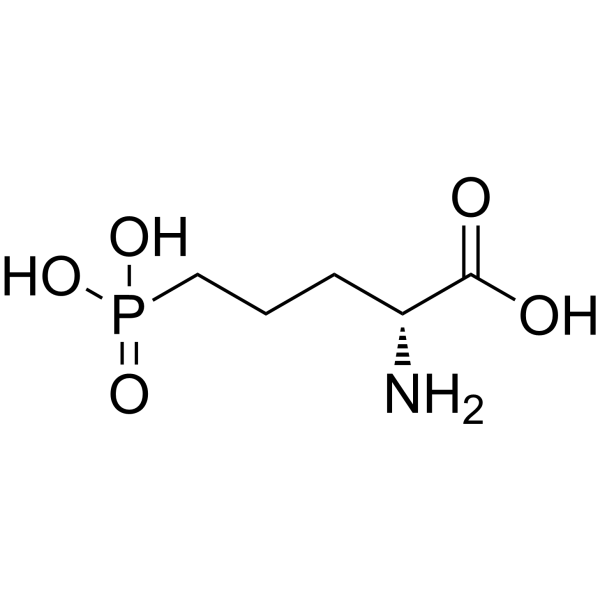
    D-AP5 (D-APV) is a selective and competitive NMDA receptor antagonist with a Kd of 1.4 μM. D-AP5 (D-APV) inhibits the glutamate binding site of NMDA receptors .
    D-AP5
  • HY-101903
    BMS-309403
    20+ Cited Publications

    FABP Cardiovascular Disease Metabolic Disease
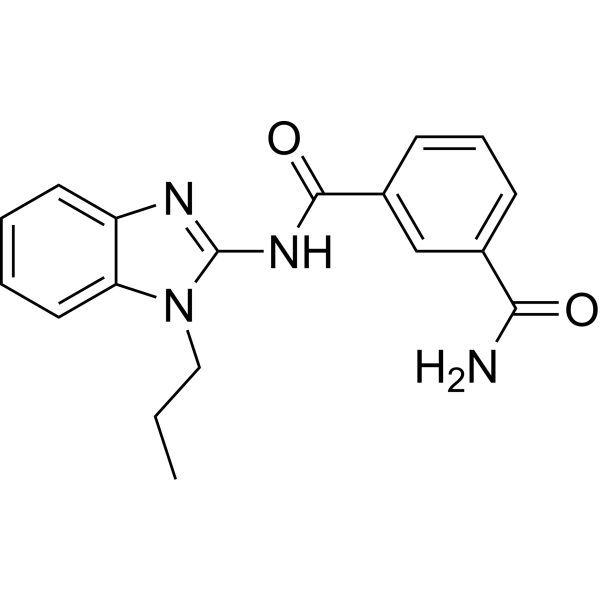
    BMS-309403 is a potent, orally active and selective adipocyte fatty acid binding protein (also known as FABP4, aP2) inhibitor with Kis of <2, 250, and 350 nM for FABP4, FABP3, and FABP5, respectively. BMS-309403 interacts with the fatty-acid-binding pocket within the interior of the protein and competitively inhibits the binding of endogenous fatty acids. BMS-309403 improves endothelial function in apolipoprotein E-deficient mice and in cultured human endothelial cells .
    BMS-309403
  • HY-15084B
    Dizocilpine
    Maximum Cited Publications
    44 Publications Verification

    MK-801

    iGluR Neurological Disease
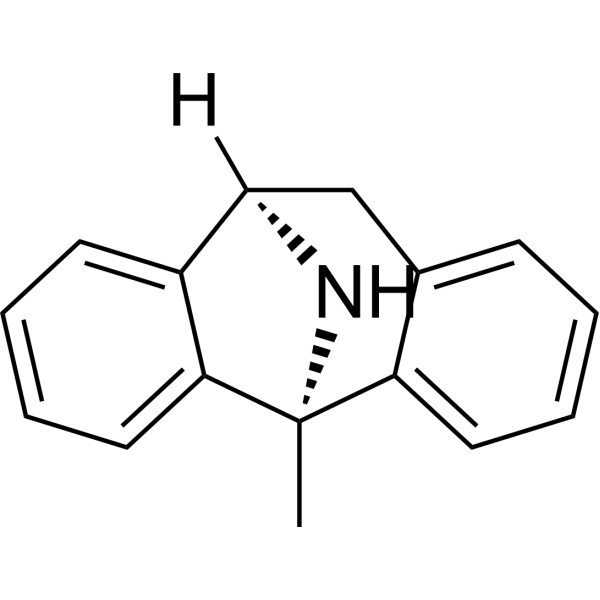
    Dizocilpine (MK-801), a potent anticonvulsant, is a selective and non-competitive NMDA receptor antagonist, with a Kd of 37.2 nM in rat brain membranes. Dizocilpine acts by binding to a site located within the NMDA associated ion channel and thus prevents Ca 2+ flux .
    Dizocilpine
  • HY-16060
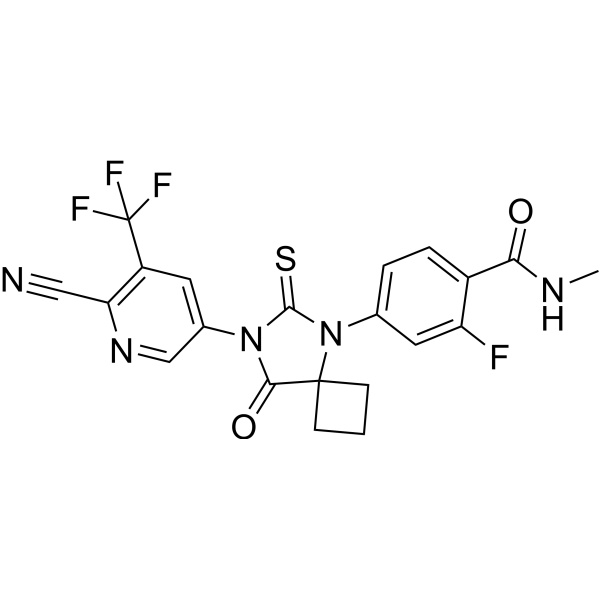
    Apalutamide
    10+ Cited Publications

    ARN-509

    Androgen Receptor Cancer
    Apalutamide (ARN-509) is a potent and competitive androgen receptor (AR) antagonist, binding AR with an IC50 of 16 nM .
    Apalutamide
  • HY-15682
    TTNPB
    5 Publications Verification

    Ro 13-7410; Arotinoid acid; AGN191183

    RAR/RXR Autophagy Apoptosis Cancer
    TTNPB is a highly potent RAR agonist. Competitive binding assays using human RARs yield IC50s of α=5.1 nM, β= 4.5 nM, and γ=9.3 nM, respectively.
    TTNPB
  • HY-113329
    Guanidinoethyl sulfonate
    5 Publications Verification

    Taurocyamine

    Endogenous Metabolite Metabolic Disease
    Guanidinoethyl sulfonate (Taurocyamine) is an orally available, blood-brain permeable competitive inhibitor of taurine transporters and a competitive antagonist of glycine receptors (GlyR) (IC50=565 μM). Guanidinoethyl sulfonate has both weak agonist and antagonist effects on GABAA receptors. Guanidinoethyl sulfonate inhibits taurine transmembrane transport and competitively binds to the GlyR ligand binding domain, thereby blocking glycine-mediated chloride influx, and may regulate brain pH to exert neuroprotective effects. Guanidinoethyl sulfonate can be used for neuroprotection studies of ischemic brain injury .
    Guanidinoethyl sulfonate
  • HY-110287
    Apcin
    5+ Cited Publications

    APC Mitosis Cancer
    Apcin, a ligand of Cdc20, is a potent and competitive anaphase-promoting complex/cyclosome (APC/C(Cdc20)) E3 ligase activity inhibitor. Apcin competitively inhibits APC/C-dependent ubiquitylation by binding to Cdc20 and preventing substrate recognition. Apcin occupes the D-box-binding pocket on the side face of the WD40-domain and can prolong mitosis .
    Apcin
  • HY-101903A
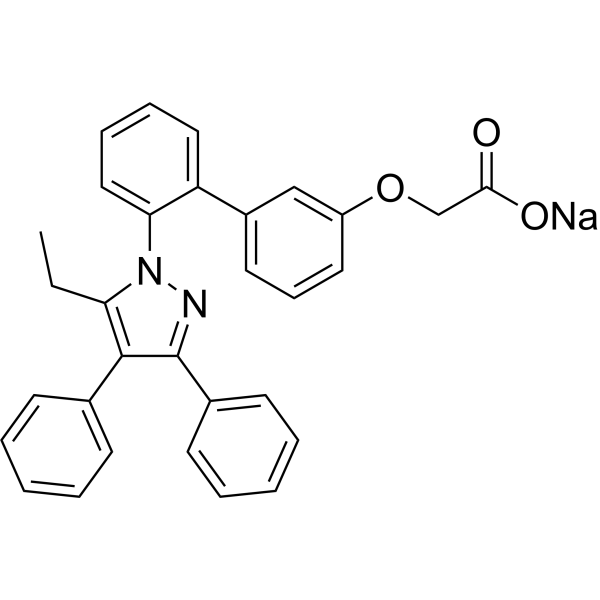
    BMS-309403 sodium
    20+ Cited Publications

    FABP Cardiovascular Disease Metabolic Disease
    BMS-309403 sodium is a potent, orally active, and selective adipocyte fatty acid binding protein (also known as FABP4, aP2) inhibitor, with Kis of <2, 250, and 350 nM for FABP4, FABP3, and FABP5, respectively. BMS-309403 sodium interacts with the fatty-acid-binding pocket within the interior of the protein and competitively inhibits the binding of endogenous fatty acids. BMS-309403 sodium improves endothelial function in apolipoprotein E-deficient mice and in cultured human endothelial cells .
    BMS-309403 sodium
  • HY-125017
    Bozitinib
    1 Publications Verification

    PLB-1001; CBT-101; Vebreltinib

    c-Met/HGFR Cancer
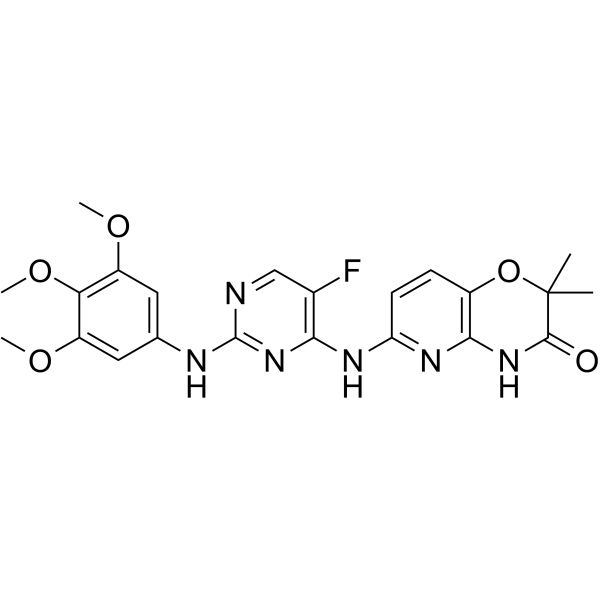
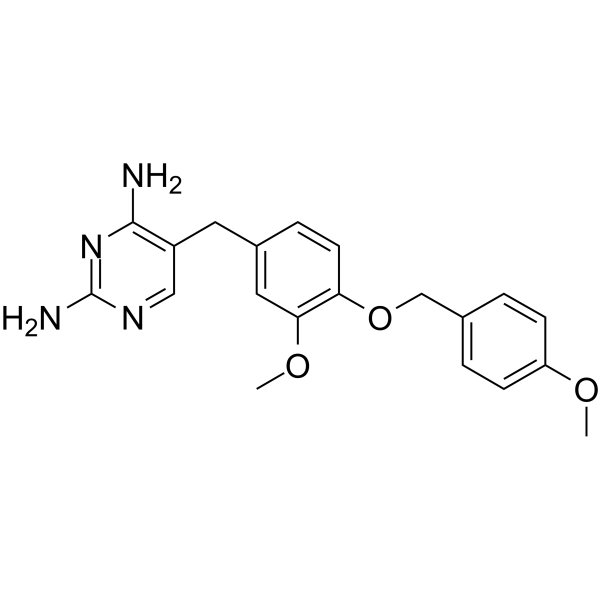
    Bozitinib (PLB-1001) is a highly selective c-MET kinase inhibitor with blood-brain barrier permeability. Bozitinib (PLB-1001) is a ATP-competitive small-molecule inhibitor, binds to the conventional ATP-binding pocket of the tyrosine kinase superfamily .
    Bozitinib
  • HY-P99009

    RVT-1401; HBM9161; IMVT-1401

    Fc Receptor (FcR) Inflammation/Immunology
    Batoclimab (RVT-1401) is a fully humanized IgG1 monoclonal antibody targeting FcRn. Batoclimab has high affinity for the IgG-binding site on FcRn. By competitively binding to the IgG binding site on FcRn, Batoclimab blocks FcRn-mediated recycling of IgG, resulting in enhanced degradation and subsequent reductions in IgG levels. Batoclimab can be used in the research of autoimmune diseases such as myasthenia gravis and thyroid eye disease .
    Batoclimab
  • HY-100472

    Caspase Cancer
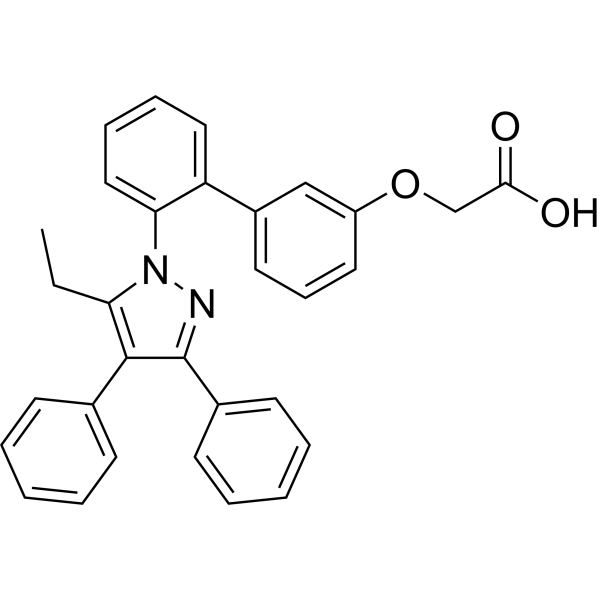
    ZYZ-488 is a competitive apoptotic protease activating factor-1 (Apaf-1) inhibitor. ZYZ-488 inhibits the activation of binding protein procaspase-9 and procaspase-3 .
    ZYZ-488
  • HY-135878
    2',5'-Dideoxyadenosine
    5 Publications Verification

    Adenylate Cyclase Adrenergic Receptor Metabolic Disease
    2',5'-Dideoxyadenosine is a potent and non-competitive adenylyl cyclase inhibitor via binding the P-site with an IC50 of 3 µM . 2',5'-Dideoxyadenosine is a nucleoside analog and exerts a potent antiadrenergic action in heart .
    2',5'-Dideoxyadenosine
  • HY-P2333
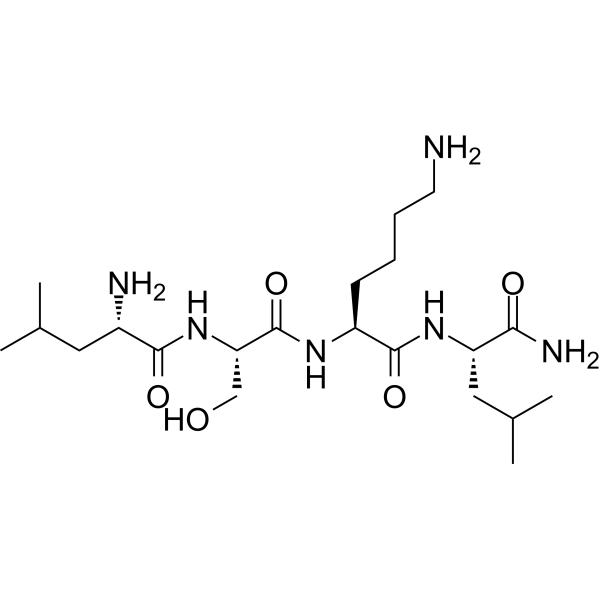
    LCKLSL
    5+ Cited Publications

    Annexin A Cardiovascular Disease
    LCKLSL is a N-terminal hexapeptide and a competitive annexin A2 (AnxA2) inhibitor. LCKLSL potently inhibits the binding of tissue plasminogen activator (tPA) to AnxA2. LCKLSL also inhibits the generation of plasmin and has anti-angiogenic roles .
    LCKLSL
  • HY-P1315

    Glycylglycyl-L-tyrosyl-L-arginine

    Cathepsin Others
    Papain inhibitor (Glycylglycyl-L-tyrosyl-L-arginine) is a competitive papain-targeting enzyme inhibitor with a Ki of 9 μM. Papain inhibitor binds directly to the substrate binding site of papain, inhibiting substrate hydrolysis by the enzyme. Papain inhibitor functions as a component of an electrochemical probe for the detection of papain .
    Papain inhibitor
  • HY-Y0258
    Benzocaine
    1 Publications Verification

    Environmental Pollutants Sodium Channel Bacterial Infection Neurological Disease
    Benzocaine is an orally active local anesthetic. Benzocaine non-competitively inhibits the binding of Ca-ATPase to Ca 2+, with an IC50 of 47.1 mM. Benzocaine exerts anesthetic effects by blocking voltage-gated sodium channels. Benzocaine induces methemoglobinemia in various experimental animals .
    Benzocaine
  • HY-109079A

    DWP14012 hydrochloride; Fexuprazan hydrochloride

    Proton Pump Metabolic Disease
    Abeprazan hydrochloride (DWP14012 hydrochloride) is a potassium-competitive acid blocker. Abeprazan hydrochloride inhibits H +, K +- ATPase by reversible potassium-competitive ionic binding with no acid activation required. Abeprazan hydrochloride is developed as a potential alternative to proton pump inhibitor for the treatment of acid-related diseases .
    Abeprazan hydrochloride
  • HY-109079

    DWP14012; Fexuprazan

    Proton Pump Metabolic Disease
    Abeprazan (DWP14012) is a potassium-competitive acid blocker. Abeprazan inhibits H +, K +- ATPase by reversible potassium-competitive ionic binding with no acid activation required. Abeprazan is developed as a potential alternative to proton pump inhibitor for the treatment of acid-related diseases .
    Abeprazan
  • HY-19548A
    BEC hydrochloride
    1 Publications Verification

    Arginase Metabolic Disease
    BEC hydrochloride is a slow-binding and competitive Arginase II inhibitor with Ki of 0.31 μM and 30 nM at pH 7.5 and pH 9.5, respectively .
    BEC hydrochloride
  • HY-115194
    Amastatin hydrochloride
    1 Publications Verification

    Aminopeptidase Bacterial Infection
    Amastatin hydrochloride is a slow, tight binding, competitive aminopeptidase (AP) inhibitor with Ki values of 0.26 nM, 30 nM, 52 nM for Aeromonas aminopeptidase, cytosolic leucine aminopeptidase, microsomal aminopeptidase .
    Amastatin hydrochloride
  • HY-17537
    APY29
    10+ Cited Publications

    IRE1 Cancer
    APY29, an ATP-competitive inhibitor, is an allosteric modulator of IRE1α which inhibits IRE1α autophosphorylation by binding to the ATP-binding pocket with IC50 of 280 nM. APY29 acts as a ligand that allosterically activates IRE1α adjacent RNase domain .
    APY29
  • HY-10017
    SCH 546738
    15+ Cited Publications

    CXCR Inflammation/Immunology Endocrinology
    SCH 546738 is a potent, orally active and non-competitive CXCR3 antagonist, the affinity constant (Ki) of SCH 546738 binding to human CXCR3 receptor is determined to be 0.4 nM in multiple experiments.
    SCH 546738
  • HY-13945
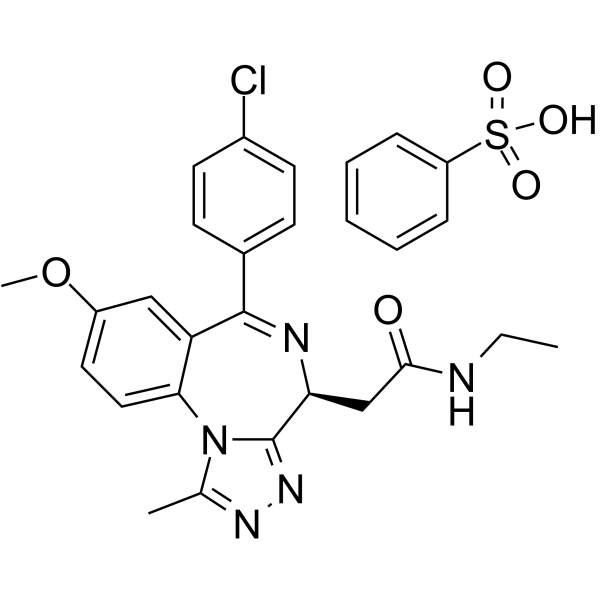
    NVP 231
    3 Publications Verification

    Apoptosis Cancer
    NVP 231 is a potent, specific, and reversible ceramide kinase (CerK) inhibitor(IC50=12 nM) that competitively inhibits binding of ceramide to CerK . NVP 231 induces cell apoptosis by increasing DNA fragmentation and caspase-3 and caspase-9 cleavage .
    NVP 231
  • HY-13503
    Epothilone A
    1 Publications Verification

    Epo A

    Microtubule/Tubulin Apoptosis Cancer
    Epothilone A is a competitive inhibitor of the binding of [ 3H] paclitaxel to tubulin polymers, with a Ki of 0.6-1.4 μM.
    Epothilone A
  • HY-P0322

    EMD 56574

    Integrin Cardiovascular Disease Metabolic Disease
    GRGDSPK (EMD 56574) is a peptide incluing Arg-Gly-Asp (RGD). GRGDSPK (EMD 56574) is an competitive and reversible inhibitory peptide for inhibiting integrin-fibronectin binding. GRGDSPK is used to study the role of integrins in bone formation and resorption .
    GRGDSPK
  • HY-139979
    USP5-IN-1
    3 Publications Verification

    Deubiquitinase Cancer
    USP5-IN-1 (compound 64) is a selective competitive inhibitor of USP5 zinc finger ubiquitin binding domain (ZnF-UBD) (KD=2.8 μM). USP5-IN-1 competitively blocks the binding of ubiquitin to ZnF-UBD, inhibits the catalytic activity of USP5, and thus hinders the hydrolysis of ubiquitin chains. USP5-IN-1 can inhibit USP5 cleavage of Lys48-linked diubiquitin substrates in vitro and is a potential USP5 chemical probe and potential inhibitor of USP5-related cancers.
    USP5-IN-1
  • HY-P2333A
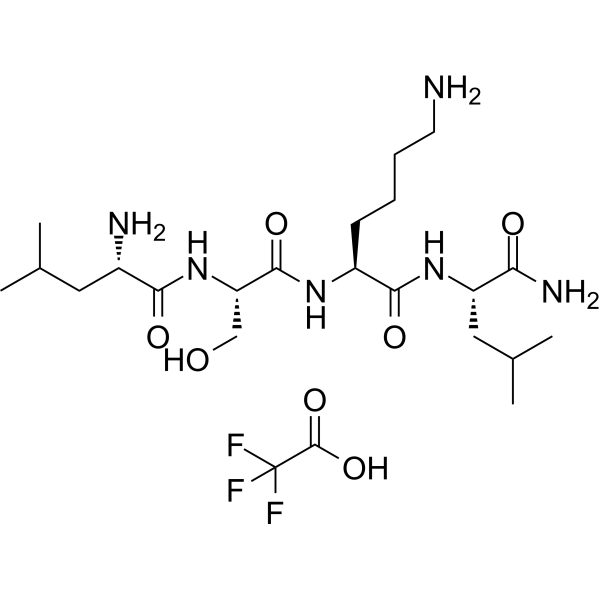
    LCKLSL hydrochloride
    5+ Cited Publications

    Annexin A Cardiovascular Disease
    LCKLSL hydrochloride is a N-terminal hexapeptide and a competitive annexin A2 (AnxA2) inhibitor. LCKLSL hydrochloride potently inhibits the binding of tissue plasminogen activator (tPA) to AnxA2. LCKLSL hydrochloride also inhibits the generation of plasmin and has anti-angiogenic roles .
    LCKLSL hydrochloride
  • HY-Y0258A
    Benzocaine (hydrochloride)
    1 Publications Verification

    Sodium Channel Calcium Channel Neurological Disease
    Benzocaine hydrochloride is an orally active local anesthetic. Benzocaine hydrochloride non-competitively inhibits the binding of Ca-ATPase to Ca 2+, with an IC50 of 47.1 mM. Benzocaine hydrochloride exerts anesthetic effects by blocking voltage-gated sodium channels. Benzocaine hydrochloride induces methemoglobinemia in various experimental animals .
    Benzocaine (hydrochloride)
  • HY-N7136

    Environmental Pollutants Cytochrome P450 Metabolic Disease
    α-Terpinyl acetate is a monoterpene ester isolated from Laurus nobilis L. essential oil. α-Terpinyl acetate is a competitive P450 2B6 substrate which binding to the active site of P450 2B6 with a Kd value of 5.4 μM .
    α-​Terpinyl acetate
  • HY-101503
    HTS01037
    1 Publications Verification

    FABP Metabolic Disease
    HTS01037 is an inhibitor of fatty acid binding; and a competitive antagonist of protein-protein interactions mediated by AFABP/aP2 with a Ki of 0.67 μM.
    HTS01037
  • HY-P2271

    Apelin Receptor (APJ) Cancer
    MM 54 (compound 5) is a competitive antagonist at APJ, with an IC50 of 93 nM. MM 54 behaves as a potent and selective inhibitor of apelin binding and APLNR activation .
    MM 54
  • HY-15716
    Kobe0065
    4 Publications Verification

    Ras Apoptosis Cancer
    Kobe0065 is a novel and effective inhibitor of Ras-Raf interaction, competitively inhibiting the binding of H-Ras·GTP to c-Raf-1 RBD with a Ki value of 46±13 μM.
    Kobe0065
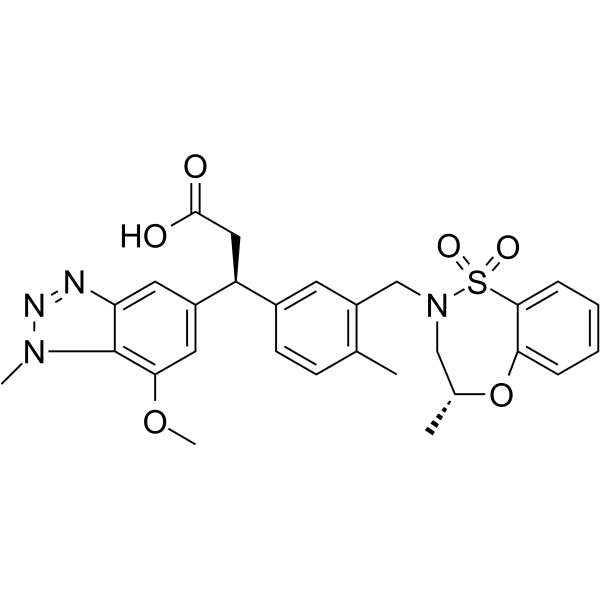
  • HY-109184
    Murizatoclax
    1 Publications Verification

    AMG 397

    Bcl-2 Family Cancer
    Murizatoclax (AMG 397) is a potent, selective and orally active inhibitor of myeloid leukemia 1 (MCL-1) inhibitor, with a Ki of 15 pM. Murizatoclax competitive binds to the BH3-binding groove of MCL1 with pro-apoptotic BCL-2 family members. Murizatoclax can be used for the research of cancer .
    Murizatoclax
  • HY-124793
    GAK inhibitor 49
    1 Publications Verification

    Cyclin G-associated Kinase (GAK) Infection
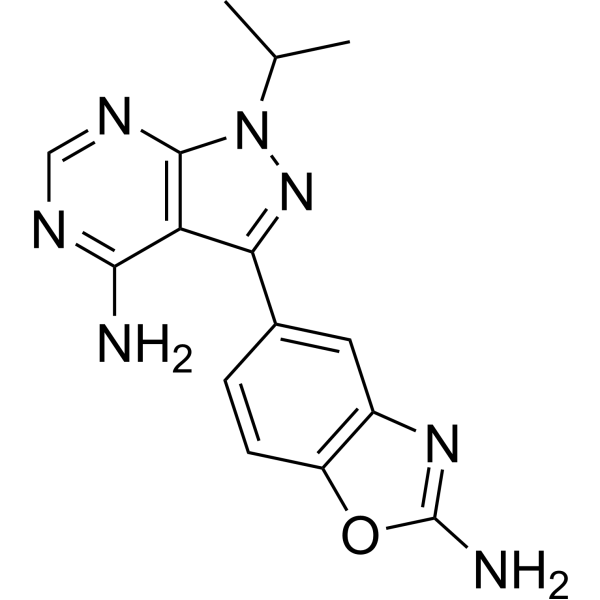
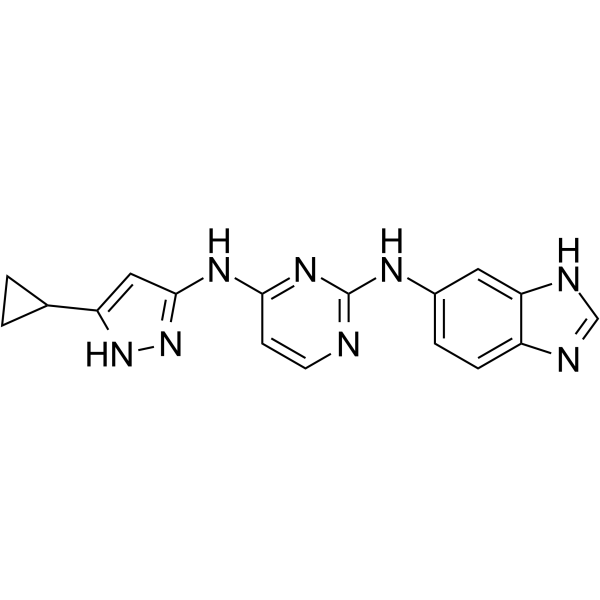
    GAK inhibitor 49 is a potent, ATP-competitive and highly selective cyclin G associated kinase (GAK) inhibitor with a Ki of 0.54 nM and a cell IC50 of 56 nM. GAK inhibitor 49 also shows binding to RIPK2 .
    GAK inhibitor 49
  • HY-108605

    Pim Cancer
    PIM1-IN-2 is a potent and ATP competitive Pim-1 inhibitor with a Ki of 91 nM. PIM1-IN-2 targets the ATP-binding kinase hinge region not by forming classical hydrogen bonds .
    PIM1-IN-2
  • HY-117992

    Complement System Inflammation/Immunology
    BR103 is a C3aR-specific small molecule ligand. BR103 can be used to measure ligand affinity for a G protein-coupled receptor for saturation and competitive binding .
    BR103
  • HY-132309
    BRD0639
    1 Publications Verification

    Histone Methyltransferase Cancer
    BRD0639 is a first-in-class inhibitor of the PRMT5-substrate adaptor interaction. BRD0639 is a PRMT5 binding motif (PBM)-competitive agent that can support studies of PBM dependent PRMT5 activities .
    BRD0639
  • HY-P99652

    AK 111

    Interleukin Related Inflammation/Immunology
    Gumokimab (AK 111) is a monoclonal antibody targeting IL-17A, which can be used in the study of psoriasis, ankylosing spondylitis. Gumokimab competitively blocks the binding of human IL-17A to IL-17R.
    Gumokimab
  • HY-N7433

    Ethylidene-glucose

    GLUT Endogenous Metabolite Metabolic Disease
    4,6-O-ethylidene-α-D-glucose (Ethylidene-glucose), a glucose derivative, is a competitive exofacial binding-site inhibitor on glucose transporter 1 (GLUT1) with a Ki of 12 mM for wild-type 2-deoxy-D-glucose transport .
    4,6-O-Ethylidene-α-D-glucose
  • HY-11028

    PF-2413873

    Progesterone Receptor Endocrinology
    PF-02413873 (PF-2413873) is a potent selective, fully competitive and orally active nonsteroidal progesterone receptor (PR) antagonist, with a Ki of 2.6 nM. PF-02413873 can block progesterone binding and PR nuclear translocation, and inhibit endometrial growth in vivo .
    PF-02413873
  • HY-136596

    Drug Metabolite Cancer
    Apalutamide-COOH is a metabolite of Apalutamide. Apalutamide is a potent and competitive androgen receptor (AR) antagonist, binding AR with an IC50 of 16 nM .
    Apalutamide-COOH
  • HY-P1083
    Dynamin inhibitory peptide
    1 Publications Verification

    Dynamin Neurological Disease
    Dynamin inhibitory peptide competitively blocks binding of dynamin to amphiphysin, thus preventing endocytosis. Dynamin inhibitory peptide blocks the dopamine D3 effect on GABAA receptors .
    Dynamin inhibitory peptide
  • HY-161137

    Amino acid Transporter iGluR Neurological Disease
    LQFM215 is a proline transporter (PROT) inhibitor. LQFM215 inhibits proline transport by competitively binding to the active site of PROT. LQFM215 effectively reduces hyperlocomotion and enhances social interaction .
    LQFM215
  • HY-16060S

    ARN-509-d4

    Androgen Receptor Cancer
    Apalutamide-d4 is a deuterium labeled Apalutamide. Apalutamide is a potent and competitive androgen receptor (AR) antagonist, binding AR with an IC50 of 16 nM .
    Apalutamide-d4
  • HY-115741

    Nucleoside Antimetabolite/Analog Neurological Disease Cancer
    3BrB-PP1 is an ATP-competitive analog. 3BrB-PP1 can specifically inhibit the activity of protein kinase with mutations in the ATP-binding pocket (mutation of Thr97 within Sty1’s ATP-binding pocket) .
    3BrB-PP1
  • HY-N7536

    TRP Channel Others
    Voacangine is an antagonist for TRPV1 and TRPM8 but as an agonist for TRPA1 (EC50=8 μM). Voacangine competitively blockes capsaicin binding to TRPV1 (IC50=50 μM). Voacangine competitively inhibits the binding of menthol to TRPM8 (IC50=9 μM) and it shows noncompetitive inhibition against icilin (IC50=7 μM). Voacangine selectively abrogates chemical agonist-induced TRPM8 activation and did not affect cold-induced activation. Voacangine is an alkaloid isolated from the root bark of Voacanga africana .
    Voacangine
  • HY-116750

    Tyrosinase Others
    6-Hydroxykaempferol, a flavonoid, is a competitive tyrosinase inhibitor with an IC50 value of 124 μM. 6-Hydroxykaempferol has a Ki value of 148 μM relative to L-DOPA as a substrate and effectively inhibits the activity of the enzyme by binding to the active site of the enzyme .
    6-Hydroxykaempferol
  • HY-150761
    MY-875
    1 Publications Verification

    Microtubule/Tubulin Apoptosis Cancer
    MY-875 is a competitive microtubulin polymerization inhibitor with an IC50 value of 0.92 μM. MY-875 inhibits microtubulin polymerization by targeting colchicine binding sites and activates the Hippo pathway. MY-875 induces apoptosis and has anticancer activity .
    MY-875
  • HY-117809

    PDK-1 Cancer
    PDK1-IN-2 is a small molecule inhibitor of 3-phosphoinositol-dependent protein kinase-1 (PDK1). PDK1-IN-2 inhibits the binding of PDK1 to its substrate by competitively binding to the PIF pocket of PDK1, thereby inhibiting the kinase activity and downstream signaling of PDK1. PDK1-IN-2 can be used for cell survival and proliferation in cancer .
    PDK1-IN-2
  • HY-128466

    Biochemical Assay Reagents Others
    N-Biotinyl-L-cysteine is a biotinylated biochemical assay reagent, which is used to detect avidin and biotin through a competitive binding reaction .
    N-Biotinyl-L-cysteine
  • HY-126055

    Adenylate Cyclase Others
    Hadacidin is a competitive inhibitor of adenylate synthase. Hadacidin binds to the active site of adenylate synthase, competitively inhibiting L-aspartate binding. Hadacidin can be used in drug design, to help develop new inhibitors or activators to regulate adenylate synthase activity, and to play a role in the study of related diseases .
    Hadacidin

Inquiry Online

Your information is safe with us. * Required Fields.

Salutation


Country or Region *

Applicant Name *


Organization Name *

Department *


Email Address *


Product Name *

Cat. No.


Requested quantity *

Phone Number *


Remarks

Inquiry Online

Inquiry Information

Product Name:
Cat. No.:
Quantity:
MCE Japan Authorized Agent:

