
1. Search Result
Search Result
Results for "

concentrations

" in MedChemExpress (MCE) Product Catalog:

1812

Inhibitors & Agonists

8

Screening Libraries

184

Fluorescent Dye

142

Biochemical Assay Reagents

92

Peptides

29

MCE Kits

6

Inhibitory Antibodies

296

Natural
Products

84

Isotope-Labeled Compounds

8

Click Chemistry

31

Oligonucleotides

1

GMP Molecules

Cat. No. Product Name Target Research Areas Chemical Structure
  • HY-44076
    LAP
    4 Publications Verification

    Lithium phenyl-2,4,6-trimethylbenzoylphosphinate

    Biochemical Assay Reagents Others Cancer
    LAP (Lithium phenyl-2,4,6-trimethylbenzoylphosphinate) is a free radical initiator. The free radicals produced by LAP under bioprinting conditions are potentially cytotoxic and mutagenic. In addition, the concentration of LAP affects the mechanical strength of 3D printed scaffolds. Generally, the concentration range of LAP used for curing is 0.05%-1%. The elastic modulus produced at a concentration of 0.1% is the highest, with enhanced mechanical properties and excellent biocompatibility .
    LAP
  • HY-15915
    DTNB
    10+ Cited Publications

    Ellman’s Reagent

    Biochemical Assay Reagents Others
    DTNB (Ellman’s Reagent) is a chemical used to quantify the number or concentration of thiol groups .
    DTNB
  • HY-136408

    Malonyl coenzyme A lithium

    Carnitine Palmitoyltransferase (CPT) Mitochondrial Metabolism Metabolic Disease
    Malonyl CoA (Malonyl Coenzyme A) lithium is an inhibitor of carnitine palmitoyl transferase 1 (CPT1). High Malonyl CoA lithium concentrations suppress fatty acid oxidation, while low Malonyl CoA lithium concentrations are permissive for fat oxidation .
    Malonyl CoA lithium
  • HY-B0398
    Nalidixic acid
    2 Publications Verification

    Bacterial Antibiotic Topoisomerase Infection
    Nalidixic acid, a quinolone antibiotic, is effective against both gram-positive and gram-negative bacteria. Nalidixic acid acts in a bacteriostatic manner in lower concentrations and is bactericidal in higher concentrations. Nalidixic acid inhibits a subunit of DNA gyrase and topoisomerase IV and reversibly blocks DNA replication in susceptible bacteria .
    Nalidixic acid
  • HY-B2209
    Hydroxocobalamin
    3 Publications Verification

    Vitamin B12a

    Endogenous Metabolite Neurological Disease Metabolic Disease
    Hydroxocobalamin (Vitamin B12a) is a cyanide antidote. Hydroxocobalamin can decrease the cell and plasma cyanide concentrations and increase survival rate in acute cyanide poisoning. Hydroxocobalamin can improve newborn Cbl-C defect-induced metabolic profile and neurocognitive outcome. Hydroxocobalamin can normalize Vitamin B12 deficiency. Hydroxocobalamin can induce acute kidney injury. Hydroxocobalamin can be used for the researches of metabolic and neurological disease .
    Hydroxocobalamin
  • HY-W099535

    Biochemical Assay Reagents Others
    Lithium dodecyl sulfate is an anionic hydrocarbon surfactant with both surface tension reduction and interfacial adsorption capabilities. Lithium dodecyl sulfate induces low surface viscosity; it forms micelles in aqueous solutions through entropy-driven (low temperature) and enthalpy-driven (high temperature) mechanisms. When acting synergistically with tetrabutylammonium bromide, Lithium dodecyl sulfate exhibits cloud point behavior due to micelle aggregation and phase separation. Lithium dodecyl sulfate can form an adsorption layer at the air-water interface with quantifiable surface excess and minimum area per molecule, and it has higher equilibrium surface tension and foamability compared to other dodecyl sulfate counterion variants. The foam stability of Lithium dodecyl sulfate above its critical micelle concentration is low, and its dynamic surface tension pattern changes dynamically with bubble frequency .
    Lithium dodecyl sulfate
  • HY-157646
    MZ-101
    2 Publications Verification

    GYS1-IN-2

    Glycosyltransferase Metabolic Disease
    MZ-101 (GYS1-IN-2) is an orally active, potent and selective small-molecule glycogen synthase 1 (GYS1) inhibitor with with an IC50 value of 0.041 µM. MZ-101 reduces glycogen concentrations in cells and in mice. MZ-101 can used to study GYS1 -mediated Pompe disease and other glycogen storage diseases .
    MZ-101
  • HY-13103
    NS 11021
    3 Publications Verification

    Potassium Channel Others
    NS 11021 is a potent and specific Ca 2+-activated big-conductance K + Channels (KCa1.1 channels) activator. NS 11021 at concentrations above 0.3 μM activates KCa1.1 in a concentration-dependent manner by parallelshifting the channel activation curves to more negative potentials .
    NS 11021
  • HY-109500

    meso-Nordihydroguaiaretic acid; meso-NDGA

    Lipoxygenase Metabolic Disease Cancer
    Masoprocol (meso-Nordihydroguaiaretic acid) is a potent and orally active lipoxygenase inhibitor. Masoprocol shows antihyperglycemic activity. Masoprocol decreases the glucose concentration and hepatic triglyceride in vivo. Masoprocol has the potential for the research of type II diabetes .
    Masoprocol
  • HY-D0221

    NSC 112125; 2,4,6-Tipyidyl-s-tiazie

    MOFs Fluorescent Dye Others
    2,4,6-Tri-2-pyridinyl-1,3,5-triazine (NSC 112125) is a colorimetric reagent for detecting iron. 2,4,6-Tri-2-pyridinyl-1,3,5-triazine forms a complex with Fe (II) and can be quantified as a measure of iron concentration by colorimetric detection at 594 nm .
    2,4,6-Tri-2-pyridinyl-1,3,5-triazine
  • HY-119401
    CAY10444
    4 Publications Verification

    BML-241

    LPL Receptor Cancer
    CAY10444 (BML-241) is a sphingosine-1-phosphate 3 (S1P3) antagonist. CAY10444 inhibits by 37% S1P-induced increases in Ca2+ in HeLa cells expressing S1P3 receptors .
    CAY10444
  • HY-P5366

    Liposome Others
    PEP1 is an amphipathic α-helical peptide containing 31 residues. The interaction of PEP1 with POPC-supported lipid bilayers (SLBs) is concentration-dependent: at low concentrations, it inserts into SLBs to generate compressive stress; at medium concentrations, it saturates the membrane surface to maintain constant stress; and at high concentrations, it solubilizes SLBs. PEP1 can be used for research on the mechanism of membrane-peptide interactions .
    PEP1
  • HY-100921

    N-Acetylaspartylglutamic acid

    Endogenous Metabolite Neurological Disease
    Spaglumic acid (N-Acetylaspartylglutamic acid) is a neuropeptide found in millimolar concentrations in brain.
    Spaglumic acid
  • HY-B0398A
    Nalidixic acid sodium salt
    2 Publications Verification

    Bacterial Antibiotic Topoisomerase Infection
    Nalidixic acid sodium salt, a quinolone antibiotic, is effective against both gram-positive and gram-negative bacteria. Nalidixic acid acts in a bacteriostatic manner in lower concentrations and is bactericidal in higher concentrations. Nalidixic acid inhibits a subunit of DNA gyrase and topoisomerase IV and reversibly blocks DNA replication in susceptible bacteria .
    Nalidixic acid sodium salt
  • HY-B2133

    Potassium Channel Inflammation/Immunology
    Cloperastine hydrochloride inhibits the hERG K + currents in a concentration-dependent manner with an IC50 value of 27 nM .
    Cloperastine hydrochloride
  • HY-N0642

    Drug Derivative Calcium Channel Metabolic Disease
    α-L-Rhamnose monohydrate is a neutral sugar present in plants, animals, viruses and bacteria. α-L-Rhamnose monohydrate is a ligand for α-L-rhamnose-recognizing lectin sites, trigger intracellular signaling pathways. α-L-Rhamnose monohydrate induces rhaE and rhaA expression as a specific carbon source in Aspergillus nidulans, while glucose inhibits its cellular uptake. α-L-Rhamnose monohydrate induces rapid and transient increases in intracellular free Ca 2+ concentration in normal human dermal fibroblasts .
    α-L-Rhamnose monohydrate
  • HY-113285

    3-Ureidopropionic acid

    Oxidative Phosphorylation Metabolic Disease
    Ureidopropionic acid is a mitochondrial respiratory chain complex V inhibitor that selectively inhibits the activity of mitochondrial respiratory chain complex V, with no effect on respiratory chain complexes I-IV or mitochondrial fatty acid β-oxidation. Ureidopropionic acid induces the production of reactive oxygen species, delayed elevation of intracellular calcium concentration, secondary energy-dependent excitotoxicity and neurodegeneration in neurons. Ureidopropionic acid promotes neuropathological changes by impairing mitochondrial energy metabolism, oxidative stress and excitotoxicity pathways. Ureidopropionic acid can be used in studies related to 3-ureidopropionase deficiency and severe propionic aciduria .
    Ureidopropionic acid
  • HY-DY1042

    Fluorescent Dye Others
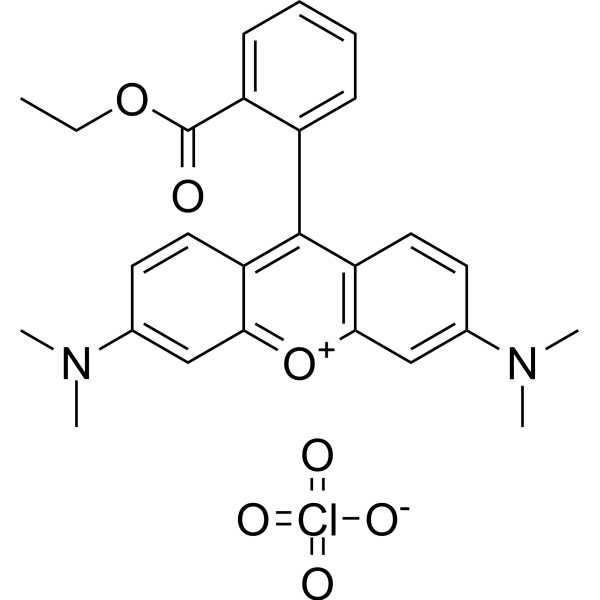
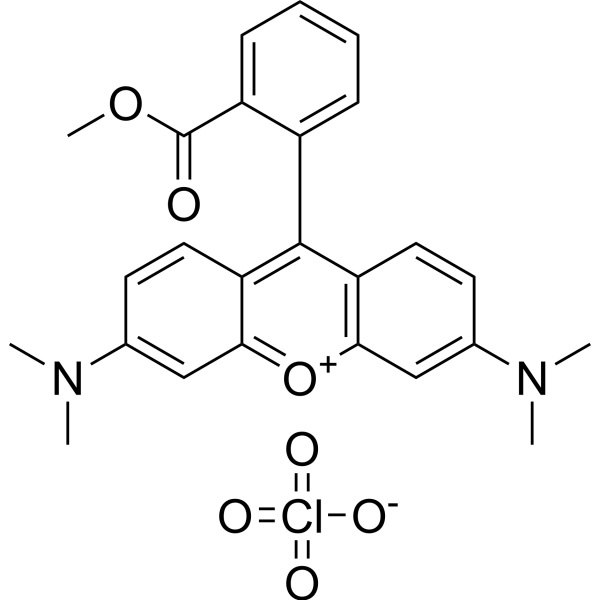
    Rhodamine dyes are membrane-permeable cationic fluorescent probes that specifically recognize mitochondrial membrane potentials, thereby attaching to mitochondria and producing bright fluorescence, and at certain concentrations, rhodamine dyes have low toxicity to cells, so they are commonly used to detect mitochondria in animal cells, plant cells, and microorganisms .
    Solvent and concentration: DMSO: 10 mM
    TMRM Perchlorate (solution)
  • HY-156829B

    Biochemical Assay Reagents Others
    PLGA-PEG-PLGA (hydrogel) (LA:GA 7:1) is a biodegradable thermosensitive hydrogel product that can undergo phase transition at a specific temperature. PLGA-PEG-PLGA (hydrogel) (LA:GA 7:1) can be widely used in drug delivery systems, tissue engineering, wound dressings, and biosensors. The gelation temperature varies with concentration. The gelation temperature varies with the concentration; the higher the concentration, the lower the gelation temperature .
    PLGA-PEG-PLGA (hydrogel) (LA:GA 7:1)
  • HY-W013275
    MCLA hydrochloride
    1 Publications Verification

    Reactive Oxygen Species (ROS) Others
    MCLA hydrochloride is a chemiluminescent reagent which can be used to quantify aqueous concentrations of superoxide.
    MCLA hydrochloride
  • HY-129811

    Microtubule/Tubulin Neurological Disease
    Bis-ANS dipotassium is a fluorescent probe of hydrophobic protein. Bis-ANS binds to tubulin with a Kd of 2 μM . Bis-ANS dipotassium is a potent biphasic modulator of protein liquid-liquid phase separation (LLPS). Bis-ANS dipotassium promotes LLPS at low concentrations but suppresses LLPS at high concentrations .
    Bis-ANS dipotassium
  • HY-B2179

    Potassium Channel Inflammation/Immunology
    Cloperastine fendizoate inhibits the hERG K + currents in a concentration-dependent manner with an IC50 value of 27 nM.
    Cloperastine fendizoate
  • HY-P0088

    Dynorphin A Porcine Fragment 1-13

    Opioid Receptor Others
    Porcine dynorphin A (1-13) is a potent, endogenous κ opioid receptor agonist and is antinociceptive at physiological concentrations.
    Porcine dynorphin A(1-13)
  • HY-DY1014

    Fluorescent Dye Others
    ATP-Red 1 (solution) is a multisite-binding switchable fluorescent probe, and can selectively and rapidly responds to intracellular concentrations of ATP in living cells (Ex/Em = 510/590 nm).
    Solvent and concentration: DMSO: 1 mM
    ATP-Red 1 (solution)
  • HY-DY1023

    Fluorescent Dye Others
    Rhodamine dyes are membrane-permeable cationic fluorescent probes that specifically recognize mitochondrial membrane potentials, thereby attaching to mitochondria and producing bright fluorescence, and at certain concentrations, rhodamine dyes have low toxicity to cells, so they are commonly used to detect mitochondria in animal cells, plant cells, and microorganisms .
    Solvent and concentration: DMSO: 10 mM
    TMRE (solution)
  • HY-N3346

    10-epi-Eucarobustol F

    Bacterial Infection
    Macrocarpal A (10-epi-Eucarobustol F) is an antibacterial agent, which can be isolated from the leaves of Eucalyptus macrocarpa. Macrocarpal A inhibits the growth of Bacillus subtilis PCI219 (minimum inhibitory concentration below 0.2 µM) and Staphylococcus aureus FDA209P (minimum inhibitory concentration is 0.4 µM) .
    Macrocarpal A
  • HY-D1436

    Fluorescent Dye Neurological Disease
    PBFI is the cell-impermeant fluorescent indicator that is widely used for the determination of concentrations of K + (Ex/Em = 340,380/500 nm) .
    PBFI
  • HY-77537

    7DX

    Thymidylate Synthase Cardiovascular Disease
    7-Deazaxanthine (7DX) is an inhibitor of thymidine phosphorylase (TPase). 7-Deazaxanthine inhibits TPase reaction in a concentration-dependent manner with an IC50 value of 40 μM. 7-Deazaxanthine also has a significant angiogenesis inhibitory effect .
    7-Deazaxanthine
  • HY-D2482

    APG-1 AM

    Fluorescent Dye Neurological Disease
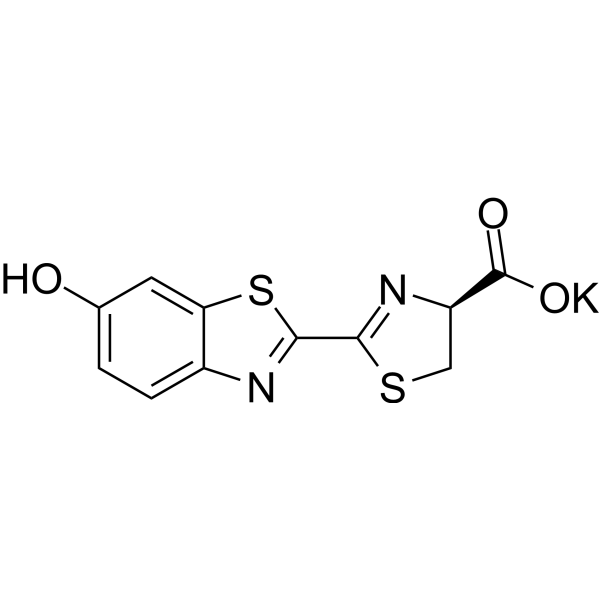
    Asante potassium green-1 AM (APG-1 AM) is a cell-permeable K +-sensitive fluorescent indicator and potassium ion indicator that exhibits minimal interference from Na + and pH at physiologically relevant intracellular levels. Asante potassium green-1 AM enables non-invasive monitoring and quantitative analysis of intracellular potassium ion concentration (ᵢ) . Its excitation/emission maxima are 525/545 nm, respectively.
    Asante potassium green-1 AM
  • HY-158741

    APG-2 Acetoxymethyl ester

    Fluorescent Dye Potassium Channel Others
    IPG-2 AM (APG-2 Acetoxymethyl ester) is a membrane-permeant acetoxymethyl ester derivative and selective fluorescent potassium ion indicator. IPG-2 AM exhibits fluorescence increases proportional to extracellular potassium ion concentrations. IPG-2 AM enables real-time monitoring of cytosolic free potassium ion fluxes in human platelets and macrophages. IPG-2 AM can be used for the research of intracellular potassium concentration dynamics .
    IPG-2 AM
  • HY-DY1054

    Fluorescent Dye Cardiovascular Disease
    Rhodamine dyes are membrane-permeable cationic fluorescent probes that specifically recognize mitochondrial membrane potentials, thereby attaching to mitochondria and producing bright fluorescence, and at certain concentrations, rhodamine dyes have low toxicity to cells, so they are commonly used to detect mitochondria in animal cells, plant cells, and microorganisms .
    Solvent and concentration: DMSO: 5 mM
    Rhodamine 123 (solution)
  • HY-W286073

    Biochemical Assay Reagents Others
    Hexaethylene glycol decyl ether is a non-ionic surfactant, which forms micelle, and can be utilized in the cosmetics, pharmaceuticals and food industries .
    Hexaethylene glycol decyl ether
  • HY-U00027

    FR71021

    Histamine Receptor Leukotriene Receptor Prostaglandin Receptor Inflammation/Immunology Endocrinology
    Quinotolast sodium in the concentration range of 1-100 μg/mL inhibits histamine, LTC4 and PGD2 release in a concentration-dependent manner.
    Quinotolast sodium
  • HY-148075

    PI4K Infection
    PI4KIIIbeta-IN-11 is an inhibitor of PI4KIIIβ, with a mean pIC50 value of at least 9.1. PI4KIIIβ plays a key role in diseases research of RNA viruses and Plasmodium falciparum .
    PI4KIIIbeta-IN-11
  • HY-P2206

    Bacterial Antibiotic Infection
    Zelkovamycin is a cyclic peptide antibiotic originally isolated from Streptomyces. It inhibits growth of X. oryzae, P. oryzae, S. aureus, and A. laidlawii in a concentration-dependent manner when used at concentrations ranging from 0.01 to 300 μg/mL.
    Zelkovamycin
  • HY-137392

    1-Naphthalenesulfonyl-Ile-Trp-CHO

    Cathepsin Others
    Cathepsin L-IN-4 is an inhibitor of cathepsin L with IC50 at nanomolar concentrations .
    Cathepsin L-IN-4
  • HY-176783

    Toll-like Receptor (TLR) Neurological Disease
    GNE-5152 is an orthosteric SARM1 base-exchange (BE) inhibitor. GNE-5152 sustainably activates SARM1 at subinhibitory concentrations under mildly activating conditions, and this synergistic adverse effect increases NAD consumption, induces axon degradation and neurodegeneration and releases neurofilament-light (NfL) in cortical neurons. GNE-5152 can be used for neurodegenerative diseases research .
    GNE-5152
  • HY-W581820

    Ferrous succinate

    Biochemical Assay Reagents Cardiovascular Disease
    Iron(II) succinate (Ferrous succinate) is an orally active and organic acid iron supplement (ferrous salt). Iron(II) succinate improves hematological parameters in iron-deficiency anemia rats, including hemoglobin, red blood cells, hematocrit, mean corpuscular volume, mean corpuscular hemoglobin, and mean corpuscular hemoglobin concentration. Iron(II) succinate increases serum ferritin, serum iron levels, and transferrin saturation, while decreasing total iron-binding capacity in iron-deficiency anemia rats. Iron(II) succinate reduces the elevated heart, spleen, and kidney coefficients, and increases the decreased liver coefficient in iron-deficiency anemia rats. Iron(II) succinate replenishes the depleted iron content in the liver and spleen of iron-deficiency anemia rats. Iron(II) succinate can be used for the research of iron-deficiency anemia .
    Iron(II) succinate
  • HY-E70648

    AMPK Cancer
    AMPK is an αβγ heterotrimeric serinethreonine kinase activated by decreasing concentrations of adenosine triphosphate (ATP) and increasing AMP concentrations. AMPK alpha 1 Recombinant Human Active Protein Kinase is obtained by co-expressing AMPKα1 proteins .
    AMPK alpha 1 Recombinant Human Active Protein Kinase
  • HY-156829H

    Biochemical Assay Reagents Others
    PLGA-PEG-PLGA (hydrogel) (LA:GA 7:1) (20% solution) is a biodegradable thermosensitive hydrogel product that can undergo phase transition at a specific temperature. PLGA-PEG-PLGA (hydrogel) (LA:GA 7:1) (20% solution) can be widely used in drug delivery systems, tissue engineering, wound dressings, and biosensors. The gelation temperature varies with concentration. The gelation temperature varies with the concentration; the higher the concentration, the lower the gelation temperature .
    PLGA-PEG-PLGA (hydrogel) (LA:GA 7:1) (20% solution)
  • HY-170327
    ZCL279
    1 Publications Verification

    Ras Cancer
    ZCL279 is a small molecule modulator (SMM) that inhibits Cdc42-intersectin (ITSN) interaction. ZCL279 can activate Cdc42 (a cytoplasmic small GTPase in the Ras superfamily) at lower concentrations (<10 μM) and significantly inhibit it at higher concentrations (<10 μM) .
    ZCL279
  • HY-W099540

    Bacterial Infection
    OES2-0017 shows potent synergy with polyamines and growth-inhibitory effects at the low micromolar range. OES2-0017 inhibits spermine/spermidine acetyltransferase (SpeG) (IC50: 34.82 μM ) and other polyamine detoxification enzymes in low concentrations, perturbed the bacterial membrane in higher concentrations .
    OES2-0017
  • HY-160245

    Btk Others
    QL47R is an approximately isosteric analogue of QL47 (HY-80003). QL47R dose not inhibit the biochemical kinase activity of BTK at concentrations below 10 μM. QL47R dose not display antiproliferative activity on B-Cell Lymphoma Cell Lines at concentrations of less than 10 μM .
    QL47R
  • HY-N10349

    Others Infection
    Gluconasturtiin is a feeding activator for the larvae of P. maculipennis. High concentrations of gluconasturtiin is toxic to the larvae .
    Gluconasturtiin
  • HY-137325

    Guanylate Cyclase Others
    2-Chloro-ATP is a soluble guanylate cyclase inhibitor that increases intracellular calcium concentration at low concentrations through a mechanism independent of inositol phosphate production .
    2-Chloro-ATP
  • HY-B2150

    4-Hydroxyphenazone; NSC 174055

    Drug Metabolite Others
    4-Hydroxyantipyrine (4-Hydroxyphenazone; NSC 174055) is the major metabolite of Antipyrine (HY-B0171), can be as a biodistribution promoter. 4-Hydroxyantipyrine can increase distribution of concentration ratio of Citicoline and Antipyrine in the brain .
    4-Hydroxyantipyrine
  • HY-171012

    NSC 335504

    STING Inflammation/Immunology
    Clonixeril (NSC 335504) is a non-nucleotide hSTING modulator. Clonixeril has weak agonist activity at micromolar concentrations and results in antagonism of the hSTING WT pathway at low femtomolar (10 -15 M) and in some cases even attomolar (10 -18 M) concentrations. Clonixeril reduces hSTING oligomerization at a concentration of 1 aM-1 pM .
    Clonixeril
  • HY-19478

    Cholinesterase (ChE) Neurological Disease
    TAK-802 is an orally active and potent acetylcholinesterase inhibitor. TAK-802’s distribution in red blood cells has a significant concentration dependence, with the distribution ratio decreasing as the concentration increases. TAK-802 exhibits significant nonlinear pharmacokinetic behavior .
    TAK-802
  • HY-179179

    Biochemical Assay Reagents Others
    1/2 MS Medium has a similar composition to standard MS medium, including inorganic salts, sucrose, vitamins, etc. Unlike MS medium, 1/2 MS Medium contains a lower concentration of plant growth hormones (such as indoleacetic acid and adenosine), typically half the concentration of standard MS medium.
    1/2 MS Medium
  • HY-B0398S

    Isotope-Labeled Compounds Bacterial Antibiotic Topoisomerase Infection
    Nalidixic Acid-d5 is the deuterium labeled Nalidixic acid. Nalidixic acid, a quinolone antibiotic, is effective against both gram-positive and gram-negative bacteria. Nalidixic acid acts in a bacteriostatic manner in lower concentrations and is bactericidal in higher concentrations. Nalidixic acid inhibits a subunit of DNA gyrase and topoisomerase IV and reversibly blocks DNA replication in susceptible bacteria .
    Nalidixic Acid-d5

Inquiry Online

Your information is safe with us. * Required Fields.

Salutation


Country or Region *

Applicant Name *


Organization Name *

Department *


Email Address *


Product Name *

Cat. No.


Requested quantity *

Phone Number *


Remarks

Inquiry Online

Inquiry Information

Product Name:
Cat. No.:
Quantity:
MCE Japan Authorized Agent:

