1. Search Result
Search Result
Results for "

coordination ligand

" in MedChemExpress (MCE) Product Catalog:

18

Inhibitors & Agonists

5

Biochemical Assay Reagents

1

Peptides

2

Natural
Products

1

Isotope-Labeled Compounds

Cat. No. Product Name Target Research Areas Chemical Structure
  • HY-Y1878
    Copper(Ⅱ) sulfate
    3 Publications Verification

    Cupric sulfate

    Environmental Pollutants Biochemical Assay Reagents Others
    Copper(Ⅱ) sulfate (Cupric sulfate) is an inorganic compound that is a source of copper ions. Copper(Ⅱ) sulfate forms coordination compounds through the coordination of copper ions with ligands. Copper(Ⅱ) sulfate can be used for various enzymatic studies and material synthesis .
    Copper(Ⅱ) sulfate
  • HY-Y1101B

    N-Methylmorpholine N-Oxide; MMNO; 4-Methylmorpholine 4-oxide

    Biochemical Assay Reagents Others
    4-Methylmorpholine N-oxide (N-Methylmorpholine N-Oxide; MMNO; 4-Methylmorpholine 4-oxide) is an amine oxide ligand and ozonation reagent. 4-Methylmorpholine N-oxide forms coordination complexes with lanthanum (III) nitrate and yttrium (III) nitrate via its nitroso oxygen atom. The metal-ligand bonds are dominated by electrostatic interactions with a small covalent component. 4-Methylmorpholine N-oxide is applicable in ozonation reactions for the synthesis of methyl 9-oxononanoate .
    4-Methylmorpholine N-oxide
  • HY-B1306
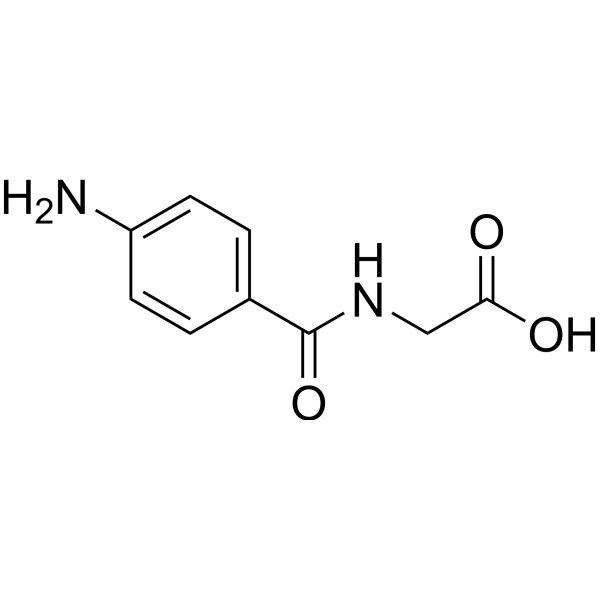
    4-Aminohippuric acid
    4 Publications Verification

    p-Aminohippuric acid

    Others Neurological Disease Metabolic Disease
    4-Aminohippuric acid (p-Aminohippuric acid) is a coordination ligand for metal ions (such as Cu 2+, Fe 3+, Hg 2+) and a functionalization reagent for nanomaterials. 4-Aminohippuric acid can coordinate with metal ions or modify the surface of materials such as carbon nanotubes and gold nanoparticles through amino and carboxyl groups. 4-Aminohippuric acid can form stable complexes with metal ions or participate in the synthesis of nanomaterials as a reducing agent/stabilizer, enriching metal ions or giving nanoparticles peroxidase-mimicking activity. 4-Aminohippuric acid can be used to construct highly sensitive electrochemical sensors or colorimetric sensors to detect and quantitatively analyze heavy metal ions such as copper, iron, and mercury in environmental water samples and biological samples. 4-Aminohippuric acid may also be a biomarker for attention-deficit/hyperactivity disorder (ADHD) .
    4-Aminohippuric acid
  • HY-W027592

    Environmental Pollutants MOFs Others
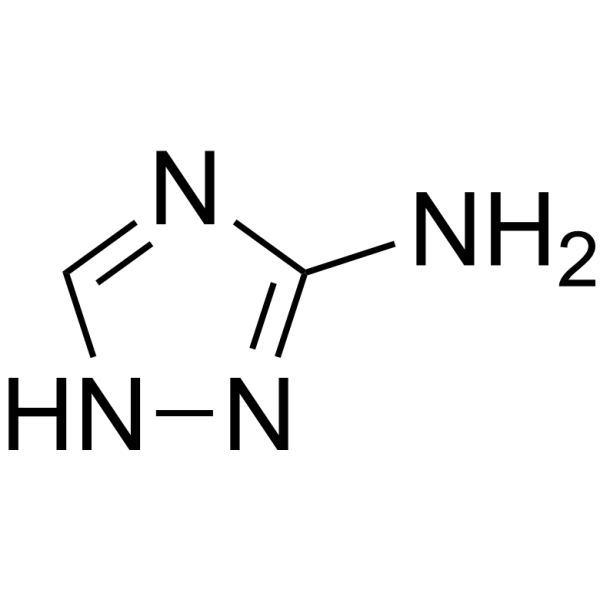
    1H-1,2,4-Triazol-3-amine consists of a triazole ring system and an amino group attached to carbon atom 3. The compound has potential applications in various fields such as medicinal chemistry, agrochemicals and material science. In medicinal chemistry, 1H-1,2,4-Triazol-3-amine is used as a starting material for the synthesis of pharmaceutical compounds such as antifungal agents, anticancer agents, and enzyme inhibitors associated with cardiovascular disease. In agrochemicals, it can be used as a raw material for the synthesis of herbicides, fungicides and insecticides. Furthermore, 1H-1,2,4-Triazol-3-amine is used as a ligand in coordination chemistry and as a precursor for the production of new functional materials such as polymers and metal-organic frameworks.
    1H-1,2,4-Triazol-3-amine
  • HY-W090309

    Biochemical Assay Reagents Others
    Monosodium 2-sulfoterephthalate is an oxygen-containing organic linker and coordination ligand. Under hydrothermal conditions, Monosodium 2-sulfoterephthalate binds to Cr 3+ ions via deprotonated carboxyl groups to form the MIL-101 (Cr)-SO3H metal-organic framework. Monosodium 2-sulfoterephthalate also adopts monodentate and hexadentate linkage modes with Er III ions, respectively, thereby forming monomeric and polymeric Er III compounds .
    Monosodium 2-sulfoterephthalate
  • HY-Y0455

    2-Amino-6-picoline

    Biochemical Assay Reagents Others
    6-Methyl-2-pyridinamine (2-Amino-6-picoline) is a metal coordination ligand. 6-Methyl-2-pyridinamine is promising for research of is promising for research of metal-organic frameworks (MOFs) and functional coordination polymers .
    6-Methyl-2-pyridinamine
  • HY-19094

    Angiotensin Receptor Cardiovascular Disease
    DuP-532 is an angiotensin type 1 receptor antagonist with potential activity in the suppression of hypertension and heart failure. DuP-532 can react with a range of aryl and heteroaryl halides to form perfluoroalkyl(hetero)arenes in moderate to high yields. Computational studies of DuP-532 suggest that coordination of a second phenyl ring ligand may lower the energy barrier for decarboxylation of perfluorocarboxylates, thereby promoting the perfluoroalkylation reaction .
    DuP-532
  • HY-B1306R

    p-Aminohippuric acid (Standard)

    Reference Standards Biochemical Assay Reagents Neurological Disease Metabolic Disease
    4-Aminohippuric acid (p-Aminohippuric acid) (Standard) is the analytical standard of 4-Aminohippuric acid (HY-B1306). This product is intended for research and analytical applications. 4-Aminohippuric acid (p-Aminohippuric acid) is a coordination ligand for metal ions (such as Cu 2+, Fe 3+, Hg 2+) and a functionalization reagent for nanomaterials. 4-Aminohippuric acid can coordinate with metal ions or modify the surface of materials such as carbon nanotubes and gold nanoparticles through amino and carboxyl groups. 4-Aminohippuric acid can form stable complexes with metal ions or participate in the synthesis of nanomaterials as a reducing agent/stabilizer, enriching metal ions or giving nanoparticles peroxidase-mimicking activity. 4-Aminohippuric acid can be used to construct highly sensitive electrochemical sensors or colorimetric sensors to detect and quantitatively analyze heavy metal ions such as copper, iron, and mercury in environmental water samples and biological samples. 4-Aminohippuric acid may also be a biomarker for attention-deficit/hyperactivity disorder (ADHD) .
    4-Aminohippuric acid (Standard)
  • HY-W124377

    3,3'-Dipyridyl

    MOFs Drug Intermediate Others
    3,3'-Bipyridine (3,3'-Dipyridyl) is a ligand used in coordination chemistry. 3,3'-Bipyridine can combine with BINOL to facilitate catalytic reactions .
    3,3'-Bipyridine
  • HY-B1306S

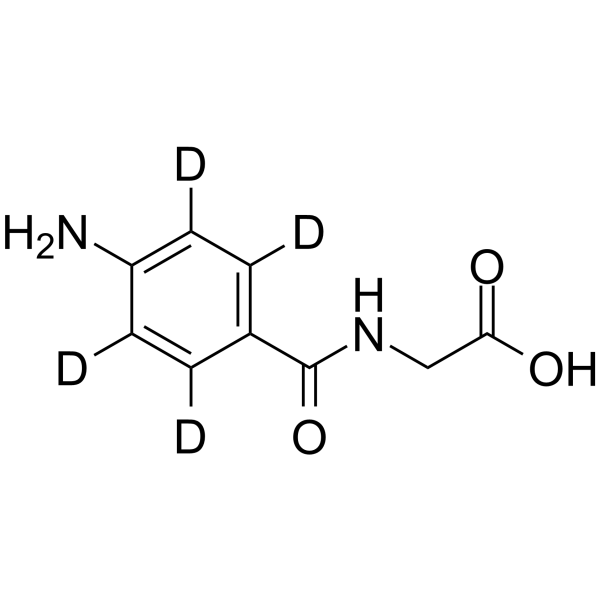
    p-Aminohippuric acid-d4

    Biochemical Assay Reagents Neurological Disease Metabolic Disease
    4-Aminohippuric acid-d4 (p-Aminohippuric acid-d4) is the deuterium labeled 4-Aminohippuric acid (HY-B1306). 4-Aminohippuric acid (p-Aminohippuric acid) is a coordination ligand for metal ions (such as Cu 2+, Fe 3+, Hg 2+) and a functionalization reagent for nanomaterials. 4-Aminohippuric acid can coordinate with metal ions or modify the surface of materials such as carbon nanotubes and gold nanoparticles through amino and carboxyl groups. 4-Aminohippuric acid can form stable complexes with metal ions or participate in the synthesis of nanomaterials as a reducing agent/stabilizer, enriching metal ions or giving nanoparticles peroxidase-mimicking activity. 4-Aminohippuric acid can be used to construct highly sensitive electrochemical sensors or colorimetric sensors to detect and quantitatively analyze heavy metal ions such as copper, iron, and mercury in environmental water samples and biological samples. 4-Aminohippuric acid may also be a biomarker for attention-deficit/hyperactivity disorder (ADHD) .
    4-Aminohippuric acid-d4
  • HY-176858

    Biochemical Assay Reagents Others
    N,N'-Bis(3-aminopropyl)oxamide is an oxamide-bridged ligand compound typically utilized as a biocuring agent, a chemical building block for bio-based curing agents, and a coordination ligand in organometallic and supramolecular chemistry .
    N,N'-Bis(3-aminopropyl)oxamide
  • HY-W013327

    Biochemical Assay Reagents Others
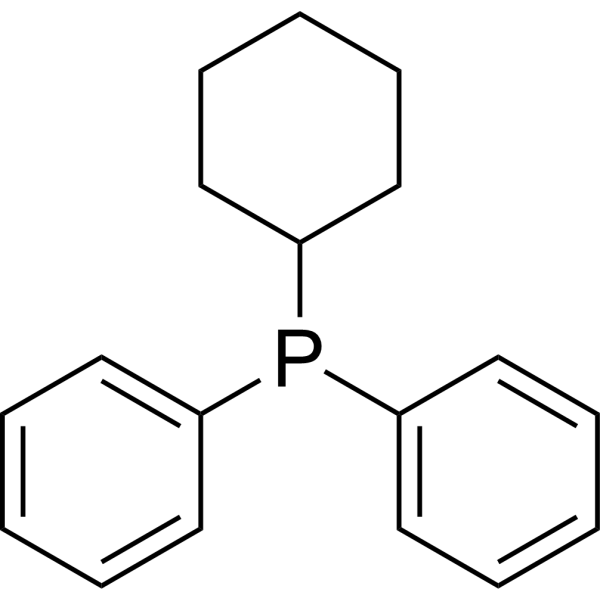
    Cyclohexyldiphenylphosphine is a chemical compound commonly used as a ligand in coordination chemistry and organometallic synthesis. Cyclohexyldiphenylphosphine facilitates various catalytic reactions through acting as a stabilizing agent. Cyclohexyldiphenylphosphine is a ligand for some nickel(II) complexes. Cyclohexyldiphenylphosphine exhibits anti-cancer properties against SNO cancer cells when formed complex with silver .
    Cyclohexyldiphenylphosphine
  • HY-W007997

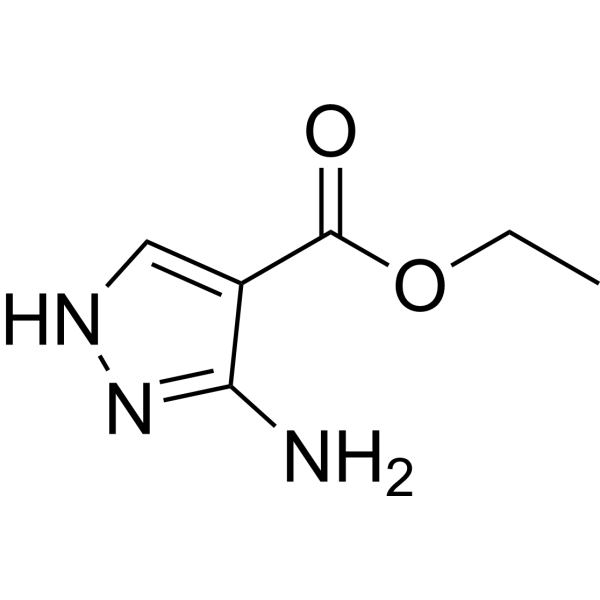
    3-Amino-4-ethoxycarbonylpyrazole

    Biochemical Assay Reagents Others
    Ethyl 3-amino-1H-pyrazole-4-carboxylate (3-Amino-4-ethoxycarbonylpyrazole) is a pyrazole organic compound containing an amino group and an ethoxycarbonyl group. Ethyl 3-amino-1H-pyrazole-4-carboxylate can be used as a ligand in the synthesis of metal coordination compounds .
    Ethyl 3-amino-1H-pyrazole-4-carboxylate
  • HY-172152

    FKBP Calcium Channel Neurological Disease
    MP-010 is a FKBP12 ligand that regulates cytosolic calcium by stabilizing RyR channel activity. MP-010 promotes functional improvement in SOD1 G93A amyotrophic lateral sclerosis (ALS) mice, as evidenced by improved motor coordination, increased integrity of neuromuscular junctions, and significantly enhanced survival of spinal motor neurons. MP-010 can be used for research in the field of neurological diseases .
    MP-010
  • HY-W027592R

    Biochemical Assay Reagents Reference Standards Others
    1H-1,2,4-Triazol-3-amine (Standard) is the analytical standard of 1H-1,2,4-Triazol-3-amine. This product is intended for research and analytical applications. 1H-1,2,4-Triazol-3-amine consists of a triazole ring system and an amino group attached to carbon atom 3. The compound has potential applications in various fields such as medicinal chemistry, agrochemicals and material science. In medicinal chemistry, 1H-1,2,4-Triazol-3-amine is used as a starting material for the synthesis of pharmaceutical compounds such as antifungal agents, anticancer agents, and enzyme inhibitors associated with cardiovascular disease. In agrochemicals, it can be used as a raw material for the synthesis of herbicides, fungicides and insecticides. Furthermore, 1H-1,2,4-Triazol-3-amine is used as a ligand in coordination chemistry and as a precursor for the production of new functional materials such as polymers and metal-organic frameworks.
    1H-1,2,4-Triazol-3-amine (Standard)
  • HY-W075796

    Environmental Pollutants Drug Intermediate Others
    Copper (I) thiocyanate is a monovalent copper pseudohalide that exists in two crystalline forms, α and β, both containing bridging thiocyanate groups. Copper (I) thiocyanate can form coordination complexes with ligands such as triphenylphosphine and pyridine .
    Copper(I) thiocyanate
  • HY-185401

    MOFs Cancer
    ATSM is a ligand that forms complexes with Cu 2+, Ni 2+, Zn 2+, and Fe 2+, with the highest affinity for Cu 2+. ATSM forms Cu-ATSM with copper, which is used for PET imaging to detect tumor hypoxia. ATSM is commonly used in coordination chemistry and radiopharmaceutical research .
    ATSM
  • HY-W007997R

    3-Amino-4-ethoxycarbonylpyrazole (Standard)

    Biochemical Assay Reagents Reference Standards Others
    Ethyl 3-amino-1H-pyrazole-4-carboxylate (Standard) is the analytical standard of Ethyl 3-amino-1H-pyrazole-4-carboxylate (HY-W007997). This product is intended for research and analytical applications. Ethyl 3-amino-1H-pyrazole-4-carboxylate (3-Amino-4-ethoxycarbonylpyrazole) is a pyrazole organic compound containing an amino group and an ethoxycarbonyl group. Ethyl 3-amino-1H-pyrazole-4-carboxylate can be used as a ligand in the synthesis of metal coordination compounds .
    Ethyl 3-amino-1H-pyrazole-4-carboxylate (Standard)

Inquiry Online

Your information is safe with us. * Required Fields.

Salutation


Country or Region *

Applicant Name *


Organization Name *

Department *


Email Address *


Product Name *

Cat. No.


Requested quantity *

Phone Number *


Remarks

Inquiry Online

Inquiry Information

Product Name:
Cat. No.:
Quantity:
MCE Japan Authorized Agent:

