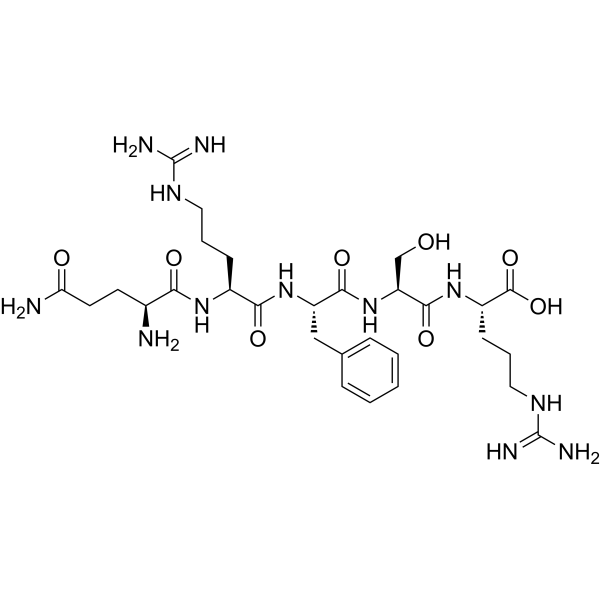
1. Search Result
Search Result
Results for "

endogenous opioid

" in MedChemExpress (MCE) Product Catalog:

35

Inhibitors & Agonists

28

Peptides

3

Natural
Products

Cat. No. Product Name Target Research Areas Chemical Structure
  • HY-P0288
    [Leu5]-Enkephalin
    2 Publications Verification

    Leu-enkephalin; Leucine enkephalin; Leucyl-enkephalin

    Opioid Receptor Endogenous Metabolite Neurological Disease
    [Leu5]-Enkephalin is a pentapeptide with morphine like properties. [Leu5]-Enkephalin is a five amino acid endogenous peptide that acts as an agonist at opioid receptors.
    [Leu5]-Enkephalin
  • HY-P1502
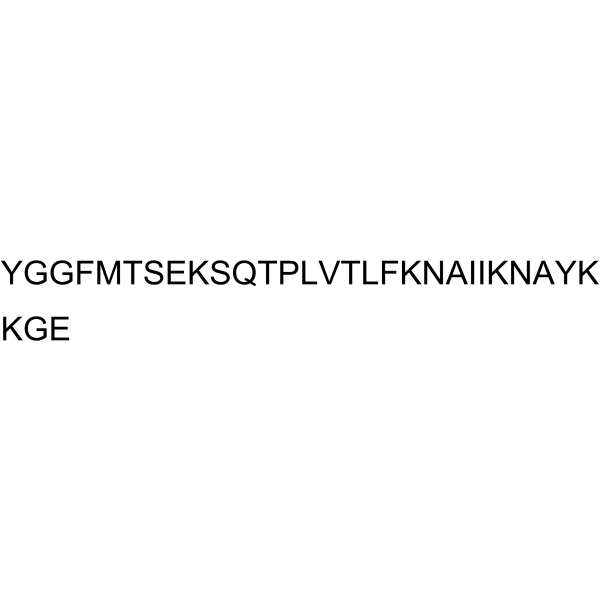
    β-Endorphin, human
    1 Publications Verification

    Opioid Receptor Neurological Disease
    β-Endorphin, human, a prominent endogenous peptide, existing in the hypophysis cerebri and hypothalamus, is an agonist of opioid receptor, with preferred affinity for μ-opioid receptor and δ-opioid receptor; β-Endorphin, human exhibits antinociception activity.
    β-Endorphin, human
  • HY-P1333
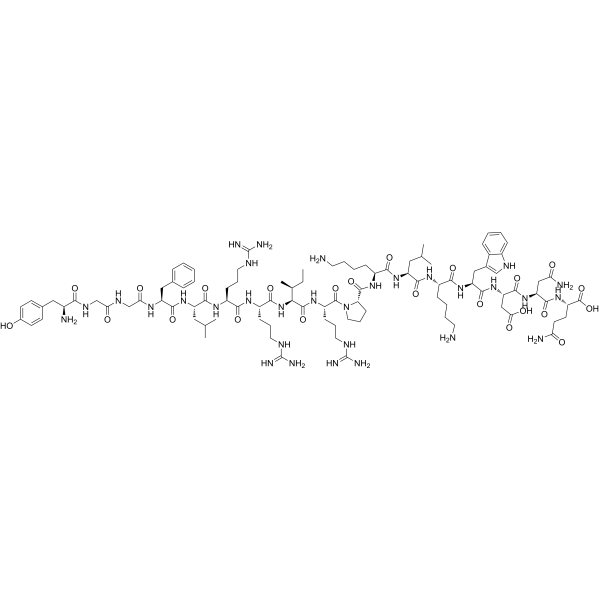
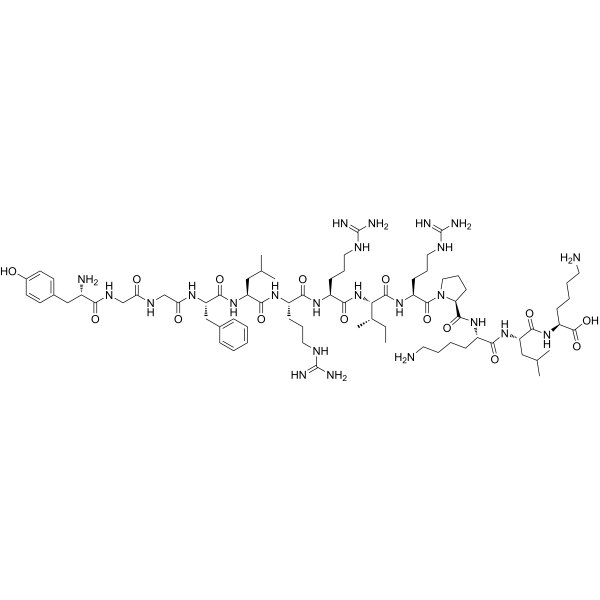
    Dynorphin A
    1 Publications Verification

    Opioid Receptor Apoptosis Caspase Endogenous Metabolite Neurological Disease
    Dynorphin A is an endogenous opioid peptide involved in inhibitory neurotransmission in the central nervous system (CNS). Dynorphin A is a highy potent kappa opioid receptor (KOR) agonist, and is also an agonist for other opioid receptors, such as mu (MOR) and delta (DOR). Dynorphin A can induce neuronal death, and can be used in the research of neurological disease .
    Dynorphin A
  • HY-107663A

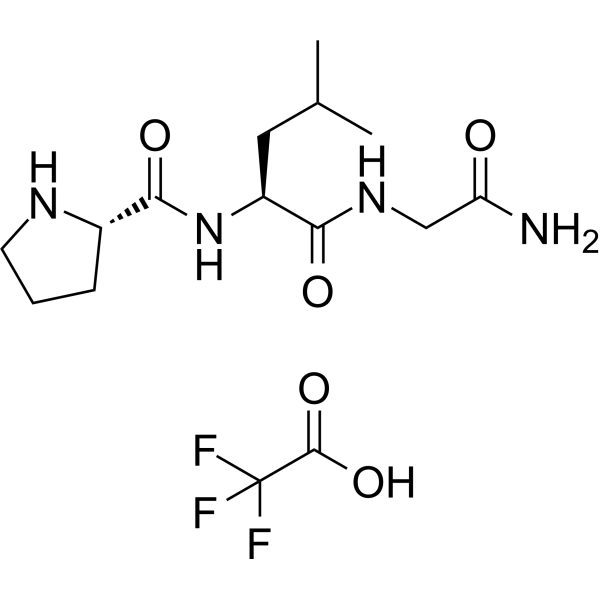
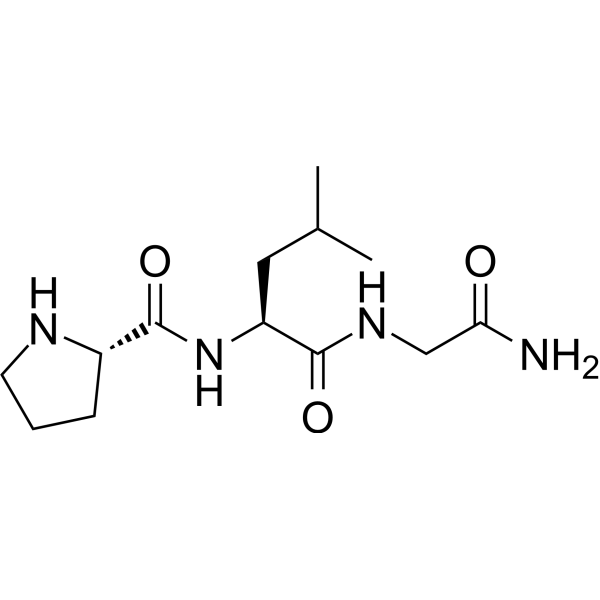
    Pro-Leu-Gly-NH2 TFA; Melanostatin TFA

    Dopamine Receptor Neurological Disease
    MIF-1 TFA (Melanostatin), an endogenous brain peptide, is a potent dopamine receptor allosteric modulator. MIF-1 TFA inhibits melanin formation. MIF-1 TFA blocks the effects of opioid receptor activation to modulate the analgesic effects. MIF-1 TFA accesses from the blood to the CNS by directly crossing the blood-brain barrier (BBB) .
    MIF-1 TFA
  • HY-W345510

    Neprilysin Neurological Disease
    Opiorphin, an opioid peptide, is a potent enkephalin-inactivating zinc ectopeptidases in human inhibitor. Opiorphin inhibits two enkephalin-catabolizing ectoenzymes, human neutral ecto-endopeptidase, hNEP (EC 3.4.24.11) with an IC50 value of 11 μM, and human ecto-aminopeptidase, hAP-N (EC 3.4.11.2). Opiorphin displays potent analgesic activity by activating endogenous opioid-dependent transmission .
    Opiorphin
  • HY-P0088

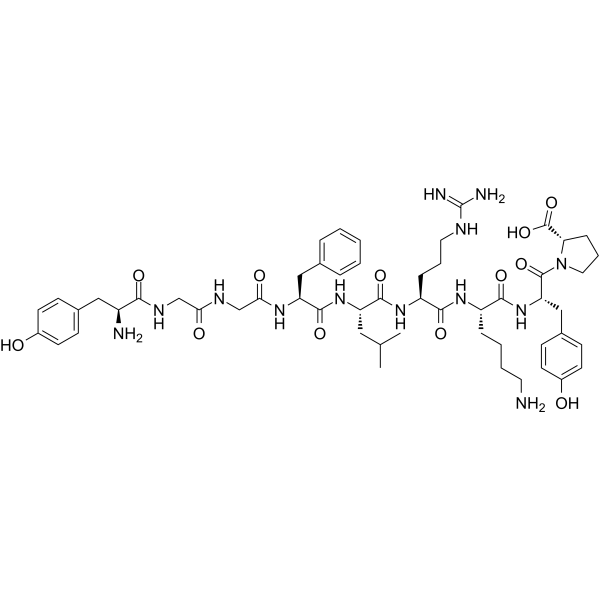
    Dynorphin A Porcine Fragment 1-13

    Opioid Receptor Others
    Porcine dynorphin A (1-13) is a potent, endogenous κ opioid receptor agonist and is antinociceptive at physiological concentrations.
    Porcine dynorphin A(1-13)
  • HY-P3513

    ERK MMP Neurological Disease
    β-Neo-Endorphin is an endogenous opioid peptide. β-Neo-Endorphin is a hypothalamic “big” Leu-enkephalin of porcine origin. β-Neo-Endorphin shows activation of the Erk1/2, MMP-2 and MMP-9 .
    β-Neo-Endorphin
  • HY-P1594A

    Opioid Receptor iGluR Neurological Disease
    Dynorphin A (1-10) (TFA), an endogenous opioid neuropeptide, binds to extracellular loop 2 of the κ-opioid receptor. Dynorphin A (1-10) (TFA) also blocks NMDA-activated current with an IC50 of 42.0 μM.
    Dynorphin A (1-10) TFA
  • HY-P1170

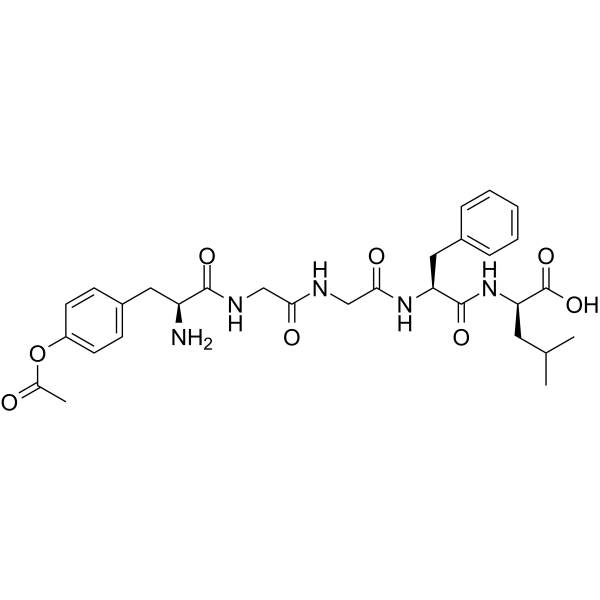
    Ac-L-Tyr-Gly-Gly-L-Phe-D-Leu-COOH

    Opioid Receptor Neurological Disease
    N-terminally acetylated Leu-enkephalin is the N-terminally acetylated form of Leu-enkephalin. Leu-enkephalin is a five amino acid endogenous peptide that acts as an agonist at opioid receptors.
    N-terminally acetylated Leu-enkephalin
  • HY-113316A

    Endogenous Metabolite Opioid Receptor Neurological Disease
    (±)-Salsolinol hydrochloride is the hydrochloride form of (±)-Salsolinol (HY-113316). (±)-Salsolinol hydrochloride is a Dopamine (HY-B0451)-derived endogenous metabolite. (±)-Salsolinol hydrochloride activates μ-opioid receptors (MORs), reduces GABAergic transmission, increases the excitability of dopamine (DA) neurons, and thus accelerates the sustained firing of neurons in the posterior ventral tegmental area (pVTA) .
    (±)-Salsolinol hydrochloride
  • HY-P1866A
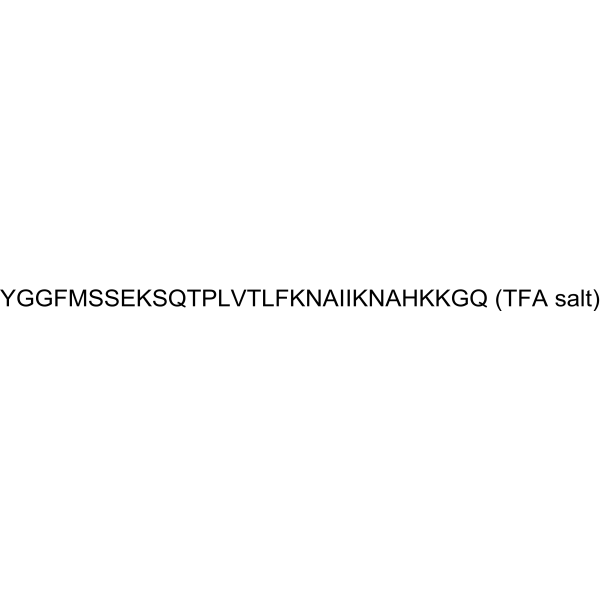
    β-Endorphin, equine TFA
    1 Publications Verification

    Opioid Receptor Neurological Disease
    β-Endorphin, equine TFA is an endogenous opioid peptide, which binds at high affinity to both μ/δ opioid receptors. β-Endorphin, equine TFA has analgesic properties .
    β-Endorphin, equine TFA
  • HY-107663

    Pro-Leu-Gly-NH2; Melanostatin

    Dopamine Receptor Neurological Disease
    MIF-1 (Melanostatin), an endogenous brain peptide, is a potent dopamine receptor allosteric modulator. MIF-1 inhibits melanin formation. MIF-1 blocks the effects of opioid receptor activation to modulate the analgesic effects. MIF-1 accesses from the blood to the CNS by directly crossing the blood-brain barrier (BBB) .
    MIF-1
  • HY-P1866

    Opioid Receptor Neurological Disease
    β-Endorphin, equine is an endogenous opioid peptide, which binds at high affinity to both μ/δ opioid receptors . Analgesic properties .
    β-Endorphin, equine
  • HY-P1594

    Opioid Receptor iGluR Neurological Disease
    Dynorphin A (1-10) an endogenous opioid neuropeptide, binds to extracellular loop 2 of the κ-opioid receptor. Dynorphin A (1-10) also blocks NMDA-activated current with an IC50 of 42.0 μM.
    Dynorphin A (1-10)
  • HY-W019787

    Opioid Receptor CXCR Neurological Disease
    BAM-12P, an endogenous opioid peptide, is a novel pro-Met-enkephalin. BAM-12P can activate human κ-opioid receptor (hKOR) with an EC50 of 101 nM and a pEC50 of 6.99. BAM-12P is a ligand for CXCR7 with an EC50 of 175 nM .
    BAM-12P
  • HY-105458

    Neprilysin Neurological Disease
    BL-2401 is an orally active enkephalinase inhibitor. BL-2401 exhibit antinociceptive and antidepressant-like activitiesin association with endogenous opioid systems. BL-2401 can be used for the research of neurological disease .
    BL-2401
  • HY-P2046

    Opioid Receptor Neurological Disease
    β-Endorphin (rat) is an endogenous opioid neuropeptide and peptide hormone. β-Endorphin (rat) has analgesic activity and also contributes to food intake in satiated rats. β-Endorphin (rat) can be used in the research of neurological diseases such as analgesia and drug addiction .
    β-Endorphin (rat)
  • HY-P3839

    Opioid Receptor Neurological Disease
    Nocistatin, a neuropeptide, is an endogenous ligand for the orphan opioid receptor-like receptor. Nocistatin is also a functional antagonist of neuropeptide nociceptin or orphanin FQ (Noc/OFQ). Nocistatin inhibits 5-HT release via a Gi/o proteinmediated pathway. Nocistatin blocks Nociceptin (Nociceptin)-induced allodynia and hyperalgesia .
    Nocistatin
  • HY-P11642A

    Enteropeptidase Aminopeptidase Opioid Receptor ERK mTOR Androgen Receptor Inflammation/Immunology
    Sialorphin TFA is a neutral endopeptidase (NEP) and aminopeptidase N (APN) inhibitor that responds to androgen signals. Sialorphin TFA blocks the degradation of endogenous opioid peptides and interacts with μ-, δ-, κ-opioid receptors. Sialorphin TFA regulates the ERK/mTOR signaling pathway by inducing cell cycle arrest, enhancing ERK1/2 activity, and reducing the phosphorylation levels of mTOR, 4E-BP1, p70S6K; accordingly, Sialorphin TFA exhibits antiproliferative activity against colorectal cancer, glioma and prostate cancer cells without cytotoxicity. In addition, Sialorphin TFA also produces antinociceptive responses, regulates sexual behavior, relaxes corpus cavernosum smooth muscle, and alleviates experimental colitis. Sialorphin TFA is also a copper (II) ion-binding ligand. Sialorphin TFA has been used in mechanistic studies related to cancer, pain management and inflammatory bowel disease .
    Sialorphin TFA
  • HY-P5826

    Opioid Receptor Neurological Disease
    Dynorphin B (1-9) is a neuropeptide and N-terminal cleavage product of dynorphin B. The formation of dynorphin B (1-9) is blocked by N-ethylmaleimide (NEM), a non-selective inhibitor of cysteine peptidases .
    Dynorphin B (1-9)
  • HY-P1599

    Opioid Receptor Neurological Disease Cancer
    Valorphin is an endogenous hemoglobin β-chain (33-39) fragment with opioid analgesic activity, binds to rat mu-opioid receptor, with an IC50 of 14 nM; Valorphin also shows anti-tumor activity.
    Valorphin
  • HY-P5061

    Opioid Receptor Neurological Disease
    Dynorphin A (1-13) amide is an endogenous opioid peptide that antagonizes morphine-induced analgesia .
    Dynorphin A (1-13) amide
  • HY-P0318

    Opioid Receptor Angiotensin-converting Enzyme (ACE) Cardiovascular Disease
    Hemorphin-7 is a hemorphin peptide, an endogenous opioid peptide derived from the β-chain of hemoglobin. Hemorphin peptides exhibits antinociceptive and antihypertensive activities, activating opioid receptors and inhibiting angiotensin-converting enzyme (ACE).
    Hemorphin-7
  • HY-P1333A

    Opioid Receptor Apoptosis Caspase Endogenous Metabolite Neurological Disease
    Dynorphin A TFA is an endogenous opioid peptide involved in inhibitory neurotransmission in the central nervous system (CNS). Dynorphin A TFA is a highy potent kappa opioid receptor (KOR) agonist, and is also an agonist for other opioid receptors, such as mu (MOR) and delta (DOR). Dynorphin A TFA can induce neuronal death, and can be used in the research of neurological disease .
    Dynorphin A TFA
  • HY-P1502F

    Opioid Receptor Neurological Disease
    Biocytin-β-endorphin, human is abiotinylated β-Endorphin, human (HY-P1502). β-Endorphin, human, a prominent endogenous peptide, existing in the hypophysis cerebri and hypothalamus, is an agonist of opioid receptor, with preferred affinity for μ-opioid receptor and δ-opioid receptor; β-Endorphin, human exhibits antinociception activity.
    Biocytin-β-endorphin, human
  • HY-P3517

    β-EP (6-31), human

    Opioid Receptor Neurological Disease Endocrinology
    β-Endorphin, an endogenous opioid neuropeptide, is an opioid receptor agonist. β-Endorphin binds preferentially to μ-opioid receptors and is produced in certain neurons of the central and peripheral nervous system and is one of three endorphins produced in humans. β-Endorphin can be used to reduce stress and maintain homeostasis in the body and is involved in neurological pain perception regulation .
    β-Endorphin (6-31), human
  • HY-P1819

    Opioid Receptor Neurological Disease
    N-Acetyl-α-Endorphin is an acetylated α-Endorphin at N-terminal. α-Endorphin is an endogenous opioid peptide.
    N-Acetyl-α-Endorphin
  • HY-P1625

    Dynorphin A ethylamide (1-9)

    Opioid Receptor Neurological Disease
    Daeatal (Dynorphin A ethylamide (1-9)) is an ethylamine-modified dynorphin fragment that can be used in the study of analgesia, addiction, depression, etc. Dynorphin A is an endogenous opioid peptide involved in inhibitory neurotransmission in the central nervous system (CNS). Dynorphin A is a highy potent kappa opioid receptor (KOR) agonist, and is also an agonist for other opioid receptors, such as mu (MOR) and delta (DOR). Dynorphin A can induce neuronal death, and can be used in the research of neurological disease .
    Daeatal
  • HY-P1863

    Opioid Receptor Neurological Disease
    α-Neoendorphin (1-8) is a 8-amino acid peptide derived from the N-terminal of α-Neoendorphin. α-Neoendorphin is an endogenous opioid peptide.
    α-Neoendorphin (1-8)
  • HY-P0288A

    Opioid Receptor Endogenous Metabolite Neurological Disease
    [Leu5]-Enkephalin TFA is a pentapeptide with morphine like properties. [Leu5]-Enkephalin TFA is a five amino acid endogenous peptide that acts as an agonist at opioid receptors.
    [Leu5]-Enkephalin TFA
  • HY-P3513A

    ERK MMP Neurological Disease
    β-Neo-Endorphin acetate is an endogenous opioid peptide. β-Neo-Endorphin acetate is a hypothalamic "big" Leu-enkephalin of porcine origin. β-Neo-Endorphin acetate shows activation of the Erk1/2, MMP-2 and MMP-9 .
    β-Neo-Endorphin acetate
  • HY-129668

    Adrenergic Receptor Neurological Disease
    Bremazocine is a potent opioid kappa receptor agonist with analgesic activity. Bremazocine induces peripheral analgesia by releasing endogenous norepinephrine. The analgesic effect of bremazocine is associated with interaction with adenosine receptors. Bremazocine produces a dose-dependent peripheral analgesia after topical application. The effect of bremazocine is affected by nonselective α(2) adrenaline receptor antagonists, suggesting that it acts through a norepinephrine pathway .
    Bremazocine
  • HY-W013353

    Endogenous Metabolite Opioid Receptor Neurological Disease
    (RS)-Salsolinol hydrobromide is the hydrobromide form of (±)-Salsolinol (HY-113316). (RS)-Salsolinol hydrobromide is a Dopamine (HY-B0451)-derived endogenous metabolite. (RS)-Salsolinol hydrobromide activates μ-opioid receptors (MORs), reduces GABAergic transmission, increases the excitability of dopamine (DA) neurons, and thus accelerates the sustained firing of neurons in the posterior ventral tegmental area (pVTA) .
    (RS)-Salsolinol hydrobromide
  • HY-W099633

    Amino Acid Derivatives Neurological Disease
    2-Aminodecanoic acid is a lipophilic α-amino acid with an aliphatic side chain of 10 carbon atoms. 2-Aminodecanoic acid modifies the N-terminus of endogenous opioid peptide endomorphin-1 to enhance metabolic stability and membrane permeability. 2-Aminodecanoic acid can be used for the research of neuropathic pain .
    2-Aminodecanoic acid
  • HY-P11642

    ERK Androgen Receptor Opioid Receptor Enteropeptidase mTOR Aminopeptidase Neurological Disease Inflammation/Immunology Cancer
    Sialorphin is a neutral endopeptidase (NEP) and aminopeptidase N (APN) inhibitor that responds to androgen signals. Sialorphin blocks the degradation of endogenous opioid peptides and interacts with μ-, δ-, κ-opioid receptors. Sialorphin regulates the ERK/mTOR signaling pathway by inducing cell cycle arrest, enhancing ERK1/2 activity, and reducing the phosphorylation levels of mTOR, 4E-BP1, p70S6K; accordingly, Sialorphin exhibits antiproliferative activity against colorectal cancer, glioma and prostate cancer cells without cytotoxicity. In addition, Sialorphin also produces antinociceptive responses, regulates sexual behavior, relaxes corpus cavernosum smooth muscle, and alleviates experimental colitis. Sialorphin is also a copper (II) ion-binding ligand. Sialorphin has been used in mechanistic studies related to cancer, pain management and inflammatory bowel disease .
    Sialorphin

Inquiry Online

Your information is safe with us. * Required Fields.

Salutation


Country or Region *

Applicant Name *


Organization Name *

Department *


Email Address *


Product Name *

Cat. No.


Requested quantity *

Phone Number *


Remarks

Inquiry Online

Inquiry Information

Product Name:
Cat. No.:
Quantity:
MCE Japan Authorized Agent: