
26 Results for "

environmental chemicals

" in MedChemExpress (MCE) Product Catalog:
Products (26)

26 Results for "environmental chemicals" in MCE Product Catalog:

2
2 Cited Publications
Cat. No.: HY-W002105
CAS No.: 3238-40-2
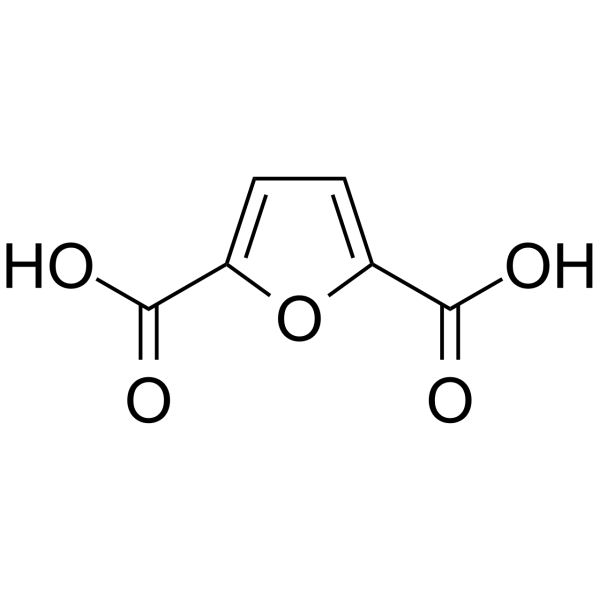
2,5-Furandicarboxylic acid is an endogenous metabolite that can be detected in human urine. 2,5-Furandicarboxylic acid serves as an environmentally friendly substitute for terephthalic acid in the production of polyesters. 2,5-Furandicarboxylic acid can be used as the raw material for various chemical intermediates to synthesize polymers, polyurethanes, thermosetting resins, and plasticizers .
loading...
    loading...
1
1 Cited Publications
Cat. No.: HY-B2243
CAS No.: 7558-80-7
Synonyms: Sodium phosphate monobasic; Monosodium dihydrogen orthophosphate; Monosodium phosphate
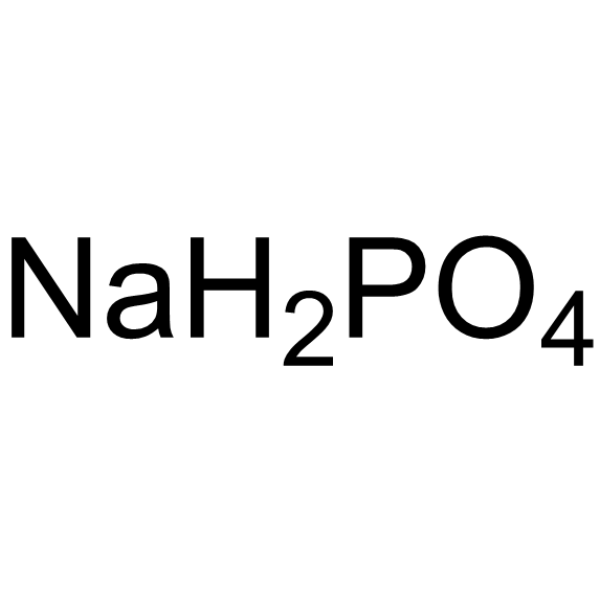
Dihydrogen monosodium phosphate (Monosodium phosphate) is an inorganic salt compound commonly used in industry and laboratories. It can be used as a buffer, nutritional supplement, cleaning agent, etc., and plays a role in certain metal processing, pharmaceutical and chemical industries. In addition, Dihydrogen monosodium phosphate can also be used in the field of water treatment and environmental protection, for example as a purifying agent or precipitating agent for solutions.
loading...
    loading...
Cat. No.: HY-W051271
CAS No.: 13463-67-7
Synonyms: Titanium dioxide
Titanium(IV) oxide is a photosensitizer and photocatalyst. Titanium(IV) oxide can be used as a pharmaceutical excipient such as a flow aid, coating agent, sunscreen, colorant, etc. Pharmaceutical excipients or pharmaceutical excipients refer to other chemical substances used in the pharmaceutical process other than the drug ingredients. Pharmaceutical excipients generally refer to inactive ingredients in pharmaceutical preparations that can improve the stability, solubility and processability of pharmaceutical preparations. Pharmaceutical excipients also affect the absorption, distribution, metabolism and elimination (ADME) process of co-administered drugs. Titanium(IV) oxide can use light energy to generate electron-hole pairs to degrade pollutants. Photons excite electrons in TiO2 to generate active oxygen species (such as ·OH and ·O2 -), thereby oxidizing and mineralizing pollutants such as organic compounds and heavy metals. TiO2 can be used in the research of environmental remediation fields such as water treatment, air purification and self-cleaning materials .
loading...
    loading...
Cat. No.: HY-W115727B
CAS No.: 9003-05-8
Synonyms: PAM,Anion,Mw 18 million
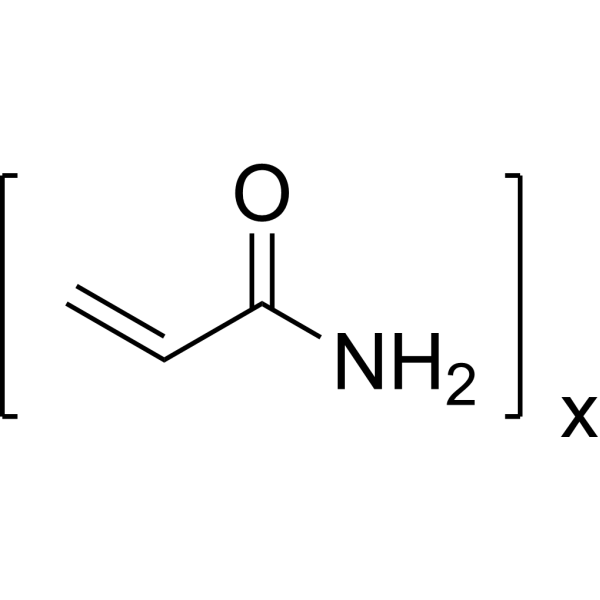
Polyacrylamide,Anion,Mw 18 million (PAM,Anion,Mw 18 million) is a multifunctional high molecular weight anionic polyacrylamide copolymer. The anionic properties of Polyacrylamide,Anion,Mw 18 million enable it to be used as a flocculant to achieve charge neutralization and aggregation, while its high molecular weight properties provide viscoelastic properties for fluid applications. Polyacrylamide series materials can maintain enzyme activity in enzyme immobilization, act as drug carriers to achieve controlled release, serve as smart materials responding to temperature/pH stimuli, and be used for in vitro toxin adsorption and soft tissue filling through mechanisms such as physical entrapment, covalent binding or chemical crosslinking. Polyacrylamide finds applications in biomedical engineering, environmental management and industrial applications .
loading...
    loading...
Cat. No.: HY-W115727E
CAS No.: 9003-05-8
Synonyms: PAM,average Mn 150000
Polyacrylamide, average Mn 150000 (PAM, average Mn 150000) is a versatile, high-molecular-weight polyacrylamide copolymer. Polyacrylamide series materials can maintain enzyme activity in enzyme immobilization, act as drug carriers to achieve controlled release, serve as smart materials responding to temperature/pH stimuli, and be used for in vitro toxin adsorption and soft tissue filling through mechanisms such as physical entrapment, covalent binding or chemical crosslinking. Polyacrylamide finds applications in biomedical engineering, environmental management and industrial applications .
loading...
    loading...
Cat. No.: HY-W115727A
CAS No.: 9003-05-8
Synonyms: PAM,Anion,Mw 14-16 million
Polyacrylamide, Anion, Mw 14-16 million is a multifunctional high molecular weight anionic polyacrylamide copolymer. The anionic properties of Polyacrylamide, Anion, Mw 14-16 million enable it to be used as a flocculant to achieve charge neutralization and aggregation, while its high molecular weight properties provide viscoelastic properties for fluid applications. Polyacrylamide series materials can maintain enzyme activity in enzyme immobilization, achieve controlled release as a drug carrier, respond to temperature/pH stimulation as a smart material, and can also be used for in vitro toxin adsorption and soft tissue filling through mechanisms such as physical embedding, covalent bonding or chemical cross-linking. Polyacrylamide can be used in biomedical engineering, environmental management and industrial applications .
loading...
    loading...
Cat. No.: HY-Y1840
CAS No.: 150-19-6
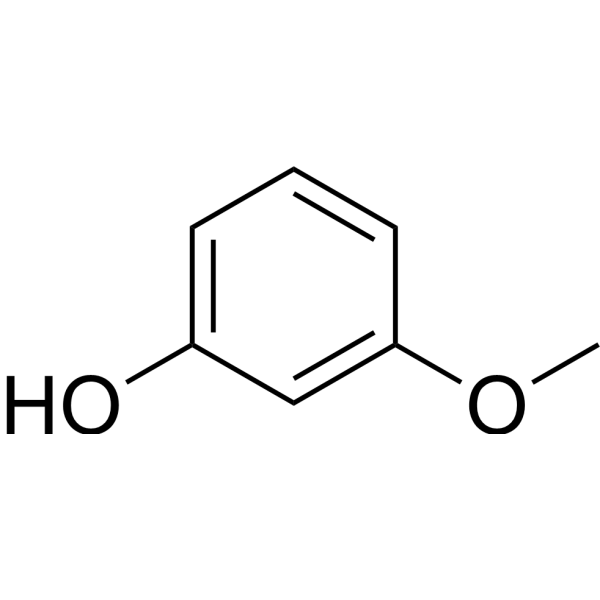
3-Methoxyphenol is an environmental pollutant. 3-Methoxyphenol occurs in the aroma components of dried bonito. 3-Methoxyphenol potentially enhances GABA-evoked responses of α1β1 GABAA receptors by increasing the affinity of GABA binding sites. 3-Methoxyphenol is used as a flavoring substance in food and animal feed. 3-Methoxyphenol prolongs pentobarbital-induced sleeping time and reduces elevated plus maze behavior .
loading...
    loading...
Cat. No.: HY-W115727D
CAS No.: 9003-05-8
Synonyms: PAM,average Mn 40000
Polyacrylamide (PAM), average Mn 40000 is a versatile, high-molecular-weight polyacrylamide copolymer. Polyacrylamide series materials can maintain enzyme activity in enzyme immobilization, act as drug carriers to achieve controlled release, serve as smart materials responding to temperature/pH stimuli, and be used for in vitro toxin adsorption and soft tissue filling through mechanisms such as physical entrapment, covalent binding or chemical crosslinking. Polyacrylamide finds applications in biomedical engineering, environmental management and industrial applications .
loading...
    loading...
Cat. No.: HY-W115727C
CAS No.: 9003-05-8
Synonyms: Acrylamide polymer,Nonionic,Mw 5-6 million
Polyacrylamide (Acrylamide polymer),Nonionic,Mw 5-6 million is a multifunctional, high-molecular-weight nonionic polyacrylamide copolymer. Polyacrylamide-based materials can maintain enzyme activity in enzyme immobilization, act as drug carriers for controlled release, function as smart materials responsive to temperature/pH stimuli, and be applied in in vitro toxin adsorption and soft tissue filling, through action mechanisms such as physical entrapment, covalent binding or chemical crosslinking. Polyacrylamide finds applications in biomedical engineering, environmental management and industrial applications .
loading...
    loading...
Cat. No.: HY-W762060
CAS No.: 9006-42-2
Target:  

Fungal

Research Areas:  

Infection

Metiram is a polymeric dithiocarbamate pesticide active as a fungicide. Metiram is widely used to protect crops such as tomatoes, potatoes, apples, grapevines, etc. Human and environmental exposure from the representative use of Metiram on potatoes is considered non-negligible. Metiram is considered necessary in the control of serious threats to plant health that cannot be suppressed by other available means, including non-chemical methods .
loading...
    loading...
Cat. No.: HY-W088320
CAS No.: 122-37-2
Synonyms: p-Anilinophenol; 4-Hydroxy-DPA; 4-HDPA
Target:  

Drug Intermediate

Research Areas:  

Inflammation/Immunology

4-Hydroxydiphenylamine (p-Anilinophenol; 4-Hydroxy-DPA; 4-HDPA) is an aromatic amine organic compound. 4-Hydroxydiphenylamine exhibits antioxidant activity, and also acts as a catalyst or intermediate in certain chemical reactions to participate in the synthesis of other compounds. 4-Hydroxydiphenylamine can be used in research in the fields of environmental science and toxicology .
loading...
    loading...
Cat. No.: HY-W127721
CAS No.: 33308-41-7
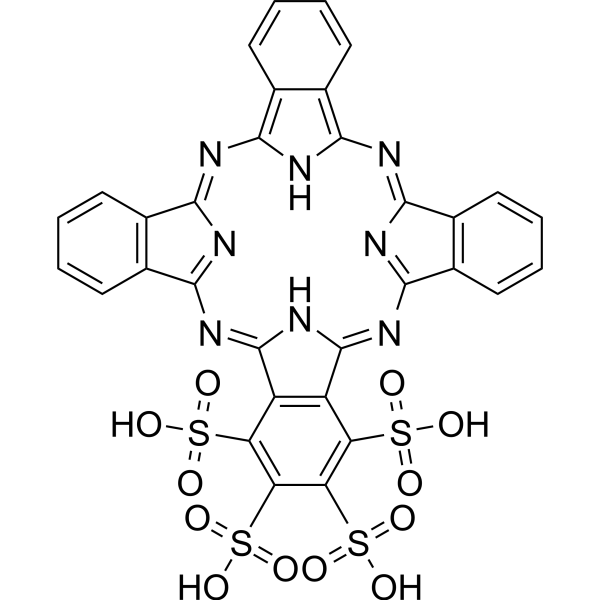
Synonyms: Phthalocyanine tetrasulfonic acid
Tetrasulfophthalocyanine is an organic compound commonly used as dyes, photosensitive materials and catalysts. It can be used in certain organic batteries, solar cells, and laser printing, and is widely used in chemical analysis, biotechnology, and environmental monitoring. In addition, this compound is also used as a substrate or catalyst in certain biochemical reactions.
loading...
    loading...
Cat. No.: HY-165055
CAS No.: 2534-97-6
Synonyms: 1-Olein-2-palmitin-3-linolein; TG(18:1/16:0/18:2); 18:1/16:0/18:2-TG
Target:  

Others

Research Areas:  

Others

1-Oleoyl-2-palmitoyl-3-linoleoyl-rac-glycerol (1-Olein-2-palmitin-3-linolein) is a compound mentioned in the chemical analysis of triglycerides and diacylglycerols in bovine milk fat. It was identified by a specific chromatography-mass spectrometry technique, which is environmentally friendly and efficient.
loading...
    loading...
Cat. No.: HY-130406
CAS No.: 177406-68-7
Target:  

Fungal

Research Areas:  

Infection

Benthiavalicarb isopropyl is a fungicide with specific activity against downy mildew and blight. Benthiavalicarb isopropyl is evaluated for use where necessary to control a serious threat to plant health that cannot be treated by other methods, including non-chemical methods. The use of Benthiavalicarb isopropyl can be considered representative of field applications in potatoes. Environmental and human exposures of Benthiavalicarb isopropyl are considered to be negligible .
loading...
    loading...
Cat. No.: HY-Y1840R
CAS No.: 150-19-6
3-Methoxyphenol (Standard) is the analytical standard of 3-Methoxyphenol (HY-Y1840). This product is intended for research and analytical applications. 3-Methoxyphenol is an environmental pollutant. 3-Methoxyphenol occurs in the aroma components of dried bonito. 3-Methoxyphenol potentially enhances GABA-evoked responses of α1β1 GABAA receptors by increasing the affinity of GABA binding sites. 3-Methoxyphenol is used as a flavoring substance in food and animal feed. 3-Methoxyphenol prolongs pentobarbital-induced sleeping time and reduces elevated plus maze behavior .
loading...
    loading...
Cat. No.: HY-Y1840S
CAS No.: 104714-88-7
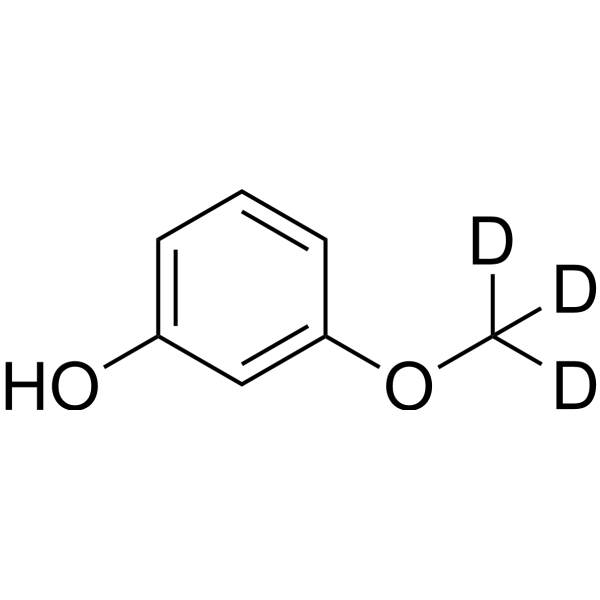
3-Methoxyphenol-d3 is the d3-labeled 3-Methoxyphenol (HY-Y1840). 3-Methoxyphenol is an environmental pollutant. 3-Methoxyphenol occurs in the aroma components of dried bonito. 3-Methoxyphenol potentially enhances GABA-evoked responses of α1β1 GABAA receptors by increasing the affinity of GABA binding sites. 3-Methoxyphenol is used as a flavoring substance in food and animal feed. 3-Methoxyphenol prolongs pentobarbital-induced sleeping time and reduces elevated plus maze behavior .
loading...
    loading...
Cat. No.: HY-103300
CAS No.: 1186195-63-0
Target:  

Endogenous Metabolite

Research Areas:  

Infection

NPE-caged-proton is a reagent that releases protons under UV light and has the activity of activating the fusion protein GP64 under weak acidic conditions. NPE-caged-proton can promote the binding of enveloped viruses to liposome membranes with acidic phospholipids in an environment of pH 4.0 to 5.5, thereby initiating membrane fusion. The ultraviolet unblocking effect of NPE-caged-proton can lower the environmental pH, thereby triggering the process of viral membrane fusion. When studying the interaction between viruses and cell membranes, NPE-caged-proton provides a valuable tool for revealing the subtle behaviors of viruses in different chemical and biochemical environments .
loading...
    loading...
Cat. No.: HY-184794
CAS No.: 67651-34-7
Target:  

Androgen Receptor

Research Areas:  

Metabolic Disease

2,3,4,5-Tetrachloro-4′-biphenylol is an Androgen receptor ligand with a pIC50 value of 4.79. 2,3,4,5-Tetrachloro-4′-biphenylol is an environmental chemical that exerts endocrine-disrupting activity .
loading...
    loading...
Cat. No.: HY-L247
296 compounds

Environmental pollution refers to the process where human activities release harmful chemicals or energy (such as industrial waste, pesticides, and plastic particles) into the natural environment at a rate that exceeds the ecosystem's capacity for self-purification, leading to deterioration in the composition or state of the atmosphere, water bodies, and soil. Environmental pollution is not only a direct threat to biodiversity but also ultimately impacts human health through the bioaccumulation effect of the food chain. Therefore, the accurate identification and dynamic monitoring of pollutants constitute the scientific cornerstone for formulating environmental policies, assessing ecological risks, and promoting green chemistry transformation.

MCE features a collection of 296 environmental pollutants, covering categories such as air pollutants, water pollutants, and pesticides, for research in the field of environmental chemistry.

Cat. No.: HY-401563
CAS No.: 676116-04-4
Research Areas:  

Neurological Disease

5-HT2A antagonist 4 methanesulfonate (Example 29) is a dopamine D2 receptor and serotonin 5HT2A receptor antagonist. 5-HT2A antagonist 4 methanesulfonate can be used for the study of central nervous system diseases .
loading...
    loading...

