36 Results for "

epididymal

" in MedChemExpress (MCE) Product Catalog:
Products (36)

36 Results for "epididymal" in MCE Product Catalog:

6
6 Cited Publications
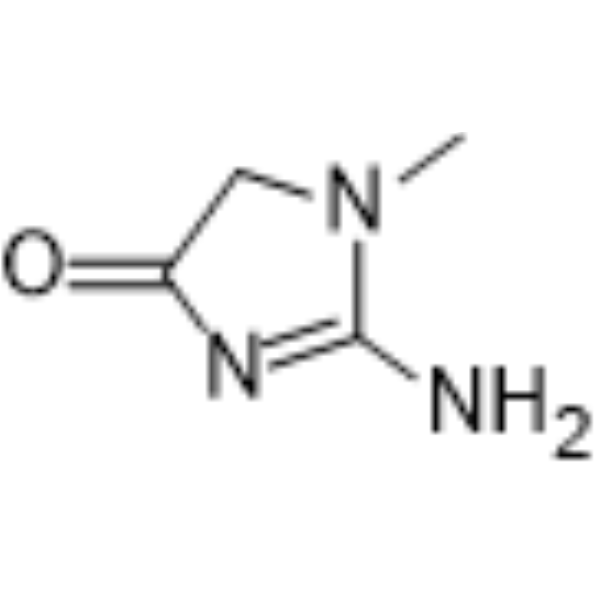
Cat. No.: HY-B0504
CAS No.: 60-27-5
Synonyms: NSC13123
Creatinine (NSC13123) is an orally active, blood-brain barrier-permeable modulator of GABAA and NMDA receptors, with activities of antioxidation and metabolic regulation. Creatinine is generated via non-enzymatic conversion of creatine and phosphocreatine in muscle. Creatinine serum levels correlate with muscle mass, glomerular filtration rate, and extrarenal clearance, serving as an evaluation biomarker for renal function, muscle mass, and clinical outcomes, and used for perioperative renal risk assessment. In addition, Creatinine can induce specific Cryptococcus species to produce creatinine deiminase and act as their nitrogen source, while it can be secreted via renal tubules. Creatinine is widely used in research related to various diseases such as neurodegenerative diseases, psychiatric disorders, acute kidney injury, chronic kidney disease, and renal failure .
loading...
    loading...
1
1 Cited Publications
Cat. No.: HY-P71432
Purity:  ≥ 95%, as determined by reducing SDS-PAGE.
Synonyms: WFDC2; WAP Four-Disulfide Core Domain 2; WAP5; HE4; WAP Four-Disulfide Core Domain Protein 2; DJ461P17.6; EDDM4; Major Epididymis-Specific Protein E4; Putative Protease Inhibitor WAP5; epididymal Secretory Protein E4; Human Epididymis Protein 4; Epididyma
Species:  
Human
Source:  
HEK293
loading...
    loading...
Cat. No.: HY-W012865
CAS No.: 80-69-3
Tartronic acid, a dicarboxylic acid derive, is an inhibitor of the transformation of carbohydrates into fat under fat-deficient diet conditions. Tartronic acid promotes 3T3-L1 adipocyte differentiation by increasing the protein expression of FABP-4, PPARγ and SREBP-1. Tartronic acid promotes de novo lipogenesis and inhibits CPT-1β by upregulating acetyl-CoA and malonyl-CoA. Tartronic acid promotes weight gain and induces adipocyte hypertrophy in epididymal white adipose tissue and lipid accumulation in the livers of high-fat diet induced obese mice. Tartronic acid can be used for lipid metabolic disease research .
loading...
    loading...
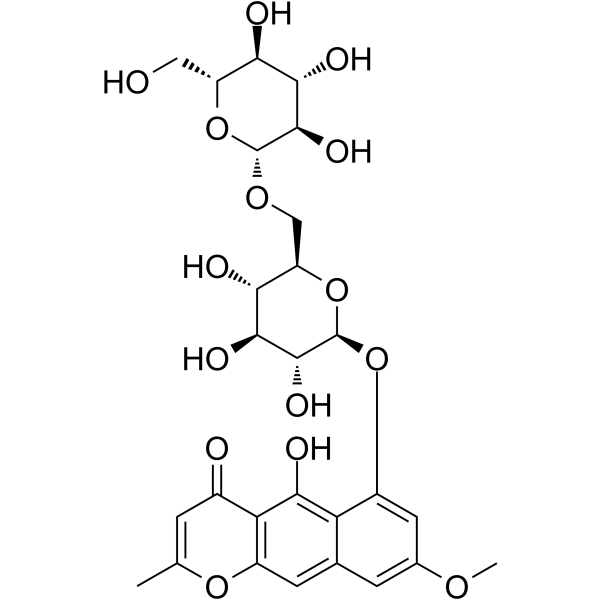
Cat. No.: HY-N4177
CAS No.: 24577-90-0
Synonyms: Rubrofusarin-6-β-gentiobioside
Rubrofusarin gentiobioside (Rrubrofusarin-6-β-gentiobioside) is an orally active weak inhibitor of PTP1B and MAO-A (IC50 >100 μM), and its glycosylation modification results in lower biological activity than its aglycone Rubrofusarin (HY-130307). Rubrofusarin gentiobioside promotes AMPK phosphorylation in an LKB1-independent manner and inhibits the mTOR signaling pathway, thereby downregulating the expressions of PPARγ, C/EBPα, as well as FAS, LPL and aP2. Rubrofusarin gentiobioside inhibits lipid accumulation, reduces body weight and epididymal white adipose tissue volume, improves fatty liver, and shows no cytotoxicity to hepatocytes. Rubrofusarin gentiobioside is widely used in obesity-related studies .
loading...
    loading...
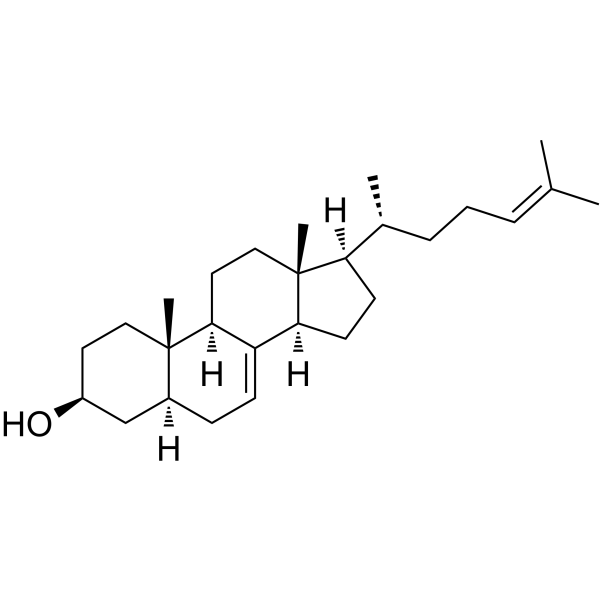
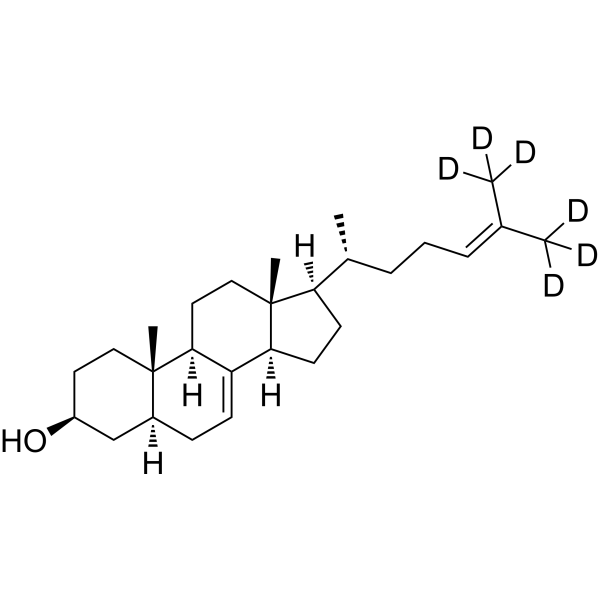
Cat. No.: HY-N9453
CAS No.: 651-54-7
5α-Cholesta-7,24-dien-3β-ol, a sterol, can be found in hamster cauda epididymal mature spermatozoa .
loading...
    loading...
Cat. No.: HY-19842
CAS No.: 618380-90-8
Synonyms: CVT 3619
GS-9667 (CVT 3619), a novel N 6-5'-substituted adenosine analog, is a selective, partial agonist of the A1 adenosine receptor (A1AdoR). GS-9667 binds to adipocyte membranes with high (KH=14 nM) and low (KL=5.4 μM) affinities. GS-9667 reduces cyclic AMP content and release of nonesterified fatty acids from epididymal adipocytes with IC50 values of 6 nM and 44 nM, respectively. GS-9667 inhibits lipolysis and has the potential for Type 2 diabetes (T2DM) and dyslipidemia via lowering of free fatty acids (FFA) .
loading...
    loading...
Cat. No.: HY-119741
CAS No.: 200399-47-9
Salacinol, compound found in Salacia reticulata, is an orally active α-glucosidase/lipase inhibitor. Salacinol inhibits enzymatic activity of intestinal maltase (IC50 = 3.2 μg/mL, Ki = 0.31 μg/mL), sucrase (IC50 = 0.84 μg/mL, Ki = 0.32 μg/mL), and isomaltase (IC50 = 0.59 μg/mL, Ki = 0.47 μg/mL), and inhibits increases in serum glucose levels in sucrose-loaded rats. Salacinol also inhibits pancreatic lipase and lipoprotein lipase. Salacinol can be used for the research of diabetes mellitus .
loading...
    loading...
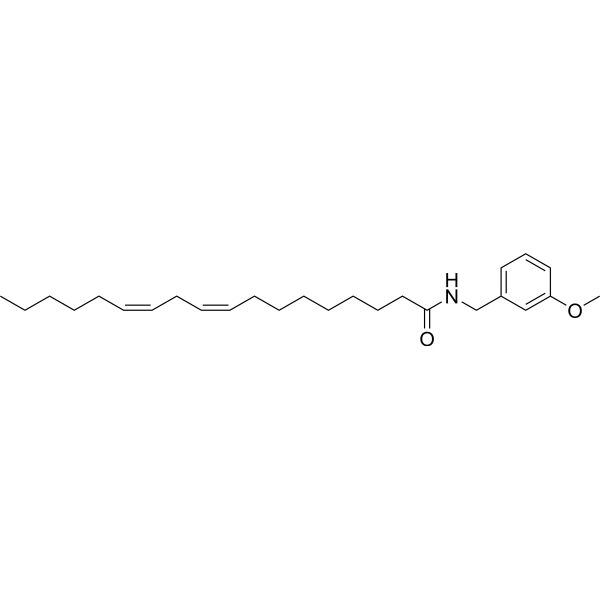
Cat. No.: HY-N2396
CAS No.: 883715-22-8
Target:  

Drug Derivative

Research Areas:  

Endocrinology

N-(3-Methoxybenzyl-(9z,12z)-octadecadienamide is a macamide compound that exhibits anti-fatigue activity and enhances physiological indicators related to male reproduction. N-(3-Methoxybenzyl-(9z,12z)-octadecadienamide increases the weight-loaded swimming time in mice, and elevates mating frequency, daily sperm production, and epididymal sperm count in rats. N-(3-Methoxybenzyl-(9z,12z)-octadecadienamide is applicable for research in male reproductive physiology and anti-fatigue directions .
loading...
    loading...
Cat. No.: HY-186028
CAS No.: 189574-20-7
Target:  

Olfactory Receptor

Research Areas:  

Metabolic Disease

HOR1-C59 is a highly selective Or5v1/Olfr110 agonist with an EC50 of 7.12 nM. HOR1-C59 can improve glucose homeostasis, alleviate obesity and insulin resistance. HOR1-C59 is applicable for obesity-related research .
loading...
    loading...
Cat. No.: HY-116806
CAS No.: 252025-48-2
Target:  

CFTR

Research Areas:  

Endocrinology

AF-2785 is a potent CFTR blocker. AF-2785 inhibits the cAMP-activated chloride current in rat epididymal cells with an IC50 of 170.6 μM. AF-2785 can be used in research related to contraceptives .
loading...
    loading...
Cat. No.: HY-N9453S
CAS No.: 2260669-18-7
5α-Cholesta-7,24-dien-3β-ol-d6 is deuterium labeled 5α-Cholesta-7,24-dien-3β-ol. 5α-Cholesta-7,24-dien-3β-ol, a sterol, can be found in hamster cauda epididymal mature spermatozoa .
loading...
    loading...
Cat. No.: HY-118156
CAS No.: 155238-60-1
Target:  

Others

Research Areas:  

Others

L-699333 is a 5-lipoxygenase (5-LO) inhibitor belonging to the thieno[2,3,4-cd]indole class. This compound has a 2-ethoxybutyric acid side chain and is a potent inhibitor of the biosynthesis of 5-HPETE and LTB4 produced from human 5-LO, with ICm values of 22 nM, 7 nM, and 3.8 pM for human neutrophils and whole blood, respectively. L-699333 has shown anti-inflammatory and antiasthmatic effects in a variety of animal models, including rat pleurisy models, antigen-induced wheezing models, and awake macaque and sheep asthma models. Its inhibition of 5-LO is highly selective, with higher ICm values or stronger competitive inhibition in FLAP binding assays compared to inhibition of human 15-LO, porcine 12-LO, and ram epididymal cyclooxygenase. The racemic enantiomer 14g of L-699333 is the most potent enantiomer to date, with inhibitory effects similar to those of the known MK-0591, which has been shown in clinical trials to inhibit the biochemical effects of LTB4 biosynthesis in vitro and LTE4 excretion in urine.
loading...
    loading...
Cat. No.: HY-16164
CAS No.: 57404-51-0
Research Areas:  

Metabolic Disease

DA-11004 is an orally active NADP-dependent isocitrate dehydrogenase (IDPc) inhibitor with an IC50 of 1.49 μM. DA-11004 reduces NADPH production, decreases plasma NADPH levels and plasma free fatty acid levels. DA-11004 lowers plasma glucose levels, inhibits fatty acid synthesis in adipose tissue, reduces weight gain and decreases epididymal and retroperitoneal fat content. DA-11004 exerts antidiabetic effects in mice fed a high-fat and high-sugar diet. DA-11004 can be used for research on obesity and type 2 diabetes .
loading...
    loading...
Cat. No.: HY-W275882
CAS No.: 13179-98-1
Research Areas:  

Endocrinology

1,6-Dimethoxyhexane is an aliphatic ether that serves as a PROTAC linker and fuel additive. 1,6-Dimethoxyhexane is an orally active testicular toxicant. It has no direct toxicity on its own, but exerts toxicity after oxidative metabolism by liver/testicular microsomes to produce 2-Methoxyacetic Acid (MAA). 1,6-Dimethoxyhexane induces apoptosis/necrosis of pachytene spermatocytes, downregulates the expression of HSP70.2, HSP60 and ERp60/PDI A3, and causes spermatogenic tubule degeneration, testicular/thymic atrophy, a sharp decline in epididymal sperm density, and other effects. 1,6-Dimethoxyhexane can be used in studies related to testicular toxicity .
loading...
    loading...
Cat. No.: HY-P87392
Synonyms: Arep; arMEP24; EGLP; epididymal androgen related protein; epididymal secretory glutathione peroxidase; epididymis secretory sperm binding protein Li 75p; Epididymis specific glutathione peroxidase like protein; Epididymis-specific glutathione peroxidase-like protein; Glutathione peroxidase 5; Glutathione peroxidase 5 (epididymal androgen related protein)

Host:  

Mouse

Application:  

WB, ICC/IF, FC

Reactivity:  

Human, Mouse, Rat

loading...
    loading...
Cat. No.: HY-P76851
Purity:  ≥ 90%, as determined by reducing SDS-PAGE.
Synonyms: CST8; Cystatin-8; Cystatin 8; CTES5; CRES; Cystatin 8 (Cystatin-Related epididymal Specific); Cystatin-Related epididymal Spermatogenic Protein; Epididymis Secretory Sperm Binding Protein
Species:  
Human
Source:  
HEK293
loading...
    loading...
Cat. No.: HY-P72211
Purity:  ≥ 90%, as determined by reducing SDS-PAGE.
Synonyms: GPX5; GPx-5; Glutathione Peroxidase 5; EGLP; Epididymis-Specific Glutathione Peroxidase-Like Protein; Epididymis Secretory Sperm Binding Protein Li 75p; epididymal Secretory Glutathione Peroxidase; Glutathione Peroxidase; epididymal Androgen-Related Prote
Species:  
Pig
Source:  
E. coli
loading...
    loading...
Cat. No.: HY-P71739
Purity:  ≥ 90%, as determined by reducing SDS-PAGE.
Synonyms: GPX5; GPx-5; Glutathione Peroxidase 5; EGLP; Epididymis-Specific Glutathione Peroxidase-Like Protein; Epididymis Secretory Sperm Binding Protein Li 75p; epididymal Secretory Glutathione Peroxidase; Glutathione Peroxidase; epididymal Androgen-Related Prote
Species:  
Pig
Source:  
P. pastoris
loading...
    loading...
Cat. No.: HY-P81043
Synonyms: WFDC2; Epididymis-specific he4; epididymal protein 4; DJ461P17.6; EDDM4; HE4; WAP5

Host:  

Rabbit

Application:  

WB, IHC-P, ICC/IF, IP, FC, IF-Tissue

Reactivity:  

Human, Mouse

loading...
    loading...
Cat. No.: HY-P77056
Purity:  ≥ 90%, as determined by reducing SDS-PAGE.
Synonyms: LCN8; epididymal-Specific Lipocalin-8; Prev. LCN5; Chromosome 9 Open Reading Frame 137; Epididymis Secretory Sperm Binding Protein; EP17; Lipocalin 8; Lipocalin 5
Species:  
Human
Source:  
HEK293
loading...
    loading...

