14 Results for "

fibrotic conditions

" in MedChemExpress (MCE) Product Catalog:
Products (14)

14 Results for "fibrotic conditions" in MCE Product Catalog:

209
209 Publications Verification
Cat. No.: HY-15147
CAS No.: 284028-89-3
Purity:  99.80%
Target:  

β-catenin PARP

Research Areas:  

Cancer

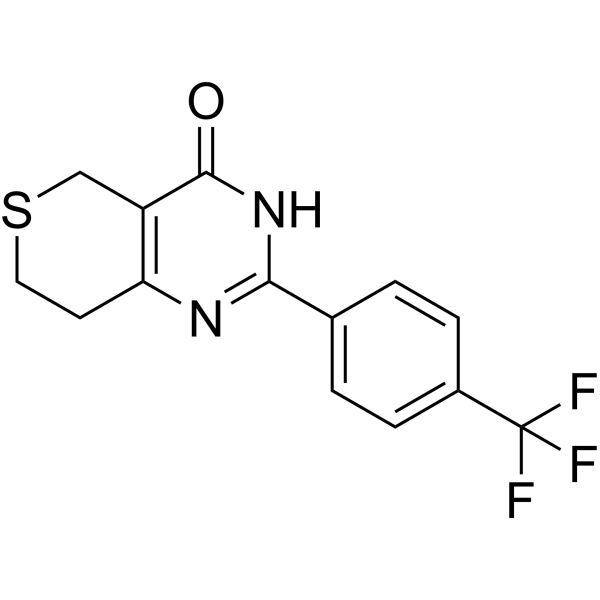
XAV-939 is a Tankyrase inhibitor. XAV-939 has inhibitory activity for TNKS1 and TNKS2 with IC50 values of 5 nM and 2 nM, respectively. XAV-939 also is an enhancer of osteoblastic differentiation of hMSCs. XAV-939 can be used for the research of conditions associated with activated Wnt signaling, such as cancer, fibrotic diseases and conditions associated with low bone formation .
loading...
    loading...
147
147 Cited Publications
Cat. No.: HY-50896
CAS No.: 183321-74-6
Synonyms: CP-358774; NSC 718781; OSI-774
Target:  

EGFR OAT ERK GSK-3 β-catenin

Research Areas:  

Endocrinology Cancer

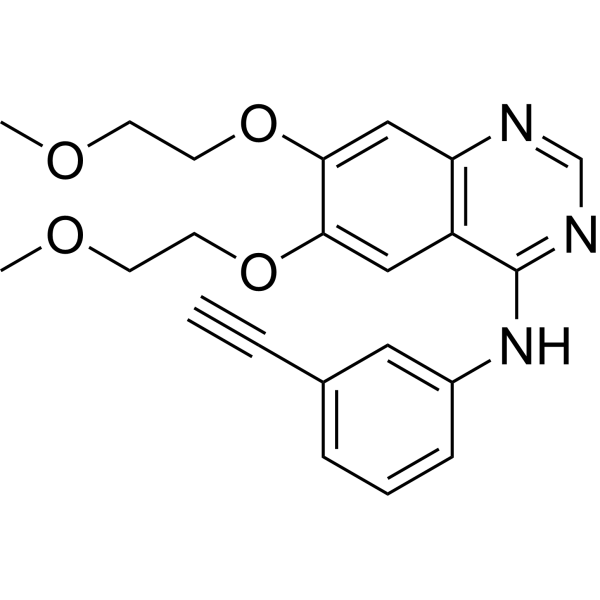
Erlotinib (CP-358774) is a selective, orally active EGFR tyrosine kinase inhibitor. Erlotinib also acts as a substrate and inhibitor of OATP2B1, with an IC50 of approximately 0.079 μM for inhibiting OATP2B1-mediated uptake of estrone 3-sulfate. Erlotinib blocks EGFR phosphorylation, downstream signal transduction, as well as the growth and proliferation of cancer cells. Erlotinib inhibits MMP-10-mediated renal injury, fibrotic lesions, the ERK1/2, GSK-3β and β-catenin signaling pathways, fibronectin, α-SMA, collagen deposition, and renal injury markers. Erlotinib is metabolized via CYP3A to produce the active metabolite OSI-420. Erlotinib can be used in research related to non-small cell lung cancer, gastric cancer, papillary renal cell carcinoma, pancreatic cancer, renal fibrosis, and other conditions .
loading...
    loading...
Cat. No.: HY-156619
CAS No.: 1426449-01-5
Purity:  99.32%
Synonyms: EVT-8565072; THB335
Target:  

c-Kit PDGFR

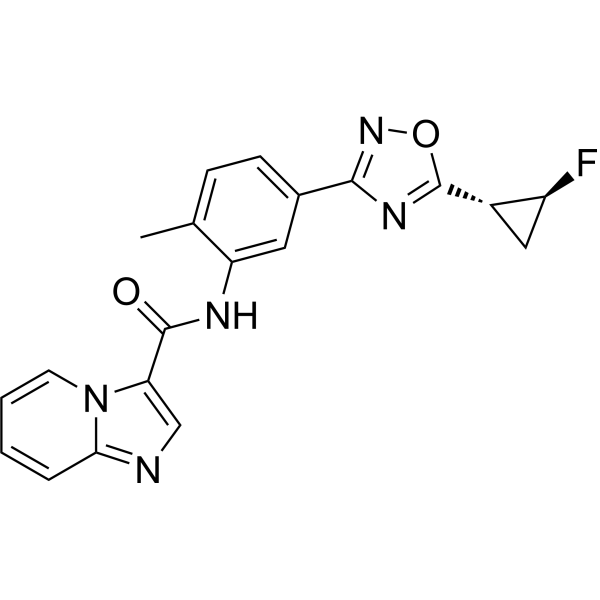
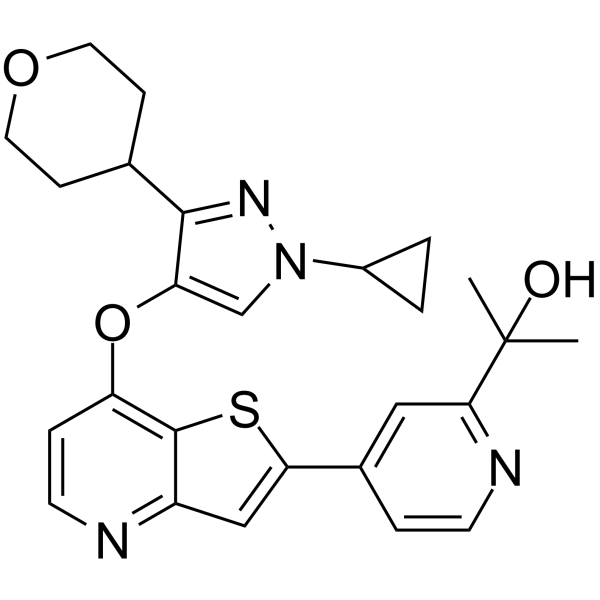
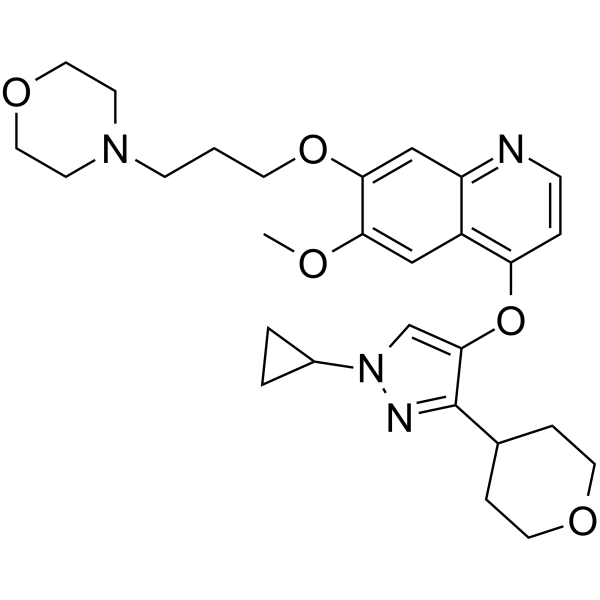
Labuxtinib (EVT-8565072; THB335) is a potent dual inhibitor of c-Kit and PDGFR. Labuxtinib exhibits potent inhibitory activity against wild-type c-Kit (IC50 = 0.005 μM). Labuxtinib inhibits SCF-dependent and PDGF-dependent cell proliferation, and blocks the proliferation of cells dependent on c-Kit or PDGFR signaling pathways. In animal models of skin allergy, Labuxtinib depletes skin mast cells and significantly alleviates anaphylactic shock responses. Labuxtinib can be used in research on mast cell-related diseases, respiratory diseases, inflammatory diseases, fibrotic diseases, metabolic diseases, and other related conditions .
loading...
    loading...
Cat. No.: HY-50896S
CAS No.: 1034651-23-4
Synonyms: CP-358774-d6; NSC 718781-d6; OSI-774-d6
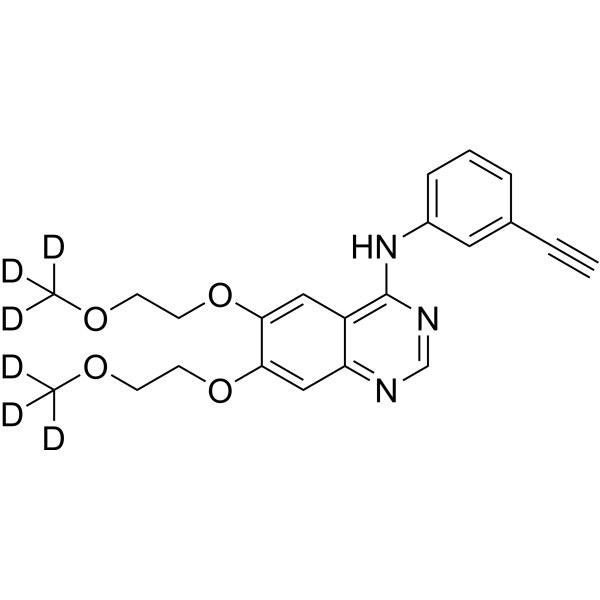
Erlotinib-d6 (CP-358774-d6) is the deuterated-labeled Erlotinib (HY-50896). Erlotinib (CP-358774) is a selective, orally active EGFR tyrosine kinase inhibitor. Erlotinib also acts as a substrate and inhibitor of OATP2B1, with an IC50 of approximately 0.079 μM for inhibiting OATP2B1-mediated uptake of estrone 3-sulfate. Erlotinib blocks EGFR phosphorylation, downstream signal transduction, as well as the growth and proliferation of cancer cells. Erlotinib inhibits MMP-10-mediated renal injury, fibrotic lesions, the ERK1/2, GSK-3β and β-catenin signaling pathways, fibronectin, α-SMA, collagen deposition, and renal injury markers. Erlotinib is metabolized via CYP3A to produce the active metabolite OSI-420. Erlotinib can be used in research related to non-small cell lung cancer, gastric cancer, papillary renal cell carcinoma, pancreatic cancer, renal fibrosis, and other conditions .
loading...
    loading...
Cat. No.: HY-178231
CAS No.: 2766583-86-0
Synonyms: ALK5-IN-85
Target:  

TGF-β Receptor

Research Areas:  

Inflammation/Immunology Cancer

Finbosertib (ALK5-IN-85) (Compound 19) is a TGFβRI (ALK5) inhibitor with an IC50 of <100 nM. Finbosertib can be used for respiratory diseases including idiopathic pulmonary fibrosis, asthma, COPD and lumg cancer, and dermal and ocular fibrotic conditions research .
loading...
    loading...
Cat. No.: HY-15147R
CAS No.: 284028-89-3
Target:  

β-catenin PARP

Research Areas:  

Cancer

XAV-939 (Standard) is the analytical standard of XAV-939. This product is intended for research and analytical applications. XAV-939 is a Tankyrase inhibitor. XAV-939 has inhibitory activity for TNKS1 and TNKS2 with IC50 values of 5 nM and 2 nM, respectively. XAV-939 also is an enhancer of osteoblastic differentiation of hMSCs. XAV-939 can be used for the research of conditions associated with activated Wnt signaling, such as cancer, fibrotic diseases and conditions associated with low bone formation .
loading...
    loading...
Cat. No.: HY-178792
CAS No.: 3073601-32-5
TGI-15 is a highly selective prostaglandin F receptor antagonist. TGI-15 inhibits downstream signaling pathways by blocking the binding of PGF2 α to FP receptors. TGI-15 can be used for research on fibrotic and inflammatory conditions .
loading...
    loading...
Cat. No.: HY-142949
CAS No.: 2657720-07-3
Target:  

TGF-β Receptor

Research Areas:  

Inflammation/Immunology Cancer

ALK5-IN-7 is a potent inhibitor of ALK5. Transforming growth factor beta (TGF-β) is a multifunctional cytokine that is involved in regulating cell proliferation, differentiation and apoptosis through complex receptor signaling pathways on the cell surface in an autocrine, paracrine and endocrine manner. ALK5-IN-7 has the potential for the research of TGF-β-related diseases and conditions, including but not limited to tumors, fibrotic diseases, inflammatory diseases, autoimmune diseases, etc (extracted from patent WO2021129621A1, compound 4) .
loading...
    loading...
Cat. No.: HY-142950
CAS No.: 2657720-04-0
Target:  

TGF-β Receptor

Research Areas:  

Inflammation/Immunology Cancer

ALK5-IN-6 is a potent inhibitor of ALK5. Transforming growth factor beta (TGF-β) is a multifunctional cytokine that is involved in regulating cell proliferation, differentiation and apoptosis through complex receptor signaling pathways on the cell surface in an autocrine, paracrine and endocrine manner. ALK5-IN-6 has the potential for the research of TGF-β-related diseases and conditions, including but not limited to tumors, fibrotic diseases, inflammatory diseases, autoimmune diseases, etc (extracted from patent WO2021129621A1, compound 1) .
loading...
    loading...
Cat. No.: HY-50896S1
CAS No.: 1211107-68-4
Synonyms: CP-358774-13C6; NSC 718781-13C6; OSI-774-13C6
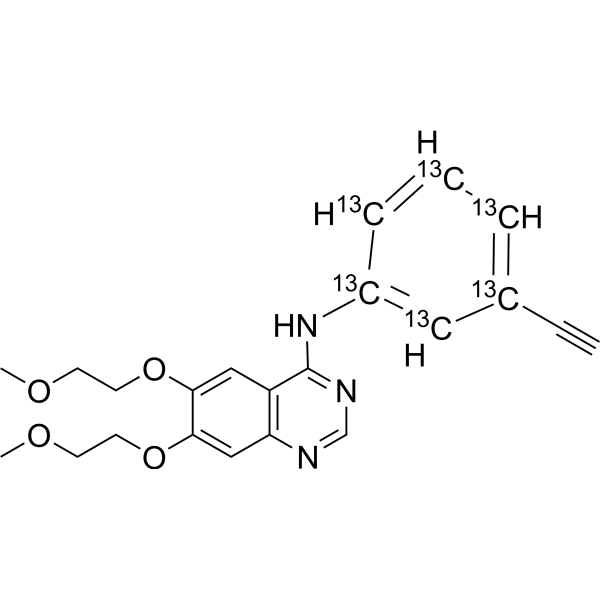
Erlotinib- 13C6 (CP-358774- 13C6) is the 13C-labeled Erlotinib (HY-50896). Erlotinib (CP-358774) is a selective, orally active EGFR tyrosine kinase inhibitor. Erlotinib also acts as a substrate and inhibitor of OATP2B1, with an IC50 of approximately 0.079 μM for inhibiting OATP2B1-mediated uptake of estrone 3-sulfate. Erlotinib blocks EGFR phosphorylation, downstream signal transduction, as well as the growth and proliferation of cancer cells. Erlotinib inhibits MMP-10-mediated renal injury, fibrotic lesions, the ERK1/2, GSK-3β and β-catenin signaling pathways, fibronectin, α-SMA, collagen deposition, and renal injury markers. Erlotinib is metabolized via CYP3A to produce the active metabolite OSI-420. Erlotinib can be used in research related to non-small cell lung cancer, gastric cancer, papillary renal cell carcinoma, pancreatic cancer, renal fibrosis, and other conditions .
loading...
    loading...
Cat. No.: HY-50896S2
CAS No.: 1130852-41-3
Synonyms: CP-358774-d4; NSC 718781-d4; OSI-774-d4
Erlotinib-d4 (CP-358774-d4) is the deuterated-labeled Erlotinib (HY-50896). Erlotinib (CP-358774) is a selective, orally active EGFR tyrosine kinase inhibitor. Erlotinib also acts as a substrate and inhibitor of OATP2B1, with an IC50 of approximately 0.079 μM for inhibiting OATP2B1-mediated uptake of estrone 3-sulfate. Erlotinib blocks EGFR phosphorylation, downstream signal transduction, as well as the growth and proliferation of cancer cells. Erlotinib inhibits MMP-10-mediated renal injury, fibrotic lesions, the ERK1/2, GSK-3β and β-catenin signaling pathways, fibronectin, α-SMA, collagen deposition, and renal injury markers. Erlotinib is metabolized via CYP3A to produce the active metabolite OSI-420. Erlotinib can be used in research related to non-small cell lung cancer, gastric cancer, papillary renal cell carcinoma, pancreatic cancer, renal fibrosis, and other conditions .
loading...
    loading...
Cat. No.: HY-182611
CAS No.: 1637468-93-9
Target:  

TGF-β Receptor

Research Areas:  

Inflammation/Immunology Cancer

SRI-31277 is a thrombospondin 1 (TSP-1) inhibitor with a human target pIC50 of 8.28 nM and in vivo activity, and exhibits a very short plasma half-life with intravenous administration.SRI-31277 inhibits interaction between TSP-1 and the latency-associated peptide (LAP) of latent TGF-β, blocking TSP-1-mediated TGF-β activation.SRI-31277 can be used for the research of multiple myeloma and fibrotic conditions .
loading...
    loading...
Cat. No.: HY-100113A
CAS No.: 1947313-60-1
Synonyms: AT2 receptor agonist C21 hydrochloride
Buloxibutid (AT2 receptor agonist C21) hydrochloride is an orally active, selective angiotensin II type 2 receptor (AT2R) agonist, with a Ki value of 0.4 nM for porcine AT2R. Buloxibutid hydrochloride exerts vasodilatory, anti-inflammatory, antifibrotic (promoting the expression of collagenase MMP-13) and tissue repair effects mainly by activating the NO/cGMP pathway, inhibiting the pro-proliferative MAPK signaling, and suppressing the pro-fibrotic TGF-β/Smad pathway and inflammatory NF-κB pathway. Buloxibutid hydrochloride can be used in research related to idiopathic pulmonary fibrosis, hypertension, systemic sclerosis and other conditions .
loading...
    loading...
Cat. No.: HY-182612
CAS No.: 2307429-54-3
Target:  

TGF-β Receptor

Research Areas:  

Cancer

SRI-35241 is a thrombospondin TSP-1 inhibitor with a pIC50 of 8.12 nM against human targets. SRI-35241 inhibits the binding of TSP-1 to latent transforming growth factor-β-associated peptide (LAP) and blocks the activation of TGF-β. SRI-35241 shows a certain time-dependent property, with a plasma half-life of 1.8 h after intravenous administration. SRI-35241 can be used for the research of multiple myeloma and fibrotic diseases .
loading...
    loading...
  • 1

