12 Results for "

heme synthesis

" in MedChemExpress (MCE) Product Catalog:
Products (12)

12 Results for "heme synthesis" in MCE Product Catalog:

5
5 Cited Publications
Cat. No.: HY-137808
CAS No.: 108347-97-3
Purity:  94%
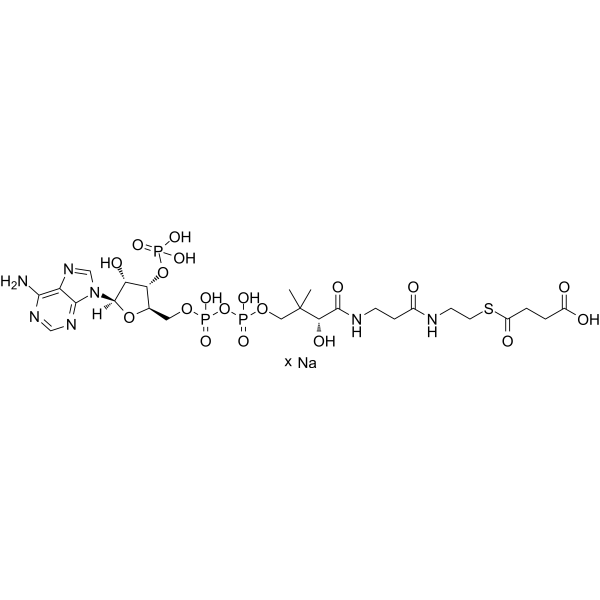
Synonyms: Succinyl-CoA sodium
Succinyl CoA (Succinyl-coenzyme A) sodium is a pivotal intermediate metabolite in the tricarboxylic acid cycle and a key coenzyme A metabolite. Succinyl CoA sodium is biosynthesized from α-ketoglutarate or propionyl-CoA. Succinyl CoA sodium acts as a critical precursor and substrate for heme biosynthesis and gluconeogenesis. Succinyl CoA sodium insufficiency caused by cobalamin deficiency is directly linked to growth retardation, impaired heme synthesis, tissue glycine accumulation and neurological abnormalities. Succinyl CoA sodium can be used in research on metabolic, neurological, and hematological abnormalities (such as porphyria) caused by nutritional vitamin B12 deficiency (leading to a lack of Succinyl-Coenzyme A synthesis) .
loading...
    loading...
Cat. No.: HY-139838
CAS No.: 353292-31-6
Target:  

Herbicide

Research Areas:  

Others Cancer

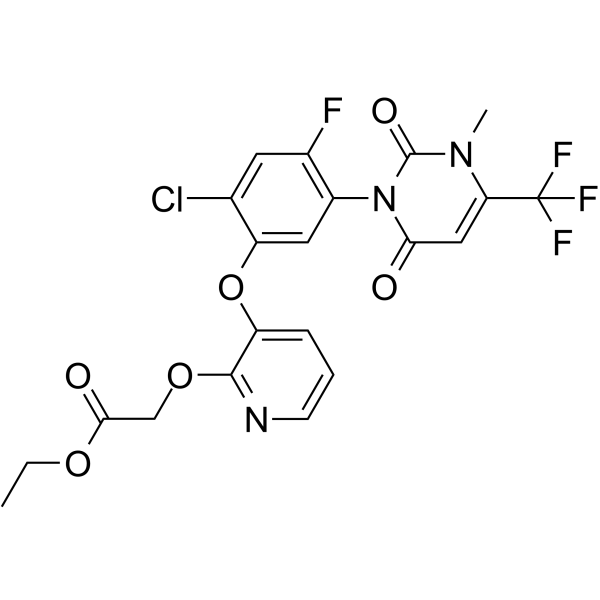
Epyrifenacil is a protoporphyrinogen oxidase (PPO) inhibiting herbicide, potently targeting the PPO2 isoform from weeds such as Amaranthus palmeri with an IC50 of 0.637 nM. Epyrifenacil also inhibits liver mitochondrial PPO across species, with IC50 values of 2.2 nM (mouse), 2.6 nM (rat), 12.1 nM (rabbit), 7.6 nM (dog), and 10.2 nM (human). Epyrifenacil induces liver tumor development in mice. Epyrifenacil can be used for weed control, and also used as a tool compound in toxicological research to study the mechanism of PPO inhibition, chemical-induced hepatotoxicity, and the mode of action of non-genotoxic carcinogens in rodents [3].
loading...
    loading...
Cat. No.: HY-W073080
CAS No.: 69477-27-6
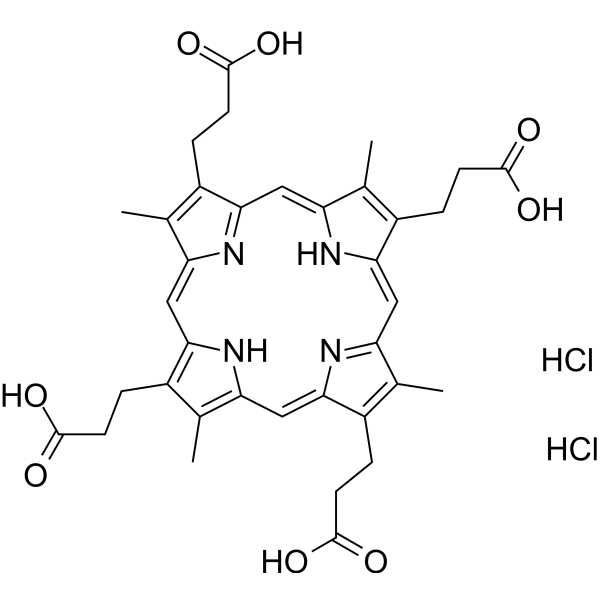
Coproporphyrin I dihydrochlorideIt is an organic compound belonging to the class of porphyrins. It is a derivative of heme, an iron-containing molecule found in hemoglobin and other proteins. Coproporphyrin I dihydrochlorideOften used as a biomarker in the assessment of certain liver and metabolic diseases, especially those related to bile synthesis and transport. It can also be used as a reference standard for analytical chemistry and pharmacological research.
loading...
    loading...
Cat. No.: HY-148285
CAS No.: 604-98-8
Synonyms: Succinyl-coenzyme A; S-(Hydrogen succinyl)coenzyme A
Succinyl CoA (Succinyl-coenzyme A) is a pivotal intermediate metabolite in the tricarboxylic acid cycle and a key coenzyme A metabolite. Succinyl CoA is biosynthesized from α-ketoglutarate or propionyl-CoA. Succinyl CoA acts as a critical precursor and substrate for heme biosynthesis and gluconeogenesis. Succinyl CoA insufficiency caused by cobalamin deficiency is directly linked to growth retardation, impaired heme synthesis, tissue glycine accumulation and neurological abnormalities. Succinyl CoA can be used in research on metabolic, neurological, and hematological abnormalities (such as porphyria) caused by nutritional vitamin B12 deficiency (leading to a lack of Succinyl-Coenzyme A synthesis) .
loading...
    loading...
Cat. No.: HY-W113615
CAS No.: 1680-44-0
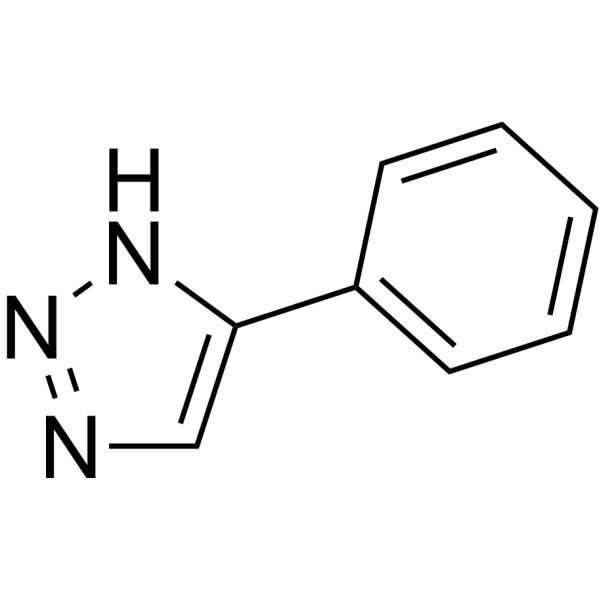
4-Phenyl-1H-1,2,3-triazole is a selective IDO1 inhibitor with an IC50 of 83 μM against human IDO1. 4-Phenyl-1H-1,2,3-triazole binds to the heme iron of IDO1 and occupies its active site, thereby inhibiting tryptophan catabolism. 4-Phenyl-1H-1,2,3-triazole can serve as a precursor for the synthesis of HIV-1 capsid protein inhibitors. 4-Phenyl-1H-1,2,3-triazole is applicable to research related to cancer and organic synthesis .
loading...
    loading...
Cat. No.: HY-W854721
CAS No.: 120389-54-0
Synonyms: Manganese(III) Protoporphyrin IX Chloride
Target:  

Heme Oxygenase (HO)

Research Areas:  

Metabolic Disease

Mn(III) protoporphyrin IX chloride is a metalloporphyrin. It induces mRNA expression of the genes encoding δ-aminolevulinate synthase and heme oxygenase (HO), enzymes that catalyze the rate-limiting steps of heme biosynthesis and degradation, respectively, in chick embryo liver cells when used at a concentration of 10 μM. Mn(III) protoporphyrin IX chloride-containing nanobialys have been used in magnetic resonance imaging (MRI) of fibrin clots in vitro. It has also been used in the synthesis of Mn(III) protoporphyrin IX-6(7)-glycyl-glycyl-L-histidine methyl ester (MnGGH), a metalloporphyrin conjugate with microperoxidase activity.
loading...
    loading...
Cat. No.: HY-W343900
CAS No.: 6912-67-0
Synonyms: DL-Hydroxyproline
Hydroxyproline (DL-Hydroxyproline) is a non-essential amino acid and one of the main components of collagenous tissues. Hydroxyproline acts as a substrate for mitochondrial hydroxyproline oxidase to generate ROS. Hydroxyproline promotes the synthesis of glutathione, DNA, heme and proteins via conversion to Glycine (HY-Y0966). Hydroxyproline promotes the activation of caspase-9 and apoptosis in cancer cells treated with Doxorubicin . Hydroxyproline serves as a biochemical marker. Hydroxyproline is used in research related to various diseases including colon cancer, diabetes and arthritis .
loading...
    loading...
Cat. No.: HY-148285A
CAS No.: 403982-65-0
Synonyms: Succinyl-coenzyme A disodium; S-(Hydrogen succinyl)coenzyme A disodium
Target:  

Endogenous Metabolite

Research Areas:  

Metabolic Disease

Succinyl CoA (Succinyl-coenzyme A) disodium is a pivotal intermediate metabolite in the tricarboxylic acid cycle and a key coenzyme A metabolite. Succinyl CoA disodium is biosynthesized from α-ketoglutarate or propionyl-CoA. Succinyl CoA disodium acts as a critical precursor and substrate for heme biosynthesis and gluconeogenesis. Succinyl CoA disodium insufficiency caused by cobalamin deficiency is directly linked to growth retardation, impaired heme synthesis, tissue glycine accumulation and neurological abnormalities. Succinyl-Coenzyme A sodium can be used in research on metabolic, neurological, and hematological abnormalities (such as porphyria) caused by nutritional vitamin B12 deficiency (leading to a lack of Succinyl-Coenzyme A synthesis) .
loading...
    loading...
Cat. No.: HY-157160
Target:  

Herbicide

Research Areas:  

Others

PPO-IN-5 (compound 9) is a herbicide based on PPO inhibitors. PPO, protoporphyrinogen oxidase, participates in the biosynthetic pathway of heme and chlorophyll synthesis. PPO-IN-5 is tolerant in cereal crops such as wheat, corn, and rice, and is a potential herbicide in wheat fields .
loading...
    loading...
Cat. No.: HY-E71547
Research Areas:  

Others

2-Hydroxy-5-methyl-1-naphthoate 7-hydroxylase (EC 1.14.99.49) is a heme-thiolate protein (P-450) enzyme involved in the synthesis of neocarzinostatin in the bacterium Streptomyces carzinostaticus.
loading...
    loading...
Cat. No.: HY-W728891
CAS No.: 110956-75-7
Target:  

Herbicide

Research Areas:  

Others

Pentoxazone is a protoporphyrinogen IX oxidase (PPO)-inhibiting herbicide. Pentoxazone inhibits chlorophyll and heme synthesis, drives protoporphyrinogen IX accumulation and oxidation, and generates singlet oxygen to oxidize cell membranes and induce cell damage.Pentoxazone suppresses fresh weight growth of multiple weed species and shows low activity against weedy rice. Pentoxazone can be used for the research of direct-seeding rice field weed management .
loading...
    loading...
Cat. No.: HY-W162231
CAS No.: 91216-38-5
Target:  

Bacterial

Research Areas:  

Infection Metabolic Disease

HC102A is an Antibacterial agent and an inhibitor of DosS and DosT histidine sensor kinases, with an IC50 of 1.9 μM against Mycobacterium tuberculosis DosS. HC102A does not alter the heme redox state of sensor kinases. HC102A reduces triacylglycerol synthesis and accumulation, decreases the survival rate of Mtb under non-replicating persistent and hypoxic conditions, and enhances the sensitivity of Mtb to Isoniazid (HY-B0329). HC102A can be used in research related to tuberculosis .
loading...
    loading...
  • 1

