
1. Search Result
Search Result
Results for "

hemorrhagic shock

" in MedChemExpress (MCE) Product Catalog:

16

Inhibitors & Agonists

4

Peptides

1

Inhibitory Antibodies

Targets Recommended:
Cat. No. Product Name Target Research Areas Chemical Structure
  • HY-142117

    Calcium Channel Chloride Channel Others
    Adenophostin A is an IP3 receptor (inositol 1,4,5-trisphosphate receptors) modulator and Ca 2+ releaser, with an IC50 of 1.3 nM, an EC50 of 1.4 nM, and a Ki of 0.18 nM in rats, and an IC50 of 0.95 nM in humans. Adenophostin A activates IP3 receptors, stimulates Ca 2+ release from intracellular stores and microsomes, inhibits the binding of [ 3H]IP3 to plasma membrane receptors, and activates chloride channels. Adenophostin A resists phosphorylation and dephosphorylation by IP3 metabolic enzymes to maintain its activity, and increases cytoplasmic [Ca 2+] levels via calcium mobilization from the endoplasmic reticulum of vascular smooth muscle cells. Adenophostin A is applicable to research related to hemorrhagic shock .
    Adenophostin A
  • HY-103320A
    Calhex 231 hydrochloride
    Maximum Cited Publications
    6 Publications Verification

    CaSR Metabolic Disease
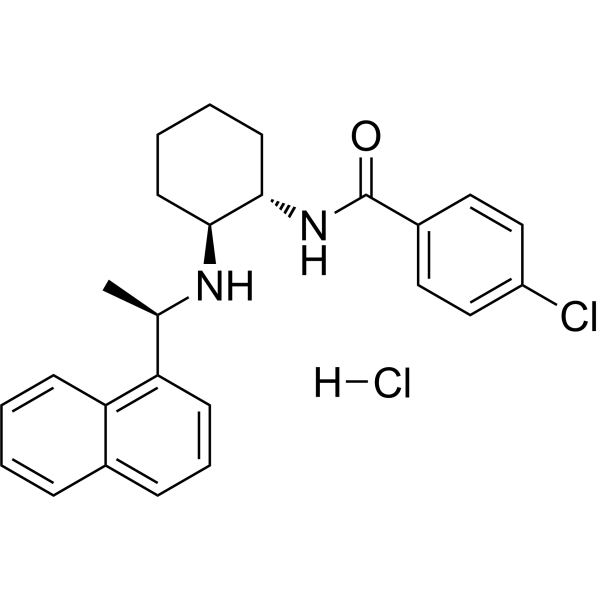
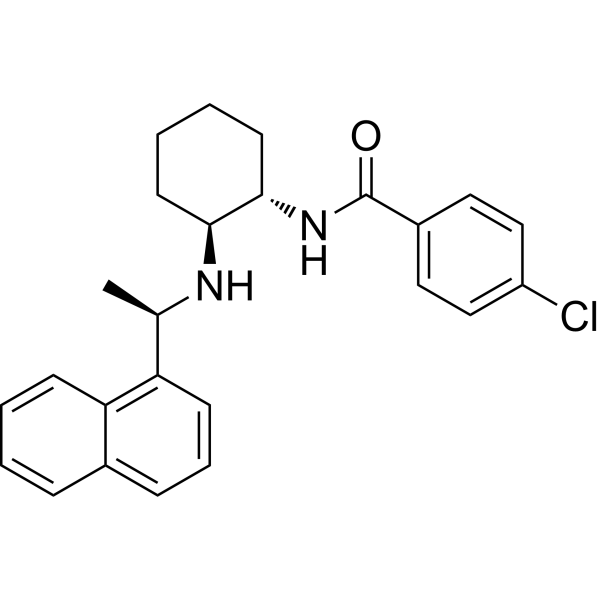
    Calhex 231 hydrochloride is a potent negative allosteric modulator that blocks (IC50 = 0.39 μM) increases in [ 3H]inositol phosphates elicited by activating the human wild-type CaSR transiently Ca 2+-sensing receptor. Calhex 231 hydrochloride can be used in the study of traumatic hemorrhagic shock (THS) and diabetic cardiomyopathy (DCM) .
    Calhex 231 hydrochloride
  • HY-P3068

    Adrenocorticotropic hormone (1-16)

    Melanocortin Receptor Cardiovascular Disease
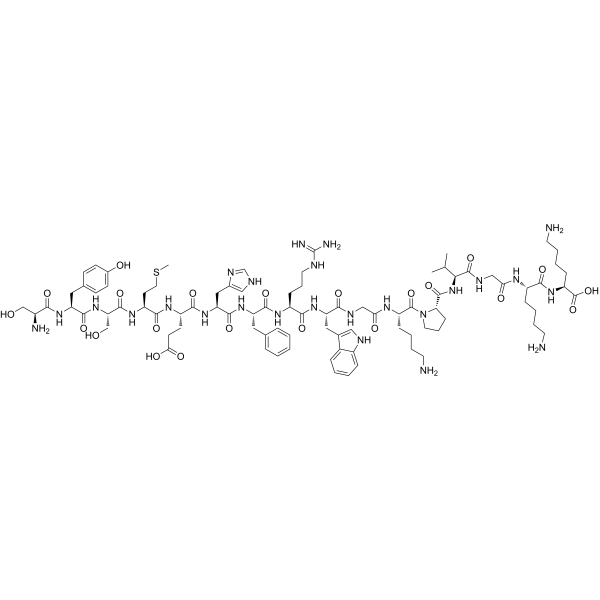
    ACTH (1-16) (human) (Adrenocorticotropic hormone (1-16)) is an ACTH fragment. ACTH (1-16) (human) improves cardiovascular function and survival in experimental hemorrhagic shock .
    ACTH (1-16) (human)
  • HY-B1404

    Buphenine hydrochloride

    iGluR Influenza Virus Infection Cardiovascular Disease Inflammation/Immunology
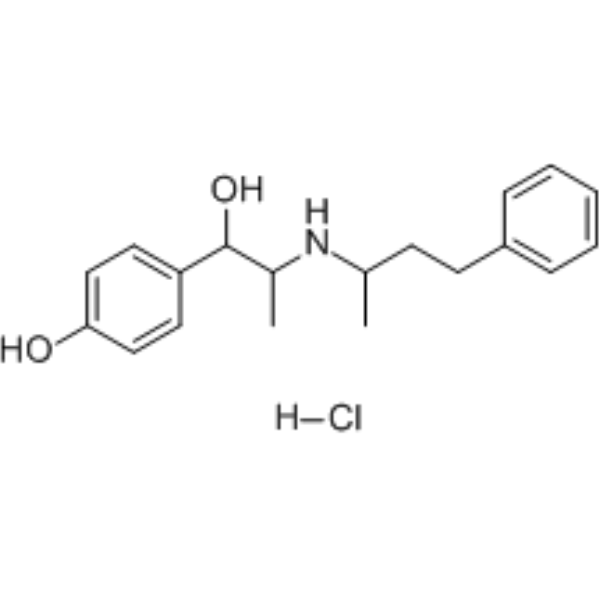
    Nylidrin hydrochloride (Buphenine hydrochloride) is an orally active β-adrenergic agonist. Nylidrin hydrochloride antagonizes NR1A/2B NMDA receptors (IC50 = 0.18 μM in Xenopus oocytes). Nylidrin hydrochloride reduces the levels of NP, HA, and M1. Nylidrin hydrochloride has antiviral activity against multiple H1N1 subtype influenza A viruses. Nylidrin hydrochloride improves hemorrhagic shock and anti-allergic effects .
    Nylidrin hydrochloride
  • HY-P2242A

    Melanocortin Receptor Neurological Disease Inflammation/Immunology
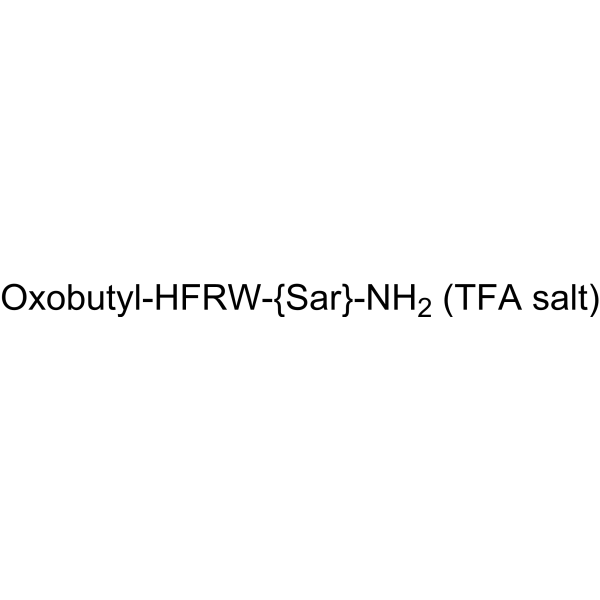
    RO27-3225 TFA is potent and selective melanocortin 4 receptor (MC4R) agonist with an EC50 of 1 nM and 8 nM for MC4R and MC1R, respectively. RO27-3225 TFA shows ~30-fold selectivity for MC4R over MC3R. RO27-3225 TFA has neuroprotective and anti-inflammatory effects .
    RO27-3225 TFA
  • HY-P99891
    Rovelizumab
    1 Publications Verification

    Hu23F2G

    Integrin Cardiovascular Disease
    Rovelizumab is a humanized monoclonal leukointegrin antibody. Rovelizumab is a monoclonal antibody directed against the CD11/CD18 cell adhesion proteins. Rovelizumab can be used for research of multiple sclerosis (MS), hemorrhagic shock, myocardial infarction (MI) and stroke .
    Rovelizumab
  • HY-P10580A

    Cadherin Tie Claudin PI3K Akt Cardiovascular Disease Infection Inflammation/Immunology
    Vasculotide TFA is a blood-brain barrier (BBB)-penetrant Tie2 agonist. Vasculotide TFA binds to a unique domain of Tie2, induces receptor clustering to drive phosphorylation, activates downstream PI3K/Akt and eNOS pathways, enhances inter-endothelial cell junctions (such as VE-cadherin and claudin-5), and inhibits inflammatory adhesion molecules, ultimately stabilizing the vascular endothelial barrier and reducing its permeability . Vasculotide TFA alleviates pulmonary microvascular leakage and microcirculatory dysfunction caused by cardiopulmonary bypass, acts as an adjuvant radioprotective agent to reduce acute radiation dermatitis, and promotes BBB recovery after focused ultrasound (FUS). Combination of Vasculotide TFA with antibiotics reduces lung injury .
    Vasculotide TFA
  • HY-115447

    Histamine Receptor Neurological Disease
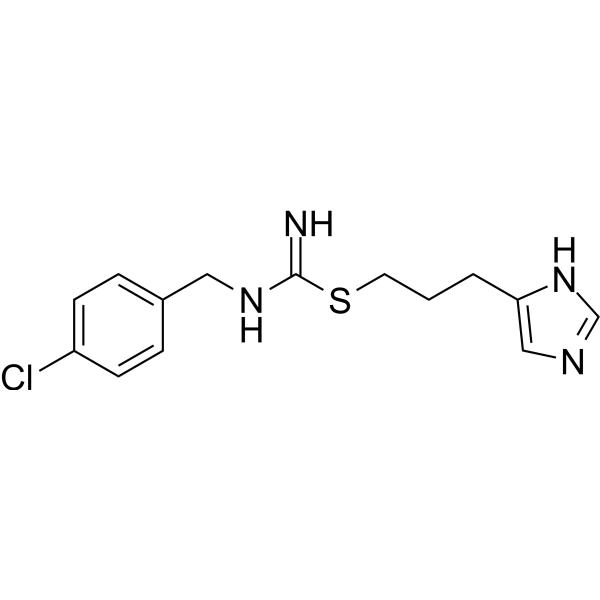
    Clobenpropit is a potent histamine H3-receptor antagonist. Clobenpropit decreases dopamine release and increases histamine levels in the hypothalamus. Clobenpropit shows antipsychotic-like activities. Clobenpropit causes a resuscitating effect in rats subjected to the hemorrhagic shock .
    Clobenpropit
  • HY-P2242

    Melanocortin Receptor Neurological Disease Inflammation/Immunology
    RO27-3225 is potent and selective melanocortin 4 receptor (MC4R) agonist with an EC50 of 1 nM and 8 nM for MC4R and MC1R, respectively. RO27-3225 shows 30-fold selectivity for MC4R over MC3R. RO27-3225 has neuroprotective and anti-inflammatory effects .
    RO27-3225
  • HY-103320

    CaSR Metabolic Disease
    Calhex 231 is a potent negative allosteric modulator that blocks (IC50 = 0.39 μM) increases in [ 3H]inositol phosphates elicited by activating the human wild-type CaSR transiently Ca 2+-sensing receptor. Calhex 231 can be used in the study of traumatic hemorrhagic shock (THS) and diabetic cardiomyopathy (DCM) .
    Calhex 231
  • HY-138454

    Mercaptoethylguanidine hemisulfate

    NO Synthase Inflammation/Immunology
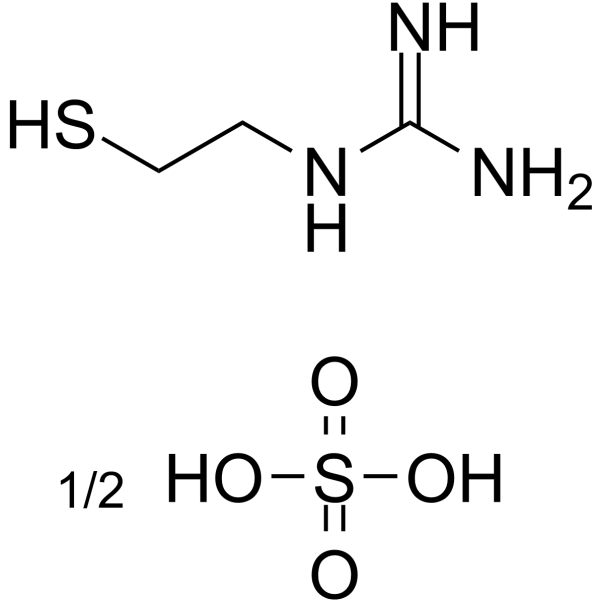
    MEG (Mercaptoethylguanidine) hemisulfate is a potent and selective inhibitor of the inducible NO synthase (iNOS), with EC50s of 11.5, 110, and 60 μM for iNOS, ecNOS, and bNOS respectively in tissue homogenates. MEG hemisulfate is also a potent scavenger of peroxynitrite and inhibits peroxynitrite-induced oxidative processes. MEG hemisulfate has a protective effect in many experimental models of inflammation, including ischemia/reperfusion injury, periodontitis, hemorrhagic shock, inflammatory bowel disease, and endotoxic and septic shock .
    MEG hemisulfate
  • HY-19586

    A 81-3138; HWA-138

    Phosphodiesterase (PDE) Endocrinology
    Albifylline (A 81-3138; HWA-138) is a Xanthine (HY-W017389) derivate. Albifylline reduces the shock-induced leukocyte adhesions to the sinusoidal endothelium in the liver after hemorrhagic shock and improves microvascular blood flow in the liver .
    Albifylline
  • HY-101304

    S-isopropyl ITU; IPTU

    NO Synthase Cardiovascular Disease Neurological Disease
    S-Isopropylisothiourea hydrobromide (S-isopropyl ITU; IPTU) is a blood-brain barrier (BBB) penetrant NOS inhibitor with IC50 values of 0.66, 0.75 and 0.29 μM against mouse spinal cord, cerebellar, bovine aortic and porcine endothelial cell NOS. S-Isopropylisothiourea exhibits a significant blood pressure-raising effect without damaging the perfusion of vital organs and can also inhibit the late-phase pain response induced by formalin. S-Isopropylisothiourea hydrobromide is used in the researchs for hemorrhagic shock and pain response based on NOS .
    S-Isopropylisothiourea hydrobromide
  • HY-B1404R

    Buphenine hydrochloride (Standard)

    Reference Standards iGluR Influenza Virus Infection Cardiovascular Disease Inflammation/Immunology
    Nylidrin (hydrochloride) (Standard) is the analytical standard of Nylidrin hydrochloride (HY-B1404). This product is intended for research and analytical applications. Nylidrin hydrochloride (Buphenine hydrochloride) is an orally active β-adrenergic agonist. Nylidrin hydrochloride antagonizes NR1A/2B NMDA receptors (IC50 = 0.18 μM in Xenopus oocytes). Nylidrin hydrochloride reduces the levels of NP, HA, and M1. Nylidrin hydrochloride has antiviral activity against multiple H1N1 subtype influenza A viruses. Nylidrin hydrochloride improves hemorrhagic shock and anti-allergic effects .
    Nylidrin hydrochloride (Standard)
  • HY-182503

    Adenosine Kinase Others Inflammation/Immunology
    GP515 is a potent and selective adenosine kinase inhibitor with a human IC50 of 4 nM. GP515 exerts tissue protective effects, produces long-lasting hepatic microcirculation effects after hemorrhagic shock, and induces dose- and time-related VEGF mRNA and protein expression in normoxic rat myocardial myoblasts, with additive VEGF increases during mild hypoxia and no effect during severe hypoxia. GP515 suppresses IFNγ synthesis and CD69 expression in DSS-induced colitis. GP515 also shows a dose-dependent suppression of TNF-α production with an IC50 of 80 μM and can be reversed in the presence of the cAMP antagonist (Rp)-cAMPS. Combinations of GP515 with either adenosine or rolipram led to an additive inhibition of TNF-α synthesis. GP515 can be used for the research of hemorrhagic shock .
    GP515
  • HY-103320AR

    Reference Standards CaSR Metabolic Disease
    Calhex 231 hydrochloride (Standard) is the analytical standard of Calhex 231 hydrochloride (HY-103320A). This product is intended for research and analytical applications. Calhex 231 hydrochloride is a potent negative allosteric modulator that blocks (IC50 = 0.39 μM) increases in [3H]inositol phosphates elicited by activating the human wild-type CaSR transiently Ca2+-sensing receptor. Calhex 231 hydrochloride can be used in the study of traumatic hemorrhagic shock (THS) and diabetic cardiomyopathy (DCM) .
    Calhex 231 hydrochloride (Standard)

Inquiry Online

Your information is safe with us. * Required Fields.

Salutation


Country or Region *

Applicant Name *


Organization Name *

Department *


Email Address *


Product Name *

Cat. No.


Requested quantity *

Phone Number *


Remarks

Inquiry Online

Inquiry Information

Product Name:
Cat. No.:
Quantity:
MCE Japan Authorized Agent:

