16 Results for "

histidine residues

" in MedChemExpress (MCE) Product Catalog:
Products (16)

16 Results for "histidine residues" in MCE Product Catalog:

3
3 Cited Publications
Cat. No.: HY-P0046
CAS No.: 49557-75-7
Synonyms: GHK; Tripeptide-1
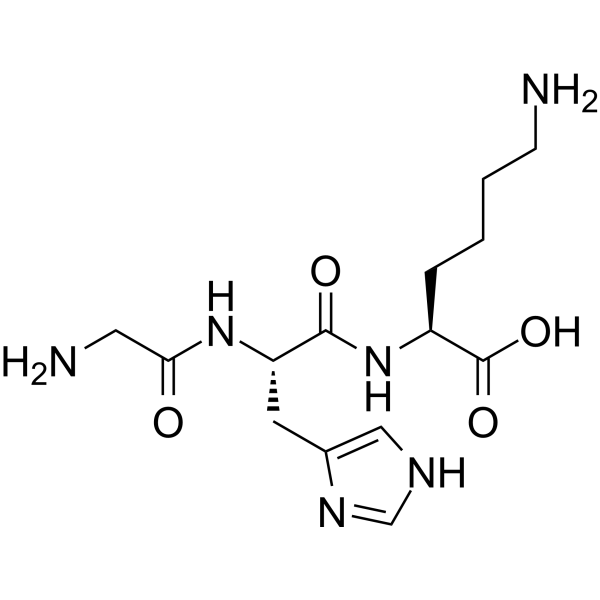
Glycyl-L-histidyl-L-lysine is a tripeptide consisting of glycine, L-histidine and L-lysine residues joined in sequence. Glycyl-L-histidyl-L-lysine is a hepatotropic immunosuppressor and shows anxiolytic effect. Glycyl-L-histidyl-L-lysine and its copper complexes show good skin tolerance .
loading...
    loading...
Cat. No.: HY-P0294
CAS No.: 64134-30-1
Synonyms: 6X His Tag
Research Areas:  

Others

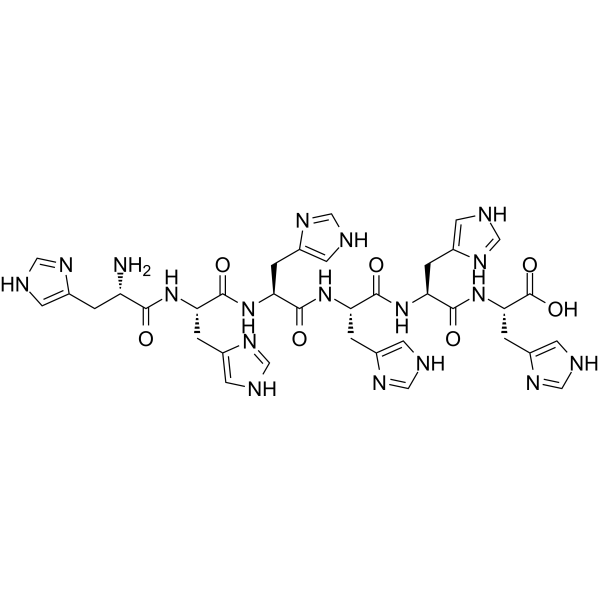
Hexa-His (6X His Tag) is a commonly used affinity tag made up of six histidine residues. HEXA-HIS can bind to affinity chromatography media containing transition metal ions like nickel (Ni 2+) or cobalt (Co 2+), making it useful for protein purification .
loading...
    loading...
Cat. No.: HY-D0846
CAS No.: 1609-47-8
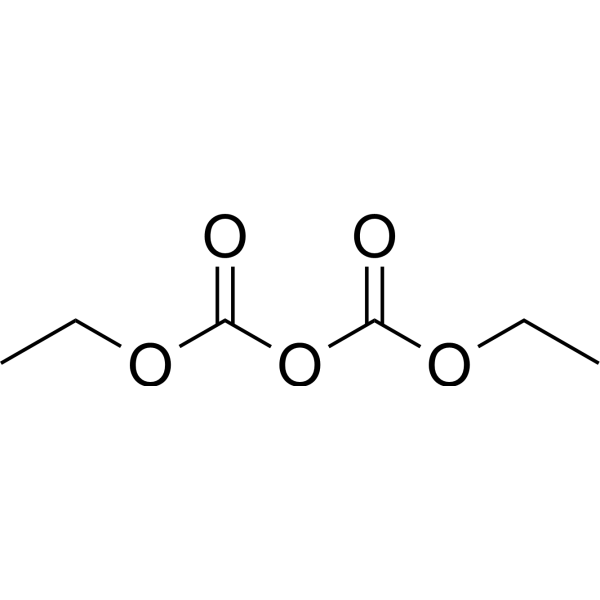
Diethyl pyrocarbonate is a potent, orally active, non-specific chemical inhibitor of RNase. Diethyl pyrocarbonate has been useful in vitro as an agent relatively specific for binding to imidazole of histidine. Diethyl pyrocarbonate inhibits central chemosensitivity in rabbits. Diethyl pyrocarbonate can modify Ser, Thr, His and Tyr residues. Diethyl pyrocarbonate can be used for modeling .
loading...
    loading...
Cat. No.: HY-P11421
CAS No.: 1051859-63-2
Research Areas:  

Others

Cys-His Tag is a dual-purpose protein tag combining a cysteine residue and a Histidine tag. Cys-His Tag can be used to improve marker specificity or introduce covalent binding sites .
loading...
    loading...
Cat. No.: HY-P1767
CAS No.: 111366-38-2
Target:  

PACAP Receptor

Research Areas:  

Cardiovascular Disease

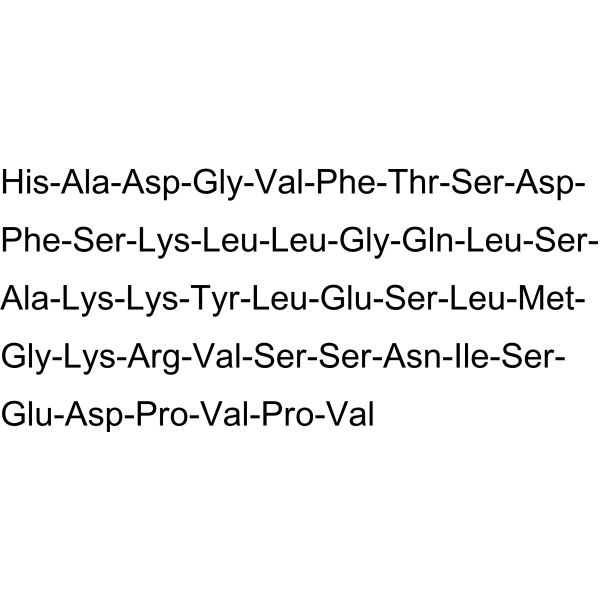
Prepro VIP (81-122), human is a prepro-vasoactive intestinal polypeptide (VIP) derived peptide, corresponding to residues 81-122. Peptide histidine valine 42 (PHV-42) has been designated to correspond exactly to Prepro VIP (81-122), which reduces both the force and frequency of spontaneous contractions of isolated rat uterus .
loading...
    loading...
Cat. No.: HY-103538
CAS No.: 62252-26-0
Target:  

Amyloid-β γ-secretase

Research Areas:  

Neurological Disease

JLK-6 is a rhomboid protease GlpG inhibitor. JLK-6 reduces the production of Amyloid β-peptide by altering the cleavage of β-amyloid precursor protein by γ-secretase, with no effect on the cleavage of Notch receptors. JLK-6 can be used in research related to Alzheimer's disease .
loading...
    loading...
Cat. No.: HY-E70933
Target:  

Endogenous Metabolite

Research Areas:  

Metabolic Disease

Protease, Streptomyces griseus, exhibits broad substrate specificity. Its active site consists of one aspartic acid residue, one histidine residue, and one serine residue. Protease tends to hydrolyze the peptide bond on the carboxyl side of glutamate or aspartate.
loading...
    loading...
Cat. No.: HY-180690
CAS No.: 2504-83-8
Synonyms: Imidazolepyruvic acid; ImPA
Imidazole-4-pyruvic acid (Imidazolepyruvic acid) is a metabolic precursor for histidine synthesis and selective stable isotope labeling of histidine residues. Imidazole-4-pyruvic acid serves as a precursor for selective histidine labeling in overexpressed proteins of Escherichia coli. Imidazole-4-pyruvic acid can be used in studies related to cancer and fungal mold infections .
loading...
    loading...
Cat. No.: HY-180690A
CAS No.: 3069873-81-7
Synonyms: Imidazolepyruvic acid TFA
Imidazole-4-pyruvic acid TFA (Imidazolepyruvic acid TFA) is a metabolic precursor for histidine synthesis and selective stable isotope labeling of histidine residues. Imidazole-4-pyruvic acid TFA serves as a precursor for selective histidine labeling in overexpressed proteins of Escherichia coli. Imidazole-4-pyruvic acid TFA can be used in studies related to cancer and fungal mold infections .
loading...
    loading...
Cat. No.: HY-E71402
Research Areas:  

Others

2-(3-Amino-3-carboxypropyl)histidine synthase (EC 2.5.1.108) is a [4Fe-4S] enzyme that modifies a histidine residue of translation elongation factor 2 (EF2) via a 3-amino-3-carboxypropyl radical. 2-(3-Amino-3-carboxypropyl)histidine synthase (EC 2.5.1.108) is involved in the biosynthesis of diphthamide.
loading...
    loading...
Cat. No.: HY-P4599B
Research Areas:  

Others

H-His-His-OH acetate is an oligopeptide. H-His-His-OH acetate can chelate with Ruthenium (II). H-His-His-OH inhibits the hydrolysis of metal ions at pH 7.4 .
loading...
    loading...
Cat. No.: HY-187411A
Synonyms: DOPE-PEG2000-Mal-Cys-RRRRRRHHHH
Research Areas:  

Others

DOPE-PEG2000-R6H4 (DOPE-PEG2000-Mal-Cys-RRRRRRHHHH) is an amphiphilic lipid-PEG-peptide conjugate consisting of DOPE (1,2-dioleoyl-sn-glycero-3-phosphoethanolamine), PEG2000, and the R6H4 peptide, a histidine-rich cell-penetrating peptide containing arginine and histidine residues. DOPE-PEG2000-R6H4 is used for intracellular delivery of drugs and nucleic acids.
loading...
    loading...
Cat. No.: HY-P2782A
Target:  

Endogenous Metabolite

Research Areas:  

Metabolic Disease

Chloramphenicol Acetyltransferase, Escherichia coli is a bacterial enzyme that detoxifies the antibiotic chloramphenicol and is responsible for chloramphenicol resistance in bacteria. Chloramphenicol Acetyltransferase, Escherichia coli covalently attaches an acetyl group from acetyl-CoA to chloramphenicol, which prevents chloramphenicol from binding to ribosomes. A histidine residue, located in the C-terminal section of Chloramphenicol Acetyltransferase, Escherichia coli, plays a central role in its catalytic mechanism.
loading...
    loading...
Cat. No.: HY-P10794
Target:  

Inhibitory Antibodies

Research Areas:  

Cancer

LH2 peptide is a pH-responsive cell-penetrating peptide dimer with the amino acid sequence LHHLCHLLHHLCHLAG. It can increase its uptake in tumor cells under weakly acidic conditions (such as the tumor microenvironment) through the protonation of histidine residues (pKa approximately 6). When conjugated with the anticancer drug Paclitaxel (HY-B0015), the PTX-LH2 conjugate showed superior tumor suppression effects compared to paclitaxel alone in a subcutaneous breast tumor model. The LH2 peptide holds potential as a drug delivery vehicle in cancer research .
loading...
    loading...
Cat. No.: HY-L908
1,244 compounds

Small molecule covalent inhibitors, or irreversible inhibitors, are a type of inhibitors that exert their biological functions by irreversibly binding to target through covalent bonds. Compared with non-covalent inhibitors, covalent inhibitors have obvious advantages in bioactivity, such that covalent warheads can target rare residues of a particular target protein, thus leading to the development of highly selective inhibitors and achieving a more complete and continued target occupancy in living systems. In recent years, the distinct strengths of covalent inhibitors in overcoming drug resistance had been recognized. However, toxicity can be a real challenge related to this class of therapeutics due to their potential for off-target reactivity and has led to these drugs being disfavored as a drug class. The drug design and optimization of covalent inhibitors has become a hot spot in drug discovery.

MCE Lead-like Covalent Screening Library offers a valuable resource of 1,049 lead-like compounds with commonly used covalent warheads. These warheads, such as acrylamide, activated terminal alkyne, acyloxymethyl ketone, and boronic acid, are capable of reacting with specific amino acid residues, including cysteine, lysine, serine, and histidine. The inclusion of these reactive warheads in the library allows researchers to explore the potential of covalent inhibition, a powerful approach in drug discovery.

Cat. No.: HY-L924
1,488 compounds

Boronic acid and boronic ester represent a relatively novel and promising chemical structure in drug design. Boronic acid exists in an sp²-hybridized state, possessing an empty p-orbital that can act as a Lewis acid to accept lone pairs from heteroatoms (O, N, or S). This Lewis acidity enables it to form reversible covalent bonds with amino acid residues such as lysine, serine, threonine, and histidine. Currently, five FDA-approved drugs containing boronic acid or boronic ester predominantly involve such covalent binding mechanisms in their interactions with target proteins. Furthermore, boronic acid can serve as a bioisostere for carboxylic acids, phosphates, and phenolic groups, utilized to improve pharmacokinetic properties and enhance drug efficacy.

To date, five boron-containing drugs have been approved by the FDA. The unique properties of boronic acids and boronic esters confer significant potential in drug design, with applications spanning cancer therapy (e.g., multiple myeloma), anti-infectives (e.g., fungal infections, tuberculosis), anti-inflammatory treatments (e.g., atopic dermatitis), antibacterial agents (e.g., carbapenem-resistant bacterial infections), and Reactive Oxygen Species (ROS)-responsive prodrugs, among others. The MCE Boronic Acid/Boronic Ester Fragment Library, which contains 1,488 compounds, serves as a valuable tool for the development of boron-containing drugs.

  • 1

