
Search Result
Results for "
hydrophilic surfaces
" in MedChemExpress (MCE) Product Catalog:
14
Biochemical Assay Reagents
| Cat. No. |
Product Name |
Target |
Research Areas |
Chemical Structure |
-
- HY-151835
-
|
|
ADC Linker
|
Others
|
|
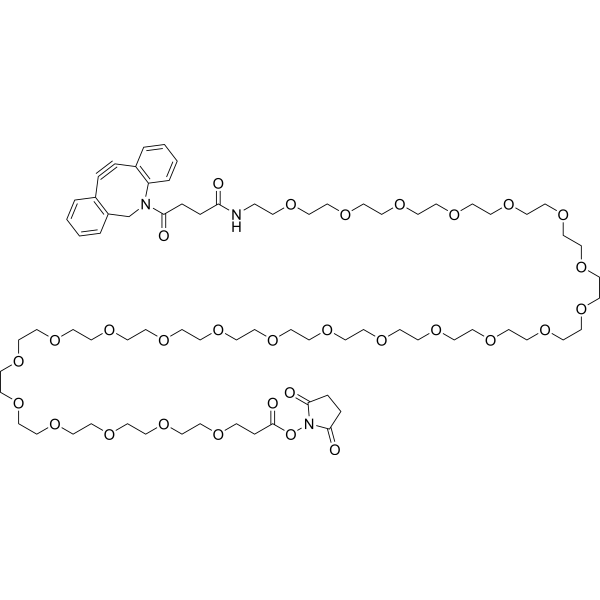
DBCO-PEG24-NHS ester is a click chemistry reagent. DBCO-PEG24-NHS ester is a click chemistry PEG reagent containing NHS ester that is able to react specifically and efficiently with primary amines (e.g. the side chain of lysine residues or aminosilane-coated surfaces) at neutral or slightly basic condition to form a covalent bond. The hydrophilic PEG spacer arm improves water solubility and provides a long and flexible connection that minimizes steric hindrance involved with ligation. DBCO is commonly used for copper-free Click Chemistry reactions. Reagent grade, for research use only .
|
-
-
- HY-W019831
-
|
Silica; Colloidal anhydrous silica
|
Biochemical Assay Reagents
|
Others
|
|
Silicon dioxide (Silica) is the core of gold-coated silica nanoparticles. Silicon dioxide has the characteristic of a spherical structure, with a layer of gold nanoparticles covering its surface. Silicon dioxide can be used as a coating material for quantum dots, enhancing their stability, reducing toxicity and improving hydrophilicity .
|
-
-
- HY-130086
-
|
|
ADC Linker
|
Cancer
|
|
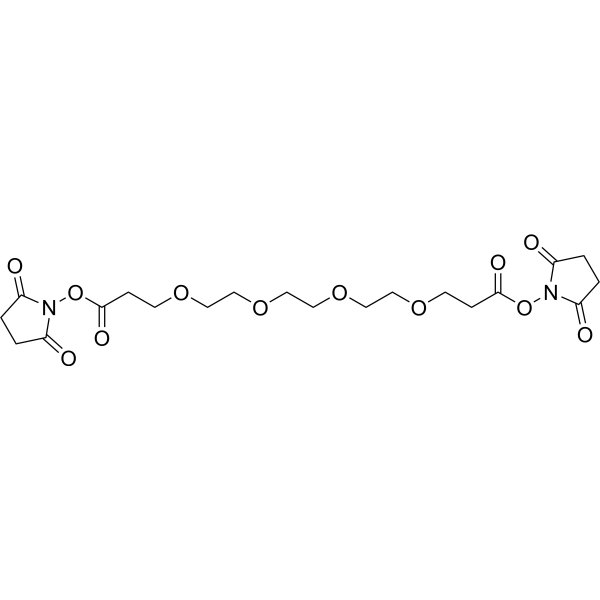
Bis-PEG4-NHS ester is a crosslinking reagent and amine-reactive modulator .Bis-PEG4-NHS ester reacts with primary amine groups on liposome surfaces via amide bond formation to covalently attach dibenzylcyclooctyne groups, with a hydrophilic PEG4 spacer reducing steric hindrance for subsequent click chemistry .Bis-PEG4-NHS ester enables site-specific antibody coupling to liposome surfaces via copper-free strain-promoted alkyne-azide cycloaddition click chemistry without disrupting liposome structure in minimal organic solvent volumes .Bis-PEG4-NHS ester undergoes hydrolysis during annealing to form -COOH groups that interact with PbI and FAI to enhance perovskite structural integrity, passivate defects, and modulate nucleation kinetics to regulate crystal growth .Bis-PEG4-NHS ester enhances device efficiency and long-term stability when used as an antisolvent additive for p-i-n perovskite solar cells .
|
-
-
- HY-154659
-
|
|
Biochemical Assay Reagents
|
Others
|
|
Polycarbophil is an orally active hydrophilic polymer. Polycarbophil achieves bioadhesion through hydrogen bonding between carboxyl groups and mucosal surfaces, and prolongs compound retention time and regulates compound release through swelling properties. Polycarbophil relieves constipation and diarrhea .
|
-
-
- HY-151827
-
|
|
ADC Linker
|
Others
|
|
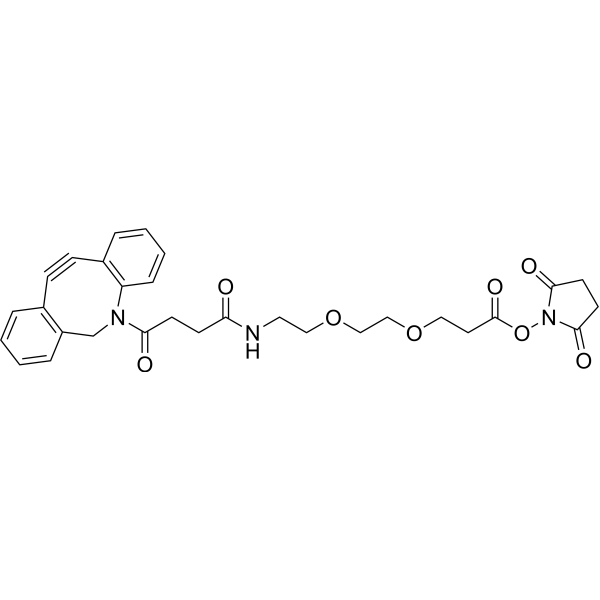
DBCO-PEG2-NHS ester is a click chemistry reagent containing an azide group. DBCO-PEG2-NHS ester is a click chemistry PEG reagent containing NHS ester that is able to react specifically and efficiently with primary amines (e.g. the side chain of lysine residues or aminosilane-coated surfaces) at neutral or slightly basic condition to form a covalent bond. The hydrophilic PEG spacer arm improves water solubility and provides a long and flexible connection that minimizes steric hindrance involved with ligation. DBCO is commonly used for copper-free Click Chemistry reactions. Reagent grade, for research use only .
|
-
-
- HY-W1048558A
-
|
mPEG2000-COOH
|
Biochemical Assay Reagents
|
Others
|
|
mPEG2000-CM (mPEG2000-COOH) is a carboxyl-terminated monomethoxy polyethylene glycol. mPEG2000-CM bears a reactive carboxyl group (-COOH) at its structural terminal site, which can form stable amide bonds with amino groups and ester bonds with hydroxyl groups. mPEG2000-CM binds to PCA-g-PCL copolymers via electrostatic interaction to form polyion complex micelles with a hydrophilic PEG surface, which enhances the stability of micelles in aqueous media. mPEG2000-CM can be used for drug delivery .
|
-
-
- HY-176509A
-
|
|
Liposome
|
Others
|
|
DSPE-PEG2000-CHO is a linear heterobifunctional PEGylation reagent with DSPE phospholipids and aldehyde groups. PEG linkers have good hydrophilicity and water solubility. Aldehyde-polyethylene glycol (DSPE) is one of the most commonly used reactive phospholipids to bind antibodies, peptides or other ligands to the surface of liposomes and other lipid-polyethylene glycol nanoparticles. DSPE-PEG2000-CHO can be used for drug delivery .
|
-
-
- HY-W848699
-
|
|
Fluorescent Dye
|
Others
|
|
FAM NHS ester, 6-isomer is a hydrophilic fluorophore. The NHS ester can react specifically and efficiently with primary amines such as the side chain of lysine residue or aminosilane-coated surfaces at neutral or slight basic conditions to form a covalent bond.
|
-
-
- HY-107201A
-
|
Betadex hydrate
|
Biochemical Assay Reagents
|
Others
|
|
β-Cyclodextrin hydrate (Betadex hydrate) is a cyclic oligosaccharide composed of seven glucose units, featuring a hydrophobic central cavity and a hydrophilic outer surface. β-Cyclodextrin hydrate is utilized in an immunoassay method that leverages the complex formed by β-Cyclodextrin hydrate with small molecules to enhance the sensitivity of the immunodetection for these small molecules. β-Cyclodextrin hydrate is applicable for research in biosensing and immunoanalysis .
|
-
-
- HY-176509C
-
|
|
Liposome
|
Others
|
|
DSPE-PEG5000-CHO is a linear heterobifunctional PEGylation reagent with DSPE phospholipids and aldehyde groups. PEG linkers have good hydrophilicity and water solubility. Aldehyde-polyethylene glycol (DSPE) is one of the most commonly used reactive phospholipids to bind antibodies, peptides or other ligands to the surface of liposomes and other lipid-polyethylene glycol nanoparticles. DSPE-PEG5000-CHO can be used for drug delivery .
|
-
-
- HY-176509
-
|
|
Liposome
|
Others
|
|
DSPE-PEG1000-CHO is a linear heterobifunctional PEGylation reagent with DSPE phospholipids and aldehyde groups. PEG linkers have good hydrophilicity and water solubility. Aldehyde-polyethylene glycol (DSPE) is one of the most commonly used reactive phospholipids to bind antibodies, peptides or other ligands to the surface of liposomes and other lipid-polyethylene glycol nanoparticles. DSPE-PEG1000-CHO can be used for drug delivery .
|
-
-
- HY-168490
-
|
|
Biochemical Assay Reagents
|
Others
|
|
Poly(ethylene glycol)methyl ether thiol (MW 800) is a thiol-modified PEG that can be used to modify the surface of materials to enhance their hydrophilicity and functionality .
|
-
-
- HY-168490A
-
|
|
Biochemical Assay Reagents
|
Others
|
|
Poly(ethylene glycol)methyl ether thiol (MW 2000) is a thiol-modified PEG that can be used to modify the surface of materials to enhance their hydrophilicity and functionality .
|
-
-
- HY-168490B
-
|
|
Biochemical Assay Reagents
|
Others
|
|
Poly(ethylene glycol)methyl ether thiol (MW 6000) is a thiol-modified PEG that can be used to modify the surface of materials to enhance their hydrophilicity and functionality .
|
-
-
- HY-147207C
-
|
|
Liposome
|
Others
|
|
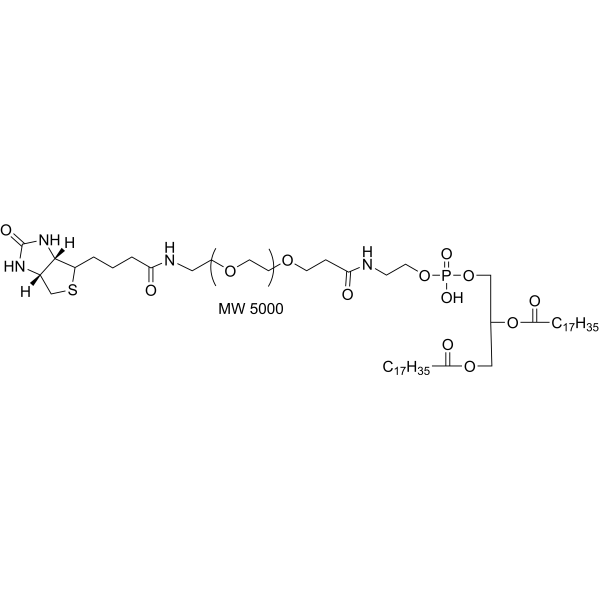
Phospholipid-PEG5000-Biotin is a phospholipid PEG derivative, can be used for modify liposome and cells surface, and pancreatic islets for cell transplantation. Phospholipid is a class of lipid containing a hydrophilic “head” and two hydrophobic “tails”; PEG is a hydrophilic and water-soluble polymer with low toxicity; Biotin is an enzyme co-factor, can be used for labeling protein .
|
-
-
- HY-147207A
-
|
|
Liposome
|
Others
|
|
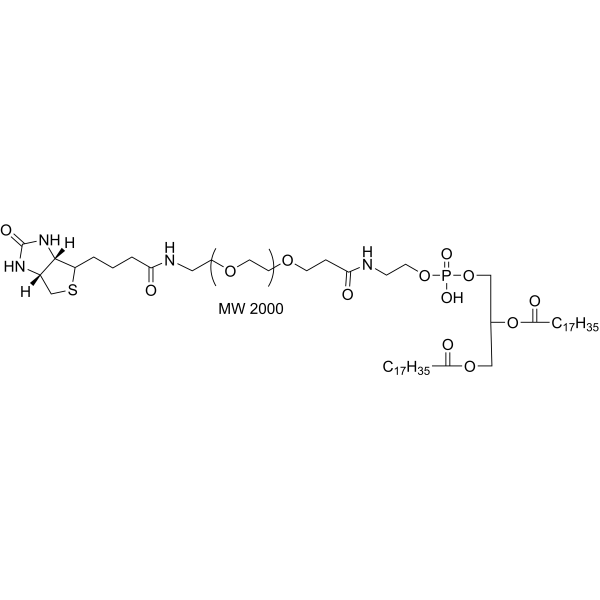
Phospholipid-PEG2000-Biotin is a Biotin labeled phospholipid PEG derivative, can be used for modify liposome and cells surface, and pancreatic islets for cell transplantation. Phospholipid is a class of lipid containing a hydrophilic "head" and two hydrophobic "tails" ; PEG is a hydrophilic and water-soluble polymer with low toxicity; Biotin is an enzyme co-factor, can be used for labeling protein .
|
-
-
- HY-P10306
-
|
|
Bacterial
|
Infection
|
|
Cys-LL37 is a biomaterial with antimicrobial properties developed by covalently fixing to the surface of titanium. Cys-LL37 uses a flexible hydrophilic polyethylene glycol spacer and selective n-terminal coupling LL37, a surface peptide layer that kills bacteria on contact is formed. Cys-LL37 can be used in research to develop new antimicrobial biomaterials .
|
-
-
- HY-16035A
-
|
|
DNA/RNA Synthesis
Antibiotic
|
Infection
|
|
Alatrofloxacin mesylate is an antibiotic with antibacterial activity. Alatrofloxacin mesylate exhibits significant hydrophilicity in the aqueous phase, forming a very stable suspension. The degradation products of Alatrofloxacin mesylate become hydrophobic upon exposure, causing aggregation of its particles. The long-term stability of Alatrofloxacin mesylate is closely related to its polar interaction. The changes in surface tension characteristics of Alatrofloxacin mesylate particles under different lighting conditions affect their physical and chemical properties .
|
-
-
- HY-176509D
-
|
|
Liposome
|
Others
|
|
DSPE-PEG10000-CHO is a linear heterobifunctional PEGylation reagent with DSPE phospholipids and aldehyde groups. PEG linkers have good hydrophilicity and water solubility. Aldehyde-polyethylene glycol (DSPE) is one of the most commonly used reactive phospholipids to bind antibodies, peptides or other ligands to the surface of liposomes and other lipid-polyethylene glycol nanoparticles. DSPE-PEG10000-CHO can be used for drug delivery .
|
-
-
- HY-176509B
-
|
|
Liposome
|
Others
|
|
DSPE-PEG3400-CHO is a linear heterobifunctional PEGylation reagent with DSPE phospholipids and aldehyde groups. PEG linkers have good hydrophilicity and water solubility. Aldehyde-polyethylene glycol (DSPE) is one of the most commonly used reactive phospholipids to bind antibodies, peptides or other ligands to the surface of liposomes and other lipid-polyethylene glycol nanoparticles. DSPE-PEG3400-CHO can be used for drug delivery .
|
-
-
- HY-176509H
-
|
|
Liposome
|
Others
|
|
DSPE-PEG40000-CHO is a linear heterobifunctional PEGylation reagent with DSPE phospholipids and aldehyde groups. PEG linkers have good hydrophilicity and water solubility. Aldehyde-polyethylene glycol (DSPE) is one of the most commonly used reactive phospholipids to bind antibodies, peptides or other ligands to the surface of liposomes and other lipid-polyethylene glycol nanoparticles. DSPE-PEG40000-CHO can be used for drug delivery .
|
-
-
- HY-179081
-
-
-
- HY-W190920
-
|
|
Biochemical Assay Reagents
|
Others
|
|
t-Butoxycarbonyl-PEG2-NHS ester has a t-Boc protecting group and an NHS ester moiety. The t-butyl group can be deprotected under acidic conditions. NHS ester can react specifically and efficiently with primary amines such as the side chain of lysine residues or aminosilane-coated surfaces at neutral or slightly basic condition to form a covalent bond. The hydrophilic PEG linker increases the water solubility of the compound in aqueous media.
|
-
-
- HY-176509E
-
|
|
Liposome
|
Others
|
|
DSPE-PEG20000-CHO is a linear heterobifunctional PEGylation reagent with DSPE phospholipids and aldehyde groups. PEG linkers have good hydrophilicity and water solubility. Aldehyde-polyethylene glycol (DSPE) is one of the most commonly used reactive phospholipids to bind antibodies, peptides or other ligands to the surface of liposomes and other lipid-polyethylene glycol nanoparticles. DSPE-PEG20000-CHO can be used for drug delivery .
|
-
-
- HY-167142
-
|
N-Stearoyl-L-glutamic acid
|
Biochemical Assay Reagents
|
Others
|
|
Stearoyl glutamic acid (N-Stearoyl-L-glutamic acid) is a saturated aliphatic amide compound and also an additive for lipid cubic phase materials. Stearoyl glutamic acid is used in studies as a surfactant and emulsifier .
|
-
| Cat. No. |
Product Name |
Type |
-
- HY-W848699
-
|
|
Fluorescent Dyes
|
|
FAM NHS ester, 6-isomer is a hydrophilic fluorophore. The NHS ester can react specifically and efficiently with primary amines such as the side chain of lysine residue or aminosilane-coated surfaces at neutral or slight basic conditions to form a covalent bond.
|
| Cat. No. |
Product Name |
Type |
-
- HY-W1048558A
-
|
mPEG2000-COOH
|
Biochemical Assay Reagents
|
|
mPEG2000-CM (mPEG2000-COOH) is a carboxyl-terminated monomethoxy polyethylene glycol. mPEG2000-CM bears a reactive carboxyl group (-COOH) at its structural terminal site, which can form stable amide bonds with amino groups and ester bonds with hydroxyl groups. mPEG2000-CM binds to PCA-g-PCL copolymers via electrostatic interaction to form polyion complex micelles with a hydrophilic PEG surface, which enhances the stability of micelles in aqueous media. mPEG2000-CM can be used for drug delivery .
|
-
- HY-176509A
-
|
|
Biochemical Assay Reagents
|
|
DSPE-PEG2000-CHO is a linear heterobifunctional PEGylation reagent with DSPE phospholipids and aldehyde groups. PEG linkers have good hydrophilicity and water solubility. Aldehyde-polyethylene glycol (DSPE) is one of the most commonly used reactive phospholipids to bind antibodies, peptides or other ligands to the surface of liposomes and other lipid-polyethylene glycol nanoparticles. DSPE-PEG2000-CHO can be used for drug delivery .
|
-
- HY-176509C
-
|
|
Biochemical Assay Reagents
|
|
DSPE-PEG5000-CHO is a linear heterobifunctional PEGylation reagent with DSPE phospholipids and aldehyde groups. PEG linkers have good hydrophilicity and water solubility. Aldehyde-polyethylene glycol (DSPE) is one of the most commonly used reactive phospholipids to bind antibodies, peptides or other ligands to the surface of liposomes and other lipid-polyethylene glycol nanoparticles. DSPE-PEG5000-CHO can be used for drug delivery .
|
-
- HY-176509
-
|
|
Biochemical Assay Reagents
|
|
DSPE-PEG1000-CHO is a linear heterobifunctional PEGylation reagent with DSPE phospholipids and aldehyde groups. PEG linkers have good hydrophilicity and water solubility. Aldehyde-polyethylene glycol (DSPE) is one of the most commonly used reactive phospholipids to bind antibodies, peptides or other ligands to the surface of liposomes and other lipid-polyethylene glycol nanoparticles. DSPE-PEG1000-CHO can be used for drug delivery .
|
-
- HY-168490
-
|
|
Biochemical Assay Reagents
|
|
Poly(ethylene glycol)methyl ether thiol (MW 800) is a thiol-modified PEG that can be used to modify the surface of materials to enhance their hydrophilicity and functionality .
|
-
- HY-168490A
-
|
|
Biochemical Assay Reagents
|
|
Poly(ethylene glycol)methyl ether thiol (MW 2000) is a thiol-modified PEG that can be used to modify the surface of materials to enhance their hydrophilicity and functionality .
|
-
- HY-168490B
-
|
|
Biochemical Assay Reagents
|
|
Poly(ethylene glycol)methyl ether thiol (MW 6000) is a thiol-modified PEG that can be used to modify the surface of materials to enhance their hydrophilicity and functionality .
|
-
- HY-147207C
-
|
|
Biochemical Assay Reagents
|
|
Phospholipid-PEG5000-Biotin is a phospholipid PEG derivative, can be used for modify liposome and cells surface, and pancreatic islets for cell transplantation. Phospholipid is a class of lipid containing a hydrophilic “head” and two hydrophobic “tails”; PEG is a hydrophilic and water-soluble polymer with low toxicity; Biotin is an enzyme co-factor, can be used for labeling protein .
|
-
- HY-147207A
-
|
|
Biochemical Assay Reagents
|
|
Phospholipid-PEG2000-Biotin is a Biotin labeled phospholipid PEG derivative, can be used for modify liposome and cells surface, and pancreatic islets for cell transplantation. Phospholipid is a class of lipid containing a hydrophilic "head" and two hydrophobic "tails" ; PEG is a hydrophilic and water-soluble polymer with low toxicity; Biotin is an enzyme co-factor, can be used for labeling protein .
|
-
- HY-176509D
-
|
|
Biochemical Assay Reagents
|
|
DSPE-PEG10000-CHO is a linear heterobifunctional PEGylation reagent with DSPE phospholipids and aldehyde groups. PEG linkers have good hydrophilicity and water solubility. Aldehyde-polyethylene glycol (DSPE) is one of the most commonly used reactive phospholipids to bind antibodies, peptides or other ligands to the surface of liposomes and other lipid-polyethylene glycol nanoparticles. DSPE-PEG10000-CHO can be used for drug delivery .
|
-
- HY-176509B
-
|
|
Biochemical Assay Reagents
|
|
DSPE-PEG3400-CHO is a linear heterobifunctional PEGylation reagent with DSPE phospholipids and aldehyde groups. PEG linkers have good hydrophilicity and water solubility. Aldehyde-polyethylene glycol (DSPE) is one of the most commonly used reactive phospholipids to bind antibodies, peptides or other ligands to the surface of liposomes and other lipid-polyethylene glycol nanoparticles. DSPE-PEG3400-CHO can be used for drug delivery .
|
-
- HY-176509H
-
|
|
Biochemical Assay Reagents
|
|
DSPE-PEG40000-CHO is a linear heterobifunctional PEGylation reagent with DSPE phospholipids and aldehyde groups. PEG linkers have good hydrophilicity and water solubility. Aldehyde-polyethylene glycol (DSPE) is one of the most commonly used reactive phospholipids to bind antibodies, peptides or other ligands to the surface of liposomes and other lipid-polyethylene glycol nanoparticles. DSPE-PEG40000-CHO can be used for drug delivery .
|
-
- HY-179081
-
|
|
Biochemical Assay Reagents
|
|
Phenyl-dextran 40 can be used to coat plastics or other related surfaces to impart more hydrophilic properties.
|
-
- HY-176509E
-
|
|
Biochemical Assay Reagents
|
|
DSPE-PEG20000-CHO is a linear heterobifunctional PEGylation reagent with DSPE phospholipids and aldehyde groups. PEG linkers have good hydrophilicity and water solubility. Aldehyde-polyethylene glycol (DSPE) is one of the most commonly used reactive phospholipids to bind antibodies, peptides or other ligands to the surface of liposomes and other lipid-polyethylene glycol nanoparticles. DSPE-PEG20000-CHO can be used for drug delivery .
|
| Cat. No. |
Product Name |
Target |
Research Area |
-
- HY-P10306
-
|
|
Bacterial
|
Infection
|
|
Cys-LL37 is a biomaterial with antimicrobial properties developed by covalently fixing to the surface of titanium. Cys-LL37 uses a flexible hydrophilic polyethylene glycol spacer and selective n-terminal coupling LL37, a surface peptide layer that kills bacteria on contact is formed. Cys-LL37 can be used in research to develop new antimicrobial biomaterials .
|
| Cat. No. |
Product Name |
Category |
Target |
Chemical Structure |
| Cat. No. |
Product Name |
|
Classification |
-
- HY-151835
-
|
|
|
DBCO
|
|
DBCO-PEG24-NHS ester is a click chemistry reagent. DBCO-PEG24-NHS ester is a click chemistry PEG reagent containing NHS ester that is able to react specifically and efficiently with primary amines (e.g. the side chain of lysine residues or aminosilane-coated surfaces) at neutral or slightly basic condition to form a covalent bond. The hydrophilic PEG spacer arm improves water solubility and provides a long and flexible connection that minimizes steric hindrance involved with ligation. DBCO is commonly used for copper-free Click Chemistry reactions. Reagent grade, for research use only .
|
-
- HY-151827
-
|
|
|
DBCO
|
|
DBCO-PEG2-NHS ester is a click chemistry reagent containing an azide group. DBCO-PEG2-NHS ester is a click chemistry PEG reagent containing NHS ester that is able to react specifically and efficiently with primary amines (e.g. the side chain of lysine residues or aminosilane-coated surfaces) at neutral or slightly basic condition to form a covalent bond. The hydrophilic PEG spacer arm improves water solubility and provides a long and flexible connection that minimizes steric hindrance involved with ligation. DBCO is commonly used for copper-free Click Chemistry reactions. Reagent grade, for research use only .
|
| Cat. No. |
Product Name |
|
Classification |
-
- HY-154659
-
|
|
|
Emulsifiers
Thickeners
Release-retarding Agents
|
|
Polycarbophil is an orally active hydrophilic polymer. Polycarbophil achieves bioadhesion through hydrogen bonding between carboxyl groups and mucosal surfaces, and prolongs compound retention time and regulates compound release through swelling properties. Polycarbophil relieves constipation and diarrhea .
|
-
- HY-176509A
-
|
|
|
Pegylated Lipids
|
|
DSPE-PEG2000-CHO is a linear heterobifunctional PEGylation reagent with DSPE phospholipids and aldehyde groups. PEG linkers have good hydrophilicity and water solubility. Aldehyde-polyethylene glycol (DSPE) is one of the most commonly used reactive phospholipids to bind antibodies, peptides or other ligands to the surface of liposomes and other lipid-polyethylene glycol nanoparticles. DSPE-PEG2000-CHO can be used for drug delivery .
|
-
- HY-176509C
-
|
|
|
Pegylated Lipids
|
|
DSPE-PEG5000-CHO is a linear heterobifunctional PEGylation reagent with DSPE phospholipids and aldehyde groups. PEG linkers have good hydrophilicity and water solubility. Aldehyde-polyethylene glycol (DSPE) is one of the most commonly used reactive phospholipids to bind antibodies, peptides or other ligands to the surface of liposomes and other lipid-polyethylene glycol nanoparticles. DSPE-PEG5000-CHO can be used for drug delivery .
|
-
- HY-176509
-
|
|
|
Pegylated Lipids
|
|
DSPE-PEG1000-CHO is a linear heterobifunctional PEGylation reagent with DSPE phospholipids and aldehyde groups. PEG linkers have good hydrophilicity and water solubility. Aldehyde-polyethylene glycol (DSPE) is one of the most commonly used reactive phospholipids to bind antibodies, peptides or other ligands to the surface of liposomes and other lipid-polyethylene glycol nanoparticles. DSPE-PEG1000-CHO can be used for drug delivery .
|
-
- HY-147207C
-
|
|
|
Pegylated Lipids
|
|
Phospholipid-PEG5000-Biotin is a phospholipid PEG derivative, can be used for modify liposome and cells surface, and pancreatic islets for cell transplantation. Phospholipid is a class of lipid containing a hydrophilic “head” and two hydrophobic “tails”; PEG is a hydrophilic and water-soluble polymer with low toxicity; Biotin is an enzyme co-factor, can be used for labeling protein .
|
-
- HY-147207A
-
|
|
|
Pegylated Lipids
|
|
Phospholipid-PEG2000-Biotin is a Biotin labeled phospholipid PEG derivative, can be used for modify liposome and cells surface, and pancreatic islets for cell transplantation. Phospholipid is a class of lipid containing a hydrophilic "head" and two hydrophobic "tails" ; PEG is a hydrophilic and water-soluble polymer with low toxicity; Biotin is an enzyme co-factor, can be used for labeling protein .
|
-
- HY-176509D
-
|
|
|
Pegylated Lipids
|
|
DSPE-PEG10000-CHO is a linear heterobifunctional PEGylation reagent with DSPE phospholipids and aldehyde groups. PEG linkers have good hydrophilicity and water solubility. Aldehyde-polyethylene glycol (DSPE) is one of the most commonly used reactive phospholipids to bind antibodies, peptides or other ligands to the surface of liposomes and other lipid-polyethylene glycol nanoparticles. DSPE-PEG10000-CHO can be used for drug delivery .
|
-
- HY-176509B
-
|
|
|
Pegylated Lipids
|
|
DSPE-PEG3400-CHO is a linear heterobifunctional PEGylation reagent with DSPE phospholipids and aldehyde groups. PEG linkers have good hydrophilicity and water solubility. Aldehyde-polyethylene glycol (DSPE) is one of the most commonly used reactive phospholipids to bind antibodies, peptides or other ligands to the surface of liposomes and other lipid-polyethylene glycol nanoparticles. DSPE-PEG3400-CHO can be used for drug delivery .
|
-
- HY-176509H
-
|
|
|
Pegylated Lipids
|
|
DSPE-PEG40000-CHO is a linear heterobifunctional PEGylation reagent with DSPE phospholipids and aldehyde groups. PEG linkers have good hydrophilicity and water solubility. Aldehyde-polyethylene glycol (DSPE) is one of the most commonly used reactive phospholipids to bind antibodies, peptides or other ligands to the surface of liposomes and other lipid-polyethylene glycol nanoparticles. DSPE-PEG40000-CHO can be used for drug delivery .
|
-
- HY-176509E
-
|
|
|
Pegylated Lipids
|
|
DSPE-PEG20000-CHO is a linear heterobifunctional PEGylation reagent with DSPE phospholipids and aldehyde groups. PEG linkers have good hydrophilicity and water solubility. Aldehyde-polyethylene glycol (DSPE) is one of the most commonly used reactive phospholipids to bind antibodies, peptides or other ligands to the surface of liposomes and other lipid-polyethylene glycol nanoparticles. DSPE-PEG20000-CHO can be used for drug delivery .
|
Your information is safe with us. * Required Fields.
Inquiry Information
- Product Name:
- Cat. No.:
- Quantity:
- MCE Japan Authorized Agent:

