
1. Search Result
Search Result
Results for "

immune initiator

" in MedChemExpress (MCE) Product Catalog:

8

Inhibitors & Agonists

1

Screening Libraries

1

Peptides

Cat. No. Product Name Target Research Areas Chemical Structure
  • HY-W075517

    2-Methylimidazole zinc salt

    Caspase Pyroptosis MOFs Cancer
    ZIF-8 (2-Methylimidazole zinc salt) is a caspase-1/Gasdermin D activator and a pH- and stimulus-responsive inducer of drug release, which serves as a highly efficient drug delivery carrier. ZIF-8 is a metal-organic framework (MOF). ZIF-8 activates the caspase-1/Gasdermin D-dependent pyroptosis pathway, induces pyroptosis, necrosis and immunogenic cell death, initiates in situ anti-tumor immunity, reprograms the immunosuppressive tumor microenvironment and inhibits tumor proliferation. ZIF-8 is applicable to related research on multiple cancers including colorectal cancer and breast cancer .
    ZIF-8
  • HY-124700
    LYPLAL1-IN-1
    1 Publications Verification

    Cyclic GMP-AMP Synthase STING PD-1/PD-L1 Epoxide Hydrolase Metabolic Disease
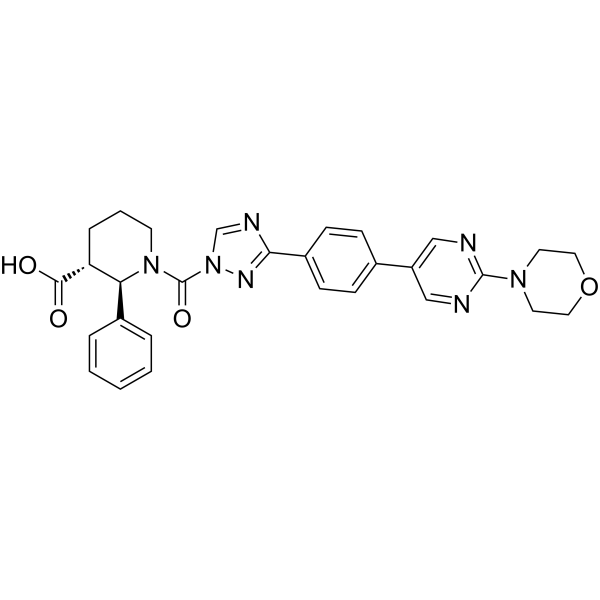
    LYPLAL1-IN-1 (compound 11) is a selective, covalent, and irreversible inhibitor of the lysophospholipase-like enzyme LYPLAL1 (IC50 = 6 nM). LYPLAL1-IN-1 shows selectivity against other serine hydrolases such as carboxylesterase CES1 (IC50 > 50 μM for CES1). LYPLAL1-IN-1 inhibits the depalmitoylation function of LYPLAL1, blocking its depalmitoylation modification of cyclic GMP-AMP synthase (cGAS), thereby promoting cGAS dimerization and activation, and initiating the cGAS-STING pathway-mediated innate immune response. LYPLAL1-IN-1 can enhance DNA-induced type I interferon production, upregulate PD-L1 expression in tumor cells, and promote the accumulation of tumor-infiltrating CD8 + T cells, with the core function of strengthening the anti-tumor immune response. LYPLAL1-IN-1 is primarily used in tumor immunology research, especially in combination with PD-1/PD-L1 inhibitors .
    LYPLAL1-IN-1
  • HY-162065
    N6F11
    1 Publications Verification

    Ferroptosis Cancer
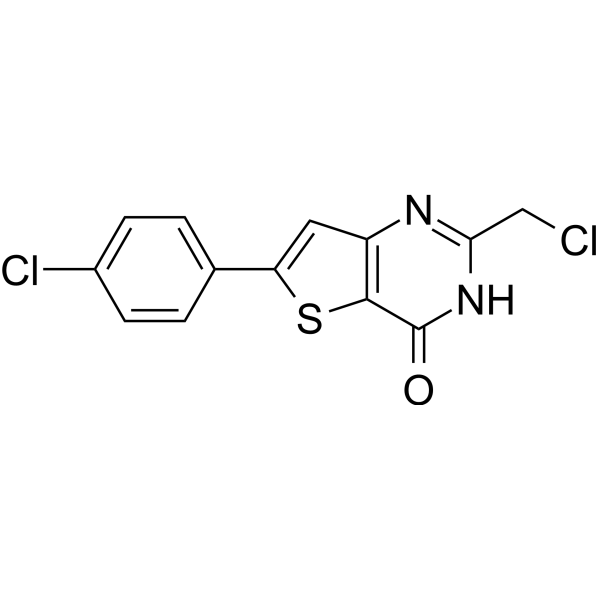
    N6F11 is a selective ferroptosis inducer, and can selectively induce ferroptosis by targeting TRIM25-mediated GPX4 degradation in cancer cells while sparing immune cells. N6F11 initiates HMGB1-dependent antitumor immunity mediated by CD8 + T cells .
    N6F11
  • HY-P1745

    Insulin B chain (9-23)

    MHC Insulin Receptor IFNAR Inflammation/Immunology
    InsB (9-23) (Insulin B chain (9-23)) is an HLA-DQ8-restricted insulin B-chain peptide composed of amino acid residues 9-23. InsB (9-23) serves as a major MHC II class-restricted antigen. InsB (9-23) supports the recognition and activation of T cells, stimulates the secretion of IFN-γ and cytokines, and induces cross-reactive immune responses. InsB (9-23)-specific CD4 T cells can initiate diabetes . InsB (9-23) can be used in research related to type 1 diabetes and autoimmune diabetes .
    InsB (9-23)
  • HY-D1453

    Biochemical Assay Reagents Cancer
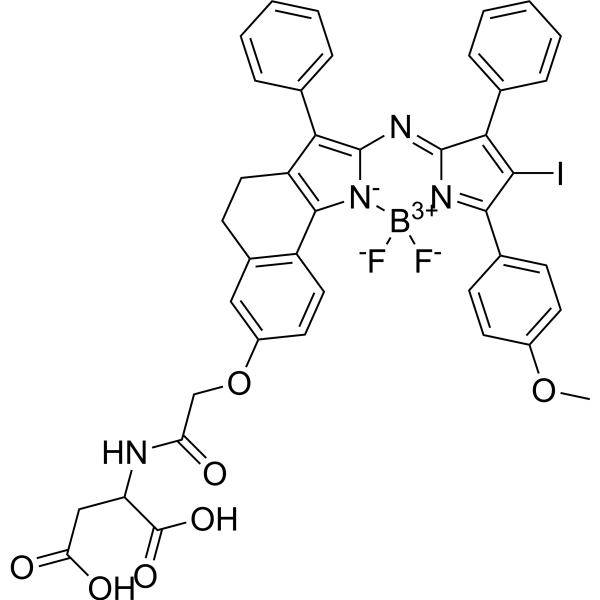
    Immune initiator-1 (Compound 1a) is an amino acid-modified near-infrared Aza-BODIPY photosensitizer, acts as an immune initiator for potent photodynamic research in melanoma .
    Immune initiator-1
  • HY-E70731

    IRAK Inflammation/Immunology
    The IRAK4 protein is a serine/threonine protein kinase that is critical for initiating the innate immune response through the Toll-like receptor (TLR) and IL-1R signaling pathways. After TLR is activated, it rapidly forms the Myddosome with IRAK2. IRAK4 aa104-460 Recombinant Human Active Protein Kinase is a recombinant IRAK4 aa104-460 protein that can be used to study IRAK4 aa104-460-related functions .
    IRAK4 aa104-460 Recombinant Human Active Protein Kinase
  • HY-185659

    CD22 Apoptosis Akt ERK Inflammation/Immunology
    6'-BPANeuGc is a CD22-targeting ligand. 6'-BPANeuGc suppresses BCR activation, recruits CD22 to B cell immunological synapses, initiates inhibitory signals, induces B cell apoptosis. 6'-BPANeuGc inhibits calcium flux, and inhibits Akt and Erk activation. 6'-BPANeuGc can be used for research on immune system diseases .
    6'-BPANeuGc
  • HY-W154247

    Bacterial Infection
    IP6C is a specific inhibitor and phage sensitizer targeting type II Thoeris systems. IP6C competitively binds to histidine in the catalytic pocket of ThsB, blocks the production of the His-ADPR alarm signal and inhibits ThsA activation, thereby relieving bacterial stasis of phage replication. IP6C selectively resensitizes drug-resistant bacteria carrying type II Thoeris systems (such as Pseudomonas aeruginosa) to phage lysis, without affecting other bacteria, and shows no toxicity to mice and human cell lines. IP6C significantly improves the survival rate of infected mice, and can be used to overcome bacterial phage defense mechanisms and study Pseudomonas aeruginosa infections .
    Thoeris system: (named after the Egyptian goddess of fertility and protection), is a widespread anti-phage immune defense system in bacteria and archaea. Thoeris system belongs to the "Abortion Infection (Abi)" mechanism of bacteria: when an individual bacterium detects phage invasion, it initiates a suicide program and dies, thereby blocking phage replication and spread, and protecting the surrounding bacterial population from infection.
    IP6C

Inquiry Online

Your information is safe with us. * Required Fields.

Salutation


Country or Region *

Applicant Name *


Organization Name *

Department *


Email Address *


Product Name *

Cat. No.


Requested quantity *

Phone Number *


Remarks

Inquiry Online

Inquiry Information

Product Name:
Cat. No.:
Quantity:
MCE Japan Authorized Agent:

