
Search Result
Results for "
indicator
" in MedChemExpress (MCE) Product Catalog:
164
Biochemical Assay Reagents
34
Isotope-Labeled Compounds
| Cat. No. |
Product Name |
Target |
Research Areas |
Chemical Structure |
-
- HY-D1055
-
MitoSOX Red
Maximum Cited Publications
263 Publications Verification
|
Fluorescent Dye
Reactive Oxygen Species (ROS)
Mitochondrial Metabolism
|
Cancer
|
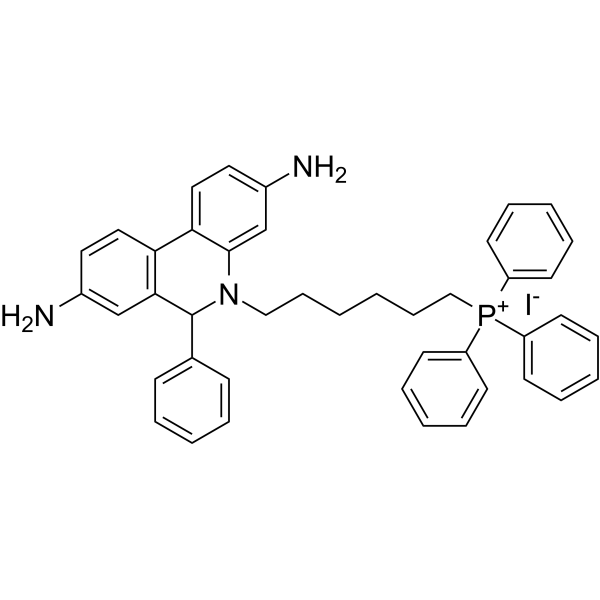
MitoSOX Red is a live cell fluorescent probe that specifically targets mitochondria and is cell membrane permeable. MitoSOX Red enters mitochondria and is oxidized by superoxide but not by other ROS or RNS generating systems. The oxidized MitoSOX Red then binds to nucleic acids in mitochondria/nucleus, producing strong red fluorescence. MitoSOX Red can be used as a fluorescent indicator to specifically detect superoxide. In addition, superoxide dismutase (SOD) can prevent the oxidation of MitoSOX Red. Excitation/emission wavelength: 510/580 nm.
|
-
-
- HY-D0169
-
-
-
- HY-111391A
-
|
Diazoresorcinol sodium, indicator
|
Bacterial
Fluorescent Dye
|
Others
|
|
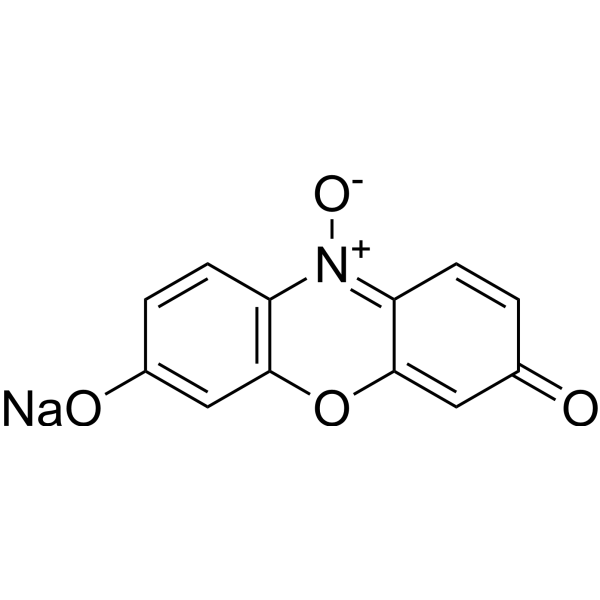
Resazurin (Diazoresorcinol) sodium, indicator is a non-toxic, stable, membrane-permeable blue non-fluorescent dye (faintly fluorescent). Resazurin sodium, indicator is used as a redox indicator, can be reduced to pink, highly fluorescent Resorufin (Ex=530-560 nm, Em=590 nm) in living cells. Resazurin sodium, indicator can be used for the detection of cell viability, toxicity, proliferation, migration and invasion in cells (human, plant and animal, bacterial and fungal) .
|
-
-
- HY-113409
-
|
|
Endogenous Metabolite
|
Metabolic Disease
|
|
3-Hydroxyisovaleric acid is a normal endogenous metabolite excreted in the urine. The urinary excretion of 3-hydroxyisovaleric acid is early and sensitive indicator of biotin deficiency .
|
-
-
- HY-B1571
-
|
|
Environmental Pollutants
Fluorescent Dye
|
Others
|
|
Bromophenol blue is an acid phthalein dye, and it is used as a tracking dye for electrophoresis. Bromophenol blue is also used as a pH indicator, with a transition range of pH 3 to 4.6. Bromophenol blue is used as a sensor for the determination of several compounds including ammonia, drugs, proteins and amino acids. The binding of Bromophenol blue to proteins is accompanied by the appearance of a strong absorbance at 610 nm .
|
-
-
- HY-B1359A
-
|
|
Biochemical Assay Reagents
|
Others
|
|
Methylene blue indicator is a biochemical reagent that can be used as a biological material or organic compound for life science related research.
|
-
-
- HY-D0023
-
|
HPTS; Solvent Green 7
|
Environmental Pollutants
Fluorescent Dye
|
Others
|
|
Pyranine (HPTS; Solvent Green 7) is a cell-impermeant pH-sensitive fluorescent indicator. Pyranine acts as a class of fluorescent chemosensor for the Cu + ion. Pyranine is used as a coloring agent, biological stain, optical detecting reagent, and pH indicator (Ex/Em = 450/510 nm) .
|
-
-
- HY-D0155
-
|
|
Fluorescent Dye
|
Others
|
|
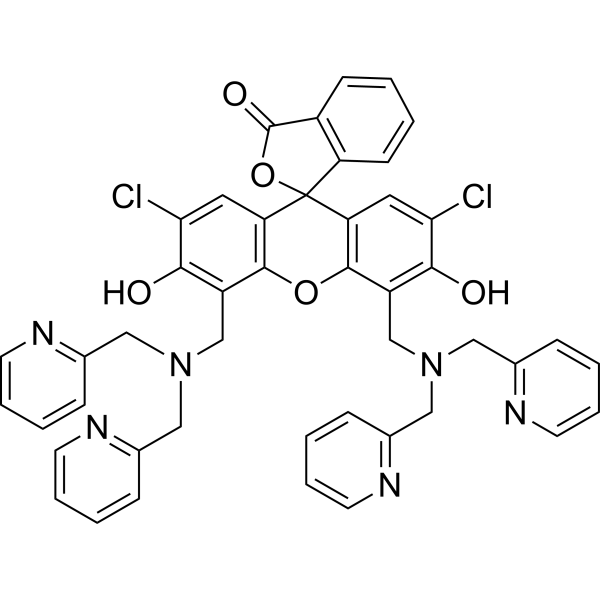
Zinpyr-1 is a zinc-responsive fluorescent indicator and a membrane-permeable metal-binding probe. Zinpyr-1 forms a complex with Mn 2+ ions and generates a fluorescence turn-on signal. Zinpyr-1 binds to free zinc ions in serum, enabling quantitative detection of free zinc concentration. Zinpyr-1 produces fluorescence signals reflecting the relative zinc concentration in plant root cells, localizes to specific layers of plant root cells, and can be used to support analyses related to plant zinc transporter mutations and homeostasis .
|
-
-
- HY-W110798
-
|
|
Environmental Pollutants
Biochemical Assay Reagents
|
Others
|
|
Bromophenol blue indicator (3.0-4.6) is a synthetic dye commonly used as an acid-base indicator with a transition range of pH 3.0-4.6. Bromophenol blue indicator (3.0-4.6) is water soluble and changes color from yellow to blue as the pH of the solution changes from acidic to basic. Its unique chemical properties make it an important ingredient in a variety of scientific applications, especially in biochemistry and molecular biology. In addition, it can be used as a stain in microbiology and histology. However, Bromophenol blue indicator (3.0-4.6) has potential irritating and staining properties.
|
-
-
- HY-W110927
-
|
|
Biochemical Assay Reagents
Fluorescent Dye
|
Others
|
|
Alizarin red S indicator (C.I. 58005) is a reductively active (quinone-based) anthraquinone dye that forms complexes with metal ions (such as zirconium, calcium) or boric acid to label calcium deposition and perform electrochemical sensing functions. Alizarin Red S undergoes reversible redox reactions (for electrochemical detection) and irreversible chelation (for bone staining). Alizarin Red S is mainly used in bone metabolism research (labeling mineralized tissue), sugar detection (boric acid-sugar competition system) and metal ion sensing (such as zirconium ion detection), and can be used in osteoporosis and metabolic disease research .
|
-
-
- HY-D0215
-
|
Safranine T
|
Fluorescent Dye
Bacterial
|
Infection
Metabolic Disease
|
|
Safranin (Safranin T) is an important and classical phenazinium dye. Safranin has been extensively used in the academic field as a spectroscopic probe and indicator. Safranin possesses a planar structure and cationic charge. Safranin can readily intercalate into biological macromolecules, including DNA and proteins. Safranin has antibacterial effects against gram-positive bacteria (S. aureus). Safranin can be used as a redox indicator in the determination of metal ion concentration .
|
-
-
- HY-W129633
-
|
DCIP sodium hydrate; DPIP sodium hydrate
|
Biochemical Assay Reagents
|
Others
|
|
2,6-Dichlorophenolindophenol (DCIP; DPIP) sodium hydrate is a redox chromogenic indicator with a redox potential of +217 mV relative to SHE, and it acts as a substrate for reduction reactions. During the metabolic process of nutrient consumption by Saccharomyces cerevisiae, 2,6-Dichlorophenolindophenol sodium hydrate is reduced from dark blue to colorless, resulting in a decrease in absorbance. 2,6-Dichlorophenolindophenol sodium hydrate is widely used in spectrophotometric biochemical oxygen demand determination and preclinical colorimetric toxicity analysis for heavy metal ion detection based on Saccharomyces cerevisiae .
|
-
-
- HY-W040144
-
|
|
Fluorescent Dye
|
Others
|
|
Bromocresol green is a pH-sensitive triphenylmethane dye commonly used for the determination of protein and albumin in serum. Bromocresol green is a bio-based dye with a yellow-green to blue-green color. Bromocresol green turns yellow (λmax=435 nm, protonated form) when placed in acidic solution (e.g. pH=4.15), and turns blue in basic solution (λmax=615 nm, deprotonated form). Bromocresol green is widely used as a pH indicator in the field of biochemical analysis. In addition, Bromocresol green is also used to detect the concentration of molecules such as creatinine, and to judge the viability of cells .
|
-
-
- HY-W110910
-
|
|
Biochemical Assay Reagents
|
Infection
|
|
Eriochrome black T, Indicator is a complexing agent for metal ions (e.g., Ca 2+, Mg 2+) and is used as an indicator in complexometric titrations. Eriochrome black T, Indicator forms colored complexes with metal ions through covalent coordination bonds, and indicates the endpoint of the titration by color change. Eriochrome black T, Indicator can be used as an anionic azo dye in photocatalytic degradation studies to evaluate the performance of photocatalysts. The reaction solution of Eriochrome black T, Indicator combined with Mg 2+ is initially purple. During loop-mediated isothermal amplification (LAMP), the color changes from purple to sky blue due to the consumption of Mg 2+ by the formation of magnesium pyrophosphate, indicating a positive reaction. The optimal concentration of Eriochrome black T, Indicator in LAMP is 60 μM, and the detection limit for Mycobacterium tuberculosis is 1 pg DNA/reaction .
|
-
-
- HY-Y0699
-
|
|
Environmental Pollutants
Fluorescent Dye
|
Others
|
|
Methyl red is a pH-sensitive acid-base indicator and colorimetric reagent with a pKa of 5.1. Methyl red achieves visual judgment of the titration endpoint through reversible structural changes of protonation (red, pH <4.4) and deprotonation (yellow, pH >6.2). Methyl red is widely used in acid-base titration in chemical analysis and buffer pH monitoring in biochemistry .
|
-
-
- HY-101883A
-
|
|
Fluorescent Dye
|
Others
|
|
BCECF Acetoxymethyl ester is a cell membrane permeable compound widely-used as a fluorescent indicator for intracellular pH. BCECF Acetoxymethyl ester could diffuse through the cell membrane and intracellular esterase cleave the ester bond releasing BCECF (HY-101882). BCECF allows measurements in the physiological pH range 6.0-8.0. Excitation ratio: 490/440 nm; Emission intensity: 535 nm .
|
-
-
- HY-D0219
-
|
Thymolsulphonephthalein
|
Fluorescent Dye
|
Others
|
|
Thymol blue is a reversible pH indicator that responds to the pH of the solution through structural changes of protonation and deprotonation. Thymol blue is red (HI - form) under acidic conditions and blue (I 2- form) under alkaline conditions. Quantitative detection is achieved through the absorption peak shift (435 nm/596 nm) of the UV-visible spectrum. Thymol blue selectively responds to pH changes, changing from red to yellow at pH 1.2-2.8 and from yellow to blue at pH 8.0-9.6. Thymol blue can be fixed in a silica gel matrix through sol-gel technology to form a solid-state sensor for in-situ pH measurement in the marine environment and acid-base monitoring in the biomedical field[1][2].
|
-
-
- HY-W012982
-
-
-
- HY-D0169A
-
|
Phenolsulfonephthalein sodium salt
|
Fluorescent Dye
Glutathione Peroxidase
|
Others
|
|
Phenol red (Phenolsulfonephthalein) sodium salt is a pH indicator dye. Phenol Red sodium salt is also an antagonist of rat P2X1R. Phenol Red sodium salt enhances the halogenating activity of myeloperoxidase. Phenol Red sodium salt shows a distinct color change from pink to yellow in a positive pH reaction .
|
-
-
- HY-W110794
-
|
|
Environmental Pollutants
Biochemical Assay Reagents
|
Others
|
|
Crystal violet, IND (0.0-2.0) is a specialized indicator suitable for strongly acidic systems, which reflects changes in pH within the range of 0.0-2.0 through color changes. Crystal violet, IND (0.0-2.0) is widely used in acid-base titration, chemical analysis, and industrial testing fields .
|
-
-
- HY-W087928
-
|
|
Biochemical Assay Reagents
|
Others
|
|
Bromocresol purple is a pH indicator, whose color changes from yellow to purple when the pH increases from 5.2 to 6.8. Bromocresol purple can be used for detecting yeast cells with plasma membrane damage and measuring serum albumin concentrations .
|
-
-
- HY-125929
-
|
Ammonium purpurate
|
Biochemical Assay Reagents
|
Others
|
|
Murexide (Ammonium purpurate) can be used as an indicator in complexometric titrations to determine water hardness.
|
-
-
- HY-Y1125
-
|
Pseudothymine
|
Endogenous Metabolite
|
Metabolic Disease
|
|
6-Methyluracil (Pseudothymine), a metabolite of Uracil, can be used as an indicator of acetoacetyl-CoA (AACoA) accumulation. 6-Methyluracil exhibits antiradiation effect in vivo .
|
-
-
- HY-125457
-
|
p-Naphtolbenzein
|
Biochemical Assay Reagents
|
Others
|
|
α-Naphtholbenzein (p-Naphtolbenzein) is a dye. α-Naphtholbenzein can be used as a pH indicator. α-Naphtholbenzein is commonly used in experiments such as acid-base neutralization reactions, titration, and pH measurement .
|
-
-
- HY-D1435
-
|
|
Na+/K+ ATPase
Fluorescent Dye
|
Metabolic Disease
|
|
Oxonol VI is an optical indicator of membrane potential in lipid vesicles (excitation/emission wavelengths: 614/646 nm). Oxonol VI can be used to detect changes in membrane potential associated with (Na + + K +)-ATPase activity in reconstituted vesicles .
|
-
-
- HY-112624F
-
|
|
Fluorescent Dye
|
Others
|
|
CY7-Dextran (MW 4000) is a fluorescent dye that consists of CY7 (HY-D0825) and Dextran (HY-112624) (Ex=740 nm; Em=770 nm). CY7-Dextran (MW 4000) can be used as a cell volume indicator and delineates the thin peripheral edges of the cells .
|
-
-
- HY-W110793
-
|
Diphenylthiocarbazone
|
Biochemical Assay Reagents
|
Metabolic Disease
|
|
Dithizone can be toxic to pancreatic islet cells and cause experimental diabetes. Dithizone can be used for in vitro in vivo staining of transplanted islets and cytoplasmic granules of bone marrow cells. Dithizone can be used as a chelating agent and colorimetric indicator for the detection and extraction of various heavy metals, including lead and mercury, in analytical and biochemical applications. Dithizone forms stable colored complexes with metal ions and can be quantitatively analyzed by methods such as spectrophotometry .
|
-
-
- HY-D0800
-
|
|
Biochemical Assay Reagents
|
Others
|
|
Chromeazurol S is a compound belonging to the class of azo dyes. It is often used as an indicator in analytical chemistry to detect metal ions such as copper, nickel, and cobalt. Chromeazurol S turns from yellow to blue in the presence of metal ions, allowing them to be detected and quantified. It can be applied to a test strip or added directly to a solution for analysis.
|
-
-
- HY-129491
-
|
CGP62221; O-Desmethyl PKC412
|
PKC
|
Cancer
|
|
O-Desmethyl Midostaurin (CGP62221; O-Desmethyl PKC412) is the active metabolite of Midostaurin (HY-10230) via cytochrome P450 liver enzyme metabolism. O-Desmethyl Midostaurin can be used as an indicator for Midostaurin metabolism in vivo . Midostaurin is a multi-targeted protein kinase inhibitor with IC50 ranging from 22-500 nM.
|
-
-
- HY-D0142
-
|
|
Environmental Pollutants
Fluorescent Dye
|
Others
|
|
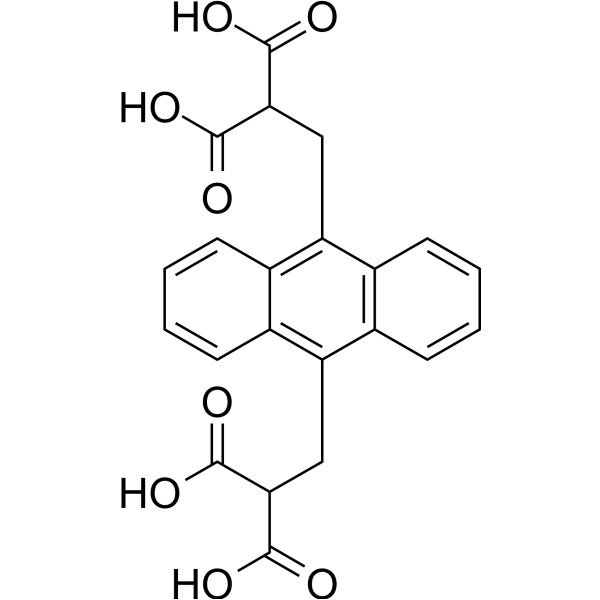
Pyrene-1,3,6,8-tetrasulfonic acid tetrasodium is a fluorescent dye and pH indicator, also as a ligand of multifunctional metal-organic framework. Pyrene-1,3,6,8-tetrasulfonic acid tetrasodium has been used to detect CO2 release .
|
-
-
- HY-109116
-
|
Leukomethylene blue
|
Biochemical Assay Reagents
|
Others
|
|
Hydromethylthionine (Leukomethylene blue) has a very active photochemically active reagent, especially in its interaction with dissolved oxygen. The photochemical activity of Hydromethylthionine is mainly regulated by the reaction of its triplet state with dissolved oxygen, which reacts with dissolved oxygen to form Methylene Blue (HY-14536) and hydronium ions under ultraviolet light. Hydromethylthionine can be used for the photodegradation of model pollutants in semiconductor photocatalysis and for the study of indicators in chemical analysis .
|
-
-
- HY-D0798
-
|
|
Fluorescent Dye
|
Others
|
|
Catechol violet is an efficient and versatile ligand for Cu(I)-catalyzed C-S coupling reactions. Catechol violet is also a complexometric indicator dye .
|
-
-
- HY-128545
-
|
Nitrazine paper; Phenaphthazine
|
Biochemical Assay Reagents
|
Others
|
|
Nitrazine yellow (Nitrazine paper; Phenaphthazine) is a pH indicator. The color of Nitrazine yellow changes from yellow to blue in the pH range from 6.0 to 7.0. Nitrazine yellow is a kind of biological materials or organic compounds that are widely used in life science research .
|
-
-
- HY-124493
-
|
ATA; Ammonium aurintricarboxylate; Aurintricarboxylic acid ammonium
|
Biochemical Assay Reagents
|
Others
|
|
Aluminon (ATA; Ammonium aurintricarboxylate; Aurintricarboxylic acid ammonium) is a complexometric titration indicator and can also be used as a nuclease inhibitor affecting transfection. Aluminon is a kind of biological materials or organic compounds that are widely used in life science research .
|
-
-
- HY-D0265
-
|
|
Environmental Pollutants
Fluorescent Dye
|
Others
|
|
Thymolphthalein is an electrochemically active dye due to the presence of thymol fragments. Thymolphthalein is a Phthalein dye used as an acid-base indicator. It is colourless in acid pH and is blue in basic pH .
|
-
-
- HY-D1436
-
|
|
Fluorescent Dye
|
Neurological Disease
|
|
PBFI is the cell-impermeant fluorescent indicator that is widely used for the determination of concentrations of K + (Ex/Em = 340,380/500 nm) .
|
-
-
- HY-D1091
-
-
-
- HY-D0228
-
|
Azo Violet; Magneson I
|
Fluorescent Dye
|
Others
|
|
4-(4-Nitrophenylazo)resorcinol (Azo Violet) is an azo purple dye used experimentally as a pH indicator, showing yellow when the pH value is lower than 11 and purple when the pH value is higher than 13. In slightly alkaline or alkaline environments, it also turns dark blue in the presence of magnesium salts. Azo Violet can also be used to test for the presence of ammonium ions. The color of the ammonium chloride or ammonium hydroxide solution will change depending on the concentration of azo violet used .
|
-
-
- HY-D1677
-
|
|
Fluorescent Dye
|
Others
|
|
5(6)-Carboxynaphthofluorescein is a pH-dependent fluorophore. 5(6)-Carboxynaphthofluorescein shows good sensitivity in an alkaline pH range and it can be exploited in the construction of fiber-optic pH sensors. 5(6)-Carboxynaphthofluorescein can be used as a fluorescent pH indicator (Ex/Em=593/668 nm) .
|
-
-
- HY-W012982S
-
-
-
- HY-131490
-
|
Violet tetrazolium
|
Biochemical Assay Reagents
|
Others
|
|
Tetrazolium violet is a redox indicator commonly used in various biochemical assays to measure cell viability and metabolic activity. Tetrazolium Violet has unique chemical properties that allow it to be reduced by cellular enzymes such as dehydrogenases to form a purple formazan product that can be detected spectrophotometrically. This makes it a useful tool for assessing cell health and growth in culture or tissue samples.
|
-
-
- HY-W141392
-
|
|
Nucleoside Antimetabolite/Analog
Xanthine Oxidase
Phosphoramidites
|
Cancer
|
|
2'-Fluoro-5'-O-DMT-2'-deoxyinosine-3'-CE-phosphoramidite is a hypoxanthine analog. Hypoxanthine is a kind of purine base mainly present in muscle tissue. And it is a metabolite produced by purine oxidase acting on xanthine. Hypoxanthine has typical anti-inflammatory effects and is a potential endogenous poly(ADP-ribose) polymerase (PARP) inhibitor. It is cytoprotective by inhibiting PAPR activity, inhibiting peroxynitrite-induced mitochondrial depolarization and secondary superoxide production. Hypoxanthine can also be used as an indicator of hypoxia .
|
-
-
- HY-D2482
-
|
APG-1 AM
|
Fluorescent Dye
|
Neurological Disease
|
|
Asante potassium green-1 AM (APG-1 AM) is a cell-permeable K +-sensitive fluorescent indicator and potassium ion indicator that exhibits minimal interference from Na + and pH at physiologically relevant intracellular levels. Asante potassium green-1 AM enables non-invasive monitoring and quantitative analysis of intracellular potassium ion concentration (ᵢ) . Its excitation/emission maxima are 525/545 nm, respectively.
|
-
-
- HY-D0948
-
|
|
Fluorescent Dye
|
Infection
|
|
Celestine Blue is a electroactive indicator in DNA biosensors. Celestine Blue is strongly adsorbed on the spinel phases and CNT (carbon nanotubes), facilitates dispersion, acts as a capping agent and allows for the fabrication of spinel decorated CNT. Celestine Blue is an efficient charge transfer mediator, which allows for significant improvement of capacitive behavior. TiO2 nanoparticles doped with Celestine Blue can be used as a label in a sandwich immunoassay for the hepatitis C virus (HCV) core antigen .
|
-
-
- HY-D0252
-
|
|
Fluorescent Dye
|
Others
|
|
m-Cresol purple is a pH indicator dye with large cross section and halochromic property in neutral pH range .
|
-
-
- HY-136884
-
|
|
Fluorescent Dye
|
Others
|
|
DAR-4M is a fluorescent indicator for nitric oxide (NO) based on the rhodamine chromophore (Ex/Em= 550/572 nm) .
|
-
-
- HY-32349S
-
-
-
- HY-D0219A
-
|
|
Fluorescent Dye
|
Others
|
|
Thymol Blue sodium is an acid-base indicator used to indicate changes in pH. Thymol Blue sodium fades from red to yellow at pH 1.2 to 2.8 and from yellow to blue at pH 8.0 to 9.6. Quantitative detection is achieved through the absorption peak shift (435 nm/596 nm) of the UV-visible spectrum. Thymol blue sodium can be fixed in a silica gel matrix through sol-gel technology to form a solid-state sensor for in-situ pH measurement in the marine environment and acid-base monitoring in the biomedical field .
|
-
-
- HY-N8502
-
|
|
Fluorescent Dye
|
Cancer
|
|
Urdamycin A (Compound 3b) is an angucycline antibiotic that can be isolated from Streptomyces fradiae. Urdamycin A is an orange indicator with a change of the color to ultramarine blue at pH 7.7. Urdamycin A has anticancer activity with IC50s of 2.4 and 0.55 μg/mL in proliferation and stem cell assays, respectively .
|
-
-
- HY-W760733
-
|
|
Biochemical Assay Reagents
|
Metabolic Disease
|
|
2,4-Decadienal is a toxic aldehyde produced by the oxidation of linoleic acid-rich oils. 2,4-decadienal can be used as an alternative oxidation indicator for linoleic acid-rich oils .
|
-
- HY-118320
-
|
Mordant orange 1
|
Fluorescent Dye
|
Others
|
|
Alizarine Yellow R (Mordant orange 1), Salicylic acid derivative (HY-B0167), is an azo dye. Alizarine Yellow R is used as a pH indicator and a biological stain in chemical examinations and dyeing industries .
|
-
- HY-D0276
-
|
Metacresol purple sodium
|
Biochemical Assay Reagents
|
Others
|
|
m-Cresol purple sodium (Metacresol purple sodium) is a pH indicator. m-Cresol purple sodium solution from yellow to blue in the pH range from 7.5 to 9.0 .
|
-
- HY-W110884
-
|
|
Biochemical Assay Reagents
|
Others
|
|
Eriochrome cyanine R indicator (C.I. 43820) is a biochemical reagent that can be used as a biological material or organic compound for life science related research.
|
-
- HY-D1492
-
|
|
Fluorescent Dye
|
Others
|
|
Fast Sulphon Black F is a specific copper indicator. Fast Sulphon Black F can be used for EDTA titration .
|
-
- HY-W140535
-
|
|
Fluorescent Dye
MOFs
|
Others
|
|
Tetrasodium,4-(1,10-phenanthrolin-4-yl)benzenesulfonate,ruthenium((II)) is a luminescent indicator dye .
|
-
- HY-W351339
-
|
|
Fluorescent Dye
|
Cancer
|
|
BAPTA-TMFM is a fluorescent chelating indicator used to study the role of cytosolic free calcium.
|
-
- HY-D0140
-
|
ETH 5294
|
Fluorescent Dye
|
Others
|
|
Chromoionophore I (ETH 5294) is a hydrophobic pH indicator. Chromoionophore I is used as a transmissive or fluorescent probe molecule in many types of hydrophobic sensor membranes. Chromoionophore I is oil-soluble .
|
-
- HY-D0121
-
|
|
Fluorescent Dye
|
Others
|
|
INDO 1 is a cell-impermeant fluorescent Ca 2+ indicator, binds specifically to Ca 2+ while emitting fluorescence, the maximum emission wavelength shifts from 485 nm before binding to 410 nm .
|
-
- HY-D1442
-
|
|
Fluorescent Dye
|
Others
|
|
SBFI (tetraammonium), the tetraammonium salt of SBFI, is a cell-impermeant sodium fluorescence indicator. SBFI (tetraammonium) is sodium-sensitive dye. The excitation wavelength is set 333 nm, and the emission wavelength is 539 nm for SBFI .
|
-
- HY-152696
-
|
|
Xanthine Oxidase
Nucleoside Antimetabolite/Analog
|
Others
|
|
6-O-Methylinosine is a hypoxanthine analogue. Hypoxanthine is a kind of purine base mainly present in muscle tissue. And it is a metabolite produced by purine oxidase acting on xanthine. Hypoxanthine has typical anti-inflammatory effects and is a potential endogenous poly(ADP-ribose) polymerase (PARP) inhibitor. It is cytoprotective by inhibiting PAPR activity, inhibiting peroxynitrite-induced mitochondrial depolarization and secondary superoxide production. Hypoxanthine can also be used as an indicator of hypoxia .
|
-
- HY-W110917
-
|
|
Biochemical Assay Reagents
|
Others
|
|
Dimethylsulfonazo III is a potent sulfate indicator. Dimethylsulfonazo III can be used as indicator to test those samples contaminated with potassium or phosphate ions .
|
-
- HY-W110789
-
|
|
Biochemical Assay Reagents
|
Others
|
|
Ethyl Orange (sodium), indicator grade is an organic azo compound that can be used as a pH indicator from pH 3.0 to pH 4.8, changing color from red to orange.
|
-
- HY-W110783
-
-
- HY-W110896
-
|
Phthalein Purple
|
Biochemical Assay Reagents
|
Others
|
|
Phthalate complexing agent [Chelation indicator] is a class of organic compounds belonging to the category of chelation indicators. It is commonly used in analytical chemistry to detect and quantify metal ions in aqueous solutions, especially in complexometric titration. Phthalate complexing agent [Chelation indicator] works by forming stable complexes with metal ions, which can then be measured using various spectroscopic or electrochemical techniques. In addition, it also has potential applications in wastewater treatment and environmental monitoring.
|
-
- HY-Y0699R
-
|
|
Fluorescent Dye
Reference Standards
|
Others
|
|
Methyl red (Standard) is the analytical standard of Methyl red. This product is intended for research and analytical applications. Methyl red is an azo dye that acts as a pH indicator. Methyl red is red and yellow at pH 4.4 and 6.0 respectively .
|
-
- HY-W110790
-
|
|
Biochemical Assay Reagents
|
Others
|
|
Bromocresol purple sodium is a pH indicator, whose color changes from yellow to purple when the pH increases from 5.2 to 6.8. Bromocresol purple sodium can be used for detecting yeast cells with plasma membrane damage and measuring serum albumin concentrations .
|
-
- HY-W342930
-
|
Acid Red 17
|
Biochemical Assay Reagents
|
Others
|
|
Bordeaux Red (Acid Red 17) is a redox indicator that can be used for cytoplasm staining, such as spleen, testis, and liver slice staining. Bordeaux Red is a kind of biological materials or organic compounds that are widely used in life science research .
|
-
- HY-W110904
-
|
|
Fluorescent Dye
|
Others
|
|
Methylthymol blue tetrasodium is a metallochromic indicator dye and can be used for determination of sulfate and calcium .
|
-
- HY-172627
-
|
|
Fluorescent Dye
Calcium Channel
|
Others
|
|
Rhod-FF tripotassium is a Rhod-2 derivative and cell-impermeant calcium indicator (Kd of 320 μM). Rhod-FF tripotassium indicates calcium concentration by fluorescence upon binding to calcium ions, with excitation at 552 nm and emission at 580 nm .
|
-
- HY-W088071
-
-
- HY-W003112
-
|
|
Fluorescent Dye
|
Others
|
|
4-Fluororesorcinol is a precursor used in the preparation of fluorescent dyes or indicators such as fluorescein, coumarin and resorcinol analogues .
|
-
- HY-137103
-
|
|
Fluorescent Dye
|
Others
|
|
BTC-AM is a low affinity calcium indicator. BTC-AM has substantial calcium-independent fluorescence at all excitation wavelengths. BTC-AM is readily loaded into neurons and is rapidly hydrolysed .
|
-
- HY-W142631
-
|
|
Fluorescent Dye
|
Cancer
|
|
4-(Phenylazo)diphenylamine is an excellent colorimetric indicator for the accurate determination of the concentration for a variety of strong bases, Lewis acids, and hydride reducing agents .
|
-
- HY-W392836
-
|
|
Nucleoside Antimetabolite/Analog
Xanthine Oxidase
Phosphoramidites
|
Cancer
|
|
2'-O-Methyl-5'-O-dmt-inosine-3'-CE-phosphoramidite is a hypoxanthine analog. Hypoxanthine is a kind of purine base mainly present in muscle tissue. And it is a metabolite produced by purine oxidase acting on xanthine. Hypoxanthine has typical anti-inflammatory effects and is a potential endogenous poly(ADP-ribose) polymerase (PARP) inhibitor. It is cytoprotective by inhibiting PAPR activity, inhibiting peroxynitrite-induced mitochondrial depolarization and secondary superoxide production. Hypoxanthine can also be used as an indicator of hypoxia .
|
-
- HY-W110914A
-
-
- HY-W926978
-
|
|
Fluorescent Dye
|
Others
|
|
Bromophenol red sodium is a chemical indicator. Bromophenol red sodium binds to lysozyme and inhibits its activity against the bacterial cell wall, but not the polysaccharide component of peptidoglycan .
|
-
- HY-D1620
-
-
- HY-W351340
-
|
|
Fluorescent Dye
|
Others
|
|
4-(Benzyloxy)-2-nitrophenol is a synthetic building block that can be used in the synthesis of fluorescent ion indicators .
|
-
- HY-D1628
-
-
- HY-104057
-
|
|
Fluorescent Dye
|
Others
|
|
Rhod-FF AM is a fluorescent calcium indicator. Rhod-FF AM is cell permeable and is hydrolyzed by intracellular esterases to generate Rhod-FF .
|
-
- HY-126821A
-
|
|
Fluorescent Dye
|
Others
|
|
Fluo-3 pentaammonium is a cell-impermeable calcium ion (Ca 2+) indicator. Fluo-3 pentaammonium itself is not fluorescent, but it becomes fluorescent after binding to calcium ions (Ex/Em = 488/525 nm) .
|
-
- HY-D1681
-
|
|
Fluorescent Dye
|
Others
|
|
Rhod-590 AM Ester is a fluorescent dye. Rhod-590 AM Ester can be used as a fluorescent indicator for calcium determination .
|
-
- HY-D1484
-
|
1,1'-Diethyl-2,4'-cyanine iodide
|
Fluorescent Dye
|
Others
|
|
Ethyl red (1,1'-Diethyl-2,4'-cyanine) iodide is an azo dye and acid–base indicator .
|
-
- HY-W342120
-
-
- HY-D0121A
-
|
|
Fluorescent Dye
|
Others
|
|
INDO 1 pentapotassium is a cell-impermeant fluorescent Ca 2+ indicator, binds specifically to Ca 2+ while emitting fluorescence, the maximum emission wavelength shifts from 485 nm before binding to 410 nm .
|
-
- HY-137128
-
|
|
Fluorescent Dye
|
Others
|
|
BTC tetrapotassium is a cell-impermeant calcium indicator (Kd approximately 7-26 µM) featuring many desirable properties for cellular calcium imaging, including long excitation wavelengths (400/485 nm), low sensitivity to Mg 2+, and accuracy of ratiometric measurement .
|
-
- HY-D1616
-
|
|
Fluorescent Dye
|
Others
|
|
5-Bromo-5'-methyl BAPTA tetramethyl ester is a derivative of BAPTA, which is a calcium indicator suitable for measurement of relatively high level of calcium .
|
-
- HY-Y1125R
-
-
- HY-W016352
-
|
Anilotic acid, 99%
|
Biochemical Assay Reagents
|
Others
|
|
2-Hydroxy-5-nitrobenzoic acid, 99% is used as an HPLC analytical standard, pH indicator, and heavy metal detection agent, and is also used in the study of phenolic compounds oxidation.
|
-
- HY-D1755
-
|
|
Fluorescent Dye
|
Others
|
|
Fluo-3FF AM is a low affinity (Kd = 42 μM) fluorescent Ca 2+ sensitive indicator (Abs/Em = 462 nm/526 nm). Fluo-3FF AM is Mg 2+ insensitive and relatively photostable. Fluo-3FF AM is an analog of Fluo-3FF AM. Fluo-3FF AM is essentially non-fluorescent, but exhibits a strong fluorescence enhancement upon entry into cells and binding to calcium.
|
-
- HY-W012982R
-
|
AOZ (Standard)
|
Reference Standards
Monoamine Oxidase
Drug Metabolite
|
Cardiovascular Disease
Metabolic Disease
|
|
3-Amino-2-oxazolidinone (Standard) (AOZ (Standard)) is the analytical standard of 3-Amino-2-oxazolidinone (HY-W012982). This product is intended for research and analytical applications. 3-Amino-2-oxazolidinone (AOZ) is the metabolite of Furazolidone (HY-B1336). 3-Amino-2-oxazolidinone is always be detected as a indicator of furazolidone residues in vivo. 3-Amino-2-oxazolidinone is orally active .
|
-
- HY-W111168
-
|
|
Biochemical Assay Reagents
|
Others
|
|
Acid chrome blue K is a metal indicator. The solution color of the LAMP (Loop-mediated isothermal amplification) reaction with ACBK (Acid chrome blue K) changes from red to blue based on a decrease in the Mg 2+ concentration in the reaction solution .
|
-
- HY-D1536
-
|
|
Fluorescent Dye
|
Neurological Disease
|
|
Glycine cresol red is a complexometric indicator. Glycine cresol red forms coloured complexes with Al 3+, Ga 3+ and In 3+ ions in aqueous solutions. Glycine cresol red can been used for the spectrophotometric determination of inorganic ions. Glycine cresol red can be used as a stain in neurohistology .
|
-
- HY-W039271
-
|
2-Chloro-6-O-methyl-inosine
|
Nucleoside Antimetabolite/Analog
Xanthine Oxidase
|
Cancer
|
|
2-Chloro-6-methoxypurine riboside is a hypoxanthine analog. Hypoxanthine is a kind of purine base mainly present in muscle tissue. And it is a metabolite produced by purine oxidase acting on xanthine. Hypoxanthine has typical anti-inflammatory effects and is a potential endogenous poly(ADP-ribose) polymerase (PARP) inhibitor. It is cytoprotective by inhibiting PAPR activity, inhibiting peroxynitrite-induced mitochondrial depolarization and secondary superoxide production. Hypoxanthine can also be used as an indicator of hypoxia .
|
-
- HY-154017
-
|
|
Nucleoside Antimetabolite/Analog
Xanthine Oxidase
|
Cancer
|
|
2′-C-Methyl-6-O-methylinosine is a hypoxanthine analog. Hypoxanthine is a kind of purine base mainly present in muscle tissue. And it is a metabolite produced by purine oxidase acting on xanthine. Hypoxanthine has typical anti-inflammatory effects and is a potential endogenous poly(ADP-ribose) polymerase (PARP) inhibitor. It is cytoprotective by inhibiting PAPR activity, inhibiting peroxynitrite-induced mitochondrial depolarization and secondary superoxide production. Hypoxanthine can also be used as an indicator of hypoxia .
|
-
- HY-154393
-
|
|
Nucleoside Antimetabolite/Analog
Xanthine Oxidase
|
Cancer
|
|
2-Chloro-2'-deoxy-6-O-methylinosine is a hypoxanthine analog. Hypoxanthine is a kind of purine base mainly present in muscle tissue. And it is a metabolite produced by purine oxidase acting on xanthine. Hypoxanthine has typical anti-inflammatory effects and is a potential endogenous poly(ADP-ribose) polymerase (PARP) inhibitor. It is cytoprotective by inhibiting PAPR activity, inhibiting peroxynitrite-induced mitochondrial depolarization and secondary superoxide production. Hypoxanthine can also be used as an indicator of hypoxia .
|
-
- HY-152678
-
|
|
Nucleoside Antimetabolite/Analog
Xanthine Oxidase
|
Cancer
|
|
6-Methoxypurine-9-β-D-5’(R)-C-methylriboside is a hypoxanthine analog. Hypoxanthine is a kind of purine base mainly present in muscle tissue. And it is a metabolite produced by purine oxidase acting on xanthine. Hypoxanthine has typical anti-inflammatory effects and is a potential endogenous poly(ADP-ribose) polymerase (PARP) inhibitor. It is cytoprotective by inhibiting PAPR activity, inhibiting peroxynitrite-induced mitochondrial depolarization and secondary superoxide production. Hypoxanthine can also be used as an indicator of hypoxia .
|
-
- HY-W110784
-
-
- HY-W016352R
-
|
Anilotic acid, 99% (Standard)
|
Biochemical Assay Reagents
Reference Standards
|
Others
|
|
2-Hydroxy-5-nitrobenzoic acid, 99% (Standard) is the analytical standard of 2-Hydroxy-5-nitrobenzoic acid, 99%. This product is intended for research and analytical applications. 2-Hydroxy-5-nitrobenzoic acid, 99% is used as an HPLC analytical standard, pH indicator, and heavy metal detection agent, and is also used in the study of phenolic compounds oxidation.
|
-
- HY-172577
-
|
Ion potassium green-4 (TMA)
|
Fluorescent Dye
Potassium Channel
|
Others
|
|
IPG-4 (Ion potassium green-4) TMA is an extracellular potassium ion fluorescence indicator with an Ex/Em ratio of 525/545 nm. IPG-4 TMA can be used for real-time monitoring and quantitative analysis of the transport of the biological electrochemical ion pump K⁺ .
|
-
- HY-D0166
-
|
|
Fluorescent Dye
|
Others
|
|
Neutral Red, a nitrogenous pH-indicator with a pKi of 6.8, is an indicator for the internal acidification of thylakoids. Neutral Red stains lysosomes red .
|
-
- HY-D1445
-
|
|
Fluorescent Dye
|
Metabolic Disease
|
|
PDMPO, a lysosome pH indicator, is an excellent fluorescent acidotropic reagent for fluorescence imaging. PDMPO is a potent tool with which to study acidic organelles of live cells. PDMPO exhibits pH-dependent dual-excitation and dual-emission spectral peaks. PDMPO produces a blue fluorescence in weakly acidic organelles and shifts to yellow in more acidic lysosomes. (Abs=329 nm; Em=440/540 nm) .
|
-
- HY-D0285
-
|
PTCDI
|
Fluorescent Dye
|
Others
|
|
3,4,9,10-Perylenetetracarboxylic-diimide (PTCDI), an organic heteropolycyclic compound, is a dimethylimine that can be used in biological dyes and indicators[1][2].
|
-
- HY-D0012
-
-
- HY-D0211
-
|
|
Fluorescent Dye
|
Cancer
|
|
Phenolphthalein is an acid-base indicator that is colorless in an acidic environment and pink in an alkaline environment. Phenolphthalein is genotoxic and potentially carcinogenic to mice. In addition, phenolphthalein is also a blood indicator .
|
-
- HY-D1176
-
|
|
Fluorescent Dye
|
Others
|
|
Calcium Green 1AM is a cell-permeant fluorescent calcium indicator (Excitation 506 nm; Emission 531 nm). Calcium Green 1AM is converted to the fluorescent calcium indicator by intracellular esterases .
|
-
- HY-W331502
-
-
- HY-118103
-
|
5β-Cholestan-3β-ol
|
Endogenous Metabolite
|
Neurological Disease
|
|
Coprostanol (5β-Cholestan-3β-ol) is a fecal sterol formed by microbial reduction of cholesterol in the intestines of man and higher animals. Coprostanol can be used as an indicator sterol of fecal pollution. Coprostanol has been recognized as a good indicator of pollution of water resources by sewage discharges. Coprostanol can serve as a potential biological indicator for cerebral chondrodystrophy (CTX) .
|
-
- HY-D0012A
-
-
- HY-D0015
-
|
|
Fluorescent Dye
|
Others
|
|
Cresol red, 97% is an acidic phenolsulfonphthalein triphenylmethane dye. Cresol red, 97% generates reactive oxygen species and singlet oxygen under ultrasonic irradiation, interacts with bovine serum albumin, alters the structure of bovine serum albumin, and oxidizes the fluorescent amino acid residues of bovine serum albumin. Cresol red, 97% can be decolorized and biodegraded by *Absidia spinosa* M15, producing phenylacetic acid and benzoic acid metabolites. Cresol red, 97% serves as a pH indicator (orange at pH 1.8-yellow at pH 2.0, yellow at pH 7.0-purple at pH 8.8). Cresol red, 97% can be used to indicate pH, temperature and salinity .
|
-
- HY-103395
-
|
Methylpropanedioic acid; Methylmalonate
|
Endogenous Metabolite
|
Cancer
|
|
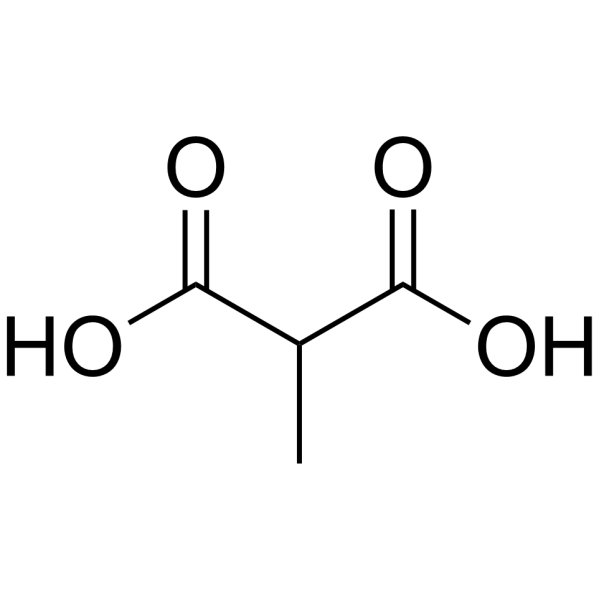
Methylmalonic acid (Methylmalonate) is an indicator of Vitamin B-12 deficiency in cancer.
|
-
- HY-118103R
-
|
5β-Cholestan-3β-ol (Standard)
|
Reference Standards
Endogenous Metabolite
|
Others
|
|
Coprostanol (5β-Cholestan-3β-ol) (Standard) is the analytical standard of Coprostanol. This product is used for research and analytical applications. Coprostanol is a fecal sterol formed by the reduction of cholesterol by microorganisms in the human and higher animal intestines. Coprostanol can be used as an indicator sterol for fecal contamination. Coprostanol has been recognized as a good indicator of water resource pollution caused by sewage discharge. Coprostanol can serve as a potential biological indicator for cerebral chondrodystrophy (CTX).
|
-
- HY-B1422
-
|
Aminacrine
|
Bacterial
HIV
|
Infection
|
|
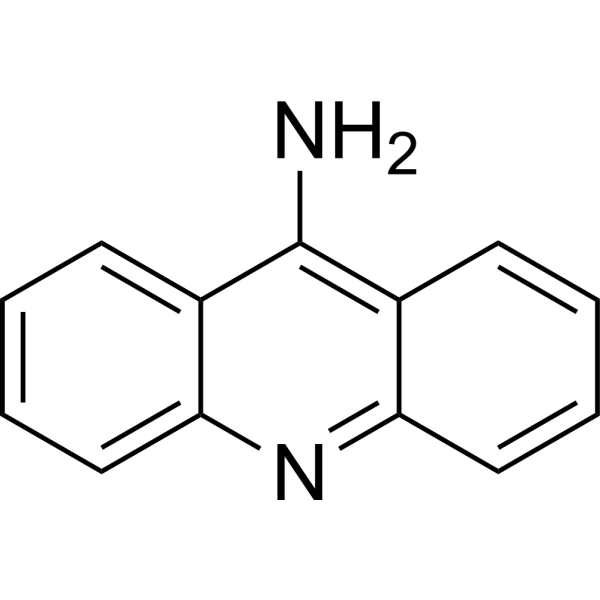
9-Aminoacridine, a fluorescent probe, acts as an indicator of pH for quantitative determination of transmembrane pH gradients (inside acidic). 9-Aminoacridine is an antimicrobial. 9-Aminoacridine exerts its antimicrobial activity by interacting with specific bacterial DNA and disrupting the proton motive force in K. pneumoniae. 9-Aminoacridine is a HIV-1 inhibitor and inhibits HIV LTR transcription highly dependent on the presence and location of the amino moiety. 9-Aminoacridine inhibits virus replication in HIV-1 infected cell lines. 9-Aminoacridine is used as a Rifampin (RIF; HY-B0272) adjuvant for the multidrug-resistant K. pneumoniae infections .
|
-
- HY-D0277
-
|
|
Fluorescent Dye
|
|
|
Eriochrome black T is a complex indicator used in complex titrations, e.g.
|
-
- HY-D3152
-
|
|
Fluorescent Dye
|
Others
|
|
NRh-Cu is a highly sensitive near-infrared fluorescence turn-on indicator and Cu 2+-selective probe (λex=680 nm, λem=740 nm). When NRh-Cu interacts with Cu 2+, it undergoes a structural transition from a non-fluorescent spirocyclic state to a fluorescent ring-opened state, which drives the enhancement of fluorescence emission. NRh-Cu can be used for Cu 2+ imaging in live cells and in vivo .
|
-
- HY-D0023A
-
|
HPTS hydrate; Solvent Green 7 hydrate
|
Fluorescent Dye
|
Others
|
|
Pyranine (HPTS; Solvent Green 7) hydrate is a cell-impermeant pH-sensitive fluorescent indicator. Pyranine hydrate acts as a class of fluorescent chemosensor for the Cu + ion. Pyranine hydrate is used as a coloring agent, biological stain, optical detecting reagent, and pH indicator (Ex/Em = 450/510 nm) .
|
-
- HY-D1779
-
-
- HY-D1401
-
|
|
Fluorescent Dye
|
Others
|
|
OG 488, acid, a fluorescent pH indicator, has many applications in biochemistry and neurosciences .
|
-
- HY-32349
-
-
- HY-N0091
-
Hypoxanthine
Maximum Cited Publications
15 Publications Verification
Purin-6-ol; Sarcine
|
Endogenous Metabolite
|
Others
|
|
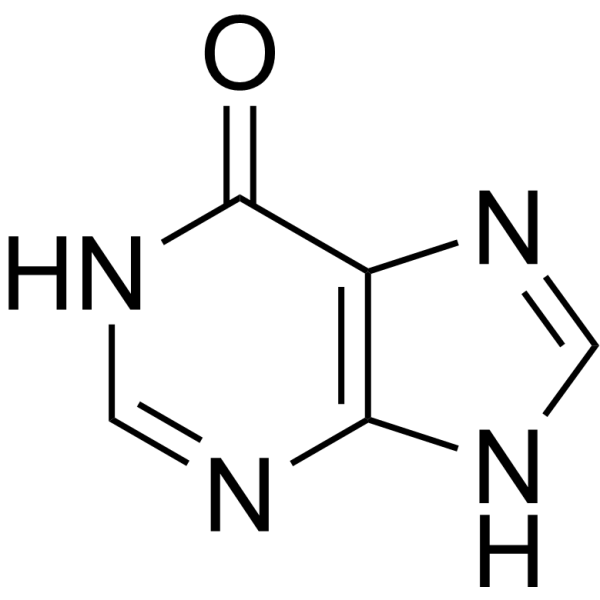
Hypoxanthine, a purine derivative, is a potential free radical generator and could be used as an indicator of hypoxia.
|
-
- HY-D0116
-
|
HPTS free acid; Solvent Green 7 free acid
|
Fluorescent Dye
|
Others
|
|
Pyranine (HPTS; Solvent Green 7) free acid is a pH-sensitive fluorescent indicator. Pyranine free acid acts as a class of fluorescent chemosensor for the Cu + ion. Pyranine free acid is used as a coloring agent, biological stain, optical detecting reagent, and pH indicator (Ex/Em = 450/510 nm) .
|
-
- HY-118103S
-
|
5β-Cholestan-3β-ol-d5
|
Isotope-Labeled Compounds
Endogenous Metabolite
|
Others
|
|
Coprostanol-d5 (5β-Cholestan-3β-ol-d5) is the deuterium labeled Coprostanol. Coprostanol (5β-Cholestan-3β-ol) is a fecal sterol formed by microbial reduction of cholesterol in the intestines of man and higher animals. Coprostanol can be used as an indicator sterol of fecal pollution. Coprostanol has been recognized as a good indicator of pollution of water resources by sewage discharges. Coprostanol can serve as a potential biological indicator for cerebral chondrodystrophy (CTX).
|
-
- HY-W151206
-
|
|
Fluorescent Dye
|
Others
|
|
Hydroxy naphthol blue disodium is an azo dye compound commonly used as an acid-base indicator (λmax = 650 nm). Within the pH range of 12 to 13, the indicator solution of Hydroxy naphthol blue disodium appears pale red in the presence of calcium ions and dark blue in the presence of disodium EDTA .
|
-
- HY-D0269
-
|
|
Fluorescent Dye
|
|
|
1-Amino-4-hydroxyanthraquinone is a red dye used as a fluorescent indicator.
|
-
- HY-B1422R
-
|
Aminacrine (Standard)
|
Reference Standards
Bacterial
HIV
|
Infection
|
|
9-Aminoacridine (Standard) is the analytical standard of 9-Aminoacridine. This product is intended for research and analytical applications. 9-Aminoacridine, a fluorescent probe, acts as an indicator of pH for quantitative determination of transmembrane pH gradients (inside acidic). 9-Aminoacridine is an antimicrobial. 9-Aminoacridine exerts its antimicrobial activity by interacting with specific bacterial DNA and disrupting the proton motive force in K. pneumoniae. 9-Aminoacridine is a HIV-1 inhibitor and inhibits HIV LTR transcription highly dependent on the presence and location of the amino moiety. 9-Aminoacridine inhibits virus replication in HIV-1 infected cell lines. 9-Aminoacridine is used as a Rifampin (RIF; HY-B0272) adjuvant for the multidrug-resistant K. pneumoniae infections .
|
-
- HY-137871
-
|
|
Biochemical Assay Reagents
|
Others
|
|
Phenolphthalein monophosphate dicyclohexylammonium is a substrate for alkaline phosphatase and is used as an indicator in various titrations and enzyme immunoassays .
|
-
- HY-D1776
-
|
|
Fluorescent Dye
|
Others
|
|
FFP-18-AM is a cell-permeable fluorescent indicator for measurement of near-membrane calcium.
|
-
- HY-D1502
-
-
- HY-D0081A
-
-
- HY-D1750
-
|
|
Fluorescent Dye
|
Others
|
|
Rhodamine B thiolactone is a high-sensitive Hg 2+ indicator used for measuring Hg 2+ concentration.
|
-
- HY-D0110A
-
|
|
Fluorescent Dye
|
Others
|
|
Fura-2 pentapotassium is a cell-impermeable scaled fluorescent dye that can be used for intracellular calcium imaging. Fura-2 pentapotassium has an emission wavelength of 510 nm and excitation wavelengths of 340 nm or 380 nm and the ratio of 340/380 fluorescence intensity is proportional to the intracellular Ca 2+ level .
|
-
- HY-D1761
-
|
|
Fluorescent Dye
|
Others
|
|
Fura-4F pentapotassium is a cell-impermeant fluorescent indicator for intracellular calcium ion measurement.
|
-
- HY-W017006
-
-
- HY-124350
-
-
- HY-B1307
-
|
|
Cytochrome P450
|
Neurological Disease
|
|
Zoxazolamine is widely used for a pharmacologic test that serves as a convenient indicator of changes in cytochrome P-450 activity in rodents.
|
-
- HY-130575
-
|
|
Fluorescent Dye
|
Others
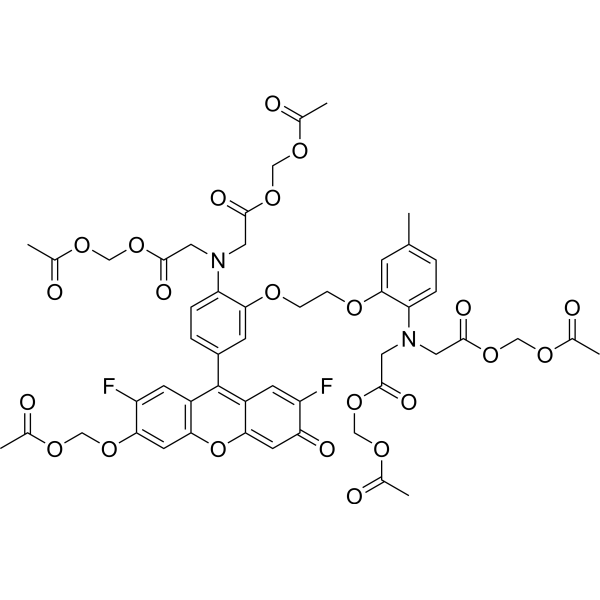
|
|
Fura-FF AM is a cell-permeable acetoxymethyl ester of fura-FF, a dluorescent calcium indicator. Fura-FF AM is hydrolyzed by intracellular esterases to release fura-FF in cells. Fura-FF is a difluorinated derivative of the calcium indicator fura-2. Compared to fura-2, fura-FF has a low affinity for calcium and is suitable for studying compartments with high concentrations of calcium.
|
-
- HY-126774
-
DAF-FM
1 Publications Verification
|
Fluorescent Dye
|
Others
|
|
DAF-FM is a cell-impermeant diaminofluorescein, which can be used as fluorescent indicator for nitric oxide (NO) with good pH tolerance .
|
-
- HY-101896
-
|
|
Fluorescent Dye
|
Others
|
|
Fluo-4 AM is a cell-permeable Ca 2+ (calcium ion) indicator (Ex/Em = 485/526 nm) .
|
-
- HY-D0211R
-
|
|
Fluorescent Dye
Reference Standards
|
Others
|
|
Phenolphthalein (Standard) is the analytical standard of Phenolphthalein. This product is intended for research and analytical applications. Phenolphthalein is a widely applied but toxic indicator dye.
|
-
- HY-23206
-
|
|
Biochemical Assay Reagents
|
Others
|
|
DAN-1 EE hydrochloride is a fluorescent indicator, which can be used for the detection of nitrite content in vitro and biological process .
|
-
- HY-133527
-
|
Oregon green 488 succinimidyl ester
|
Fluorescent Dye
|
Neurological Disease
|
|
OG 488, SE (Oregon green 488 succinimidyl ester), a fluorescent pH indicator, has many applications in biochemistry and neurosciences .
|
-
- HY-135035
-
|
(-)-Decanoylcarnitine
|
Endogenous Metabolite
|
Metabolic Disease
Cancer
|
|
Decanoyl-L-carnitine ((-)-Decanoylcarnitine) is an endogenous metabolite. Decanoyl-L-carnitine can be used as a serum metabolic biomarkers as indicators in the progression of intravenous leiomyomatosis .
|
-
- HY-115773
-
|
NMTPRO; N-Nitroso-2-methylthiazolidine 4-carboxylic acid; N-nitrosomethylthioproline
|
Endogenous Metabolite
|
Metabolic Disease
|
|
NMTCA (NMTPRO) is a sulfur-containing N-nitrosamino acid. NMTCA can be used as an indicator of endogenous nitrosation by gas chromatography-thermalenergyanalysis .
|
-
- HY-W110883
-
|
|
Biochemical Assay Reagents
|
Others
|
|
Xylenol Orange (tetrasodium), metal indicator, AR is a biochemical reagent that can be used as a biological material or organic compound for life science related research.
|
-
- HY-D1477
-
|
|
Fluorescent Dye
|
Others
|
|
5(6)-Carboxyfluorescein diisobutyrate is a protected 5(6)-carboxyfluorescein. 5(6)-carboxyfluorescein is a fluorescence pH indicator .
|
-
- HY-W145108
-
|
|
Biochemical Assay Reagents
|
Others
|
|
Methyl red hydrochloride is an azo dye that acts as a pH indicator. Methyl red is red and yellow at pH 4.4 and 6.0 respectively .
|
-
- HY-W134020
-
|
Semixylenol orange
|
Biochemical Assay Reagents
|
Others
|
|
Semixylenol orange is a metallochromic indicator that can complex with various metal ions and is used for the testing and analysis of metal ions such as zinc and zirconium .
|
-
- HY-108398A
-
-
- HY-N1442
-
|
Orange II; D&C Orange NO. 4
|
Environmental Pollutants
Biochemical Assay Reagents
|
Others
|
|
Acid Orange 7 (Orange II; D&C Orange NO. 4) is an azo dye widely used in the textile, food and cosmetic industries. Acid Orange 7 is mainly used as a colorant by combining with fibers and other substances through azo bonds. Acid Orange 7 has a maximum absorption wavelength at 484-485 nm, and the concentration is measured using a UV-visible spectrophotometer. Acid Orange 7 is difficult to degrade and has a certain degree of toxicity. It is often used to study various sewage treatment technologies and photocatalytic degradation reactions, and to evaluate the removal effects of different treatment methods on organic pollutants .
|
-
- HY-D0168
-
|
3,5-Dihydroxytoluene
|
Fluorescent Dye
Tyrosinase
p38 MAPK
ERK
|
Metabolic Disease
Cancer
|
|
Orcinol (3,5-Dihydroxytoluene) is an organic compound used in biological dyeing and proteomics research. Orcinol inhibits melanogenesis in B16F10 cells by upregulating the MAPK/ERK signaling pathway, and suppresses the expression of MITF, tyrosinase (TYR), TRP1, and DCT. Orcinol exhibits certain DPPH radical scavenging activity. In addition, Orcinol can alter nitrogen balance in animals. Orcinol holds promise for research in cancer and metabolic diseases .
|
-
- HY-N1442R
-
|
Orange II (Standard); D&C Orange NO. 4 (Standard)
|
Biochemical Assay Reagents
Reference Standards
|
Others
|
|
Acid orange 7 (Standard) is the analytical standard of Acid orange 7 (HY-1442). This product is intended for research and analytical applications. Acid Orange 7 (Orange II; D&C Orange NO. 4) is an azo dye widely used in the textile, food and cosmetic industries. Acid Orange 7 is mainly used as a colorant by combining with fibers and other substances through azo bonds. Acid Orange 7 has a maximum absorption wavelength at 484-485 nm, and the concentration is measured using a UV-visible spectrophotometer. Acid Orange 7 is difficult to degrade and has a certain degree of toxicity. Acid Orange 7 is often used to study various sewage treatment technologies and photocatalytic degradation reactions, and to evaluate the removal effects of different treatment methods on organic pollutants .
|
-
- HY-103395R
-
|
Methylpropanedioic acid (Standard); Methylmalonate (Standard)
|
Reference Standards
Endogenous Metabolite
|
Cancer
|
|
Methylmalonic acid (Standard) is the analytical standard of Methylmalonic acid. This product is intended for research and analytical applications. Methylmalonic acid (Methylmalonate) is an indicator of Vitamin B-12 deficiency in cancer.
|
-
- HY-D2483
-
|
APG-1 (TMA)
|
Fluorescent Dye
|
Neurological Disease
|
|
Asante potassium green-1 (APG-1) TMA is a cell-impermeable K + (potassium) sensitive fluorescent indicator (excitation/emission = 525/545 nm) .
|
-
- HY-103395S
-
|
Methylpropanedioic acid-d3; Methylmalonate-d3
|
Endogenous Metabolite
|
Cancer
|
|
Methylmalonic acid-d3 is the deuterium labeled Methylmalonic acid. Methylmalonic acid (Methylmalonate) is an indicator of Vitamin B-12 deficiency in cancer .
|
-
- HY-101887
-
|
|
Fluorescent Dye
|
Others
|
|
Calcein Blue, a membrane-impermeant fluorescent dye, is a coumarin derivative that contains an iminodiacetic acid structure. Calcein Blue is also a metallofluorochromic indicator .
|
-
- HY-103395S1
-
|
|
Endogenous Metabolite
|
Cancer
|
|
Methylmalonic acid- 13C4 is the 13C labeled Methylmalonic acid . Methylmalonic acid (Methylmalonate) is an indicator of Vitamin B-12 deficiency in cancer .
|
-
- HY-W419044A
-
|
|
Fluorescent Dye
|
Others
|
|
Calcein calcium potassium is a fluorescent dye and self-quenching probe, used as an indicator of lipid vesicle leakage, and also as a complexometric indicator for titration of calcium ions with EDTA, and for fluorometric determination of calcium. Calcein cannot directly cross the intact cell membrane of a living cell, unlike Calcein-AM (HY-D0041) which is cell-permeable. Calcein can also be used as a model drug for evaluating efficiency and bioavailability of drug delivery systems .
|
-
- HY-D0040
-
|
Fluorexon
|
Fluorescent Dye
|
Others
|
|
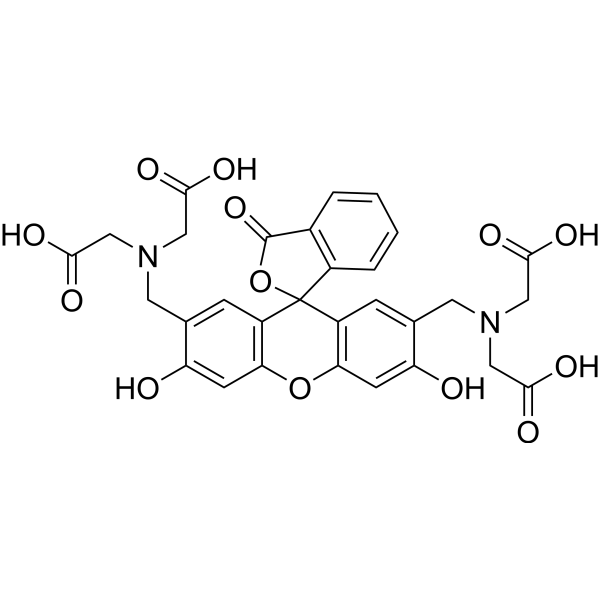
Calcein is a fluorescent dye and self-quenching probe, used as an indicator of lipid vesicle leakage, and also as a complexometric indicator for titration of calcium ions with EDTA, and for fluorometric determination of calcium. Calcein cannot directly cross the intact cell membrane of a living cell, unlike Calcein-AM (HY-D0041) which is cell-permeable. Calcein can also be used as a model drug for evaluating efficiency and bioavailability of drug delivery systems .
|
-
- HY-W329161
-
|
|
Fluorescent Dye
|
Others
|
|
Calcein sodium is a fluorescent dye and self-quenching probe, used as an indicator of lipid vesicle leakage, and also as a complexometric indicator for titration of calcium ions with EDTA, and for fluorometric determination of calcium. Calcein cannot directly cross the intact cell membrane of a living cell, unlike Calcein-AM (HY-D0041) which is cell-permeable. Calcein can also be used as a model drug for evaluating efficiency and bioavailability of drug delivery systems .
|
-
- HY-136784A
-
|
|
Fluorescent Dye
|
Others
|
|
Rhod-2 sodium is a cell impermeant, red fluorescent calcium indicator. Rhod-2 sodium exhibits a significant shift in fluorescence intensity upon calcium binding (ex max=549 nm; calcium-free v. ex/em max=552/581 nm; calcium-bound). Unlike the UV-excitable indicators Fura-2 and Indo-1 (HY-D0121), there is no accompanying spectral shift .
|
-
- HY-136784
-
|
|
Fluorescent Dye
|
Others
|
|
Rhod-2 potassium is a cell impermeant, red fluorescent calcium indicator. Rhod-2 potassium exhibits a significant shift in fluorescence intensity upon calcium binding (ex max=549 nm; calcium-free v. ex/em max=552/581 nm; calcium-bound). Unlike the UV-excitable indicators Fura-2 and Indo-1 (HY-D0121), there is no accompanying spectral shift .
|
-
- HY-21193
-
-
- HY-N0091S5
-
-
- HY-N0091S6
-
|
|
Endogenous Metabolite
|
Others
|
|
Hypoxanthine-d2 is the deuterium labeled Hypoxanthine . Hypoxanthine, a purine derivative, is a potential free radical generator and could be used as an indicator of hypoxia .
|
-
- HY-W025785
-
|
Solvent Yellow 2; Dimethyl yellow
|
Biochemical Assay Reagents
|
Cancer
|
|
Methyl yellow (Solvent Yellow 2) is a pH indicator. Methyl yellow appears red at low pH, and becomes yellow above pH 4.0 .
|
-
- HY-W127781
-
|
|
Fluorescent Dye
|
Others
|
|
Rhod-2 triammonium is a cell impermeant, red fluorescent calcium indicator. Rhod-2 triammonium exhibits a significant shift in fluorescence intensity upon calcium binding (ex max=549 nm; calcium-free v. ex/em max=552/581 nm; calcium-bound). Unlike the UV-excitable indicators Fura-2 and Indo-1 (HY-D0121), there is no accompanying spectral shift .
|
-
- HY-136457
-
|
|
Drug Metabolite
|
Others
|
|
2-NP-AHD is a 2-nitrophenyl derivative of AHD (a metabolite of nitrofurans type of antibiotics), can be used as indicator of the illegal usage of nitrofuran agents .
|
-
- HY-N0091R
-
|
Purin-6-ol (Standard); Sarcine (Standard)
|
Reference Standards
Endogenous Metabolite
|
Others
|
|
Hypoxanthine (Standard) is the analytical standard of Hypoxanthine. This product is intended for research and analytical applications. Hypoxanthine, a purine derivative, is a potential free radical generator and could be used as an indicator of hypoxia.
|
-
- HY-DY1028
-
|
|
Fluorescent Dye
|
Others
|
Fluo-4 AM (solution) is a cell-permeable Ca 2+ (calcium ion) indicator (Ex/Em = 485/526 nm) . Solvent and concentration: DMSO: 1 mM
|
-
- HY-32349R
-
|
25-Hydroxy Vitamin D2 (Standard)
|
Reference Standards
VD/VDR
Endogenous Metabolite
|
Metabolic Disease
|
|
Ercalcidiol (Standard) is the analytical standard of Ercalcidiol. This product is intended for research and analytical applications. Ercalcidiol is a metabolite of vitamin D2, is regarded as an indicator of vitamin D nutritional status.
|
-
- HY-D1759
-
|
|
Fluorescent Dye
|
Others
|
|
Fura-4F AM is a cell-permeant fluorescent calcium indicator. Upon entering the cell, this probe is hydrolyzed by cytosilic esterases and trapped as the active chelator.
|
-
- HY-N0091S7
-
|
Purin-6-ol-15N4; Sarcine-15N4
|
Endogenous Metabolite
|
Others
|
|
Hypoxanthine- 15N4 is the 15N labeled Hypoxanthine . Hypoxanthine, a purine derivative, is a potential free radical generator and could be used as an indicator of hypoxia .
|
-
- HY-165151
-
|
Urochrome hydrochloride
|
Endogenous Metabolite
|
Others
|
|
Urobilin hydrochloride is the metabolite of Hemoglobin (HY-P2995), that can be excreted through urine and feces in many mammals. Urobilin hydrochloride can be used as an indicator of human waste pollution .
|
-
- HY-145656
-
|
3-Oxo-7α-hydroxy-5β-cholanoic acid
|
Endogenous Metabolite
|
Metabolic Disease
|
|
3-Oxochenodeoxycholic acid is an endogenous metabolite that can be found in feces. 3-Oxochenodeoxycholic acid can serve as an indicator for the diagnosis of certain diseases, such as COVID-19 .
|
-
- HY-W616806
-
|
|
Biochemical Assay Reagents
|
Others
|
|
Sodium 6-oxo-3,6-dihydropurin-7-ide, a purine derivative, is a potential free radical generator and could be used as an indicator of hypoxia.
|
-
- HY-113486S
-
-
- HY-D0011A
-
|
|
Fluorescent Dye
|
Others
|
|
Bromophenol red (sultone form) is a chemical indicator. Bromophenol red (sultone form) binds to lysozyme and inhibits its activity against the bacterial cell wall, but not the polysaccharide component of peptidoglycan .
|
-
- HY-113406
-
|
DL-Hexanoylcarnitine
|
Others
|
Inflammation/Immunology
|
|
(±)-Hexanoylcarnitine exists in human urine and plasma. (±)-Hexanoylcarnitine can be used as a plasma detection indicator in patients with methylmalonic aciduria, propionic acidemia, and medium-chain acyl-CoA dehydrogenase deficiency .
|
-
- HY-176031
-
|
|
Fluorescent Dye
|
Others
|
|
Fluo-2 potassium is a cell-impermeant fluorescent calcium indicator. Fluo-2 potassium binds calcium (Kd: 0.37 μM) with excitation/emission wavelengths of 493/518 nm, respectively .
|
-
- HY-D0176
-
|
(3-Chloro-2-hydroxypropyl)trimethylammonium chloride
|
Biochemical Assay Reagents
|
Others
|
|
Dextrosil KA ((3-Chloro-2-hydroxypropyl) trimethylammonium (chloride)) is a biological dye and indicator that can be used as a biomaterial or organic compound in life science-related research .
|
-
- HY-W008820
-
|
|
MOFs
Endogenous Metabolite
|
Metabolic Disease
|
|
Glutaric acid, C5 dicarboxylic acid, is an intermediate during the catabolic pathways of lysine and tryptophan. Glutaric acid affects pericyte contractility and migration. Glutaric acid is an indicator of glutaric aciduria type I .
|
-
- HY-N0091S2
-
|
Purin-6-ol-13C5; Sarcine-13C5
|
Endogenous Metabolite
Isotope-Labeled Compounds
|
Others
|
|
Hypoxanthine- 13C5 is a 13C-labeled Hypoxanthine (HY-N0091). Hypoxanthine, a purine derivative, is a potential free radical generator and could be used as an indicator of hypoxia.
|
-
- HY-117070
-
|
|
Fluorescent Dye
|
Others
|
|
TO-PRO-3 iodide is a cell-impermeant nucleic acid stain. TO-PRO-3 iodide is useful as a nuclear counterstain and dead cell indicator (Ex/Em = 642/661 nm).
|
-
- HY-W102684
-
|
|
Biochemical Assay Reagents
|
Others
|
|
N,N-Dicyclohexyl-2-benzothiazolesulfenamide is a compound with reproductive and developmental toxicity that can affect body weight gain, reproductive organ weight, and multiple reproductive and developmental indicators in rats.
|
-
- HY-D1488
-
|
|
Fluorescent Dye
|
Others
|
|
Ethyl benzo[6,7]-4-oxo-4H-quinolizine-3-carboxlate (Compound 3) is a Mg 2+ selective fluorescent indicator .
|
-
- HY-D3151
-
|
|
Fluorescent Dye
|
Cancer
|
|
RHBCu is a rhodamine-based azophenol derivative and a fluorescent indicator for Cu 2+. RHBCu exhibits high selectivity for Cu 2+ ions and enables fluorescent imaging of Cu 2+ in cancer cells .
|
-
- HY-D0112
-
|
|
Fluorescent Dye
|
Others
|
|
7-Hydroxycoumarin-4-acetic acid, a pH-indicator dye, is covalently bound to bovine serum albumin (BSA) at the positions of reactive amino groups (λmax=326 nm) .
|
-
- HY-126831
-
SBFI-AM
3 Publications Verification
|
Fluorescent Dye
|
Others
|
|
SBFI-AM is a Na + selective fluorescent indicator. SBFI-AM shows selectivity for Na + over K + with Kd values of 6.7 and 166 mM, respectively (Ex = 340/380 nm; Em = 500 nm) .
|
-
- HY-D1556
-
|
1,2-dioleoyl-sn-glycero-3-phosphoethanolamine-N-(carboxyfluorescein) ammonium
|
Fluorescent Dye
|
Cancer
|
|
18:1 PE CF (1,2-dioleoyl-sn-glycero-3-phosphoethanolamine-N-(carboxyfluorescein) (ammonium)) is a pH-sensitive fluorescent indicator. 18:1 PE CF exhibits changes in fluorescence intensity in response to pH variations and reflects the electrostatic states of cationic liposomes and lipoplexes. 18:1 PE CF supports real-time visualization of pH distribution and membrane deformation in giant unilamellar vesicles and is suitable for steady-state fluorescence testing in large unilamellar vesicle membranes. 18:1 PE CF is capable of monitoring the surface electrical potential of cationic liposomes and lipoplexes and can effectively label lipid bilayers and nanomicelles. 18:1 PE CF can be used for the research of the investigation of lung cancer (Ex = 495 nm; Em = 520 nm) .
|
-
- HY-D0015A
-
|
|
Fluorescent Dye
|
Others
|
|
Cresol Red sodium is a triarylmethane dye. Cresol Red sodium can be used for indicating pH, temperatures and salinities .
|
-
- HY-D0221
-
|
NSC 112125; 2,4,6-Tipyidyl-s-tiazie
|
MOFs
Fluorescent Dye
|
Others
|
|
2,4,6-Tri-2-pyridinyl-1,3,5-triazine (NSC 112125) is a colorimetric reagent for detecting iron. 2,4,6-Tri-2-pyridinyl-1,3,5-triazine forms a complex with Fe (II) and can be quantified as a measure of iron concentration by colorimetric detection at 594 nm .
|
-
- HY-B1178R
-
|
(-)-Cotinine (Standard); (S)-Cotinine (Standard); NIH-10498 (Standard)
|
Reference Standards
Endogenous Metabolite
nAChR
|
Cardiovascular Disease
Inflammation/Immunology
|
|
Cotinine (Standard) is the analytical standard of Cotinine. This product is intended for research and analytical applications. Cotinine ((-)-Cotinine), an alkaloid in tobacco and a major metabolite of nicotine, is used as a biological indicator to measure the composition of tobacco smoke
|
-
- HY-B1307R
-
|
|
Cytochrome P450
Reference Standards
|
Neurological Disease
|
|
Zoxazolamine (Standard) is the analytical standard of Zoxazolamine. This product is intended for research and analytical applications. Zoxazolamine is widely used for a pharmacologic test that serves as a convenient indicator of changes in cytochrome P-450 activity in rodents.
|
-
- HY-129380A
-
|
Fructoselysine dihydrochloride
|
Endogenous Metabolite
|
Metabolic Disease
|
|
Fructosyl-lysine (Fructoselysine) dihydrochloride is an amadori glycation product from the reaction of glucose and lysine by the Maillard reaction. Fructosyl-lysine dihydrochloride is the precursor to glucosepane, a lysine–arginine protein cross-link that can be an indicator in diabetes detection .
|
-
- HY-D1760
-
|
|
Fluorescent Dye
|
Others
|
|
SBFI is a cell-impermeant, fluorescent Na + indicator dye. SBFI is excited at 340 nm and the fluorophore emission is collected at 450 nm . SBFI selective for Na + over K + with Kd values of 20 and 120 mM for these ions, respectively. .
|
-
- HY-108398AS
-
|
5,8,11-Eicosatrienoic acid-d6
|
Isotope-Labeled Compounds
|
Metabolic Disease
Cancer
|
|
Mead acid-d6 is the deuterium labeled Mead acid. Mead acid (5,8,11-Eicosatrienoic acid), an unsaturated (Omega-9) fatty acid, is an indicator of essential fatty acid deficiency .
|
-
- HY-W439487
-
|
|
Nucleoside Antimetabolite/Analog
|
Metabolic Disease
|
|
7,9-Dimethylguanine is a modified nucleotide base that is a product of RNA degradation. The level of 7,9-Dimethylguanine in urine and serum can be used as a scoring indicator for the severity of alcoholic liver disease (ALD).
|
-
- HY-131510
-
|
SNARF-DE
|
Fluorescent Dye
|
Others
|
|
Chromoionophore XIII (SNARF-DE) is a pH senor that enables excitation with red light. Chromoionophore XIII functionality renders the indicator molecule lipophilic and water-insoluble but also prevents lactonization of the dye in an apolar environment .
|
-
- HY-126821
-
|
|
Fluorescent Dye
|
Others
|
|
Fluo-3 is a cell-impermeable calcium ion (Ca 2+) indicator. Fluo-3 itself is not fluorescent, but it becomes fluorescent after binding to calcium ions (Ex/Em = 488/525 nm) .
|
-
- HY-126821B
-
|
|
Fluorescent Dye
|
Others
|
|
Fluo-3 sodium is a cell-impermeable calcium ion (Ca 2+) indicator. Fluo-3 sodium itself is not fluorescent, but it becomes fluorescent after binding to calcium ions (Ex/Em = 488/525 nm) .
|
-
- HY-129380
-
|
Fructoselysine
|
Endogenous Metabolite
|
Metabolic Disease
|
|
Fructosyl-lysine (Fructoselysine) is an amadori glycation product from the reaction of glucose and lysine by the Maillard reaction. Fructosyl-lysine is the precursor to glucosepane, a lysine–arginine protein cross-link that can be an indicator in diabetes?detection .
|
-
- HY-104058
-
|
Green 488 BAPTA 1AM
|
Fluorescent Dye
|
Others
|
|
BAPTA Green 1AM (Oregon Green 488 BAPTA 1AM) is a fluorescent Ca 2+ indicator that consists of a green fluorescent probe OG 488 and a cell-permeable Ca 2+ chelator BAPTA AM.
|
-
- HY-D1769
-
|
|
Fluorescent Dye
|
Others
|
|
N-hydroxy Rhodamine B amide is a ClO - indicator, which is hydrolyzed to prduce fluorescence in the presence of ClO -. The fluorescence intensity of N-hydroxy Rhodamine B amide is proportional to the product, thus can be used to quantify ClO -.
|
-
- HY-W653780
-
|
DMTP; O,O-Dimethyl phosphorothionate
|
Endogenous Metabolite
|
Others
|
|
Dimethyl phosphorothioate (DMTP; O,O-Dimethyl phosphorothionate) is a metabolite of organophosphate pesticides. Dimethyl phosphorothioate can be used as a biomonitoring indicator for assessing pesticide exposure levels of organophosphate pesticides and identifying high-risk groups .
|
-
- HY-168377
-
|
|
Fluorescent Dye
|
Others
|
|
Fluo-4 potassium is a cell-impermeable Ca 2+ (calcium ion) indicator (λex=494 nm, λem=516 nm). Fluo-4 potassium can be introduced into cells using methods such as patch clamping and microinjection .
|
-
- HY-W017006S
-
|
|
Endogenous Metabolite
|
Metabolic Disease
|
|
1-Methyl-L-histidine-d3 is the deuterium labeled 1-Methyl-L-histidine. 1-Methyl-L-histidine is an objective indicator of meat ingestion and exogenous 3-methylhistidine (3MH) intake.
|
-
- HY-W127795
-
|
|
Fluorescent Dye
|
Others
|
|
Fluo-3 ammonium is a cell-impermeable calcium ion (Ca 2+) indicator. Fluo-3 ammonium itself is not fluorescent, but it becomes fluorescent after binding to calcium ions (Ex/Em = 488/525 nm) .
|
-
- HY-129547
-
|
|
Fluorescent Dye
|
Others
|
|
Fluo-3 pentapotassium is a cell-impermeable calcium ion (Ca 2+) indicator. Fluo-3 pentapotassium itself is not fluorescent, but it becomes fluorescent after binding to calcium ions (Ex/Em = 488/525 nm) .
|
-
- HY-W328786
-
|
|
Drug Metabolite
|
Metabolic Disease
|
|
4-Hydroxy-BHT is metabolite of Butylated hydroxytoluene (HY-Y0172) and used as an indicator of exposure to Butylated hydroxytoluene. Butylated hydroxytoluene is a phenolic antioxidant used widely in processed foods and petroleum products .
|
-
- HY-D1894
-
|
|
Fluorescent Dye
|
Others
|
|
5-Br-PAPS is a highly specific Zn 2+ metallochromic indicator. 5-Br-PAPS is used in assays for measuring free Zn 2+ by forming a deeply colored red Zn 2+ complex .
|
-
- HY-W003371
-
|
|
Drug Metabolite
|
Others
|
|
CGP 44 645 is the methanol metabolite of Letrozole (HY-14248) and is a molecular indicator for evaluating its metabolic kinetics in microsomes in vitro. Levels of CGP 44 645 in rat liver microsomes may be sex-specific .
|
-
- HY-B1727S
-
|
|
Isotope-Labeled Compounds
|
Inflammation/Immunology
|
|
Phenanthrene-d10 is the deuterium labeled Phenanthrene. Phenanthrene is a polycyclic aromatic hydrocarbon (PAH) and has been frequently used as an indicator for monitoring PAH contaminated matrices . Phenanthrene induces oxidative stress and inflammation .
|
-
- HY-DY1091
-
|
Fluorexon (solution)
|
Fluorescent Dye
|
Others
|
Calcein (solution) (Fluorexon (solution)) is a fluorescent dye and self-quenching probe, used as an indicator of lipid vesicle leakage, and also as a complexometric indicator for titration of calcium ions with EDTA, and for fluorometric determination of calcium. Calcein cannot directly cross the intact cell membrane of a living cell, unlike Calcein-AM (HY-D0041) which is cell-permeable. Calcein can also be used as a model drug for evaluating efficiency and bioavailability of drug delivery systems . Solvent and concentration: DMSO: 2 mM The 1 mL volume is defined as the base specification. All larger sizes correspond to incremental volumes of this base.
|
-
- HY-N10681
-
|
Euonine
|
Others
|
Others
|
|
Evonimine (Euonine) is an alkaloid isolated from Tripterygium wilfordii Hook. Evonimine exhibits significant inhibition of humoral-mediated immunity using the haemolytic response as an indicator, and shows good anti-feeding activity against the lepidopteran Spodoptera littoralis .
|
-
- HY-135035S
-
|
(-)-Decanoylcarnitine-d3
|
Isotope-Labeled Compounds
Endogenous Metabolite
|
Metabolic Disease
Cancer
|
|
Decanoyl-L-carnitine ((-)-Decanoylcarnitine)-d3 is deuterium labeled Decanoyl-L-carnitine (HY-135035). Decanoyl-L-carnitine is an endogenous metabolite. Decanoyl-L-carnitine can be used as a serum metabolic biomarkers as indicators in the progression of intravenous leiomyomatosis .
|
-
- HY-D2481
-
|
APG-2 (TMA)
|
Fluorescent Dye
|
Neurological Disease
|
|
Asante potassium green-2 (APG-2) TMA is a cell-impermeable K + (potassium ion) fluorescent indicator that produces a fluorescent response to changes in extracellular potassium ion concentration. Its excitation/emission maxima are 525/545 nm , respectively.
|
-
- HY-113168
-
|
|
Endogenous Metabolite
|
Cardiovascular Disease
Metabolic Disease
Cancer
|
|
Butyrylcarnitine is an endogenous metabolite found in plasma. Elevated levels of Butyrylcarnitine are closely associated with abnormalities in lipid and energy metabolism. Butyrylcarnitine can serve as a diagnostic and prognostic indicator for certain diseases, such as heart failure and head and neck cancer .
|
-
- HY-113457
-
-
- HY-124350R
-
|
|
Antifolate
Reference Standards
Dihydrofolate reductase (DHFR)
|
Cancer
|
|
10-Formylfolic acid (Standard) is the analytical standard of 10-Formylfolic acid. This product is intended for research and analytical applications. 10-Formylfolic acid is a potent inhibitor of dihydrofolate reductase. 10-Formylfolic acid be used as an early indicator of leukemia .
|
-
- HY-W008820S
-
|
|
Endogenous Metabolite
|
Metabolic Disease
|
|
Glutaric acid-d6 is the deuterium labeled Glutaric acid. Glutaric acid is an intermediate during the catabolic pathways of lysine and tryptophan. Glutaric acid affects pericyte contractility and migration. Glutaric acid is an indicator of glutaric aciduria type I .
|
-
- HY-DY1035
-
|
|
Reactive Oxygen Species (ROS)
Fluorescent Dye
|
Others
|
Hydroxyphenyl Fluorescein (HPF) (solution) is a stable ROS fluorescent probe dye. Hydroxyphenyl Fluorescein has stronger specificity and stability than H2DCFDA (HY-D0940). Hydroxyphenyl Fluorescein can produce strong green fluorescence through hydroxyl radical reaction with intracellular peroxynitroso. Hydroxyphenyl Fluorescein can be applied for fluorescence microscopy, high-throughput imager, luciferase microplate reader or flow cytometry. Ex/Em=490/515 nm . Solvent and concentration: DMSO: 10 mM
|
-
- HY-15919
-
|
3-Hydroxy-2,4,6-triiodobenzoic acid
|
Biochemical Assay Reagents
|
Others
|
|
HTBA (3-Hydroxy-2,4,6-triiodobenzoic acid) is a biochemical reagent and important intermediate. HTBA can be used in the research of life science, organic chemistry and other fields .
|
-
- HY-111330
-
|
HPF; 3'-p-(Hydroxyphenyl) fluorescein
|
Fluorescent Dye
Reactive Oxygen Species (ROS)
|
Others
|
|
Hydroxyphenyl Fluorescein (HPF) is a stable ROS fluorescent probe dye. Hydroxyphenyl Fluorescein has stronger specificity and stability than H2DCFDA (HY-D0940). Hydroxyphenyl Fluorescein can produce strong green fluorescence through hydroxyl radical reaction with intracellular peroxynitroso. Hydroxyphenyl Fluorescein can be applied for fluorescence microscopy, high-throughput imager, luciferase microplate reader or flow cytometry. Ex/Em=490/515 nm .
|
-
- HY-W174556
-
|
3-mBSA
|
Drug Derivative
|
Others
|
|
2-(3-Methylbenzyl)succinic acid (3-mBSA) is a degradation product of anaerobic toluene and ethylbenzene/xylene. 2-(3-Methylbenzyl)succinic acid can serve as a qualitative in situ indicator of toluene and ethylbenzene/xylene in contaminated groundwater .
|
-
- HY-D0011
-
|
|
Biochemical Assay Reagents
|
Others
|
|
Bromophenol blue sodium is a pH indicator. It changes from yellow at pH 3.0 to blue at pH 4.6. Bromophenol blue sodium is also used as a tracking dye to monitor the process of agarose gel electrophoresis and polyacrylamide gel electrophoresis .
|
-
- HY-N0091S1
-
|
Purin-6-o-13C,15N2; Sarcine-13C,15N2
|
Bacterial
|
Infection
|
|
Hypoxanthine- 13C, 15N2 is a 15N-labeled and 13C-labled Hypoxanthine (HY-N0091). Hypoxanthine, a purine derivative, is a potential free radical generator and could be used as an indicator of hypoxia.
|
-
- HY-N0091S3
-
|
Purin-6-ol-13C2,15N; Sarcine-13C2,15N
|
Endogenous Metabolite
Isotope-Labeled Compounds
|
Others
|
|
Hypoxanthine- 13C2, 15N is a 15N-labeled and 13C-labled Hypoxanthine (HY-N0091). Hypoxanthine, a purine derivative, is a potential free radical generator and could be used as an indicator of hypoxia.
|
-
- HY-D2952
-
|
|
Fluorescent Dye
|
Others
|
|
BOCA-1-BG is a BODIPY-labeled SNAP tag fluorescence probe. BOCA-1-BG can be used to detect Ca 2+ concentration and serves as a highly sensitive Ca 2+ fluorescent indicator .
|
-
- HY-N4241
-
|
|
Others
|
Others
|
|
Kauran-18-oic acid, 16,17,19-trihydroxy-, (4α)- (compound 5) is a endogenous ent-kaurane diterpene compound in green coffee beans, providing direct chemical indicators of low-quality coffee .
|
-
- HY-W017006R
-
|
|
Reference Standards
Endogenous Metabolite
|
Metabolic Disease
|
|
1-Methyl-L-histidine (Standard) is the analytical standard of 1-Methyl-L-histidine. This product is intended for research and analytical applications. 1-Methyl-L-histidine is an objective indicator of meat ingestion and exogenous 3-methylhistidine (3MH) intake.
|
-
- HY-N0091S
-
|
Purin-6-ol-13C5,15N4; Sarcine-13C5,15N4
|
Endogenous Metabolite
Isotope-Labeled Compounds
|
Others
|
|
Hypoxanthine- 13C5, 15N4 is a 15N-labeled and 13C-labled Hypoxanthine (HY-N0091). Hypoxanthine, a purine derivative, is a potential free radical generator and could be used as an indicator of hypoxia.
|
-
- HY-D1768
-
|
|
Fluorescent Dye
|
Others
|
|
Fluo-4FF AM is a cell-permeant fluorescent calcium indicator. Fluo-4FF is an analog of Fluo-4 with a lower affinity for calcium, which is suitable for investigation of relatively high level of intracellular calcium.
|
-
- HY-106586
-
|
P-286
|
Biochemical Assay Reagents
|
Others
|
|
Ioxaglic acid (P-286) is negatively charged contrast agent, is useful as an inverse indicator for glycosaminoglycan (GAG) used in computed tomography (CT). Ioxaglic acid can be used for imaging of human osteoarthritic cartilage via quantitative assessment of glycosaminoglycan content .
|
-
- HY-W011180
-
|
|
Drug Derivative
|
Others
|
|
Vitamin A Propionate is an ester compound of vitamin A. In nutritional studies of foals, different doses have different effects on growth, serum biochemistry and hematological indicators. Too high or too low doses will produce adverse effects and are related to the vitamin A concentration in plasma, liver and kidneys.
|
-
- HY-D0077
-
|
Oregon green 488
|
Fluorescent Dye
|
Others
|
|
2',7'-Difluorofluorescein (Oregon green 488) is a fluorescein derivative and a pH-sensitive fluorescent probe (pKa ~4.7). Upon excitation at 488 nm, 2',7'-Difluorofluorescein exhibits pH-sensitive fluorescence intensity through the formation of dianions, while its pH sensitivity decreases under excitation at 450 nm, allowing its use in ratiometric pH analysis. 2',7'-Difluorofluorescein can be used for the quantitative analysis of pH values in the range of 2-7 in submicron aerosol particles. 2',7'-Difluorofluorescein undergoes buffer-mediated and buffer-free excited-state proton transfer between different protonated forms, and its cationic form undergoes rapid excited-state deprotonation. 2',7'-Difluorofluorescein is resistant to photodegradation, maintains stable absorption and fluorescence properties within the physiological pH range, and serves as a fluorescent protein label, a component of Ca 2+ indicators, a fluorescent imaging agent, and an anisotropy probe .
|
-
- HY-W008820S1
-
|
|
Endogenous Metabolite
|
Metabolic Disease
|
|
Glutaric acid-d4 is the deuterium labeled Glutaric acid. Glutaric acid, C5 dicarboxylic acid, is an intermediate during the catabolic pathways of lysine and tryptophan. Glutaric acid affects pericyte contractility and migration. Glutaric acid is an indicator of glutaric aciduria type I .
|
-
- HY-32349S2
-
-
- HY-W008820S2
-
|
|
Isotope-Labeled Compounds
Endogenous Metabolite
|
Metabolic Disease
|
|
Glutaric acid-d2 is the deuterium labeled Glutaric acid. Glutaric acid, C5 dicarboxylic acid, is an intermediate during the catabolic pathways of lysine and tryptophan. Glutaric acid affects pericyte contractility and migration. Glutaric acid is an indicator of glutaric aciduria type I .
|
-
- HY-32349S3
-
-
- HY-135035S1
-
|
(-)-Decanoylcarnitine-d19
|
Isotope-Labeled Compounds
Endogenous Metabolite
|
Metabolic Disease
Cancer
|
|
Decanoyl-L-carnitine-d19 ((-)-Decanoylcarnitine-d19> is the deuterium labeled Decanoyl-L-carnitine (HY-135035). Decanoyl-L-carnitine ((-)-Decanoylcarnitine) is an endogenous metabolite. Decanoyl-L-carnitine can be used as a serum metabolic biomarkers as indicators in the progression of intravenous leiomyomatosis.
|
-
- HY-135035R
-
|
(-)-Decanoylcarnitine (Standard)
|
Endogenous Metabolite
Reference Standards
|
Metabolic Disease
Cancer
|
|
Decanoyl-L-carnitine ((-)-Decanoylcarnitine) (Standard) is the analytical standard of Decanoyl-L-carnitine (HY-135035). This product is intended for research and analytical applications. Decanoyl-L-carnitine is an endogenous metabolite. Decanoyl-L-carnitine can be used as a serum metabolic biomarkers as indicators in the progression of intravenous leiomyomatosis .
|
-
- HY-N9945R
-
-
- HY-N9945
-
-
- HY-N0091S4
-
|
Purin-6-ol-13C2,15N-1; Sarcine-13C2,15N-1
|
Endogenous Metabolite
Isotope-Labeled Compounds
|
Others
|
|
Hypoxanthine- 13C2, 15N-1 is a 15N-labeled and 13C-labled Hypoxanthine (HY-N0091). Hypoxanthine, a purine derivative, is a potential free radical generator and could be used as an indicator of hypoxia.
|
-
- HY-101894
-
|
DHR 123
|
Fluorescent Dye
|
Others
|
|
Dihydrorhodamine 123 (DHR 123) is a non-fluorescent reactive oxygen species (ROS) indicator. Dihydrorhodamine 123 is oxidized to fluorescent Rhodamine 123 (HY-D0816) within cells in the presence of reactive oxygen species and it localizes in mitochondria (Ex/Em = 515/536 nm).
|
-
- HY-129912
-
|
|
Endogenous Metabolite
|
Cancer
|
|
N1,N8-Diacetylspermidine is a polyamines in the human urine . N1,N8-Diacetylspermidine is useful as prognostic indicators after treatment and during follow-up examination of cancer patients .
|
-
- HY-W004874
-
|
M-Xylohydroquinone
|
Endogenous Metabolite
|
Metabolic Disease
|
|
2,6-Dimethylhydroquinone is a key metabolic intermediate for the Mycobacterium strain DM1 during the degradation of 2,6-dimethylphenol (2,6-xylenol). 2,6-Dimethylhydroquinone can serve as an indicator for early failures in biological treatment systems .
|
-
- HY-D0720
-
|
NSC-151912; L-6868
|
Fluorescent Dye
Reactive Oxygen Species (ROS)
|
Others
|
|
Lucigenin is a chemiluminescence probe. Lucigenin can be used to detect the production of endogenous superoxide anion radical (O 2-). Lucigenin is extremely sensitive to chloride ions, while it combined with chloride ions, the fluorescence will be quenched. Lucigenin also can be used as a chloride indicator. Ex/Em=455/505 nm .
|
-
- HY-101887R
-
|
|
Fluorescent Dye
Reference Standards
|
Others
|
|
Calcein Blue (Standard) is the analytical standard of Calcein Blue (HY-101887). This product is intended for research and analytical applications. Calcein Blue, a membrane-impermeant fluorescent dye, is a coumarin derivative that contains an iminodiacetic acid structure. Calcein Blue is also a metallofluorochromic indicator .
|
-
- HY-W099331
-
|
MEGX hydrochloride; Norlidocaine hydrochloride
|
Drug Metabolite
|
Metabolic Disease
Inflammation/Immunology
|
|
Monoethylglycinexylidide (MEGX) hydrochloride is a metabolite of Lidocain (HY-B0185) via oxidative N-deethylation of Lignocaine by liver cytochrome P-450 enzymes in the liver. Monoethylglycinexylidide has proven to be a highly sensitive indicator of hepatic dysfunction, especially in the field of liver transplantation .
|
-
- HY-21193R
-
|
PFPeA (Standard); Perfluorovaleric acid (Standard)
|
Biochemical Assay Reagents
Reference Standards
PPAR
Interleukin Related
S100 Protein
|
Others
|
|
Perfluoropentanoic acid (Standard) (PFPeA (Standard)) is the analytical standard of Perfluoropentanoic acid (HY-21193). This product is intended for research and analytical applications. Perfluoropentanoic acid (PFPeA), a short-chain perfluorinated compound, serves as an important indicator of perfluorinated compound pollution in ecosystems. Perfluoropentanoic acid exhibits certain toxicity to mice .
|
-
- HY-129912A
-
|
|
Endogenous Metabolite
|
Cancer
|
|
N1,N8-Diacetylspermidine hydrochloride is a polyamines in the human urine . N1,N8-Diacetylspermidine hydrochloride is useful as prognostic indicators after treatment and during follow-up examination of cancer patients .
|
-
- HY-113409R
-
|
|
Reference Standards
Endogenous Metabolite
|
Metabolic Disease
|
|
3-Hydroxyisovaleric acid (Standard) is the analytical standard of 3-Hydroxyisovaleric acid. This product is used for research and analytical applications. 3-Hydroxyisovaleric acid is a normal endogenous metabolite excreted in urine. The urinary excretion of 3-Hydroxyisovaleric acid serves as an early and sensitive indicator of biotin deficiency .
|
-
- HY-P2754
-
|
|
Endonuclease
|
Infection
|
|
Micrococcal nuclease is an endonuclease derived from Staphylococcus aureus. Micrococcal nuclease is able to digest both single and double-stranded DNA (ssDNA and dsDNA) and RNA, and can cleave and hydrolyze the AT or AU-rich regions specifically. Micrococcal nuclease could be used as an indicator of Staphylococcus aureus contamination .
|
-
- HY-D3447
-
|
|
Fluorescent Dye
Ferroptosis
|
Others
|
|
LPd peroxida probe-2 (Compound I-1) is a lipid peroxidation fluorescent indicator (Ex = 488 nm, Em = 535 nm). LPd peroxida probe-2 undergoes fluorescence spectral changes in response to lipid hydroperoxides and can be used for Ferroptosis detection and cell imaging.
|
-
- HY-W151629A
-
|
|
Fluorescent Dye
|
Others
|
|
Ferrozine sodium hydrate is a spectrophotometric reagent for iron, can react with divalent Fe to form a stable magenta complex species. The complex has an absorption peak at 562 nm .Ferrozine sodium hydrate-based colorimetric assays can quantify iron in cells
|
-
- HY-137805
-
|
|
Fluorescent Dye
|
Others
|
|
Ferrozine is a spectrophotometric reagent for iron ions, can react with divalent Fe to form a stable magenta complex species. The complex has an absorption peak at 562 nm . Ferrozine-based colorimetric assays can quantify iron in cells
|
-
- HY-DY1106
-
|
|
Fluorescent Dye
|
Others
|
Ferrozine (solution) is a spectrophotometric reagent for iron ions, can react with divalent Fe to form a stable magenta complex species. The complex has an absorption peak at 562 nm . Ferrozine-based colorimetric assays can quantify iron in cells Solvent and concentration: ddH2O: 10 mM
|
-
- HY-112948
-
|
|
Endogenous Metabolite
|
Metabolic Disease
|
|
2-Methylbutyrylcarnitine is a fatty acid metabolite. 2-Methylbutyrylcarnitine is found mainly in the blood and urine of humans and animals and is produced through the pyruvate carboxylation pathway. 2-Methylbutyrylcarnitine exhibits high level in the plasma of subjects with steatohepatitis (NASH) and can be used as an indicator for the diagnosis of metabolic diseases .
|
-
- HY-113245
-
|
|
Endogenous Metabolite
|
Others
|
|
3-Indolyl-β-D-glucuronide, a chromogenic substrate for β-D-glucuronidase, employs in the detection and enumeration of E. coli, yielding a blue precipitate upon cleavage. 3-Indolyl-β-D-glucuronide in? patients' plasma act as a new indicator of renal failure .
|
-
- HY-126923
-
|
2,3-Dinor-TXB2
|
Endogenous Metabolite
|
Cardiovascular Disease
Metabolic Disease
|
|
2,3-Dinor thromboxane B2 (2,3-Dinor-TXB2), a metabolite of urine, serves as an indicator of the production of thromboxane A2 (TxA2) in the body, and can be used as a tool to study the role of thromboxane in various pathophysiological processes in the human body .
|
-
- HY-136457R
-
|
|
Drug Metabolite
Reference Standards
|
Others
|
|
2-NP-AHD (Standard) is the analytical standard of 2-NP-AHD. This product is intended for research and analytical applications. 2-NP-AHD is a 2-nitrophenyl derivative of AHD (a metabolite of nitrofurans type of antibiotics), can be used as indicator of the illegal usage of nitrofuran agents .
|
-
- HY-113465
-
|
LTE4
|
Endogenous Metabolite
|
Inflammation/Immunology
|
|
Leukotriene E4 (LTE4) is produced by the action of dipeptidase on LTD4. Leukotriene E4 is one of the constituents of slow-reacting substance of anaphylaxis (SRS-A). Leukotriene E4 accumulates in both plasma and urine and urinary excretion of Leukotriene E4 is most often used as an indicator of asthma.
|
-
- HY-W027126
-
|
|
Apoptosis
|
Metabolic Disease
|
|
Hepatoprotective agent-2 (compound 2a), a 4-phenyl-tetrahydroquinoline derivative, displays a remarkable hepatoprotective effect. Hepatoprotective agent-2 has antiapoptotic activity. Hepatoprotective agent-2 notably prevents the chemically induced elevation of hepatic indicators associated with liver injury .
|
-
- HY-D1702
-
|
|
Fluorescent Dye
|
Others
|
|
Mag-Fura-2 tetrapotassium is a cell-impermeant UV excitable rational fluorescent Mg 2+/Ca 2+ indicator (Ex=334-360 nm, Em=510 nm). Mag-Fura-2 tetrapotassium can be used for the determination of Mg 2+ and Ca 2+ concentrations .
|
-
- HY-D1700
-
|
|
Fluorescent Dye
|
Others
|
|
Mag-indo-1/AM is a cell-permeable fluorescent indicator for Mg 2+ and also for Ca 2+ (Ex=340-390 nm, Em=410-490 nm). Mag-indo-1/AM can be used to determine intracellular Mg 2+ and Ca 2+ concentrations .
|
-
- HY-129380AR
-
|
Fructoselysine dihydrochloride (Standard)
|
Endogenous Metabolite
Reference Standards
|
Metabolic Disease
|
|
Fructosyl-lysine (dihydrochloride) (Standard) is the analytical standard of Fructosyl-lysine (dihydrochloride). This product is intended for research and analytical applications. Fructosyl-lysine (Fructoselysine) dihydrochloride is an amadori glycation product from the reaction of glucose and lysine by the Maillard reaction. Fructosyl-lysine dihydrochloride is the precursor to glucosepane, a lysine-arginine protein cross-link that can be an indicator in diabetes detection .
|
-
- HY-DY1037
-
|
|
Fluorescent Dye
|
Others
|
Dihydrorhodamine 123 (DHR 123) (solution) is a non-fluorescent reactive oxygen species (ROS) indicator. Dihydrorhodamine 123 is oxidized to fluorescent Rhodamine 123 (HY-D0816) within cells in the presence of reactive oxygen species and it localizes in mitochondria (Ex/Em = 515/536 nm). Solvent and concentration: DMSO: 10 mM
|
-
- HY-D0018
-
|
Dichlorophenylindophenol sodium; DCPIP sodium; Indochlorophenol sodium
|
Biochemical Assay Reagents
|
Others
|
|
DCIP sodium is a blue dye commonly used in various biochemical and biotechnological applications as an indicator of redox reactions. DCIP sodium has unique chemical properties that change color according to the oxidation state of the substance being tested. It is commonly used in enzyme assays, such as measuring the activity of succinate dehydrogenase, or in protein quantification methods, such as the Lowry assay.
|
-
- HY-152007S
-
|
|
Isotope-Labeled Compounds
Endogenous Metabolite
|
Cardiovascular Disease
Metabolic Disease
Cancer
|
|
Butyrylcarnitine-d3 hydrochloride is deuterium labeled Butyrylcarnitine (HY-113168). Butyrylcarnitine is an endogenous metabolite found in plasma. Elevated levels of Butyrylcarnitine are closely associated with abnormalities in lipid and energy metabolism. Butyrylcarnitine can serve as a diagnostic and prognostic indicator for certain diseases, such as heart failure and head and neck cancer .
|
-
- HY-D0284
-
|
|
Fluorescent Dye
|
Others
|
|
Pigment Yellow 139 is a biological dye and indicator. Pigment Yellow 139 is an organic pigment and an additive for color filters of liquid crystal displays. When formulated in a dye-pigment hybrid system, Pigment Yellow 139 can form color filters with specific chromaticity coordinates, brightness, contrast, and average particle size .
|
-
- HY-136457S
-
|
|
Isotope-Labeled Compounds
|
Others
|
|
2-NP-AHD- 13C3 is the 13C labled 2-NP-AHD (HY-136457) . 2-NP-AHD is a 2-nitrophenyl derivative of AHD (a metabolite of nitrofurans type of antibiotics), can be used as indicator of the illegal usage of nitrofuran agents .
|
-
- HY-W025785S1
-
|
Solvent Yellow 2-d6; Dimethyl yellow-d6
|
Isotope-Labeled Compounds
Biochemical Assay Reagents
|
Cancer
|
|
Methyl yellow-d6 (Solvent Yellow 2-d6) is the deuterium labeled Methyl yellow (HY-W025785). Methyl yellow (Solvent Yellow 2) is a pH indicator. Methyl yellow appears red at low pH, and becomes yellow above pH 4.0 .
|
-
- HY-113168R
-
|
|
Reference Standards
Endogenous Metabolite
|
Cardiovascular Disease
Metabolic Disease
Cancer
|
|
Butyrylcarnitine (Standard) is the analytical standard of Butyrylcarnitine (HY-113168). This product is intended for research and analytical applications. Butyrylcarnitine is an endogenous metabolite found in plasma. Elevated levels of Butyrylcarnitine are closely associated with abnormalities in lipid and energy metabolism. Butyrylcarnitine can serve as a diagnostic and prognostic indicator for certain diseases, such as heart failure and head and neck cancer .
|
-
- HY-113323
-
|
HMPG; MHPG; MOPEG
|
Endogenous Metabolite
|
Neurological Disease
|
|
3-Methoxy-4-hydroxyphenylglycol (HMPG) is a metabolite of norepinephrine degradation in the brain. 3-Methoxy-4-hydroxyphenylglycol is an indicators of central nervous system noradrenergic activity. 3-Methoxy-4-hydroxyphenylglycol can be used for research of depression, chronic schizophrenia, etc .
|
-
- HY-Y1097
-
|
2-(Methoxycarbonyl)benzoic acid
|
Endogenous Metabolite
Reactive Oxygen Species (ROS)
|
Cancer
|
|
Monomethyl phthalate is an orally active metabolite of phthalic acid. Monomethyl phthalate, as a urine biomarker after exposure to phthalate, can be used as a detection indicator for thyroid cancer and benign nodules. Monomethyl phthalate reduces the survival rate of young frogs. Monomethyl phthalate induces oxidative damage to red blood cells in rats .
|
-
- HY-D0916
-
|
YOYO 1; YOYO1
|
Fluorescent Dye
|
Others
|
|
Thiazole orange dimer YOYO 1 (YOYO 1) is a cell-impermeable cyanine dimer with no inherent fluorescence, and its fluorescence intensity increases significantly upon binding to double-stranded DNA (dsDNA) . Thiazole orange dimer YOYO 1 can serve as a nuclear counterstain or a dead cell indicator (Ex/Em = 505/512 nm).
|
-
- HY-W087913
-
|
|
Biochemical Assay Reagents
|
Others
|
|
alpha-Naphtholphthalein is an indicator that is light yellow at pH 6 and gradually shows a clear color change with increasing pH to light green-green-blue. alpha-Naphtholphthalein can be impregnated into cotton-blend fabrics and used to develop medical supplies for wound pH monitoring, such as medical gauze, hospital gowns and compression bandages .
|
-
- HY-D3227
-
|
|
Fluorescent Dye
|
Inflammation/Immunology
Cancer
|
|
HOTN is a hypochlorous acid (HClO) Fluorescent indicator. HOTN is oxidized by HClO, causing cleavage of its Py +-N + moiety and a change in hydrophobicity, which in turn triggers aggregation-induced emission to generate a strong fluorescent signal. HOTN is used for in vivo imaging of inflammation and hepatocellular carcinoma, as these diseases typically result in high levels of HClO .
|
-
- HY-D0009
-
|
|
Fluorescent Dye
|
Others
|
|
Bromocresol green sodium is an anionic dye. Bromocresol green sodium can be used for pH indication and DNA agarose gel electrophoresis. Bromocresol green sodium is also used in mammalian albumin measurement. Bromocresol green sodium deprotonates and produces the monoanionic form of yellow colour at lower pH (acidic condition), and produces dianionic blue colour at the basic condition .
|
-
- HY-160758
-
|
|
Insecticide
|
Others
|
|
J9Z38 is a metabolite of Cyantraniliprole (HY-12779), a broad-spectrum agrochemical insecticide belonging to the anthranilic diamide insecticide class. Cyantraniliprole effectively controls the growth of various pests on fruits, vegetables, cereals and other crops. Thus, J9Z38 is a key indicator for indirect detection and evaluation of Cyantraniliprole residue levels .
|
-
- HY-D3376
-
|
6-Carboxy-2',7'-dichlorodihydrofluorescein
|
Fluorescent Dye
Reactive Oxygen Species (ROS)
|
Others
|
|
6-Carboxy-H2DCFDA (6-Carboxy-2',7'-dichlorodihydrofluorescein) is a non-fluorescent, cell-permeable intracellular ROS indicator. 6-Carboxy-H2DCFDA undergoes oxidation to highly fluorescent carboxy-dichlorofluorescein (Ex/Em = 488/520 nm) .
|
-
- HY-118907
-
|
|
Fluorescent Dye
|
Others
|
|
Methyl Orange is a soluble azo dye commonly used as an acid-base indicator and for staining cells and tissue sections, as well as for dyeing textiles. Methyl Orange appears red at a pH of 3.1 and changes to bright yellow as the pH increases to 4.4. Methyl Orange (500 mg/L) exhibits cytotoxicity and can cause DNA damage .
|
-
- HY-167255
-
|
|
Fluorescent Dye
|
Others
|
|
JC-10 is a lipophilic mitochondrial membrane potential indicator and is a fluorescent dye. JC-10 accumulates and aggregates in healthy mitochondria to emit red fluorescence; exists as a monomer emitting green fluorescence in the cytosol or apoptotic cells with collapsed mitochondrial membrane potential, enabling measurement of mitochondrial depolarization via the green/red fluorescence ratio .
|
-
- HY-W003371R
-
|
|
Drug Metabolite
Reference Standards
|
Others
|
|
CGP 44 645 (Standard) is the analytical standard of CGP 44 645. This product is intended for research and analytical applications. CGP 44 645 is the methanol metabolite of Letrozole (HY-14248) and is a molecular indicator for evaluating its metabolic kinetics in microsomes in vitro. Levels of CGP 44 645 in rat liver microsomes may be sex-specific .
|
-
- HY-157695
-
|
C18(Plasm)-22:6-PC; PC(P-18:0/22:6); 18:0p/22:6-PC
|
Endogenous Metabolite
|
Others
|
|
1-(1Z-Octadecenyl)-2-docosahexaenoyl-sn-glycero-3-phosphocholine (C18(Plasm)-22:6-PC) is a phospholipid identified in fish viscera by lipidomics strategy. It has different content and distribution in different fish species and can be used as an indicator of fish species differentiation.
|
-
- HY-175146
-
|
|
Fluorescent Dye
Calcium Channel
|
Others
|
|
Fura-2 leakage resistant AM (Fura-PE3) is a new ratiometric calcium indicator. Fura-2 leakage resistant AM has calcium-binding characteristics (Kd = 146 nM) and fluorescent properties (emission: 510 nm; alternating excitation: 340 nm and 380 nm). Fura-2 leakage resistant AM monitors calcium concentration in platelet .
|
-
- HY-101897
-
|
Fura-2 Acetoxymethyl ester
|
Fluorescent Dye
|
Others
|
|
Fura-2 AM is a membrane permeable, intracellular, UV light-excitable and ratiometric fluorescent Ca 2+ (calcium ion) indicator. Fura-2 AM crosses cell membranes and is converted to Fura-2 (HY-D0110A) via cellular esterases. Fura-2 AM can be used to detect calcium in cells.
|
-
- HY-101883
-
|
|
Fluorescent Dye
|
Others
|
|
BCECF-AM is a cell membrane permeable compound widely used as a fluorescent indicator for intracellular pH. BCECF-AM could diffuse through the cell membrane and intracellular esterase cleave the ester bond releasing BCECF (HY-101882). BCECF allows measurements in the physiological pH range 6.0-8.0. Excitation ratio: 490/440 nm; Emission intensity: 535 nm.
|
-
- HY-113323A
-
|
HMPG sulfate; MHPG sulfate; MOPEG sulfate
|
Endogenous Metabolite
|
Neurological Disease
|
|
3-Methoxy-4-hydroxyphenylglycol sulfate (HMPG sulfate) is a metabolite of norepinephrine degradation in the brain. 3-Methoxy-4-hydroxyphenylglycol sulfate is an indicators of central nervous system noradrenergic activity. 3-Methoxy-4-hydroxyphenylglycol sulfate can be used for research of depression, chronic schizophrenia, etc .
|
-
- HY-128369
-
|
Metanil Yellow
|
Environmental Pollutants
Cytochrome P450
|
Others
|
|
Acid Yellow 36 (Metanil Yellow) is an azo dye and a pH indicator. Acid Yellow 36 changes its color from red at pH 1.2 to yellow at pH 2.3. Acid Yellow 36 is used in the leather, paper and textile industries. Acid Yellow 36 acts as a bifunctional inducer of specific isozymes of P-450 and cytosolic enzymes .
|
-
- HY-N0157C
-
|
6-Carboxyuracil potassium; Vitamin B13 potassium
|
Endogenous Metabolite
DNA/RNA Synthesis
|
Metabolic Disease
|
|
Orotic acid potassium (Vitamin B13 potassium) is a precursor of pyrimidine bases and is involved in the synthesis of DNA and RNA. Orotic acid potassium stimulates the growth of animals, plants and microorganisms, participates in carbohydrate metabolism, and is necessary for the growth and life activities of organisms. Orotic acid potassium is a measurement indicator in routine newborn screening for urea cycle abnormalities. Orotic acid potassium can cause hepatic steatosis and hepatomegaly in rats .
|
-
- HY-147181
-
|
|
Fluorescent Dye
|
Others
|
|
1,3-Di-(2-pyrenyl)propane is a fluorescent indicator. 1,3-Di-(2-pyrenyl)propane can be used in fluidity of bacterial membrane lipids monitored by intramolecular excimerization. 1,3-Di-(2-pyrenyl)propane shows temperature dependence of fluorescence lifetime distributions .
|
-
- HY-W245806S1
-
|
|
Isotope-Labeled Compounds
Bacterial
|
Infection
|
|
1-Methylnaphthalene- 13C is the 13C-labeled 1-Methylnaphthalene (HY-166872). 1-Methylnaphthalene is an organic compound with antibacterial and antioxidant activities. 1-Methylnaphthalene is used as a pollutant indicator in environmental monitoring. 1-Methylnaphthalene can also be used as an intermediate for petrochemical products, helping to improve reaction efficiency during the synthesis process.
|
-
- HY-135256
-
|
Acid yellow 1, 98%
|
Biochemical Assay Reagents
|
Others
|
|
Naphthol yellow S, 98% (Acid yellow 1, 98%) is a basic protein-binding dye used for enzyme activity detection.
|
-
- HY-W415807
-
-
- HY-Y0292
-
-
- HY-W540873
-
-
- HY-167542
-
-
- HY-W013140A
-
|
Azomethine-H monosodium salt hydrate
|
Biochemical Assay Reagents
|
Others
|
|
Azomethine-H sodium hydrate is a compound belonging to the class of organic compounds. It is a derivative of hydrazine and is commonly used as a reducing agent in various industrial and biomedical applications. Azomethine-H sodium hydrate is particularly suitable for the reduction of ketones and aldehydes, making it valuable in organic synthesis reactions. It is also used in the production of medicines, dyes, and other chemical products.
|
-
- HY-W140928
-
-
- HY-121310
-
|
|
MOFs
Bacterial
|
Infection
Cancer
|
Phthalocyanine is a photosensitizer. Phthalocyanine has a light-killing effect on bacterial biofilms, effectively inactivating bacteria. Phthalocyanine can be linked to anticancer drugs to target cancer. Phthalocyanine can also be used to develop chemical sensors for studying microbial infections and tumors .
|
-
- HY-W094381
-
-
- HY-116834
-
|
Ciba Blue 2B
|
Biochemical Assay Reagents
|
Others
|
|
Vat Blue 4B (Ciba Blue 2B) is a biochemical reagent. Vat Blue 4B is a kind of biological materials or organic compounds that are widely used in life science research .
|
-
- HY-15905
-
|
N-Ethyl-N-sulfopropylaniline sodium salt
|
Fluorescent Dye
|
Others
|
|
ALPS(N-Ethyl-N-sulfopropylaniline sodium salt) is a bio-chemical reagents/chromogenic reagent.
|
-
- HY-W341497
-
-
- HY-D0788
-
|
|
Biochemical Assay Reagents
|
Others
|
|
Dimidium bromide is a biochemical reagent that can be used as a biological material or organic compound for life science related research.
|
-
- HY-118755
-
-
- HY-W009694
-
|
|
Biochemical Assay Reagents
|
Others
|
|
3,5-Dinitrosalicylic acid the derivative of salicylic acid. 3,5-Dinitrosalicylic acid is used in the α-amylase assay, carbohydrase assay, and for the colorimetric determination of reducing substances .
|
-
- HY-W331971
-
-
- HY-W344938
-
|
Quinoline yellow
|
Fluorescent Dye
|
Others
|
|
C.I. Acid yellow 3 is an anionic quinolinone dye that is commonly used as a food additive, but also in the cosmetic and pharmaceutical industries .
|
-
- HY-163623
-
|
|
Biochemical Assay Reagents
|
Others
|
|
Phenolphthalein bisphosphate (sodium) is a biological material or organic compound that can be used in life science research .
|
-
- HY-D1181
-
|
Basic violet 2
|
Biochemical Assay Reagents
|
Others
|
|
New Fuchsin is a biochemical reagent that can be used as a biological material or organic compound for life science related research.
|
-
- HY-167552
-
-
- HY-W612784
-
-
- HY-W414355
-
-
- HY-B1684
-
|
SQ 26962
|
Biochemical Assay Reagents
|
Others
|
|
Mebrofenin (SQ 26962) is a type of iminodiacetic acid (IDA). Mebrofenin is available as a ready to use the kit for radio-labeling with Tc-99m. Tc-99m Mebrofenin, a diagnostic agent, is used for hepatobiliary imaging. Tc-99m Mebrofenin is the radiopharmaceutical of choice for the evaluation of hepatic function .
|
-
- HY-W338901
-
-
- HY-D0788R
-
|
|
Biochemical Assay Reagents
Reference Standards
|
Others
|
|
Dimidium bromide (Standard) is the analytical standard of Dimidium bromide. This product is intended for research and analytical applications. Dimidium bromide is a biochemical reagent that can be used as a biological material or organic compound for life science related research.
|
-
- HY-W341455
-
-
- HY-126944
-
|
2-Amino-N-phenylbenzamide
|
Biochemical Assay Reagents
|
Cancer
|
|
2-Aminobenzamide is a neutral and stable compound used as fluorescent tag, numerously in Glycan analysis. 2-aminobenzamide acts as the starting material for several important reactions like Bargellini reaction as an competent ambident nucleophile. Specifically 2-aminobenzamide and its derivatives are used in the blood coagulation cascade .
|
-
- HY-D0928R
-
|
Sudan orange RPA (Standard); Sudan red II (Standard)
|
Biochemical Assay Reagents
Reference Standards
|
Others
|
|
Sudan II (Standard) is the analytical standard of Sudan II. This product is intended for research and analytical applications. Sudan Red II is a biochemical reagent that can be used as a biological material or organic compound for life science related research.
|
-
- HY-W019927
-
|
Ammonium ferric sulfate dodecahydrate, 99%
|
Biochemical Assay Reagents
|
Others
|
|
Ammonium iron(III) sulfate dodecahydrate, 99% is an analytical reagent-grade iron(III) salt and source material for iron(III) reagent or standard solutions in volumetric analysis .
|
-
- HY-W140934
-
|
|
Fluorescent Dye
|
Others
|
|
Tris 4-aminophenyl methanol is a triamino-triphenylmethane chloride alkaline dye used to prepare Schiff reagent .
|
-
- HY-W750458
-
|
|
Fluorescent Dye
|
Others
|
|
Acid Violet 7 is an azo dye that can be used to determine the degradation of dyes by various microorganisms .
|
-
- HY-157916
-
|
Aldehyde reactive probe
|
Fluorescent Dye
|
Others
|
|
ARP (Aldehyde reactive probe) is an aldehyde-reactive probe . ARP specifically labels AP sites in DNA with biotin residues . ARP detects abasic sites induced by RNA oxidation . ARP is suitable for studies involving the quantification of AP sites, or the detection of other aldehyde-containing DNA damages and abasic sites induced by RNA oxidation .
|
-
- HY-W110926
-
-
- HY-D0267
-
|
|
Fluorescent Dye
|
Others
|
|
Quinaldine red is a fluorescent probe for determining the melting temperature (Tm) of proteins .
|
-
- HY-W001990
-
|
1-(Pyridin-2-yl)piperazine
|
Biochemical Assay Reagents
|
Others
|
|
1-(2-Pyridyl)piperazine is a biochemical reagent that can be used as a biological material or organic compound for life science related research.
|
-
- HY-W110908
-
-
- HY-W674039
-
-
- HY-D0928
-
|
Sudan orange RPA; Sudan red II
|
Biochemical Assay Reagents
|
Others
|
|
Sudan Red II is a biochemical reagent that can be used as a biological material or organic compound for life science related research.
|
-
- HY-101183
-
-
- HY-W739438
-
-
- HY-W009022
-
|
|
Biochemical Assay Reagents
|
Others
|
|
Diantipyrylmethane is a chromogenic reagent commonly used for the determination of the contents of metals such as Au (III), Ti (IV), Ir, Fe (III), molybdenum, neodymium, U (IV), iridium, platinum and rhenium via spectrophotometry and extraction photometry. Diantipyrylmethane can also form a fluorescent complex with Er (III) ions, which is applied to the determination of erbium .
|
-
- HY-W787537
-
|
LBB
|
Biochemical Assay Reagents
|
Others
|
|
Leucoberbelin blue I (LBB) is a leuco base that is oxidized by manganese through a hydrogen atom transfer reaction forming a colored complex. Leucoberbelin blue I can be used to quantify or confirm the Mn (II) oxides formation .
|
-
- HY-D0930
-
-
- HY-148851
-
|
BChl a, from Rhodopseudomonas sphaeroides (under argon)
|
Bacterial
|
Others
|
|
Bacteriochlorophyll a, from Rhodopseudomonas sphaeroides (under argon) (BChl a, from Rhodopseudomonas sphaeroides (under argon)) is a chlorophyll analog found in some bacteria that participates in the light absorption and energy transfer processes of photosynthesis .
|
-
- HY-W344938R
-
|
Quinoline yellow (Standard)
|
Fluorescent Dye
Reference Standards
|
Others
|
|
C.I. Acid yellow 3 (Standard) is the analytical standard of C.I. Acid yellow 3. This product is intended for research and analytical applications. C.I. Acid yellow 3 is an anionic quinolinone dye that is commonly used as a food additive, but also in the cosmetic and pharmaceutical industries .
|
-
- HY-W110925
-
|
|
Biochemical Assay Reagents
|
Others
|
|
Alkali blue 6B monosodium (IND) is a basic dye that can be used as a reagent in biochemical and medical research. Alkali blue 6B monosodium (IND) interacts with various proteins, and can be used in protein adsorption studies. Alkali blue 6B monosodium (IND) contains SO3H -, NH and OH groups that may react with divalent heavy metal ions, and can be used for the removal of heavy metals from aqua .
|
-
- HY-W344380
-
|
|
Biochemical Assay Reagents
|
|
|
Tetrahydro-2,5-dioxo-3-furansulfonic acid, sodium is a chemical reagent with excellent water determination activity. Tetrahydro-2,5-dioxo-3-furansulfonic acid, sodium is widely used as a titrant in Karl Fischer titration to determine the water content in various samples. Tetrahydro-2,5-dioxo-3-furansulfonic acid, sodium has important application value in chemical analysis.
|
-
- HY-W013178
-
|
|
Biochemical Assay Reagents
|
Others
|
|
DCTA monohydrate is an organic acid. DCTA refers to N,N,N',N' -tetraacetic acid, which has a strong chelating ability. DCTA monohydrate can be used as a chelating agent and coordination reagent for metal ions. DCTA monohydrate, for example, forms stable complexes with many metal ions, including calcium, magnesium and zinc. DCTA modified with ethylene glycol is selective to calcium ions in the presence of magnesium ions .
|
-
- HY-D0007
-
|
Tetrazolium blue
|
Biochemical Assay Reagents
|
Others
|
|
Blue Tetrazolium is a tetrazolium salt chromogenic dye that can be reduced to a dark blue formazan product. Blue Tetrazolium is applicable for assays such as succinate dehydrogenase activity detection and reducing sugar quantification. Blue Tetrazolium also serves as a novel corrosion inhibitor for cold-rolled steel in hydrochloric acid solutions. Blue Tetrazolium has a broad wavelength range (480-600 nm), with the maximum absorbance observed at 540 nm .
|
-
- HY-W540962
-
-
- HY-15933
-
TOPS
1 Publications Verification
|
Biochemical Assay Reagents
|
Others
Metabolic Disease
|
|
TOPS is a chromogenic substrate. TOPS undergoes an oxidative coupling reaction with 4-aminoantipyrine in the presence of H2O2 and nanocrystalline cobalt selenide. TOPS is used in studies related to uric acid detection .
|
-
- HY-141618
-
|
|
Fluorescent Dye
|
Others
|
|
5(6)-Carboxyrhodamine 110 is an amine-reactive fluorescent probe for labeling DNA, cells and proteins (Ex/Em = 498/530 nm) .
|
-
- HY-W329113
-
-
- HY-139109
-
IR-783
2 Publications Verification
ADS 780WS
|
Fluorescent Dye
Apoptosis
Mitochondrial Metabolism
ATP Synthase
Cytochrome P450
Dynamin
|
Cancer
|
|
IR-783 (ADS 780WS) is a heptamethine cyanine dye. IR-783 induces Mitochondrial membrane potential loss, ATP depletion, mitochondrial permeability transition pore opening, Cytochrome c release and Apoptosis in breast cancer cells. IR-783 promotes the translocation of Drp1 from the cytosol to mitochondria. IR-783 increases the expression of mitochondrial fission proteins such as MFF and Fission-1. IR-783 possesses imaging, cancer-targeting and anticancer properties. IR-783 exerts anticancer effects against breast cancer. IR-783 can be used in breast cancer-related research .
|
-
- HY-Y1332
-
|
L-Tartaric acid potassium sodium salt tetrahydrate; Potassium sodium tartrate tetrahydrate; Sodium potassium tartrate tetrahydrate
|
Biochemical Assay Reagents
|
Others
|
|
Rochelle salt is an organic-inorganic compound commonly used as a catalyst and complexing reagent. It can be used to catalyze or promote certain chemical reactions, and is widely used in batteries, pharmaceuticals and food industries. In addition, this compound is also used as a substrate or intermediate in some biochemical reactions.
|
-
- HY-163863
-
|
|
Biochemical Assay Reagents
|
Others
|
|
Fast Red RC salt, 97% is used in plant science to detect aminotransferase activity and as a marker for phosphatase activity in diagnostic procedures.
|
-
- HY-D1224A
-
|
CPRG sodium
|
Biochemical Assay Reagents
|
Others
|
|
Chlorophenol red-β-D-galactopyranoside (CPRG) sodium is an efficient and sensitive chromogenic substrate for β-galactosidase (HY-P2869), widely used in colorimetric assays. Chlorophenol red-β-D-galactopyranoside sodium itself appears pale yellow. When it is specifically hydrolyzed by β-galactosidase, it releases chlorophenol red. The released chlorophenol red turns purple-red under alkaline or neutral pH conditions. This color change from yellow to red can be quantitatively detected at wavelengths of 540-572 nm using visible spectrophotometry .
|
-
- HY-D1360
-
-
- HY-W698964
-
|
|
Biochemical Assay Reagents
|
Metabolic Disease
|
|
2′-Hydroxy-5′-nitrohexadecanamide is a lysosomal hydrolase inhibitor and is a lipid containing pentadecanoic acid and a terminal nitrophenol in its structure. 2′-Hydroxy-5′-nitrohexadecanamide can cause intracellular lipid accumulation by inhibiting lysosomal hydrolase activity. Additionally, 2′-Hydroxy-5′-nitrohexadecanamide can be used to synthesize chromogenic substrates for measuring sphingolipase activity .
|
-
- HY-W568899
-
-
- HY-145789
-
|
|
Biochemical Assay Reagents
|
Cancer
|
|
Difluorocyclooctyne-CH2-benzoic acid is a Difluorinated cyclooctyne (DIFO) analogue that can be used for imaging glycans on live cells. Difluorinated cyclooctyne (DIFO) reagents rapidly reacts with azides in living cells without the need for copper catalysis . Difluorocyclooctyne-CH2-benzoic acid is a click chemistry reagent, it contains an Alkyne group and can undergo copper-catalyzed azide-alkyne cycloaddition (CuAAc) with molecules containing Azide groups.
|
-
- HY-W874904
-
-
- HY-D0946
-
-
- HY-15913
-
|
|
Biochemical Assay Reagents
|
Others
|
|
DAOS, a Trinder's reagent, is a novel highly water-soluble aniline derivative; are widely used in diagnostic tests and biochemical tests.
|
-
- HY-B1684R
-
|
SQ 26962 (Standard)
|
Biochemical Assay Reagents
Reference Standards
|
Others
|
|
Mebrofenin (Standard) is the analytical standard of Mebrofenin. This product is intended for research and analytical applications. Mebrofenin (SQ 26962) is a type of iminodiacetic acid (IDA). Mebrofenin is available as a ready to use the kit for radio-labeling with Tc-99m. Tc-99m Mebrofenin, a diagnostic agent, is used for hepatobiliary imaging. Tc-99m Mebrofenin is the radiopharmaceutical of choice for the evaluation of hepatic function .
|
-
- HY-D0330
-
|
Sunchromine blue black R
|
Biochemical Assay Reagents
|
Others
|
|
Mordant black 17 (Sunchromine blue black R) is a versatile chelating agent, demonstrating significant adsorptive properties through its interaction with metal ions, enhancing the efficiency of polymeric materials in various applications.
|
-
- HY-W073074
-
|
|
VSV
|
Infection
|
Mesoporphyrin IX (dihydrochloride) is a photosensitizer that can be used to modify liposomes. Mesoporphyrin IX (dihydrochloride) can insert into lipid vesicles and disrupt the viral membrane structure in vesicular stomatitis virus (VSV), inducing cross-linking of VSV glycoproteins, thereby inhibiting viral activity .
|
-
- HY-15904
-
|
ESPA
|
Biochemical Assay Reagents
|
Others
|
|
N-Ethyl-N-(3-sulfopropyl)-m-anisidine sodium (ESPA) is a Trinder's reagent and a highly water-soluble aniline derivative. N-Ethyl-N-(3-sulfopropyl)-m-anisidine sodium has a relatively high absorption wavelength at 540 nm and can be widely used in diagnostic tests and biochemical experiments .
|
-
- HY-W540972
-
|
Primuline
|
Fluorescent Dye
HCV
Dengue Virus
|
Infection
|
|
Primulin is a versatile fluorescent dye and bioactive compound widely used in analytical, biological, botanical and virological studies. Primulin acts as a versatile stain that labels plant cell walls and differentiates live and dead spermatozoa via distinct fluorescence patterns. Primulin exhibits strong albumin‑binding capacity. Primulin acts as a retrograde axonal tracer in neurobiological investigations. Primulin and its derivatives inhibit HCV NS3, block dengue virus NS3-mediated ATP hydrolysis, and disrupt HCV replicase assembly .
|
-
- HY-W650530
-
-
- HY-W104821
-
|
|
Keap1-Nrf2
|
Metabolic Disease
|
|
Rosolic Acid is an activator of Nrf2, as well as its downstream targets. Rosolic Acid increases the levels of angiogenic factors, decreases inflammation (TNF-α and IL-1β) and apoptotic markers (CXCL10 and CCL2). Rosolic Acid restores the function of pancreatic cells and protects endothelial cells (ECs) from endoplasmic reticulum stressed .
|
-
- HY-W034674
-
|
Silver(1+) diethyldithiocarbamate
|
Biochemical Assay Reagents
|
Others
|
|
Silver diethyldithiocarbamate (SDDC) is an organic compound consisting of silver ions complexed with the ligand diethyldithiocarbamate. SDDC is mainly used as a reagent in analytical chemistry to detect the presence of copper, iron and other heavy metals in various materials. It acts as a chelating agent, binding to metal ions and forming stable complexes that can be easily analyzed using techniques such as UV-Vis spectroscopy.
|
-
- HY-W739550
-
-
- HY-W009938
-
|
Anthracen-9(10H)-one
|
Biochemical Assay Reagents
|
Others
|
|
Anthrone is an organic compound commonly used as a dye and intermediate. It can be used to make products such as pigments, dyes and fluorescent whitening agents, and is widely used in certain industrial production fields such as textile manufacturing, soap making and paper making. In addition, this compound is also used as a reagent and catalyst in some organic synthesis reactions.
|
-
- HY-107629
-
|
|
Fluorescent Dye
|
Cancer
|
|
Flutax 1 is a fluorescent Paclitaxel (HY-B0015) derivative, which can be used for microtubule staining (Ex/Em = 495 nm/520 nm) .
|
-
- HY-D0170
-
|
|
Biochemical Assay Reagents
|
Others
|
|
Ferene disodium is a biochemical reagent that can be used as a biological material or organic compound for life science related research.
|
-
- HY-W145129
-
-
- HY-W009311
-
|
4,4'-Bis(dimethylamino)thiobenzophenone
|
Biochemical Assay Reagents
|
Others
|
|
Thiomichler's ketone (4,4'-Bis(dimethylamino)thiobenzophenone) can be used as a photometric reagent for the determination of gold, palladium, platinum, mercury, silver, and copper. Thiomichler's ketone is a kind of biological materials or organic compounds that are widely used in life science research .
|
-
- HY-145790
-
|
|
Biochemical Assay Reagents
|
Cancer
|
|
Difluorocyclooctyne-CH2-COOH is a difluorinated cyclooctyne (DIFO) analog that can be used for imaging glycans on live cells. Difluorocyclooctyne-CH2-COOH reacts rapidly with azides in live cells without copper catalysis .
|
-
- HY-Y1332R
-
|
L-Tartaric acid potassium sodium salt tetrahydrate (Standard); Potassium sodium tartrate tetrahydrate (Standard); Sodium potassium tartrate tetrahydrate (Standard)
|
Biochemical Assay Reagents
Reference Standards
|
Others
|
|
Rochelle salt (Standard) is the analytical standard of Rochelle salt. This product is intended for research and analytical applications. Rochelle salt is an organic-inorganic compound commonly used as a catalyst and complexing reagent. It can be used to catalyze or promote certain chemical reactions, and is widely used in batteries, pharmaceuticals and food industries. In addition, this compound is also used as a substrate or intermediate in some biochemical reactions.
|
-
- HY-W328317
-
-
- HY-D0854
-
|
Acid Violet 19; Acid fuchsin sodium
|
Environmental Pollutants
Biochemical Assay Reagents
|
Others
|
|
Acid Red is a class of synthetic dyes commonly used in the textile, paper and ink industries. They are in the category of acid dyes, which means they are water soluble and have acidic properties. Acid Red dye produces bright, vibrant colors that don't fade easily, but are not as durable as some other dyes. They can be used to dye a wide variety of fibers including wool, silk and nylon, as well as paper and leather.
|
-
- HY-W739549
-
|
A-MUAA
|
Biochemical Assay Reagents
|
Others
|
|
4-Methylumbelliferyl 3,4,6-tri-O-acetyl-2-deoxy-2-trifluoroacetamido-α-D-glucopyranoside (A-MUAA) is a biochemical reagent.
|
-
- HY-W698574
-
|
|
Biochemical Assay Reagents
|
|
|
Dansylamidoethyl mercaptan is a molecule that reacts with -SH groups of proteins and other sulfhydryl-containing molecules and has activity for detecting SS bonds in proteins.
|
-
- HY-15918
-
|
|
Biochemical Assay Reagents
|
Others
|
|
HDAOS is a novel Trinder's reagent, which is a highly water-soluble aniline derivative. HDAOS is widely used in diagnostic tests and biochemical tests .
|
-
- HY-167541
-
-
- HY-Y0449C
-
|
Ammonium rhodanide, 99.99% trace metals basis
|
Biochemical Assay Reagents
|
Others
|
|
Ammonium thiocyanate, 99.99% trace metals basis is widely used in titration methods to determine the concentrations of various metal ions (especially iron and silver) by forming distinctly different complexes.
|
-
- HY-15915
-
DTNB
Maximum Cited Publications
14 Publications Verification
Ellman’s Reagent
|
Biochemical Assay Reagents
|
Others
|
|
DTNB (Ellman’s Reagent) is a chemical used to quantify the number or concentration of thiol groups .
|
-
- HY-123065
-
-
- HY-159051
-
|
|
Biochemical Assay Reagents
|
Others
|
|
Dragendorff reagent is used for detecting alkaloids and other nitrogen-containing compounds. Dragendorff reagent is a solution of potassium bismuth iodide composing of Basic bismuth nitrate (Bi(NO3)3), Tartaric acid (HY-N2436), and Potassium iodide (KI). When contact with alkaloids, Dragendorff reagent produces an orange or orange red precipitate .
|
-
- HY-W110909
-
|
Titan yellow; Clayton Yellow
|
Biochemical Assay Reagents
|
Others
|
|
Thiazole yellow G, for microscopy is a cationic basic thiazine dye. Thiazole yellow G can be used for the determination of uranium and thorium .
|
-
- HY-136664A
-
-
- HY-W110882
-
-
- HY-101183R
-
|
|
Tau Protein
Reference Standards
|
Neurological Disease
|
|
THK5351 (Standard) is the analytical standard of THK5351 (HY-101183). This product is intended for research and analytical applications. THK5351 can be radiolabeled and used as a radiotracer for in vivo imaging of tau pathology in the brain.
|
-
- HY-59301
-
|
|
Biochemical Assay Reagents
|
Others
|
|
4-Methoxyindole is a biochemical reagent that can be used as a biological material or organic compound for life science related research.
|
-
- HY-W115721
-
|
Sodium rhodizonate dibasic
|
Reactive Oxygen Species (ROS)
DNA/RNA Synthesis
|
Others
|
|
Rhodizonic acid disodium (Sodium rhodizonate dibasic) is a transition metal-dependent pro-oxidant and lead detection agent that induces reactive oxygen species generation, DNA damage, and inhibits Aconitase activity. Rhodizonic acid disodium generates superoxide anion radicals in an iron (II)-dependent manner, leading to aconitase inactivation. Rhodizonic acid disodium also triggers hydroxyl radical-mediated DNA strand breaks and 8-OHdG formation via copper ion reduction. Rhodizonic acid disodium reacts with lead to form a scarlet precipitate, with the color intensity proportional to lead content, enabling qualitative or quantitative analysis of lead. Rhodizonic acid disodium can also be used for real-time visualization of the dynamic process of lead sequestration in the plant rhizosphere and evaluation of the effects of environmental factors such as soil type on the stability of lead-sequestering structures .
|
-
- HY-W020211
-
-
- HY-W015715
-
|
Orcinol monohydrate
|
Tyrosinase
|
Neurological Disease
|
|
5-Methylresorcinol monohydrate (Orcinol monohydrate) is a tyrosinase inhibitor. 5-Methylresorcinol monohydrate shows cytotoxicity. 5-Methylresorcinol monohydrate also is an oral active and cross the blood-brain barrier anxiolytic agent .
|
-
- HY-167259
-
-
- HY-134052
-
-
- HY-121462
-
|
Quinoline Blue
|
Fluorescent Dye
|
Cancer
|
|
Cyanine is an excellent fluorescent core scaffold for constructing fluorescent probes. Covalent conjugation of Cyanine with other potent compounds can not only enhance their efficacy but also expand their application modes. Cyanine supports the development of cancer theranostic agents. Cyanine can be used in cancer research .
|
-
- HY-167806
-
|
|
Biochemical Assay Reagents
|
|
|
N-C16-desoxymethylsphingosine is an atypical sphingoid base with quantitative activity in biological samples. N-C16-desoxymethylsphingosine can be used as a standard to help analyze relevant biological samples. N-C16-desoxymethylsphingosine has important application value in biochemical research.
|
-
- HY-118955
-
-
- HY-W713923
-
-
- HY-101894R
-
|
DHR 123 (Standard)
|
Fluorescent Dye
Reference Standards
|
Others
|
|
Dihydrorhodamine 123 (Standard) is the analytical standard of Dihydrorhodamine 123 (HY-101894). This product is intended for research and analytical applications. Dihydrorhodamine 123 (DHR 123) is a non-fluorescent reactive oxygen species (ROS) indicator. Dihydrorhodamine 123 is oxidized to fluorescent Rhodamine 123 (HY-D0816) within cells in the presence of reactive oxygen species and it localizes in mitochondria (Ex/Em = 515/536 nm).
|
-
- HY-D1247
-
|
|
Biochemical Assay Reagents
|
Others
|
|
Hydroxynaphthol Blue is an azo dye and serves as a metal indicator. Hydroxynaphthol Blue binds to specific metal ions to form stable complexes with distinct color and fluorescence properties. Hydroxynaphthol Blue is used for the visual monitoring of isothermal nucleic acid amplification results. A visible color difference appears between positive and negative nucleic acid amplification reactions, allowing result discrimination by the naked eye without opening the reaction tube .
|
-
- HY-W004874R
-
|
M-Xylohydroquinone (Standard)
|
Reference Standards
Endogenous Metabolite
|
Metabolic Disease
|
|
2,6-Dimethylhydroquinone (Standard) is an analytical standard for 2,6-Dimethylhydroquinone (HY-W004874). This product is intended for research and analytical applications. 2,6-Dimethylhydroquinone is a key metabolic intermediate in the degradation of 2,6-xylenol by Mycobacterium strain DM1. 2,6-Dimethylhydroquinone can be used as an early indicator of failure in biological treatment systems.
|
-
- HY-15935C
-
|
|
β-glucuronidase
Fluorescent Dye
|
Others
|
|
X-Gluc sodium is a dye reagent for the detection of β-glucuronidase (GUS), an enzyme produced by E. coli. X-Gluc sodium can be used to detect E. coli contamination in food, water and the urinary tract (GUS as a specific detection indicator). X-Gluc sodium is also widely used in molecular biology experiments to label and detect the expression of target genes (reacts with the GUS gene, appears blue) .
|
-
- HY-Y1097R
-
|
2-(Methoxycarbonyl)benzoic acid (Standard)
|
Reference Standards
Endogenous Metabolite
|
Cancer
|
|
Monomethyl phthalate (Standard) is the analytical standard of Monomethyl phthalate. This product is intended for research and analytical applications. Monomethyl phthalate is an orally active metabolite of phthalic acid. Monomethyl phthalate, as a urine biomarker after exposure to phthalate, can be used as a detection indicator for thyroid cancer and benign nodules. Monomethyl phthalate reduces the survival rate of young frogs. Monomethyl phthalate induces oxidative damage to red blood cells in rats.
|
-
- HY-D0018R
-
|
Dichlorophenylindophenol sodium (Standard); DCPIP sodium (Standard); Indochlorophenol sodium (Standard)
|
Biochemical Assay Reagents
Reference Standards
|
Others
|
|
DCIP (sodium) (Standard) is the analytical standard of DCIP (sodium). This product is intended for research and analytical applications. DCIP sodium is a blue dye commonly used in various biochemical and biotechnological applications as an indicator of redox reactions. DCIP sodium has unique chemical properties that change color according to the oxidation state of the substance being tested. It is commonly used in enzyme assays, such as measuring the activity of succinate dehydrogenase, or in protein quantification methods, such as the Lowry assay.
|
-
- HY-D0055
-
|
|
Cytochrome P450
|
Others
|
|
3-Cyano-7-ethoxycoumarin is a fluorescent cytochrome P-450 substrate that generates a blue fluorescent product upon enzymatic cleavage. 3-Cyano-7-ethoxycoumarin is used to detect the activity of mixed-function oxidases in isolated rat hepatocytes. 3-Cyano-7-ethoxycoumarin serves as a biological dye and indicator for research .
|
-
- HY-15935B
-
|
|
β-glucuronidase
Fluorescent Dye
|
Others
|
|
X-Gluc cyclohexanamine is a dye reagent for the detection of β-glucuronidase (GUS), an enzyme produced by E. coli. X-Gluc cyclohexanamine can be used to detect E. coli contamination in food, water and the urinary tract (GUS as a specific detection indicator). X-Gluc cyclohexanamine is also widely used in molecular biology experiments to label and detect the expression of target genes (reacts with the GUS gene, appears blue) .
|
-
- HY-D1460
-
|
|
Bacterial
β-glucuronidase
|
Infection
|
|
Fluorescein Di-β-D-Glucuronide is an orally active fluorescent probe substrate and an indicator of β-glucuronidase (βG) activity in intestinal bacteria. Fluorescein Di-β-D-Glucuronide can be used for non-invasive time-lapse optical imaging of βG activity in intestinal bacteria in nude mice. Fluorescein Di-β-D-Glucuronide supports the quantitative analysis of bacterial βG enzyme activity and inhibition .
|
-
- HY-113465S
-
|
LTE4-d5
|
Endogenous Metabolite
|
Inflammation/Immunology
|
|
Leukotriene E4-d5 is the deuterium labeled Leukotriene E4. Leukotriene E4 (LTE4) is produced by the action of dipeptidase on LTD4. Leukotriene E4 is one of the constituents of slow-reacting substance of anaphylaxis (SRS-A). Leukotriene E4 accumulates in both plasma and urine and urinary excretion of Leukotriene E4 is most often used as an indicator of asthma.
|
-
- HY-113457S
-
|
11-Ketoetiocholanolone-d5
|
Isotope-Labeled Compounds
Endogenous Metabolite
Biochemical Assay Reagents
|
Metabolic Disease
|
|
11-Oxo etiocholanolone-d5 (11-Ketoetiocholanolone-d5) is the deuterium labeled 11-Oxo etiocholanolone (HY-113457). 11-Oxo etiocholanolone (11-Ketoetiocholanolone) is a steroid. 11-Oxo etiocholanolone is a key indicator for detecting cortisol metabolites in feces and urine. 11-Oxo etiocholanolone has the potential to be a pheromone .
|
-
- HY-111391
-
|
Diazoresorcinol sodium
|
Bacterial
Fluorescent Dye
|
Infection
|
|
Resazurin sodium (Diazoresorcinol sodium) is a non-toxic, stable, membrane-permeable blue non-fluorescent dye (faintly fluorescent). Resazurin sodium is used as a redox indicator, can be reduced to pink, highly fluorescent Resorufin (Ex=530-560 nm, Em=590 nm) in living cells. Resazurin sodium can be used for the detection of cell viability, toxicity, proliferation, migration and invasion in cells (human, plant and animal, bacterial and fungal) .
|
-
- HY-D0034
-
|
ABMDMA
|
Fluorescent Dye
MOFs
|
Cancer
|
|
9,10-Anthracenediyl-bis(methylene)dimalonic acid (ABMDMA) is a biological dye and indicator used to detect singlet oxygen generation (SOG). 9,10-Anthracenediyl-bis(methylene)dimalonic acid is water-soluble derivative of anthracene. 9,10-Anthracenediyl-bis(methylene)dimalonic acid can be photobleached by singlet oxygen to its corresponding endoperoxide. This reaction can be monitored spectrophotometrically by recording the decrease of absorbance at 400 nm .
|
-
- HY-D1636
-
|
|
Fluorescent Dye
|
Others
|
|
5-Nitro BAPTA is a calcium chelator, combinded with 2-Me-substituted TM ( as a fluorescent moiety), can be used to form a red fluorescent probe (CaTM-2 AM), for imaging of cytoplasmic Ca 2+ in cultured living cells. 5-Nitro BAPTA is a building block used in the synthesis of Ca 2+ specific chelators, Ca 2+ buffers, and fluorescent Ca 2+ indicators .
|
-
- HY-118540
-
|
Diazoresorcinol
|
Fluorescent Dye
Bacterial
|
Infection
|
|
Resazurin (Diazoresorcinol) is a water-soluble, non-toxic, stable, membrane-permeable blue non-fluorescent dye (faintly fluorescent). Resazurin is used as a redox indicator, can be reduced to pink, highly fluorescent Resorufin (Ex=530-560 nm, Em=590 nm) in living cells. Resazurin can be used for the detection of cell viability, toxicity, proliferation, migration and invasion in cells (human, plant and animal, bacterial and fungal) .
|
-
- HY-W411215
-
|
|
Fluorescent Dye
|
Others
|
|
1,4-Diacetoxy-2,3-dicyanobenzene is a cell-permeable fluorescent probe. 1,4-Diacetoxy-2,3-dicyanobenzene crosses the cell membrane and is cleaved by cytosolic esterases to the fluorescent pH indicator 2,3-dicyano-hydroquinone (DCH). 1,4-Diacetoxy-2,3-dicyanobenzene can be used to monitor intracellular pH .
|
-
- HY-185056
-
|
|
Ferroptosis
Fluorescent Dye
|
Cardiovascular Disease
Neurological Disease
|
|
Ferfluor-1 is a Ferroptosis inhibitor (EC50 of 57 nM in HT108 cells; EC50 of 75 nM in OS-RC-2 cells; EC50 of 2.3 nM in SH-SY5Y neuroblastoma cells), and ratiometric photoluminescent probe with blood-brain barrier permeability. Ferfluor-1 is a specific indicator for the fluctuation of Ferroptosis. Ferfluor-1 alleviates brain disorder diseases of in vivo stroke and PD models .
|
-
- HY-D0202
-
|
|
Fluorescent Dye
|
Others
|
|
Arsenazo III is an azo derivative of chromotropic acid, a metal chrome dye, a chelating agent, and a cation complexing agent. Arsenazo III forms stable 1:1 complexes with Ca 2+, Mg 2+, Sr 2+, Ba 2+, K +, and Na +, and its binding affinity for Ca 2+ depends on pH, alkali metal cation concentration, and buffer parameters. Arsenazo III serves as a colorimetric indicator for micromolar ionized Ca 2+ in cells .
|
-
- HY-W110791
-
|
|
Biochemical Assay Reagents
|
Others
|
|
Sodium diphenylamine-4-sulfonate is a chemical indicator commonly used in redox titrations. Its reduced state is colorless and its oxidized state is reddish-purple. Sodium diphenylamine-4-sulfonate is also a quencher and reducing agent. Sodium diphenylamine-4-sulfonate inhibits the electrochemiluminescence of the ruthenium tris(bipyridine) system through energy transfer. Sodium diphenylamine-4-sulfonate participates in the synthesis of nanocrystals .
|
-
- HY-158741
-
|
APG-2 Acetoxymethyl ester
|
Fluorescent Dye
Potassium Channel
|
Others
|
|
IPG-2 AM (APG-2 Acetoxymethyl ester) is a membrane-permeant acetoxymethyl ester derivative and selective fluorescent potassium ion indicator. IPG-2 AM exhibits fluorescence increases proportional to extracellular potassium ion concentrations. IPG-2 AM enables real-time monitoring of cytosolic free potassium ion fluxes in human platelets and macrophages. IPG-2 AM can be used for the research of intracellular potassium concentration dynamics .
|
-
- HY-D3036
-
|
|
Fluorescent Dye
|
Others
|
|
5-(6)-Carboxy SNAFL-1 SE is an amine-reactive succinimidyl ester pH indicator. 5-(6)-Carboxy SNAFL-1 SE can be readily conjugated to peptides, antibodies and other amino-containing molecules such as amino-modified oligos. 5-(6)-Carboxy SNAFL-1 SE can be used for measurement of pH changes between 7-8 (Ex/Em = 490/513 nm) .
|
-
- HY-N0321
-
|
trans-Caftaric acid
|
Others
|
Cardiovascular Disease
Neurological Disease
Inflammation/Immunology
|
|
Caftaric acid (trans-Caftaric acid) is a polyphenolic antidiuretic, antioxidant and anti-apoptotic agent that can be hydrolyzed by intestinal microbial esterases. Caftaric acid exerts its antioxidant and potential anti-inflammatory effects mainly through intestinal microbial metabolism. Caftaric acid can reduce renal damage, restore electrolyte balance, renal function indicators and antioxidant enzyme activities in a rat albinism model, and further exert anti-oxidative stress and anti-inflammatory activities .
|
-
- HY-DY1101
-
|
Fura-2 Acetoxymethyl ester (solution)
|
Fluorescent Dye
|
Others
|
Fura-2 AM (solution) (Fura-2 Acetoxymethyl ester (solution)) is a membrane permeable, intracellular, UV light-excitable and ratiometric fluorescent Ca 2+ (calcium ion) indicator. Fura-2 AM crosses cell membranes and is converted to Fura-2 (HY-D0110A) via cellular esterases. Fura-2 AM can be used to detect calcium in cells. Solvent and concentration: DMSO: 1 mM
|
-
- HY-118907R
-
|
|
Fluorescent Dye
Reference Standards
|
Others
|
|
Methyl Orange (Standard) is the analytical standard of Methyl Orange. This product is intended for research and analytical applications. Methyl Orange is a soluble azo dye commonly used as an acid-base indicator and for staining cells and tissue sections, as well as for dyeing textiles. Methyl Orange appears red at a pH of 3.1 and changes to bright yellow as the pH increases to 4.4. Methyl Orange (500 mg/L) exhibits cytotoxicity and can cause DNA damage .
|
-
- HY-DY1051
-
|
|
Bacterial
Fluorescent Dye
|
Infection
|
Resazurin sodium (Diazoresorcinol sodium) (solution) is a non-toxic, stable, membrane-permeable blue non-fluorescent dye (faintly fluorescent). Resazurin sodium is used as a redox indicator, can be reduced to pink, highly fluorescent Resorufin (Ex=530-560 nm, Em=590 nm) in living cells. Resazurin sodium can be used for the detection of cell viability, toxicity, proliferation, migration and invasion in cells (human, plant and animal, bacterial and fungal) . Solvent and Concentration: Sterile water: 10 mM
|
-
- HY-E70618
-
|
|
E1/E2/E3 Enzyme
|
Cancer
|
|
Ubiquitin Conjugating enzyme E2C (EC 2.3.2.24) is a member of the E2 ubiquitin-conjugating enzyme family, and it is the principal regulator of pathways for protein degradation in eukaryotes. Ubiquitin Conjugating enzyme E2C is involved in the tumorigenesis of various malignancies. Ubiquitin Conjugating enzyme E2C is also involved in mitotic cyclin disruption, affecting cell cycle progression. Ubiquitin Conjugating enzyme E2C is a prognostic indicator for cholangiocarcinoma .
|
-
- HY-D0166A
-
|
|
Biochemical Assay Reagents
|
Others
|
|
Neutral Red (IND) is an organic dye commonly used in biology and cytology laboratories. It can be used to stain living cells, secreted proteins and other molecular structures, etc., and has a wide range of applications in cell imaging and staining. In addition, Neutral Red (IND) is widely used in industrial fields such as water treatment, food processing and paper manufacturing, for example as an indicator or colorant. Although the compound has no direct medical application, it has important application value in the fields of biology, chemistry and industry.
|
-
- HY-129912S
-
|
|
Isotope-Labeled Compounds
Endogenous Metabolite
|
Cancer
|
|
N1,N8-Diacetylspermidine-d6 is the deuterium labeled N1,N8-Diacetylspermidine (HY-129912). N1,N8-Diacetylspermidine is a polyamines in the human urine . N1,N8-Diacetylspermidine is useful as prognostic indicators after treatment and during follow-up examination of cancer patients .
|
-
- HY-129912AR
-
|
|
Endogenous Metabolite
|
Cancer
|
|
N1,N8-Diacetylspermidine (hydrochloride) (Standard) is the analytical standard of N1,N8-Diacetylspermidine (hydrochloride). This product is intended for research and analytical applications. N1,N8-Diacetylspermidine hydrochloride is a polyamines in the human urine . N1,N8-Diacetylspermidine hydrochloride is useful as prognostic indicators after treatment and during follow-up examination of cancer patients .
|
-
- HY-178936
-
|
|
JAK
STAT
|
Inflammation/Immunology
Cancer
|
|
JAK2-IN-15 is an orally active, potent, selective JAK2 inhibitor (IC50 = 1.17 nM). JAK2-IN-15 can inhibit the AK2-STAT signaling pathway. JAK2-IN-15 significantly improves key pathological indicators such as hematocrit and splenomegaly in an Epoetin beta (HY-114134) (rhEPO)-induced mouse model. JAK2-IN-15 can be used for the study of Polycythemia Vera (PV) .
|
-
- HY-100168R
-
|
|
Reference Standards
Phospholipase
|
Others
|
|
BAPTA (Standard) is the analytical standard of BAPTA. This product is intended for research and analytical applications. BBAPTA is a selective and cell-impermeant chelator for calcium. BAPTA, as calcium indicator, has high selectivity against magnesium and calcium. BAPTA is widely used as an intracellular buffer for investigating the effects of Ca 2+ release from intracellular stores or influx via Ca 2+-permeable channels in the plasma membrane. BAPTA can also inhibit phospholipase C activity independently of their role as Ca 2+ chelators .
|
-
- HY-D3222
-
|
|
Fluorescent Dye
|
Neurological Disease
|
|
NIR-PN1 is a blood-brain barrier-permeable near-infrared fluorescent indicator targeting peroxynitrite anion (ONOO −) (Ex/Em = 510 nm/670 nm). NIR-PN1 reacts with ONOO − to trigger a strong near-infrared fluorescence enhancement, enabling the detection of ONOO − flux. NIR-PN1 allows the imaging of ONOO − flux in various Parkinson's disease models. NIR-PN1 is applicable to Parkinson's disease-related research .
|
-
- HY-D1447
-
|
|
Fluorescent Dye
|
Others
|
|
Fluo-3FF pentapotassium is a cell-impermeant fluorescent calcium indicator. Fluo-3FF is a di-fluorinated analog of Fluo-3 with a 100-fold lower affinity than Fluo-3 for calcium (Kds=42 and 0.4 μM, respectively). For its low affinity, Fluo-3FF is used for studying compartments with high concentrations of calcium, such as endoplasmic reticulum, where high affinity dyes will be insensitive to luminal fluctuations.
|
-
- HY-117401
-
|
|
Fluorescent Dye
|
Others
|
|
5-Dodecanoylaminofluorescein is an amphipathic (amphoteric) fluorescent probe (Ex/Em = 485 nm/515-535 nm), which consists of a hydrophilic fluorescein core and a hydrophobic dodecanoyl group (C12 fatty acid chain) linked by an amide bond. 5-Dodecanoylaminofluorescein is mainly used as an interface-localized radical trapping/indicator probe. Dodecanoylaminofluorescein can be used for the determination of the antioxidant properties of emulsions, or can serve as a lipophilic drug model for the study of passive skin penetration when encapsulated in tyrosine-derived nanospheres .
|
-
- HY-D0121B
-
|
|
Fluorescent Dye
|
Others
|
|
INDO 1 pentasodium is a cell-impermeant ratiometric, free calcium ion (Ca 2+) fluorescent indicator that can quantitatively monitor dynamic changes in intracellular free Ca 2+ concentrations. When unbound to Ca 2+ (free state), INDO 1 pentasodium exhibits a peak emission wavelength of 485 nm under UV excitation (350 nm). Upon binding to Ca 2+ (bound state), the emission peak shifts to 405 nm. INDO 1 pentasodium is highly photolabile and susceptible to photobleaching, and its emission spectrum may overlap with the autofluorescence of NADH .
|
-
- HY-113323S
-
|
HMPG-d3; MHPG-d3; MOPEG-d3
|
Isotope-Labeled Compounds
Endogenous Metabolite
|
Neurological Disease
|
|
3-Methoxy-4-hydroxyphenylglycol-d3 (HMPG-d3) is the deuterium labeled 3-Methoxy-4-hydroxyphenylglycol. 3-Methoxy-4-hydroxyphenylglycol is a metabolite of norepinephrine degradation in the brain. 3-Methoxy-4-hydroxyphenylglycol (HMPG) serves as an indicator of noradrenergic activity in the central nervous system. 3-Methoxy-4-hydroxyphenylglycol (HMPG) can be used for research on diseases such as depression and chronic schizophrenia.
|
-
- HY-D1551
-
|
|
Fluorescent Dye
|
Others
|
|
10-(4-(Bis(2-hydroxyethyl)amino)phenyl)-5,5-difluoro-1,3,7,9-tetramethyl-5H-dipyrrolo[1,2-c:2',1'-f][1,3,2]diazaborinin-4-ium-5-uide, a BODIPY derivative, is a fluorescent indicator for detecting Pb 2+ (Ex=504 nM, Em=510 nM) .
|
-
- HY-D3240
-
|
|
Fluorescent Dye
|
Others
|
|
Photoactive NTR probe (Compound 1) is a covalent crosslinker and Fluorescent indicator targeting Nitroreductase. The Photoactive NTR probe undergoes a sequential activation process: it is first activated via nitroreductase-mediated nitro-to-amino conversion, and then forms a fluorescent product upon photoactivation. The Photoactive NTR probe can form covalent adducts with the side chains of cysteine, tyrosine, lysine and histidine in adjacent proteins to reduce fluorophore diffusion. The Photoactive NTR probe enables super-resolution (STORM) imaging of active mitochondrial nitroreductase microdomains in living cells .
|
-
- HY-D0079
-
|
Hydroethidine; PD-MY 003
|
Fluorescent Dye
|
Others
|
|
Dihydroethidium, also known as DHE, is a peroxide indicator. Dihydroethidium penetrates cell membranes to form a fluorescent protein complex with blue fluoresces. After entering the cells, Dihydroethidium is mainly localized in the cell membrane, cytoplasm and nucleus, and the staining effect is the strongest in the nucleus. Dihydroethidium produces inherent blue fluorescence with a maximum excitation wavelength of 370 nm and a maximum emission wavelength of 420 nm; after dehydrogenation, Dihydroethidium combines with RNA or DNA to produce red fluorescence with a maximum excitation wavelength of 300 nm and a maximum emission wavelength of 610 nm. 535 nm can also be used as the excitation wavelength for actual observation .
|
-
- HY-100168AR
-
|
|
Reference Standards
Phospholipase
|
Others
|
|
BAPTA tetrasodium (Standard) is the analytical standard of BAPTA tetrasodium. This product is intended for research and analytical applications. BAPTA tetrasodium is a selective and cell-impermeant chelator for calcium. BAPTA tetrasodium, as calcium indicator, has high selectivity against magnesium and calcium. BAPTA tetrasodium is widely used as an intracellular buffer for investigating the effects of Ca 2+ release from intracellular stores or influx via Ca 2+-permeable channels in the plasma membrane. BAPTA tetrasodium can also inhibit phospholipase C activity independently of their role as Ca 2+ chelators .
|
-
- HY-125287
-
|
(Rac)-UCB0599; NPT200-11
|
α-synuclein
|
Neurological Disease
|
|
(Rac)-Minzasolmin ((Rac)-UCB0599; NPT200-11) is a blood-brain barrier penetrated alpha-synuclein (ASYN) misfolding inhibitor. (Rac)-Minzasolmin acts on the early stage of ASYN aggregation process, by replacing the membrane-bound oligomers ASYN, allowing them to revert to the monomeric form, while preventing pathological aggregation. (Rac)-Minzasolmin effectively improves the ASYN deposition in the retina and the neuro-pathological indicators in two α-synuclein transgenic mouse models. (Rac)-Minzasolmin can be used for the studies of Parkinson's disease (PD) and dementia with Lewy bodies (DLB) .
|
-
- HY-124470
-
|
|
Others
|
Cardiovascular Disease
|
|
Amisometradine is an orally active aminouracil diuretic with a diuretic potency approximately 40% that of Mersalyl (HY-108868) (when administered intramuscularly). Amisometradine exerts its effects by promoting the excretion of sodium, chloride and a small amount of potassium, exhibits significant therapeutic effects in heart failure models, and has good tolerance with long-term administration. Compared with drugs of the same class, Amisometradine causes fewer gastrointestinal reactions; its minor side effects mainly include nausea, vomiting, diarrhea, tinnitus and deafness, and are usually not accompanied by proteinuria or abnormalities in blood and urine indicators. Amisometradine is an important tool for the study of heart failure and related diuretic mechanisms .
|
-
- HY-W751181
-
|
CGP62221-13C6; O-Desmethyl PKC412-13C6
|
Isotope-Labeled Compounds
PKC
|
Cancer
|
|
O-Desmethyl midostaurin- 13C6 (CGP62221- 13C6; O-Desmethyl PKC412- 13C6) is the 13C-labeled O-Desmethyl Midostaurin (HY-129491). O-Desmethyl Midostaurin (CGP62221; O-Desmethyl PKC412) is the active metabolite of Midostaurin (HY-10230) via cytochrome P450 liver enzyme metabolism. O-Desmethyl Midostaurin can be used as an indicator for Midostaurin metabolism in vivo . Midostaurin is a multi-targeted protein kinase inhibitor?with?IC50?ranging from 22-500 nM.
|
-
- HY-DY1015
-
|
|
Fluorescent Dye
|
Others
|
Dihydroethidium (solution) , also known as DHE, is a peroxide indicator. Dihydroethidium penetrates cell membranes to form a fluorescent protein complex with blue fluoresces. After entering the cells, Dihydroethidium is mainly localized in the cell membrane, cytoplasm and nucleus, and the staining effect is the strongest in the nucleus. Dihydroethidium produces inherent blue fluorescence with a maximum excitation wavelength of 370 nm and a maximum emission wavelength of 420 nm; after dehydrogenation, Dihydroethidium combines with RNA or DNA to produce red fluorescence with a maximum excitation wavelength of 300 nm and a maximum emission wavelength of 610 nm. 535 nm can also be used as the excitation wavelength for actual observation . Solvent and concentration: DMSO: 5 mM
|
-
- HY-100168BR
-
|
|
Reference Standards
Phospholipase
|
Others
|
|
BAPTA tetrapotassium (Standard) is the analytical standard of BAPTA tetrapotassium (HY-100168B). This product is intended for research and analytical applications. BAPTA tetrapotassium is a selective and cell-impermeant chelator for calcium. BAPTA tetrapotassium, as calcium indicator, has high selectivity against magnesium and calcium. BAPTA tetrapotassium is widely used as an intracellular buffer for investigating the effects of Ca 2+ release from intracellular stores or influx via Ca 2+-permeable channels in the plasma membrane. BAPTA tetrapotassium can also inhibit phospholipase C activity independently of their role as Ca 2+ chelators .
|
-
- HY-D0014
-
|
|
Environmental Pollutants
Biochemical Assay Reagents
|
Others
|
|
Brilliant Blue G-250 is a dye commonly used for the visualization of proteins separated by SDS-PAGE, offering a simple staining procedure and high quantitation. In the Bradford protein assay, protein concentrations are determined by the absorbance at 595 nm due to the binding of Brilliant Blue G-250 to proteins. Brilliant Blue G-250 is a safe highly selective P2×7R antagonist with promising consequent inactivation of NLRP3 inflammasome .
|
-
- HY-W127711
-
|
|
Phosphatase
Lipase
|
Metabolic Disease
Inflammation/Immunology
|
Fast Blue B Salt, Dye content ~95% is a diazo dye, primarily used as a chromogenic substrate in biochemical analysis. Fast Blue B Salt, Dye content ~95% is the coupling agent for the histochemical demonstration of proteases. Fast Blue B Salt, Dye content ~95% can be used for the detection of acid phosphatase in Clostridium perfringens, and also for the determination of lipase activity. Fast Blue B Salt, Dye content ~95% reacts directly with the active hydroxyl groups in phenolic compounds to determine the content of phenolic substances .
|
-
- HY-W353607A
-
-
- HY-D0304
-
|
Solvent red 49
|
Fluorescent Dye
|
Others
|
|
Rhodamine B base (Solvent red 49) is a fluorescent dye (Ex=543 nM; Em=565 nM) .
|
-
- HY-137006
-
|
|
Fluorescent Dye
|
Others
|
|
MTT Formazan is a purple water-insoluble product formed by the reduction of yellow soluble MTT by succinate dehydrogenase in the mitochondria of viable cells. The amount of MTT Formazan produced is proportional to cellular metabolic activity, and it can serve as an indicator for evaluating cell viability and proliferation. MTT Formazan exhibits solvent-dependent solubility properties, and its absorbance value can be measured by spectrophotometry to reflect cellular status. MTT Formazan also supports the assessment of cell viability in bacterial MTT assays. MTT Formazan can be used in photoacoustic microscopy to enhance the imaging effect of viable cells, especially in applications in the fields of three-dimensional cell culture and tissue engineering .
|
-
- HY-W250147
-
|
Victoria blue B
|
Biochemical Assay Reagents
|
Others
|
|
Basic blue 26 (Victoria blue B) is a synthetic cationic dye belonging to the class of triarylmethane dyes. It has a bright blue color and is commonly used as a colorant for a variety of applications, including textiles, paper and leather. Basic Blue 26 is also used as a biological stain for DNA and protein detection in laboratories. Due to its ability to bind negatively charged materials, it can be used as an indicator of the presence of specific molecules in biological samples. However, Basic blue 26 has been reported to have potentially harmful effects on human health and the environment and its use is regulated in some countries. Proper handling and disposal procedures are necessary to minimize its impact on the environment.
|
-
- HY-W250148
-
|
Spirit nigrosine
|
Biochemical Assay Reagents
|
Others
|
|
Solvent black 5 (Spirit nigrosine) is a synthetic dye belonging to the family of azo dyes. Also known as oil black or naphthol black, it is dark blue-black and has excellent solubility in organic solvents. Solvent black 5 is commonly used as a colorant in various industrial applications such as printing inks, coatings and plastics. It can also be used as an indicator dye to detect the presence of metals in solution. Furthermore, due to its high absorption and emission properties in the near-infrared region, it has been used in scientific research as a fluorescent biomarker for tissues and cells. However, Solvent black 5 has been reported to have potentially toxic effects on human health and the environment and its use is therefore regulated in some countries.
|
-
- HY-P10638
-
|
|
CaMK
|
Cardiovascular Disease
Neurological Disease
|
|
TAT-CN21 is a potent CaMKII inhibitor with an IC50 of 77.2 nM. TAT-CN21 inhibits both calcium/calmodulin-dependent and autonomously activated CaMKII, blocks glutamate-induced translocation of CaMK IIα, and reverses the enhanced phosphorylation of CaMKII at Thr286 following excitotoxic injury. TAT-CN21 shows application potential in studies related to ischemic stroke by reducing neuronal excitotoxicity and exacerbating pre-existing long-term neuronal death prior to injury. TAT-CN21 improves definitive behaviors in rats with residual nerve injury without altering indicators such as mechanical/thermal hyperalgesia or spatial memory. TAT-CN21 can also be used in studies related to neuropathic pain .
|
-
- HY-119578
-
|
|
Cytochrome P450
|
Cancer
|
|
Imiprothrin is an inducer that induces CYP1A2 and metallothionein 1a, with significant genotoxicity and cytotoxicity. In rat hepatocytes, Imiprothrin initiates detoxification responses by triggering the overexpression of these two genes. Imiprothrin induces chromosomal aberrations and micronucleus formation in rat bone marrow cells, and causes DNA damage in hepatocytes. Imiprothrin triggers oxidative stress in rats, leading to lipid peroxidation, excessive reactive oxygen species production and redox imbalance, which in turn impairs liver and kidney functions and causes tissue damage. Imiprothrin inhibits weight gain in mice, and even causes high mortality in female mice at high doses. However, it shows no carcinogenicity in rat experiments; among relevant indicators, aspartate aminotransferase and total protein are identified as sensitive toxicity biomarkers .
|
-
- HY-B1422S
-
|
Aminacrine-13C6
|
Bacterial
HIV
Isotope-Labeled Compounds
|
Infection
|
|
9-Aminoacridine-13C6 is the 13C-labeled 9-Aminoacridine(HY-B1422). 9-Aminoacridine, a fluorescent probe, acts as an indicator of pH for quantitative determination of transmembrane pH gradients (inside acidic). 9-Aminoacridine is an antimicrobial. 9-Aminoacridine exerts its antimicrobial activity by interacting with specific bacterial DNA and disrupting the proton motive force in K. pneumoniae. 9-Aminoacridine is a HIV-1 inhibitor and inhibits HIV LTR transcription highly dependent on the presence and location of the amino moiety. 9-Aminoacridine inhibits virus replication in HIV-1 infected cell lines. 9-Aminoacridine is used as a Rifampin (RIF; HY-B0272) adjuvant for the multidrug-resistant K. pneumoniae infections .
|
-
- HY-W324435
-
|
Sodium 2,4-dinitrobenzenesulfonate; DNBS sodium salt; DNBSO sodium salt
|
NF-κB
p38 MAPK
COX
|
Inflammation/Immunology
|
|
2,4-Dinitrobenzenesulfonic acid (DNBS; DNBSO) sodium salt (Sodium 2,4-dinitrobenzenesulfonate) is a classic colitis inducer that relies on activation of the NF-κB p65/COX-2/p38 pathway. As a hapten, 2,4-Dinitrobenzenesulfonic acid sodium salt stimulates the production of immune responses in colonic tissues, triggers oxidative stress and inflammatory reactions, and thereby leads to colonic injury. 2,4-Dinitrobenzenesulfonic acid sodium salt successfully induces models of colitis and ulcerative colitis in rats, causing pathological changes such as ulcers, edema, stenosis, shortening and organ adhesion in the distal colon, along with significant increases in the levels of inflammatory indicators and endoplasmic reticulum stress marker proteins. 2,4-Dinitrobenzenesulfonic acid sodium salt is widely used in studies on the mechanisms related to colitis and ulcerative colitis .
|
-
- HY-N0772
-
|
|
VEGFR
NOD-like Receptor (NLR)
NF-κB
Bacterial
AMPK
Acetyl-CoA Carboxylase
Apoptosis
Reactive Oxygen Species (ROS)
HSV
Drug Derivative
|
Infection
Metabolic Disease
Inflammation/Immunology
Cancer
|
|
Isomangiferin is an orally active xanthone C-glucoside, and its chemical structure is similar to Mangiferin (HY-N0290). Isomangiferin is an effective VEGFR-2 kinase inhibitor, which can induces cell apoptosis, inhibit the growth, metastasis and angiogenesis of breast cancer. Isomangiferin exerts anti-inflammatory effects by inhibiting the HMGB1/NLRP3/NF-κB signaling pathway, thereby improving the renal function indicators of diabetic mice. Isomangiferin exhibits inhibitory effects on various bacteria and herpes simplex virus type 1 (HSV-1). Isomangiferin promotes the migration and osteogenic differentiation of bone marrow mesenchymal stem cells (BMSCs) and reduces cell apoptosis and the production of ROS by activating the AMPK/ACC pathway, thereby facilitating fracture healing .
|
-
- HY-P0267A
-
|
|
Melanocortin Receptor
|
Neurological Disease
Metabolic Disease
Endocrinology
|
|
Melanotan (MT)-II acetate is a melanocortin receptor agonist that crosses the blood-brain barrier. Melanotan (MT)-II acetate activates melanocortin receptor 3 and melanocortin receptor 4, and stimulates the release of central endogenous oxytocin. Melanotan (MT)-II acetate reverses recognition memory impairment, increased anxiety levels and reduced exploratory tendency in zebrafish exposed to short-term high-fat diet. Melanotan (MT)-II acetate improves impaired social behavior indicators in mouse models of autism spectrum disorder. Melanotan (MT)-II acetate induces weight loss, reduces food intake and exerts anorectic effects. Melanotan (MT)-II acetate increases intracavernous pressure and erectile activity in brown rats. Melanotan (MT)-II acetate can be used in studies related to memory impairment, anxiety, reduced exploratory behavior, autism spectrum disorder, obesity and erectile dysfunction .
|
-
- HY-W008820R
-
|
|
Reference Standards
Endogenous Metabolite
|
Metabolic Disease
|
|
Glutaric acid (Standard) is the analytical standard of Glutaric acid. This product is intended for research and analytical applications. Glutaric acid, C5 dicarboxylic acid, is an intermediate during the catabolic pathways of lysine and tryptophan. Glutaric acid affects pericyte contractility and migration. Glutaric acid is an indicator of glutaric aciduria type I .
In Vitro: Glutaric acid (GA) at concentrations of 1 and 2 mM is able to reduce TRAP measurement by up to 28% in a dose-dependent manner (β=0.77; P<0.001). Furthermore, a significantly inverse correlation is also verified between chemiluminescence and TRAP (β=0.81; P<0.001). Glutaric acid does not alter the activities of Cat and SOD, but strongly inhibits (up to 46%) the activity of GPx even at the lower concentration used (0.5 mM). It is observed that the metabolite inhibits this activity in a dose-dependent manner at concentrations as low as 0.05 mM .
|
-
- HY-N0772R
-
|
|
Reference Standards
VEGFR
NF-κB
NOD-like Receptor (NLR)
AMPK
Acetyl-CoA Carboxylase
Apoptosis
Reactive Oxygen Species (ROS)
HSV
Drug Derivative
|
Infection
Metabolic Disease
Inflammation/Immunology
Cancer
|
|
Isomangiferin (Standard) is the analytical standard of Isomangiferin (HY-N0772). This product is intended for research and analytical applications. Isomangiferin is an orally active xanthone C-glucoside, and its chemical structure is similar to Mangiferin (HY-N0290). Isomangiferin is an effective VEGFR-2 kinase inhibitor, which can induces cell apoptosis, inhibit the growth, metastasis and angiogenesis of breast cancer. Isomangiferin exerts anti-inflammatory effects by inhibiting the HMGB1/NLRP3/NF-κB signaling pathway, thereby improving the renal function indicators of diabetic mice. Isomangiferin exhibits inhibitory effects on various bacteria and herpes simplex virus type 1 (HSV-1). Isomangiferin promotes the migration and osteogenic differentiation of bone marrow mesenchymal stem cells (BMSCs) and reduces cell apoptosis and the production of ROS by activating the AMPK/ACC pathway, thereby facilitating fracture healing.
|
-
- HY-D0896
-
ANS
1 Publications Verification
ANSA; 8-Anilino-1-naphthalenesulfonic acid
|
Bacterial
|
Infection
|
|
ANS (8-Anilino-1-naphthalenesulfonic acid) is a competitive inhibitor targeting thyroxine binding globulin (TBG) (Ki=2.09×10 6 M -1). ANS is used in radioimmunoassay by displacing bound triiodothyronine (T3) to improve detection sensitivity. ANS can block the protein binding site of T3 and release free T3 for antibody recognition. As a fluorescent probe, ANS can specifically bind to the hydrophobic region of proteins (such as membrane proteins) and monitor the dynamics of protein conformation through changes in fluorescent signals. It is widely used in biochemical research and antibacterial material development .
|
-
- HY-D0896AR
-
|
NSC 1746 ammonium (Standard); Peri acid, phenyl- ammonium (Standard); Phenyl peri acid ammonium (Standard)
|
Bacterial
Reference Standards
|
Infection
|
|
ANS (ammonium) (Standard) is the analytical standard of ANS (ammonium). This product is intended for research and analytical applications. ANS ammonium is a potent antibacterial agent and a textile dye. ANS ammonium can be used as fluorescence probe. ANS ammonium blocks the binding of triiodothyronine to thyroxine binding globulin in radioimmunoassay of triiodothyronine .
|
-
- HY-D0896A
-
|
NSC 1746 ammonium; Peri acid, phenyl- ammonium; Phenyl peri acid ammonium
|
Bacterial
|
Infection
|
|
ANS ammonium is a potent antibacterial agent and a textile dye. ANS ammonium can be used as fluorescence probe. ANS ammonium blocks the binding of triiodothyronine to thyroxine binding globulin in radioimmunoassay of triiodothyronine .
|
-
- HY-N18192
-
|
|
HIV
HIV Integrase
|
Infection
|
|
Kuwanon L is an HIV-1 integrase (HIV-1 integrase) inhibitor, with IC50 values of 42 μM and 34 μM for LEDGF-dependent and LEDGF-independent integrase, respectively. Kuwanon L blocks the interaction between HIV-1 integrase and LEDGF/p75, with an IC50 of 22 μM. Kuwanon L inhibits HIV-1 replication in immune cells. Kuwanon L is applicable to research related to HIV-1 infection .
|
-
-
-
HY-L204
-
|
|
529 compounds
|
|
Lactic acid metabolism is one of the key metabolic pathways within living organisms. It plays a crucial role not only in cellular energy conversion but is also closely related to a variety of physiological and pathological processes. The production and clearance of lactic acid are important indicators of cellular metabolic balance, and its abnormal regulation may lead to conditions such as lactic acidosis, muscle fatigue, and hereditary metabolic diseases. Moreover, lactic acid is closely related to the malignancy of tumors and is considered a biomarker for malignant tumors and poor prognosis. Lactic acid can serve as a metabolic substrate to support the metabolic needs of tumor cells under hypoxic conditions, and it can also cause acidification of the tumor microenvironment, suppress immune cell function to promote immune evasion, and induce drug resistance in tumor cells. Currently, targeting lactic acid-lactylation and its related metabolic pathways has become a new research avenue for cancer treatment. In-depth exploration of the molecular mechanisms of lactic acid metabolism can help in screening lead compounds that regulate the lactic acid metabolism.
MCE contains 529 small molecule compounds targeting enzymes involved in lactic acid metabolism. This library is of significant value for researching the role of lactate metabolism in the mechanisms of diseases.
|
| Cat. No. |
Product Name |
Type |
-
- HY-D1055
-
MitoSOX Red
Maximum Cited Publications
263 Publications Verification
|
Fluorescent Dye
|
MitoSOX Red is a live cell fluorescent probe that specifically targets mitochondria and is cell membrane permeable. MitoSOX Red enters mitochondria and is oxidized by superoxide but not by other ROS or RNS generating systems. The oxidized MitoSOX Red then binds to nucleic acids in mitochondria/nucleus, producing strong red fluorescence. MitoSOX Red can be used as a fluorescent indicator to specifically detect superoxide. In addition, superoxide dismutase (SOD) can prevent the oxidation of MitoSOX Red. Excitation/emission wavelength: 510/580 nm.
|
-
- HY-101896
-
|
|
Fluorescent Dye
|
|
Fluo-4 AM is a cell-permeable Ca 2+ (calcium ion) indicator (Ex/Em = 485/526 nm) .
|
-
- HY-D0040
-
|
Fluorexon
|
Fluorescent Dye
|
|
Calcein is a fluorescent dye and self-quenching probe, used as an indicator of lipid vesicle leakage, and also as a complexometric indicator for titration of calcium ions with EDTA, and for fluorometric determination of calcium. Calcein cannot directly cross the intact cell membrane of a living cell, unlike Calcein-AM (HY-D0041) which is cell-permeable. Calcein can also be used as a model drug for evaluating efficiency and bioavailability of drug delivery systems .
|
-
- HY-D0169
-
|
Phenolsulfonephthalein
|
Fluorescent Dye
|
|
Phenol red (Phenolsulfonephthalein) is a pH indicator dye, relying on a distinct color change from pink to yellow in case of a positive reaction .
|
-
- HY-B1571
-
|
|
Fluorescent Dye
|
|
Bromophenol blue is an acid phthalein dye, and it is used as a tracking dye for electrophoresis. Bromophenol blue is also used as a pH indicator, with a transition range of pH 3 to 4.6. Bromophenol blue is used as a sensor for the determination of several compounds including ammonia, drugs, proteins and amino acids. The binding of Bromophenol blue to proteins is accompanied by the appearance of a strong absorbance at 610 nm .
|
-
- HY-D0166
-
|
|
Fluorescent Dye
|
|
Neutral Red, a nitrogenous pH-indicator with a pKi of 6.8, is an indicator for the internal acidification of thylakoids. Neutral Red stains lysosomes red .
|
-
- HY-D0211
-
|
|
Fluorescent Dye
|
|
Phenolphthalein is an acid-base indicator that is colorless in an acidic environment and pink in an alkaline environment. Phenolphthalein is genotoxic and potentially carcinogenic to mice. In addition, phenolphthalein is also a blood indicator .
|
-
- HY-133527
-
|
Oregon green 488 succinimidyl ester
|
Fluorescent Dye
|
|
OG 488, SE (Oregon green 488 succinimidyl ester), a fluorescent pH indicator, has many applications in biochemistry and neurosciences .
|
-
- HY-D0023
-
|
HPTS; Solvent Green 7
|
Fluorescent Dye
|
|
Pyranine (HPTS; Solvent Green 7) is a cell-impermeant pH-sensitive fluorescent indicator. Pyranine acts as a class of fluorescent chemosensor for the Cu + ion. Pyranine is used as a coloring agent, biological stain, optical detecting reagent, and pH indicator (Ex/Em = 450/510 nm) .
|
-
- HY-D0155
-
|
|
Fluorescent Dye
|
|
Zinpyr-1 is a zinc-responsive fluorescent indicator and a membrane-permeable metal-binding probe. Zinpyr-1 forms a complex with Mn 2+ ions and generates a fluorescence turn-on signal. Zinpyr-1 binds to free zinc ions in serum, enabling quantitative detection of free zinc concentration. Zinpyr-1 produces fluorescence signals reflecting the relative zinc concentration in plant root cells, localizes to specific layers of plant root cells, and can be used to support analyses related to plant zinc transporter mutations and homeostasis .
|
-
- HY-D0012
-
-
- HY-B1422
-
|
Aminacrine
|
Fluorescent Dye
|
|
9-Aminoacridine, a fluorescent probe, acts as an indicator of pH for quantitative determination of transmembrane pH gradients (inside acidic). 9-Aminoacridine is an antimicrobial. 9-Aminoacridine exerts its antimicrobial activity by interacting with specific bacterial DNA and disrupting the proton motive force in K. pneumoniae. 9-Aminoacridine is a HIV-1 inhibitor and inhibits HIV LTR transcription highly dependent on the presence and location of the amino moiety. 9-Aminoacridine inhibits virus replication in HIV-1 infected cell lines. 9-Aminoacridine is used as a Rifampin (RIF; HY-B0272) adjuvant for the multidrug-resistant K. pneumoniae infections .
|
-
- HY-D0168
-
|
3,5-Dihydroxytoluene
|
Fluorescent Dye
|
|
Orcinol (3,5-Dihydroxytoluene) is an organic compound used in biological dyeing and proteomics research. Orcinol inhibits melanogenesis in B16F10 cells by upregulating the MAPK/ERK signaling pathway, and suppresses the expression of MITF, tyrosinase (TYR), TRP1, and DCT. Orcinol exhibits certain DPPH radical scavenging activity. In addition, Orcinol can alter nitrogen balance in animals. Orcinol holds promise for research in cancer and metabolic diseases .
|
-
- HY-126831
-
SBFI-AM
3 Publications Verification
|
Fluorescent Dye
|
|
SBFI-AM is a Na + selective fluorescent indicator. SBFI-AM shows selectivity for Na + over K + with Kd values of 6.7 and 166 mM, respectively (Ex = 340/380 nm; Em = 500 nm) .
|
-
- HY-D0215
-
|
Safranine T
|
Fluorescent Dye
|
|
Safranin (Safranin T) is an important and classical phenazinium dye. Safranin has been extensively used in the academic field as a spectroscopic probe and indicator. Safranin possesses a planar structure and cationic charge. Safranin can readily intercalate into biological macromolecules, including DNA and proteins. Safranin has antibacterial effects against gram-positive bacteria (S. aureus). Safranin can be used as a redox indicator in the determination of metal ion concentration .
|
-
- HY-N1442
-
|
Orange II; D&C Orange NO. 4
|
Fluorescent Dye
|
|
Acid Orange 7 (Orange II; D&C Orange NO. 4) is an azo dye widely used in the textile, food and cosmetic industries. Acid Orange 7 is mainly used as a colorant by combining with fibers and other substances through azo bonds. Acid Orange 7 has a maximum absorption wavelength at 484-485 nm, and the concentration is measured using a UV-visible spectrophotometer. Acid Orange 7 is difficult to degrade and has a certain degree of toxicity. It is often used to study various sewage treatment technologies and photocatalytic degradation reactions, and to evaluate the removal effects of different treatment methods on organic pollutants .
|
-
- HY-D0221
-
|
NSC 112125; 2,4,6-Tipyidyl-s-tiazie
|
Fluorescent Dye
|
|
2,4,6-Tri-2-pyridinyl-1,3,5-triazine (NSC 112125) is a colorimetric reagent for detecting iron. 2,4,6-Tri-2-pyridinyl-1,3,5-triazine forms a complex with Fe (II) and can be quantified as a measure of iron concentration by colorimetric detection at 594 nm .
|
-
- HY-101883A
-
|
|
Fluorescent Dye
|
|
BCECF Acetoxymethyl ester is a cell membrane permeable compound widely-used as a fluorescent indicator for intracellular pH. BCECF Acetoxymethyl ester could diffuse through the cell membrane and intracellular esterase cleave the ester bond releasing BCECF (HY-101882). BCECF allows measurements in the physiological pH range 6.0-8.0. Excitation ratio: 490/440 nm; Emission intensity: 535 nm .
|
-
- HY-D0219
-
|
Thymolsulphonephthalein
|
Fluorescent Dye
|
|
Thymol blue is a reversible pH indicator that responds to the pH of the solution through structural changes of protonation and deprotonation. Thymol blue is red (HI - form) under acidic conditions and blue (I 2- form) under alkaline conditions. Quantitative detection is achieved through the absorption peak shift (435 nm/596 nm) of the UV-visible spectrum. Thymol blue selectively responds to pH changes, changing from red to yellow at pH 1.2-2.8 and from yellow to blue at pH 8.0-9.6. Thymol blue can be fixed in a silica gel matrix through sol-gel technology to form a solid-state sensor for in-situ pH measurement in the marine environment and acid-base monitoring in the biomedical field[1][2].
|
-
- HY-D0169A
-
|
Phenolsulfonephthalein sodium salt
|
Fluorescent Dye
|
|
Phenol red (Phenolsulfonephthalein) sodium salt is a pH indicator dye. Phenol Red sodium salt is also an antagonist of rat P2X1R. Phenol Red sodium salt enhances the halogenating activity of myeloperoxidase. Phenol Red sodium salt shows a distinct color change from pink to yellow in a positive pH reaction .
|
-
- HY-D1445
-
|
|
Fluorescent Dye
|
|
PDMPO, a lysosome pH indicator, is an excellent fluorescent acidotropic reagent for fluorescence imaging. PDMPO is a potent tool with which to study acidic organelles of live cells. PDMPO exhibits pH-dependent dual-excitation and dual-emission spectral peaks. PDMPO produces a blue fluorescence in weakly acidic organelles and shifts to yellow in more acidic lysosomes. (Abs=329 nm; Em=440/540 nm) .
|
-
- HY-126774
-
DAF-FM
1 Publications Verification
|
Fluorescent Dye
|
|
DAF-FM is a cell-impermeant diaminofluorescein, which can be used as fluorescent indicator for nitric oxide (NO) with good pH tolerance .
|
-
- HY-101887
-
|
|
Fluorescent Dye
|
|
Calcein Blue, a membrane-impermeant fluorescent dye, is a coumarin derivative that contains an iminodiacetic acid structure. Calcein Blue is also a metallofluorochromic indicator .
|
-
- HY-DY1028
-
|
|
Fluorescent Dye
|
Fluo-4 AM (solution) is a cell-permeable Ca 2+ (calcium ion) indicator (Ex/Em = 485/526 nm) . Solvent and concentration: DMSO: 1 mM
|
-
- HY-D1435
-
|
|
Fluorescent Dye
|
|
Oxonol VI is an optical indicator of membrane potential in lipid vesicles (excitation/emission wavelengths: 614/646 nm). Oxonol VI can be used to detect changes in membrane potential associated with (Na + + K +)-ATPase activity in reconstituted vesicles .
|
-
- HY-112624F
-
|
|
Fluorescent Dye
|
|
CY7-Dextran (MW 4000) is a fluorescent dye that consists of CY7 (HY-D0825) and Dextran (HY-112624) (Ex=740 nm; Em=770 nm). CY7-Dextran (MW 4000) can be used as a cell volume indicator and delineates the thin peripheral edges of the cells .
|
-
- HY-D0800
-
|
|
Fluorescent Dye
|
|
Chromeazurol S is a compound belonging to the class of azo dyes. It is often used as an indicator in analytical chemistry to detect metal ions such as copper, nickel, and cobalt. Chromeazurol S turns from yellow to blue in the presence of metal ions, allowing them to be detected and quantified. It can be applied to a test strip or added directly to a solution for analysis.
|
-
- HY-D0285
-
|
PTCDI
|
Fluorescent Dye
|
|
3,4,9,10-Perylenetetracarboxylic-diimide (PTCDI), an organic heteropolycyclic compound, is a dimethylimine that can be used in biological dyes and indicators[1][2].
|
-
- HY-D1176
-
|
|
Fluorescent Dye
|
|
Calcium Green 1AM is a cell-permeant fluorescent calcium indicator (Excitation 506 nm; Emission 531 nm). Calcium Green 1AM is converted to the fluorescent calcium indicator by intracellular esterases .
|
-
- HY-W110883
-
|
|
Fluorescent Dye
|
|
Xylenol Orange (tetrasodium), metal indicator, AR is a biochemical reagent that can be used as a biological material or organic compound for life science related research.
|
-
- HY-117070
-
|
|
Fluorescent Dye
|
|
TO-PRO-3 iodide is a cell-impermeant nucleic acid stain. TO-PRO-3 iodide is useful as a nuclear counterstain and dead cell indicator (Ex/Em = 642/661 nm).
|
-
- HY-D0142
-
|
|
Fluorescent Dye
|
|
Pyrene-1,3,6,8-tetrasulfonic acid tetrasodium is a fluorescent dye and pH indicator, also as a ligand of multifunctional metal-organic framework. Pyrene-1,3,6,8-tetrasulfonic acid tetrasodium has been used to detect CO2 release .
|
-
- HY-109116
-
|
Leukomethylene blue
|
Fluorescent Dye
|
|
Hydromethylthionine (Leukomethylene blue) has a very active photochemically active reagent, especially in its interaction with dissolved oxygen. The photochemical activity of Hydromethylthionine is mainly regulated by the reaction of its triplet state with dissolved oxygen, which reacts with dissolved oxygen to form Methylene Blue (HY-14536) and hydronium ions under ultraviolet light. Hydromethylthionine can be used for the photodegradation of model pollutants in semiconductor photocatalysis and for the study of indicators in chemical analysis .
|
-
- HY-W151206
-
|
|
Fluorescent Dye
|
|
Hydroxy naphthol blue disodium is an azo dye compound commonly used as an acid-base indicator (λmax = 650 nm). Within the pH range of 12 to 13, the indicator solution of Hydroxy naphthol blue disodium appears pale red in the presence of calcium ions and dark blue in the presence of disodium EDTA .
|
-
- HY-D0265
-
|
|
Fluorescent Dye
|
|
Thymolphthalein is an electrochemically active dye due to the presence of thymol fragments. Thymolphthalein is a Phthalein dye used as an acid-base indicator. It is colourless in acid pH and is blue in basic pH .
|
-
- HY-D1436
-
|
|
Fluorescent Dye
|
|
PBFI is the cell-impermeant fluorescent indicator that is widely used for the determination of concentrations of K + (Ex/Em = 340,380/500 nm) .
|
-
- HY-D1091
-
|
|
Fluorescent Dye
|
|
DiSBAC2(3) is an anionic membrane-potential-sensitive dye. DiSBAC2(3) is a plasma membrane potential indicator .
|
-
- HY-D0228
-
|
Azo Violet; Magneson I
|
Fluorescent Dye
|
|
4-(4-Nitrophenylazo)resorcinol (Azo Violet) is an azo purple dye used experimentally as a pH indicator, showing yellow when the pH value is lower than 11 and purple when the pH value is higher than 13. In slightly alkaline or alkaline environments, it also turns dark blue in the presence of magnesium salts. Azo Violet can also be used to test for the presence of ammonium ions. The color of the ammonium chloride or ammonium hydroxide solution will change depending on the concentration of azo violet used .
|
-
- HY-D2482
-
|
APG-1 AM
|
Fluorescent Dye
|
|
Asante potassium green-1 AM (APG-1 AM) is a cell-permeable K +-sensitive fluorescent indicator and potassium ion indicator that exhibits minimal interference from Na + and pH at physiologically relevant intracellular levels. Asante potassium green-1 AM enables non-invasive monitoring and quantitative analysis of intracellular potassium ion concentration (ᵢ) . Its excitation/emission maxima are 525/545 nm, respectively.
|
-
- HY-D0948
-
|
|
Fluorescent Dye
|
|
Celestine Blue is a electroactive indicator in DNA biosensors. Celestine Blue is strongly adsorbed on the spinel phases and CNT (carbon nanotubes), facilitates dispersion, acts as a capping agent and allows for the fabrication of spinel decorated CNT. Celestine Blue is an efficient charge transfer mediator, which allows for significant improvement of capacitive behavior. TiO2 nanoparticles doped with Celestine Blue can be used as a label in a sandwich immunoassay for the hepatitis C virus (HCV) core antigen .
|
-
- HY-D1401
-
|
|
Fluorescent Dye
|
|
OG 488, acid, a fluorescent pH indicator, has many applications in biochemistry and neurosciences .
|
-
- HY-D0110A
-
|
|
Fluorescent Dye
|
|
Fura-2 pentapotassium is a cell-impermeable scaled fluorescent dye that can be used for intracellular calcium imaging. Fura-2 pentapotassium has an emission wavelength of 510 nm and excitation wavelengths of 340 nm or 380 nm and the ratio of 340/380 fluorescence intensity is proportional to the intracellular Ca 2+ level .
|
-
- HY-D1556
-
|
1,2-dioleoyl-sn-glycero-3-phosphoethanolamine-N-(carboxyfluorescein) ammonium
|
Fluorescent Dye
|
|
18:1 PE CF (1,2-dioleoyl-sn-glycero-3-phosphoethanolamine-N-(carboxyfluorescein) (ammonium)) is a pH-sensitive fluorescent indicator. 18:1 PE CF exhibits changes in fluorescence intensity in response to pH variations and reflects the electrostatic states of cationic liposomes and lipoplexes. 18:1 PE CF supports real-time visualization of pH distribution and membrane deformation in giant unilamellar vesicles and is suitable for steady-state fluorescence testing in large unilamellar vesicle membranes. 18:1 PE CF is capable of monitoring the surface electrical potential of cationic liposomes and lipoplexes and can effectively label lipid bilayers and nanomicelles. 18:1 PE CF can be used for the research of the investigation of lung cancer (Ex = 495 nm; Em = 520 nm) .
|
-
- HY-D1760
-
|
|
Fluorescent Dye
|
|
SBFI is a cell-impermeant, fluorescent Na + indicator dye. SBFI is excited at 340 nm and the fluorophore emission is collected at 450 nm . SBFI selective for Na + over K + with Kd values of 20 and 120 mM for these ions, respectively. .
|
-
- HY-104058
-
|
Green 488 BAPTA 1AM
|
Fluorescent Dye
|
|
BAPTA Green 1AM (Oregon Green 488 BAPTA 1AM) is a fluorescent Ca 2+ indicator that consists of a green fluorescent probe OG 488 and a cell-permeable Ca 2+ chelator BAPTA AM.
|
-
- HY-D0252
-
|
|
Fluorescent Dye
|
|
m-Cresol purple is a pH indicator dye with large cross section and halochromic property in neutral pH range .
|
-
- HY-136884
-
|
|
Fluorescent Dye
|
|
DAR-4M is a fluorescent indicator for nitric oxide (NO) based on the rhodamine chromophore (Ex/Em= 550/572 nm) .
|
-
- HY-D0219A
-
|
|
Fluorescent Dye
|
|
Thymol Blue sodium is an acid-base indicator used to indicate changes in pH. Thymol Blue sodium fades from red to yellow at pH 1.2 to 2.8 and from yellow to blue at pH 8.0 to 9.6. Quantitative detection is achieved through the absorption peak shift (435 nm/596 nm) of the UV-visible spectrum. Thymol blue sodium can be fixed in a silica gel matrix through sol-gel technology to form a solid-state sensor for in-situ pH measurement in the marine environment and acid-base monitoring in the biomedical field .
|
-
- HY-118320
-
|
Mordant orange 1
|
Fluorescent Dye
|
|
Alizarine Yellow R (Mordant orange 1), Salicylic acid derivative (HY-B0167), is an azo dye. Alizarine Yellow R is used as a pH indicator and a biological stain in chemical examinations and dyeing industries .
|
-
- HY-W331502
-
- HY-D0012A
-
|
|
Fluorescent Dye
|
|
Bromothymol Blue sodium salt is a pH indicator. Storage: protect from light.
|
- HY-D0112
-
|
|
Fluorescent Dye
|
|
7-Hydroxycoumarin-4-acetic acid, a pH-indicator dye, is covalently bound to bovine serum albumin (BSA) at the positions of reactive amino groups (λmax=326 nm) .
|
- HY-W110884
-
|
|
Fluorescent Dye
|
|
Eriochrome cyanine R indicator (C.I. 43820) is a biochemical reagent that can be used as a biological material or organic compound for life science related research.
|
- HY-D1492
-
|
|
Fluorescent Dye
|
|
Fast Sulphon Black F is a specific copper indicator. Fast Sulphon Black F can be used for EDTA titration .
|
- HY-W351339
-
|
|
Fluorescent Dye
|
|
BAPTA-TMFM is a fluorescent chelating indicator used to study the role of cytosolic free calcium.
|
- HY-D0140
-
|
ETH 5294
|
Fluorescent Dye
|
|
Chromoionophore I (ETH 5294) is a hydrophobic pH indicator. Chromoionophore I is used as a transmissive or fluorescent probe molecule in many types of hydrophobic sensor membranes. Chromoionophore I is oil-soluble .
|
- HY-D0121
-
|
|
Fluorescent Dye
|
|
INDO 1 is a cell-impermeant fluorescent Ca 2+ indicator, binds specifically to Ca 2+ while emitting fluorescence, the maximum emission wavelength shifts from 485 nm before binding to 410 nm .
|
- HY-D1442
-
|
|
Fluorescent Dye
|
|
SBFI (tetraammonium), the tetraammonium salt of SBFI, is a cell-impermeant sodium fluorescence indicator. SBFI (tetraammonium) is sodium-sensitive dye. The excitation wavelength is set 333 nm, and the emission wavelength is 539 nm for SBFI .
|
- HY-D0015
-
|
|
Fluorescent Dye
|
|
Cresol red, 97% is an acidic phenolsulfonphthalein triphenylmethane dye. Cresol red, 97% generates reactive oxygen species and singlet oxygen under ultrasonic irradiation, interacts with bovine serum albumin, alters the structure of bovine serum albumin, and oxidizes the fluorescent amino acid residues of bovine serum albumin. Cresol red, 97% can be decolorized and biodegraded by *Absidia spinosa* M15, producing phenylacetic acid and benzoic acid metabolites. Cresol red, 97% serves as a pH indicator (orange at pH 1.8-yellow at pH 2.0, yellow at pH 7.0-purple at pH 8.8). Cresol red, 97% can be used to indicate pH, temperature and salinity .
|
- HY-D0277
-
|
|
Fluorescent Dye
|
|
Eriochrome black T is a complex indicator used in complex titrations, e.g.
|
- HY-W110904
-
|
|
Fluorescent Dye
|
|
Methylthymol blue tetrasodium is a metallochromic indicator dye and can be used for determination of sulfate and calcium .
|
- HY-137103
-
|
|
Fluorescent Dye
|
|
BTC-AM is a low affinity calcium indicator. BTC-AM has substantial calcium-independent fluorescence at all excitation wavelengths. BTC-AM is readily loaded into neurons and is rapidly hydrolysed .
|
- HY-W142631
-
|
|
Fluorescent Dye
|
|
4-(Phenylazo)diphenylamine is an excellent colorimetric indicator for the accurate determination of the concentration for a variety of strong bases, Lewis acids, and hydride reducing agents .
|
- HY-D0269
-
|
|
Fluorescent Dye
|
|
1-Amino-4-hydroxyanthraquinone is a red dye used as a fluorescent indicator.
|
- HY-D1502
-
|
|
Fluorescent Dye
|
|
FURA-PE3/AM is a leak-resistant fluorescent calcium indicator dye .
|
- HY-D1759
-
|
|
Fluorescent Dye
|
|
Fura-4F AM is a cell-permeant fluorescent calcium indicator. Upon entering the cell, this probe is hydrolyzed by cytosilic esterases and trapped as the active chelator.
|
- HY-D0015A
-
|
|
Fluorescent Dye
|
|
Cresol Red sodium is a triarylmethane dye. Cresol Red sodium can be used for indicating pH, temperatures and salinities .
|
- HY-126821
-
|
|
Fluorescent Dye
|
|
Fluo-3 is a cell-impermeable calcium ion (Ca 2+) indicator. Fluo-3 itself is not fluorescent, but it becomes fluorescent after binding to calcium ions (Ex/Em = 488/525 nm) .
|
- HY-D1620
-
- HY-W351340
-
|
|
Fluorescent Dye
|
|
4-(Benzyloxy)-2-nitrophenol is a synthetic building block that can be used in the synthesis of fluorescent ion indicators .
|
- HY-D1628
-
|
|
Fluorescent Dye
|
|
Calcium Green BAPTA-2 AM is a fluorescent calcium indicator.
|
- HY-104057
-
|
|
Fluorescent Dye
|
|
Rhod-FF AM is a fluorescent calcium indicator. Rhod-FF AM is cell permeable and is hydrolyzed by intracellular esterases to generate Rhod-FF .
|
- HY-126821A
-
|
|
Fluorescent Dye
|
|
Fluo-3 pentaammonium is a cell-impermeable calcium ion (Ca 2+) indicator. Fluo-3 pentaammonium itself is not fluorescent, but it becomes fluorescent after binding to calcium ions (Ex/Em = 488/525 nm) .
|
- HY-D1484
-
|
1,1'-Diethyl-2,4'-cyanine iodide
|
Fluorescent Dye
|
|
Ethyl red (1,1'-Diethyl-2,4'-cyanine) iodide is an azo dye and acid–base indicator .
|
- HY-D0121A
-
|
|
Fluorescent Dye
|
|
INDO 1 pentapotassium is a cell-impermeant fluorescent Ca 2+ indicator, binds specifically to Ca 2+ while emitting fluorescence, the maximum emission wavelength shifts from 485 nm before binding to 410 nm .
|
- HY-D1616
-
|
|
Fluorescent Dye
|
|
5-Bromo-5'-methyl BAPTA tetramethyl ester is a derivative of BAPTA, which is a calcium indicator suitable for measurement of relatively high level of calcium .
|
- HY-D1755
-
|
|
Fluorescent Dye
|
|
Fluo-3FF AM is a low affinity (Kd = 42 μM) fluorescent Ca 2+ sensitive indicator (Abs/Em = 462 nm/526 nm). Fluo-3FF AM is Mg 2+ insensitive and relatively photostable. Fluo-3FF AM is an analog of Fluo-3FF AM. Fluo-3FF AM is essentially non-fluorescent, but exhibits a strong fluorescence enhancement upon entry into cells and binding to calcium.
|
- HY-D1536
-
|
|
Fluorescent Dye
|
|
Glycine cresol red is a complexometric indicator. Glycine cresol red forms coloured complexes with Al 3+, Ga 3+ and In 3+ ions in aqueous solutions. Glycine cresol red can been used for the spectrophotometric determination of inorganic ions. Glycine cresol red can be used as a stain in neurohistology .
|
- HY-D0023A
-
|
HPTS hydrate; Solvent Green 7 hydrate
|
Fluorescent Dye
|
|
Pyranine (HPTS; Solvent Green 7) hydrate is a cell-impermeant pH-sensitive fluorescent indicator. Pyranine hydrate acts as a class of fluorescent chemosensor for the Cu + ion. Pyranine hydrate is used as a coloring agent, biological stain, optical detecting reagent, and pH indicator (Ex/Em = 450/510 nm) .
|
- HY-D1779
-
|
|
Fluorescent Dye
|
|
Fura-5F pentapotassium is a cell-impermeant fluorescent calcium indicator.
|
- HY-D0116
-
|
HPTS free acid; Solvent Green 7 free acid
|
Fluorescent Dye
|
|
Pyranine (HPTS; Solvent Green 7) free acid is a pH-sensitive fluorescent indicator. Pyranine free acid acts as a class of fluorescent chemosensor for the Cu + ion. Pyranine free acid is used as a coloring agent, biological stain, optical detecting reagent, and pH indicator (Ex/Em = 450/510 nm) .
|
- HY-B1422R
-
|
Aminacrine (Standard)
|
Fluorescent Dye
|
|
9-Aminoacridine (Standard) is the analytical standard of 9-Aminoacridine. This product is intended for research and analytical applications. 9-Aminoacridine, a fluorescent probe, acts as an indicator of pH for quantitative determination of transmembrane pH gradients (inside acidic). 9-Aminoacridine is an antimicrobial. 9-Aminoacridine exerts its antimicrobial activity by interacting with specific bacterial DNA and disrupting the proton motive force in K. pneumoniae. 9-Aminoacridine is a HIV-1 inhibitor and inhibits HIV LTR transcription highly dependent on the presence and location of the amino moiety. 9-Aminoacridine inhibits virus replication in HIV-1 infected cell lines. 9-Aminoacridine is used as a Rifampin (RIF; HY-B0272) adjuvant for the multidrug-resistant K. pneumoniae infections .
|
- HY-D1776
-
|
|
Fluorescent Dye
|
|
FFP-18-AM is a cell-permeable fluorescent indicator for measurement of near-membrane calcium.
|
- HY-D0081A
-
|
|
Fluorescent Dye
|
|
5,6-Diamino-N,N,N',N'-tetraethyl-rhodamin is a fluorescent indicator for NO .
|
- HY-D1750
-
|
|
Fluorescent Dye
|
|
Rhodamine B thiolactone is a high-sensitive Hg 2+ indicator used for measuring Hg 2+ concentration.
|
- HY-D1761
-
|
|
Fluorescent Dye
|
|
Fura-4F pentapotassium is a cell-impermeant fluorescent indicator for intracellular calcium ion measurement.
|
- HY-130575
-
|
|
Fluorescent Dye
|
|
Fura-FF AM is a cell-permeable acetoxymethyl ester of fura-FF, a dluorescent calcium indicator. Fura-FF AM is hydrolyzed by intracellular esterases to release fura-FF in cells. Fura-FF is a difluorinated derivative of the calcium indicator fura-2. Compared to fura-2, fura-FF has a low affinity for calcium and is suitable for studying compartments with high concentrations of calcium.
|
- HY-D0211R
-
|
|
Fluorescent Dye
|
|
Phenolphthalein (Standard) is the analytical standard of Phenolphthalein. This product is intended for research and analytical applications. Phenolphthalein is a widely applied but toxic indicator dye.
|
- HY-D1477
-
|
|
Fluorescent Dye
|
|
5(6)-Carboxyfluorescein diisobutyrate is a protected 5(6)-carboxyfluorescein. 5(6)-carboxyfluorescein is a fluorescence pH indicator .
|
- HY-W134020
-
|
Semixylenol orange
|
Fluorescent Dye
|
|
Semixylenol orange is a metallochromic indicator that can complex with various metal ions and is used for the testing and analysis of metal ions such as zinc and zirconium .
|
- HY-N1442R
-
|
Orange II (Standard); D&C Orange NO. 4 (Standard)
|
Fluorescent Dye
|
|
Acid orange 7 (Standard) is the analytical standard of Acid orange 7 (HY-1442). This product is intended for research and analytical applications. Acid Orange 7 (Orange II; D&C Orange NO. 4) is an azo dye widely used in the textile, food and cosmetic industries. Acid Orange 7 is mainly used as a colorant by combining with fibers and other substances through azo bonds. Acid Orange 7 has a maximum absorption wavelength at 484-485 nm, and the concentration is measured using a UV-visible spectrophotometer. Acid Orange 7 is difficult to degrade and has a certain degree of toxicity. Acid Orange 7 is often used to study various sewage treatment technologies and photocatalytic degradation reactions, and to evaluate the removal effects of different treatment methods on organic pollutants .
|
- HY-D2483
-
|
APG-1 (TMA)
|
Fluorescent Dye
|
|
Asante potassium green-1 (APG-1) TMA is a cell-impermeable K + (potassium) sensitive fluorescent indicator (excitation/emission = 525/545 nm) .
|
- HY-136784A
-
|
|
Fluorescent Dye
|
|
Rhod-2 sodium is a cell impermeant, red fluorescent calcium indicator. Rhod-2 sodium exhibits a significant shift in fluorescence intensity upon calcium binding (ex max=549 nm; calcium-free v. ex/em max=552/581 nm; calcium-bound). Unlike the UV-excitable indicators Fura-2 and Indo-1 (HY-D0121), there is no accompanying spectral shift .
|
- HY-136784
-
|
|
Fluorescent Dye
|
|
Rhod-2 potassium is a cell impermeant, red fluorescent calcium indicator. Rhod-2 potassium exhibits a significant shift in fluorescence intensity upon calcium binding (ex max=549 nm; calcium-free v. ex/em max=552/581 nm; calcium-bound). Unlike the UV-excitable indicators Fura-2 and Indo-1 (HY-D0121), there is no accompanying spectral shift .
|
- HY-D0011A
-
|
|
Fluorescent Dye
|
|
Bromophenol red (sultone form) is a chemical indicator. Bromophenol red (sultone form) binds to lysozyme and inhibits its activity against the bacterial cell wall, but not the polysaccharide component of peptidoglycan .
|
- HY-176031
-
|
|
Fluorescent Dye
|
|
Fluo-2 potassium is a cell-impermeant fluorescent calcium indicator. Fluo-2 potassium binds calcium (Kd: 0.37 μM) with excitation/emission wavelengths of 493/518 nm, respectively .
|
- HY-D1488
-
|
|
Fluorescent Dye
|
|
Ethyl benzo[6,7]-4-oxo-4H-quinolizine-3-carboxlate (Compound 3) is a Mg 2+ selective fluorescent indicator .
|
- HY-131510
-
|
SNARF-DE
|
Fluorescent Dye
|
|
Chromoionophore XIII (SNARF-DE) is a pH senor that enables excitation with red light. Chromoionophore XIII functionality renders the indicator molecule lipophilic and water-insoluble but also prevents lactonization of the dye in an apolar environment .
|
- HY-D3152
-
|
|
Fluorescent Dye
|
|
NRh-Cu is a highly sensitive near-infrared fluorescence turn-on indicator and Cu 2+-selective probe (λex=680 nm, λem=740 nm). When NRh-Cu interacts with Cu 2+, it undergoes a structural transition from a non-fluorescent spirocyclic state to a fluorescent ring-opened state, which drives the enhancement of fluorescence emission. NRh-Cu can be used for Cu 2+ imaging in live cells and in vivo .
|
- HY-D3151
-
|
|
Fluorescent Dye
|
|
RHBCu is a rhodamine-based azophenol derivative and a fluorescent indicator for Cu 2+. RHBCu exhibits high selectivity for Cu 2+ ions and enables fluorescent imaging of Cu 2+ in cancer cells .
|
- HY-D1769
-
|
|
Fluorescent Dye
|
|
N-hydroxy Rhodamine B amide is a ClO - indicator, which is hydrolyzed to prduce fluorescence in the presence of ClO -. The fluorescence intensity of N-hydroxy Rhodamine B amide is proportional to the product, thus can be used to quantify ClO -.
|
- HY-129547
-
|
|
Fluorescent Dye
|
|
Fluo-3 pentapotassium is a cell-impermeable calcium ion (Ca 2+) indicator. Fluo-3 pentapotassium itself is not fluorescent, but it becomes fluorescent after binding to calcium ions (Ex/Em = 488/525 nm) .
|
- HY-D1894
-
|
|
Fluorescent Dye
|
|
5-Br-PAPS is a highly specific Zn 2+ metallochromic indicator. 5-Br-PAPS is used in assays for measuring free Zn 2+ by forming a deeply colored red Zn 2+ complex .
|
- HY-DY1091
-
|
Fluorexon (solution)
|
Fluorescent Dye
|
Calcein (solution) (Fluorexon (solution)) is a fluorescent dye and self-quenching probe, used as an indicator of lipid vesicle leakage, and also as a complexometric indicator for titration of calcium ions with EDTA, and for fluorometric determination of calcium. Calcein cannot directly cross the intact cell membrane of a living cell, unlike Calcein-AM (HY-D0041) which is cell-permeable. Calcein can also be used as a model drug for evaluating efficiency and bioavailability of drug delivery systems . Solvent and concentration: DMSO: 2 mM The 1 mL volume is defined as the base specification. All larger sizes correspond to incremental volumes of this base.
|
- HY-D2481
-
|
APG-2 (TMA)
|
Fluorescent Dye
|
|
Asante potassium green-2 (APG-2) TMA is a cell-impermeable K + (potassium ion) fluorescent indicator that produces a fluorescent response to changes in extracellular potassium ion concentration. Its excitation/emission maxima are 525/545 nm , respectively.
|
- HY-DY1035
-
|
|
Fluorescent Dye
|
Hydroxyphenyl Fluorescein (HPF) (solution) is a stable ROS fluorescent probe dye. Hydroxyphenyl Fluorescein has stronger specificity and stability than H2DCFDA (HY-D0940). Hydroxyphenyl Fluorescein can produce strong green fluorescence through hydroxyl radical reaction with intracellular peroxynitroso. Hydroxyphenyl Fluorescein can be applied for fluorescence microscopy, high-throughput imager, luciferase microplate reader or flow cytometry. Ex/Em=490/515 nm . Solvent and concentration: DMSO: 10 mM
|
- HY-111330
-
|
HPF; 3'-p-(Hydroxyphenyl) fluorescein
|
Fluorescent Dye
|
|
Hydroxyphenyl Fluorescein (HPF) is a stable ROS fluorescent probe dye. Hydroxyphenyl Fluorescein has stronger specificity and stability than H2DCFDA (HY-D0940). Hydroxyphenyl Fluorescein can produce strong green fluorescence through hydroxyl radical reaction with intracellular peroxynitroso. Hydroxyphenyl Fluorescein can be applied for fluorescence microscopy, high-throughput imager, luciferase microplate reader or flow cytometry. Ex/Em=490/515 nm .
|
- HY-D0011
-
|
|
Fluorescent Dye
|
|
Bromophenol blue sodium is a pH indicator. It changes from yellow at pH 3.0 to blue at pH 4.6. Bromophenol blue sodium is also used as a tracking dye to monitor the process of agarose gel electrophoresis and polyacrylamide gel electrophoresis .
|
- HY-D2952
-
|
|
Fluorescent Dye
|
|
BOCA-1-BG is a BODIPY-labeled SNAP tag fluorescence probe. BOCA-1-BG can be used to detect Ca 2+ concentration and serves as a highly sensitive Ca 2+ fluorescent indicator .
|
- HY-D1768
-
|
|
Fluorescent Dye
|
|
Fluo-4FF AM is a cell-permeant fluorescent calcium indicator. Fluo-4FF is an analog of Fluo-4 with a lower affinity for calcium, which is suitable for investigation of relatively high level of intracellular calcium.
|
- HY-101894
-
|
DHR 123
|
Fluorescent Dye
|
|
Dihydrorhodamine 123 (DHR 123) is a non-fluorescent reactive oxygen species (ROS) indicator. Dihydrorhodamine 123 is oxidized to fluorescent Rhodamine 123 (HY-D0816) within cells in the presence of reactive oxygen species and it localizes in mitochondria (Ex/Em = 515/536 nm).
|
- HY-D0720
-
|
NSC-151912; L-6868
|
Fluorescent Dye
|
|
Lucigenin is a chemiluminescence probe. Lucigenin can be used to detect the production of endogenous superoxide anion radical (O 2-). Lucigenin is extremely sensitive to chloride ions, while it combined with chloride ions, the fluorescence will be quenched. Lucigenin also can be used as a chloride indicator. Ex/Em=455/505 nm .
|
- HY-101887R
-
|
|
Fluorescent Dye
|
|
Calcein Blue (Standard) is the analytical standard of Calcein Blue (HY-101887). This product is intended for research and analytical applications. Calcein Blue, a membrane-impermeant fluorescent dye, is a coumarin derivative that contains an iminodiacetic acid structure. Calcein Blue is also a metallofluorochromic indicator .
|
- HY-137805
-
|
|
Fluorescent Dye
|
|
Ferrozine is a spectrophotometric reagent for iron ions, can react with divalent Fe to form a stable magenta complex species. The complex has an absorption peak at 562 nm . Ferrozine-based colorimetric assays can quantify iron in cells
|
- HY-DY1106
-
|
|
Fluorescent Dye
|
Ferrozine (solution) is a spectrophotometric reagent for iron ions, can react with divalent Fe to form a stable magenta complex species. The complex has an absorption peak at 562 nm . Ferrozine-based colorimetric assays can quantify iron in cells Solvent and concentration: ddH2O: 10 mM
|
- HY-D1702
-
|
|
Fluorescent Dye
|
|
Mag-Fura-2 tetrapotassium is a cell-impermeant UV excitable rational fluorescent Mg 2+/Ca 2+ indicator (Ex=334-360 nm, Em=510 nm). Mag-Fura-2 tetrapotassium can be used for the determination of Mg 2+ and Ca 2+ concentrations .
|
- HY-D1700
-
|
|
Fluorescent Dye
|
|
Mag-indo-1/AM is a cell-permeable fluorescent indicator for Mg 2+ and also for Ca 2+ (Ex=340-390 nm, Em=410-490 nm). Mag-indo-1/AM can be used to determine intracellular Mg 2+ and Ca 2+ concentrations .
|
- HY-DY1037
-
|
|
Fluorescent Dye
|
Dihydrorhodamine 123 (DHR 123) (solution) is a non-fluorescent reactive oxygen species (ROS) indicator. Dihydrorhodamine 123 is oxidized to fluorescent Rhodamine 123 (HY-D0816) within cells in the presence of reactive oxygen species and it localizes in mitochondria (Ex/Em = 515/536 nm). Solvent and concentration: DMSO: 10 mM
|
- HY-D0018
-
|
Dichlorophenylindophenol sodium; DCPIP sodium; Indochlorophenol sodium
|
Fluorescent Dye
|
|
DCIP sodium is a blue dye commonly used in various biochemical and biotechnological applications as an indicator of redox reactions. DCIP sodium has unique chemical properties that change color according to the oxidation state of the substance being tested. It is commonly used in enzyme assays, such as measuring the activity of succinate dehydrogenase, or in protein quantification methods, such as the Lowry assay.
|
- HY-D0284
-
|
|
Fluorescent Dye
|
|
Pigment Yellow 139 is a biological dye and indicator. Pigment Yellow 139 is an organic pigment and an additive for color filters of liquid crystal displays. When formulated in a dye-pigment hybrid system, Pigment Yellow 139 can form color filters with specific chromaticity coordinates, brightness, contrast, and average particle size .
|
- HY-D0916
-
|
YOYO 1; YOYO1
|
Fluorescent Dye
|
|
Thiazole orange dimer YOYO 1 (YOYO 1) is a cell-impermeable cyanine dimer with no inherent fluorescence, and its fluorescence intensity increases significantly upon binding to double-stranded DNA (dsDNA) . Thiazole orange dimer YOYO 1 can serve as a nuclear counterstain or a dead cell indicator (Ex/Em = 505/512 nm).
|
- HY-D3227
-
|
|
Fluorescent Dye
|
|
HOTN is a hypochlorous acid (HClO) Fluorescent indicator. HOTN is oxidized by HClO, causing cleavage of its Py +-N + moiety and a change in hydrophobicity, which in turn triggers aggregation-induced emission to generate a strong fluorescent signal. HOTN is used for in vivo imaging of inflammation and hepatocellular carcinoma, as these diseases typically result in high levels of HClO .
|
- HY-D0009
-
|
|
Fluorescent Dye
|
|
Bromocresol green sodium is an anionic dye. Bromocresol green sodium can be used for pH indication and DNA agarose gel electrophoresis. Bromocresol green sodium is also used in mammalian albumin measurement. Bromocresol green sodium deprotonates and produces the monoanionic form of yellow colour at lower pH (acidic condition), and produces dianionic blue colour at the basic condition .
|
- HY-D3376
-
|
6-Carboxy-2',7'-dichlorodihydrofluorescein
|
Fluorescent Dye
|
|
6-Carboxy-H2DCFDA (6-Carboxy-2',7'-dichlorodihydrofluorescein) is a non-fluorescent, cell-permeable intracellular ROS indicator. 6-Carboxy-H2DCFDA undergoes oxidation to highly fluorescent carboxy-dichlorofluorescein (Ex/Em = 488/520 nm) .
|
- HY-167255
-
|
|
Fluorescent Dye
|
|
JC-10 is a lipophilic mitochondrial membrane potential indicator and is a fluorescent dye. JC-10 accumulates and aggregates in healthy mitochondria to emit red fluorescence; exists as a monomer emitting green fluorescence in the cytosol or apoptotic cells with collapsed mitochondrial membrane potential, enabling measurement of mitochondrial depolarization via the green/red fluorescence ratio .
|
- HY-101897
-
|
Fura-2 Acetoxymethyl ester
|
Fluorescent Dye
|
|
Fura-2 AM is a membrane permeable, intracellular, UV light-excitable and ratiometric fluorescent Ca 2+ (calcium ion) indicator. Fura-2 AM crosses cell membranes and is converted to Fura-2 (HY-D0110A) via cellular esterases. Fura-2 AM can be used to detect calcium in cells.
|
- HY-101883
-
|
|
Fluorescent Dye
|
|
BCECF-AM is a cell membrane permeable compound widely used as a fluorescent indicator for intracellular pH. BCECF-AM could diffuse through the cell membrane and intracellular esterase cleave the ester bond releasing BCECF (HY-101882). BCECF allows measurements in the physiological pH range 6.0-8.0. Excitation ratio: 490/440 nm; Emission intensity: 535 nm.
|
- HY-128369
-
|
Metanil Yellow
|
Fluorescent Dye
|
|
Acid Yellow 36 (Metanil Yellow) is an azo dye and a pH indicator. Acid Yellow 36 changes its color from red at pH 1.2 to yellow at pH 2.3. Acid Yellow 36 is used in the leather, paper and textile industries. Acid Yellow 36 acts as a bifunctional inducer of specific isozymes of P-450 and cytosolic enzymes .
|
- HY-101894R
-
|
DHR 123 (Standard)
|
Fluorescent Dye
|
|
Dihydrorhodamine 123 (Standard) is the analytical standard of Dihydrorhodamine 123 (HY-101894). This product is intended for research and analytical applications. Dihydrorhodamine 123 (DHR 123) is a non-fluorescent reactive oxygen species (ROS) indicator. Dihydrorhodamine 123 is oxidized to fluorescent Rhodamine 123 (HY-D0816) within cells in the presence of reactive oxygen species and it localizes in mitochondria (Ex/Em = 515/536 nm).
|
- HY-15935C
-
|
|
Fluorescent Dye
|
|
X-Gluc sodium is a dye reagent for the detection of β-glucuronidase (GUS), an enzyme produced by E. coli. X-Gluc sodium can be used to detect E. coli contamination in food, water and the urinary tract (GUS as a specific detection indicator). X-Gluc sodium is also widely used in molecular biology experiments to label and detect the expression of target genes (reacts with the GUS gene, appears blue) .
|
- HY-D0018R
-
|
Dichlorophenylindophenol sodium (Standard); DCPIP sodium (Standard); Indochlorophenol sodium (Standard)
|
Fluorescent Dye
|
|
DCIP (sodium) (Standard) is the analytical standard of DCIP (sodium). This product is intended for research and analytical applications. DCIP sodium is a blue dye commonly used in various biochemical and biotechnological applications as an indicator of redox reactions. DCIP sodium has unique chemical properties that change color according to the oxidation state of the substance being tested. It is commonly used in enzyme assays, such as measuring the activity of succinate dehydrogenase, or in protein quantification methods, such as the Lowry assay.
|
- HY-D0055
-
|
|
Fluorescent Dye
|
|
3-Cyano-7-ethoxycoumarin is a fluorescent cytochrome P-450 substrate that generates a blue fluorescent product upon enzymatic cleavage. 3-Cyano-7-ethoxycoumarin is used to detect the activity of mixed-function oxidases in isolated rat hepatocytes. 3-Cyano-7-ethoxycoumarin serves as a biological dye and indicator for research .
|
- HY-D1460
-
|
|
Fluorescent Dye
|
|
Fluorescein Di-β-D-Glucuronide is an orally active fluorescent probe substrate and an indicator of β-glucuronidase (βG) activity in intestinal bacteria. Fluorescein Di-β-D-Glucuronide can be used for non-invasive time-lapse optical imaging of βG activity in intestinal bacteria in nude mice. Fluorescein Di-β-D-Glucuronide supports the quantitative analysis of bacterial βG enzyme activity and inhibition .
|
- HY-111391
-
|
Diazoresorcinol sodium
|
Fluorescent Dye
|
|
Resazurin sodium (Diazoresorcinol sodium) is a non-toxic, stable, membrane-permeable blue non-fluorescent dye (faintly fluorescent). Resazurin sodium is used as a redox indicator, can be reduced to pink, highly fluorescent Resorufin (Ex=530-560 nm, Em=590 nm) in living cells. Resazurin sodium can be used for the detection of cell viability, toxicity, proliferation, migration and invasion in cells (human, plant and animal, bacterial and fungal) .
|
- HY-D0034
-
|
ABMDMA
|
Fluorescent Dye
|
|
9,10-Anthracenediyl-bis(methylene)dimalonic acid (ABMDMA) is a biological dye and indicator used to detect singlet oxygen generation (SOG). 9,10-Anthracenediyl-bis(methylene)dimalonic acid is water-soluble derivative of anthracene. 9,10-Anthracenediyl-bis(methylene)dimalonic acid can be photobleached by singlet oxygen to its corresponding endoperoxide. This reaction can be monitored spectrophotometrically by recording the decrease of absorbance at 400 nm .
|
- HY-118540
-
|
Diazoresorcinol
|
Fluorescent Dye
|
|
Resazurin (Diazoresorcinol) is a water-soluble, non-toxic, stable, membrane-permeable blue non-fluorescent dye (faintly fluorescent). Resazurin is used as a redox indicator, can be reduced to pink, highly fluorescent Resorufin (Ex=530-560 nm, Em=590 nm) in living cells. Resazurin can be used for the detection of cell viability, toxicity, proliferation, migration and invasion in cells (human, plant and animal, bacterial and fungal) .
|
- HY-W411215
-
|
|
Fluorescent Dye
|
|
1,4-Diacetoxy-2,3-dicyanobenzene is a cell-permeable fluorescent probe. 1,4-Diacetoxy-2,3-dicyanobenzene crosses the cell membrane and is cleaved by cytosolic esterases to the fluorescent pH indicator 2,3-dicyano-hydroquinone (DCH). 1,4-Diacetoxy-2,3-dicyanobenzene can be used to monitor intracellular pH .
|
- HY-D0202
-
|
|
Fluorescent Dye
|
|
Arsenazo III is an azo derivative of chromotropic acid, a metal chrome dye, a chelating agent, and a cation complexing agent. Arsenazo III forms stable 1:1 complexes with Ca 2+, Mg 2+, Sr 2+, Ba 2+, K +, and Na +, and its binding affinity for Ca 2+ depends on pH, alkali metal cation concentration, and buffer parameters. Arsenazo III serves as a colorimetric indicator for micromolar ionized Ca 2+ in cells .
|
- HY-158741
-
|
APG-2 Acetoxymethyl ester
|
Fluorescent Dye
|
|
IPG-2 AM (APG-2 Acetoxymethyl ester) is a membrane-permeant acetoxymethyl ester derivative and selective fluorescent potassium ion indicator. IPG-2 AM exhibits fluorescence increases proportional to extracellular potassium ion concentrations. IPG-2 AM enables real-time monitoring of cytosolic free potassium ion fluxes in human platelets and macrophages. IPG-2 AM can be used for the research of intracellular potassium concentration dynamics .
|
- HY-D3036
-
|
|
Fluorescent Dye
|
|
5-(6)-Carboxy SNAFL-1 SE is an amine-reactive succinimidyl ester pH indicator. 5-(6)-Carboxy SNAFL-1 SE can be readily conjugated to peptides, antibodies and other amino-containing molecules such as amino-modified oligos. 5-(6)-Carboxy SNAFL-1 SE can be used for measurement of pH changes between 7-8 (Ex/Em = 490/513 nm) .
|
- HY-DY1101
-
|
Fura-2 Acetoxymethyl ester (solution)
|
Fluorescent Dye
|
Fura-2 AM (solution) (Fura-2 Acetoxymethyl ester (solution)) is a membrane permeable, intracellular, UV light-excitable and ratiometric fluorescent Ca 2+ (calcium ion) indicator. Fura-2 AM crosses cell membranes and is converted to Fura-2 (HY-D0110A) via cellular esterases. Fura-2 AM can be used to detect calcium in cells. Solvent and concentration: DMSO: 1 mM
|
- HY-DY1051
-
|
|
Fluorescent Dye
|
Resazurin sodium (Diazoresorcinol sodium) (solution) is a non-toxic, stable, membrane-permeable blue non-fluorescent dye (faintly fluorescent). Resazurin sodium is used as a redox indicator, can be reduced to pink, highly fluorescent Resorufin (Ex=530-560 nm, Em=590 nm) in living cells. Resazurin sodium can be used for the detection of cell viability, toxicity, proliferation, migration and invasion in cells (human, plant and animal, bacterial and fungal) . Solvent and Concentration: Sterile water: 10 mM
|
- HY-D0166A
-
|
|
Fluorescent Dye
|
|
Neutral Red (IND) is an organic dye commonly used in biology and cytology laboratories. It can be used to stain living cells, secreted proteins and other molecular structures, etc., and has a wide range of applications in cell imaging and staining. In addition, Neutral Red (IND) is widely used in industrial fields such as water treatment, food processing and paper manufacturing, for example as an indicator or colorant. Although the compound has no direct medical application, it has important application value in the fields of biology, chemistry and industry.
|
- HY-D3222
-
|
|
Fluorescent Dye
|
|
NIR-PN1 is a blood-brain barrier-permeable near-infrared fluorescent indicator targeting peroxynitrite anion (ONOO −) (Ex/Em = 510 nm/670 nm). NIR-PN1 reacts with ONOO − to trigger a strong near-infrared fluorescence enhancement, enabling the detection of ONOO − flux. NIR-PN1 allows the imaging of ONOO − flux in various Parkinson's disease models. NIR-PN1 is applicable to Parkinson's disease-related research .
|
- HY-D1447
-
|
|
Fluorescent Dye
|
|
Fluo-3FF pentapotassium is a cell-impermeant fluorescent calcium indicator. Fluo-3FF is a di-fluorinated analog of Fluo-3 with a 100-fold lower affinity than Fluo-3 for calcium (Kds=42 and 0.4 μM, respectively). For its low affinity, Fluo-3FF is used for studying compartments with high concentrations of calcium, such as endoplasmic reticulum, where high affinity dyes will be insensitive to luminal fluctuations.
|
- HY-117401
-
|
|
Fluorescent Dye
|
|
5-Dodecanoylaminofluorescein is an amphipathic (amphoteric) fluorescent probe (Ex/Em = 485 nm/515-535 nm), which consists of a hydrophilic fluorescein core and a hydrophobic dodecanoyl group (C12 fatty acid chain) linked by an amide bond. 5-Dodecanoylaminofluorescein is mainly used as an interface-localized radical trapping/indicator probe. Dodecanoylaminofluorescein can be used for the determination of the antioxidant properties of emulsions, or can serve as a lipophilic drug model for the study of passive skin penetration when encapsulated in tyrosine-derived nanospheres .
|
- HY-D0121B
-
|
|
Fluorescent Dye
|
|
INDO 1 pentasodium is a cell-impermeant ratiometric, free calcium ion (Ca 2+) fluorescent indicator that can quantitatively monitor dynamic changes in intracellular free Ca 2+ concentrations. When unbound to Ca 2+ (free state), INDO 1 pentasodium exhibits a peak emission wavelength of 485 nm under UV excitation (350 nm). Upon binding to Ca 2+ (bound state), the emission peak shifts to 405 nm. INDO 1 pentasodium is highly photolabile and susceptible to photobleaching, and its emission spectrum may overlap with the autofluorescence of NADH .
|
- HY-D3240
-
|
|
Fluorescent Dye
|
|
Photoactive NTR probe (Compound 1) is a covalent crosslinker and Fluorescent indicator targeting Nitroreductase. The Photoactive NTR probe undergoes a sequential activation process: it is first activated via nitroreductase-mediated nitro-to-amino conversion, and then forms a fluorescent product upon photoactivation. The Photoactive NTR probe can form covalent adducts with the side chains of cysteine, tyrosine, lysine and histidine in adjacent proteins to reduce fluorophore diffusion. The Photoactive NTR probe enables super-resolution (STORM) imaging of active mitochondrial nitroreductase microdomains in living cells .
|
- HY-D0079
-
|
Hydroethidine; PD-MY 003
|
Fluorescent Dye
|
|
Dihydroethidium, also known as DHE, is a peroxide indicator. Dihydroethidium penetrates cell membranes to form a fluorescent protein complex with blue fluoresces. After entering the cells, Dihydroethidium is mainly localized in the cell membrane, cytoplasm and nucleus, and the staining effect is the strongest in the nucleus. Dihydroethidium produces inherent blue fluorescence with a maximum excitation wavelength of 370 nm and a maximum emission wavelength of 420 nm; after dehydrogenation, Dihydroethidium combines with RNA or DNA to produce red fluorescence with a maximum excitation wavelength of 300 nm and a maximum emission wavelength of 610 nm. 535 nm can also be used as the excitation wavelength for actual observation .
|
- HY-DY1015
-
|
|
Fluorescent Dye
|
Dihydroethidium (solution) , also known as DHE, is a peroxide indicator. Dihydroethidium penetrates cell membranes to form a fluorescent protein complex with blue fluoresces. After entering the cells, Dihydroethidium is mainly localized in the cell membrane, cytoplasm and nucleus, and the staining effect is the strongest in the nucleus. Dihydroethidium produces inherent blue fluorescence with a maximum excitation wavelength of 370 nm and a maximum emission wavelength of 420 nm; after dehydrogenation, Dihydroethidium combines with RNA or DNA to produce red fluorescence with a maximum excitation wavelength of 300 nm and a maximum emission wavelength of 610 nm. 535 nm can also be used as the excitation wavelength for actual observation . Solvent and concentration: DMSO: 5 mM
|
- HY-D0014
-
|
|
Fluorescent Dye
|
|
Brilliant Blue G-250 is a dye commonly used for the visualization of proteins separated by SDS-PAGE, offering a simple staining procedure and high quantitation. In the Bradford protein assay, protein concentrations are determined by the absorbance at 595 nm due to the binding of Brilliant Blue G-250 to proteins. Brilliant Blue G-250 is a safe highly selective P2×7R antagonist with promising consequent inactivation of NLRP3 inflammasome .
|
- HY-W127711
-
|
|
Fluorescent Dye
|
Fast Blue B Salt, Dye content ~95% is a diazo dye, primarily used as a chromogenic substrate in biochemical analysis. Fast Blue B Salt, Dye content ~95% is the coupling agent for the histochemical demonstration of proteases. Fast Blue B Salt, Dye content ~95% can be used for the detection of acid phosphatase in Clostridium perfringens, and also for the determination of lipase activity. Fast Blue B Salt, Dye content ~95% reacts directly with the active hydroxyl groups in phenolic compounds to determine the content of phenolic substances .
|
- HY-W353607A
-
|
|
Fluorescent Dye
|
|
Bromochlorophenol Blue sodium salt, an acid-sensitive dye, is a pH-indicating dye .
|
- HY-D0304
-
|
Solvent red 49
|
Fluorescent Dye
|
|
Rhodamine B base (Solvent red 49) is a fluorescent dye (Ex=543 nM; Em=565 nM) .
|
- HY-W250147
-
|
Victoria blue B
|
Fluorescent Dye
|
|
Basic blue 26 (Victoria blue B) is a synthetic cationic dye belonging to the class of triarylmethane dyes. It has a bright blue color and is commonly used as a colorant for a variety of applications, including textiles, paper and leather. Basic Blue 26 is also used as a biological stain for DNA and protein detection in laboratories. Due to its ability to bind negatively charged materials, it can be used as an indicator of the presence of specific molecules in biological samples. However, Basic blue 26 has been reported to have potentially harmful effects on human health and the environment and its use is regulated in some countries. Proper handling and disposal procedures are necessary to minimize its impact on the environment.
|
- HY-W250148
-
|
Spirit nigrosine
|
Fluorescent Dye
|
|
Solvent black 5 (Spirit nigrosine) is a synthetic dye belonging to the family of azo dyes. Also known as oil black or naphthol black, it is dark blue-black and has excellent solubility in organic solvents. Solvent black 5 is commonly used as a colorant in various industrial applications such as printing inks, coatings and plastics. It can also be used as an indicator dye to detect the presence of metals in solution. Furthermore, due to its high absorption and emission properties in the near-infrared region, it has been used in scientific research as a fluorescent biomarker for tissues and cells. However, Solvent black 5 has been reported to have potentially toxic effects on human health and the environment and its use is therefore regulated in some countries.
|
- HY-D0896
-
ANS
1 Publications Verification
ANSA; 8-Anilino-1-naphthalenesulfonic acid
|
Fluorescent Dye
|
|
ANS (8-Anilino-1-naphthalenesulfonic acid) is a competitive inhibitor targeting thyroxine binding globulin (TBG) (Ki=2.09×10 6 M -1). ANS is used in radioimmunoassay by displacing bound triiodothyronine (T3) to improve detection sensitivity. ANS can block the protein binding site of T3 and release free T3 for antibody recognition. As a fluorescent probe, ANS can specifically bind to the hydrophobic region of proteins (such as membrane proteins) and monitor the dynamics of protein conformation through changes in fluorescent signals. It is widely used in biochemical research and antibacterial material development .
|
- HY-D0896AR
-
|
NSC 1746 ammonium (Standard); Peri acid, phenyl- ammonium (Standard); Phenyl peri acid ammonium (Standard)
|
Fluorescent Dye
|
|
ANS (ammonium) (Standard) is the analytical standard of ANS (ammonium). This product is intended for research and analytical applications. ANS ammonium is a potent antibacterial agent and a textile dye. ANS ammonium can be used as fluorescence probe. ANS ammonium blocks the binding of triiodothyronine to thyroxine binding globulin in radioimmunoassay of triiodothyronine .
|
- HY-D0896A
-
|
NSC 1746 ammonium; Peri acid, phenyl- ammonium; Phenyl peri acid ammonium
|
Fluorescent Dye
|
|
ANS ammonium is a potent antibacterial agent and a textile dye. ANS ammonium can be used as fluorescence probe. ANS ammonium blocks the binding of triiodothyronine to thyroxine binding globulin in radioimmunoassay of triiodothyronine .
|
| Cat. No. |
Product Name |
Type |
-
- HY-111391A
-
|
Diazoresorcinol sodium, indicator
|
Biochemical Assay Reagents
|
|
Resazurin (Diazoresorcinol) sodium, indicator is a non-toxic, stable, membrane-permeable blue non-fluorescent dye (faintly fluorescent). Resazurin sodium, indicator is used as a redox indicator, can be reduced to pink, highly fluorescent Resorufin (Ex=530-560 nm, Em=590 nm) in living cells. Resazurin sodium, indicator can be used for the detection of cell viability, toxicity, proliferation, migration and invasion in cells (human, plant and animal, bacterial and fungal) .
|
-
- HY-Y0292
-
|
Carbolithium; Lithium carbonate
|
Biochemical Assay Reagents
|
|
Lithium carbonate (Carbolithium) is a biochemical reagent that can be used as a biological material or organic compound for life science related research .
|
-
- HY-W009694
-
|
|
Biochemical Assay Reagents
|
|
3,5-Dinitrosalicylic acid the derivative of salicylic acid. 3,5-Dinitrosalicylic acid is used in the α-amylase assay, carbohydrase assay, and for the colorimetric determination of reducing substances .
|
-
- HY-B1359A
-
|
|
Biochemical Assay Reagents
|
|
Methylene blue indicator is a biochemical reagent that can be used as a biological material or organic compound for life science related research.
|
-
- HY-D0155
-
|
|
Biochemical Assay Reagents
|
|
Zinpyr-1 is a zinc-responsive fluorescent indicator and a membrane-permeable metal-binding probe. Zinpyr-1 forms a complex with Mn 2+ ions and generates a fluorescence turn-on signal. Zinpyr-1 binds to free zinc ions in serum, enabling quantitative detection of free zinc concentration. Zinpyr-1 produces fluorescence signals reflecting the relative zinc concentration in plant root cells, localizes to specific layers of plant root cells, and can be used to support analyses related to plant zinc transporter mutations and homeostasis .
|
-
- HY-W110798
-
|
|
Biochemical Assay Reagents
|
|
Bromophenol blue indicator (3.0-4.6) is a synthetic dye commonly used as an acid-base indicator with a transition range of pH 3.0-4.6. Bromophenol blue indicator (3.0-4.6) is water soluble and changes color from yellow to blue as the pH of the solution changes from acidic to basic. Its unique chemical properties make it an important ingredient in a variety of scientific applications, especially in biochemistry and molecular biology. In addition, it can be used as a stain in microbiology and histology. However, Bromophenol blue indicator (3.0-4.6) has potential irritating and staining properties.
|
-
- HY-W110927
-
|
|
Biochemical Assay Reagents
|
|
Alizarin red S indicator (C.I. 58005) is a reductively active (quinone-based) anthraquinone dye that forms complexes with metal ions (such as zirconium, calcium) or boric acid to label calcium deposition and perform electrochemical sensing functions. Alizarin Red S undergoes reversible redox reactions (for electrochemical detection) and irreversible chelation (for bone staining). Alizarin Red S is mainly used in bone metabolism research (labeling mineralized tissue), sugar detection (boric acid-sugar competition system) and metal ion sensing (such as zirconium ion detection), and can be used in osteoporosis and metabolic disease research .
|
-
- HY-W129633
-
|
DCIP sodium hydrate; DPIP sodium hydrate
|
Biochemical Assay Reagents
|
|
2,6-Dichlorophenolindophenol (DCIP; DPIP) sodium hydrate is a redox chromogenic indicator with a redox potential of +217 mV relative to SHE, and it acts as a substrate for reduction reactions. During the metabolic process of nutrient consumption by Saccharomyces cerevisiae, 2,6-Dichlorophenolindophenol sodium hydrate is reduced from dark blue to colorless, resulting in a decrease in absorbance. 2,6-Dichlorophenolindophenol sodium hydrate is widely used in spectrophotometric biochemical oxygen demand determination and preclinical colorimetric toxicity analysis for heavy metal ion detection based on Saccharomyces cerevisiae .
|
-
- HY-W040144
-
|
|
Biochemical Assay Reagents
|
|
Bromocresol green is a pH-sensitive triphenylmethane dye commonly used for the determination of protein and albumin in serum. Bromocresol green is a bio-based dye with a yellow-green to blue-green color. Bromocresol green turns yellow (λmax=435 nm, protonated form) when placed in acidic solution (e.g. pH=4.15), and turns blue in basic solution (λmax=615 nm, deprotonated form). Bromocresol green is widely used as a pH indicator in the field of biochemical analysis. In addition, Bromocresol green is also used to detect the concentration of molecules such as creatinine, and to judge the viability of cells .
|
-
- HY-W110910
-
|
|
Biochemical Assay Reagents
|
|
Eriochrome black T, Indicator is a complexing agent for metal ions (e.g., Ca 2+, Mg 2+) and is used as an indicator in complexometric titrations. Eriochrome black T, Indicator forms colored complexes with metal ions through covalent coordination bonds, and indicates the endpoint of the titration by color change. Eriochrome black T, Indicator can be used as an anionic azo dye in photocatalytic degradation studies to evaluate the performance of photocatalysts. The reaction solution of Eriochrome black T, Indicator combined with Mg 2+ is initially purple. During loop-mediated isothermal amplification (LAMP), the color changes from purple to sky blue due to the consumption of Mg 2+ by the formation of magnesium pyrophosphate, indicating a positive reaction. The optimal concentration of Eriochrome black T, Indicator in LAMP is 60 μM, and the detection limit for Mycobacterium tuberculosis is 1 pg DNA/reaction .
|
-
- HY-W019927
-
|
Ammonium ferric sulfate dodecahydrate, 99%
|
Biochemical Assay Reagents
|
|
Ammonium iron(III) sulfate dodecahydrate, 99% is an analytical reagent-grade iron(III) salt and source material for iron(III) reagent or standard solutions in volumetric analysis .
|
-
- HY-W013178
-
|
|
Biochemical Assay Reagents
|
|
DCTA monohydrate is an organic acid. DCTA refers to N,N,N',N' -tetraacetic acid, which has a strong chelating ability. DCTA monohydrate can be used as a chelating agent and coordination reagent for metal ions. DCTA monohydrate, for example, forms stable complexes with many metal ions, including calcium, magnesium and zinc. DCTA modified with ethylene glycol is selective to calcium ions in the presence of magnesium ions .
|
-
- HY-Y0699
-
|
|
Biochemical Assay Reagents
|
|
Methyl red is a pH-sensitive acid-base indicator and colorimetric reagent with a pKa of 5.1. Methyl red achieves visual judgment of the titration endpoint through reversible structural changes of protonation (red, pH <4.4) and deprotonation (yellow, pH >6.2). Methyl red is widely used in acid-base titration in chemical analysis and buffer pH monitoring in biochemistry .
|
-
- HY-W110794
-
|
|
Biochemical Assay Reagents
|
|
Crystal violet, IND (0.0-2.0) is a specialized indicator suitable for strongly acidic systems, which reflects changes in pH within the range of 0.0-2.0 through color changes. Crystal violet, IND (0.0-2.0) is widely used in acid-base titration, chemical analysis, and industrial testing fields .
|
-
- HY-D0176
-
|
(3-Chloro-2-hydroxypropyl)trimethylammonium chloride
|
Biochemical Assay Reagents
|
|
Dextrosil KA ((3-Chloro-2-hydroxypropyl) trimethylammonium (chloride)) is a biological dye and indicator that can be used as a biomaterial or organic compound in life science-related research .
|
-
- HY-15933
-
TOPS
1 Publications Verification
|
Biochemical Assay Reagents
|
|
TOPS is a chromogenic substrate. TOPS undergoes an oxidative coupling reaction with 4-aminoantipyrine in the presence of H2O2 and nanocrystalline cobalt selenide. TOPS is used in studies related to uric acid detection .
|
-
- HY-D0007
-
|
Tetrazolium blue
|
Biochemical Assay Reagents
|
|
Blue Tetrazolium is a tetrazolium salt chromogenic dye that can be reduced to a dark blue formazan product. Blue Tetrazolium is applicable for assays such as succinate dehydrogenase activity detection and reducing sugar quantification. Blue Tetrazolium also serves as a novel corrosion inhibitor for cold-rolled steel in hydrochloric acid solutions. Blue Tetrazolium has a broad wavelength range (480-600 nm), with the maximum absorbance observed at 540 nm .
|
-
- HY-W087928
-
|
|
Biochemical Assay Reagents
|
|
Bromocresol purple is a pH indicator, whose color changes from yellow to purple when the pH increases from 5.2 to 6.8. Bromocresol purple can be used for detecting yeast cells with plasma membrane damage and measuring serum albumin concentrations .
|
-
- HY-125929
-
|
Ammonium purpurate
|
Biochemical Assay Reagents
|
|
Murexide (Ammonium purpurate) can be used as an indicator in complexometric titrations to determine water hardness.
|
-
- HY-125457
-
|
p-Naphtolbenzein
|
Biochemical Assay Reagents
|
|
α-Naphtholbenzein (p-Naphtolbenzein) is a dye. α-Naphtholbenzein can be used as a pH indicator. α-Naphtholbenzein is commonly used in experiments such as acid-base neutralization reactions, titration, and pH measurement .
|
-
- HY-W110793
-
|
Diphenylthiocarbazone
|
Biochemical Assay Reagents
|
|
Dithizone can be toxic to pancreatic islet cells and cause experimental diabetes. Dithizone can be used for in vitro in vivo staining of transplanted islets and cytoplasmic granules of bone marrow cells. Dithizone can be used as a chelating agent and colorimetric indicator for the detection and extraction of various heavy metals, including lead and mercury, in analytical and biochemical applications. Dithizone forms stable colored complexes with metal ions and can be quantitatively analyzed by methods such as spectrophotometry .
|
-
- HY-D0800
-
|
|
Biochemical Assay Reagents
|
|
Chromeazurol S is a compound belonging to the class of azo dyes. It is often used as an indicator in analytical chemistry to detect metal ions such as copper, nickel, and cobalt. Chromeazurol S turns from yellow to blue in the presence of metal ions, allowing them to be detected and quantified. It can be applied to a test strip or added directly to a solution for analysis.
|
-
- HY-121310
-
|
|
Biochemical Assay Reagents
|
Phthalocyanine is a photosensitizer. Phthalocyanine has a light-killing effect on bacterial biofilms, effectively inactivating bacteria. Phthalocyanine can be linked to anticancer drugs to target cancer. Phthalocyanine can also be used to develop chemical sensors for studying microbial infections and tumors .
|
-
- HY-B1684
-
|
SQ 26962
|
Biochemical Assay Reagents
|
|
Mebrofenin (SQ 26962) is a type of iminodiacetic acid (IDA). Mebrofenin is available as a ready to use the kit for radio-labeling with Tc-99m. Tc-99m Mebrofenin, a diagnostic agent, is used for hepatobiliary imaging. Tc-99m Mebrofenin is the radiopharmaceutical of choice for the evaluation of hepatic function .
|
-
- HY-W001990
-
|
1-(Pyridin-2-yl)piperazine
|
Biochemical Assay Reagents
|
|
1-(2-Pyridyl)piperazine is a biochemical reagent that can be used as a biological material or organic compound for life science related research.
|
-
- HY-101183
-
|
|
Biochemical Assay Reagents
|
|
THK5351 can be radiolabeled and used as a radiotracer for in vivo imaging of tau pathology in the brain.
|
-
- HY-D0928
-
|
Sudan orange RPA; Sudan red II
|
Biochemical Assay Reagents
|
|
Sudan Red II is a biochemical reagent that can be used as a biological material or organic compound for life science related research.
|
-
- HY-D0798
-
|
|
Biochemical Assay Reagents
|
|
Catechol violet is an efficient and versatile ligand for Cu(I)-catalyzed C-S coupling reactions. Catechol violet is also a complexometric indicator dye .
|
-
- HY-128545
-
|
Nitrazine paper; Phenaphthazine
|
Biochemical Assay Reagents
|
|
Nitrazine yellow (Nitrazine paper; Phenaphthazine) is a pH indicator. The color of Nitrazine yellow changes from yellow to blue in the pH range from 6.0 to 7.0. Nitrazine yellow is a kind of biological materials or organic compounds that are widely used in life science research .
|
-
- HY-124493
-
|
ATA; Ammonium aurintricarboxylate; Aurintricarboxylic acid ammonium
|
Biochemical Assay Reagents
|
|
Aluminon (ATA; Ammonium aurintricarboxylate; Aurintricarboxylic acid ammonium) is a complexometric titration indicator and can also be used as a nuclease inhibitor affecting transfection. Aluminon is a kind of biological materials or organic compounds that are widely used in life science research .
|
-
- HY-D0265
-
|
|
Biochemical Assay Reagents
|
|
Thymolphthalein is an electrochemically active dye due to the presence of thymol fragments. Thymolphthalein is a Phthalein dye used as an acid-base indicator. It is colourless in acid pH and is blue in basic pH .
|
-
- HY-131490
-
|
Violet tetrazolium
|
Biochemical Assay Reagents
|
|
Tetrazolium violet is a redox indicator commonly used in various biochemical assays to measure cell viability and metabolic activity. Tetrazolium Violet has unique chemical properties that allow it to be reduced by cellular enzymes such as dehydrogenases to form a purple formazan product that can be detected spectrophotometrically. This makes it a useful tool for assessing cell health and growth in culture or tissue samples.
|
-
- HY-D0788
-
|
|
Biochemical Assay Reagents
|
|
Dimidium bromide is a biochemical reagent that can be used as a biological material or organic compound for life science related research.
|
-
- HY-W674039
-
-
- HY-157916
-
|
Aldehyde reactive probe
|
Biochemical Assay Reagents
|
|
ARP (Aldehyde reactive probe) is an aldehyde-reactive probe . ARP specifically labels AP sites in DNA with biotin residues . ARP detects abasic sites induced by RNA oxidation . ARP is suitable for studies involving the quantification of AP sites, or the detection of other aldehyde-containing DNA damages and abasic sites induced by RNA oxidation .
|
-
- HY-D0252
-
|
|
Biochemical Assay Reagents
|
|
m-Cresol purple is a pH indicator dye with large cross section and halochromic property in neutral pH range .
|
-
- HY-W760733
-
|
|
Biochemical Assay Reagents
|
|
2,4-Decadienal is a toxic aldehyde produced by the oxidation of linoleic acid-rich oils. 2,4-decadienal can be used as an alternative oxidation indicator for linoleic acid-rich oils .
|
-
- HY-15919
-
|
3-Hydroxy-2,4,6-triiodobenzoic acid
|
Biochemical Assay Reagents
|
|
HTBA (3-Hydroxy-2,4,6-triiodobenzoic acid) is a biochemical reagent and important intermediate. HTBA can be used in the research of life science, organic chemistry and other fields .
|
-
- HY-W140928
-
-
- HY-W338901
-
-
- HY-W110925
-
|
|
Biochemical Assay Reagents
|
|
Alkali blue 6B monosodium (IND) is a basic dye that can be used as a reagent in biochemical and medical research. Alkali blue 6B monosodium (IND) interacts with various proteins, and can be used in protein adsorption studies. Alkali blue 6B monosodium (IND) contains SO3H -, NH and OH groups that may react with divalent heavy metal ions, and can be used for the removal of heavy metals from aqua .
|
-
- HY-D0276
-
|
Metacresol purple sodium
|
Biochemical Assay Reagents
|
|
m-Cresol purple sodium (Metacresol purple sodium) is a pH indicator. m-Cresol purple sodium solution from yellow to blue in the pH range from 7.5 to 9.0 .
|
-
- HY-D0015
-
|
|
Biochemical Assay Reagents
|
|
Cresol red, 97% is an acidic phenolsulfonphthalein triphenylmethane dye. Cresol red, 97% generates reactive oxygen species and singlet oxygen under ultrasonic irradiation, interacts with bovine serum albumin, alters the structure of bovine serum albumin, and oxidizes the fluorescent amino acid residues of bovine serum albumin. Cresol red, 97% can be decolorized and biodegraded by *Absidia spinosa* M15, producing phenylacetic acid and benzoic acid metabolites. Cresol red, 97% serves as a pH indicator (orange at pH 1.8-yellow at pH 2.0, yellow at pH 7.0-purple at pH 8.8). Cresol red, 97% can be used to indicate pH, temperature and salinity .
|
-
- HY-W127781
-
|
|
Biochemical Assay Reagents
|
|
Rhod-2 triammonium is a cell impermeant, red fluorescent calcium indicator. Rhod-2 triammonium exhibits a significant shift in fluorescence intensity upon calcium binding (ex max=549 nm; calcium-free v. ex/em max=552/581 nm; calcium-bound). Unlike the UV-excitable indicators Fura-2 and Indo-1 (HY-D0121), there is no accompanying spectral shift .
|
-
- HY-W110789
-
|
|
Biochemical Assay Reagents
|
|
Ethyl Orange (sodium), indicator grade is an organic azo compound that can be used as a pH indicator from pH 3.0 to pH 4.8, changing color from red to orange.
|
-
- HY-D1181
-
|
Basic violet 2
|
Biochemical Assay Reagents
|
|
New Fuchsin is a biochemical reagent that can be used as a biological material or organic compound for life science related research.
|
-
- HY-W344938
-
|
Quinoline yellow
|
Biochemical Assay Reagents
|
|
C.I. Acid yellow 3 is an anionic quinolinone dye that is commonly used as a food additive, but also in the cosmetic and pharmaceutical industries .
|
-
- HY-W787537
-
|
LBB
|
Biochemical Assay Reagents
|
|
Leucoberbelin blue I (LBB) is a leuco base that is oxidized by manganese through a hydrogen atom transfer reaction forming a colored complex. Leucoberbelin blue I can be used to quantify or confirm the Mn (II) oxides formation .
|
-
- HY-148851
-
|
BChl a, from Rhodopseudomonas sphaeroides (under argon)
|
Biochemical Assay Reagents
|
|
Bacteriochlorophyll a, from Rhodopseudomonas sphaeroides (under argon) (BChl a, from Rhodopseudomonas sphaeroides (under argon)) is a chlorophyll analog found in some bacteria that participates in the light absorption and energy transfer processes of photosynthesis .
|
-
- HY-W110783
-
|
Methyl violet
|
Biochemical Assay Reagents
|
|
Methyl violet indicator (Methyl violet) is a kind of biological materials or organic compounds that are widely used in life science research .
|
- HY-W110896
-
|
Phthalein Purple
|
Biochemical Assay Reagents
|
|
Phthalate complexing agent [Chelation indicator] is a class of organic compounds belonging to the category of chelation indicators. It is commonly used in analytical chemistry to detect and quantify metal ions in aqueous solutions, especially in complexometric titration. Phthalate complexing agent [Chelation indicator] works by forming stable complexes with metal ions, which can then be measured using various spectroscopic or electrochemical techniques. In addition, it also has potential applications in wastewater treatment and environmental monitoring.
|
- HY-Y0699R
-
|
|
Biochemical Assay Reagents
|
|
Methyl red (Standard) is the analytical standard of Methyl red. This product is intended for research and analytical applications. Methyl red is an azo dye that acts as a pH indicator. Methyl red is red and yellow at pH 4.4 and 6.0 respectively .
|
- HY-W110790
-
|
|
Biochemical Assay Reagents
|
|
Bromocresol purple sodium is a pH indicator, whose color changes from yellow to purple when the pH increases from 5.2 to 6.8. Bromocresol purple sodium can be used for detecting yeast cells with plasma membrane damage and measuring serum albumin concentrations .
|
- HY-W342930
-
|
Acid Red 17
|
Biochemical Assay Reagents
|
|
Bordeaux Red (Acid Red 17) is a redox indicator that can be used for cytoplasm staining, such as spleen, testis, and liver slice staining. Bordeaux Red is a kind of biological materials or organic compounds that are widely used in life science research .
|
- HY-W088071
-
- HY-W110914A
-
- HY-D0011
-
|
|
Biochemical Assay Reagents
|
|
Bromophenol blue sodium is a pH indicator. It changes from yellow at pH 3.0 to blue at pH 4.6. Bromophenol blue sodium is also used as a tracking dye to monitor the process of agarose gel electrophoresis and polyacrylamide gel electrophoresis .
|
- HY-W087913
-
|
|
Biochemical Assay Reagents
|
|
alpha-Naphtholphthalein is an indicator that is light yellow at pH 6 and gradually shows a clear color change with increasing pH to light green-green-blue. alpha-Naphtholphthalein can be impregnated into cotton-blend fabrics and used to develop medical supplies for wound pH monitoring, such as medical gauze, hospital gowns and compression bandages .
|
- HY-W094381
-
- HY-15905
-
|
N-Ethyl-N-sulfopropylaniline sodium salt
|
Biochemical Assay Reagents
|
|
ALPS(N-Ethyl-N-sulfopropylaniline sodium salt) is a bio-chemical reagents/chromogenic reagent.
|
- HY-D0267
-
- HY-W009022
-
|
|
Biochemical Assay Reagents
|
|
Diantipyrylmethane is a chromogenic reagent commonly used for the determination of the contents of metals such as Au (III), Ti (IV), Ir, Fe (III), molybdenum, neodymium, U (IV), iridium, platinum and rhenium via spectrophotometry and extraction photometry. Diantipyrylmethane can also form a fluorescent complex with Er (III) ions, which is applied to the determination of erbium .
|
- HY-W013140A
-
|
Azomethine-H monosodium salt hydrate
|
Biochemical Assay Reagents
|
|
Azomethine-H sodium hydrate is a compound belonging to the class of organic compounds. It is a derivative of hydrazine and is commonly used as a reducing agent in various industrial and biomedical applications. Azomethine-H sodium hydrate is particularly suitable for the reduction of ketones and aldehydes, making it valuable in organic synthesis reactions. It is also used in the production of medicines, dyes, and other chemical products.
|
- HY-118755
-
- HY-W140934
-
|
|
Biochemical Assay Reagents
|
|
Tris 4-aminophenyl methanol is a triamino-triphenylmethane chloride alkaline dye used to prepare Schiff reagent .
|
- HY-W926978
-
|
|
Biochemical Assay Reagents
|
|
Bromophenol red sodium is a chemical indicator. Bromophenol red sodium binds to lysozyme and inhibits its activity against the bacterial cell wall, but not the polysaccharide component of peptidoglycan .
|
- HY-W342120
-
- HY-W016352
-
|
Anilotic acid, 99%
|
Biochemical Assay Reagents
|
|
2-Hydroxy-5-nitrobenzoic acid, 99% is used as an HPLC analytical standard, pH indicator, and heavy metal detection agent, and is also used in the study of phenolic compounds oxidation.
|
- HY-W111168
-
|
|
Biochemical Assay Reagents
|
|
Acid chrome blue K is a metal indicator. The solution color of the LAMP (Loop-mediated isothermal amplification) reaction with ACBK (Acid chrome blue K) changes from red to blue based on a decrease in the Mg 2+ concentration in the reaction solution .
|
- HY-137871
-
|
|
Biochemical Assay Reagents
|
|
Phenolphthalein monophosphate dicyclohexylammonium is a substrate for alkaline phosphatase and is used as an indicator in various titrations and enzyme immunoassays .
|
- HY-W145108
-
|
|
Biochemical Assay Reagents
|
|
Methyl red hydrochloride is an azo dye that acts as a pH indicator. Methyl red is red and yellow at pH 4.4 and 6.0 respectively .
|
- HY-W134020
-
|
Semixylenol orange
|
Biochemical Assay Reagents
|
|
Semixylenol orange is a metallochromic indicator that can complex with various metal ions and is used for the testing and analysis of metal ions such as zinc and zirconium .
|
- HY-W616806
-
|
|
Biochemical Assay Reagents
|
|
Sodium 6-oxo-3,6-dihydropurin-7-ide, a purine derivative, is a potential free radical generator and could be used as an indicator of hypoxia.
|
- HY-W127795
-
|
|
Biochemical Assay Reagents
|
|
Fluo-3 ammonium is a cell-impermeable calcium ion (Ca 2+) indicator. Fluo-3 ammonium itself is not fluorescent, but it becomes fluorescent after binding to calcium ions (Ex/Em = 488/525 nm) .
|
- HY-N0157C
-
|
6-Carboxyuracil potassium; Vitamin B13 potassium
|
Biochemical Assay Reagents
|
|
Orotic acid potassium (Vitamin B13 potassium) is a precursor of pyrimidine bases and is involved in the synthesis of DNA and RNA. Orotic acid potassium stimulates the growth of animals, plants and microorganisms, participates in carbohydrate metabolism, and is necessary for the growth and life activities of organisms. Orotic acid potassium is a measurement indicator in routine newborn screening for urea cycle abnormalities. Orotic acid potassium can cause hepatic steatosis and hepatomegaly in rats .
|
- HY-135256
-
|
Acid yellow 1, 98%
|
Biochemical Assay Reagents
|
|
Naphthol yellow S, 98% (Acid yellow 1, 98%) is a basic protein-binding dye used for enzyme activity detection.
|
- HY-W415807
-
- HY-167542
-
- HY-116834
-
|
Ciba Blue 2B
|
Biochemical Assay Reagents
|
|
Vat Blue 4B (Ciba Blue 2B) is a biochemical reagent. Vat Blue 4B is a kind of biological materials or organic compounds that are widely used in life science research .
|
- HY-W341497
-
- HY-163623
-
|
|
Biochemical Assay Reagents
|
|
Phenolphthalein bisphosphate (sodium) is a biological material or organic compound that can be used in life science research .
|
- HY-167552
-
- HY-W612784
-
- HY-W414355
-
- HY-W341455
-
- HY-126944
-
|
2-Amino-N-phenylbenzamide
|
Biochemical Assay Reagents
|
|
2-Aminobenzamide is a neutral and stable compound used as fluorescent tag, numerously in Glycan analysis. 2-aminobenzamide acts as the starting material for several important reactions like Bargellini reaction as an competent ambident nucleophile. Specifically 2-aminobenzamide and its derivatives are used in the blood coagulation cascade .
|
- HY-D0928R
-
|
Sudan orange RPA (Standard); Sudan red II (Standard)
|
Biochemical Assay Reagents
|
|
Sudan II (Standard) is the analytical standard of Sudan II. This product is intended for research and analytical applications. Sudan Red II is a biochemical reagent that can be used as a biological material or organic compound for life science related research.
|
- HY-W750458
-
|
|
Biochemical Assay Reagents
|
|
Acid Violet 7 is an azo dye that can be used to determine the degradation of dyes by various microorganisms .
|
- HY-W110926
-
- HY-W110908
-
- HY-D0930
-
- HY-W344938R
-
|
Quinoline yellow (Standard)
|
Biochemical Assay Reagents
|
|
C.I. Acid yellow 3 (Standard) is the analytical standard of C.I. Acid yellow 3. This product is intended for research and analytical applications. C.I. Acid yellow 3 is an anionic quinolinone dye that is commonly used as a food additive, but also in the cosmetic and pharmaceutical industries .
|
- HY-W344380
-
|
|
Biochemical Assay Reagents
|
|
Tetrahydro-2,5-dioxo-3-furansulfonic acid, sodium is a chemical reagent with excellent water determination activity. Tetrahydro-2,5-dioxo-3-furansulfonic acid, sodium is widely used as a titrant in Karl Fischer titration to determine the water content in various samples. Tetrahydro-2,5-dioxo-3-furansulfonic acid, sodium has important application value in chemical analysis.
|
- HY-W110784
-
- HY-W016352R
-
|
Anilotic acid, 99% (Standard)
|
Biochemical Assay Reagents
|
|
2-Hydroxy-5-nitrobenzoic acid, 99% (Standard) is the analytical standard of 2-Hydroxy-5-nitrobenzoic acid, 99%. This product is intended for research and analytical applications. 2-Hydroxy-5-nitrobenzoic acid, 99% is used as an HPLC analytical standard, pH indicator, and heavy metal detection agent, and is also used in the study of phenolic compounds oxidation.
|
- HY-W540873
-
- HY-W331971
-
- HY-D0788R
-
|
|
Biochemical Assay Reagents
|
|
Dimidium bromide (Standard) is the analytical standard of Dimidium bromide. This product is intended for research and analytical applications. Dimidium bromide is a biochemical reagent that can be used as a biological material or organic compound for life science related research.
|
- HY-W739438
-
- HY-W540962
-
- HY-141618
-
|
|
Biochemical Assay Reagents
|
|
5(6)-Carboxyrhodamine 110 is an amine-reactive fluorescent probe for labeling DNA, cells and proteins (Ex/Em = 498/530 nm) .
|
- HY-W329113
-
- HY-139109
-
IR-783
2 Publications Verification
ADS 780WS
|
Biochemical Assay Reagents
|
|
IR-783 (ADS 780WS) is a heptamethine cyanine dye. IR-783 induces Mitochondrial membrane potential loss, ATP depletion, mitochondrial permeability transition pore opening, Cytochrome c release and Apoptosis in breast cancer cells. IR-783 promotes the translocation of Drp1 from the cytosol to mitochondria. IR-783 increases the expression of mitochondrial fission proteins such as MFF and Fission-1. IR-783 possesses imaging, cancer-targeting and anticancer properties. IR-783 exerts anticancer effects against breast cancer. IR-783 can be used in breast cancer-related research .
|
- HY-Y1332
-
|
L-Tartaric acid potassium sodium salt tetrahydrate; Potassium sodium tartrate tetrahydrate; Sodium potassium tartrate tetrahydrate
|
Biochemical Assay Reagents
|
|
Rochelle salt is an organic-inorganic compound commonly used as a catalyst and complexing reagent. It can be used to catalyze or promote certain chemical reactions, and is widely used in batteries, pharmaceuticals and food industries. In addition, this compound is also used as a substrate or intermediate in some biochemical reactions.
|
- HY-163863
-
|
|
Biochemical Assay Reagents
|
|
Fast Red RC salt, 97% is used in plant science to detect aminotransferase activity and as a marker for phosphatase activity in diagnostic procedures.
|
- HY-D1224A
-
|
CPRG sodium
|
Biochemical Assay Reagents
|
|
Chlorophenol red-β-D-galactopyranoside (CPRG) sodium is an efficient and sensitive chromogenic substrate for β-galactosidase (HY-P2869), widely used in colorimetric assays. Chlorophenol red-β-D-galactopyranoside sodium itself appears pale yellow. When it is specifically hydrolyzed by β-galactosidase, it releases chlorophenol red. The released chlorophenol red turns purple-red under alkaline or neutral pH conditions. This color change from yellow to red can be quantitatively detected at wavelengths of 540-572 nm using visible spectrophotometry .
|
- HY-D1360
-
- HY-W698964
-
|
|
Biochemical Assay Reagents
|
|
2′-Hydroxy-5′-nitrohexadecanamide is a lysosomal hydrolase inhibitor and is a lipid containing pentadecanoic acid and a terminal nitrophenol in its structure. 2′-Hydroxy-5′-nitrohexadecanamide can cause intracellular lipid accumulation by inhibiting lysosomal hydrolase activity. Additionally, 2′-Hydroxy-5′-nitrohexadecanamide can be used to synthesize chromogenic substrates for measuring sphingolipase activity .
|
- HY-W568899
-
- HY-145789
-
|
|
Biochemical Assay Reagents
|
|
Difluorocyclooctyne-CH2-benzoic acid is a Difluorinated cyclooctyne (DIFO) analogue that can be used for imaging glycans on live cells. Difluorinated cyclooctyne (DIFO) reagents rapidly reacts with azides in living cells without the need for copper catalysis . Difluorocyclooctyne-CH2-benzoic acid is a click chemistry reagent, it contains an Alkyne group and can undergo copper-catalyzed azide-alkyne cycloaddition (CuAAc) with molecules containing Azide groups.
|
- HY-W874904
-
|
|
Biochemical Assay Reagents
|
|
C.I. Solvent Yellow 33 is a nontoxic yellow dye that can be used in industrial and several Navy signaling devices .
|
- HY-D0946
-
- HY-15913
-
|
|
Biochemical Assay Reagents
|
|
DAOS, a Trinder's reagent, is a novel highly water-soluble aniline derivative; are widely used in diagnostic tests and biochemical tests.
|
- HY-B1684R
-
|
SQ 26962 (Standard)
|
Biochemical Assay Reagents
|
|
Mebrofenin (Standard) is the analytical standard of Mebrofenin. This product is intended for research and analytical applications. Mebrofenin (SQ 26962) is a type of iminodiacetic acid (IDA). Mebrofenin is available as a ready to use the kit for radio-labeling with Tc-99m. Tc-99m Mebrofenin, a diagnostic agent, is used for hepatobiliary imaging. Tc-99m Mebrofenin is the radiopharmaceutical of choice for the evaluation of hepatic function .
|
- HY-D0330
-
|
Sunchromine blue black R
|
Biochemical Assay Reagents
|
|
Mordant black 17 (Sunchromine blue black R) is a versatile chelating agent, demonstrating significant adsorptive properties through its interaction with metal ions, enhancing the efficiency of polymeric materials in various applications.
|
- HY-W073074
-
|
|
Biochemical Assay Reagents
|
Mesoporphyrin IX (dihydrochloride) is a photosensitizer that can be used to modify liposomes. Mesoporphyrin IX (dihydrochloride) can insert into lipid vesicles and disrupt the viral membrane structure in vesicular stomatitis virus (VSV), inducing cross-linking of VSV glycoproteins, thereby inhibiting viral activity .
|
- HY-15904
-
|
ESPA
|
Biochemical Assay Reagents
|
|
N-Ethyl-N-(3-sulfopropyl)-m-anisidine sodium (ESPA) is a Trinder's reagent and a highly water-soluble aniline derivative. N-Ethyl-N-(3-sulfopropyl)-m-anisidine sodium has a relatively high absorption wavelength at 540 nm and can be widely used in diagnostic tests and biochemical experiments .
|
- HY-W540972
-
|
Primuline
|
Biochemical Assay Reagents
|
|
Primulin is a versatile fluorescent dye and bioactive compound widely used in analytical, biological, botanical and virological studies. Primulin acts as a versatile stain that labels plant cell walls and differentiates live and dead spermatozoa via distinct fluorescence patterns. Primulin exhibits strong albumin‑binding capacity. Primulin acts as a retrograde axonal tracer in neurobiological investigations. Primulin and its derivatives inhibit HCV NS3, block dengue virus NS3-mediated ATP hydrolysis, and disrupt HCV replicase assembly .
|
- HY-W650530
-
- HY-W104821
-
|
|
Biochemical Assay Reagents
|
|
Rosolic Acid is an activator of Nrf2, as well as its downstream targets. Rosolic Acid increases the levels of angiogenic factors, decreases inflammation (TNF-α and IL-1β) and apoptotic markers (CXCL10 and CCL2). Rosolic Acid restores the function of pancreatic cells and protects endothelial cells (ECs) from endoplasmic reticulum stressed .
|
- HY-W034674
-
|
Silver(1+) diethyldithiocarbamate
|
Biochemical Assay Reagents
|
|
Silver diethyldithiocarbamate (SDDC) is an organic compound consisting of silver ions complexed with the ligand diethyldithiocarbamate. SDDC is mainly used as a reagent in analytical chemistry to detect the presence of copper, iron and other heavy metals in various materials. It acts as a chelating agent, binding to metal ions and forming stable complexes that can be easily analyzed using techniques such as UV-Vis spectroscopy.
|
- HY-W739550
-
|
|
Biochemical Assay Reagents
|
|
4-Methylumbelliferyl 2-trifluoroacetyl-3,4,6-O-triacetyl-2-deoxy-β-D-glucopyranoside is a biochemical reagent.
|
- HY-W009938
-
|
Anthracen-9(10H)-one
|
Biochemical Assay Reagents
|
|
Anthrone is an organic compound commonly used as a dye and intermediate. It can be used to make products such as pigments, dyes and fluorescent whitening agents, and is widely used in certain industrial production fields such as textile manufacturing, soap making and paper making. In addition, this compound is also used as a reagent and catalyst in some organic synthesis reactions.
|
- HY-107629
-
|
|
Biochemical Assay Reagents
|
|
Flutax 1 is a fluorescent Paclitaxel (HY-B0015) derivative, which can be used for microtubule staining (Ex/Em = 495 nm/520 nm) .
|
- HY-D0170
-
|
|
Biochemical Assay Reagents
|
|
Ferene disodium is a biochemical reagent that can be used as a biological material or organic compound for life science related research.
|
- HY-W145129
-
|
|
Biochemical Assay Reagents
|
|
Crocein orange G is a biological material or organic compound that can be used in life science research .
|
- HY-W009311
-
|
4,4'-Bis(dimethylamino)thiobenzophenone
|
Biochemical Assay Reagents
|
|
Thiomichler's ketone (4,4'-Bis(dimethylamino)thiobenzophenone) can be used as a photometric reagent for the determination of gold, palladium, platinum, mercury, silver, and copper. Thiomichler's ketone is a kind of biological materials or organic compounds that are widely used in life science research .
|
- HY-145790
-
|
|
Biochemical Assay Reagents
|
|
Difluorocyclooctyne-CH2-COOH is a difluorinated cyclooctyne (DIFO) analog that can be used for imaging glycans on live cells. Difluorocyclooctyne-CH2-COOH reacts rapidly with azides in live cells without copper catalysis .
|
- HY-Y1332R
-
|
L-Tartaric acid potassium sodium salt tetrahydrate (Standard); Potassium sodium tartrate tetrahydrate (Standard); Sodium potassium tartrate tetrahydrate (Standard)
|
Biochemical Assay Reagents
|
|
Rochelle salt (Standard) is the analytical standard of Rochelle salt. This product is intended for research and analytical applications. Rochelle salt is an organic-inorganic compound commonly used as a catalyst and complexing reagent. It can be used to catalyze or promote certain chemical reactions, and is widely used in batteries, pharmaceuticals and food industries. In addition, this compound is also used as a substrate or intermediate in some biochemical reactions.
|
- HY-W328317
-
|
Azoic diazo No. 4, 90%
|
Biochemical Assay Reagents
|
|
Fast garnet GBC sulfate salt, 90% is a chromogenic substrate for alkaline phosphatase.
|
- HY-D0854
-
|
Acid Violet 19; Acid fuchsin sodium
|
Biochemical Assay Reagents
|
|
Acid Red is a class of synthetic dyes commonly used in the textile, paper and ink industries. They are in the category of acid dyes, which means they are water soluble and have acidic properties. Acid Red dye produces bright, vibrant colors that don't fade easily, but are not as durable as some other dyes. They can be used to dye a wide variety of fibers including wool, silk and nylon, as well as paper and leather.
|
- HY-W739549
-
|
A-MUAA
|
Biochemical Assay Reagents
|
|
4-Methylumbelliferyl 3,4,6-tri-O-acetyl-2-deoxy-2-trifluoroacetamido-α-D-glucopyranoside (A-MUAA) is a biochemical reagent.
|
- HY-W698574
-
|
|
Biochemical Assay Reagents
|
|
Dansylamidoethyl mercaptan is a molecule that reacts with -SH groups of proteins and other sulfhydryl-containing molecules and has activity for detecting SS bonds in proteins.
|
- HY-15918
-
|
|
Biochemical Assay Reagents
|
|
HDAOS is a novel Trinder's reagent, which is a highly water-soluble aniline derivative. HDAOS is widely used in diagnostic tests and biochemical tests .
|
- HY-167541
-
- HY-120209
-
- HY-Y0449C
-
|
Ammonium rhodanide, 99.99% trace metals basis
|
Biochemical Assay Reagents
|
|
Ammonium thiocyanate, 99.99% trace metals basis is widely used in titration methods to determine the concentrations of various metal ions (especially iron and silver) by forming distinctly different complexes.
|
- HY-15915
-
DTNB
Maximum Cited Publications
14 Publications Verification
Ellman’s Reagent
|
Biochemical Assay Reagents
|
|
DTNB (Ellman’s Reagent) is a chemical used to quantify the number or concentration of thiol groups .
|
- HY-123065
-
- HY-159051
-
|
|
Biochemical Assay Reagents
|
|
Dragendorff reagent is used for detecting alkaloids and other nitrogen-containing compounds. Dragendorff reagent is a solution of potassium bismuth iodide composing of Basic bismuth nitrate (Bi(NO3)3), Tartaric acid (HY-N2436), and Potassium iodide (KI). When contact with alkaloids, Dragendorff reagent produces an orange or orange red precipitate .
|
- HY-W110909
-
|
Titan yellow; Clayton Yellow
|
Biochemical Assay Reagents
|
|
Thiazole yellow G, for microscopy is a cationic basic thiazine dye. Thiazole yellow G can be used for the determination of uranium and thorium .
|
- HY-136664A
-
- HY-W110882
-
- HY-101183R
-
|
|
Biochemical Assay Reagents
|
|
THK5351 (Standard) is the analytical standard of THK5351 (HY-101183). This product is intended for research and analytical applications. THK5351 can be radiolabeled and used as a radiotracer for in vivo imaging of tau pathology in the brain.
|
- HY-59301
-
|
|
Biochemical Assay Reagents
|
|
4-Methoxyindole is a biochemical reagent that can be used as a biological material or organic compound for life science related research.
|
- HY-W115721
-
|
Sodium rhodizonate dibasic
|
Biochemical Assay Reagents
|
|
Rhodizonic acid disodium (Sodium rhodizonate dibasic) is a transition metal-dependent pro-oxidant and lead detection agent that induces reactive oxygen species generation, DNA damage, and inhibits Aconitase activity. Rhodizonic acid disodium generates superoxide anion radicals in an iron (II)-dependent manner, leading to aconitase inactivation. Rhodizonic acid disodium also triggers hydroxyl radical-mediated DNA strand breaks and 8-OHdG formation via copper ion reduction. Rhodizonic acid disodium reacts with lead to form a scarlet precipitate, with the color intensity proportional to lead content, enabling qualitative or quantitative analysis of lead. Rhodizonic acid disodium can also be used for real-time visualization of the dynamic process of lead sequestration in the plant rhizosphere and evaluation of the effects of environmental factors such as soil type on the stability of lead-sequestering structures .
|
- HY-W020211
-
- HY-W015715
-
|
Orcinol monohydrate
|
Biochemical Assay Reagents
|
|
5-Methylresorcinol monohydrate (Orcinol monohydrate) is a tyrosinase inhibitor. 5-Methylresorcinol monohydrate shows cytotoxicity. 5-Methylresorcinol monohydrate also is an oral active and cross the blood-brain barrier anxiolytic agent .
|
- HY-167259
-
- HY-134052
-
- HY-121462
-
|
Quinoline Blue
|
Biochemical Assay Reagents
|
|
Cyanine is an excellent fluorescent core scaffold for constructing fluorescent probes. Covalent conjugation of Cyanine with other potent compounds can not only enhance their efficacy but also expand their application modes. Cyanine supports the development of cancer theranostic agents. Cyanine can be used in cancer research .
|
- HY-167806
-
|
|
Biochemical Assay Reagents
|
|
N-C16-desoxymethylsphingosine is an atypical sphingoid base with quantitative activity in biological samples. N-C16-desoxymethylsphingosine can be used as a standard to help analyze relevant biological samples. N-C16-desoxymethylsphingosine has important application value in biochemical research.
|
- HY-118955
-
- HY-W713923
-
- HY-D1247
-
|
|
Biochemical Assay Reagents
|
|
Hydroxynaphthol Blue is an azo dye and serves as a metal indicator. Hydroxynaphthol Blue binds to specific metal ions to form stable complexes with distinct color and fluorescence properties. Hydroxynaphthol Blue is used for the visual monitoring of isothermal nucleic acid amplification results. A visible color difference appears between positive and negative nucleic acid amplification reactions, allowing result discrimination by the naked eye without opening the reaction tube .
|
- HY-100168R
-
|
|
Biochemical Assay Reagents
|
|
BAPTA (Standard) is the analytical standard of BAPTA. This product is intended for research and analytical applications. BBAPTA is a selective and cell-impermeant chelator for calcium. BAPTA, as calcium indicator, has high selectivity against magnesium and calcium. BAPTA is widely used as an intracellular buffer for investigating the effects of Ca 2+ release from intracellular stores or influx via Ca 2+-permeable channels in the plasma membrane. BAPTA can also inhibit phospholipase C activity independently of their role as Ca 2+ chelators .
|
- HY-100168BR
-
|
|
Biochemical Assay Reagents
|
|
BAPTA tetrapotassium (Standard) is the analytical standard of BAPTA tetrapotassium (HY-100168B). This product is intended for research and analytical applications. BAPTA tetrapotassium is a selective and cell-impermeant chelator for calcium. BAPTA tetrapotassium, as calcium indicator, has high selectivity against magnesium and calcium. BAPTA tetrapotassium is widely used as an intracellular buffer for investigating the effects of Ca 2+ release from intracellular stores or influx via Ca 2+-permeable channels in the plasma membrane. BAPTA tetrapotassium can also inhibit phospholipase C activity independently of their role as Ca 2+ chelators .
|
- HY-D0014
-
|
|
Biochemical Assay Reagents
|
|
Brilliant Blue G-250 is a dye commonly used for the visualization of proteins separated by SDS-PAGE, offering a simple staining procedure and high quantitation. In the Bradford protein assay, protein concentrations are determined by the absorbance at 595 nm due to the binding of Brilliant Blue G-250 to proteins. Brilliant Blue G-250 is a safe highly selective P2×7R antagonist with promising consequent inactivation of NLRP3 inflammasome .
|
- HY-W127711
-
|
|
Biochemical Assay Reagents
|
Fast Blue B Salt, Dye content ~95% is a diazo dye, primarily used as a chromogenic substrate in biochemical analysis. Fast Blue B Salt, Dye content ~95% is the coupling agent for the histochemical demonstration of proteases. Fast Blue B Salt, Dye content ~95% can be used for the detection of acid phosphatase in Clostridium perfringens, and also for the determination of lipase activity. Fast Blue B Salt, Dye content ~95% reacts directly with the active hydroxyl groups in phenolic compounds to determine the content of phenolic substances .
|
- HY-W353607A
-
- HY-D0304
-
- HY-D0896
-
ANS
1 Publications Verification
ANSA; 8-Anilino-1-naphthalenesulfonic acid
|
Biochemical Assay Reagents
|
|
ANS (8-Anilino-1-naphthalenesulfonic acid) is a competitive inhibitor targeting thyroxine binding globulin (TBG) (Ki=2.09×10 6 M -1). ANS is used in radioimmunoassay by displacing bound triiodothyronine (T3) to improve detection sensitivity. ANS can block the protein binding site of T3 and release free T3 for antibody recognition. As a fluorescent probe, ANS can specifically bind to the hydrophobic region of proteins (such as membrane proteins) and monitor the dynamics of protein conformation through changes in fluorescent signals. It is widely used in biochemical research and antibacterial material development .
|
- HY-D0896AR
-
|
NSC 1746 ammonium (Standard); Peri acid, phenyl- ammonium (Standard); Phenyl peri acid ammonium (Standard)
|
Biochemical Assay Reagents
|
|
ANS (ammonium) (Standard) is the analytical standard of ANS (ammonium). This product is intended for research and analytical applications. ANS ammonium is a potent antibacterial agent and a textile dye. ANS ammonium can be used as fluorescence probe. ANS ammonium blocks the binding of triiodothyronine to thyroxine binding globulin in radioimmunoassay of triiodothyronine .
|
- HY-D0896A
-
|
NSC 1746 ammonium; Peri acid, phenyl- ammonium; Phenyl peri acid ammonium
|
Biochemical Assay Reagents
|
|
ANS ammonium is a potent antibacterial agent and a textile dye. ANS ammonium can be used as fluorescence probe. ANS ammonium blocks the binding of triiodothyronine to thyroxine binding globulin in radioimmunoassay of triiodothyronine .
|
| Cat. No. |
Product Name |
Target |
Research Area |
-
- HY-P10638
-
|
|
CaMK
|
Cardiovascular Disease
Neurological Disease
|
|
TAT-CN21 is a potent CaMKII inhibitor with an IC50 of 77.2 nM. TAT-CN21 inhibits both calcium/calmodulin-dependent and autonomously activated CaMKII, blocks glutamate-induced translocation of CaMK IIα, and reverses the enhanced phosphorylation of CaMKII at Thr286 following excitotoxic injury. TAT-CN21 shows application potential in studies related to ischemic stroke by reducing neuronal excitotoxicity and exacerbating pre-existing long-term neuronal death prior to injury. TAT-CN21 improves definitive behaviors in rats with residual nerve injury without altering indicators such as mechanical/thermal hyperalgesia or spatial memory. TAT-CN21 can also be used in studies related to neuropathic pain .
|
-
- HY-P0267A
-
|
|
Melanocortin Receptor
|
Neurological Disease
Metabolic Disease
Endocrinology
|
|
Melanotan (MT)-II acetate is a melanocortin receptor agonist that crosses the blood-brain barrier. Melanotan (MT)-II acetate activates melanocortin receptor 3 and melanocortin receptor 4, and stimulates the release of central endogenous oxytocin. Melanotan (MT)-II acetate reverses recognition memory impairment, increased anxiety levels and reduced exploratory tendency in zebrafish exposed to short-term high-fat diet. Melanotan (MT)-II acetate improves impaired social behavior indicators in mouse models of autism spectrum disorder. Melanotan (MT)-II acetate induces weight loss, reduces food intake and exerts anorectic effects. Melanotan (MT)-II acetate increases intracavernous pressure and erectile activity in brown rats. Melanotan (MT)-II acetate can be used in studies related to memory impairment, anxiety, reduced exploratory behavior, autism spectrum disorder, obesity and erectile dysfunction .
|
-
- HY-KD1001
-
|
|
|
The MCE three-color immunohistochemical kit marks the dual indicators. The kit contains rabbit secondary antibodies and can be used in combination with rabbit primary antibodies
|
-
- HY-KD1002
-
1 Publications Verification
|
|
The MCE three-color immunohistochemical kit marks the dual indicators. The kit contains a universal secondary antibody for mice and rats and can be used in combination with rabbit or mouse primary antibodies.
|
| Cat. No. |
Product Name |
Category |
Target |
Chemical Structure |
-
- HY-N0091
-
-
-
- HY-103395
-
-
-
- HY-N0321
-
-
-
- HY-113409
-
-
-
- HY-118103
-
-
-
- HY-113168
-
-
-
- HY-32349
-
-
-
- HY-W017006
-
-
-
- HY-D0168
-
-
-
- HY-129380
-
-
-
- HY-W008820
-
-
-
- HY-113323
-
-
-
- HY-129912
-
-
-
- HY-N0772
-
-
-
- HY-Y1125
-
-
-
- HY-129380A
-
-
-
- HY-108398A
-
-
-
- HY-N9945
-
-
-
- HY-W004874
-
-
-
- HY-112948
-
-
-
- HY-113465
-
-
-
- HY-Y1097
-
-
-
- HY-103395R
-
-
-
- HY-N0091R
-
-
-
- HY-129912A
-
-
-
- HY-N8502
-
|
|
Microorganisms
Antibiotics
Source Classification
|
Fluorescent Dye
|
|
Urdamycin A (Compound 3b) is an angucycline antibiotic that can be isolated from Streptomyces fradiae. Urdamycin A is an orange indicator with a change of the color to ultramarine blue at pH 7.7. Urdamycin A has anticancer activity with IC50s of 2.4 and 0.55 μg/mL in proliferation and stem cell assays, respectively .
|
-
-
- HY-32349R
-
-
-
- HY-113406
-
-
-
- HY-W008820R
-
|
|
Structural Classification
Microorganisms
Ketones, Aldehydes, Acids
Disease markers
Endocrine diseases
Nervous System Disorder
Endogenous metabolite
Source Classification
|
Reference Standards
Endogenous Metabolite
|
|
Glutaric acid (Standard) is the analytical standard of Glutaric acid. This product is intended for research and analytical applications. Glutaric acid, C5 dicarboxylic acid, is an intermediate during the catabolic pathways of lysine and tryptophan. Glutaric acid affects pericyte contractility and migration. Glutaric acid is an indicator of glutaric aciduria type I .
In Vitro: Glutaric acid (GA) at concentrations of 1 and 2 mM is able to reduce TRAP measurement by up to 28% in a dose-dependent manner (β=0.77; P<0.001). Furthermore, a significantly inverse correlation is also verified between chemiluminescence and TRAP (β=0.81; P<0.001). Glutaric acid does not alter the activities of Cat and SOD, but strongly inhibits (up to 46%) the activity of GPx even at the lower concentration used (0.5 mM). It is observed that the metabolite inhibits this activity in a dose-dependent manner at concentrations as low as 0.05 mM .
|
-
-
- HY-115773
-
-
-
- HY-113457
-
-
-
- HY-W017006R
-
-
-
- HY-113245
-
-
-
- HY-148851
-
|
BChl a, from Rhodopseudomonas sphaeroides (under argon)
|
Natural Products
Microorganisms
Source Classification
|
Bacterial
|
|
Bacteriochlorophyll a, from Rhodopseudomonas sphaeroides (under argon) (BChl a, from Rhodopseudomonas sphaeroides (under argon)) is a chlorophyll analog found in some bacteria that participates in the light absorption and energy transfer processes of photosynthesis .
|
-
-
- HY-Y1125R
-
-
-
- HY-118103R
-
|
5β-Cholestan-3β-ol (Standard)
|
Structural Classification
Endogenous metabolite
Steroids
Source Classification
|
Reference Standards
Endogenous Metabolite
|
|
Coprostanol (5β-Cholestan-3β-ol) (Standard) is the analytical standard of Coprostanol. This product is used for research and analytical applications. Coprostanol is a fecal sterol formed by the reduction of cholesterol by microorganisms in the human and higher animal intestines. Coprostanol can be used as an indicator sterol for fecal contamination. Coprostanol has been recognized as a good indicator of water resource pollution caused by sewage discharge. Coprostanol can serve as a potential biological indicator for cerebral chondrodystrophy (CTX).
|
-
-
- HY-B1178R
-
-
-
- HY-N10681
-
-
-
- HY-N4241
-
-
-
- HY-129380AR
-
|
Fructoselysine dihydrochloride (Standard)
|
Structural Classification
Natural Products
Endogenous metabolite
Source Classification
|
Endogenous Metabolite
Reference Standards
|
|
Fructosyl-lysine (dihydrochloride) (Standard) is the analytical standard of Fructosyl-lysine (dihydrochloride). This product is intended for research and analytical applications. Fructosyl-lysine (Fructoselysine) dihydrochloride is an amadori glycation product from the reaction of glucose and lysine by the Maillard reaction. Fructosyl-lysine dihydrochloride is the precursor to glucosepane, a lysine-arginine protein cross-link that can be an indicator in diabetes detection .
|
-
-
- HY-113168R
-
-
-
- HY-Y1097R
-
|
2-(Methoxycarbonyl)benzoic acid (Standard)
|
Structural Classification
Ketones, Aldehydes, Acids
Endogenous metabolite
Source Classification
|
Reference Standards
Endogenous Metabolite
|
|
Monomethyl phthalate (Standard) is the analytical standard of Monomethyl phthalate. This product is intended for research and analytical applications. Monomethyl phthalate is an orally active metabolite of phthalic acid. Monomethyl phthalate, as a urine biomarker after exposure to phthalate, can be used as a detection indicator for thyroid cancer and benign nodules. Monomethyl phthalate reduces the survival rate of young frogs. Monomethyl phthalate induces oxidative damage to red blood cells in rats.
|
-
-
- HY-N0772R
-
-
-
- HY-N9945R
-
-
-
- HY-W004874R
-
-
-
- HY-129912AR
-
|
|
Alkaloids
Other Alkaloids
Endogenous metabolite
Source Classification
|
Endogenous Metabolite
|
|
N1,N8-Diacetylspermidine (hydrochloride) (Standard) is the analytical standard of N1,N8-Diacetylspermidine (hydrochloride). This product is intended for research and analytical applications. N1,N8-Diacetylspermidine hydrochloride is a polyamines in the human urine . N1,N8-Diacetylspermidine hydrochloride is useful as prognostic indicators after treatment and during follow-up examination of cancer patients .
|
-
-
- HY-N18192
-
-
| Cat. No. |
Product Name |
Chemical Structure |
-
- HY-B1727S
-
|
|
|
Phenanthrene-d10 is the deuterium labeled Phenanthrene. Phenanthrene is a polycyclic aromatic hydrocarbon (PAH) and has been frequently used as an indicator for monitoring PAH contaminated matrices . Phenanthrene induces oxidative stress and inflammation .
|
-
-
- HY-N0091S5
-
|
|
|
Hypoxanthine-d4 is the deuterium labeled Hypoxanthine . Hypoxanthine, a purine derivative, is a potential free radical generator and could be used as an indicator of hypoxia .
|
-
-
- HY-W008820S
-
1 Publications Verification
|
|
Glutaric acid-d6 is the deuterium labeled Glutaric acid. Glutaric acid is an intermediate during the catabolic pathways of lysine and tryptophan. Glutaric acid affects pericyte contractility and migration. Glutaric acid is an indicator of glutaric aciduria type I .
|
-
-
- HY-103395S1
-
|
|
|
Methylmalonic acid- 13C4 is the 13C labeled Methylmalonic acid . Methylmalonic acid (Methylmalonate) is an indicator of Vitamin B-12 deficiency in cancer .
|
-
-
- HY-N0091S6
-
1 Publications Verification
|
|
Hypoxanthine-d2 is the deuterium labeled Hypoxanthine . Hypoxanthine, a purine derivative, is a potential free radical generator and could be used as an indicator of hypoxia .
|
-
-
- HY-N0091S7
-
2 Publications Verification
|
|
Hypoxanthine- 15N4 is the 15N labeled Hypoxanthine . Hypoxanthine, a purine derivative, is a potential free radical generator and could be used as an indicator of hypoxia .
|
-
-
- HY-W012982S
-
|
|
|
3-Amino-2-oxazolidinone-d4 (AOZ-d4) is a deuterium labeled 3-Amino-2-oxazolidinone (HY-W012982). 3-Amino-2-oxazolidinone (AOZ) is the metabolite of Furazolidone (HY-B1336). 3-Amino-2-oxazolidinone is always be detected as a indicator of furazolidone residues in vivo. 3-Amino-2-oxazolidinone is orally active .
|
-
-
- HY-118103S
-
|
|
|
Coprostanol-d5 (5β-Cholestan-3β-ol-d5) is the deuterium labeled Coprostanol. Coprostanol (5β-Cholestan-3β-ol) is a fecal sterol formed by microbial reduction of cholesterol in the intestines of man and higher animals. Coprostanol can be used as an indicator sterol of fecal pollution. Coprostanol has been recognized as a good indicator of pollution of water resources by sewage discharges. Coprostanol can serve as a potential biological indicator for cerebral chondrodystrophy (CTX).
|
-
-
- HY-103395S
-
|
|
|
Methylmalonic acid-d3 is the deuterium labeled Methylmalonic acid. Methylmalonic acid (Methylmalonate) is an indicator of Vitamin B-12 deficiency in cancer .
|
-
-
- HY-N0091S2
-
|
|
|
Hypoxanthine- 13C5 is a 13C-labeled Hypoxanthine (HY-N0091). Hypoxanthine, a purine derivative, is a potential free radical generator and could be used as an indicator of hypoxia.
|
-
-
- HY-W017006S
-
|
|
|
1-Methyl-L-histidine-d3 is the deuterium labeled 1-Methyl-L-histidine. 1-Methyl-L-histidine is an objective indicator of meat ingestion and exogenous 3-methylhistidine (3MH) intake.
|
-
-
- HY-113323S
-
|
|
|
3-Methoxy-4-hydroxyphenylglycol-d3 (HMPG-d3) is the deuterium labeled 3-Methoxy-4-hydroxyphenylglycol. 3-Methoxy-4-hydroxyphenylglycol is a metabolite of norepinephrine degradation in the brain. 3-Methoxy-4-hydroxyphenylglycol (HMPG) serves as an indicator of noradrenergic activity in the central nervous system. 3-Methoxy-4-hydroxyphenylglycol (HMPG) can be used for research on diseases such as depression and chronic schizophrenia.
|
-
-
- HY-32349S
-
|
|
|
Ercalcidiol-d3 is the deuterium labeled Ercalcidiol. Ercalcidiol is a metabolite of Vitamins D2. Ercalcidiol can be used as an indicator of vitamins D status .
|
-
-
- HY-113465S
-
|
|
|
Leukotriene E4-d5 is the deuterium labeled Leukotriene E4. Leukotriene E4 (LTE4) is produced by the action of dipeptidase on LTD4. Leukotriene E4 is one of the constituents of slow-reacting substance of anaphylaxis (SRS-A). Leukotriene E4 accumulates in both plasma and urine and urinary excretion of Leukotriene E4 is most often used as an indicator of asthma.
|
-
-
- HY-113457S
-
|
|
|
11-Oxo etiocholanolone-d5 (11-Ketoetiocholanolone-d5) is the deuterium labeled 11-Oxo etiocholanolone (HY-113457). 11-Oxo etiocholanolone (11-Ketoetiocholanolone) is a steroid. 11-Oxo etiocholanolone is a key indicator for detecting cortisol metabolites in feces and urine. 11-Oxo etiocholanolone has the potential to be a pheromone .
|
-
-
- HY-W008820S1
-
|
|
|
Glutaric acid-d4 is the deuterium labeled Glutaric acid. Glutaric acid, C5 dicarboxylic acid, is an intermediate during the catabolic pathways of lysine and tryptophan. Glutaric acid affects pericyte contractility and migration. Glutaric acid is an indicator of glutaric aciduria type I .
|
-
-
- HY-136457S
-
|
|
|
2-NP-AHD- 13C3 is the 13C labled 2-NP-AHD (HY-136457) . 2-NP-AHD is a 2-nitrophenyl derivative of AHD (a metabolite of nitrofurans type of antibiotics), can be used as indicator of the illegal usage of nitrofuran agents .
|
-
-
- HY-135035S
-
|
|
|
Decanoyl-L-carnitine ((-)-Decanoylcarnitine)-d3 is deuterium labeled Decanoyl-L-carnitine (HY-135035). Decanoyl-L-carnitine is an endogenous metabolite. Decanoyl-L-carnitine can be used as a serum metabolic biomarkers as indicators in the progression of intravenous leiomyomatosis .
|
-
-
- HY-113486S
-
|
|
|
(S)-Lathosterol-d4 is the deuterium labeled (S)-Lathosterol. Lathosterol is a cholesterol-like molecule. Serum Lathosterol concentration is an indicator of whole-body cholesterol synthesis .
|
-
-
- HY-108398AS
-
|
|
|
Mead acid-d6 is the deuterium labeled Mead acid. Mead acid (5,8,11-Eicosatrienoic acid), an unsaturated (Omega-9) fatty acid, is an indicator of essential fatty acid deficiency .
|
-
-
- HY-N0091S3
-
|
|
|
Hypoxanthine- 13C2, 15N is a 15N-labeled and 13C-labled Hypoxanthine (HY-N0091). Hypoxanthine, a purine derivative, is a potential free radical generator and could be used as an indicator of hypoxia.
|
-
-
- HY-N0091S1
-
|
|
|
Hypoxanthine- 13C, 15N2 is a 15N-labeled and 13C-labled Hypoxanthine (HY-N0091). Hypoxanthine, a purine derivative, is a potential free radical generator and could be used as an indicator of hypoxia.
|
-
-
- HY-N0091S
-
|
|
|
Hypoxanthine- 13C5, 15N4 is a 15N-labeled and 13C-labled Hypoxanthine (HY-N0091). Hypoxanthine, a purine derivative, is a potential free radical generator and could be used as an indicator of hypoxia.
|
-
-
- HY-N0091S4
-
|
|
|
Hypoxanthine- 13C2, 15N-1 is a 15N-labeled and 13C-labled Hypoxanthine (HY-N0091). Hypoxanthine, a purine derivative, is a potential free radical generator and could be used as an indicator of hypoxia.
|
-
-
- HY-152007S
-
|
|
|
Butyrylcarnitine-d3 hydrochloride is deuterium labeled Butyrylcarnitine (HY-113168). Butyrylcarnitine is an endogenous metabolite found in plasma. Elevated levels of Butyrylcarnitine are closely associated with abnormalities in lipid and energy metabolism. Butyrylcarnitine can serve as a diagnostic and prognostic indicator for certain diseases, such as heart failure and head and neck cancer .
|
-
-
- HY-129912S
-
|
|
|
N1,N8-Diacetylspermidine-d6 is the deuterium labeled N1,N8-Diacetylspermidine (HY-129912). N1,N8-Diacetylspermidine is a polyamines in the human urine . N1,N8-Diacetylspermidine is useful as prognostic indicators after treatment and during follow-up examination of cancer patients .
|
-
-
- HY-W751181
-
|
|
|
O-Desmethyl midostaurin- 13C6 (CGP62221- 13C6; O-Desmethyl PKC412- 13C6) is the 13C-labeled O-Desmethyl Midostaurin (HY-129491). O-Desmethyl Midostaurin (CGP62221; O-Desmethyl PKC412) is the active metabolite of Midostaurin (HY-10230) via cytochrome P450 liver enzyme metabolism. O-Desmethyl Midostaurin can be used as an indicator for Midostaurin metabolism in vivo . Midostaurin is a multi-targeted protein kinase inhibitor?with?IC50?ranging from 22-500 nM.
|
-
-
- HY-B1422S
-
|
|
|
9-Aminoacridine-13C6 is the 13C-labeled 9-Aminoacridine(HY-B1422). 9-Aminoacridine, a fluorescent probe, acts as an indicator of pH for quantitative determination of transmembrane pH gradients (inside acidic). 9-Aminoacridine is an antimicrobial. 9-Aminoacridine exerts its antimicrobial activity by interacting with specific bacterial DNA and disrupting the proton motive force in K. pneumoniae. 9-Aminoacridine is a HIV-1 inhibitor and inhibits HIV LTR transcription highly dependent on the presence and location of the amino moiety. 9-Aminoacridine inhibits virus replication in HIV-1 infected cell lines. 9-Aminoacridine is used as a Rifampin (RIF; HY-B0272) adjuvant for the multidrug-resistant K. pneumoniae infections .
|
-
-
- HY-32349S2
-
|
|
|
Ercalcidiol-d9 (25-Hydroxy Vitamin D2-d9) is the deuterium labeled Ercalcidiol (HY-32349). Ercalcidiol is a metabolite of vitamin D2, is regarded as an indicator of vitamin D nutritional status.
|
-
-
- HY-W008820S2
-
|
|
|
Glutaric acid-d2 is the deuterium labeled Glutaric acid. Glutaric acid, C5 dicarboxylic acid, is an intermediate during the catabolic pathways of lysine and tryptophan. Glutaric acid affects pericyte contractility and migration. Glutaric acid is an indicator of glutaric aciduria type I .
|
-
-
- HY-32349S3
-
|
|
|
Ercalcidiol- 13C3 (25-Hydroxy Vitamin D2- 13C3) is the 13C-labeled Ercalcidiol (HY-32349). Ercalcidiol is a metabolite of vitamin D2, is regarded as an indicator of vitamin D nutritional status.
|
-
-
- HY-135035S1
-
|
|
|
Decanoyl-L-carnitine-d19 ((-)-Decanoylcarnitine-d19> is the deuterium labeled Decanoyl-L-carnitine (HY-135035). Decanoyl-L-carnitine ((-)-Decanoylcarnitine) is an endogenous metabolite. Decanoyl-L-carnitine can be used as a serum metabolic biomarkers as indicators in the progression of intravenous leiomyomatosis.
|
-
-
- HY-W025785S1
-
|
|
|
Methyl yellow-d6 (Solvent Yellow 2-d6) is the deuterium labeled Methyl yellow (HY-W025785). Methyl yellow (Solvent Yellow 2) is a pH indicator. Methyl yellow appears red at low pH, and becomes yellow above pH 4.0 .
|
-
-
- HY-W245806S1
-
|
|
|
1-Methylnaphthalene- 13C is the 13C-labeled 1-Methylnaphthalene (HY-166872). 1-Methylnaphthalene is an organic compound with antibacterial and antioxidant activities. 1-Methylnaphthalene is used as a pollutant indicator in environmental monitoring. 1-Methylnaphthalene can also be used as an intermediate for petrochemical products, helping to improve reaction efficiency during the synthesis process.
|
-
| Cat. No. |
Product Name |
|
Classification |
-
- HY-W674039
-
|
|
|
Azide
|
|
6-Azido-6-deoxy-D-glucose, 95% is used for visualizing protein-specific glycosylation in living cells.
|
-
- HY-119578
-
|
|
|
Alkynes
|
|
Imiprothrin is an inducer that induces CYP1A2 and metallothionein 1a, with significant genotoxicity and cytotoxicity. In rat hepatocytes, Imiprothrin initiates detoxification responses by triggering the overexpression of these two genes. Imiprothrin induces chromosomal aberrations and micronucleus formation in rat bone marrow cells, and causes DNA damage in hepatocytes. Imiprothrin triggers oxidative stress in rats, leading to lipid peroxidation, excessive reactive oxygen species production and redox imbalance, which in turn impairs liver and kidney functions and causes tissue damage. Imiprothrin inhibits weight gain in mice, and even causes high mortality in female mice at high doses. However, it shows no carcinogenicity in rat experiments; among relevant indicators, aspartate aminotransferase and total protein are identified as sensitive toxicity biomarkers .
|
| Cat. No. |
Product Name |
|
Classification |
-
- HY-W141392
-
|
|
|
Phosphoramidites
Hypoxanthine
|
|
2'-Fluoro-5'-O-DMT-2'-deoxyinosine-3'-CE-phosphoramidite is a hypoxanthine analog. Hypoxanthine is a kind of purine base mainly present in muscle tissue. And it is a metabolite produced by purine oxidase acting on xanthine. Hypoxanthine has typical anti-inflammatory effects and is a potential endogenous poly(ADP-ribose) polymerase (PARP) inhibitor. It is cytoprotective by inhibiting PAPR activity, inhibiting peroxynitrite-induced mitochondrial depolarization and secondary superoxide production. Hypoxanthine can also be used as an indicator of hypoxia .
|
-
- HY-152696
-
|
|
|
Nucleoside Analogs
Inosine
|
|
6-O-Methylinosine is a hypoxanthine analogue. Hypoxanthine is a kind of purine base mainly present in muscle tissue. And it is a metabolite produced by purine oxidase acting on xanthine. Hypoxanthine has typical anti-inflammatory effects and is a potential endogenous poly(ADP-ribose) polymerase (PARP) inhibitor. It is cytoprotective by inhibiting PAPR activity, inhibiting peroxynitrite-induced mitochondrial depolarization and secondary superoxide production. Hypoxanthine can also be used as an indicator of hypoxia .
|
-
- HY-157695
-
|
C18(Plasm)-22:6-PC; PC(P-18:0/22:6); 18:0p/22:6-PC
|
|
Phospholipids
|
|
1-(1Z-Octadecenyl)-2-docosahexaenoyl-sn-glycero-3-phosphocholine (C18(Plasm)-22:6-PC) is a phospholipid identified in fish viscera by lipidomics strategy. It has different content and distribution in different fish species and can be used as an indicator of fish species differentiation.
|
-
- HY-W392836
-
|
|
|
Phosphoramidites
Hypoxanthine
|
|
2'-O-Methyl-5'-O-dmt-inosine-3'-CE-phosphoramidite is a hypoxanthine analog. Hypoxanthine is a kind of purine base mainly present in muscle tissue. And it is a metabolite produced by purine oxidase acting on xanthine. Hypoxanthine has typical anti-inflammatory effects and is a potential endogenous poly(ADP-ribose) polymerase (PARP) inhibitor. It is cytoprotective by inhibiting PAPR activity, inhibiting peroxynitrite-induced mitochondrial depolarization and secondary superoxide production. Hypoxanthine can also be used as an indicator of hypoxia .
|
-
- HY-154017
-
|
|
|
Nucleoside Analogs
Inosine
|
|
2′-C-Methyl-6-O-methylinosine is a hypoxanthine analog. Hypoxanthine is a kind of purine base mainly present in muscle tissue. And it is a metabolite produced by purine oxidase acting on xanthine. Hypoxanthine has typical anti-inflammatory effects and is a potential endogenous poly(ADP-ribose) polymerase (PARP) inhibitor. It is cytoprotective by inhibiting PAPR activity, inhibiting peroxynitrite-induced mitochondrial depolarization and secondary superoxide production. Hypoxanthine can also be used as an indicator of hypoxia .
|
-
- HY-154393
-
|
|
|
Nucleoside Analogs
Inosine
|
|
2-Chloro-2'-deoxy-6-O-methylinosine is a hypoxanthine analog. Hypoxanthine is a kind of purine base mainly present in muscle tissue. And it is a metabolite produced by purine oxidase acting on xanthine. Hypoxanthine has typical anti-inflammatory effects and is a potential endogenous poly(ADP-ribose) polymerase (PARP) inhibitor. It is cytoprotective by inhibiting PAPR activity, inhibiting peroxynitrite-induced mitochondrial depolarization and secondary superoxide production. Hypoxanthine can also be used as an indicator of hypoxia .
|
-
- HY-152678
-
|
|
|
Nucleoside Analogs
|
|
6-Methoxypurine-9-β-D-5’(R)-C-methylriboside is a hypoxanthine analog. Hypoxanthine is a kind of purine base mainly present in muscle tissue. And it is a metabolite produced by purine oxidase acting on xanthine. Hypoxanthine has typical anti-inflammatory effects and is a potential endogenous poly(ADP-ribose) polymerase (PARP) inhibitor. It is cytoprotective by inhibiting PAPR activity, inhibiting peroxynitrite-induced mitochondrial depolarization and secondary superoxide production. Hypoxanthine can also be used as an indicator of hypoxia .
|
Your information is safe with us. * Required Fields.
Inquiry Information
- Product Name:
- Cat. No.:
- Quantity:
- MCE Japan Authorized Agent:

