1. Search Result
Search Result
Results for "

inositol phosphate formation

" in MedChemExpress (MCE) Product Catalog:

21

Inhibitors & Agonists

5

Biochemical Assay Reagents

1

Peptides

Cat. No. Product Name Target Research Areas Chemical Structure
  • HY-107664

    Neurotensin Receptor Neurological Disease
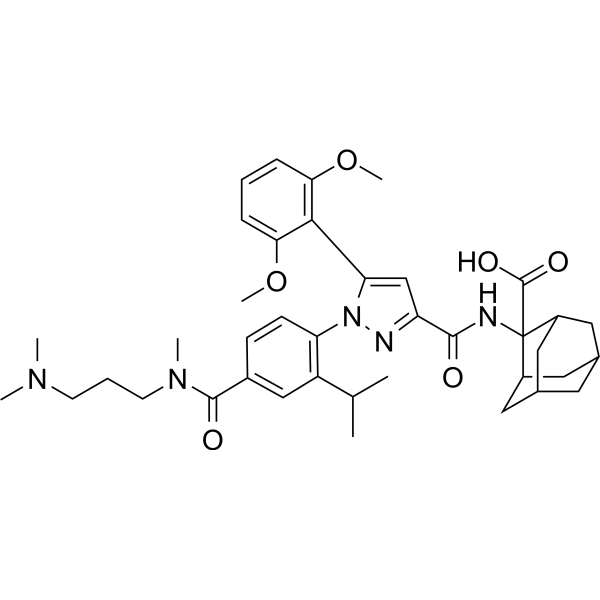
    SR 142948 is an orally active and selective non-peptide neurotensin receptor (NT) antagonist with IC50s of 1.19 nM, 0.32 nM, 3.96 nM in h-NTR1-CHO cells, HT-29 cells, and adult rat brain, respectively. SR 142948 antagonizes NT-induced inositol monophosphate formation in HT-29 cells with an IC50 of 3.9 nM. SR 142948 blocks hypothermia, analgesia and steering behavior induced by NT in vivo. SR 142948 shows blood-brain permeability and can be used in study of psychiatric disorders .
    SR 142948
  • HY-17397
    Strontium Ranelate
    2 Publications Verification

    Distrontium renelate; S12911

    CaSR Metabolic Disease
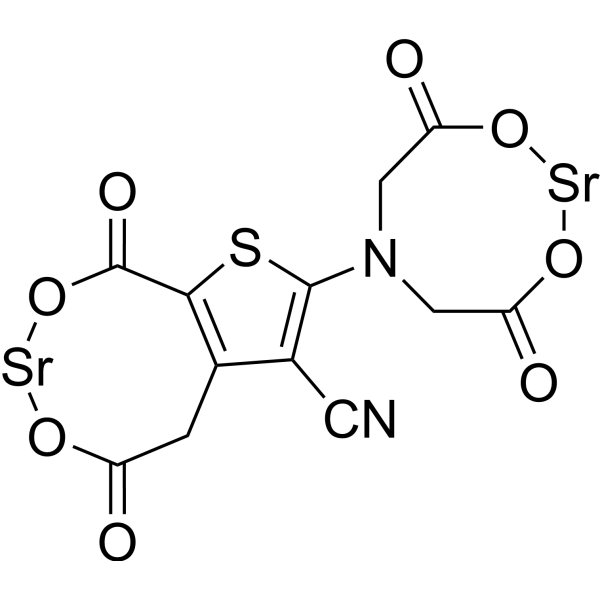
    Strontium Ranelate (S12911) is an antiosteoporotic agent that acts by reducing bone resorption and promoting bone formation, thereby inducing a positive bone balance. Strontium Ranelate can also activate the calcium-sensing receptor (CaSR) in non skeletal cells, resulting in the activation of inositol 1, 4, 5-triphosphate production and mitogen-activated protein kinase signaling .
    Strontium Ranelate
  • HY-12613

    NSC 45109

    Drug Derivative Fungal Others
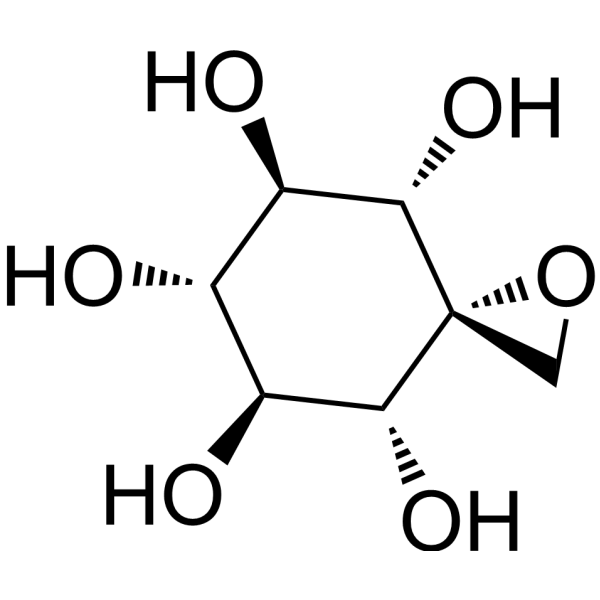
    2-C-methylene-myo-inositol oxide (NSC 45109), an inositol derivative, induces pseudohyphae formation in Saccharomyces spp .
    2-C-methylene-myo-inositol oxide
  • HY-175042

    Ins(1,3,4,5,6)P5 ammonium salt; 1,3,4,5,6-IP5 ammonium salt

    Akt Cancer
    D-myo-Inositol-1,3,4,5,6-pentaphosphate (ammonium salt) (Ins(1,3,4,5,6)P5 (ammonium salt)) is an isomer of inositol phosphate that acts as a small and soluble second messenger in the transmission of cellular signals. D-myo-Inositol-1,3,4,5,6-pentaphosphate (ammonium salt) can bind to the PH domain of Grp1 with a Kd of 590 nM. D-myo-Inositol-1,3,4,5,6-pentaphosphate (ammonium salt) can inhibit the phosphorylation and kinase activity of Akt/PKB, inducing apoptosis in ovarian, lung, and breast cancer cells. D-myo-Inositol-1,3,4,5,6-pentaphosphate (ammonium salt) exhibits antiangiogenic activity in vitro and blocks capillary tube formation of HUVEC. D-myo-Inositol-1,3,4,5,6-pentaphosphate (ammonium salt) exerts antitumor effects against cancer xenografts in nude mice .
    D-myo-Inositol-1,3,4,5,6-pentaphosphate ammonium salt
  • HY-P3799

    Neurokinin Receptor Neurological Disease
    [Glp6] Substance P (6-11) is an analogue of substance P (6-11). Substance P (6-11) stimulates [3H]-inositol monophosphate ([3H]-IP1) formation in rat urinary bladder by acting on the 'septide-sensitive' tachykinin receptors .
    [Glp6] Substance P (6-11)
  • HY-W788039

    Ins(1,3,5)P3 ammonium; 1,3,5-IP3 ammonium

    Biochemical Assay Reagents Others
    D-myo-Inositol-1,3,5-triphosphate (ammonium) is a class of biochemical reagents used in glycobiology research. Glycobiology studies the structure, synthesis, biology, and evolution of sugars. It involves carbohydrate chemistry, enzymology of glycan formation and degradation, protein-glycan recognition, and the role of glycans in biological systems. This field is closely related to basic research, biomedicine, and biotechnology .
    D-myo-Inositol-1,3,5-triphosphate ammonium
  • HY-107664A

    Neurotensin Receptor Neurological Disease
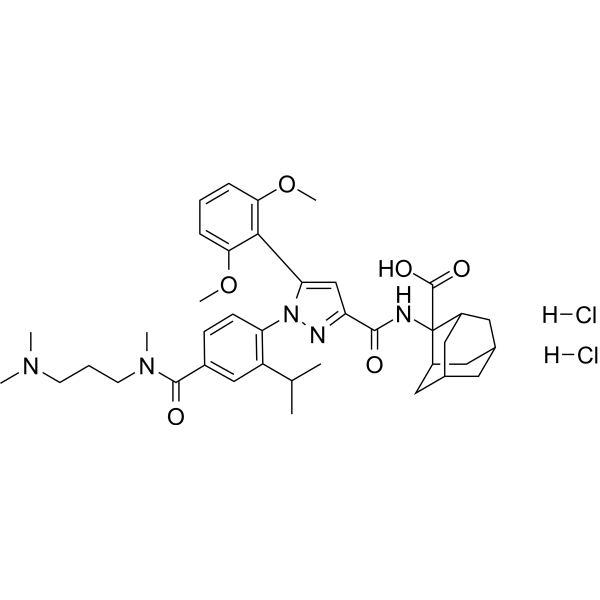
    SR 142948 dihydrochloride is an orally active and selective non-peptide neurotensin receptor (NT) antagonist with IC50s of 1.19 nM, 0.32 nM, 3.96 nM in h-NTR1-CHO cells, HT-29 cells, and adult rat brain, respectively. SR 142948 dihydrochloride antagonizes NT-induced inositol monophosphate formation in HT-29 cells with an IC50 of 3.9 nM. SR 142948 dihydrochloride blocks hypothermia, analgesia and steering behavior induced by NT in vivo. SR 142948 dihydrochloride shows blood-brain permeability and can be used in study of psychiatric disorders .
    SR 142948 dihydrochloride
  • HY-137749A

    2'-Deoxy-3'-MANT-ADP trisodium

    Biochemical Assay Reagents Others
    MANT-dADP (trisodium) (2'-Deoxy-3'-MANT-ADP (trisodium)) is a fluorescent nucleotide derivative, with an emission maximum of 453 nm upon excitation at 350 nm. MANT-dADP (trisodium) can decrease inositol phoshate formation in CHO-K1 cells that express human purinergic P2Y12 receptor. MANT-dADP (trisodium) can be studied in research on the interaction between cardiac troponin I and myofibrils .
    MANT-dADP trisodium
  • HY-107664B

    Neurotensin Receptor Neurological Disease
    SR 142948 TFA is an orally active and selective non-peptide neurotensin receptor (NT) antagonist with IC50s of 1.19 nM, 0.32 nM, 3.96 nM in h-NTR1-CHO cells, HT-29 cells, and adult rat brain, respectively. SR 142948 TFA antagonizes NT-induced inositol monophosphate formation in HT-29 cells with an IC50 of 3.9 nM. SR 142948 TFA blocks hypothermia, analgesia and steering behavior induced by NT in vivo. SR 142948 TFA shows blood-brain permeability and can be used in study of psychiatric disorders .
    SR 142948 TFA
  • HY-137603

    UTPγS

    P2Y Receptor Metabolic Disease
    Uridine-5'-O-(3-thiotriphosphate) (UTPγS), a stable analogue of Uridine triphosphate (UTP) (HY-107372), is a potent agonist of the P2Y2 and P2Y4 receptors with increased metabolic stability. Uridine-5'-O-(3-thiotriphosphate) stimulates inositol phosphate formation in human 1321N1 astrocytoma cells stably expressing the phospholipase C-coupled human P2U-purinoceptor (EC50 = 240 nM) .
    Uridine-5'-O-3-thiotriphosphate
  • HY-114667

    EGFR Others
    Lavendustin C6 is a specific inhibitor of tyrosine kinase. Lavendustin C6 inhibits epidermal growth factor (EGF) receptor tyrosine kinase with an EC50 value of 0.05 μg/mL. Lavendustin C6 inhibits platelet-derived growth factor (PDGF)-induced inositol phosphate formation .
    Lavendustin C6
  • HY-W331816

    Biochemical Assay Reagents Others
    myo-Inositol,hexaacetate is a class of biochemical reagents used in glycobiology research. Glycobiology studies the structure, synthesis, biology, and evolution of sugars. It involves carbohydrate chemistry, enzymology of glycan formation and degradation, protein-glycan recognition, and the role of glycans in biological systems. This field is closely related to basic research, biomedicine, and biotechnology .
    myo-Inositol,hexaacetate
  • HY-W151168

    Biochemical Assay Reagents Others
    1,2-O-Cyclohexylidene-myo-inositol is a class of biochemical reagents used in glycobiology research. Glycobiology studies the structure, synthesis, biology, and evolution of sugars. It involves carbohydrate chemistry, enzymology of glycan formation and degradation, protein-glycan recognition, and the role of glycans in biological systems. This field is closely related to basic research, biomedicine, and biotechnology .
    1,2-O-Cyclohexylidene-myo-inositol
  • HY-W739692

    Biochemical Assay Reagents Others
    1,2:4,5-Di-O-cyclohexylidene-myo-inositol is a class of biochemical reagents used in glycobiology research. Glycobiology studies the structure, synthesis, biology, and evolution of sugars. It involves carbohydrate chemistry, enzymology of glycan formation and degradation, protein-glycan recognition, and the role of glycans in biological systems. This field is closely related to basic research, biomedicine, and biotechnology .
    1,2:4,5-Di-O-cyclohexylidene-myo-inositol
  • HY-W567260

    Biochemical Assay Reagents Others
    1,2:4,5-Bis-O-(1-methylethylidene)-myo-inositol is a class of biochemical reagents used in glycobiology research. Glycobiology studies the structure, synthesis, biology, and evolution of sugars. It involves carbohydrate chemistry, enzymology of glycan formation and degradation, protein-glycan recognition, and the role of glycans in biological systems. This field is closely related to basic research, biomedicine, and biotechnology .
    1,2:4,5-Bis-O-(1-methylethylidene)-myo-inositol
  • HY-17397R

    Distrontium renelate (Standard); S12911 (Standard)

    Reference Standards CaSR Metabolic Disease
    Strontium Ranelate (Standard) is the analytical standard of Strontium Ranelate. This product is intended for research and analytical applications. Strontium Ranelate (S12911) is an antiosteoporotic agent that acts by reducing bone resorption and promoting bone formation, thereby inducing a positive bone balance. Strontium Ranelate can also activate the calcium-sensing receptor (CaSR) in non skeletal cells, resulting in the activation of inositol 1, 4, 5-triphosphate production and mitogen-activated protein kinase signaling .
    Strontium Ranelate (Standard)
  • HY-19633A

    Endogenous Metabolite Neurological Disease
    CS-003 is a triple neurokinin receptor antagonist with activity in inhibiting neurokinin-related respiratory diseases. CS-003 exhibits high affinity for human neurokinin 1, 2 and 3 receptors, withKi values of 2.3 nM, 0.54 nM and 0.74 nM respectively. The Ki values of CS-003 on the guinea pig neurokinin receptor are 5.2 nM, 0.47 nM and 0.71 nM respectively, showing superior inhibitory effect. CS-003 significantly inhibits the formation of inositol phosphate involving substance P, neurokinin A and neurokinin B through competitive antagonism. CS-003 significantly inhibits citric acid-induced cough, and its effect is better than other selective neurokinin receptor antagonists .
    CS-003
  • HY-137603A

    UTPγS tetrasodium

    P2Y Receptor Neurological Disease Metabolic Disease
    Uridine-5'-O-(3-thiotriphosphate) (UTPγS) tetrasodium, a stable analogue of Uridine triphosphate (UTP) (HY-107372), is a potent agonist of the P2Y2 and P2Y4 receptors with increased metabolic stability. Uridine-5'-O-(3-thiotriphosphate) tetrasodium stimulates inositol phosphate formation in human 1321N1 astrocytoma cells stably expressing the phospholipase C-coupled human P2U-purinoceptor (EC50 = 240 nM) .
    Uridine-5'-O-3-thiotriphosphate tetrasodium
  • HY-175068

    Ins(1,3,4,5,6)P5 sodium

    PI3K Akt Apoptosis Cardiovascular Disease Cancer
    D-myo-Inositol-1,3,4,5,6-pentaphosphate sodium (Ins(1,3,4,5,6)P5 sodium) is a small intracellular signaling molecule. D-myo-Inositol-1,3,4,5,6-pentaphosphate sodium inhibits the PI3K/Akt signaling pathway. D-myo-Inositol-1,3,4,5,6-pentaphosphate sodium inhibits Akt/PKB phosphorylation and kinase activity, inducing apoptosis in cancer cells. D-myo-Inositol-1,3,4,5,6-pentaphosphate sodium inhibits the formation of tubular structures in endothelial cells in an in vitro angiogenesis mouse model. D-myo-Inositol-1,3,4,5,6-pentaphosphate sodium can be used in research on ovarian cancer, lung cancer, breast cancer, and other cancers, as well as in cardiovascular and cerebrovascular diseases such as angiogenesis .
    D-myo-Inositol-1,3,4,5,6-pentaphosphate sodium
  • HY-182471

    Fungal Infection
    Aminopyrifen is a GWT-1 inhibitor. Aminopyrifen inhibits the inositol acylation of phosphatidylinositol, disrupting the maturation process of GPI-anchored proteins and the integrity of fungal cell walls. Aminopyrifen strongly inhibits germ tube elongation of Botrytis cinerea, delays spore germination, prevents appressorium formation, and blocks the infection of plant tissues by pathogenic fungi. Aminopyrifen is effective against field populations of eggplant gray mold and cucumber powdery mildew, and can be used for research on various plant fungal diseases such as gray mold and powdery mildew .
    Aminopyrifen
  • HY-107664R

    Reference Standards Neurotensin Receptor Neurological Disease
    SR 142948 (Standard) is the analytical standard of SR 142948 (HY-107664). This product is intended for research and analytical applications. SR 142948 is an orally active and selective non-peptide neurotensin receptor (NT) antagonist with IC50s of 1.19 nM, 0.32 nM, 3.96 nM in h-NTR1-CHO cells, HT-29 cells, and adult rat brain, respectively. SR 142948 antagonizes NT-induced inositol monophosphate formation in HT-29 cells with an IC50 of 3.9 nM. SR 142948 blocks hypothermia, analgesia and steering behavior induced by NT in vivo. SR 142948 shows blood-brain permeability and can be used in study of psychiatric disorders .
    SR 142948 (Standard)

Inquiry Online

Your information is safe with us. * Required Fields.

Salutation


Country or Region *

Applicant Name *


Organization Name *

Department *


Email Address *


Product Name *

Cat. No.


Requested quantity *

Phone Number *


Remarks

Inquiry Online

Inquiry Information

Product Name:
Cat. No.:
Quantity:
MCE Japan Authorized Agent:

