




Scientific Reviews
Product Guides
Blogs
Topics
Targeted therapy! The Capetin Prize winning "Click Chemistry" can be used like this!Targeted therapy! The Nobel Prize winning "Click Chemistry" can be used like this!2025-02-06



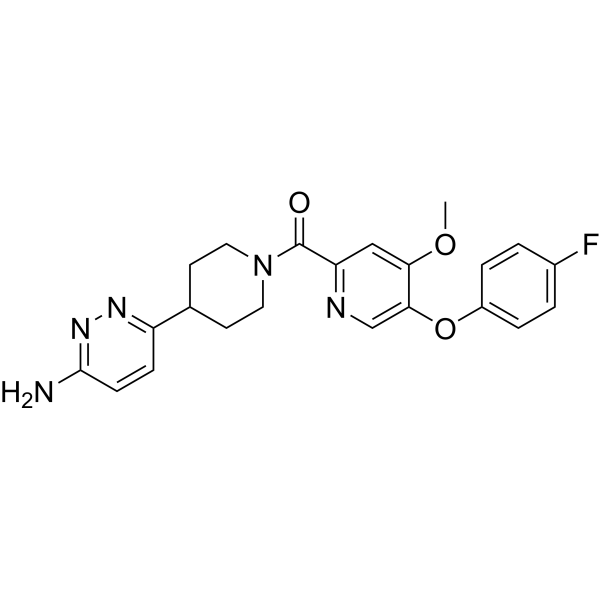
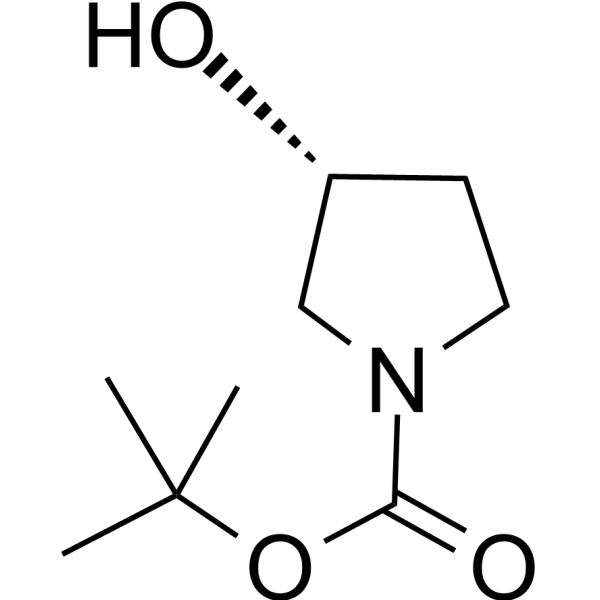
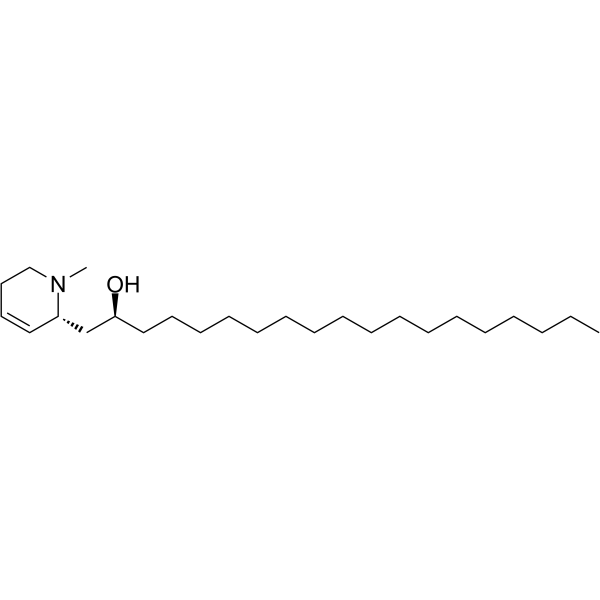
8 Results for "ion channel modulating compounds" in MCE Product Catalog:
Most of molecules enter or leave cells mainly via membrane transport proteins, which play important roles in several cellular functions, including cell metabolism, ion homeostasis, signal transduction, the recognition process in the immune system, energy transduction, etc. There are three major types of transport proteins, ATP-powered pumps, channel proteins and transporters. Transport proteins such as channels and transporters play important roles in the maintenance of intracellular homeostasis, and mutations in these transport protein genes have been identified in the pathogenesis of a number of hereditary diseases. In the central nervous system, ion channels have been linked to, but not limited to, many diseases such asataxias, paralyses, epilepsies, and deafness. This indicates the roles of ion channels in the initiation and coordination of movement, sensory perception, and encoding and processing of information. Ion channels are a major class of drug targets in drug development.
MCE designs a unique collection of 2,278 smal-molecule modulators that can be used for the research of Ion Channel and Membrane Transporter or high throughput screening (HTS) related drug discovery.
Protein protein interactions (PPI) have pivotal roles in life processes. The studies showed that aberrant PPI are associated with various diseases, including cancer, infectious diseases, and neurodegenerative diseases. The classic drug targets are usually enzymes, ion channels, or receptors, the PPI indicate new potential therapeutic targets. Therefore, targeting PPI is a new direction in treating diseases and an essential strategy for the development of new drugs.
However, the design of modulators targeting PPI still faces tremendous challenges, such the difficult PPI interfaces for the drug design, lack of ligands reference, lack of guidance rules for the PPI modulators development and high-resolution PPI proteins structures.
With the development of high-throughput technology, high-throughput screening is also gradually used for the identification of PPI inhibitors, but the compound library used for conventional target screening is not very effective in screening PPI inhibitors. To improve screening efficiency, MCE carefully selected 826 PPI inhibitors and mainly targeting MDM2-p53, Keap1-Nrf2, PD-1/PD-L1, Myc-Max, etc. MCE Protein-protein Interaction Inhibitor Library is a useful tool for PPI drug discovery and related research.
Seven-membered rings are privileged medium-sized scaffolds with distinct twist-chair conformations and greater 3D diversity than five- and six-membered rings. Their flexible conformations allow induced-fit protein binding and precise pharmacophore positioning. They also modulate Fsp³, pKa and logP to enhance solubility and permeability. Azepanes, oxepanes and benzodiazepines serve as bioisosteres for hit discovery against GPCRs, ion channels and kinases.
Widely found in plant and microbial alkaloids, seven-membered heterocycles show excellent biocompatibility and target affinity. They underpin many approved drugs for CNS, cancer and infectious diseases, including diazepam, imipramine and carbamazepine. Clinical candidates further highlight their unique value. However, high transannular strain and synthetic difficulty limit their availability, leaving them rare in standard screening libraries.
MCE 7 Membered Scaffold Library contains 2,792 structurally diverse, lead-like molecules covering azepanes, oxepanes, benzodiazepines and dibenzazepines. With varied substitutions, chiral centers and synthetic accessibility, it fills the shortage of medium-ring scaffolds. Ideal for HTS, virtual screening and SAR studies, these novel, patent-clear compounds offer a distinctive starting point for drug discovery in CNS disorders, oncology, antivirals and challenging targets such as PPIs.

Scientific Reviews
Product Guides
Blogs
Topics
Targeted therapy! The Capetin Prize winning "Click Chemistry" can be used like this!Targeted therapy! The Nobel Prize winning "Click Chemistry" can be used like this!2025-02-06
Protocols
Targeted therapy! The Capetin Prize winning "Click Chemistry" can be used like this!Targeted therapy! The Nobel Prize winning "Click Chemistry" can be used like this!2025-02-06



