
1. Search Result
Search Result
Results for "

lung tumor regression

" in MedChemExpress (MCE) Product Catalog:

24

Inhibitors & Agonists

1

Inhibitory Antibodies

3

Oligonucleotides

Cat. No. Product Name Target Research Areas Chemical Structure
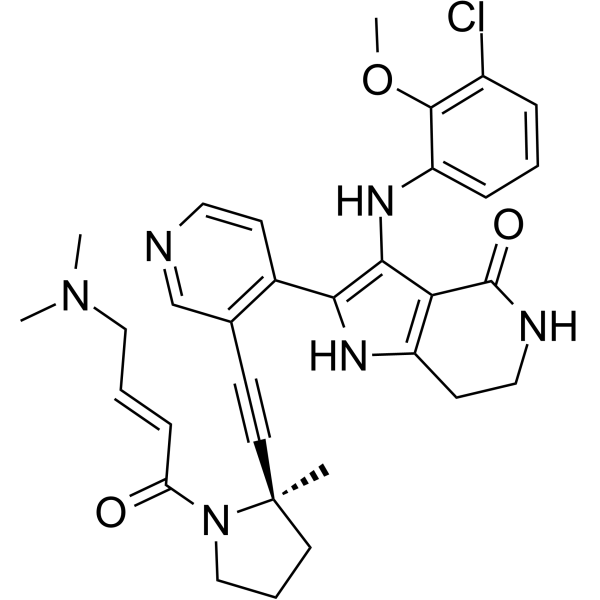
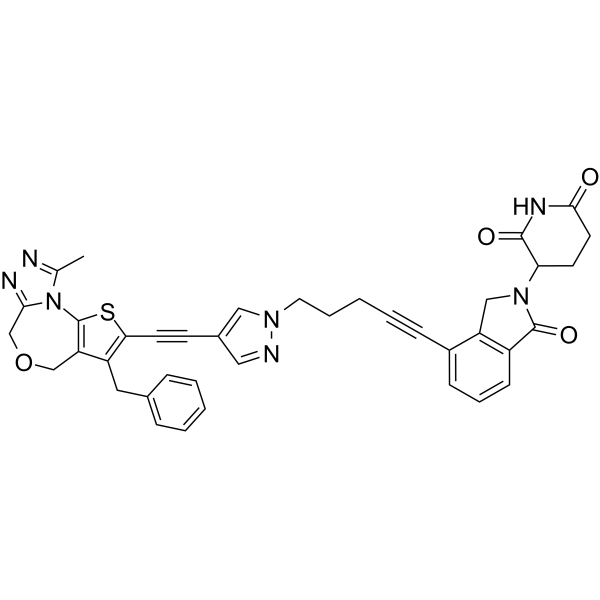
  • HY-175749

    Molecular Glues Wee1 Inflammation/Immunology Cancer
    BMS-986463, a CRBN E3 ligase modulator (CELMoD), is a WEE1 kinase molecular glue degrader. BMS-986463 significantly inhibits tumor regression and reduces the level of phospho-CDK2. BMS-986463 can be used for advanced malignant solid tumors like non-small cell lung cancer (NSCLC) research .
    BMS-986463
  • HY-159607

    PROTACs SWI/SNF Complex Cancer
    PRT3789 is a selective SMARCA2 PROTAC degrader (DC50 in HeLa cell: 0.72 nM for SMARCA2, 14 nM for SMARCA4). PRT3789 forms a stable ternary complex with Von Hippel-Lindau (VHL) E3 ligase, induces polyubiquitination at SMARCA2-specific lysine residues, and drives proteasome-dependent SMARCA2 degradation. PRT3789 disrupts SWI/SNF chromatin remodeling complex integrity, induces dissociation of specific subunits, suppresses oncogenic gene expression, reduces chromatin accessibility, and upregulates antigen processing/presentation-related gene expression. PRT3789 induces synthetic lethality, inhibits proliferation and colony formation, and drives tumor growth inhibition and regression in SMARCA4-deficient contexts. PRT3789 can be used for the research of SMARCA4-mutated solid tumors, non-small cell lung cancer, endometrial cancer, colorectal cancer, bladder cancer, esophageal cancer, ovarian cancer, and gastric cancer .
    PRT3789
  • HY-172429

    ORIC-114

    EGFR Neurological Disease Cancer
    Enozertinib (ORIC-114) is an orally active, CNS-penetrant, highly selective and irreversible dual EGFR/HER2 inhibitor that exhibits potent and targeted inhibition of exon 20 insertion mutations. Enozertinib exhibits high kinome selectivity for the EGFR family of receptors to reduce off-target kinase liabilities. Enozertinib induces tumor regression and demonstrates antitumor activity in central nervous system and non-small cell lung cancer (NSCLC) tumor models. Enozertinib can be used for the research of solid tumors and NSCLC .
    Enozertinib
  • HY-157229
    STX-721
    1 Publications Verification

    EGFR ERK Cancer
    STX-721 is an orally active, irreversible, covalent EGFR exon 20 insertion (ex20ins) inhibitor that selectively targets ex20ins-mutant dynamic protein states. STX-721 potently inhibits the kinase activity of EGFR ex20ins mutants (NPG, ASV, SVD). STX-721 inhibits phosphorylation of EGFR (pEGFR Y1068) and downstream ERK (pERK Thr202/Tyr204), and suppresses proliferation of ex20ins-mutant Ba/F3 cells and human NSCLC cell lines (NCI-H2073 ASV KI, CUTO-14 ASV). STX-721 induces tumor regression in EGFR ex20ins-mutant PDX/CDX models. STX-721 can be used for the study of non-small cell lung cancer (NSCLC) harboring EGFR or HER2 ex20ins mutations .
    STX-721
  • HY-172429A

    ORIC-114 hemihydrate

    EGFR Neurological Disease Cancer
    Enozertinib (ORIC-114) hemihydrate is an orally active, CNS-penetrant, highly selective and irreversible dual EGFR/HER2 inhibitor that exhibits potent and targeted inhibition of exon 20 insertion mutations. Enozertinib hemihydrate exhibits high kinome selectivity for the EGFR family of receptors to reduce off-target kinase liabilities. Enozertinib hemihydrate induces tumor regression and demonstrates antitumor activity in central nervous system and non-small cell lung cancer (NSCLC) tumor models. Enozertinib hemihydrate can be used for the research of solid tumors and NSCLC .
    Enozertinib hemihydrate
  • HY-148511

    CMP-001

    Toll-like Receptor (TLR) IFNAR PD-1/PD-L1 Indoleamine 2,3-Dioxygenase (IDO) Cancer
    Vidutolimod (CMP-001) is a virus-like particle containing a TLR9 activator . Vidutolimod induces human peripheral blood mononuclear cells to secrete IFNα, and upregulates the gene expression of CXCL10, PDL1, IDO and CD80. Vidutolimod activates TLR9, which in turn triggers plasmacytoid dendritic cell activation, production of IFNγ and TNFα, induction of CXCL10, and recruitment of antitumor T cells. Vidutolimod causes influenza-like symptoms, hypotension and tumor regression, and its activity depends on the presence of anti- antibodies. Vidutolimod modulates monocyte function, promotes CD4 T cell proliferation, and activates multiple immune cell types in an environment with anti-Qβ antibodies. Vidutolimod prolongs the survival of tumor-bearing mice. Vidutolimod is used in research related to advanced melanoma, head and neck squamous cell carcinoma, and advanced non-small cell lung cancer .
    Vidutolimod
  • HY-178238

    ADC Payload Topoisomerase Cancer
    LD2-3 is a cytotoxic compound derived from Exatecan (HY-13631), designed to be conjugated with anti-FGFR2b or anti-CEA antibodies to form intact antibody-drug conjugate (ADC) molecules. LD2-3 exhibits a remarkable bystander killing effect: it not only effectively kills FGFR2b-positive tumor cells, but also eliminates surrounding FGFR2b-negative cells in co-culture and mixed tumor xenograft models, thereby inducing complete tumor regression. LD2-3 can be used for anti-tumor research in relevant fields such as gastric cancer and lung cancer .
    LD2-3
  • HY-160047

    PDGFR Cancer
    AX102 sodium is a 34 bp length nucleotide aptamer modified at the 5' end with a 40 kDa polyethylene glycol moiety. AX102 selectively binds platelet-derived growth factor B (PDGF-B) and causes tumor vessel regression .
    AX102 sodium
  • HY-118899

    Endogenous Metabolite Cancer
    XR5944 is an anti-tumor compound with DNA-targeting activity. As a topoisomerase inhibitor, XR5944 can effectively inhibit the activities of topoisomerase I and II. XR5944 shows excellent anti-tumor activity against human and mouse tumor cells in vitro and in vivo. XR5944 exhibits significant potency in multiple cell lines, with IC50 values of 0.04-0.4 nM. XR5944 is not affected by atypical drug resistance in cells and remains significantly active even in cells overexpressing P-glycoprotein or multidrug resistance-related proteins. XR5944 showed anti-tumor efficacy in human tumor models of H69 small cell lung cancer and HT29 colon cancer, inducing tumor regression in most animals in the HT29 model. XR5944 can be used to study biological processes related to colon and lung cancer .
    XR5944
  • HY-164429

    Integrin Elastase Cancer
    VIP236 is a small-molecule drug conjugate targeting αvβ3 integrin. VIP236 achieves tumor homing via specific binding to αvβ3 integrin and delivers its payload to the tumor microenvironment. The linker of VIP236 is cleavable by neutrophil elastase, which is highly expressed in the tumor microenvironment, to release the payload 7-ethylcamptothecin. This payload induces DNA damage by inhibiting topoisomerase 1, thereby exerting anti-tumor effects. VIP236 exhibits excellent plasma stability and tumor targeting property, with a tumor/plasma payload ratio 10-fold higher than that of the single administration. It effectively induces tumor regression, reduces metastasis formation, and shows good tolerance in mouse models. VIP236 has been used in studies related to non-small cell lung cancer, clear cell renal cell carcinoma, colon cancer, triple-negative breast cancer, small cell lung cancer, and metastatic solid tumors .
    VIP236
  • HY-178008

    Bcl-2 Family Caspase Apoptosis Cancer
    Mcl-1-IN-16 is an effective macrocyclic myeloid cell leukemia 1 (Mcl-1) inhibitor with a Ki of below 0.08 nM. Mcl-1-IN-16 maintains high selectivity (>50,000-fold) for Mcl-1 over other antiapoptotic Bcl-2 family members Bcl-2 and Bcl-xL. Mcl-1-IN-16 leads to the activation of caspase-3/7, thereby initiating cell apoptosis. Mcl-1-IN-16 achieves tumor regression in a lung cancer-derived tumor xenograft mice model. Mcl-1-IN-16 can be used in the research of solid tumor such as nonsmall cell lung cancer (NSCLC) .
    Mcl-1-IN-16
  • HY-160048

    PDGFR Cancer
    PEG40K unconjugated/naked AX102 sodium is AX102 without PEG40K conjugation. AX102 is a DNA oligonucleotide aptamer for platelet-derived growth factor PDGF-B. AX102 is 34 bases in length, selectively binds platelet-derived growth factor B (PDGF-B), and causes tumor vessel regression .
    PEG40K unconjugated/naked AX102 sodium
  • HY-149695

    EGFR Cancer
    EGFR-IN-91 (compound 9) is an orally available EGFR inhibitor with blood-brain barrier penetrability. EGFR-IN-91 inhibits EGFR L858R/C797S and EGFR exon 19del/C797S, inducing tumor regression in xenograft (PDX) mouse models. EGFR-IN-91 has the potential to inhibit localized and metastatic non-small cell lung cancer (NSCLC) driven by EGFR mutants .
    EGFR-IN-91
  • HY-171509

    Drug-Linker Conjugates for ADC Apoptosis Cancer
    Mal-N(Me)-C6-N(Me)-PNU-159682 (Compound 27), an agent-linker conjugate for ADC, consists the ADC linker Mal-N(Me)-C6-N(Me) and a potent ADC cytotoxin PNU-159682. Mal-N(Me)-C6-N(Me)-PNU-159682 (Compound 27) selectively delivers the payload to CD46-expressing cells, where the linker is cleaved by cathepsin B to release PNU-159682, inducing DNA damage and apoptosis. Mal-N(Me)-C6-N(Me)-PNU-159682 shows durable tumor regression in xenograft (PDX) models of non-small cell lung cancer (NSCLC) and colorectal cancer (CRC) .
    Mal-N(Me)-C6-N(Me)-PNU-159682
  • HY-182914

    EGFR Akt Bcl-2 Family Apoptosis Cancer
    NGI‑189 is a selective OST‑A inhibitor. NGI‑189 inhibits the STT3A catalytic subunit of the OST complex and reduces N‑glycosylation of target glycoproteins. NGI‑189 blocks oncogenic and bypass signaling, reduces phosphorylation of EGFR, AKT, p70S6K and S6RP, and induces cell cycle arrest and apoptosis. NGI‑189 markedly suppresses tumor growth and induces tumor regression in non‑small cell lung cancer (NSCLC) xenograft models. NGI‑189 can be used for the research of EGFR‑mutant non‑small cell lung cancer .
    NGI-189
  • HY-183116

    Molecular Glues Anaplastic lymphoma kinase (ALK) Cancer
    TRI-611 is a brain-penetrant, orally active molecular glue degrader targeting ALK. TRI-611 engages ALK via a distal degron, forms a ternary complex with CRBN, triggers ALK polyubiquitination and degradation, including TKI-resistant ALK fusion proteins. TRI-611 inhibits ALK downstream signaling pathways, induces anti-proliferative effects in ALK-positive cancer cells. TRI-611 induces regression of ALK-positive non-small cell lung cancer tumors in preclinical xenograft models. TRI-611 can be used for the research of ALK-positive non-small cell lung cancer, including TKI-refractory tumors and central nervous system metastases .
    TRI-611
  • HY-P992060

    CD20 NF-κB Inflammation/Immunology Cancer
    Anti-Mouse CD20 Antibody (18B12) is a B cell depleting agent that targets mouse CD20. Anti-Mouse CD20 Antibody (18B12) not only inhibits the growth of mesothelioma, lung cancer and thymoma, but also significantly enhances the efficacy of adenoviral tumor antigen vaccines and induces tumor regression by increasing the number of tumor-specific CD8 + T cells. Anti-Mouse CD20 Antibody (18B12) reduces B cell infiltration into the central nervous system of mice with experimental autoimmune encephalomyelitis, and delays motor dysfunction and neuronal death after spinal cord injury by alleviating inflammatory responses and tissue damage. Anti-Mouse CD20 Antibody (18B12) is widely applicable to research in fields related to mesothelioma, lung cancer, thymoma, experimental autoimmune encephalomyelitis and spinal cord injury .
    Anti-Mouse CD20 Antibody (18B12)
  • HY-181838

    CDK Apoptosis Cancer
    CIRc-014 is an orally active Cyclin A/B inhibitor with a Cyclin A IC50 of 0.05 μM, Cyclin A Kd of 2.7 nM, Cyclin B IC50 of less than 0.02 μM and Cyclin B Kd of 1.0 nM. CIRc-014 activates the spindle assembly checkpoint and promotes the formation of a complex between Cyclin B and CDK2 by blocking the RxL interaction of Cyclin A/B. CIRc-014 can induce replication stress, DNA damage, mitotic arrest and apoptosis in tumor cells. CIRc-014 showed tumor growth inhibition and regression in NCI-H69 and NCI-H446 small cell lung cancer xenograft models. CIRc-014 can be used for the research of small-cell lung cancer .
    CIRc-014
  • HY-185426

    SC-011

    Antibody-Drug Conjugates (ADCs) Cancer
    ABBV-011 (SC-011) is a SEZ6-targeted, antibody-drug conjugate (ADC). ABBV-011 binds cell surface-expressed SEZ6 by anti-SEZ6 antibody Turmetabart (HY-P991041), triggers ADC-receptor complex internalization into lysosomes, releases Calicheamicin (HY-19609) payload, and mediates cytotoxicity. ABBV-011 induces tumor regression and mediates selective killing of SEZ6-positive cells. ABBV-011 can be used for the research of small cell lung cancer .
    ABBV-011
  • HY-186086

    Ras Cancer
    RM-041 is a selective, orally active KRAS G13C (ON) inhibitor that forms a covalent complex with KRAS G13C (ON) and Cyclophilin A. RM-041 blocks the binding of RAS effector proteins via steric hindrance, and then covalently binds to Cys-13 to form an irreversible inhibitory complex, thereby inhibiting the proliferation of KRAS G13C mutant cancer cells. RM-041 induces regression of KRAS G13C tumors in cellular and xenograft tumor models. RM-041 exerts a synergistic effect when combined with upstream node inhibitors (such as SHP2 inhibitors). RM-041 can be used for the research of non-small cell lung cancer .
    RM-041
  • HY-183629

    Zinc Finger Protein Apoptosis Cardiovascular Disease Cancer
    ZNF281-IN-1 is a ZNF281 inhibitor. ZNF281-IN-1 disrupts the binding of transcriptionally active DNA-bound ZNF281 to the promoters of target genes including TRIM35 and ZEB1. ZNF281-IN-1 inhibits tumor cell proliferation, stabilizes P53 and upregulates PUMA to induce apoptosis, while triggering cellular senescence. ZNF281-IN-1 completely prevents Doxorubicin (HY-15142A)-induced cardiotoxicity (AIC), and enhances rather than impairs the antitumor efficacy of Doxorubicin. ZNF281-IN-1 completely blocks the distant metastasis of melanoma to the lungs. ZNF281-IN-1 can be used in the research of cardiotoxicity, lung cancer and metastatic melanoma .
    ZNF281-IN-1
  • HY-181420A

    Ras Phosphatase ERK Apoptosis Cancer
    BBO-11818 is an orally active, highly selective (relative to NRAS and HRAS), non-covalent pan-KRAS inhibitor (IC50=28-120 nM). BBO-11818 specifically binds to the Switch-II/Helix 3 pocket, disrupts the KRAS:RAF1 interaction by inducing conformational changes, and blocks the MAPK signaling pathway. BBO-11818 exhibits significant anti-tumor activity, which not only inhibits cell proliferation and induces apoptosis, but also drives tumor regression in xenograft models. BBO-11818 produces synergistic effects when combined with Cetuximab (HY-P9905), anti-PD-1 antibody or PI3Kα inhibitor. BBO-11818 is used in the research of KRAS mutation-related malignancies such as pancreatic cancer, non-small cell lung cancer and colorectal cancer .
    BBO-11818
  • HY-181420

    ERK Apoptosis Phosphatase Ras Cancer
    (S,R,S)-BBO-11818 is an orally active, highly selective (relative to NRAS and HRAS), non-covalent pan-KRAS inhibitor (IC50=28-120 nM). (S,R,S)-BBO-11818 specifically binds to the Switch-II/Helix 3 pocket, disrupts the KRAS:RAF1 interaction by inducing conformational changes, and blocks the MAPK signaling pathway. (S,R,S)-BBO-11818 exhibits significant anti-tumor activity, which not only inhibits cell proliferation and induces apoptosis, but also drives tumor regression in xenograft models. (S,R,S)-BBO-11818 produces synergistic effects when combined with Cetuximab (HY-P9905), anti-PD-1 antibody or PI3Kα inhibitor. (S,R,S)-BBO-11818 is used in the research of KRAS mutation-related malignancies such as pancreatic cancer, non-small cell lung cancer and colorectal cancer .
    (S,R,S)-BBO-11818
  • HY-175870A

    Ras ERK Cancer
    (7R)-Eras-4001 is an orally active KRAS mutant inhibitor with remarkable selectivity for H-RAS and N-RAS. (7R)-Eras-4001 effectively suppresses cancer cell viability by blocking downstream signaling pathways mediated by RAF family proteins, inhibiting the formation of the KRAS G12D-RAF1 RBD complex and the phosphorylation of ERK1/2. (7R)-Eras-4001 induces tumor growth inhibition and regression in a dose-dependent manner, and also reduces plasma ERK1/2 phosphorylation levels. (7R)-Eras-4001 exerts a synergistic effect with anti-PD-1 Cetuximab (HY-P9905). (7R)-Eras-4001 can be used in research on non-small cell lung cancer, pancreatic cancer, colorectal cancer, and ovarian cancer .
    (7R)-Eras-4001

Inquiry Online

Your information is safe with us. * Required Fields.

Salutation


Country or Region *

Applicant Name *


Organization Name *

Department *


Email Address *


Product Name *

Cat. No.


Requested quantity *

Phone Number *


Remarks

Inquiry Online

Inquiry Information

Product Name:
Cat. No.:
Quantity:
MCE Japan Authorized Agent:

