1. Search Result
Search Result
Results for "

myocardial remodeling

" in MedChemExpress (MCE) Product Catalog:

22

Inhibitors & Agonists

3

Peptides

2

Isotope-Labeled Compounds

Cat. No. 상품명 Target 연구분야 Chemical Structure
  • HY-B1409

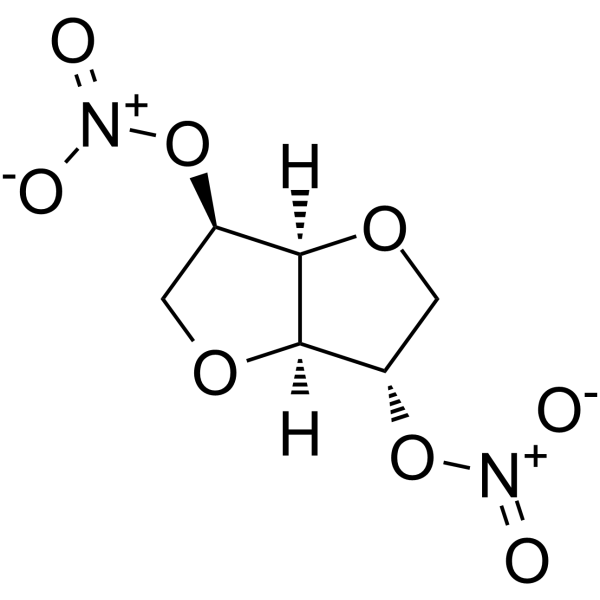
    ISDN

    NO Synthase Cardiovascular Disease
    Isosorbide dinitrate (ISDN) is an NO donor that prevents LV remodeling and degradation of cardiac function following myocardial infarction (MI) .
    Isosorbide dinitrate
  • HY-139397
    TJ-M2010-5
    Maximum Cited Publications
    31 Publications Verification

    MyD88 Cardiovascular Disease
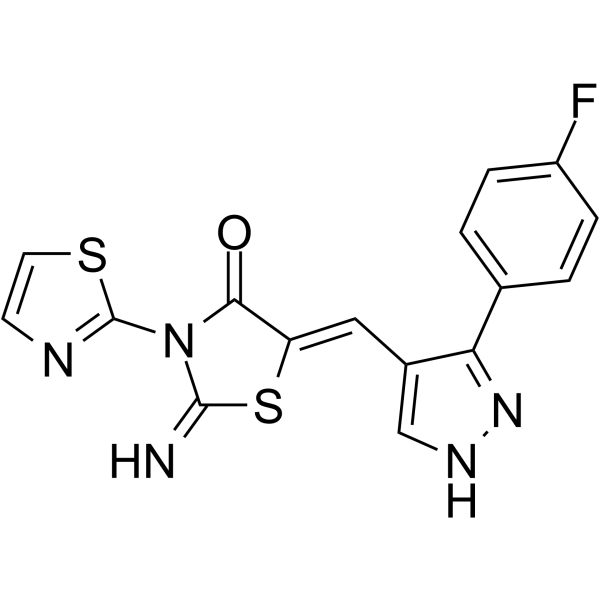
    TJ-M2010-5 is a MyD88 inhibitor that binds to the TIR domain of MyD88 to interfere with its homodimerization, and the TLR/MyD88 signal pathway . TJ-M2010-5 can be used for the research of myocardial ischemia/reperfusion injury (MIRI) .
    TJ-M2010-5
  • HY-103153
    SB 204741
    1 Publications Verification

    5-HT Receptor Cardiovascular Disease
    SB 204741 is a selective and high affinity 5-HT2B antagonist with a pKi value of 7.1 .
    SB 204741
  • HY-B1194

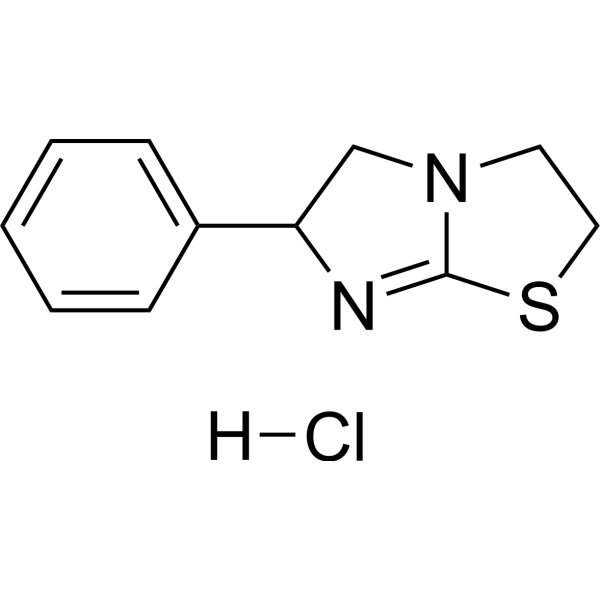
    (±)-Tetramisole hydrochloride; DL-Tetramisole hydrochloride; R-829

    Potassium Channel Parasite PKA Infection Cardiovascular Disease
    Tetramisole hydrochloride is an orally active, selective inward rectifier potassium channel agonist with an EC50 of approximately 30 μM for the Kir2.1 subunit. Tetramisole hydrochloride is also an anti-nematode agent that blocks neuromuscular transmission by non-competitive depolarization. Tetramisole hydrochloride promotes the forward transport of Kir2.1 channels, hyperpolarizes the resting potential (RP), shortens the action potential duration (APD), inhibits intracellular calcium overload and the PKA signaling pathway, and exerts anti-arrhythmic and anti-myocardial remodeling activities. Tetramisole hydrochloride can be used in cardiac electrophysiology research and research related to myocardial ischemia and heart failure .
    Tetramisole hydrochloride
  • HY-10081
    GS-6201
    1 Publications Verification

    CVT-6883

    Adenosine Receptor Inflammation/Immunology
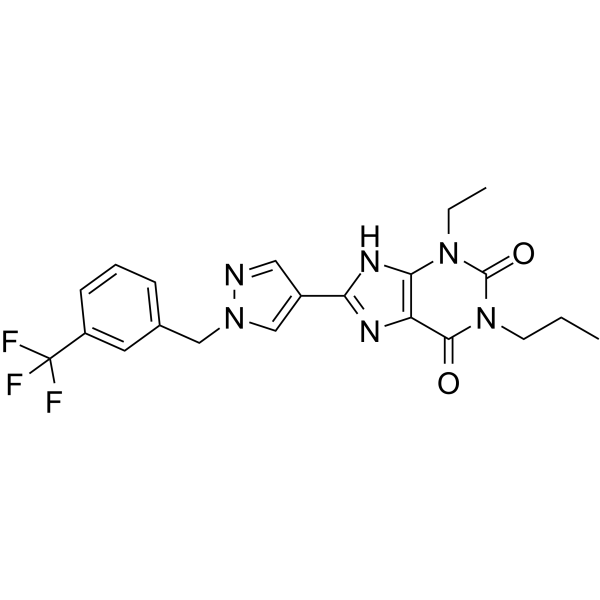
    GS-6201 (CVT-6883) is a selective adenosine A2B receptor antagonist. GS-6201 displays high affinity and selectivity for the human adenosine A2B receptors (Ki=22 nM) . GS-6201 reduces caspase-1 activity in the heart, and attenuates cardiac remodeling after acute myocardial infarction (AMI) in the mouse . GS-62013 attenuates the airway reactivity induced by NECA, AMP, or allergen in sensitized mice .
    GS-6201
  • HY-P3304

    GHR Neurological Disease Cancer
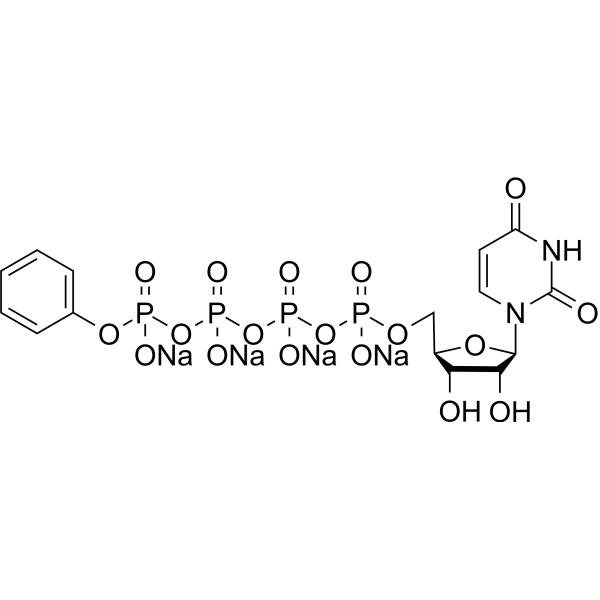
    MR 409 is a selected growth hormone-releasing hormone (GHRH) agonist. MR 409 has remarkable neuroprotective effects through enhancing endogenous neurogenesis in cerebral ischemic mice. MR 409 also inhibits the in vivo growth of lung cancer .
    MR 409
  • HY-151483

    Wnt Histone Demethylase Cardiovascular Disease
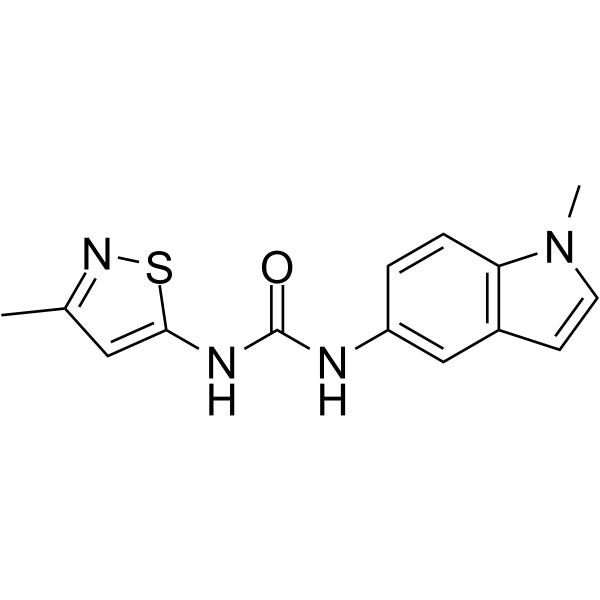
    TK-129 is an orally active, low-toxicity, potent KDM5B inhibitor (with high affinity; IC50=44 nM). TK-129 exerts cardioprotective effects by inhibiting KDM5B and blocking the KDM5B-associated Wnt pathway. TK-129 reduces ang II-induced activation of cardiac fibroblasts in vitro and reduces isoprenaline-induced myocardial remodelling and fibrosis in vivo. TK-129 can be used in studies of cardiovascular disease .
    TK-129
  • HY-135746
    OR-1896
    2 Publications Verification

    Potassium Channel Phosphodiesterase (PDE) Drug Metabolite Apoptosis Cardiovascular Disease
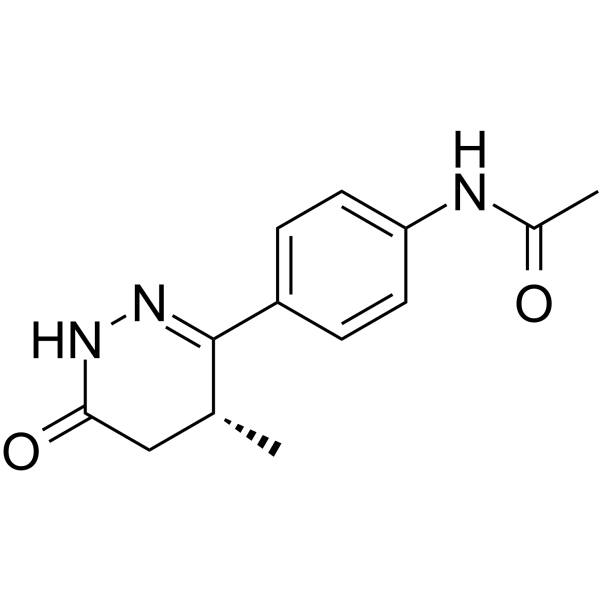
    OR-1896 is an active long-lived metabolite of Levosimendan. OR-1896 is a highly selective phosphodiesterase (PDE) III isoform inhibitor and a powerful vasodilator. OR-1896 can open ATP-sensitive K + channels and has Ca 2+-sensitizing effect. OR-1896 mitigates cardiomyocyte apoptosis, cardiac remodeling and myocardial inflammation .
    OR-1896
  • HY-P4911A
    SDF-1α (human) TFA
    2 Publications Verification

    CXCR Cardiovascular Disease
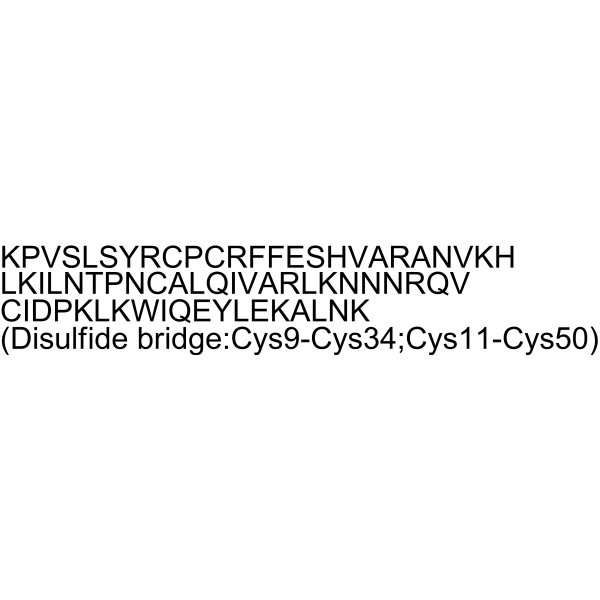
    SDF-1α (human) TFA is a mononuclear cells chemoattractant that can bind to CXCR4. SDF-1α plays a central role in stem cell homing, retention, survival, proliferation, cardiomyocyte repair, angiogenesis and ventricular remodelling following myocardial infarction. SDF-1α (human) TFA can be used in cardiovascular disease research .
    SDF-1α (human) TFA
  • HY-P4911

    CXCR Cardiovascular Disease
    SDF-1α (human) is a mononuclear cells chemoattractant that can bind to CXCR4. SDF-1α plays a central role in stem cell homing, retention, survival, proliferation, cardiomyocyte repair, angiogenesis and ventricular remodelling following myocardial infarction. SDF-1α (human) can be used in cardiovascular disease research .
    SDF-1α (human)
  • HY-B1409S

    ISDN-13C6

    NO Synthase Cardiovascular Disease
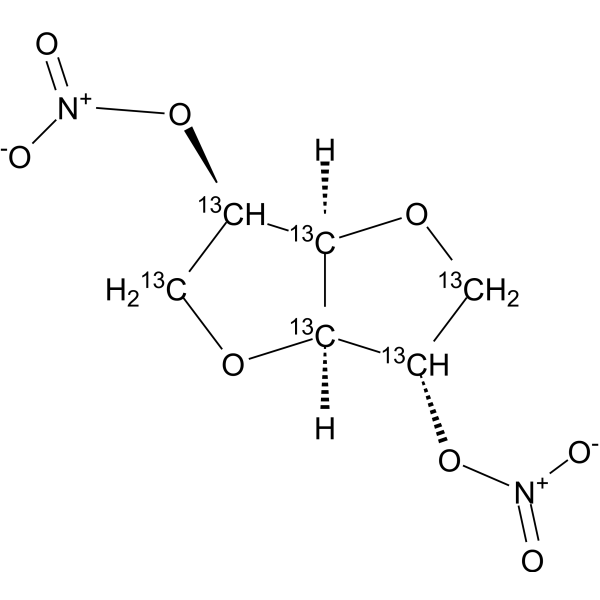
    Isosorbide dinitrate- 13C6 is the 13C labeled Isosorbide dinitrate . Isosorbide dinitrate (ISDN) is an NO donor that prevents LV remodeling and degradation of cardiac function following myocardial infarction (MI) .
    Isosorbide dinitrate-13C6
  • HY-14240

    PG 530742; PGE 530742; PGE 7113313

    MMP Cardiovascular Disease
    PG 116800 (PGE 530742; PGE 7113313) is an orally active, selective and high-affinity inhibitor of MMP. PG 116800 acts as an inhibitor of ventricular remodeling, reduces left ventricular volumes and infarct zone collagen content, and improves ejection fraction. PG 116800 is generally well tolerated, but is associated with higher rates of arthralgia, joint stiffness, and dyspepsia. PG 116800 can be used for the research of myocardial infarction .
    PG 116800
  • HY-163859

    Histone Demethylase Cardiovascular Disease
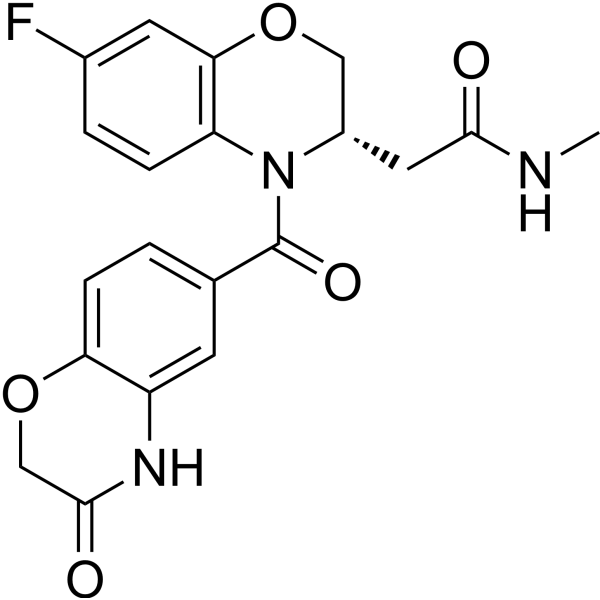
    LSD1-IN-33 (7d), an orally active LSD1 inhibitor with an IC50 of 4.51 nM, alleviates Ang II-induced NRCFs activation in vitro and reducing pathological myocardial remodeling in TAC-induced cardiac remodeling and heart failure in vivo .
    LSD1-IN-33
  • HY-B1409R

    ISDN (Standard)

    Reference Standards NO Synthase Cardiovascular Disease
    Isosorbide dinitrate (Standard) is the analytical standard of Isosorbide dinitrate. This product is intended for research and analytical applications. Isosorbide dinitrate (ISDN) is an NO donor that prevents LV remodeling and degradation of cardiac function following myocardial infarction (MI) .
    Isosorbide dinitrate (Standard)
  • HY-114941

    BP1137

    Angiotensin-converting Enzyme (ACE) Neprilysin Cardiovascular Disease
    Aladotril (BP1137) is the inhibitor for neutral endopeptidase (NEP) and angiotensin-converting enzyme (ACE), that ameliorates the cardiac hypertrophy in rats, without decreasing the blood pressure. Aladotril can be used in research about heart failure and cardiac remodeling after myocardial infarction .
    Aladotril
  • HY-103153R

    Reference Standards 5-HT Receptor Cardiovascular Disease
    SB 204741 (Standard) is the analytical standard of SB 204741. This product is intended for research and analytical applications. SB 204741 is a selective and high affinity 5-HT2B antagonist with a pKi value of 7.1 .
    SB 204741 (Standard)
  • HY-B1194A

    Potassium Channel Parasite PKA Infection Cardiovascular Disease
    Tetramisole is an orally active, selective inward rectifier potassium channel agonist with an EC50 of approximately 30 μM for the Kir2.1 subunit. Tetramisole is also an anti-nematode agent that blocks neuromuscular transmission by non-competitive depolarization. Tetramisole promotes the forward transport of Kir2.1 channels, hyperpolarizes the resting potential (RP), shortens the action potential duration (APD), inhibits intracellular calcium overload and the PKA signaling pathway, and exerts anti-arrhythmic and anti-myocardial remodeling activities. Tetramisole can be used in cardiac electrophysiology research and research related to myocardial ischemia and heart failure .
    Tetramisole
  • HY-B1194R

    (±)-Tetramisole hydrochloride (Standard); DL-Tetramisole hydrochloride (Standard); R-829 (Standard)

    Reference Standards Potassium Channel Parasite PKA Infection Cardiovascular Disease
    Tetramisole hydrochloride (Standard) is the analytical standard of Tetramisole (hydrochloride). This product is intended for research and analytical applications. Tetramisole hydrochloride is an orally active, selective inward rectifier potassium channel agonist with an EC50 of approximately 30 μM for the Kir2.1 subunit. Tetramisole hydrochloride is also an anti-nematode agent that blocks neuromuscular transmission by non-competitive depolarization. Tetramisole hydrochloride promotes the forward transport of Kir2.1 channels, hyperpolarizes the resting potential (RP), shortens the action potential duration (APD), inhibits intracellular calcium overload and the PKA signaling pathway, and exerts anti-arrhythmic and anti-myocardial remodeling activities. Tetramisole hydrochloride can be used in cardiac electrophysiology research and research related to myocardial ischemia and heart failure .
    Tetramisole hydrochloride (Standard)
  • HY-10081R

    CVT-6883 (Standard)

    Adenosine Receptor Reference Standards Inflammation/Immunology
    GS-6201 (Standard) is the analytical standard of GS-6201 (HY-10081). This product is intended for research and analytical applications. GS-6201 (CVT-6883) is a selective adenosine A2B receptor antagonist. GS-6201 displays high affinity and selectivity for the human adenosine A2B receptors (Ki=22 nM) . GS-6201 reduces caspase-1 activity in the heart, and attenuates cardiac remodeling after acute myocardial infarction (AMI) in the mouse . GS-62013 attenuates the airway reactivity induced by NECA, AMP, or allergen in sensitized mice .
    GS-6201 (Standard)
  • HY-180583

    G Protein-coupled Receptor Kinase (GRK) Cardiovascular Disease
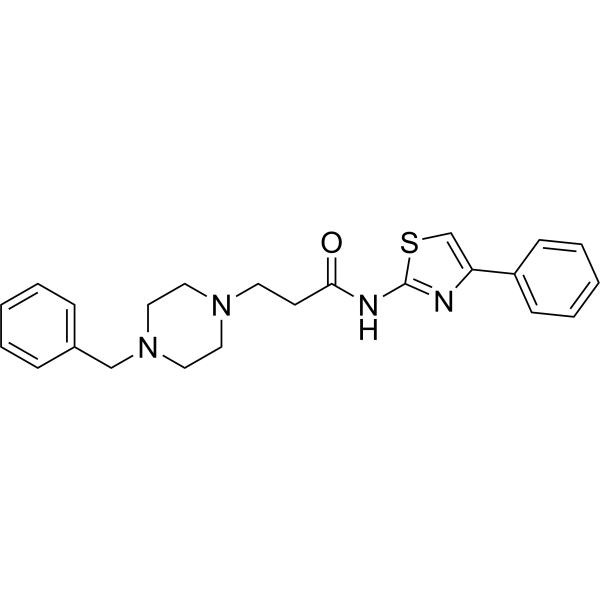
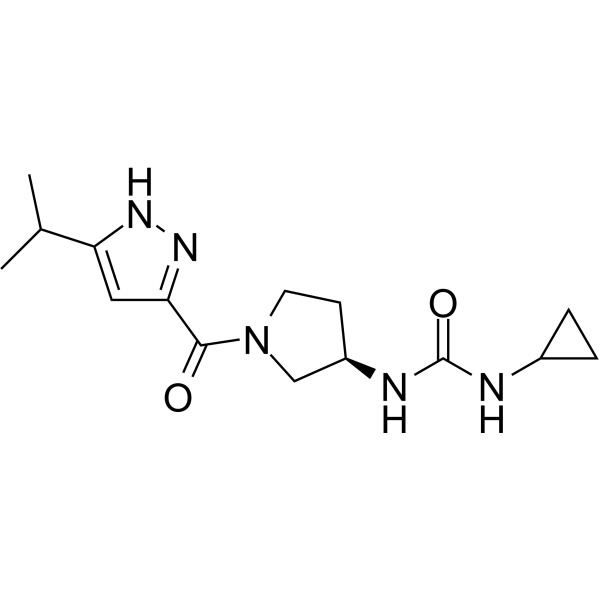
    GRK5-IN-5 (Compound 4a) is a selective G protein-coupled receptor (GPCR) kinase 5 (GRK5) inhibitor with an IC50 of 0.03 μM. GRK5-IN-5 shows IC50 values of 2.2 and 0.036 μM for GRK2 and GRK6. GRK5-IN-5 has potent anti-myocardial hypertrophy activity and also inhibits the proliferation of non-myocardial cells. GRK5-IN-5 can inhibit the abnormal upregulation of hypertrophy marker genes Nppa and Nppb, thus blocking pathological myocardial remodeling. GRK5-IN-5 can be used for the research of cardiac hypertrophy .
    GRK5-IN-5
  • HY-135746S

    Isotope-Labeled Compounds Phosphodiesterase (PDE) Apoptosis Potassium Channel Drug Metabolite Cardiovascular Disease
    OR-1896-d3 is the deuterium labeled OR-1896 (HY-135746). OR-1896 is an active long-lived metabolite of Levosimendan. OR-1896 is a highly selective phosphodiesterase (PDE) III isoform inhibitor and a powerful vasodilator. OR-1896 can open ATP-sensitive K+ channels and has Ca2+-sensitizing effect. OR-1896 mitigates cardiomyocyte apoptosis, cardiac remodeling and myocardial inflammation .
    OR-1896-d3
  • HY-148150A

    Creatine Kinase Cardiovascular Disease Inflammation/Immunology Cancer
    Cyclocreatine phosphate dilithium is a synthetic intracellular energy buffer. Cyclocreatine phosphate dilithium mediates antiproliferative activity in cells with high creatine kinase levels and inhibits solid tumor growth. Cyclocreatine phosphate dilithium maintains adenosine triphosphate (ATP) levels and protects tissues from hypoxia, cellular damage and inflammation during ischemic events. Cyclocreatine phosphate dilithium accumulates in skeletal muscle, reduces muscle phosphocreatine and total creatine levels, and acts both as a bioenergetic/anti-inflammatory agent and an experimental tool for the assessment of ischemic injury. Cyclocreatine phosphate dilithium can be used in studies related to solid tumors, heart failure and ischemia .
    Cyclocreatine phosphate dilithium

온라인 문의

Your information is safe with us. * Required Fields.

호칭


Country or Region *

고객명 *


회사명 *

Department *


메일주소 *


상품명 *

Cat. No.


Requested quantity *

전화번호 *


비고

온라인 문의

Inquiry Information

상품명:
Cat. No.:
수량:
MCE Japan Authorized Agent:

