86 Results for "

neoformans

" in MedChemExpress (MCE) Product Catalog:
Products (86)

86 Results for "neoformans" in MCE Product Catalog:

6
6 Cited Publications
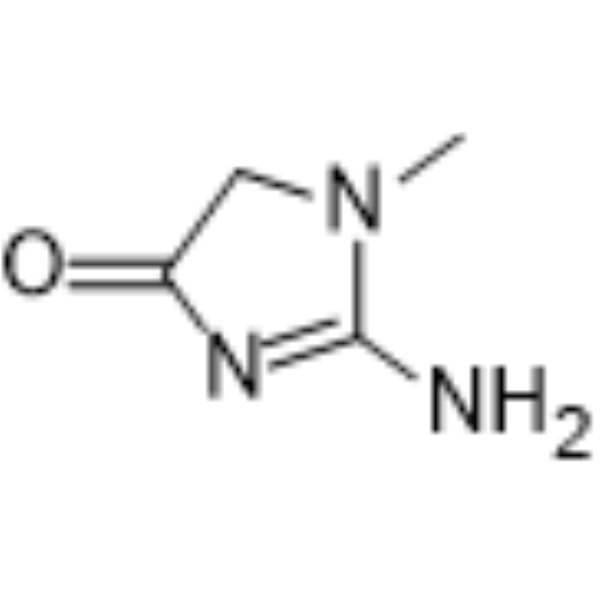
Cat. No.: HY-B0504
CAS No.: 60-27-5
Synonyms: NSC13123
Creatinine (NSC13123) is an orally active, blood-brain barrier-permeable modulator of GABAA and NMDA receptors, with activities of antioxidation and metabolic regulation. Creatinine is generated via non-enzymatic conversion of creatine and phosphocreatine in muscle. Creatinine serum levels correlate with muscle mass, glomerular filtration rate, and extrarenal clearance, serving as an evaluation biomarker for renal function, muscle mass, and clinical outcomes, and used for perioperative renal risk assessment. In addition, Creatinine can induce specific Cryptococcus species to produce creatinine deiminase and act as their nitrogen source, while it can be secreted via renal tubules. Creatinine is widely used in research related to various diseases such as neurodegenerative diseases, psychiatric disorders, acute kidney injury, chronic kidney disease, and renal failure .
loading...
    loading...
1
1 Cited Publications
Cat. No.: HY-P990228
Anti-Mouse IL-10R/CD210 Antibody (1B1.3A) is a rat-derived IgG1 κ type antibody inhibitor, targeting to mouse IL-10R/CD210. Anti-Mouse IL-10R/CD210 Antibody (1B1.3A) blocks IL-10R signaling. Anti-Mouse IL-10R/CD210 Antibody (1B1.3A) can be used for the researches of cancer, infection and metabolic disease, such as diabetes and malaria .
loading...
    loading...
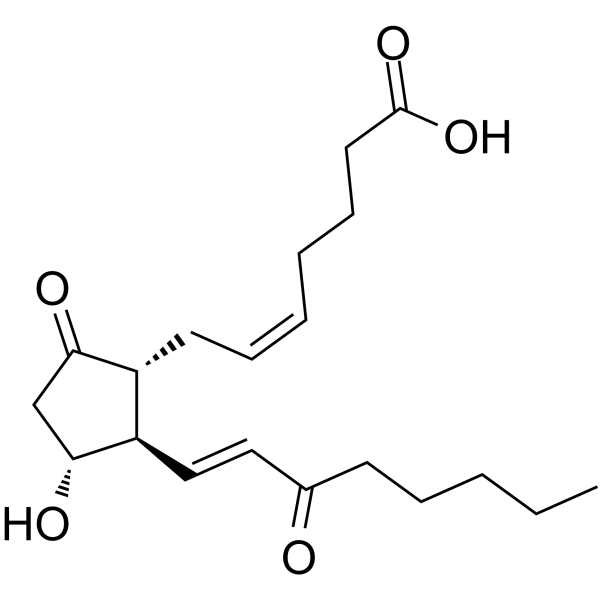
Cat. No.: HY-113205
CAS No.: 26441-05-4
Purity:  ≥99.0%
Synonyms: 15-keto-PGE2
15-keto-Prostaglandin E2 (15-keto-PGE2) is an endogenous PGE2 metabolite. 15-keto-Prostaglandin E2 inhibits STAT3 activation by binding to the Cys259 residue of STAT3. 15-keto-Prostaglandin E2 binds to and stabilizes EP2 and EP4 receptors. 15-keto-Prostaglandin E2 inhibits the growth and progression of breast cancer cells. 15-keto-Prostaglandin E2 activates PPAR-γ and promotes fungal growth. 15-keto-Prostaglandin E2 disrupts glomerular vascularization during zebrafish development and reduces the surface area of the glomerular filtration barrier .
loading...
    loading...
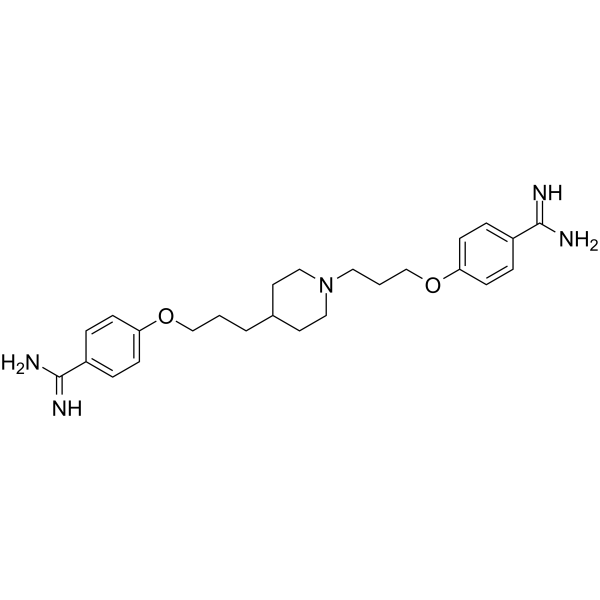
Cat. No.: HY-114220
CAS No.: 873546-31-7
Purity:  98.41%
Target:  

Fungal

Research Areas:  

Infection

T-2307, an arylamidine, has antifungal activities in vitro and in vivo. T-2307 exhibits broad-spectrum activity against clinically significant pathogens, including Candida species (MIC range, 0.00025 to 0.0078 μg/ml), Cryptococcus neoformans (MIC range, 0.0039 to 0.0625 μg/ml), and Aspergillus species (MIC range, 0.0156 to 4 μg/mL) .
loading...
    loading...
Cat. No.: HY-126396
CAS No.: 463356-00-5
Purity:  ≥99.0%
Target:  

Antibiotic CaMK Fungal

Research Areas:  

Infection

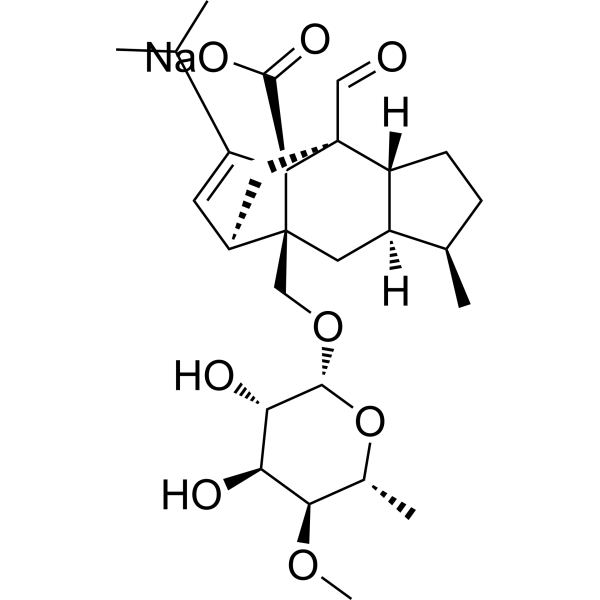
Sordarin sodium is an eEF2 inhibitor and antibiotic. Sordarin sodium's function is dependent on the diphthamide modification on eEF2. Sordarin sodium inhibits protein synthesis by preventing the binding of eEF2 to the ribosome complex. Sordarin sodium has antifungal activity .
loading...
    loading...
Cat. No.: HY-147110
CAS No.: 2342606-49-7
Purity:  98.12%
Target:  

Fungal

Research Areas:  

Infection Inflammation/Immunology

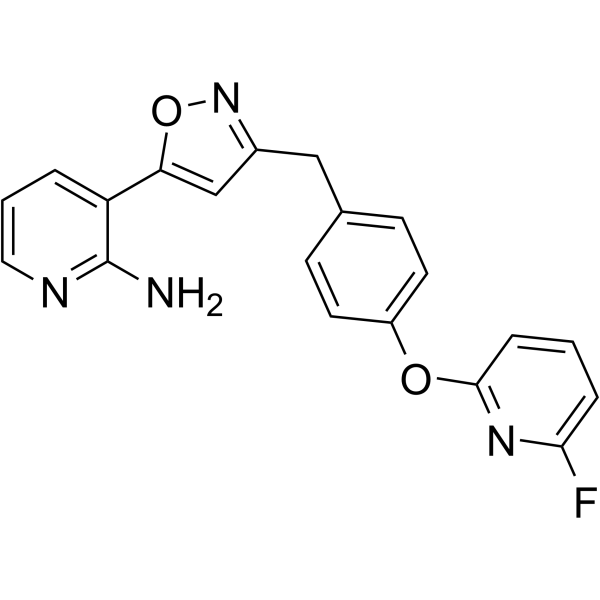
APX2039 is a brain-penetrant and orally active Gwt1 protein inhibitor. APX2039 inhibits an early step in fungal glycosylphosphatidylinositol anchor biosynthesis. APX2039 can be used for the research of cryptococcal meningitis and invasive mycosis caused by Talaromyces marneffei .
loading...
    loading...
Cat. No.: HY-109040
CAS No.: 1340593-70-5
Purity:  98.98%
Synonyms: VT-1129
Target:  

Fungal Cytochrome P450

Research Areas:  

Infection Inflammation/Immunology

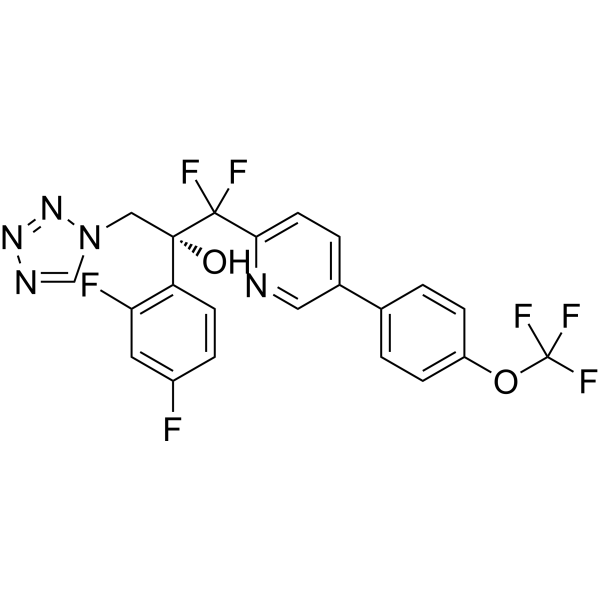
Quilseconazole (VT-1129) is an orally active, highly selective fungal cytochrome P450 enzyme Cyp51 inhibitor that can cross the blood-brain barrier. Quilseconazole prevents the synthesis of ergosterol, an important component of the fungal cell membrane, by inhibiting Cyp51. Quilseconazole has minimal effects on human CYP enzymes. Quilseconazole has antifungal activity and can be used in the study of cryptococcal meningitis and other diseases .
loading...
    loading...
Cat. No.: HY-N2198
CAS No.: 22136-74-9
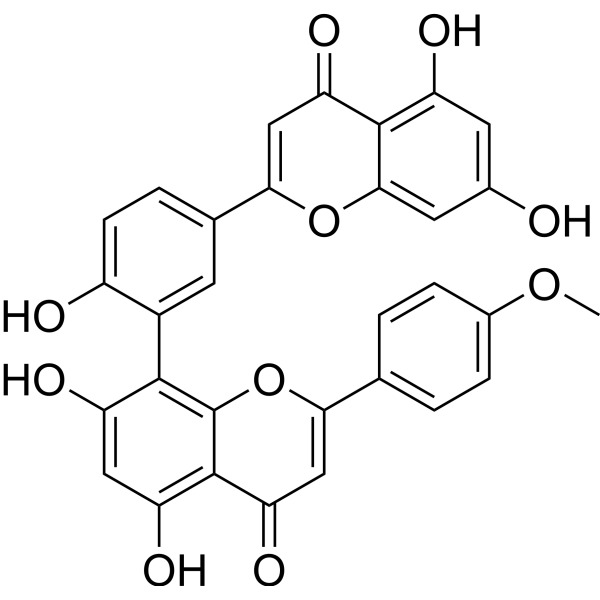
Podocarpusflavone A is a biflavonoid present in the leaves of Podocarpus henkelii, with anti-tumor, topoisomerase I inhibitory, antibacterial and antifungal activities. Podocarpusflavone A exhibits antibacterial activity against Enterococcus faecalis and Pseudomonas aeruginosa. Podocarpusflavone A shows weak activity against fungal pathogens. Podocarpusflavone A targets topoisomerase I and induces cell cycle arrest and apoptosis in MCF-7 cells. Podocarpusflavone A can be used for studies on cancer, bacterial and fungal infections .
loading...
    loading...
Cat. No.: HY-133157
CAS No.: 13018-54-7
Purity:  85.00%
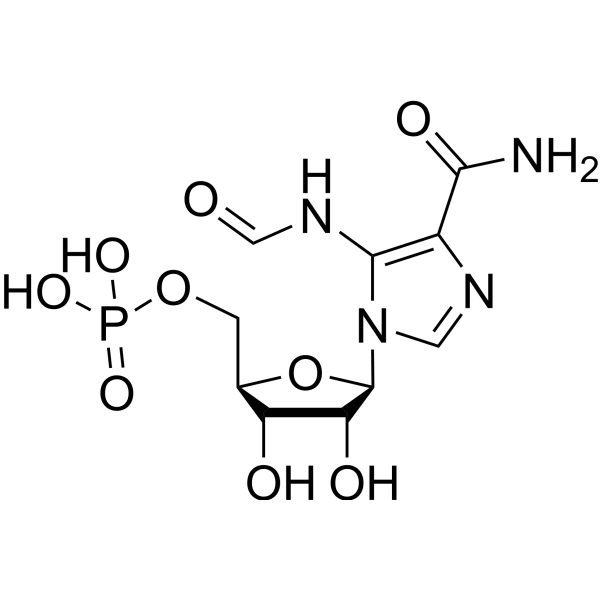
Synonyms: 5-Formamidoimidazole-4-carboxamide ribotide
Category:  

Natural Products

Target:  

DNA/RNA Synthesis

FAICAR (5-Formamidoimidazole-4-carboxamide ribotide) is a purine nucleotide and the IMP cyclohydrolase substrate of Cryptococcus neoformans ATIC. It is a key intermediate in the de novo purine synthesis pathway. FAICAR can be used in studies related to Cryptococcus neoformans infection .
loading...
    loading...
Cat. No.: HY-N7626
CAS No.: 480-00-2
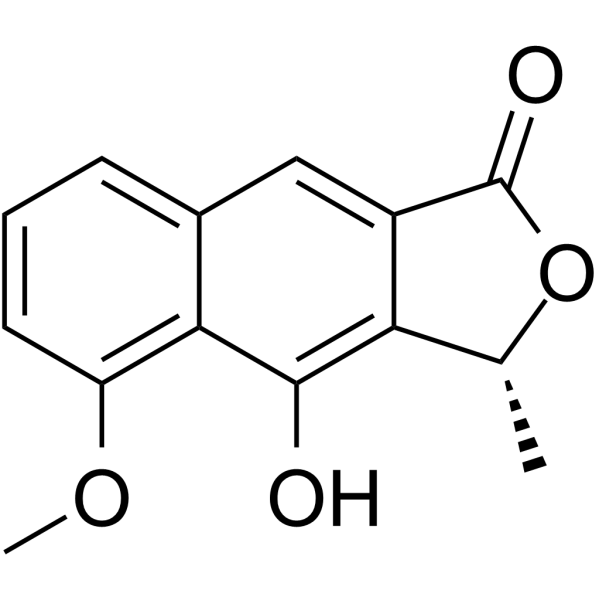
Eleutherol is a naphthalene isolated from E. americana with antifungal activities . Eleutherol is against yeasts Candida albicans, C. tropicalis, Saccharomyces cerevisiae and Cryptococcus neoformans with MIC values between 7.8 µg/mL and 250 µg/mL . Eleutherol inhibits α-glucosidase function with an IC50>1.00 mM .
loading...
    loading...
Cat. No.: HY-N1433
CAS No.: 1802-12-6
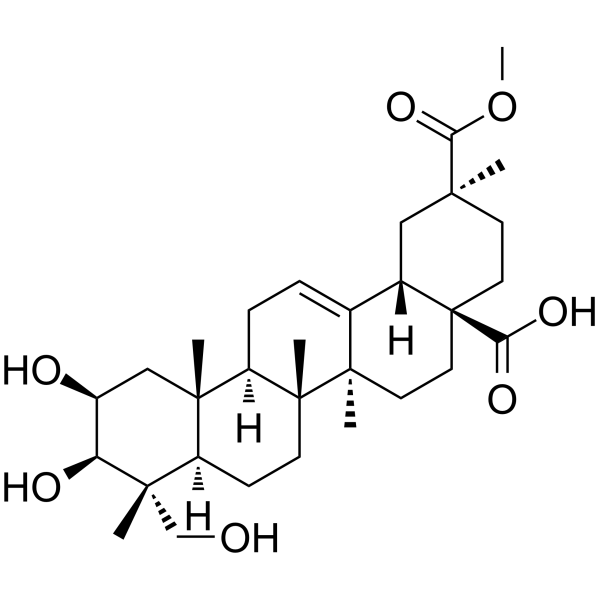
Phytolaccagenin is a triterpenoid saponin aglycone, Antifungal agent, vasodilator, antihypertensive agent, and anti-inflammatory agent. Phytolaccagenin activates vascular and cardiac Muscarinic receptors, blocks cardiac β-adrenergic receptors, and inhibits voltage-dependent calcium channels in blood vessels. Phytolaccagenin inhibits the growth of Candida albicans and Cryptococcus neoformans. Phytolaccagenin induces vasodilation, produces negative inotropic and negative chronotropic effects, reduces mean arterial pressure, and inhibits LPS-induced inflammation. Phytolaccagenin exhibits enhanced antihypertensive effects in high salt-induced hypertensive rats. Phytolaccagenin can be used in the research of candidiasis, cryptococcosis, hypertension, and inflammation-related diseases .
loading...
    loading...
Cat. No.: HY-136153
CAS No.: 136135-57-4
Target:  

Fungal

Research Areas:  

Infection

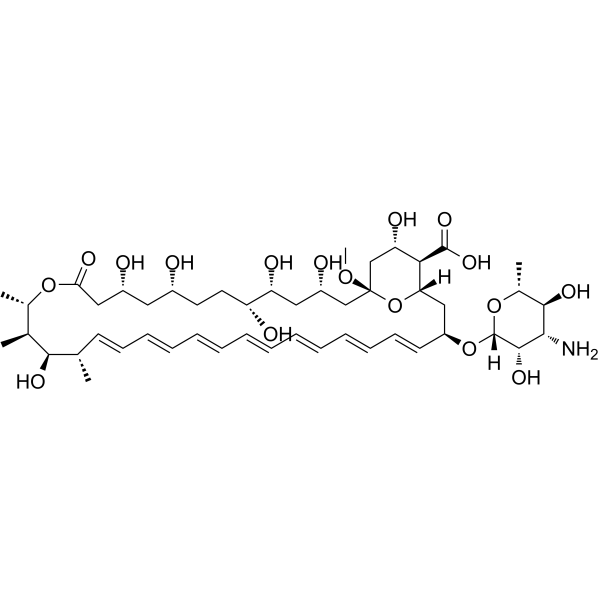
Amphotericin X1 is an 13-O-methyl derivative of Amphotericin B with good antifungal activity. Amphotericin X1 inhibits Candida albicans 33/079, C.parapsilosis 937A, Cryptococcus neoformans 451, Aspergillus niger 57A and A.fumigatus with MIC values of 1 μg/mL, 8 μg/mL, 1 μg/mL, 2 μg/mL and 2 μg/mL, respectively .
loading...
    loading...
Cat. No.: HY-170616
CAS No.: 3062848-75-0
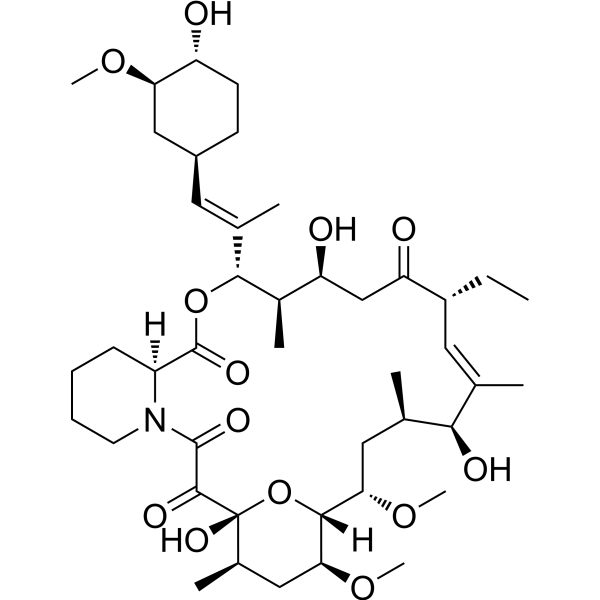
JH-FK-08 is an inhibitor for the serine/threonine-specific phosphatase calcineurin. JH-FK-08 exhibits antifungal activity that inhibits C. neoformans with MIC80 of 0.8 µg/mL. JH-FK-08 exhibits immunosuppressive activity and inhibits the IL-2 expression with an IC50 of 42.6 nM. JH-FK-08 exhibits anti-infectious activity in mouse models .
loading...
    loading...
Cat. No.: HY-186027
CAS No.: 2225901-81-3
Target:  

Fungal

Research Areas:  

Infection

Antifungal agent 152 (Compound 27) is an antifungal agent. Antifungal agent 152 shows antifungal activity against C. neoformans, C. albicans, C. glabrata with MICs of 4 μg/mL, 16 μg/mL, 16 μg/mL, respectively .
loading...
    loading...
Cat. No.: HY-P2450
CAS No.: 76600-38-9
Synonyms: Antibiotic P168
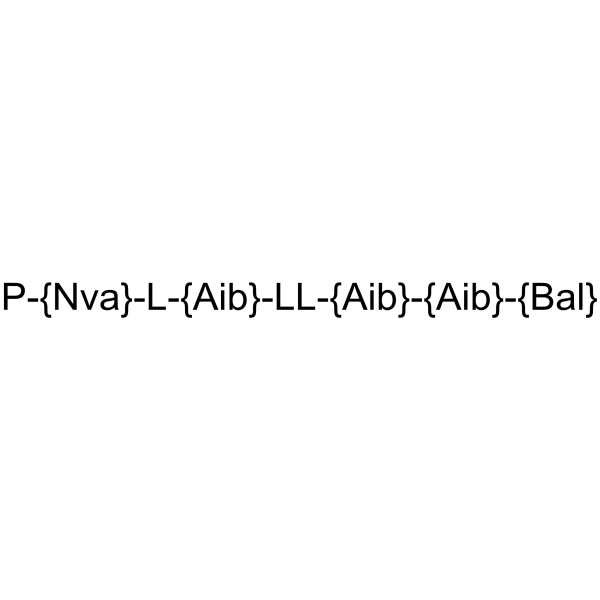
Leucinostatin A (Antibiotic P168) is a nonapeptide exerting a remarkable activity especially against Candida albicans and Cryptococcus neoformans. Leucinostatin A is a hydrophobic nonapeptide antibiotic. Leucinostatin A inhibits prostate cancer growth through reduction of insulin-like growth factor-I expression in prostate stromal cells. Antiprotozoal activies .
loading...
    loading...
Cat. No.: HY-125693
CAS No.: 143839-74-1
Target:  

Fungal

Research Areas:  

Infection Neurological Disease

L685818 is a specific immunophilin ligand. L685818 was neuroregenerative and non-neuroprotective in primary brain cultures. L685818 protects dopaminergic neurons from toxic inhibition of MPP+ and 6-OHDA, reduces tyrosine hydroxylase (TH) loss, and promotes neuronal process regeneration. L685818 is also an antifungal reagent for Cryptococcus neoformans .
loading...
    loading...
Cat. No.: HY-151566
CAS No.: 2842067-19-8
Research Areas:  

Infection

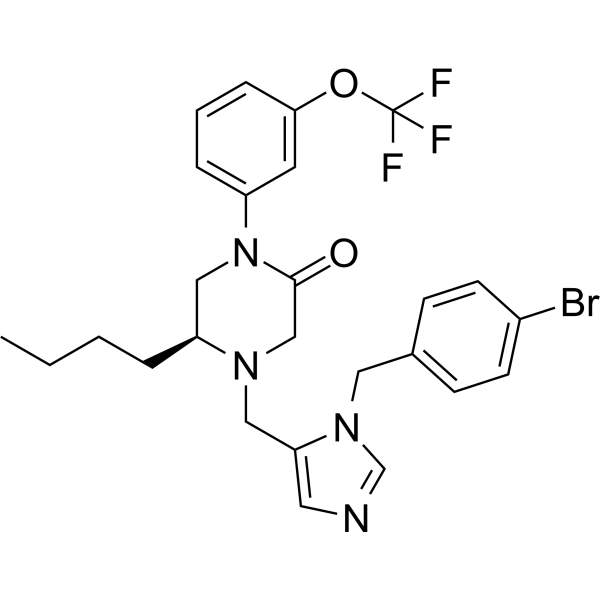
Antifungal agent 46 (compound 2f) is a potent antifungal agent. Antifungal agent 46 prevents Ras signaling by inhibiting protein farnesyltransferase .
loading...
    loading...
Cat. No.: HY-176970
CAS No.: 2043299-21-2
Target:  

Fungal Bacterial

Research Areas:  

Infection

Antimicrobial agent-45 (Compound 16) is a broad-spectrum antibacterial agent. Antimicrobial agent-45 exhibits MICs against Cr. neoformans, S. aureus, MRSA and My. intracellulare of 9.25, 74.04, 74.04 and 74.04 μM respectively. Antimicrobial agent-45 can be used for the study of cryptococcal infections .
loading...
    loading...
Cat. No.: HY-175198
CAS No.: 2928129-57-9
Target:  

Acyltransferase Fungal

Research Areas:  

Infection

Cs-2d is a selective ceramide synthases Cer1 inhibitor. Cs-2d has potent inhibitory activity toward C. neoformans Cer1, while maintaining a low off-target effect on human hCerS1. Cs-2d has potent antifungal activity with the significant growth inhibition. Cs-2d can be used for invasive fungal infections research .
loading...
    loading...
Cat. No.: HY-W716339
CAS No.: 19902-08-0
Synonyms: d-β-Pinene
(+)-β-Pinene (d-β-Pinene) acts as an Antifungal and Antibacterial agent. (+)-β-Pinene inhibits Phospholipase. (+)-β-Pinene interferes with fungal cell wall function, reduces Candida biofilm adhesion, inhibits Candida albicans biofilm formation, and suppresses the growth of various Candida species. Combined with Ciprofloxacin (HY-B0356), (+)-β-Pinene exerts synergistic antibacterial activity against Methicillin (HY-121544)-resistant Staphylococcus aureus. (+)-β-Pinene can be used in research related to candidiasis and Staphylococcus aureus infections .
loading...
    loading...

