1. Search Result
Search Result
Pathways Recommended: Neuronal Signaling
Results for "

neuronal necrosis

" in MedChemExpress (MCE) Product Catalog:

11

Inhibitors & Agonists

4

Natural
Products

2

Isotope-Labeled Compounds

Targets Recommended:
Cat. No. Product Name Target Research Areas Chemical Structure
  • HY-B0863
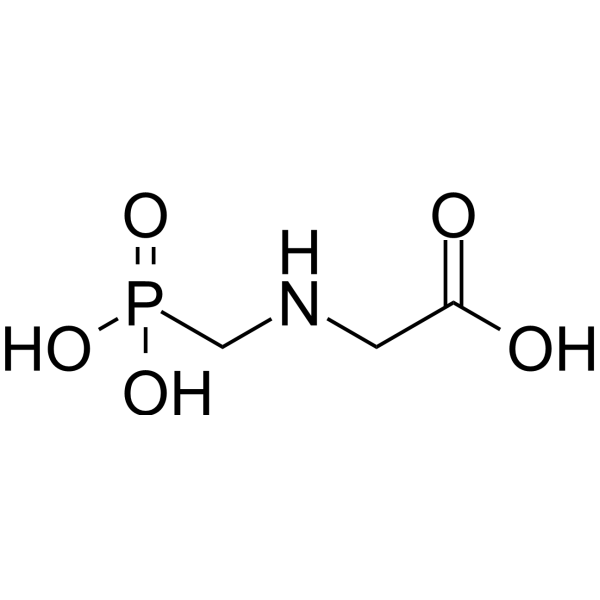
    Glyphosate
    1 Publications Verification

    Environmental Pollutants Necroptosis Apoptosis Autophagy Neurological Disease
    Glyphosate, a non-selective systemic biocide with broad-spectrum activity, is an herbicidal derivative of the amino acid glycine. Glyphosate inhibits the enzymatic activity of the 5-endopyruvylshikimate 3-phosphate synthase (EPSPS) in the shikimic acid pathway, preventing the synthesis of the aromatic amino acids tyrosine, phenylalanine, and tryptophan. Glyphosate induces oxidative stress, neuroinflammation, and mitochondrial dysfunction, processes that lead to neuronal death by autophagia, necrosis, or apoptosis, as well as the appearance of behavioral and motor disorders .
    Glyphosate
  • HY-B0886A
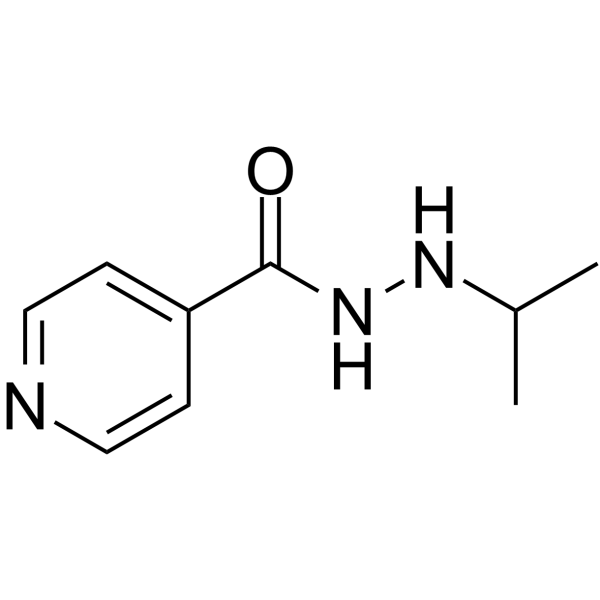
    Iproniazid
    2 Publications Verification

    Monoamine Oxidase Apoptosis Neurological Disease Metabolic Disease Endocrinology
    Iproniazid is an orally active, irreversible, non-selective monoamine oxidase (MAO) inhibitor. Iproniazid inhibits MAO activity and enhances Rotenone (HY-B1756)-induced Apoptosis. Iproniazid modulates neurotransmitter levels, affects neuronal function, induces hepatic necrosis, and interferes with the endocrine system. Iproniazid can be used in the research of depression, Parkinson's disease, and hepatotoxicity .
    Iproniazid
  • HY-N6588

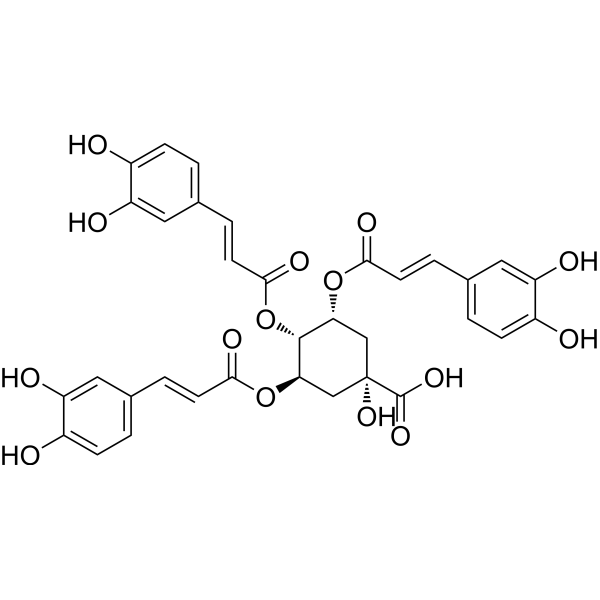
    3,4,5-triCQA

    Akt NF-κB Inflammation/Immunology Cancer
    3,4,5-Tricaffeoylquinic acid (3,4,5-triCQA) inhibits tumor necrosis factor-α-stimulated production of inflammatory mediators in keratinocytes via suppression of Akt- and NF-κB-pathways. 3,4,5-Tricaffeoylquinic acid induces cell cycle arrest at G0/G1, actin cytoskeleton organization, chromatin remodeling, neuronal differentiation, and bone morphogenetic protein signaling in human neural stem cells. 3,4,5-Tricaffeoylquinic acid has the potential for the research of aging-associated diseases .
    3,4,5-Tricaffeoylquinic acid
  • HY-N4246

    Aquaporin PKC Akt PI3K Apoptosis Monoamine Oxidase Pregnane X Receptor (PXR) Cardiovascular Disease Neurological Disease Inflammation/Immunology Cancer
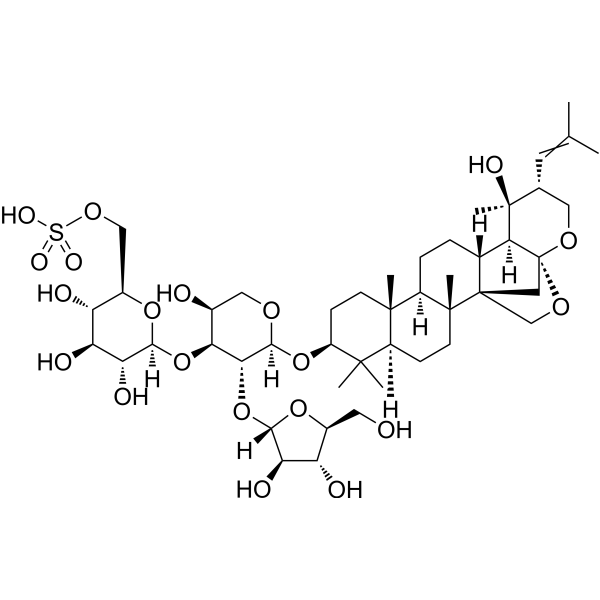
    Bacopaside I is an orally active aquaporin AQP1 inhibitor and PKC modulator with neuroprotective and anticancer activities. Bacopaside I specifically blocks the water channel and cGMP-gated ion channel activities of AQP1 without affecting AQP4, thereby inhibiting the migration of colon cancer cells expressing AQP1. Bacopaside I activates the Akt pathway by interacting with PI3K, specifically inhibits MAO-A, effectively alleviates neuron necrosis and apoptosis induced by oxygen-glucose deprivation, reduces oxidative stress, and regulates the surface expression of neuroreceptors. When combined with Bacopaside II (HY-N6016), Bacopaside I significantly reduces the viability, proliferation and invasion ability of breast cancer cells, and binds to the pregnane X receptor (PXR). Bacopaside I is applicable to the research of colon cancer, breast cancer, vascular dementia, cerebral ischemia and other related diseases .
    Bacopaside I
  • HY-B0886
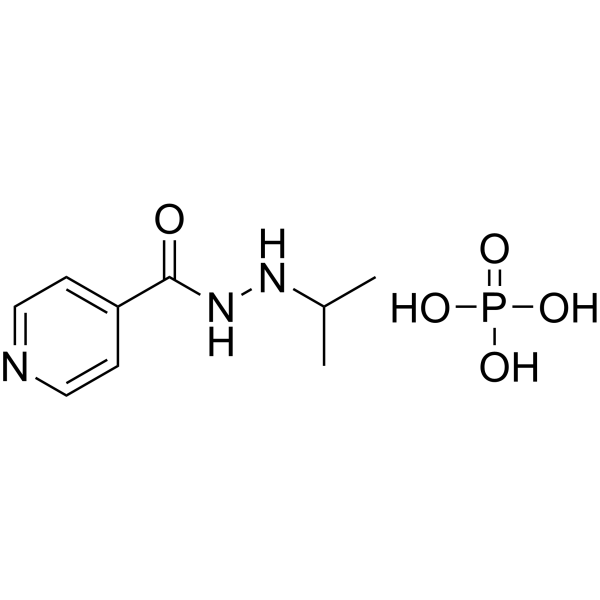
    Iproniazid phosphate
    2 Publications Verification

    Monoamine Oxidase Apoptosis Neurological Disease Metabolic Disease Endocrinology
    Iproniazid phosphate is an orally active, irreversible, non-selective monoamine oxidase (MAO) inhibitor. Iproniazid phosphate inhibits MAO activity and enhances Rotenone (HY-B1756)-induced Apoptosis. Iproniazid phosphate modulates neurotransmitter levels, affects neuronal function, induces hepatic necrosis, and interferes with the endocrine system. Iproniazid phosphate can be used in the research of depression, Parkinson's disease, and hepatotoxicity .
    Iproniazid phosphate
  • HY-W747676

    Isotope-Labeled Compounds Apoptosis Autophagy Necroptosis Neurological Disease
    Glyphosate- 13C is the 13C-labeled Glyphosate (HY-B0863). Glyphosate, a non-selective systemic biocide with broad-spectrum activity, is an herbicidal derivative of the amino acid glycine. Glyphosate inhibits the enzymatic activity of the 5-endopyruvylshikimate 3-phosphate synthase (EPSPS) in the shikimic acid pathway, preventing the synthesis of the aromatic amino acids tyrosine, phenylalanine, and tryptophan. Glyphosate induces oxidative stress, neuroinflammation, and mitochondrial dysfunction, processes that lead to neuronal death by autophagia, necrosis, or apoptosis, as well as the appearance of behavioral and motor disorders .
    Glyphosate-13C
  • HY-B0863B

    Apoptosis Autophagy Necroptosis Neurological Disease
    Glyphosate isopropylammonium, a non-selective systemic biocide with broad-spectrum activity, is an herbicidal derivative of the amino acid glycine. Glyphosate isopropylammonium inhibits the enzymatic activity of the 5-endopyruvylshikimate 3-phosphate synthase (EPSPS) in the shikimic acid pathway, preventing the synthesis of the aromatic amino acids tyrosine, phenylalanine, and tryptophan. Glyphosate isopropylammonium induces oxidative stress, neuroinflammation, and mitochondrial dysfunction, processes that lead to neuronal death by autophagia, necrosis, or apoptosis, as well as the appearance of behavioral and motor disorders .
    Glyphosate isopropylammonium
  • HY-126758

    Apoptosis Glutathione Peroxidase Inflammation/Immunology
    Ludartin a sesquiterpene lactone, which can be isolated from the plant Artemisia carruthii Wood. Ludartin reduces the expression of myeloperoxidase and malondialdehyde, enhances the expression of glutathione and superoxide dismutase in spinal cord tissue. Ludartin inhibits neuronal apoptosis. Ludartin inhibits the upregulation of tumor necrosis factor-α, interleukin-1β, and interleukin-6. Ludartin improves the motor function of rats with spinal cord injury .
    Ludartin
  • HY-B0886AR

    Reference Standards Monoamine Oxidase Apoptosis Neurological Disease Metabolic Disease Endocrinology
    Iproniazid (Standard) is the analytical standard of Iproniazid (HY-B0886A). This product is intended for research and analytical applications. Iproniazid is an orally active, irreversible, non-selective monoamine oxidase (MAO) inhibitor. Iproniazid inhibits MAO activity and enhances Rotenone (HY-B1756)-induced Apoptosis. Iproniazid modulates neurotransmitter levels, affects neuronal function, induces hepatic necrosis, and interferes with the endocrine system. Iproniazid can be used in the research of depression, Parkinson's disease, and hepatotoxicity .
    Iproniazid (Standard)
  • HY-B0863S5

    Isotope-Labeled Compounds Apoptosis Autophagy Necroptosis Neurological Disease
    Glyphosate- 13C, 15N-1 is the 13C- and 15N-labeled Glyphosate (HY-B0863). Glyphosate, a non-selective systemic biocide with broad-spectrum activity, is an herbicidal derivative of the amino acid glycine. Glyphosate inhibits the enzymatic activity of the 5-endopyruvylshikimate 3-phosphate synthase (EPSPS) in the shikimic acid pathway, preventing the synthesis of the aromatic amino acids tyrosine, phenylalanine, and tryptophan. Glyphosate induces oxidative stress, neuroinflammation, and mitochondrial dysfunction, processes that lead to neuronal death by autophagia, necrosis, or apoptosis, as well as the appearance of behavioral and motor disorders .
    Glyphosate-13C,15N-1
  • HY-B0886R

    Reference Standards Monoamine Oxidase Apoptosis Neurological Disease Metabolic Disease Endocrinology
    Iproniazid (phosphate) (Standard) is the analytical standard of Iproniazid phosphate (HY-B0886). This product is intended for research and analytical applications. Iproniazid phosphate is an orally active, irreversible, non-selective monoamine oxidase (MAO) inhibitor. Iproniazid phosphate inhibits MAO activity and enhances Rotenone (HY-B1756)-induced Apoptosis. Iproniazid phosphate modulates neurotransmitter levels, affects neuronal function, induces hepatic necrosis, and interferes with the endocrine system. Iproniazid phosphate can be used in the research of depression, Parkinson's disease, and hepatotoxicity .
    Iproniazid phosphate (Standard)

Inquiry Online

Your information is safe with us. * Required Fields.

Salutation


Country or Region *

Applicant Name *


Organization Name *

Department *


Email Address *


Product Name *

Cat. No.


Requested quantity *

Phone Number *


Remarks

Inquiry Online

Inquiry Information

Product Name:
Cat. No.:
Quantity:
MCE Japan Authorized Agent:

