Search Result
Results for "
oligosaccharides
" in MedChemExpress (MCE) Product Catalog:
129
Biochemical Assay Reagents
9
Isotope-Labeled Compounds
| Cat. No. |
Product Name |
Target |
Research Areas |
Chemical Structure |
-
- HY-P2929
-
|
|
Biochemical Assay Reagents
Glycosidase
|
Cancer
|
|
PNGase F, a glycosidase, catalyzes the cleavage of an internal glycoside bond in an oligosaccharide. PNGase F removes nearly all N-linked oligosaccharides from glycoproteins. PNGase F can release N-glycans from glycoproteins in glycoanalytical workflows .
|
-
-
- HY-E70069
-
|
|
Others
|
Others
|
|
Endo-β-N-acetylglucosaminidase (Endo S2) is a key enzyme involved in the processing of free oligosaccharides in the cytosol. Endo-β-N-acetylglucosaminidase catalyzes hydrolysis of N-linked oligosaccharides .
|
-
-
- HY-N7910
-
-
-
- HY-W015798
-
|
|
Biochemical Assay Reagents
|
Others
|
|
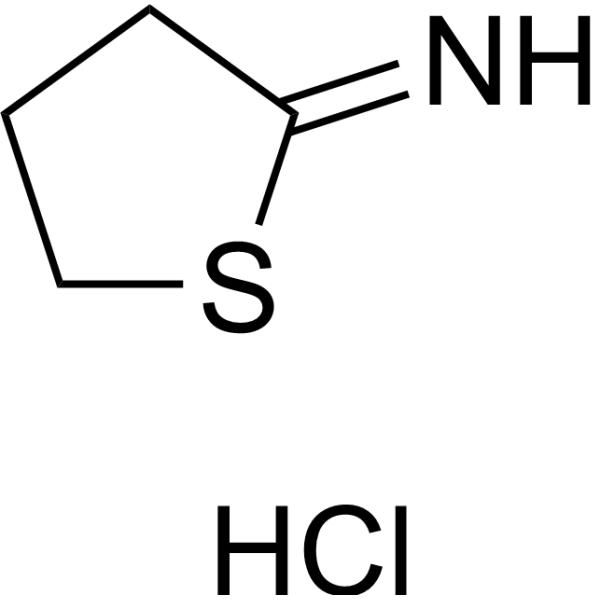
2-Iminothiolane hydrochloride is a reagent for the introduction of sulphydryl groups into oligosaccharides derived from asparagine-linked glycans .
|
-
-
- HY-N9965
-
|
2'-FL
|
TNF Receptor
Interleukin Related
|
Infection
Inflammation/Immunology
|
|
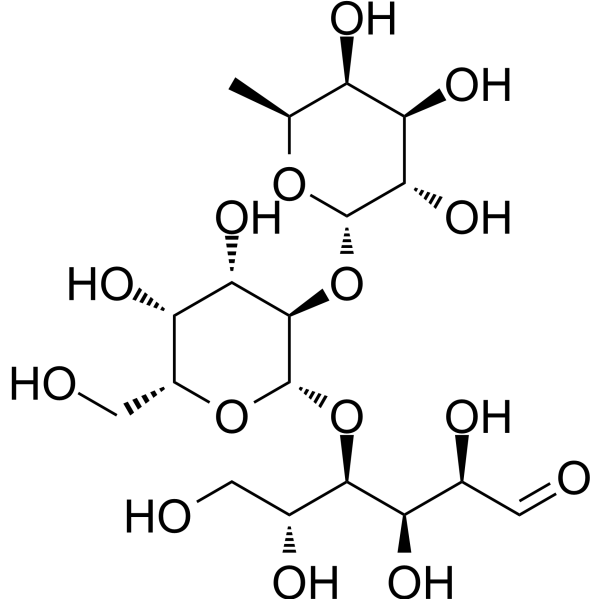
2'-Fucosyllactose (2'-FL) is an oligosaccharide that could be derived from human milk. 2'-Fucosyllactose regulates the expression of CD14, alleviates colitis and regulates the gut microbiome. 2'-Fucosyllactose stimulates T cells to increase IFN-γ production and decreases IL-6, IL-17, and TNF-α production of cytokines .
|
-
-
- HY-N9448
-
|
|
Bacterial
|
Infection
Inflammation/Immunology
|
|
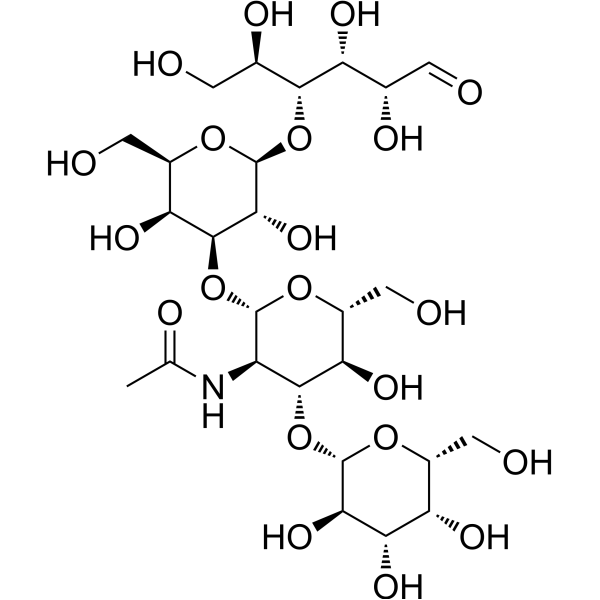
Lacto-N-tetraose is the significant core structure of human milk oligosaccharides (HMOs) naturally existing in human milk. Lacto-N-tetraose is consist of galactose, N-acetylglucosamine, and glucose moieties. Lacto-N-tetraose has prebiotic effect, immune regulatory effect, anti-inflammatory effects, intestinal cell responses regulatory effect, antibacterial activity and antiviral activity. Lacto-N-tetraose has been widely added to infant formula .
|
-
-
- HY-126854
-
|
N-Acetyl-D-lactosamine
|
Endogenous Metabolite
Galectin
|
Cardiovascular Disease
|
|
N-Acetyllactosamine (N-Acetyl-D-lactosamine), a nitrogen-containing disaccharide, is a galectin-3 inhibitor, which is an important component of various oligosaccharides such as glycoproteins and sialyl Lewis X. N-Acetyllactosamine can be used as the starting material for the synthesis of various oligosaccharides. N-Acetyllactosamine has prebiotic effects .
|
-
-
- HY-134433
-
|
|
Endogenous Metabolite
|
Metabolic Disease
|
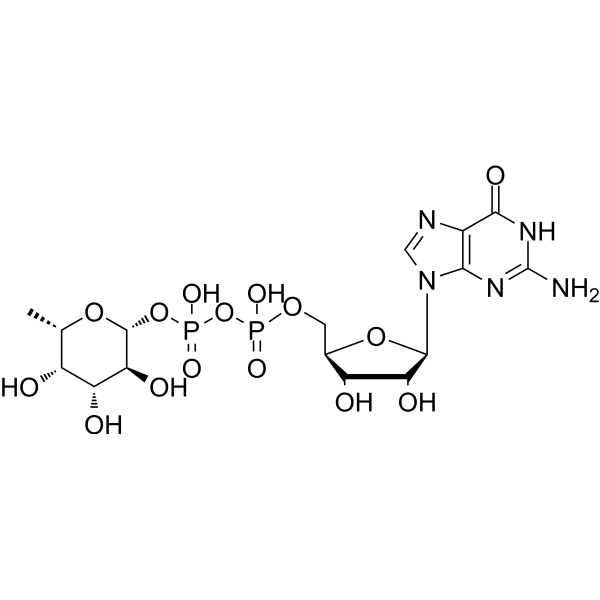
GDP-L-fucose is a nucleotide sugar that is a key substrate for the biosynthesis of fucose oligosaccharides, providing the fucose moiety for the oligosaccharides.The formation of GDP-L-fucose occurs through two pathways, the major ab initio metabolic pathway and the minor remedial metabolic pathway. GDP-L-fucose is associated with diabetes in rats .
|
-
-
- HY-112108
-
|
COS
|
AMPK
Endogenous Metabolite
|
Metabolic Disease
Cancer
|
|
Chitosan oligosaccharide (COS) is an oligomer of β-(1→4)-linked D-glucosamine. Chitosan oligosaccharide (COS) activates AMPK and inhibits inflammatory signaling pathways including NF-κB and MAPK pathways.
|
-
-
- HY-N10528
-
-
-
- HY-N7088
-
-
-
- HY-N6840
-
|
|
Biochemical Assay Reagents
|
Others
|
|
Xylotetraose is a xylo-oligosaccharide and a substrate of Taxy11. Xylotetraose serves as a substrate for the endo-xylanase Taxy11, and is hydrolyzed by it into xylobiose and xylotriose .
|
-
-
- HY-E70135
-
-
-
- HY-W040040
-
|
|
Environmental Pollutants
Endogenous Metabolite
|
Metabolic Disease
|
|
γ-Cyclodextrin is an orally active cyclic oligosaccharide composed of eight glucose molecules, which can be formed by bacteria digesting starch. γ-Cyclodextrin can form water-soluble inclusion complexes with a variety of poorly soluble compounds and is widely used in fields such as pharmacy and food. In addition, γ-Cyclodextrin has good safety .
|
-
-
- HY-N9497
-
|
|
Galectin
Fungal
|
Infection
|
|
Galactinol is a disaccharide carbohydrate serving as a galactosyl donor, which belongs to the raffinose family oligosaccharide pathway and acts as an important osmoprotectant. Galactinol not only induces disease resistance in plants against fungal and bacterial pathogens, but also significantly enhances plant tolerance to abiotic stresses such as drought, high salinity, low temperature and oxidative damage. In addition, Galactinol has the ability to scavenge hydroxyl radicals, can act as a signaling component for root colonization-induced systemic resistance, and is positively correlated with seed longevity in various crops, making it a potential biomarker for evaluating seed vigor. Therefore, Galactinol can be used in the research of various plant diseases including fungal leaf spot, bacterial angular leaf spot, gray mold and soft rot .
|
-
-
- HY-P2839
-
|
Heparinase I
|
Endogenous Metabolite
|
Metabolic Disease
|
|
Heparinase (Heparinase I) degrades heparin to oligosaccharide or unsaturated disaccharide. Heparinase can be used in the preparation of low molecular weight heparin (LMWH) .
|
-
-
- HY-111951
-
-
-
- HY-N7948
-
|
|
Endogenous Metabolite
|
Others
|
|
Isomaltotetraose is an orally active branched isomaltooligosaccharide with α-(1,6) glycosidic linkages. Isomaltotetraose is a prebiotic oligosaccharide present in honey and also a component of isomaltooligosaccharide mixtures. Isomaltotetraose maintains the growth of Prevotella or sustains the *Prevotella* enterotype in both in vitro systems and mouse models .
|
-
-
- HY-127018
-
|
|
Biochemical Assay Reagents
|
Others
|
|
Maltoheptaose is a linear oligosaccharide composed of seven glucose units and belongs to the class of malto-oligosaccharides .
|
-
-
- HY-E70134
-
|
Endo F3
|
Others
|
Metabolic Disease
|
|
Endo-β-N-acetylglucosaminidase D (Endo F3) cleaves free or Asparagine-linked triantennary oligosaccharides or α1-6 fucosylated biantennary oligosaccharides, as well as triamnnosyl chitobiose core structures .
|
-
-
- HY-N10514
-
|
|
Others
|
Others
|
|
Lacto-N-triose II is a core structural unit of human milk oligosaccharides (HMOs). Lacto-N-triose II owns nutraceutical potentials and can be used in the production of complex HMOs .
|
-
-
- HY-41074
-
|
|
Biochemical Assay Reagents
|
Others
|
|
N,O-Dimethylhydroxylamine hydrochloride is a biochemical reagent used as a terminal protecting group in oligosaccharide synthesis .
|
-
-
- HY-W028813
-
-
-
- HY-N10530
-
|
Difucosyllactose ; 2′,3-Difucosyllactose
|
Endogenous Metabolite
|
Inflammation/Immunology
|
|
Lactodifucotetraose is a difucosylated human milk oligosaccharide. Lactodifucotetraose inhibits platelet function and the release of inflammatory factors. Lactodifucotetraose can be used for the research of *Campylobacter jejuni*-associated diarrhea and platelet-induced inflammatory processes .
|
-
-
- HY-N6836
-
|
|
Others
|
Others
|
|
Fructo-oligosaccharide DP8/GF7 belongs to fructooligosaccharides (FOS) with degree of polymerization (DP=8). Fructo-oligosaccharides (FOS) are composed of 7 fructose units linked by (2→1)-β-glycosidic bonds and having a single D-glucosyl unit at the non-reducing end .
|
-
-
- HY-137940
-
|
Gentiobiose
|
Others
|
Others
|
|
β-Gentiobiose (Gentiobiose) is a natural oligosaccharide. β-Gentiobiose can promote ripening of tomato fruit .
|
-
-
- HY-148389
-
|
Sialylglycoasparaginate
|
Biochemical Assay Reagents
|
Others
|
|
Disialo-Asn (Sialylglycoasparaginate) is an asparagine oligosaccharide. Disialo-Asn can be used for nucleic acid modification .
|
-
-
- HY-E70029
-
|
|
Others
|
Others
|
|
alpha-1,6-Fucosidase (LpAlfC(E274A)) (EC 3.2.1.51) cleaves branched non-reducing terminal fucose, linked α(1-6) to the core N-acetylglucosamine of N-linked oligosaccharides. alpha-1,6-Fucosidase (LpAlfC(E274A)) is useful for determining core fucosylation .
|
-
-
- HY-N11503
-
-
-
- HY-N6835
-
|
|
Others
|
Others
|
|
Fructo-oligosaccharide DP9/GF8 belongs to fructooligosaccharides (FOS) with degree of polymerization (DP=9). Fructo-oligosaccharides (FOS) are composed of 8 fructose units linked by (2→1)-β-glycosidic bonds and having a single D-glucosyl unit at the non-reducing end .
|
-
-
- HY-N2172
-
|
|
Others
|
Neurological Disease
|
|
Sibiricose A6 is an oligosaccharide ester isolated from Polygalae Radix with potent antioxidant activity .
|
-
-
- HY-166519
-
|
α‐HPCD (MW 1180)
|
Biochemical Assay Reagents
|
Others
|
|
(2-Hydroxypropyl)-α-cyclodextrin (MW 1180) is a cyclic oligosaccharide derivative that acts as a solubilizer in various experiments.
|
-
-
- HY-W14549
-
|
Cellotriose
|
Drug Intermediate
|
Others
|
|
D-(+)-Cellotriose (Cellotriose) is an oligosaccharide, it is an intermediate in the enzyme hydrolysis of cellulose .
|
-
-
- HY-134433A
-
|
|
Endogenous Metabolite
|
Metabolic Disease
|
|
GDP-L-fucose disodium is a nucleotide sugar that is a key substrate for the biosynthesis of fucose oligosaccharides. GDP-L-fucose disodium provides the fucose moiety for the oligosaccharides. The formation of GDP-L-fucose disodium occurs through two pathways, the major de novo metabolic pathway and the minor remedial metabolic pathway .
|
-
-
- HY-N12323
-
|
|
Others
|
Inflammation/Immunology
|
|
6′-Galactosyllactose is the main oligosaccharide that makes up galactose, a component of human milk. 6′-Galactosyllactose can synthesize human milk oligosaccharides and synthetic galactosyllactose with 3′-Galactosyllactose and 4′-Galactosyllactose, and reduce inflammation in human T84, NCM-460 and H4 cells and intestinal tissues .
|
-
-
- HY-W039915
-
|
|
Glycosidase
|
Others
|
|
Allyl α-D-galactopyranoside is an α-galactoside and acceptor/donor substrate for transgalactosylation reactions. Allyl α-D-galactopyranoside acts as an acceptor substrate in α-galactosidase-catalyzed transgalactosylation, and serves as a donor substrate to form longer α-galactosyl-containing oligosaccharides. Allyl α-D-galactopyranoside serves as a model compound for investigating the catalytic mechanism and substrate specificity of glycoside hydrolases and glycosyltransferases .
|
-
-
- HY-16304
-
|
|
Endogenous Metabolite
|
Metabolic Disease
|
|
Mannose 1-phosphate is a phosphorylated mannose that serves as a precursor of GDP-mannose, a constituent unit of glycosylation biosynthetic pathways. Mannose 1-phosphate increases intracellular GDP-mannose concentration, promotes normalization of lipid-linked oligosaccharide structures, and enhances the formation of mature N-glycans on cellular proteins. Mannose 1-phosphate can be used in studies related to glycosylation disorders .
|
-
-
- HY-N6837
-
|
|
Others
|
Others
|
|
Fructo-oligosaccharide DP7/GF6 belongs to fructooligosaccharides (FOS) with degree of polymerization (DP=7). Fructo-oligosaccharides (FOS) are composed of 6 fructose units linked by (2→1)-β-glycosidic bonds and having a single D-glucosyl unit at the non-reducing end .
|
-
-
- HY-N2167
-
-
-
- HY-N7697A
-
|
|
Others
|
Inflammation/Immunology
|
|
Chitopentaose pentahydrochloride is a chitosan oligosaccharide with anti-inflammatory effect. Chitopentaose pentahydrochloride is a substrate of gene encoding chitinase B (FjchiB) .
|
-
-
- HY-N8208
-
|
|
Others
|
Others
|
|
Sibiricose A1is an oligosaccharide ester that can be found in Polygala tenuifolia .
|
-
-
- HY-P2999
-
|
ENGase
|
Endogenous Metabolite
|
Others
|
|
Endo-β-N-acetylglucosaminidase (ENGase) is cytosolic deglycosylating enzyme that hydrolyzes the N-linked oligosaccharides. Endo-β-N-acetylglucosaminidase can be used for glycan analysis on glycoproteins and preparation of precursors for glycosylated compounds, is often used in biochemical studies .
|
-
-
- HY-N10627
-
|
|
Endogenous Metabolite
|
Others
|
|
NA2 Glycan is NA2 N-linked oligosaccharide. NA2 is the asialo-substructure of A2 glycan. NA2 glycan can be isolated from mammalian serum glycoproteins, such as serum IgG .
|
-
-
- HY-W040040A
-
|
|
Endogenous Metabolite
|
Metabolic Disease
|
|
γ-Cyclodextrin hydrate is an orally active cyclic oligosaccharide composed of eight glucose molecules, which can be formed by bacteria digesting starch. γ-Cyclodextrin hydrate can form water-soluble inclusion complexes with a variety of poorly soluble compounds and is widely used in fields such as pharmacy and food. In addition, γ-Cyclodextrin hydrate has good safety .
|
-
-
- HY-N7699H
-
|
|
Drug Intermediate
|
Infection
|
|
D-Dimannuronic acid is an alginate extract from brown algae which can be used to synthesize sulfated polymannuronate (SPMG)-derived oligosaccharides .
|
-
-
- HY-N10510
-
|
A-Tetrasaccharide
|
Others
|
Others
|
|
Blood group A antigen tetraose type 5 (A-Tetrasaccharide) is a tetrasaccharide and a blood group specific oligosaccharide, inhibits the binding of anti-A antibody to blood group A substance. Blood group A antigen tetraose type 5 can be isolated from polar bear milk samples .
|
-
-
- HY-158498
-
|
FA2 N-linked oligosaccharide; F(6)A2 glycan
|
Biochemical Assay Reagents
|
Cancer
|
|
FA2 glycan (G0F) (FA2 N-linked oligosaccharide; F(6)A2 glycan) is a core-fucosylated biantennary N-linked oligosaccharide that serves as a prostate cancer biomarker. The level of FA2 glycan (G0F) is higher in prostate cancer than in benign prostatic hyperplasia, and it is further elevated in advanced prostate cancer with a Gleason score ≥8 compared with both benign prostatic hyperplasia and low-/intermediate-risk prostate cancer. FA2 glycan (G0F) can be used in prostate cancer research .
|
-
-
- HY-N7088R
-
-
-
- HY-E70069GL
-
|
|
Biochemical Assay Reagents
|
Infection
|
|
Endo S2, Streptococcus pyogenes (GMP Like) is Endo S2, Streptococcus pyogenes (HY-E70069) produced by using GMP like guidelines. Endo-β-N-acetylglucosaminidase (Endo S2) is a key enzyme involved in the processing of free oligosaccharides in the cytosol. Endo-β-N-acetylglucosaminidase catalyzes hydrolysis of N-linked oligosaccharides .
|
-
-
- HY-E70070
-
|
|
Bacterial
|
Others
|
|
Endo-β-N-acetylglucosaminidase (Endo A) is an Endo-β-N-acetylglucosaminidases (ENGases) from Arthrobacter protophormiae. Endo-β-N-acetylglucosaminidase (Endo A) can transfer a high-mannose type oligosaccharide to monosaccharides such as N-acetylglucosamine (GlcNAc) and glucose to form a new oligosaccharide. Endo-β-N-acetylglucosaminidase (Endo A) catalyzes glycopeptide synthesis by using Man3GlcNAc-oxazoline .
|
-
- HY-N12073
-
|
MFLNH I
|
Others
|
Others
|
|
Monofucosyllacto-N-hexaose I (MFLNH I) is a composition of human milk oligosaccharide .
|
-
- HY-P2929D
-
|
|
Glycosidase
|
Cancer
|
|
PNGase F (MS grade), a glycosidase, catalyzes the cleavage of an internal glycoside bond in an oligosaccharide. PNGase F (MS grade) removes nearly all N-linked oligosaccharides from glycoproteins. PNGase F (MS grade) can be used for MS analysis .
|
-
- HY-N12074
-
|
MFLNH III
|
Others
|
Others
|
|
Monofucosyllacto-N-hexaose III (MFLNH III) is a kind of neutral human milk oligosaccharides (HMO) .
|
-
- HY-E70054
-
|
|
Others
|
Others
|
|
beta-1,3-Galactosyltransferase (WbgO) (CgtB) acts on N-glycan substrates. beta-1,3-Galactosyltransferase (WbgO) catalyzes the formation of type 1 chains on oligosaccharide, glycopeptide, and glycoprotein substrates, including itself .
|
-
- HY-N8326
-
|
|
Others
|
Others
|
|
Maltononaose is a linear oligosaccharide consisting of 9 glucose units linked by alpha-1, 4-glucoside bonds. Maltononaose is used as a substrate to study the subsites affinity of glucoamylase. Maltononaose can be used to determine the activity of amylase and to optimize the process of starch hydrolysis .
|
-
- HY-W415798
-
|
|
Endogenous Metabolite
|
Others
|
|
Ac4GalNAlk is a weakly alkyne-labeled reagent for metabolic oligosaccharide engineering (MOE) that can be used to detect protein glycosylation. MOE reagents can be activated by cellular biosynthetic machinery into nucleotide sugars, which can be further traced through the introduction of glycoproteins in bioorthogonal chemistry. Ac4GalNAlk promotes nucleotide-sugar biosynthesis and increases bioorthogonal cell surface markers .
|
-
- HY-107201A
-
|
Betadex hydrate
|
Biochemical Assay Reagents
|
Others
|
|
β-Cyclodextrin hydrate (Betadex hydrate) is a cyclic oligosaccharide composed of seven glucose units, featuring a hydrophobic central cavity and a hydrophilic outer surface. β-Cyclodextrin hydrate is utilized in an immunoassay method that leverages the complex formed by β-Cyclodextrin hydrate with small molecules to enhance the sensitivity of the immunodetection for these small molecules. β-Cyclodextrin hydrate is applicable for research in biosensing and immunoanalysis .
|
-
- HY-N8059
-
|
|
Others
|
Others
|
|
Fructo-oligosaccharide DP14 is an oligosaccharide that can be isolated from Atractylodes lancea .
|
-
- HY-N7938
-
|
|
Others
|
Others
|
|
Fructo-oligosaccharide DP13 is an Inulin (HY-N7075)-type fructo-oligosaccharide that can be isolated from Morinda Officinalis .
|
-
- HY-101218
-
|
N-(+)-Biotinyl-6-aminohexanoic acid
|
Sialyltransferase
|
Others
|
|
N-Biotinyl-6-aminohexanoic acid (N-(+)-Biotinyl-6-aminohexanoic acid) can be used to perform biotinylation .
|
-
- HY-N6834
-
|
|
Others
|
Others
|
|
Fructo-oligosaccharide DP10/GF9 belongs to fructooligosaccharides (FOS) with degree of polymerization (DP=10). Fructo-oligosaccharides (FOS) are composed of 9 fructose units linked by (2→1)-β-glycosidic bonds and having a single D-glucosyl unit at the non-reducing end .
|
-
- HY-N7009
-
|
|
Others
|
Metabolic Disease
|
|
Fructo-oligosaccharide DP12/GF11 belongs to fructooligosaccharides (FOS) with degree of polymerization (DP=12). Fructo-oligosaccharides (FOS) are composed of 11 fructose units linked by (2→1)-β-glycosidic bonds and having a single D-glucosyl unit at the non-reducing end .
|
-
- HY-112108D
-
|
COS (MW 2000)
|
Biochemical Assay Reagents
|
Others
|
|
Chitosan oligosaccharide (MW 2000) (COS (MW 2000)) is a degradation product of chitosan. It is an oligosaccharide composed of 2-20 glucosamine groups linked by β-(1→4) glycosidic bonds .
|
-
- HY-N12807
-
|
|
Others
|
Others
|
|
Tenuifoliose D is an oligosaccharide and can be isolated from Polygala tenuifolia .
|
-
- HY-N7008
-
|
|
Others
|
Metabolic Disease
|
|
Fructo-oligosaccharide DP11/GF10 belongs to fructooligosaccharides (FOS) with degree of polymerization (DP=11). Fructo-oligosaccharides (FOS) are composed of 10 fructose units linked by (2→1)-β-glycosidic bonds and having a single D-glucosyl unit at the non-reducing end .
|
-
- HY-W145579
-
-
- HY-N6593
-
|
|
Others
|
Others
|
|
Arillanin A is an oligosaccharide ester isolated from Polygala arillata.
|
-
- HY-N10632
-
-
- HY-E70169
-
-
- HY-126854R
-
|
N-Acetyl-D-lactosamine (Standard)
|
Reference Standards
Endogenous Metabolite
Galectin
|
Others
|
|
N-Acetyllactosamine (Standard) is the analytical standard of N-Acetyllactosamine. This product is intended for research and analytical applications. N-Acetyllactosamine (N-Acetyl-D-lactosamine), a nitrogen-containing disaccharide, is a galectin-3 inhibitor, which is an important component of various oligosaccharides such as glycoproteins and sialyl Lewis X. N-Acetyllactosamine can be used as the starting material for the synthesis of various oligosaccharides. N-Acetyllactosamine has prebiotic effects[1][2][3][4].
|
-
- HY-N10532
-
|
LNDFH II ; Lacto-N-fucohexaose
|
Others
|
Others
|
|
Lacto-N-difucohexaose II (LNDFH II) is one of the oligosaccharides in human milk, it is important for infant health .
|
-
- HY-N10529
-
|
LNFP V
|
Others
|
Others
|
|
Lacto-N-fucopentaose V (LNFP V), a new pentasaccharide, is an oligosaccharide found in human milk and other biofluids .
|
-
- HY-N10509
-
|
A-Trisaccharide
|
Others
|
Others
|
|
Blood-group A trisaccharide (A-Trisaccharide) is a oligosaccharide present in the urine of blood group A secretors .
|
-
- HY-W145690
-
-
- HY-E70280
-
|
rEGCase I
|
Biochemical Assay Reagents
|
Metabolic Disease
|
|
Recombinant endoglycoceramidase I (rEGCase I) is a glycosidase that catalyzes the hydrolysis of the β-glycosidic linkage between oligosaccharides and ceramides. Recombinant endoglycoceramidase I catalyzes a transglycosylation reaction, which transfers the sugar moiety of glycosphingolipids (GSLs) to the primary hydroxyl group of several 1-alkanols .
|
-
- HY-N7699
-
|
|
Others
|
Infection
|
|
D-Dimannuronic acid is an alginate extract from brown algae which can be used to synthesize sulfated polymannuronate (SPMG)-derived oligosaccharides .
|
-
- HY-125946
-
|
|
Drug Intermediate
|
Endocrinology
|
|
Latanoprost lactone diol is a small organic molecule derived from Prostaglandin F2α (HY-12956), serving as a key synthetic intermediate and inactive metabolism-related form of Latanoprost (HY-B0577). Latanoprost lactone diol is significantly upregulated in hypothyroid rats, and its level can be reversed by crude polysaccharide, lactone and oligosaccharide fractions from the rhizome of Atractylodis macrocephalae. Latanoprost lactone diol can be used in studies related to hypothyroidism .
|
-
- HY-127018A
-
|
|
Biochemical Assay Reagents
|
Others
|
|
Maltoheptaose hydrate is the hydrate form of Maltoheptaose (HY-127018). Maltoheptaose hydrate is a linear oligosaccharide composed of seven glucose units and belongs to the class of malto-oligosaccharides .
|
-
- HY-N4222
-
|
|
Others
|
Others
|
|
Acetyl Perisesaccharide C is an oligosaccharide.
|
-
- HY-P2769
-
-
- HY-N4249
-
|
|
Others
|
Others
|
|
Perisesaccharide B is an oligosaccharide isolated from the root barks of Periploca sepium.
|
-
- HY-N4248
-
|
|
Others
|
Others
|
|
Perisesaccharide C is an oligosaccharide isolated from the root barks of Periploca sepium.
|
-
- HY-N12813
-
|
|
Others
|
Others
|
|
Tenuifoliose K is an oligosaccharide and can be isolated from Polygala tenuifolia .
|
-
- HY-N11504
-
|
|
Others
|
Others
|
|
Difucosyllacto-N-neohexaose is an oligosaccharide that can be isolated from human milk .
|
-
- HY-126703
-
-
- HY-N12814
-
|
|
Others
|
Neurological Disease
|
|
Tenuifoliose C is an oligosaccharide that can be isolated from Polygala tenuifolia, used in neural-related research .
|
-
- HY-N6591
-
|
|
Others
|
Others
|
|
Tenuifoliose H is an oligosaccharide ester compound derived from Polygala tenuifolia, with potential applications in anti-inflammatory and antioxidant research .
|
-
- HY-N7237
-
|
|
Fungal
|
Infection
|
|
Stichloroside B1 is a class of antifungal triterpenoid oligosaccharide isolated from the sea cucumber Stichopus chloronotus (BRANDT) .
|
-
- HY-N7910R
-
-
- HY-N12811
-
|
|
Others
|
Neurological Disease
|
|
Tenuifoliose B is an oligosaccharide and can be isolated from Polygala tenuifolia. Tenuifoliose B exhibits neuroprotective activity against glutamate and serum deficiency .
|
-
- HY-N12812
-
|
|
Others
|
Neurological Disease
|
|
Tenuifoliose J is a neuroprotective oligosaccharide. Tenuifoliose J protects SY5Y cells induced by corticosterone (HY-B1618) .
|
-
- HY-N13146
-
|
|
Others
|
Cardiovascular Disease
|
|
Azukisaponin VI is an oligosaccharide isolated from Vigna angularis. Azukisaponin VI has the activity of inhibiting the synthesis of lipid peroxides and can be used in the study of hyperlipidemia .
|
-
- HY-N17871
-
|
|
Drug Derivative
|
Others
|
|
Tenuifoliose F is an oligosaccharide multi-ester. Tenuifoliose F can be found in the roots of Polygala tenuifolia WiLLD .
|
-
- HY-N18298
-
|
|
Others
|
Others
|
|
Tenuifoliose S is an oligosaccharide multiester compound. Tenuifoliose S can be isolated from the Polygala tenuifolia .
|
-
- HY-N18287
-
|
|
Drug Derivative
|
Others
|
|
Tenuifoliose Q is an oligosaccharide ester esterified with acetic acid, benzoic acid and p-hydroxycinnamic acid, which can be isolated from the root bark of Polygala tenuifolia Willd .
|
-
- HY-N16477
-
|
|
Drug Metabolite
|
Metabolic Disease
|
|
Ciceritol is a dietary fiber component/prebiotic targeting α-galactosidic linkage oligosaccharides. Ciceritol selectively promotes proliferation of beneficial bacteria like Bifidobacteria. Ciceritol is promising for research of gut microbiota-related diseases (e.g., irritable bowel syndrome, metabolic syndrome) .
|
-
- HY-N10527
-
|
Globoisotetraose
|
Others
|
Others
|
|
Isoglobotetraose (Globoisotetraose) is the oligosaccharide moiety of human glycosphingolipids. Synthesis process: globotetraose (GalNAcβ1→3Galα1→4Galβ1→4Glc) and isoglobotetraose (GalNAcβ1→3Galα1→3Galβ1→4Glc) .
|
-
- HY-E71245
-
|
|
Biochemical Assay Reagents
|
Others
|
|
α-Neoagaro-oligosaccharide hydrolase (EC 3.2.1.159) is an enzyme with systematic name alpha-neoagaro-oligosaccharide 3-glycohydrolase.
|
-
- HY-W378863
-
|
|
Biochemical Assay Reagents
|
|
|
Methyl 2,3,5-tri-O-benzyl-β-D-ribofuranoside is a glycosylation reagent that can be used in the synthesis of oligosaccharides and polysaccharides .
|
-
- HY-E70974
-
|
|
Biochemical Assay Reagents
|
Metabolic Disease
|
|
2-O-Sulfatase, Flavobacterium heparinum, acts on the terminal 2-O-sulfate esters of unsaturated disaccharides and oligosaccharides produced by sulfated glycosaminoglycans.
|
-
- HY-N11455
-
|
LDFH I
|
Others
|
Metabolic Disease
|
|
Lacto-N-difucohexaose I (LNDFH I), a linker, could be used to combine oligosaccharides containing Lewis b sugar chain to water insoluble polysaccharide .
|
-
- HY-137335
-
|
|
Bacterial
VEGFR
Akt
ERK
|
Infection
Inflammation/Immunology
|
|
6'-Sialyllactose sodium promotes the growth of beneficial bacteria (such as Bifidobacterium and lactobacillus) and inhibits the proliferation of harmful bacteria. 6'-Sialyllactose sodium exhibits anti-inflammatory and anti-angiogenic activities. 6'-Sialyllactose sodium promotes the muscle health .
|
-
- HY-P2929A
-
|
|
Glycosidase
|
Cancer
|
|
PNGase F-Fast is a glycosidase that catalyzes the cleavage of internal glycosidic bonds in oligosaccharides. PNGase F-Fast removes almost all N-linked oligosaccharides from glycoproteins. PNGase F-Fast can release N-glycans from glycoproteins in the sugar analysis workflow. The cleavage site is: the glycosidic bond between the innermost N-acetylglucosamine and asparagine. PNGase F-Fast is an improved reagent that allows for rapid deglycosylation of antibodies and antibody fusions within minutes .
|
-
- HY-N6590
-
|
|
Others
|
Neurological Disease
|
|
Tenuifoliose A is a multi-acylated oligosaccharide compound derived from Polygala tenuifolia with neuroprotective activity. Tenuifoliose A holds promise for research in anti-inflammatory and antioxidant fields .
|
-
- HY-N7697D
-
-
- HY-E70133
-
|
Endo F2
|
Others
|
Metabolic Disease
|
|
Endo-β-N-acetylglucosaminidase F2 (Endo F2), a highly specific endoglycosidase, cleaves within the chitobiose core of asparagine-linked complex biantennary and high mannose oligosaccharides from glycoproteins and glycopeptides. Endo F2 cleaves biantennary glycans at a rate approximately 20 times greater than high mannose glycans. The activity of Endo F2 is identical on biantennary structures with and without core fucosylation. Endo F2 is not active on hybrid or tri- and tetra-antennary oligosaccharides .
|
-
- HY-E71026
-
|
|
Endogenous Metabolite
|
Metabolic Disease
|
|
β-1,4-Galactosyl Transferase, Bovine (EC 2.4.1.22) catalyzes the transfer of galactose from UDP-galactose to the terminal N-acetylglucosamine residues on elongating oligosaccharide chains. β-1,4-Galactosyl Transferase, Bovine (EC 2.4.1.22) can also be found on the cell surface functioning as a cell-adhesion molecule during various cellular interactions by binding to N-acetylglucosamine containing oligosaccharide substrates or ligands in the extracellular matrix.
|
-
- HY-W010751
-
|
2,3,4,6-Tetrakis-O-(phenylmethyl)-D-glucopyranose
|
Drug Intermediate
|
Others
|
|
2,3,4,6-Tetra-O-benzyl-D-glucopyranose is a glucose derivative that serves as an important intermediate in the synthesis of complex glycoconjugates, oligosaccharides, and glycosylated drug molecules .
|
-
- HY-N12719
-
|
|
Others
|
Others
|
|
Isocampneoside I is an acylated phenethyl oligosaccharide that can be isolated from Cistanche deserticola (Orobanchaceae). Isocampneoside I inhibits D-galactose-induced cytotoxicity and protects primary hepatocytes in mice .
|
-
- HY-W724364
-
|
|
Isotope-Labeled Compounds
Biochemical Assay Reagents
|
Others
|
|
N,O-Dimethylhydroxylamine-d6 hydrochloride is a deuterium labeled N,O-Dimethylhydroxylamine hydrochloride (HY-41074). N,O-Dimethylhydroxylamine hydrochloride as an anomeric protecting group for use in oligosaccharide synthesis .
|
-
- HY-113529
-
|
|
Apoptosis
Endogenous Metabolite
|
Cancer
|
|
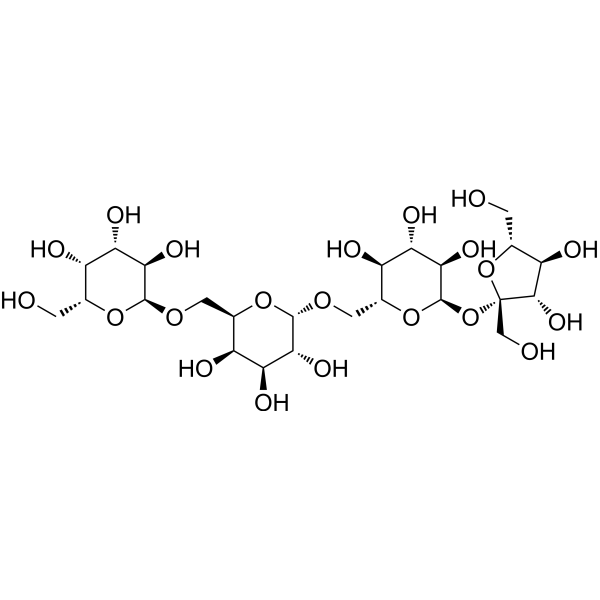
Stachyose tetrahydrate, a functional oligosaccharide, acts as a prebiotic. Stachyose tetrahydrate can prevent indirectly colon cancer cell growth by promoting the proliferation of probiotics or producing beneficial materials in the intestine .
|
-
- HY-W090210
-
|
MPOH
|
Biochemical Assay Reagents
|
Others
|
|
3-Mercapto-1-propanol can be used for the preparation of hydrophilic self-assembled monolayers and as a non-marking linker molecule for chemical and enzymatic synthesis of oligosaccharides .
|
-
- HY-111951R
-
|
|
Endogenous Metabolite
Reference Standards
|
Others
|
|
D-Panose (Standard) is the analytical standard of D-Panose (HY-111951). This product is intended for research and analytical applications. D-Panose is an oligosaccharide composed of glucose units linked by specific glycosidic bonds.
|
-
- HY-P2950A
-
|
|
Glycosidase
|
Metabolic Disease
|
|
α1-6 Mannosidase, Xanthomonas phaseoli is a highly specific exoglycosidase that removes unbranched α1-6 linked mannose residues from oligosaccharides .
|
-
- HY-158532
-
|
A4 N-linked oligosaccharide
|
Biochemical Assay Reagents
|
Others
|
|
A4 glycan (A4 N-linked oligosaccharide) is a N-polysaccharide protein and a multifunctional fluorescent linker. The resulting conjugates exhibit high sensitivity and specificity by mimicking the antennal elements of N-glycans .
|
-
- HY-N2559
-
|
Amylohexaose
|
Endogenous Metabolite
|
Cancer
|
|
Maltohexaose (Amylohexaose) is a linear oligosaccharide containing 6 glucose units, which can be produced from amylose, amylopectin, and whole starch. Maltohexaose can inhibit the proliferation of P-815 cells .
|
-
- HY-158528
-
|
A3 N-linked oligosaccharide
|
Biochemical Assay Reagents
|
Others
|
|
A3 glycan (A3 N-linked oligosaccharide) is a N-polysaccharide protein and a multifunctional fluorescent linker. The resulting conjugates exhibit high sensitivity and specificity by mimicking the antennal elements of N-glycans .
|
-
- HY-146446R
-
|
|
Reference Standards
Bacterial
Antibiotic
|
Infection
|
|
Maltopentaose (Standard) is the analytical standard of Maltopentaose. This product is intended for research and analytical applications. Maltopentaose is the shortest chain oligosaccharide that can be classified as maltodextrin and is also used in a study to investigate glycation and phosphorylation of α-lactalbumin.
|
-
- HY-N1495R
-
|
Maltopentose (Standard)
|
Reference Standards
Endogenous Metabolite
|
Inflammation/Immunology
|
|
Maltopentaose (Standard) is the analytical standard of Maltopentaose. This product is intended for research and analytical applications. Maltopentaose is the shortest chain oligosaccharide that can be classified as maltodextrin and is also used in a study to investigate glycation and phosphorylation of α-lactalbumin.
|
-
- HY-E70038
-
|
|
Endogenous Metabolite
|
Metabolic Disease
|
Endoglycoceramidase II (EGCase II) is an endo-β-glucosidase that releases intact glycans from ceramides in glycosphingolipids. Endoglycoceramidase II catalyzes the hydrolysis of β-glycosidic linkages between oligosaccharides and ceramides in various glycosphingolipids .
|
-
- HY-E70896
-
|
|
Biochemical Assay Reagents
|
Metabolic Disease
|
|
Xyloglucanase, Clostridium thermocellum (EC 3.2.1.151) belongs to the hydrolase family and is a glycosidase that hydrolyzes O- and S-glycosidic compounds. The two substrates of Xyloglucanase, Clostridium thermocellum are xyloglucan and water, and its product is a xyloglucan oligosaccharide.
|
-
- HY-N2167R
-
-
- HY-E70158
-
|
EC:2.4.1.152; FUT9
|
Drug Intermediate
|
Others
|
|
Fucosyltransferase 9 (EC:2.4.1.152, FUT9) catalyzes the last step in the biosynthesis of Lewis antigen, the addition of a fucose to precursor polysaccharides. Fucosyltransferase 9 synthesizes the LeX oligosaccharide (CD15) .
|
-
- HY-W128533
-
|
2-Octen-1-ylsuccinic anhydride
|
Biochemical Assay Reagents
|
Others
|
|
2-Octen-1-ylsuccinic anhydride, mixture of cis and trans (2-Octen-1-ylsuccinic anhydride) can be used to prepare amphiphilic pectin oligosaccharide (POS) derivatives .
|
-
- HY-P2988C
-
|
|
Endogenous Metabolite
|
Metabolic Disease
|
|
α2-3,6,8,9 Neuraminidase, Arthrobacter ureafaciens (EC 3.2.1.18) catalyzes the hydrolysis of all linear and branched non-reducing terminal sialic acid residues from glycoproteins and oligosaccharides.
|
-
- HY-P2869B
-
|
|
Endogenous Metabolite
|
Metabolic Disease
|
|
β1-4 Galactosidase, E. coli is a highly specific exoglycosidase that catalyzes the hydrolysis of terminal, non-reducing β1-4 linked galactose residues from oligosaccharides .
|
-
- HY-E71301
-
|
|
Biochemical Assay Reagents
|
Others
|
|
The terminal β-D-galactose residues of glycoprotein oligosaccharides, as well as lactose, can both serve as acceptors for β-Galactoside α-2,6-sialyltransferase (EC 2.4.99.1).
|
-
- HY-132177A
-
|
|
Glycosidase
|
Metabolic Disease
|
|
α1-2 Fucosidase (EC 3.2.1.51) is a highly specific exoglycosidase that catalyzes the hydrolysis of linear α1-2 linked fucose residues from oligosaccharides .
|
-
- HY-N10511
-
|
|
Others
|
Inflammation/Immunology
|
|
GM1a Ganglioside oligosaccharide is a semisynthetic form of ganglioside GM1. Ganglioside GM1 is the natural receptor for cholera toxin and plays an important role not only in general growth regulation but also in the coupling of hormone-induced responses .
|
-
- HY-158525
-
|
A3G3S3 N-linked oligosaccharide
|
Biochemical Assay Reagents
|
Others
|
|
A3G3S3 glycan (A3G3S3 N-linked oligosaccharide) is an N-glycosylated plasma protein that plays an important role in indicating different stages of type 1 diabetes .
|
-
- HY-E70281
-
|
rEGCase II
|
Biochemical Assay Reagents
|
Metabolic Disease
|
|
Recombinant endoglycoceramidase II (rEGCase II) is an endo-β-glucosidase releasing the complete glycan from ceramide in glycosphingolipids. Recombinant endoglycoceramidase II catalyzes the hydrolysis of the β-glycosidic linkage between oligosaccharides and ceramides in various glycosphingolipids .
|
-
- HY-158490
-
|
A4G4 N-linked oligosaccharide
|
Biochemical Assay Reagents
|
Others
|
|
A4G4 glycan (A4G4 N-linked oligosaccharide) is a N-polysaccharide protein and a multifunctional fluorescent linker. The resulting conjugates exhibit high sensitivity and specificity by mimicking the antennal elements of N-glycans .
|
-
- HY-E70131
-
|
Endo-β-N-acetylglucosaminidase H
|
Others
|
Metabolic Disease
|
|
Endo H, Streptomyces picatus (Endo-β-N-acetylglucosaminidase H), isolated from Streptomyces plicatus, hydrolyzes the central glycosidic bond of the β1, 4-di-N-acetylchitobiose core in asparagine-linked oligosaccharides .
|
-
- HY-158542
-
|
A4 N-linked oligosaccharide, procainamide labelled
|
Biochemical Assay Reagents
|
Others
|
|
A4 glycan, procainamide labelled (A4 N-linked oligosaccharide, procainamide labelled) is a N-polysaccharide protein and a multifunctional fluorescent linker. The resulting conjugates exhibit high sensitivity and specificity by mimicking the antennal elements of N-glycans .
|
-
- HY-N10519
-
|
|
Others
|
Others
|
|
Cellooctaose is an oligosaccharide, consisting of eight glucose residues. Cellooctaose is a low-cost polysaccharides in fermentation to hold on Lactococcus lactis recombinant strain growth. Cellooctaose is the substrate of beta-glucosidase (E.C. 3.2.1.21) .
|
-
- HY-158531
-
|
A3 N-linked oligosaccharide, procainamide labelled
|
Fluorescent Dye
Biochemical Assay Reagents
|
Others
|
|
A3 glycan, procainamide labelled (A3 N-linked oligosaccharide, procainamide labelled) is a N-polysaccharide protein and a multifunctional fluorescent linker. The resulting conjugates exhibit high sensitivity and specificity by mimicking the antennal elements of N-glycans .
|
-
- HY-E70010
-
|
mutarotases
|
Endogenous Metabolite
|
Others
|
|
Aldose 1-epimerase (mutarotases) is a key enzyme of carbohydrate metabolism catalysing the interconversion of the α- and β-anomers of hexose sugars such as glucose and galactose. Aldose 1-epimerase is essential for normal carbohydrate metabolism and the production of complex oligosaccharides .
|
-
- HY-E70141
-
|
EC:2.4.1.149; B3GNT4
|
Glycosyltransferase
|
Others
|
|
β-1,3-N-Acetylglucosaminyltransferase 4 (EC:2.4.1.149, B3GNT4) is involved in the synthesis of poly-N-acetyllactosamine and has activity for type 2 oligosaccharides .
|
-
- HY-113011
-
|
|
Endogenous Metabolite
|
Others
|
|
Maltotriose is a maltooligosaccharide and a specific inducer of the Escherichia coli maltose operon. The oligosaccharide structure of Maltotriose acts as a highly efficient drug delivery carrier, which significantly enhances the targeting ability and water solubility of photosensitizers in photodynamic therapy for pancreatic cancer .
|
-
- HY-158493
-
|
A2 N-linked oligosaccharide, procainamide labelled
|
Biochemical Assay Reagents
|
Others
|
|
A2 glycan (G0), procainamide labelled (A2 N-linked oligosaccharide, procainamide labelled) is a N-polysaccharide protein and a multifunctional fluorescent linker. The resulting conjugates exhibit high sensitivity and specificity by mimicking the antennal elements of N-glycans .
|
-
- HY-158497
-
|
A2 N-linked oligosaccharide, APTS labelled
|
Biochemical Assay Reagents
|
Others
|
|
A2 glycan (G0), APTS labelled (A2 N-linked oligosaccharide, APTS labelled) is a N-polysaccharide protein and a multifunctional fluorescent linker. The resulting conjugates exhibit high sensitivity and specificity by mimicking the antennal elements of N-glycans .
|
-
- HY-158534
-
|
Mannose-8 N-linked oligosaccharide; Oligomannose 8 glycan
|
Biochemical Assay Reagents
|
Others
|
|
M8 glycan (Man8) (Mannose-8 N-linked oligosaccharide; Oligomannose 8 glycan) is a N-polysaccharide protein and a multifunctional fluorescent linker. The resulting conjugates exhibit high sensitivity and specificity by mimicking the antennal elements of N-glycans .
|
-
- HY-158485
-
|
Mannose-5 N-linked oligosaccharide; Oligomannose 5 glycan
|
Biochemical Assay Reagents
|
Others
|
|
M5 glycan (Man5) (Mannose-5 N-linked oligosaccharide; Oligomannose 5 glycan) is a N-polysaccharide protein and a multifunctional fluorescent linker. The resulting conjugates exhibit high sensitivity and specificity by mimicking the antennal elements of N-glycans .
|
-
- HY-P2869C
-
|
|
Endogenous Metabolite
|
Metabolic Disease
|
|
β1-3,4 Galactosidase is a highly specific exoglycosidase that catalyzes the hydrolysis of terminal β1-3 and β1-4 linked galactose residues from oligosaccharides .
|
-
- HY-158519
-
|
Mannose-7 N-linked oligosaccharide; Oligomannose 7 glycan
|
Biochemical Assay Reagents
|
Others
|
|
M7 glycan (Man7) (Mannose-7 N-linked oligosaccharide; Oligomannose 7 glycan) is a N-polysaccharide protein and a multifunctional fluorescent linker. The resulting conjugates exhibit high sensitivity and specificity by mimicking the antennal elements of N-glycans .
|
-
- HY-158543
-
|
Mannose-9 N-linked oligosaccharide; Oligomannose 9 glycan
|
Biochemical Assay Reagents
|
Others
|
|
M9 glycan (Man9) (Mannose-9 N-linked oligosaccharide; Oligomannose 9 glycan) is a N-polysaccharide protein and a multifunctional fluorescent linker. The resulting conjugates exhibit high sensitivity and specificity by mimicking the antennal elements of N-glycans .
|
-
- HY-158509
-
|
Mannose-6 N-linked oligosaccharide; Oligomannose 6 glycan
|
Biochemical Assay Reagents
|
Others
|
|
M6 glycan (Man6) (Mannose-6 N-linked oligosaccharide; Oligomannose 6 glycan) is a N-polysaccharide protein and a multifunctional fluorescent linker. The resulting conjugates exhibit high sensitivity and specificity by mimicking the antennal elements of N-glycans .
|
-
- HY-158482
-
|
Mannose-3 N-linked oligosaccharide; Oligomannose 3 glycan
|
Biochemical Assay Reagents
|
Others
|
|
M3 glycan (Man3) (Mannose-3 N-linked oligosaccharide; Oligomannose 3 glycan) is a N-polysaccharide protein and a multifunctional fluorescent linker. The resulting conjugates exhibit high sensitivity and specificity by mimicking the antennal elements of N-glycans .
|
-
- HY-P2871A
-
|
|
Endogenous Metabolite
|
Metabolic Disease
|
|
α1-3,6 Galactosidase, Xanthomonas manihotis is a highly specific exoglycosidase that catalyzes the hydrolysis of α1-3 and α1-6 linked galactose residues from oligosaccharides .
|
-
- HY-158516
-
|
Mannose-6 N-linked oligosaccharide, procainamide labelled; Oligomannose 6 glycan, procainamide labelled
|
Biochemical Assay Reagents
|
Others
|
|
M6 glycan (Man6), procainamide labelled (Mannose-6 N-linked oligosaccharide, procainamide labelled) is a N-polysaccharide protein and a multifunctional fluorescent linker. The resulting conjugates exhibit high sensitivity and specificity by mimicking the antennal elements of N-glycans .
|
-
- HY-158541
-
|
A4 N-linked oligosaccharide, 2-AB labelled
|
Fluorescent Dye
Biochemical Assay Reagents
|
Others
|
|
A4 glycan, 2-AB labelled (A4 N-linked oligosaccharide, 2-AB labelled) is a N-polysaccharide protein and a multifunctional fluorescent linker. The resulting conjugates exhibit high sensitivity and specificity by mimicking the antennal elements of N-glycans .
|
-
- HY-E70100A
-
|
|
Biochemical Assay Reagents
|
Others
|
|
Acetyl xylan esterase, Cellvibrio japonicus (EC 3.1.1.72) is an enzyme that catalyzes a chemical reaction, the deacetylation of xylans and xylo-oligosaccharides. Acetyl xylan esterase, Cellvibrio japonicus (EC 3.1.1.72) belongs to the family of hydrolases, specifically those acting on carboxylic ester bonds.
|
-
- HY-158540
-
|
A4 N-linked oligosaccharide, 2-AA labelled
|
Biochemical Assay Reagents
|
Others
|
|
A4 glycan, 2-AA labelled (A4 N-linked oligosaccharide, 2-AA labelled) is a N-polysaccharide protein and a multifunctional fluorescent linker. The resulting conjugates exhibit high sensitivity and specificity by mimicking the antennal elements of N-glycans .
|
-
- HY-E70100B
-
|
|
Biochemical Assay Reagents
|
Others
|
|
Acetyl xylan esterase, Clostridium thermocellum (EC 3.1.1.72) is an enzyme that catalyzes a chemical reaction, the deacetylation of xylans and xylo-oligosaccharides. Acetyl xylan esterase, Clostridium thermocellum (EC 3.1.1.72) belongs to the family of hydrolases, specifically those acting on carboxylic ester bonds.
|
-
- HY-158529
-
|
A3 N-linked oligosaccharide, 2-AA labelled
|
Biochemical Assay Reagents
|
Others
|
|
A3 glycan, 2-AA labelled (A3 N-linked oligosaccharide, 2-AA labelled) is a N-polysaccharide protein and a multifunctional fluorescent linker. The resulting conjugates exhibit high sensitivity and specificity by mimicking the antennal elements of N-glycans .
|
-
- HY-158530
-
|
A3 N-linked oligosaccharide, 2-AB labelled
|
Biochemical Assay Reagents
|
Others
|
|
A3 glycan, 2-AB labelled (A3 N-linked oligosaccharide, 2-AB labelled) is a N-polysaccharide protein and a multifunctional fluorescent linker. The resulting conjugates exhibit high sensitivity and specificity by mimicking the antennal elements of N-glycans .
|
-
- HY-N7698
-
|
|
Biochemical Assay Reagents
|
Others
|
|
Tetra-N-acetylchitotetraose is a linear chitosan oligosaccharide. Tetra-N-acetylchitotetraose is a component of the hpo-chitoo gosacchaπdes (LCOs) secreted from Rhizobia. Tetra-N-acetylchitotetraose is also a substrate for the Rhizobium leguminosarum nodulation protein NodB, a CO deacetylase .
|
-
- HY-E71146
-
|
|
Biochemical Assay Reagents
|
Others
|
|
1,2-β-Oligomannan phosphorylase (EC 2.4.1.340) catalyses a reversible reaction. In the synthetic direction it produces oligosaccharides with a degree of polymerization (DP) of 3, 4 and 5. The phosphorolysis reaction proceeds to completion, although activity is highest when the substrate has at least three residues.
|
-
- HY-P2859
-
|
|
Endogenous Metabolite
|
Metabolic Disease
|
|
Chitosanase is a glycosyl hydrolase that catalyzes the endo hydrolysis of β-1,4-glycosidic bonds of partially acetylated chitosan to release chitosan oligosaccharides (COS). Chitosanases can convert high molecular weight chitosan into functional chitooligosaccharides with low molecular weight .
|
-
- HY-158496
-
|
A2 N-linked oligosaccharide, 2-AB labelled
|
Biochemical Assay Reagents
|
Others
|
|
A2 glycan (G0), 2-AB labelled (A2 N-linked oligosaccharide, 2-AB labelled) is a N-polysaccharide protein and a multifunctional fluorescent linker. The resulting conjugates exhibit high sensitivity and specificity by mimicking the antennal elements of N-glycans .
|
-
- HY-113529R
-
|
|
Apoptosis
Endogenous Metabolite
Reference Standards
|
Cancer
|
|
Stachyose (tetrahydrate) (Standard) is the analytical standard of Stachyose (tetrahydrate). This product is intended for research and analytical applications. Stachyose tetrahydrate, a functional oligosaccharide, acts as a prebiotic. Stachyose tetrahydrate can prevent indirectly colon cancer cell growth by promoting the proliferation of probiotics or producing beneficial materials in the intestine .
|
-
- HY-158446
-
|
A2G2 N-linked oligosaccharide, APTS labelled
|
Biochemical Assay Reagents
|
Others
|
|
A2G2 glycan (G2), APTS labelled (A2G2 N-linked oligosaccharide, APTS labelled) is a N-polysaccharide protein and a multifunctional fluorescent linker. The resulting conjugates exhibit high sensitivity and specificity by mimicking the antennal elements of N-glycans .
|
-
- HY-N7697F
-
|
|
Others
|
Metabolic Disease
|
|
Chitobiose is an orally active chitosan oligosaccharide (degree of polymerization 2). Chitobiose shows hepatoprotective activity and counteracts CCl4-induced elevation of plasma aspartate transaminase and alanine transaminase activities in rats. Chitobiose can be used for the research of carbon tetrachloride-induced acute hepatotoxicity .
|
-
- HY-N7697B
-
|
|
Others
|
Others
|
|
Chitobiose dihydrochloride is an orally active chitosan oligosaccharide (degree of polymerization 2). Chitobiose dihydrochloride shows hepatoprotective activity and counteracts CCl4-induced elevation of plasma aspartate transaminase and alanine transaminase activities in rats. Chitobiose dihydrochloride can be used for the research of carbon tetrachloride-induced acute hepatotoxicity .
|
-
- HY-E70119D
-
|
|
Biochemical Assay Reagents
|
Metabolic Disease
|
|
Pectate Lyase, Aspergillus sp. (EC 4.2.2.2) is an enzyme involved in the maceration and soft rotting of plant tissue. Pectate lyase is responsible for the eliminative cleavage of pectate, yielding oligosaccharides with 4-deoxy-α-D-mann-4-enuronosyl groups at their non-reducing ends.
|
-
- HY-P2858A
-
|
|
Glycosidase
|
Metabolic Disease
|
|
β-Mannosidase, Cellvibrio mixtus (EC 3.2.1.25), is the final exoglycosidase in the N-linked glycoprotein oligosaccharide catabolism pathway. β-Mannosidase catalyzes the following chemical reaction: hydrolysis of the terminal non-reducing β-D-mannose residue in β-D-mannoside.
|
-
- HY-E70119C
-
|
|
Biochemical Assay Reagents
|
Metabolic Disease
|
|
Pectate Lyase, Caulobacter crescentus (EC 4.2.2.2) is an enzyme involved in the maceration and soft rotting of plant tissue. Pectate lyase is responsible for the eliminative cleavage of pectate, yielding oligosaccharides with 4-deoxy-α-D-mann-4-enuronosyl groups at their non-reducing ends.
|
-
- HY-E70119B
-
|
|
Biochemical Assay Reagents
|
Metabolic Disease
|
|
Pectate Lyase, Cellvibrio japonicus (EC 4.2.2.2) is an enzyme involved in the maceration and soft rotting of plant tissue. Pectate lyase is responsible for the eliminative cleavage of pectate, yielding oligosaccharides with 4-deoxy-α-D-mann-4-enuronosyl groups at their non-reducing ends.
|
-
- HY-P2858C
-
|
|
Glycosidase
|
Metabolic Disease
|
|
β-Mannosidase, Bacteroides fragilis (EC 3.2.1.25), is the final exoglycosidase in the N-linked glycoprotein oligosaccharide catabolism pathway. β-Mannosidase catalyzes the following chemical reaction: hydrolysis of the terminal non-reducing β-D-mannose residue in β-D-mannoside.
|
-
- HY-132177C
-
|
|
Glycosidase
|
Metabolic Disease
|
|
α1-3,4 Fucosidase, Bifidobacterium bifidum is a broad specificity exoglycosidase that catalyzes the hydrolysis of terminal, non-reducing α1-3 and α1-4 linked fucose residues from oligosaccharides and glycoproteins .
|
-
- HY-N1495
-
|
Maltopentose
|
Amylases
|
Others
|
|
Maltopentaose is the shortest chain oligosaccharide. Maltopentaose is a substrate for α-amylases. Maltopentaose can be classified as maltodextrin and is also used in a study to investigate glycation and phosphorylation of α-lactalbumin. Maltopentaose is used to study the inhibition kinetics of human pancreatic α-amylase by dehydrodieugenol B .
|
-
- HY-P2858B
-
|
|
Glycosidase
|
Metabolic Disease
|
|
β-Mannosidase, Bacteroides thetaiotaomicron (EC 3.2.1.25), is the final exoglycosidase in the N-linked glycoprotein oligosaccharide catabolism pathway. β-Mannosidase catalyzes the following chemical reaction: hydrolysis of the terminal non-reducing β-D-mannose residue in β-D-mannoside.
|
-
- HY-E70119A
-
|
|
Biochemical Assay Reagents
|
Metabolic Disease
|
|
Pectate Lyase, Clostridium acetobutylicum (EC 4.2.2.2) is an enzyme involved in the maceration and soft rotting of plant tissue. Pectate lyase is responsible for the eliminative cleavage of pectate, yielding oligosaccharides with 4-deoxy-α-D-mann-4-enuronosyl groups at their non-reducing ends.
|
-
- HY-158492
-
|
A4G4 N-linked oligosaccharide, 2-AB labelled
|
Biochemical Assay Reagents
|
Others
|
|
A4G4 glycan, 2-AB labelled (A4G4 N-linked oligosaccharide, 2-AB labelled) is a N-polysaccharide protein and a multifunctional fluorescent linker. The resulting conjugates exhibit high sensitivity and specificity by mimicking the antennal elements of N-glycans .
|
-
- HY-158539
-
|
Mannose-8 N-linked oligosaccharide, procainamide labelled; Oligomannose 8 glycan, procainamide labelled
|
Biochemical Assay Reagents
|
Others
|
|
M8 glycan (Man8), procainamide labelled (Mannose-8 N-linked oligosaccharide, procainamide labelled; Oligomannose 8 glycan, procainamide labelled) is a N-polysaccharide protein and a multifunctional fluorescent linker. The resulting conjugates exhibit high sensitivity and specificity by mimicking the antennal elements of N-glycans .
|
-
- HY-158537
-
|
A3G3S3 N-linked oligosaccharide, procainamide labelled
|
Biochemical Assay Reagents
|
Others
|
|
A3G3S3 glycan, procainamide labelled (A3G3S3 N-linked oligosaccharide, procainamide labelled) is a N-polysaccharide protein and a multifunctional fluorescent linker. The resulting conjugates exhibit high sensitivity and specificity by mimicking the antennal elements of N-glycans .
|
-
- HY-158546
-
|
Mannose-9 N-linked oligosaccharide, procainamide labelled; Oligomannose 9 glycan, procainamide labelled
|
Biochemical Assay Reagents
|
Others
|
|
M9 glycan (Man9), procainamide labelled (Mannose-9 N-linked oligosaccharide, procainamide labelled; Oligomannose 9 glycan, procainamide labelled) is a N-polysaccharide protein and a multifunctional fluorescent linker. The resulting conjugates exhibit high sensitivity and specificity by mimicking the antennal elements of N-glycans .
|
-
- HY-158505
-
|
Mannose-5 N-linked oligosaccharide, APTS labelled; Oligomannose 5 glycan, APTS labelled
|
Biochemical Assay Reagents
|
Others
|
|
M5 glycan (Man5), APTS labelled (Mannose-5 N-linked oligosaccharide, APTS labelled; Oligomannose 5 glycan, APTS labelled) is a N-polysaccharide protein and a multifunctional fluorescent linker. The resulting conjugates exhibit high sensitivity and specificity by mimicking the antennal elements of N-glycans .
|
-
- HY-158526
-
|
Mannose-7 N-linked oligosaccharide, procainamide labelled; Oligomannose 7 glycan, procainamide labelled
|
Biochemical Assay Reagents
|
Others
|
|
M7 glycan (Man7), procainamide labelled (Mannose-7 N-linked oligosaccharide, procainamide labelled; Oligomannose 7 glycan, procainamide labelled) is a N-polysaccharide protein and a multifunctional fluorescent linker. The resulting conjugates exhibit high sensitivity and specificity by mimicking the antennal elements of N-glycans .
|
-
- HY-158491
-
|
A4G4 N-linked oligosaccharide, 2-AA labelled
|
Biochemical Assay Reagents
|
Others
|
|
A4G4 glycan, 2-AA labelled (A4G4 N-linked oligosaccharide, 2-AA labelled) is a N-polysaccharide protein and a multifunctional fluorescent linker. The resulting conjugates exhibit high sensitivity and specificity by mimicking the antennal elements of N-glycans .
|
-
- HY-158507
-
|
Mannose-5 N-linked oligosaccharide, procainamide labelled; Oligomannose 5 glycan, procainamide labelled
|
Biochemical Assay Reagents
|
Others
|
|
M5 glycan (Man5), procainamide labelled (Mannose-5 N-linked oligosaccharide, procainamide labelled; Oligomannose 5 glycan, procainamide labelled) is a N-polysaccharide protein and a multifunctional fluorescent linker. The resulting conjugates exhibit high sensitivity and specificity by mimicking the antennal elements of N-glycans .
|
-
- HY-N6911
-
|
(18β,20α)-Glycyrrhizic acid
|
Others
|
Metabolic Disease
|
|
Liquorice-saponin H2 ((18β,20α)-Glycyrrhizic acid) is a type of triterpenoid oligosaccharide glycoside found in the Glycyrrhiza genus. Liquorice-saponin H2 accumulates more in the roots of licorice plants under salt stress conditions, suggesting that it may play a role in plant stress resistance .
|
-
- HY-E70304
-
|
MAN1A1
|
Endogenous Metabolite
|
Others
|
|
Mannosyl-oligosaccharide 1,2-α-mannosidase IA (MAN1A1) is a glycosidase that catalyzes the hydrolysis of α-1,2-linked mannose residues in Man(9)GlcNAc(2) to produce Man(9)GlcNAc(2) .
|
-
- HY-NP188
-
|
LEL (FITC)
|
Fluorescent Dye
Biochemical Assay Reagents
|
Others
|
|
Lycopersicon esculentum (Tomato) Lectin (FITC) is Lycopersicon esculentum (Tomato) Lectin (HY-NP071) labeled with FITC (HY-66019). Lycopersicon esculentum (Tomato) Lectin (FITC) binds to poly-N-acetyllactosamine oligosaccharides. Lycopersicon esculentum (Tomato) Lectin (FITC) is a major component of carbohydrates on the surface of endothelial and epithelial cells .
|
-
- HY-P2858E
-
|
|
Biochemical Assay Reagents
|
Metabolic Disease
|
|
β-Mannosidase, Helix pomatia (EC 3.2.1.25), catalyzes the hydrolysis of the terminal non-reducing β-D-mannose residue in β-D-mannoside. β-Mannosidase, Helix pomatia (EC 3.2.1.25) is the final exoglycosidase in the N-linked glycoprotein oligosaccharide catabolism pathway.
|
-
- HY-158452
-
|
A3G3 N-linked oligosaccharide; A3G(4)3 glycan
|
Biochemical Assay Reagents
|
Others
|
|
A3G3 glycan (G3) (A3G3 N-linked oligosaccharide; A3G(4)3 glycan) is a N-polysaccharide protein and a multifunctional fluorescent linker. The resulting conjugates exhibit high sensitivity and specificity by mimicking the antennal elements of N-glycans .
|
-
- HY-N6911B
-
|
(18β,20α)-Glycyrrhizic acid ammonium
|
Others
|
Metabolic Disease
|
|
Liquorice-saponin H2 ((18β,20α)-Glycyrrhizic acid) ammonium is a type of triterpenoid oligosaccharide glycoside found in the Glycyrrhiza genus. Liquorice-saponin H2 ammonium accumulates more in the roots of licorice plants under salt stress conditions, suggesting that it may play a role in plant stress resistance .
|
-
- HY-158488
-
|
A3G3 N-linked oligosaccharide, 2-AB labelled
|
Biochemical Assay Reagents
|
Others
|
|
A3G3 glycan (G3), 2-AB labelled (A3G3 N-linked oligosaccharide, 2-AB labelled) is a N-polysaccharide protein and a multifunctional fluorescent linker. The resulting conjugates exhibit high sensitivity and specificity by mimicking the antennal elements of N-glycans .
|
-
- HY-158442
-
|
A2G2 N-linked oligosaccharide; A2G(4)2 glycan
|
Biochemical Assay Reagents
|
Others
|
|
A2G2 glycan (G2) (A2G2 N-linked oligosaccharide; A2G(4)2 glycan) is a N-polysaccharide protein and a multifunctional fluorescent linker. The resulting conjugates exhibit high sensitivity and specificity by mimicking the antennal elements of N-glycans .
|
-
- HY-158487
-
|
A3G3 N-linked oligosaccharide, 2-AA labelled
|
Biochemical Assay Reagents
|
Others
|
|
A3G3 glycan (G3), 2-AA labelled (A3G3 N-linked oligosaccharide, 2-AA labelled) is a N-polysaccharide protein and a multifunctional fluorescent linker. The resulting conjugates exhibit high sensitivity and specificity by mimicking the antennal elements of N-glycans .
|
-
- HY-E71254
-
|
|
Biochemical Assay Reagents
|
Others
|
|
α-Xylosidase 31A, Bacteroides ovatus (EC 3.2.1.177) is an enzyme. This enzyme catalyses the following chemical reaction: Hydrolysis of terminal, non-reducing alpha-D-xylose residues with release of alpha-D-xylose. The enzyme catalyses hydrolysis of a terminal, unsubstituted xyloside at the extreme reducing end of a xylogluco-oligosaccharide.
|
-
- HY-158445
-
|
A2G2 N-linked oligosaccharide, 2-AB labelled
|
Biochemical Assay Reagents
|
Others
|
|
A2G2 glycan (G2), 2-AB labelled (A2G2 N-linked oligosaccharide, 2-AB labelled) is a N-polysaccharide protein and a multifunctional fluorescent linker. The resulting conjugates exhibit high sensitivity and specificity by mimicking the antennal elements of N-glycans .
|
-
- HY-N10521
-
|
|
Bacterial
VEGFR
Akt
ERK
|
Infection
Inflammation/Immunology
|
|
6'-Sialyllactose promotes the growth of beneficial bacteria (such as Bifidobacterium and lactobacillus) and inhibits the proliferation of harmful bacteria. 6'-Sialyllactose exhibits anti-inflammatory and anti-angiogenic activities. 6'-Sialyllactose promotes the muscle health .
|
-
- HY-158448
-
|
FA2G2 N-linked oligosaccharide; F(6)A2G2
|
Biochemical Assay Reagents
|
Others
|
|
FA2G2 glycan (G2F) (FA2G2 N-linked oligosaccharide; F(6)A2G2) is a N-polysaccharide protein and a multifunctional fluorescent linker. The resulting conjugates exhibit high sensitivity and specificity by mimicking the antennal elements of N-glycans .
|
-
- HY-E70039
-
|
|
Others
|
Others
|
|
alpha-2-3,6,8-Sialidosidase (SpNanA) catalyses hydrolysis of alpha-(2->3)-, alpha-(2->6)-, alpha-(2->8)- glycosidic linkages of terminal sialic acid residues in oligosaccharides, glycoproteins, glycolipids, colominic acid and synthetic substrates .
|
-
- HY-158474
-
|
A2G2S1 N-linked oligosaccharide, APTS labelled
|
Biochemical Assay Reagents
|
Others
|
|
A2G2S1 glycan (G2S1), APTS labelled (A2G2S1 N-linked oligosaccharide, APTS labelled) is a N-polysaccharide protein and a multifunctional fluorescent linker. The resulting conjugates exhibit high sensitivity and specificity by mimicking the antennal elements of N-glycans .
|
-
- HY-158504
-
|
FA2G2S1 N-linked oligosaccharide, APTS labelled
|
Biochemical Assay Reagents
|
Others
|
|
FA2G2S1 glycan (G2FS1), APTS labelled (FA2G2S1 N-linked oligosaccharide, APTS labelled) is a N-polysaccharide protein and a multifunctional fluorescent linker. The resulting conjugates exhibit high sensitivity and specificity by mimicking the antennal elements of N-glycans .
|
-
- HY-P2871B
-
|
|
Endogenous Metabolite
|
Metabolic Disease
|
|
α1-3,4,6 Galactosidase is a broad specificity exoglycosidase that catalyzes the hydrolysis of terminal, non-reducing α1-3, α1-4 and α1-6-linked galactose residues from oligosaccharides .
|
-
- HY-158533
-
|
A3G3S3 N-linked oligosaccharide, 2-AA labelled
|
Biochemical Assay Reagents
|
Others
|
|
A3G3S3 glycan, 2-AA labelled (A3G3S3 N-linked oligosaccharide, 2-AA labelled) is a N-polysaccharide protein and a multifunctional fluorescent linker. The resulting conjugates exhibit high sensitivity and specificity by mimicking the antennal elements of N-glycans .
|
-
- HY-158527
-
|
FA2 N-linked oligosaccharide, APTS labelled; F(6)A2 glycan, APTS labelled
|
Biochemical Assay Reagents
|
Others
|
|
FA2 glycan (G0F), APTS labelled (FA2 N-linked oligosaccharide, APTS labelled; F(6)A2 glycan, APTS labelled) is a N-polysaccharide protein and a multifunctional fluorescent linker. The resulting conjugates exhibit high sensitivity and specificity by mimicking the antennal elements of N-glycans .
|
-
- HY-113011R
-
|
|
Reference Standards
Endogenous Metabolite
|
Others
|
|
Maltotriose (Standard) is the analytical standard of Maltotriose (HY-13011). This product is intended for research and analytical applications. Maltotriose is a maltooligosaccharide and a specific inducer of the Escherichia coli maltose operon. The oligosaccharide structure of Maltotriose acts as a highly efficient drug delivery carrier, which significantly enhances the targeting ability and water solubility of photosensitizers in photodynamic therapy for pancreatic cancer.
|
-
- HY-158535
-
|
A3G3S3 N-linked oligosaccharide, 2-AB labelled
|
Biochemical Assay Reagents
|
Others
|
|
A3G3S3 glycan, 2-AB labelled (A3G3S3 N-linked oligosaccharide, 2-AB labelled) is a N-polysaccharide protein and a multifunctional fluorescent linker. The resulting conjugates exhibit high sensitivity and specificity by mimicking the antennal elements of N-glycans .
|
-
- HY-E71225
-
|
|
Biochemical Assay Reagents
|
Others
|
|
α-D-Xyloside xylohydrolase (EC 3.2.1.177) catalyses hydrolysis of a terminal, unsubstituted xyloside at the extreme reducing end of a xylogluco-oligosaccharide. Representative α-xylosidases from glycoside hydrolase family 31 utilize a two-step (double-displacement) mechanism involving a covalent glycosyl-enzyme intermediate, and retain the anomeric configuration of the product.
|
-
- HY-158514
-
|
Mannose-6 N-linked oligosaccharide, 2-AB labelled; Oligomannose 6 glycan, 2-AB labelled
|
Biochemical Assay Reagents
|
Others
|
|
M6 glycan (Man6), 2-AB labelled (Mannose-6 N-linked oligosaccharide, 2-AB labelled; Oligomannose 6 glycan, 2-AB labelled) is a N-polysaccharide protein and a multifunctional fluorescent linker. The resulting conjugates exhibit high sensitivity and specificity by mimicking the antennal elements of N-glycans .
|
-
- HY-158483
-
|
Mannose-3 N-linked oligosaccharide, 2-AA labelled; Oligomannose 3 glycan, 2-AA labelled
|
Biochemical Assay Reagents
|
Others
|
|
M3 glycan (Man3), 2-AA labelled (Mannose-3 N-linked oligosaccharide, 2-AA labelled; Oligomannose 3 glycan, 2-AA labelled) is a N-polysaccharide protein and a multifunctional fluorescent linker. The resulting conjugates exhibit high sensitivity and specificity by mimicking the antennal elements of N-glycans .
|
-
- HY-158511
-
|
Mannose-6 N-linked oligosaccharide, 2-AA labelled; Oligomannose 6 glycan, 2-AA labelled
|
Biochemical Assay Reagents
|
Others
|
|
M6 glycan (Man6), 2-AA labelled (Mannose-6 N-linked oligosaccharide, 2-AA labelled; Oligomannose 6 glycan, 2-AA labelled) is a N-polysaccharide protein and a multifunctional fluorescent linker. The resulting conjugates exhibit high sensitivity and specificity by mimicking the antennal elements of N-glycans .
|
-
- HY-158503
-
|
Mannose-5 N-linked oligosaccharide, 2-AB labelled; Oligomannose 5 glycan, 2-AB labelled
|
Biochemical Assay Reagents
|
Others
|
|
M5 glycan (Man5), 2-AB labelled (Mannose-5 N-linked oligosaccharide, 2-AB labelled; Oligomannose 5 glycan, 2-AB labelled) is a N-polysaccharide protein and a multifunctional fluorescent linker. The resulting conjugates exhibit high sensitivity and specificity by mimicking the antennal elements of N-glycans .
|
-
- HY-158521
-
|
Mannose-7 N-linked oligosaccharide, 2-AA labelled; Oligomannose 7 glycan, 2-AA labelled
|
Biochemical Assay Reagents
|
Others
|
|
M7 glycan (Man7), 2-AA labelled (Mannose-7 N-linked oligosaccharide, 2-AA labelled; Oligomannose 7 glycan, 2-AA labelled) is a N-polysaccharide protein and a multifunctional fluorescent linker. The resulting conjugates exhibit high sensitivity and specificity by mimicking the antennal elements of N-glycans .
|
-
- HY-158524
-
|
Mannose-7 N-linked oligosaccharide, 2-AB labelled; Oligomannose 7 glycan, 2-AB labelled
|
Biochemical Assay Reagents
|
Others
|
|
M7 glycan (Man7), 2-AB labelled (Mannose-7 N-linked oligosaccharide, 2-AB labelled; Oligomannose 7 glycan, 2-AB labelled) is a N-polysaccharide protein and a multifunctional fluorescent linker. The resulting conjugates exhibit high sensitivity and specificity by mimicking the antennal elements of N-glycans .
|
-
- HY-158545
-
|
Mannose-9 N-linked oligosaccharide, 2-AB labelled; Oligomannose 9 glycan, 2-AB labelled
|
Biochemical Assay Reagents
|
Others
|
|
M9 glycan (Man9), 2-AB labelled (Mannose-9 N-linked oligosaccharide, 2-AB labelled; Oligomannose 9 glycan, 2-AB labelled) is a N-polysaccharide protein and a multifunctional fluorescent linker. The resulting conjugates exhibit high sensitivity and specificity by mimicking the antennal elements of N-glycans .
|
-
- HY-158544
-
|
Mannose-9 N-linked oligosaccharide, 2-AA labelled; Oligomannose 9 glycan, 2-AA labelled
|
Biochemical Assay Reagents
|
Others
|
|
M9 glycan (Man9), 2-AA labelled (Mannose-9 N-linked oligosaccharide, 2-AA labelled; Oligomannose 9 glycan, 2-AA labelled) is a N-polysaccharide protein and a multifunctional fluorescent linker. The resulting conjugates exhibit high sensitivity and specificity by mimicking the antennal elements of N-glycans .
|
-
- HY-158536
-
|
Mannose-8 N-linked oligosaccharide, 2-AA labelled; Oligomannose 8 glycan, 2-AA labelled
|
Biochemical Assay Reagents
|
Others
|
|
M8 glycan (Man8), 2-AA labelled (Mannose-8 N-linked oligosaccharide, 2-AA labelled; Oligomannose 8 glycan, 2-AA labelled) is a N-polysaccharide protein and a multifunctional fluorescent linker. The resulting conjugates exhibit high sensitivity and specificity by mimicking the antennal elements of N-glycans .
|
-
- HY-E71216
-
|
|
Biochemical Assay Reagents
|
Others
|
|
α-2,3/8-Sialyltransferase, Campylobacter jejuni (EC 2.4.99.-) is an enzyme that transfers sialic acid to nascent oligosaccharides. α-2,3/8-Sialyltransferase, Campylobacter jejuni (EC 2.4.99.-) adds sialic acid to the terminal of sialylated glycolipids (gangliosides) or to the N- or O-linked sugar chain of glycoproteins.
|
-
- HY-16304A
-
|
|
Endogenous Metabolite
|
Metabolic Disease
|
|
Mannose 1-phosphate sodium is a phosphorylated mannose that serves as a precursor of GDP-mannose, a constituent unit of glycosylation biosynthetic pathways. Mannose 1-phosphate sodium increases intracellular GDP-mannose concentration, promotes normalization of lipid-linked oligosaccharide structures, and enhances the formation of mature N-glycans on cellular proteins. Mannose 1-phosphate sodium can be used in studies related to glycosylation disorders .
|
-
- HY-158484
-
|
Mannose-3 N-linked oligosaccharide, 2-AB labelled; Oligomannose 3 glycan, 2-AB labelled
|
Biochemical Assay Reagents
|
Others
|
|
M3 glycan (Man3), 2-AB labelled (Mannose-3 N-linked oligosaccharide, 2-AB labelled; Oligomannose 3 glycan, 2-AB labelled) is a N-polysaccharide protein and a multifunctional fluorescent linker. The resulting conjugates exhibit high sensitivity and specificity by mimicking the antennal elements of N-glycans .
|
-
- HY-158501
-
|
Mannose-5 N-linked oligosaccharide, 2-AA labelled; Oligomannose 5 glycan, 2-AA labelled
|
Biochemical Assay Reagents
|
Others
|
|
M5 glycan (Man5), 2-AA labelled (Mannose-5 N-linked oligosaccharide, 2-AA labelled; Oligomannose 5 glycan, 2-AA labelled) is a N-polysaccharide protein and a multifunctional fluorescent linker. The resulting conjugates exhibit high sensitivity and specificity by mimicking the antennal elements of N-glycans .
|
-
- HY-158538
-
|
Mannose-8 N-linked oligosaccharide, 2-AB labelled; Oligomannose 8 glycan, 2-AB labelled
|
Biochemical Assay Reagents
|
Others
|
|
M8 glycan (Man8), 2-AB labelled (Mannose-8 N-linked oligosaccharide, 2-AB labelled; Oligomannose 8 glycan, 2-AB labelled) is a N-polysaccharide protein and a multifunctional fluorescent linker. The resulting conjugates exhibit high sensitivity and specificity by mimicking the antennal elements of N-glycans .
|
-
- HY-E70573
-
|
|
Biochemical Assay Reagents
|
Others
|
|
Endo SH is a fusion protein of Endo S (from Streptococcus pyogenes) and Endo H (from Streptomyces plicatus), expressed in Escherichia coli. Endo SH can cleave the chitobiose core structure of high mannose, complex and some hybrid oligosaccharides in N-glycoproteins, remove N-linked high mannose in glycoproteins, and can completely replace Endo S and Endo H.
|
-
- HY-D1056C4
-
|
LPS, from Salmonella enterica (Serotype abortus equi)
|
Toll-like Receptor (TLR)
|
Inflammation/Immunology
|
Lipopolysaccharides, from S. enterica (Salmonella enterica) serotype Abortusequi are lipopolysaccharide endotoxins and TLR-4 activators derived from the Abortusequi serotype of S. enterica, classified as a mutated R-type LPS, which can activate pathogen-associated molecular patterns (PAMP) of the immune system and induce cellular secretion of migrasomes. Lipopolysaccharides, from S. enterica serotype abortus equi consist of core oligosaccharide (core oligosaccharide) and lipid A (Lipid A). S. enterica serotype Abortusequi is a major pathogen causing abortion in mares and is also associated with neonatal sepsis, multiple abscesses, orchitis, and polyarthritis in equids. It is primarily grouped based on lipopolysaccharides (O-antigen) and flagellin (H-antigen) .
It is recommended to prepare a solution with concentration ≥2 mg/mL. Vortex thoroughly for more than 10 minutes. Due to the adsorption characteristics of LPS, silanized container or low adsorption centrifuge tubes should be used for aliquoting and storage, and mix thoroughly before use.
|
-
- HY-N9448R
-
|
|
Reference Standards
Bacterial
|
Infection
Inflammation/Immunology
|
|
Ethyl 2-chloronicotinate (Standard) is the analytical standard of Ethyl 2-chloronicotinate. This product is intended for research and analytical applications. Ethyl 2-chloronicotinate is a biochemical reagent that can be used as a biological material or organic compound for life science related research.
|
-
- HY-158502
-
|
FA2G2S1 N-linked oligosaccharide, 2-AB labelled
|
Biochemical Assay Reagents
|
Others
|
|
FA2G2S1 glycan (G2FS1), 2-AB labelled (FA2G2S1 N-linked oligosaccharide, 2-AB labelled) is a N-polysaccharide protein and a multifunctional fluorescent linker. The resulting conjugates exhibit high sensitivity and specificity by mimicking the antennal elements of N-glycans .
|
-
- HY-E70097
-
|
|
Endogenous Metabolite
|
Others
|
|
Sialidase (α2-3-6-8-9) is a broadly specific sialidase that cuts linear and branched non-reducing terminal sialic acid residues from glycoproteins, glycopeptides, and oligosaccharides. Sialidase (α2-3-6-8-9) can be used for in vitro and in vivo polysaccharide analysis and characterization as well as complete glycoprotein remodeling .
|
-
- HY-158441
-
|
A2G2S1 N-linked oligosaccharide, 2-AA labelled
|
Biochemical Assay Reagents
|
Others
|
|
A2G2S1 glycan (G2S1), 2-AA labelled (A2G2S1 N-linked oligosaccharide, 2-AA labelled) is a N-polysaccharide protein and a multifunctional fluorescent linker. The resulting conjugates exhibit high sensitivity and specificity by mimicking the antennal elements of N-glycans .
|
-
- HY-N1414A
-
|
|
Bcl-2 Family
Apoptosis
|
Neurological Disease
|
|
3′,6-Disinapoylsucrose is a type of oligosaccharide that's effective when taken orally, and it has antidepressant, anti-anxiety, and antioxidant properties. 3′,6-Disinapoylsucrose inhibits neuronal apoptosis by lowering the ratio of Bax to Bcl-2 in hippocampal neurons, and it enhances cognitive function in APP/PS1 transgenic mice by activating the CREB/BDNF signaling pathway .
|
-
- HY-158447
-
|
A2G2 N-linked oligosaccharide, procainamide labelled; A2G(4)2 glycan, procainamide labelled
|
Biochemical Assay Reagents
|
Others
|
|
A2G2 glycan (G2), procainamide labelled (A2G2 N-linked oligosaccharide, procainamide labelled; A2G(4)2 glycan, procainamide labelled) is a N-polysaccharide protein and a multifunctional fluorescent linker. The resulting conjugates exhibit high sensitivity and specificity by mimicking the antennal elements of N-glycans .
|
-
- HY-14829A
-
|
D-Isofagomine hydrochloride; Isofagomine hydrochloride
|
Glycosidase
|
Metabolic Disease
|
|
Afegostat hydrochloride (D-Isofagomine hydrochloride) is a potent β-galactosidase inhibitor with activity ameliorating GM1-gangliosidosis and Morquio B disease-associated mutations. Afegostat hydrochloride is able to induce the maturation of mutant β-galactosidase in fibroblasts from patients with GM1-gangliosidosis. Afegostat hydrochloride also promotes the reduction of keratin sulfate and oligosaccharide load in patient cells .
|
-
- HY-158486
-
|
FA2G2S1 N-linked oligosaccharide, 2-AA labelled
|
Biochemical Assay Reagents
|
Others
|
|
FA2G2S1 glycan (G2FS1), 2-AA labelled (FA2G2S1 N-linked oligosaccharide, 2-AA labelled) is a N-polysaccharide protein and a multifunctional fluorescent linker. The resulting conjugates exhibit high sensitivity and specificity by mimicking the antennal elements of N-glycans .
|
-
- HY-158443
-
|
A2G2S1 N-linked oligosaccharide, 2-AB labelled
|
Biochemical Assay Reagents
|
Others
|
|
A2G2S1 glycan (G2S1), 2-AB labelled (A2G2S1 N-linked oligosaccharide, 2-AB labelled) is a N-polysaccharide protein and a multifunctional fluorescent linker. The resulting conjugates exhibit high sensitivity and specificity by mimicking the antennal elements of N-glycans .
|
-
- HY-158489
-
|
A3G3 N-linked oligosaccharide, procainamide labelled; A3G(4)3 glycan, procainamide labelled
|
Biochemical Assay Reagents
|
Others
|
|
A3G3 glycan (G3), procainamide labelled (A3G3 N-linked oligosaccharide, procainamide labelled; A3G(4)3 glycan, procainamide labelled) is a N-polysaccharide protein and a multifunctional fluorescent linker. The resulting conjugates exhibit high sensitivity and specificity by mimicking the antennal elements of N-glycans .
|
-
- HY-W004260S5
-
|
|
Endogenous Metabolite
|
Others
|
|
Arachidic acid-d4-1 is the deuterium labeled Arachidic acid (HY-W004260). Arachidic acid (Eicosanoic acid) is a long-chain saturated fatty acid. Arachidic acid can be found in the human organism from the plasma phospholipid, fish, cannabis and other plant oils. Arachidic acid conjugated with Chitosan oligosaccharide (HY-112108) can be used for anti-cancer drug delivery research .
|
-
- HY-158453
-
|
FA2B N-linked oligosaccharide, 2-AA labelled; G0F with bisecting GlcNAc, 2-AA labelled
|
Biochemical Assay Reagents
|
Others
|
|
FA2B glycan (G0B), 2-AA labelled (FA2B N-linked oligosaccharide, 2-AA labelled; G0F with bisecting GlcNAc, 2-AA labelled) is a N-polysaccharide protein and a multifunctional fluorescent linker. The resulting conjugates exhibit high sensitivity and specificity by mimicking the antennal elements of N-glycans .
|
-
- HY-158499
-
|
FA2 N-linked oligosaccharide, 2-AA labelled; F(6)A2 glycan, 2-AA labelled
|
Biochemical Assay Reagents
|
Others
|
|
FA2 glycan (G0F), 2-AA labelled (FA2 N-linked oligosaccharide, 2-AA labelled; F(6)A2 glycan, 2-AA labelled) is a N-polysaccharide protein and a multifunctional fluorescent linker. The resulting conjugates exhibit high sensitivity and specificity by mimicking the antennal elements of N-glycans .
|
-
- HY-158500
-
|
FA2 N-linked oligosaccharide, 2-AB labelled; F(6)A2 glycan, 2-AB labelled
|
Biochemical Assay Reagents
|
Others
|
|
FA2 glycan (G0F), 2-AB labelled (FA2 N-linked oligosaccharide, 2-AB labelled; F(6)A2 glycan, 2-AB labelled) is a N-polysaccharide protein and a multifunctional fluorescent linker. The resulting conjugates exhibit high sensitivity and specificity by mimicking the antennal elements of N-glycans .
|
-
- HY-W004260S2
-
|
Icosanoic acid-d3
|
Isotope-Labeled Compounds
Endogenous Metabolite
|
Others
|
|
Arachidic acid-d3 is the deuterium labeled Arachidic acid (HY-W004260). Arachidic acid (Eicosanoic acid) is a long-chain saturated fatty acid. Arachidic acid can be found in the human organism from the plasma phospholipid, fish, cannabis and other plant oils. Arachidic acid conjugated with Chitosan oligosaccharide (HY-112108) can be used for anti-cancer drug delivery research .
|
-
- HY-E70013
-
|
endo-1,3:1,4-β-D-Glucanase
|
Endogenous Metabolite
|
Metabolic Disease
|
|
Lichenase, Microorganism (endo-1,3:1,4-β-D-Glucanase) is a specific, endo-(1-3),(1-4)-β-D-glucan 4-glucanohydrolase. Lichenase, Microorganism solubilizes β-glucans from cereal grains and gives gluco-oligosaccharides (GOS). Lichenase, Microorganism can be used in the degradation of polysaccharides in the cell walls .
|
-
- HY-W004260S4
-
|
Icosanoic acid-d4
|
Isotope-Labeled Compounds
Endogenous Metabolite
|
Others
|
|
Arachidic acid-d4 is the deuterium labeled Arachidic acid (HY-W004260). Arachidic acid (Eicosanoic acid) is a long-chain saturated fatty acid. Arachidic acid can be found in the human organism from the plasma phospholipid, fish, cannabis and other plant oils. Arachidic acid conjugated with Chitosan oligosaccharide (HY-112108) can be used for anti-cancer drug delivery research .
|
-
- HY-W004260R
-
|
Eicosanoic acid (Standard)
|
Reference Standards
Endogenous Metabolite
|
Others
|
|
Arachidic acid (Standard) is the analytical standard of Arachidic acid (HY-W004260). This product is intended for research and analytical applications. Arachidic acid (Eicosanoic acid) is a long-chain saturated fatty acid. Arachidic acid can be found in the human organism from the plasma phospholipid, fish, cannabis and other plant oils. Arachidic acid conjugated with Chitosan oligosaccharide (HY-112108) can be used for anti-cancer drug delivery research .
|
-
- HY-W004260S
-
|
Icosanoic acid-d2
|
Isotope-Labeled Compounds
Endogenous Metabolite
|
Others
|
|
Arachidic acid-d2 is the deuterium labeled Arachidic acid (HY-W004260). Arachidic acid (Eicosanoic acid) is a long-chain saturated fatty acid. Arachidic acid can be found in the human organism from the plasma phospholipid, fish, cannabis and other plant oils. Arachidic acid conjugated with Chitosan oligosaccharide (HY-112108) can be used for anti-cancer drug delivery research .
|
-
- HY-W004260S1
-
|
Icosanoic acid-d39
|
Isotope-Labeled Compounds
Endogenous Metabolite
|
Others
|
|
Arachidic acid-d39 is the deuterium labeled Arachidic acid (HY-W004260). Arachidic acid (Eicosanoic acid) is a long-chain saturated fatty acid. Arachidic acid can be found in the human organism from the plasma phospholipid, fish, cannabis and other plant oils. Arachidic acid conjugated with Chitosan oligosaccharide (HY-112108) can be used for anti-cancer drug delivery research .
|
-
- HY-158451
-
|
FA2G2 N-linked oligosaccharide, APTS labelled; F(6)A2G2, APTS labelled
|
Biochemical Assay Reagents
|
Others
|
|
FA2G2 glycan (G2F), APTS labelled (FA2G2 N-linked oligosaccharide, APTS labelled; F(6)A2G2, APTS labelled) is a N-polysaccharide protein and a multifunctional fluorescent linker. The resulting conjugates exhibit high sensitivity and specificity by mimicking the antennal elements of N-glycans .
|
-
- HY-P2835A
-
|
|
Biochemical Assay Reagents
|
Others
|
|
Alginate lyase, Sphingomonas sp. (EC 4.2.2.3) is an enzyme that catalyzes the chemical reaction:Eliminative cleavage of polysaccharides containing beta-D-mannuronate residues to give oligosaccharides with 4-deoxy-alpha-L-erythro-hex-4-enopyranuronosyl groups at their ends. Alginate lyase, Sphingomonas sp. (EC 4.2.2.3) belongs to the family of lyases, participates in fructose and mannose metabolism.
|
-
- HY-N9445
-
|
LNnT
|
Endogenous Metabolite
TNF Receptor
|
Inflammation/Immunology
|
|
Lacto-N-neotetraose (LNnT) is an endogenous metabolite. Lacto-N-neotetraose can inhibit TNF-α induced IL-8 secretion in immature epithelial cells. Lacto-N-neotetraose has anti-inflammatory avtivity, and can improve the wound closure .
|
-
- HY-N11287
-
|
|
Endogenous Metabolite
|
Others
|
|
UDP-xylose is an endogenous sugar nucleotide and a catalytic substrate of UDP-xylose synthase (UXS). UDP-xylose is a sugar donor for the synthesis of glycoproteins, polysaccharides, various metabolites and oligosaccharides in plants, vertebrates and fungi, and participates in the synthesis of proteoglycans as a glycosyl donor. UDP-xylose participates in the regulation of the synthesis of extracellular matrix components and can be used to study the mechanism of proteoglycan biosynthesis in glycobiology and related diseases (such as connective tissue diseases)[1][2].
|
-
- HY-158506
-
|
A2G2S2 N-linked oligosaccharide; A2G(4)2S(6)2 glycan
|
Biochemical Assay Reagents
|
Others
|
|
A2G2S2 glycan (G2S2) (A2G2S2 N-linked oligosaccharide; A2G(4)2S(6)2 glycan) is a N-polysaccharide protein and a multifunctional fluorescent linker. The resulting conjugates exhibit high sensitivity and specificity by mimicking the antennal elements of N-glycans .
|
-
- HY-P2869E
-
|
|
Endogenous Metabolite
|
Metabolic Disease
|
|
β1-3,4,6 Galactosidase is a broad specificity exoglycosidase that catalyzes the hydrolysis of terminal, non-reducing β1-3 β1-4 and β1-6 linked galactose residues from oligosaccharides, with β1-6 linked galactose residues at a slower rate .
|
-
- HY-158475
-
|
A2G2S1 N-linked oligosaccharide; A2G(4)2S(6)1 glycan
|
Biochemical Assay Reagents
|
Others
|
|
A2G2S1 glycan (G2S1) (A2G2S1 N-linked oligosaccharide; A2G(4)2S(6)1 glycan) is a N-polysaccharide protein and a multifunctional fluorescent linker. The resulting conjugates exhibit high sensitivity and specificity by mimicking the antennal elements of N-glycans .
|
-
- HY-B1172
-
|
4-O-β-D-Galactopyranosyl-D-fructose
|
Bacterial
Interleukin Related
DNA/RNA Synthesis
|
Infection
Inflammation/Immunology
Endocrinology
Cancer
|
|
Lactulose is an orally active galactose-fructose disaccharide. Lactulose suppresses upregulation of TNF-α and IL-6. Lactulose decreases the degree of DNA damage. Lactulose exhibits many of the properties of other oligosaccharides, including increasing the numbers of Bifidobacteria in feces. Lactulose restores the structure and composition of the intestinal microbiota, mitigates inflammation, and suppresses inflammatory tumorigenesis in mice with colitis-associated cancer. Lactulose can be used in the research of constipation .
|
-
- HY-D1056H
-
|
LPS, from Serratia marcescens
|
Toll-like Receptor (TLR)
|
Inflammation/Immunology
|
Lipopolysaccharides, from S. marcescens (Serratia marcescens) are lipopolysaccharide endotoxins and TLR-4 activators derived from Serratia marcescens, classified as S-type LPS, which can activate pathogen-associated molecular patterns (PAMP) of the immune system and induce cellular secretion of migrasomes. Lipopolysaccharides, from S. marcescens exhibit a typical three-part structure: O-antigen (O-antigen), core oligosaccharide (core oligosaccharide), and lipid A (Lipid A). Lipopolysaccharides, from S. marcescens induce NF-κB activation in mouse cells via Toll-like receptor (TLR4)/MD-2. The lipopolysaccharides of S. marcescens can induce apoptosis in host immune cells, thereby suppressing the host's innate immunity .
It is recommended to prepare a solution with concentration ≥2 mg/mL. Vortex thoroughly for more than 10 minutes. Due to the adsorption characteristics of LPS, silanized container or low adsorption centrifuge tubes should be used for aliquoting and storage, and mix thoroughly before use.
|
-
- HY-158513
-
|
FA2G2S2 N-linked oligosaccharide; F(6)A2G(4)2S(6)2 glycan
|
Biochemical Assay Reagents
|
Others
|
|
FA2G2S2 glycan (G2FS2) (FA2G2S2 N-linked oligosaccharide; F(6)A2G(4)2S(6)2 glycan) is a N-polysaccharide protein and a multifunctional fluorescent linker. The resulting conjugates exhibit high sensitivity and specificity by mimicking the antennal elements of N-glycans .
|
-
- HY-158450
-
|
FA2G2 N-linked oligosaccharide, 2-AB labelled; F(6)A2G2, 2-AB labelled
|
Biochemical Assay Reagents
|
Others
|
|
FA2G2 glycan (G2F), 2-AB labelled (FA2G2 N-linked oligosaccharide, 2-AB labelled; F(6)A2G2, 2-AB labelled) is a N-polysaccharide protein and a multifunctional fluorescent linker. The resulting conjugates exhibit high sensitivity and specificity by mimicking the antennal elements of N-glycans .
|
-
- HY-132177B
-
|
|
Glycosidase
|
Metabolic Disease
|
|
α1-2,4,6 Fucosidase O (EC 3.2.1.51) is a broad specificity exoglycosidase that catalyzes the hydrolysis of terminal α1-2, α1-4 and α1-6 linked fucose residues from oligosaccharides, with α1-6 fucose residues more efficiently .
|
-
- HY-N11287A
-
|
|
Endogenous Metabolite
|
Others
|
|
UDP-xylose disodium is an endogenous sugar nucleotide and a catalytic substrate of UDP-xylose disodium synthase (UXS). UDP-xylose disodium is a sugar donor for the synthesis of glycoproteins, polysaccharides, various metabolites and oligosaccharides in plants, vertebrates and fungi, and participates in the synthesis of proteoglycans as a glycosyl donor. UDP-xylose disodium participates in the regulation of the synthesis of extracellular matrix components and can be used to study the mechanism of proteoglycan biosynthesis in glycobiology and related diseases (such as connective tissue diseases)[1][2].
|
-
- HY-P2929C
-
|
|
Glycosidase
|
Cancer
|
|
PNGase F (Lyophilized) is a glycosidase expressed by recombinant E. coli. PNGase F (Lyophilized) can selectively hydrolyze all N-glycans linked to Asn in proteins except those containing α1-3 fucosidic bonds. The cleavage site is the glycosidic bond between Asn and the innermost GIcNAc, which releases sugar molecules linked to asparagine from glycoproteins and converts asparagine to aspartic acid. The cleaved glycoforms include high mannose, hybrid and complex oligosaccharides .
|
-
- HY-158510
-
|
A2G2S2 N-linked oligosaccharide, APTS labelled; A2G(4)2S(6)2 glycan, APTS labelled
|
Biochemical Assay Reagents
|
Others
|
|
A2G2S2 glycan (G2S2), APTS labelled (A2G2S2 N-linked oligosaccharide, APTS labelled; A2G(4)2S(6)2 glycan, APTS labelled) is a N-polysaccharide protein and a multifunctional fluorescent linker. The resulting conjugates exhibit high sensitivity and specificity by mimicking the antennal elements of N-glycans .
|
-
- HY-E71264
-
|
|
Biochemical Assay Reagents
|
Others
|
|
β-Acetylglucosaminidase 18A, Bacteroides thetaiotaomicron (EC 3.2.1.96), is an enzyme from Bacteroides thetaiotaomicron that participates in the endohydrolysis of the diacetylchitobiosyl unit in high-mannose glycopeptides and glycoproteins containing the (Man (GlcNAc) (2) ) Asn-structure. One N-acetyl-D-glucosamine residue remains attached to the protein; the rest of the oligosaccharide is released intact. Recombinant BtAcp18A (GH18) , purified from Escherichia coli, is a single domain family 18 Glycoside Hydrolase (GH18) .
|
-
- HY-158473
-
|
FA2[3]G1 & FA2[6]G1 N-linked oligosaccharide
|
Biochemical Assay Reagents
|
Others
|
|
FA2[3]G1 & FA2[6]G1 glycan (G1F) (FA2[3]G1 & FA2[6]G1 N-linked oligosaccharide) is a N-polysaccharide protein and a multifunctional fluorescent linker. The resulting conjugates exhibit high sensitivity and specificity by mimicking the antennal elements of N-glycans .
|
-
- HY-P2769A
-
|
|
Biochemical Assay Reagents
|
Others
|
|
Thermostable β-Agarase is a hydrolase that can hydrolyze the β-1,4 linkages in agarose to produce neoagaro-oligosaccharides, and it can be used to extract DNA and RNA from gels. Compared to conventional β-Agarase, Thermostable β-Agarase exhibits higher heat resistance and stronger hydrolytic activity. The thermostable properties of Thermostable β-Agarase simplify experimental procedures and make it suitable for the rapid purification of intact large DNA molecules .
|
-
- HY-158523
-
|
A2[3]G1 & A2[6]G1 N-linked oligosaccharide
|
Biochemical Assay Reagents
|
Others
|
|
A2[3]G1 & A2[6]G1 glycan (G1) (A2[3]G1 & A2[6]G1 N-linked oligosaccharide) is a N-polysaccharide protein and a multifunctional fluorescent linker. The resulting conjugates exhibit high sensitivity and specificity by mimicking the antennal elements of N-glycans .
|
-
- HY-D1056E
-
|
LPS, from Pseudomonas aeruginosa (10)
|
Toll-like Receptor (TLR)
|
Inflammation/Immunology
|
Lipopolysaccharides from P. aeruginosa (Pseudomonas aeruginosa) 10 are lipopolysaccharide endotoxins and TLR4 activators derived from Pseudomonas aeruginosa 10, and are classified as S-type LPS. Lipopolysaccharides from P. aeruginosa 10 exhibit a typical three-part structure: O-antigen, core oligosaccharide, and lipid A. The lipopolysaccharides of P. aeruginosa 10 have a fatty acid composition distinct from common enterobacteria, an exceptionally high degree of phosphorylation (triphosphate residues have been detected), and a unique outer region of the core oligosaccharide. Additionally, their O-specific side chains are typically rich in novel aminosugars. Lipopolysaccharides from P. aeruginosa 10 demonstrate susceptibility to viruses, with the level of susceptibility determined by the content of high molecular weight polysaccharides in their composition. The absence of high molecular weight polysaccharides increases their sensitivity to bacteriophages .
It is recommended to prepare a solution with concentration ≥2 mg/mL. Vortex thoroughly for more than 10 minutes. Due to the adsorption characteristics of LPS, silanized container or low adsorption centrifuge tubes should be used for aliquoting and storage, and mix thoroughly before use.
|
-
- HY-E70555
-
|
|
Glycosidase
|
Others
|
|
PNGase A is a β-aspartylglucosaminidase and N-glycan-releasing enzyme. PNGase A catalyzes hydrolysis reactions to release the N-glycan moiety from glycoproteins or glycopeptides. PNGase A releases N-linked oligosaccharides containing core α-1,3 fucose from glycopeptides. PNGase A undergoes self-deglycosylation, which may cause contamination of endogenous glycan structures in N-glycan analysis. PNGase A cannot be heterologously expressed in recombinant expression systems; it can be extracted and purified from almond seeds .
|
-
- HY-158517
-
|
FA2G2S2 N-linked oligosaccharide, APTS labelled; F(6)A2G(4)2S(6)2 glycan, APTS labelled
|
Biochemical Assay Reagents
|
Others
|
|
FA2G2S2 glycan (G2FS2), APTS labelled (FA2G2S2 N-linked oligosaccharide, APTS labelled; F(6)A2G(4)2S(6)2 glycan, APTS labelled) is a N-polysaccharide protein and a multifunctional fluorescent linker. The resulting conjugates exhibit high sensitivity and specificity by mimicking the antennal elements of N-glycans .
|
-
- HY-P2866A
-
|
NAG, Porcine kidney
|
Others
|
Others
|
|
β-N-Acetylhexosaminidase, Porcine kidney is a glycosidase with transglycosylation activity, used to generate health-beneficial human milk oligosaccharides, and it effectively interacts with low molecular weight sugar alcohols (such as glycerol, erythritol, and xylitol). The enzyme exhibits optimal activity at pH 5 and 40 °C, and shows high thermal stability (up to 55°C) when bound to the cell wall. β-N-Acetylhexosaminidase holds promise for applications in the biotransformation of Chitin (HY-126389) and research in the food health sector .
|
-
- HY-158480
-
|
FA2[3]G1 & FA2[6]G1 N-linked oligosaccharide, procainamide labelled
|
Biochemical Assay Reagents
|
Others
|
|
FA2[3]G1 & FA2[6]G1 glycan (G1F), procainamide labelled (FA2[3]G1 & FA2[6]G1 N-linked oligosaccharide, procainamide labelled) is a N-polysaccharide protein and a multifunctional fluorescent linker. The resulting conjugates exhibit high sensitivity and specificity by mimicking the antennal elements of N-glycans .
|
-
- HY-P2858H
-
|
|
Biochemical Assay Reagents
|
Others
|
|
β-Mannosidase, Streptomyces coelicolor (EC 3.2.1.25) catalyses the following chemical reaction:Hydrolysis of terminal, non-reducing beta-D-mannose residues in beta-D-mannosides. This gene encodes a member of the glycosyl hydrolase 2 family. The encoded protein localizes to the lysosome where it is the final exoglycosidase in the pathway for N-linked glycoprotein oligosaccharide catabolism. Mutations in this gene are associated with beta-mannosidosis, a lysosomal storage disease that has a wide spectrum of neurological involvement.
|
-
- HY-W019806
-
|
LNFP I
|
Endogenous Metabolite
CDK
Reactive Oxygen Species (ROS)
Apoptosis
Enterovirus
Bacterial
|
Infection
Inflammation/Immunology
|
|
Lacto-N-fucopentaose I (LNFPI) is a human milk oligosaccharide (HMO), possessing antiviral and antibacterial activity. Lacto-N-fucopentaose I can reduce capsid protein VP1 to block virus adsorption, promote CDK2 and reduce cyclin E to recover cell cycle S phase block. Lacto-N-fucopentaose I inhibits ROS production and apoptosis in virus-infected cells. Lacto-N-fucopentaose I can also regulate intestinal microbiota to affect immune system development .
|
-
- HY-E71366
-
|
|
Glycosidase
Endogenous Metabolite
|
Metabolic Disease
|
|
Endo-1,4-β-D-glucanase is a glycoside hydrolase that cleaves internal β-1,4-glycosidic bonds in cellulose and related β-D-glucans (β-D-Glucan) (HY-139413). Endo-1,4-β-D-glucanase randomly cuts long, insoluble cellulose polymer chains into shorter, soluble fragments such as oligosaccharides, thereby paving the way for further digestion into glucose .
|
-
- HY-W040040R
-
|
|
Reference Standards
Endogenous Metabolite
|
Metabolic Disease
|
|
γ-Cyclodextrin (Standard) is the analytical standard of γ-Cyclodextrin (HY-W040040). This product is intended for research and analytical applications. γ-Cyclodextrin is an orally active cyclic oligosaccharide composed of eight glucose molecules, which can be formed by bacteria digesting starch. γ-Cyclodextrin can form water-soluble inclusion complexes with a variety of poorly soluble compounds and is widely used in fields such as pharmacy and food. In addition, γ-Cyclodextrin has good safety.
|
-
- HY-158479
-
|
FA2[3]G1 & FA2[6]G1 N-linked oligosaccharide, APTS labelled
|
Biochemical Assay Reagents
|
Others
|
|
FA2[3]G1 & FA2[6]G1 glycan (G1F), APTS labelled (FA2[3]G1 & FA2[6]G1 N-linked oligosaccharide, APTS labelled) is a N-polysaccharide protein and a multifunctional fluorescent linker. The resulting conjugates exhibit high sensitivity and specificity by mimicking the antennal elements of N-glycans .
|
-
- HY-N7032
-
|
UDP-D-Glucose disodium
|
Endogenous Metabolite
P2Y Receptor
|
Cardiovascular Disease
Metabolic Disease
Inflammation/Immunology
|
|
Uridine 5’-diphosphoglucose (UDP-glucose) disodium, secreted by cardiomyocytes during ischemia and reperfu, is a potent agonist of the proinflammatory P2Y14 receptor. It acts an important role in the regulation of inflammation and neutrophil polarization in neutrophils. Uridine 5’-diphosphoglucose disodium is also the precursor of glucose-containing oligosaccharides, polysaccharides, glycoproteins, and glycolipids in animal tissues and in some microorganisms. Uridine 5’-diphosphoglucose disodium is promising for research in counteracting myocardial infarction/reperfusion (MIR)-induced inflammation in the heart tissue.
|
-
- HY-113044
-
|
UDP-D-Glucose
|
Endogenous Metabolite
P2Y Receptor
|
Cardiovascular Disease
Metabolic Disease
Inflammation/Immunology
|
|
Uridine 5’-diphosphoglucose (UDP-glucose), secreted by cardiomyocytes during ischemia and reperfu, is a potent agonist of the proinflammatory P2Y14 receptor. It acts an important role in the regulation of inflammation and neutrophil polarization in neutrophils. Uridine 5’-diphosphoglucose is also the precursor of glucose-containing oligosaccharides, polysaccharides, glycoproteins, and glycolipids in animal tissues and in some microorganisms. Uridine 5’-diphosphoglucose is promising for research in counteracting myocardial infarction/reperfusion (MIR)-induced inflammation in the heart tissue .
|
-
- HY-D1056A5
-
|
LPS, from Escherichia coli (K-235)
|
Toll-like Receptor (TLR)
|
Inflammation/Immunology
|
Lipopolysaccharides, from E. coli (Escherichia coli) K-235 are lipopolysaccharide endotoxins and TLR-4 activators derived from E. coli, classified as S-type LPS, which can activate pathogen-associated molecular patterns (PAMP) of the immune system and induce cellular secretion of migrasomes. Lipopolysaccharides, from E. coli K-235 exhibit a typical three-part structure: O-antigen (O-antigen), core oligosaccharide (core oligosaccharide), and lipid A (Lipid A). Lipopolysaccharides, from E. coli K-235 have a mitogenic effect on C57BL/10ScN spleen cells. Additionally, LPS purified using butanol and deoxycholic acid methods stimulates spleen cells in C57BL/10ScCR and C3H/HeJ mice .
It is recommended to prepare a solution with concentration ≥2 mg/mL. Vortex thoroughly for more than 10 minutes. Due to the adsorption characteristics of LPS, silanized container or low adsorption centrifuge tubes should be used for aliquoting and storage, and mix thoroughly before use.
|
-
- HY-137273A
-
|
|
MMP
Somatostatin Receptor
|
Inflammation/Immunology
|
|
Sucrose octasulfate, a derivative of sulfated oligosaccharides, is a matrix metalloproteinase (MMP) inhibitor. Sucrose octasulfate stimulates the release of somatostatin-like immunoreactivity (SLI) from the stomach by acting directly on D cells in the gastric mucosa. Sucrose octasulfate exerts its ulcer-healing effect by releasing endogenous gastric somatostatin. Sucrose octasulfate can be used as a pharmaceutical excipient and significantly improves wound closure in diabetic foot ulcers caused by nerve ischemia and venous leg ulcers. Sucrose octasulfate can be used in the study of chronic wound healing .
|
-
- HY-158508
-
|
A2G2S2 N-linked oligosaccharide, 2-AA labelled; A2G(4)2S(6)2 glycan, 2-AA labelled
|
Biochemical Assay Reagents
|
Others
|
|
A2G2S2 glycan (G2S2), 2-AA labelled (A2G2S2 N-linked oligosaccharide, 2-AA labelled; A2G(4)2S(6)2 glycan, 2-AA labelled) is a N-polysaccharide protein and a multifunctional fluorescent linker. The resulting conjugates exhibit high sensitivity and specificity by mimicking the antennal elements of N-glycans .
|
-
- HY-158481
-
|
FA2[3]G1 & FA2[6]G1 N-linked oligosaccharide, 2-AA labelled
|
Biochemical Assay Reagents
|
Others
|
|
FA2[3]G1 & FA2[6]G1 glycan (G1F), 2-AA labelled (FA2[3]G1 & FA2[6]G1 N-linked oligosaccharide, 2-AA labelled) is a N-polysaccharide protein and a multifunctional fluorescent linker. The resulting conjugates exhibit high sensitivity and specificity by mimicking the antennal elements of N-glycans .
|
-
- HY-158520
-
|
A2[3]G1 & A2[6]G1 N-linked oligosaccharide, 2-AA labelled
|
Biochemical Assay Reagents
|
Others
|
|
A2[3]G1 & A2[6]G1 glycan (G1), 2-AA labelled (A2[3]G1 & A2[6]G1 N-linked oligosaccharide, 2-AA labelled) is a N-polysaccharide protein and a multifunctional fluorescent linker. The resulting conjugates exhibit high sensitivity and specificity by mimicking the antennal elements of N-glycans .
|
-
- HY-158512
-
|
A2G2S2 N-linked oligosaccharide, 2-AB labelled; A2G(4)2S(6)2 glycan, 2-AB labelled
|
Biochemical Assay Reagents
|
Others
|
|
A2G2S2 glycan (G2S2), 2-AB labelled (A2G2S2 N-linked oligosaccharide, 2-AB labelled; A2G(4)2S(6)2 glycan, 2-AB labelled) is a N-polysaccharide protein and a multifunctional fluorescent linker. The resulting conjugates exhibit high sensitivity and specificity by mimicking the antennal elements of N-glycans .
|
-
- HY-158478
-
|
FA2[3]G1 & FA2[6]G1 N-linked oligosaccharide, 2-AB labelled
|
Biochemical Assay Reagents
|
Others
|
|
FA2[3]G1 & FA2[6]G1 glycan (G1F), 2-AB labelled (FA2[3]G1 & FA2[6]G1 N-linked oligosaccharide, 2-AB labelled) is a N-polysaccharide protein and a multifunctional fluorescent linker. The resulting conjugates exhibit high sensitivity and specificity by mimicking the antennal elements of N-glycans .
|
-
- HY-137273
-
|
|
Somatostatin Receptor
MMP
|
Inflammation/Immunology
|
|
Sucrose octasulfate sodium, a derivative of sulfated oligosaccharides, is a matrix metalloproteinase (MMP) inhibitor. Sucrose octasulfate sodium stimulates the release of somatostatin-like immunoreactivity (SLI) from the stomach by acting directly on D cells in the gastric mucosa. Sucrose octasulfate sodium exerts its ulcer-healing effect by releasing endogenous gastric somatostatin. Sucrose octasulfate sodium can be used as a pharmaceutical excipient and significantly improves wound closure in diabetic foot ulcers caused by nerve ischemia and venous leg ulcers. Sucrose octasulfate sodium can be used in the study of chronic wound healing .
|
-
- HY-D0027
-
|
Coumarin 120; AMC
|
Fluorescent Dye
Antibiotic
Fungal
|
Infection
|
|
7-Amino-4-methylcoumarin belongs to the coumarin class, can be isolated from the endophytic fungus Xylaria sp. and has a broad spectrum of antibacterial activity. 7-Amino-4-methylcoumarin is also commonly used as an important laser dye that emits in the blue region, capable of analyzing glycoprotein monosaccharides and N-linked oligosaccharides, and is also utilized in tissue pathology analysis, enzyme activity measurement, and copper ion detection. The excitation wavelength and emission wavelength are 351 nm and 430 nm, respectively.
|
-
- HY-158515
-
|
FA2G2S2 N-linked oligosaccharide, 2-AB labelled; F(6)A2G(4)2S(6)2 glycan, 2-AB labelled
|
Biochemical Assay Reagents
|
Others
|
|
FA2G2S2 glycan (G2FS2), 2-AB labelled (FA2G2S2 N-linked oligosaccharide, 2-AB labelled; F(6)A2G(4)2S(6)2 glycan, 2-AB labelled) is a N-polysaccharide protein and a multifunctional fluorescent linker. The resulting conjugates exhibit high sensitivity and specificity by mimicking the antennal elements of N-glycans .
|
-
- HY-158518
-
|
FA2G2S2 N-linked oligosaccharide, 2-AA labelled; F(6)A2G(4)2S(6)2 glycan, 2-AA labelled
|
Biochemical Assay Reagents
|
Others
|
|
FA2G2S2 glycan (G2FS2), 2-AA labelled (FA2G2S2 N-linked oligosaccharide, 2-AA labelled; F(6)A2G(4)2S(6)2 glycan, 2-AA labelled) is a N-polysaccharide protein and a multifunctional fluorescent linker. The resulting conjugates exhibit high sensitivity and specificity by mimicking the antennal elements of N-glycans .
|
-
- HY-N7092A
-
|
L-arabino-2-Hexulose, 95%
|
Endogenous Metabolite
|
Metabolic Disease
|
|
L-(+)-Fructose, 95% (L-arabino-2-Hexulose, 95%) is the L-isomer of D-Fructose (HY-N7092). L-(+)-Fructose, 95% participates in glycolysis and gluconeogenesis, and can be used to study photosynthesis and carbohydrate storage in plant biology. L-(+)-Fructose, 95% is applicable for investigating the activity of fructokinase and other fructose-metabolizing enzymes .
|
-
- HY-125946R
-
|
|
Reference Standards
Drug Intermediate
|
Metabolic Disease
|
|
Latanoprost lactone diol (Standard) is the analytical standard of Latanoprost lactone diol (HY-125946). This product is intended for research and analytical applications. Latanoprost lactone diol is a small organic molecule derived from Prostaglandin F2α (HY-12956), and is a key synthetic intermediate and inactive metabolically related form of Latanoprost (HY-B0577). Latanoprost lactone diol is significantly upregulated in hypothyroid rats, and its levels can be reversed by the crude polysaccharide, lactone, and oligosaccharide components of the rhizome of Atractylodis macrocephalae. Latanoprost lactone diol can be used for research related to hypothyroidism.
|
-
- HY-156261
-
-
- HY-P3173
-
|
R-enzyme
|
Biochemical Assay Reagents
|
Others
|
|
Pullulanase (R-enzyme) is a key starch debranching enzyme that specifically hydrolyzes α-1,6-glycosidic linkages in polysaccharides such as amylopectin and pullulan, facilitating the efficient degradation of starch into fermentable sugars .
|
-
- HY-P3004
-
|
Lyticase
|
Endogenous Metabolite
Fungal
|
Infection
|
|
Endo-1,3-β-glucanase (Lyticase) is an endoenzyme that can specifically cleave β-1,3-glycosidic bonds. Endo-1,3-β-glucanase recognizes and binds to β-1,3-glucan chains, catalyzing the cleavage of glycosidic bonds and hydrolyzing polysaccharides into oligosaccharides. Endo-1,3-β-glucanase eliminates vaginal Candida. Endo-1,3-β-glucanase can be used in the study of recurrent Candida vaginitis .
|
-
- HY-158456
-
|
FA2[3]BG1 & FA2[6]BG1 glycan N-linked oligosaccharide, 2-AB labelled; G1F with bisecting GlcNAc, 2-AB labelled
|
Biochemical Assay Reagents
|
Others
|
|
FA2[3]BG1 & FA2[6]BG1 glycan (G1B), 2-AB labelled (FA2[3]BG1 & FA2[6]BG1 glycan N-linked oligosaccharide, 2-AB labelled; G1F with bisecting GlcNAc, 2-AB labelled) is a N-polysaccharide protein and a multifunctional fluorescent linker. The resulting conjugates exhibit high sensitivity and specificity by mimicking the antennal elements of N-glycans .
|
-
- HY-158455
-
|
FA2[3]BG1 & FA2[6]BG1 glycan N-linked oligosaccharide, 2-AA labelled; G1F with bisecting GlcNAc, 2-AA labelled
|
Biochemical Assay Reagents
|
Others
|
|
FA2[3]BG1 & FA2[6]BG1 glycan (G1B), 2-AA labelled (FA2[3]BG1 & FA2[6]BG1 glycan N-linked oligosaccharide, 2-AA labelled; G1F with bisecting GlcNAc, 2-AA labelled) is a N-polysaccharide protein and a multifunctional fluorescent linker. The resulting conjugates exhibit high sensitivity and specificity by mimicking the antennal elements of N-glycans .
|
-
- HY-158477
-
|
FA2G2S1 N-linked oligosaccharide; α(2,6)/FA2G2S(6)1 glycan; F(6)A2G(4)2S(6)1 glycan
|
Biochemical Assay Reagents
|
Others
|
|
FA2G2S1 glycan (G2FS1) (FA2G2S1 N-linked oligosaccharide; α(2,6)/FA2G2S(6)1 glycan; F(6)A2G(4)2S(6)1 glycan) is a N-polysaccharide protein and a multifunctional fluorescent linker. The resulting conjugates exhibit high sensitivity and specificity by mimicking the antennal elements of N-glycans .
|
-
- HY-W423191
-
|
4-O-α-D-Glucopyranosyl-D-gluconic acid
|
Nuclear Factor of activated T Cells (NFAT)
Bacterial
|
Infection
Metabolic Disease
|
|
Maltobionic acid (4-O-α-D-Glucopyranosyl-D-gluconic acid) is an orally active oligosaccharide and iron chelator with antibacterial activity. Maltobionic acid inhibits the expression of NFATc1, suppresses osteoclast differentiation, inhibits bone resorption, and increases serum calcitonin levels. Maltobionic acid protects mammalian cells from hydrogen peroxide (H2O2)-induced oxidative damage; resists fermentation by the gut microbiota; and exhibits anti-digestive and anti-fermentative properties. Maltobionic acid can be used in research related to osteoporosis, bacterial infections, and constipation .
|
-
- HY-E71265
-
|
|
Biochemical Assay Reagents
|
Others
|
|
β-Acetylglucosaminidase 73A, Clostridium perfringensreleases non-reducing terminal β1-2, β1-3, β1-4 and β1-6 linked N-acetylglucosamine from complex carbohydrates. When incubated with oligosaccharides at low concentrations (<50 mU/mL) the enzyme can differentiate between GlcNAcβ1-2Man, GlcNAcβ1-4Man and GlcNAcβ1-6Man linkages.
|
-
- HY-B2220A
-
|
|
Endogenous Metabolite
|
Others
|
|
Cellulase R-10 from Trichoderma Vride is an enzyme mixture that includes cellulase, hemicellulase, pectinase and protease, etc. Cellulase R-10 from Trichoderma Vride can act on the 1,4-β-D-glucosidic bonds in cellulose, catalyzing the hydrolysis of cellulose molecules and generating cellulose oligosaccharides, cellulose di-saccharides and glucose. Cellulase R-10 from Trichoderma Vride can be used in combination with lyase R-10 to break down the cell walls of plants, preparing protoplasts. Cellulase R-10 from Trichoderma Vride is widely applied in plant cell hybridization research .
|
-
- HY-E70118
-
|
|
Glycosidase
|
Others
|
|
oligo-α-1,6-Glucosidase, Bacillus cereus ATCC7064 is a hydrolase that mainly hydrolyzes oligosaccharides with α-1,6-glycosidic bonds. oligo-α-1,6-Glucosidase, Bacillus cereus ATCC7064 can catalyzes the exo hydrolysis of α-1,6-glucoside bonds from the nonreducing ends of panose, palatinose, α-limit dextrins, and isomaltooligosaccharides. oligo-α-1,6-Glucosidase, Bacillus cereus ATCC7064 participates in the degradation pathway of starch and glycogen, assisting enzymes such as α-amylase to completely hydrolyzes amylopectin .
|
-
- HY-158476
-
|
FA2G2S1 N-linked oligosaccharide, procainamide labelled; α(2,6)/FA2G2S(6)1 glycan, procainamide labelled; F(6)A2G(4)2S(6)1 glycan, procainamide labelled
|
Biochemical Assay Reagents
|
Others
|
|
FA2G2S1 glycan (G2FS1), procainamide labelled (FA2G2S1 N-linked oligosaccharide, procainamide labelled; α(2,6)/FA2G2S(6)1 glycan, procainamide labelled; F(6)A2G(4)2S(6)1 glycan, procainamide labelled) is a N-polysaccharide protein and a multifunctional fluorescent linker. The resulting conjugates exhibit high sensitivity and specificity by mimicking the antennal elements of N-glycans .
|
-
- HY-150177
-
|
|
Drug Intermediate
|
Metabolic Disease
|
|
Mannose 6 phosphate is an essential precursor for mannosyl glycoconjugates, including lipid-linked oligosaccharides (LLO; glucose3mannose9GlcNAc2-P-P-dolichol) used for protein N-glycosylation. Mannose 6 phosphate causes specific LLO cleavage. Mannose 6 phosphate causes specific degradation of G3M9Gn2-P-P-Dol. Complexes containing Mannose 6 phosphate can remodel the dermal collagen network, improve skin biomechanical properties, and reverse visible signs of aging. Mannose 6 phosphate can be used in research related to skin aging .
|
-
- HY-113044R
-
|
UDP-D-Glucose (Standard)
|
Reference Standards
Endogenous Metabolite
P2Y Receptor
|
Cardiovascular Disease
Metabolic Disease
Inflammation/Immunology
|
|
Uridine 5′-diphosphoglucose (Standard) (UDP-D-Glucose (Standard)) is the analytical standard of Uridine 5′-diphosphoglucose (HY-113044). This product is intended for research and analytical applications. Uridine 5’-diphosphoglucose (UDP-glucose), secreted by cardiomyocytes during ischemia and reperfu, is a potent agonist of the proinflammatory P2Y14 receptor. It acts an important role in the regulation of inflammation and neutrophil polarization in neutrophils. Uridine 5’-diphosphoglucose is also the precursor of glucose-containing oligosaccharides, polysaccharides, glycoproteins, and glycolipids in animal tissues and in some microorganisms. Uridine 5’-diphosphoglucose is promising for research in counteracting myocardial infarction/reperfusion (MIR)-induced inflammation in the heart tissue.
|
-
- HY-E71265A
-
|
|
Biochemical Assay Reagents
|
Others
|
|
β-Acetylglucosaminidase 73A, Lactococcus lactis releases non-reducing terminal β1-2, β1-3, β1-4 and β1-6 linked N-acetylglucosamine from complex carbohydrates. When incubated with oligosaccharides at low concentrations (<50 mU/mL) the enzyme can differentiate between GlcNAcβ1-2Man, GlcNAcβ1-4Man and GlcNAcβ1-6Man linkages.
|
-
- HY-N7032S
-
|
UDP-D-Glucose-13C disodium
|
Isotope-Labeled Compounds
Endogenous Metabolite
P2Y Receptor
|
Cardiovascular Disease
Metabolic Disease
Inflammation/Immunology
|
|
Uridine 5′-diphosphoglucose- 13C (UDP-D-Glucose- 13C) disodium is the 13C labeled Uridine 5′-diphosphoglucose disodium (HY-N7032) . Uridine 5’-diphosphoglucose (UDP-glucose) disodium, secreted by cardiomyocytes during ischemia and reperfu, is a potent agonist of the proinflammatory P2Y14 receptor. It acts an important role in the regulation of inflammation and neutrophil polarization in neutrophils. Uridine 5’-diphosphoglucose disodium is also the precursor of glucose-containing oligosaccharides, polysaccharides, glycoproteins, and glycolipids in animal tissues and in some microorganisms. Uridine 5’-diphosphoglucose disodium is promising for research in counteracting myocardial infarction/reperfusion (MIR)-induced inflammation in the heart tissue .
|
-
- HY-D0027R
-
|
Coumarin 120 (Standard); AMC (Standard)
|
Fluorescent Dye
Antibiotic
Fungal
Reference Standards
|
Infection
|
|
7-Amino-4-methylcoumarin (Standard) is the analytical standard of 7-Amino-4-methylcoumarin. This product is intended for research and analytical applications. 7-Amino-4-methylcoumarin belongs to the coumarin class, can be isolated from the endophytic fungus Xylaria sp. and has a broad spectrum of antibacterial activity. 7-Amino-4-methylcoumarin is also commonly used as an important laser dye that emits in the blue region, capable of analyzing glycoprotein monosaccharides and N-linked oligosaccharides, and is also utilized in tissue pathology analysis, enzyme activity measurement, and copper ion detection. The excitation wavelength and emission wavelength are 351 nm and 430 nm, respectively. [4]
|
-
- HY-135258
-
|
|
Galectin
Fungal
|
Others
|
|
Galactinol dihydrate is a disaccharide carbohydrate serving as a galactosyl donor, which belongs to the raffinose family oligosaccharide pathway and acts as an important osmoprotectant. Galactinol dihydrate not only induces disease resistance in plants against fungal and bacterial pathogens, but also significantly enhances plant tolerance to abiotic stresses such as drought, high salinity, low temperature and oxidative damage. In addition, Galactinol dihydrate has the ability to scavenge hydroxyl radicals, can act as a signaling component for root colonization-induced systemic resistance, and is positively correlated with seed longevity in various crops, making it a potential biomarker for evaluating seed vigor. Therefore, Galactinol dihydrate can be used in the research of various plant diseases including fungal leaf spot, bacterial angular leaf spot, gray mold and soft rot .
|
-
- HY-D1056C3
-
|
LPS, from Salmonella enterica (Serotype typhimurium)
|
Toll-like Receptor (TLR)
|
Inflammation/Immunology
|
Lipopolysaccharides, from S. enterica (Salmonella enterica) serotype typhimurium are lipopolysaccharide endotoxins and TLR4 activators derived from serotype typhimurium of Salmonella enterica, and are classified as S-type LPS. Lipopolysaccharides, from S. enterica exhibit a typical three-part structure: O-antigen, core oligosaccharide, and lipid A. Lipopolysaccharides, from S. enterica serotype typhimurium can modulate the fate of bacteria in dendritic cells (DC), determining the uptake, degradation, and activation of immune functions by DC cells against the bacteria .
It is recommended to prepare a solution with concentration ≥2 mg/mL. Vortex thoroughly for more than 10 minutes. Due to the adsorption characteristics of LPS, silanized container or low adsorption centrifuge tubes should be used for aliquoting and storage, and mix thoroughly before use.
|
-
- HY-N7032S1
-
|
UDP-D-Glucose-13C6 disodium
|
Isotope-Labeled Compounds
Endogenous Metabolite
P2Y Receptor
|
Cardiovascular Disease
Metabolic Disease
Inflammation/Immunology
|
|
Uridine 5′-diphosphoglucose- 13C6 (UDP-D-Glucose- 13C6) disodium is the 13C labeled Uridine 5′-diphosphoglucose disodium (HY-N7032) . Uridine 5’-diphosphoglucose (UDP-glucose) disodium, secreted by cardiomyocytes during ischemia and reperfu, is a potent agonist of the proinflammatory P2Y14 receptor. It acts an important role in the regulation of inflammation and neutrophil polarization in neutrophils. Uridine 5’-diphosphoglucose disodium is also the precursor of glucose-containing oligosaccharides, polysaccharides, glycoproteins, and glycolipids in animal tissues and in some microorganisms. Uridine 5’-diphosphoglucose disodium is promising for research in counteracting myocardial infarction/reperfusion (MIR)-induced inflammation in the heart tissue .
|
-
- HY-D1056B4
-
|
LPS, from bacterial (Salmonella typhosa)
|
Toll-like Receptor (TLR)
|
Inflammation/Immunology
|
Lipopolysaccharides, from Salmonella typhosa are lipopolysaccharide endotoxins and TLR-4 activators derived from Salmonella typhosa, classified as S-type LPS, which can activate pathogen-associated molecular patterns (PAMP) of the immune system and induce cellular secretion of migrasomes. Lipopolysaccharides, from Salmonella typhosa exhibit a typical three-part structure: O-antigen, core oligosaccharide, and lipid A. Lipopolysaccharides, from Salmonella typhosa can serve as vaccine adjuvants and demonstrate adjuvant activity targeting B cells in immune responses in vivo .
It is recommended to prepare a solution with concentration ≥2 mg/mL. Vortex thoroughly for more than 10 minutes. Due to the adsorption characteristics of LPS, silanized container or low adsorption centrifuge tubes should be used for aliquoting and storage, and mix thoroughly before use.
|
-
- HY-D1056I
-
|
LPS, from Akkermansia muciniphila
|
Biochemical Assay Reagents
|
Inflammation/Immunology
|
Lipopolysaccharides, from Akkermansia muciniphila (LPS, from Akkermansia muciniphila) are lipopolysaccharide endotoxins derived from Akkermansia muciniphila and are TLR-4 activators. Unlike typical LPS, Lipopolysaccharides, from Akkermansia muciniphila are R-type LPS or lipooligosaccharides (LOS), lacking the O-antigen domain and consisting only of a core oligosaccharide and a lipid A. Lipopolysaccharides, from Akkermansia muciniphila can activate TLR4 and TLR2, and may inhibit the TLR4/NF-κB pathway, thereby alleviating LPS-induced acute kidney injury .
It is recommended to prepare a solution with concentration ≥2 mg/mL. Vortex thoroughly for more than 10 minutes. Due to the adsorption characteristics of LPS, silanized container or low adsorption centrifuge tubes should be used for aliquoting and storage, and mix thoroughly before use.
|
-
- HY-D0027S1
-
|
Coumarin 120-d4; AMC-d4
|
Isotope-Labeled Compounds
Fluorescent Dye
Antibiotic
Fungal
|
Infection
|
|
7-Amino-4-methylcoumarin-d4 (Coumarin 120-d4) is the deuterium labeled 7-Amino-4-methylcoumarin (HY-D0027). 7-Amino-4-methylcoumarin belongs to the coumarin class, can be isolated from the endophytic fungus Xylaria sp. and has a broad spectrum of antibacterial activity. 7-Amino-4-methylcoumarin is also commonly used as an important laser dye that emits in the blue region, capable of analyzing glycoprotein monosaccharides and N-linked oligosaccharides, and is also utilized in tissue pathology analysis, enzyme activity measurement, and copper ion detection. The excitation wavelength and emission wavelength are 351 nm and 430 nm, respectively .
|
-
- HY-D1056D
-
|
LPS, from Porphyromonas gingivalis
|
Toll-like Receptor (TLR)
|
Inflammation/Immunology
|
Lipopolysaccharides, from P. gingivalis (LPS, from Porphyromonas gingivalis) are endotoxins and TLR4 activators extracted from Porphyromonas gingivalis (P. gingivalis) and are classified as S (smooth) type LPS. Lipopolysaccharides, from P. gingivalis possess the typical three-part structure: O-antigen, core oligosaccharide, and lipid A. Lipopolysaccharides, from P. gingivalis activate TLR-4 in immune cells and are important virulence factors in the mechanism of periodontal disease. Lipopolysaccharides, from P. gingivalis can be used in research related to periodontitis .
It is recommended to prepare a solution with concentration ≥2 mg/mL. Vortex thoroughly for more than 10 minutes. Due to the adsorption characteristics of LPS, silanized container or low adsorption centrifuge tubes should be used for aliquoting and storage, and mix thoroughly before use.
|
-
- HY-D1056B2
-
|
LPS, from bacterial (Proteus mirabilis)
|
Toll-like Receptor (TLR)
|
Inflammation/Immunology
|
Lipopolysaccharides, from Proteus mirabilis are lipopolysaccharide endotoxins and TLR-4 activators derived from Proteus mirabilis, classified as S-type LPS, which can activate pathogen-associated molecular patterns (PAMP) of the immune system and induce cellular secretion of migrasomes. Lipopolysaccharides, from Proteus mirabilis exhibit a typical three-part structure: O-antigen, core oligosaccharide, and lipid A. Proteus mirabilis is a major pathogen causing urinary tract infections and may also contribute to rheumatoid arthritis. Lipopolysaccharides, from Proteus mirabilis also exhibit potential anti-tumor effects, demonstrating in vivo inhibitory activity against solid tumors such as meningosarcoma and Walker carcinosarcoma .
It is recommended to prepare a solution with concentration ≥2 mg/mL. Vortex thoroughly for more than 10 minutes. Due to the adsorption characteristics of LPS, silanized container or low adsorption centrifuge tubes should be used for aliquoting and storage, and mix thoroughly before use.
|
-
- HY-D1056C1
-
|
LPS, from Salmonella enterica (Serotype enteritidis)
|
Toll-like Receptor (TLR)
|
Inflammation/Immunology
|
Lipopolysaccharides, from S. enterica (Salmonella enterica) serotype enteritidis are lipopolysaccharide endotoxins and TLR-4 activators derived from the enteritidis serotype of S. enterica, classified as S-type LPS, which can activate pathogen-associated molecular patterns (PAMP) of the immune system and induce cellular secretion of migrasomes. Lipopolysaccharides, from S. enterica serotype enteritidis exhibit a typical three-part structure: O-antigen, core oligosaccharide, and lipid A. Lipopolysaccharides, from S. enterica serotype enteritidis can induce systemic inflammatory responses, increasing levels of TNF-α, IFN-γ, IL-6, IL-10, and nitrate in plasma .
It is recommended to prepare a solution with concentration ≥2 mg/mL. Vortex thoroughly for more than 10 minutes. Due to the adsorption characteristics of LPS, silanized container or low adsorption centrifuge tubes should be used for aliquoting and storage, and mix thoroughly before use.
|
-
- HY-D1056B3
-
|
LPS, from bacterial (Klebsiella pneumoniae)
|
Toll-like Receptor (TLR)
|
Inflammation/Immunology
|
Lipopolysaccharides, from Klebsiella pneumoniae (LPS, from bacterial (Klebsiella pneumoniae)) are lipopolysaccharide endotoxins and TLR4 activators derived from Klebsiella pneumoniae, and are classified as S-type LPS. Lipopolysaccharides, from Klebsiella pneumoniae exhibit a typical three-part structure: O-antigen, core oligosaccharide, and lipid A. Lipopolysaccharides, from Klebsiella pneumoniae may participate in bacterial immune evasion by inhibiting complement-mediated killing and suppressing the host's secretion of antimicrobial peptides, thereby allowing the bacteria to escape immune defenses. Lipopolysaccharides, from Klebsiella pneumoniae possess high viscosity and resistance to serum-mediated killing, which may lead to sepsis. Lipopolysaccharides, from Klebsiella pneumoniae can be used to construct Acute Lung Injury Model .
It is recommended to prepare a solution with concentration ≥2 mg/mL. Vortex thoroughly for more than 10 minutes. Due to the adsorption characteristics of LPS, silanized container or low adsorption centrifuge tubes should be used for aliquoting and storage, and mix thoroughly before use.
|
-
- HY-D1056B1
-
|
LPS, from bacterial (Proteus vulgaris)
|
Toll-like Receptor (TLR)
|
Inflammation/Immunology
|
Lipopolysaccharides, from Proteus vulgaris are lipopolysaccharide endotoxins and TLR-4 activators derived from Proteus vulgaris, classified as S-type LPS, which can activate pathogen-associated molecular patterns (PAMP) of the immune system and induce cellular secretion of migrasomes. Lipopolysaccharides, from Proteus vulgaris exhibit a typical three-part structure: O-antigen, core oligosaccharide, and lipid A. Lipopolysaccharides, from Proteus vulgaris possess a unique molecular structure and chitosan affinity (Kb=2.72 μM), surpassing that of Yersinia pseudotuberculosis (Kb=6.06 μM) and Escherichia coli (Kb=79.50 μM) .
It is recommended to prepare a solution with concentration ≥2 mg/mL. Vortex thoroughly for more than 10 minutes. Due to the adsorption characteristics of LPS, silanized container or low adsorption centrifuge tubes should be used for aliquoting and storage, and mix thoroughly before use.
|
-
- HY-NP0144
-
|
WGA (Fluorescein)
|
Fluorescent Dye
|
Others
|
|
Succinylated Wheat Germ Agglutinin (Fluorescein) (WGA (Fluorescein)) is a fluorescent lectin that acts as a probe to specifically bind biomolecules. Succinylated Wheat Germ Agglutinin (Fluorescein) binds to cell surface glycoconjugates containing N-acetylglucosamine. Succinylated Wheat Germ Agglutinin (Fluorescein) is a selective agglutinating agent targeting specific red blood cells, thymocytes, splenocytes and lymphocytes. Succinylated Wheat Germ Agglutinin (Fluorescein) binds to fibroblasts and lymphocytes via dual binding sites in a temperature-dependent, saturable manner. Succinylated Wheat Germ Agglutinin (Fluorescein) can be used for quantitative studies of cell surface receptor glycoconjugates (Ex=495 nm, Em=515 nm) .
|
-
- HY-W145695
-
|
|
Biochemical Assay Reagents
Apoptosis
Interleukin Related
IFNAR
|
Cardiovascular Disease
Inflammation/Immunology
|
|
Chitoheptaose is an orally active chitooligosaccharide (degree of polymerization = 7). Chitoheptaose can be extracted from the exoskeletons of crustaceans, such as the shells of crabs, shrimps and lobsters. Chitoheptaose reduces pro-inflammatory cytokines while increasing the levels of anti-inflammatory cytokines (decreasing the levels of pro-inflammatory cytokines IL-1β, IL-17A and IFN-γ, and increasing the level of the anti-inflammatory cytokine IL-10). Chitoheptaose possesses antioxidant, anti-inflammatory and anti-Apoptotic activities. Chitoheptaose improves cardiac parameters, alleviates myocarditis injury, and exerts cardioprotective effects in a rat model of myocarditis. Chitoheptaose can be used in studies related to myocarditis .
|
-
- HY-W039897
-
|
α-Methyl-D-mannoside
|
Environmental Pollutants
Bacterial
|
Infection
|
|
Methyl α-D-mannopyranoside (α-Methyl-D-mannoside) is a methyl glycoside derivative and conformational stabilizer of α-D-mannopyranose. The glycosidic bond conformation of Methyl α-D-mannopyranoside is significantly affected by the environment. In aqueous solution, Methyl α-D-mannopyranoside stabilizes into a trans conformation via intermolecular hydrogen bonds; in the gas phase, however, steric interactions drive Methyl α-D-mannopyranoside to prefer a clockwise gauche conformation. Methyl α-D-mannopyranoside also serves as a major component of secondary cell wall polymers in some bacteria and an active precursor site for virus-targeted glycoproteins. Methyl α-D-mannopyranoside acts as an acceptor substrate for alternansucrase, mediating the transfer of D-glucopyranosyl groups to generate a variety of glycosylated oligosaccharide products, with methyl α-D-glucopyranosyl-(1→6)-α-D-mannopyranoside as the main component. Methyl α-D-mannopyranoside is applicable to studies on bacterial pathogenic mechanisms associated with mannose-specific fimbrial lectins .
|
-
- HY-181015
-
|
|
PI3K
Akt
Bcl-2 Family
Apoptosis
Reactive Oxygen Species (ROS)
Lactate Dehydrogenase
SOD
|
Neurological Disease
|
|
α-D-Manp(3→1)-α-D-Manp(2→1)-α-D-Glu (Compound C) is an oligosaccharide. α-D-Manp(3→1)-α-D-Manp(2→1)-α-D-Glu activates the PI3K/AKT signaling pathway. α-D-Manp(3→1)-α-D-Manp(2→1)-α-D-Glu significantly inhibits Apoptosis by regulating the Bcl-2/BAX ratio. α-D-Manp(3→1)-α-D-Manp(2→1)-α-D-Glu shows cytoprotective activity by reducing ROS and LDH levels, decreasing MDA activity, and increasing CAT, SOD, and GSH activities. α-D-Manp(3→1)-α-D-Manp(2→1)-α-D-Glu shows neuroprotective effects and antioxidant capacity .
|
-
- HY-D1056A4
-
|
LPS, from Escherichia coli (O128:B12)
|
Toll-like Receptor (TLR)
|
Inflammation/Immunology
|
Lipopolysaccharides, from E. coli O128:B12 (LPS, from Escherichia coli (O128:B12)) are endotoxins and TLR4 activators extracted from Escherichia coli (E. coli O128:B12) and are classified as S (smooth) type LPS. Lipopolysaccharides, from E. coli O128:B12 possess the typical three-part structure: O-antigen, R3-type core oligosaccharide, and lipid A. Lipopolysaccharides, from E. coli O128:B12 activate TLR-4 in immune cells, can be used to construct animal models of neonatal brain inflammation, and may influence preterm birth in neonates .
It is recommended to prepare a solution with concentration ≥2 mg/mL. Vortex thoroughly for more than 10 minutes. Due to the adsorption characteristics of LPS, silanized container or low adsorption centrifuge tubes should be used for aliquoting and storage, and mix thoroughly before use.
|
-
- HY-D1056A2
-
|
LPS, from Escherichia coli (O127:B8)
|
Toll-like Receptor (TLR)
|
Inflammation/Immunology
|
Lipopolysaccharides, from E. coli O127:B8 (LPS, from Escherichia coli (O127:B8)) are endotoxins and TLR4 activators extracted from Escherichia coli (E. coli O127:B8) and are classified as S (smooth) type LPS. Lipopolysaccharides, from E. coli O127:B8 possess the typical three-part structure: O-antigen, R3-type core oligosaccharide, and lipid A. Lipopolysaccharides, from E. coli O127:B8 activate TLR-4 in immune cells, can induce inflammatory responses and ileal contractility, and can be used to construct intestinal inflammation models .
It is recommended to prepare a solution with concentration ≥2 mg/mL. Vortex thoroughly for more than 10 minutes. Due to the adsorption characteristics of LPS, silanized container or low adsorption centrifuge tubes should be used for aliquoting and storage, and mix thoroughly before use.
|
-
- HY-D1056
-
|
LPS
|
Toll-like Receptor (TLR)
|
Infection
Neurological Disease
Inflammation/Immunology
Cancer
|
Lipopolysaccharides, from E. coli O55:B5 (LPS, from Escherichia coli (O55:B5)) are endotoxins and TLR4 activators extracted from Escherichia coli (E. coli O55:B5) and are classified as S (smooth) type LPS. Lipopolysaccharides, from E. coli O55:B5 possess the typical three-part structure: O-antigen, core oligosaccharide, and lipid A. Lipopolysaccharides, from E. coli O55:B5 activate TLR-4 in immune cells, exhibit high pyrogenicity, and demonstrate dose and serotype specificity. Lipopolysaccharides, from E. coli O55:B5 can be widely used to induce cellular inflammation and establish animal models related to inflammation .
It is recommended to prepare a solution with concentration ≥2 mg/mL. Vortex thoroughly for more than 10 minutes. Due to the adsorption characteristics of LPS, silanized container or low adsorption centrifuge tubes should be used for aliquoting and storage, and mix thoroughly before use.
|
-
- HY-D1056A1
-
|
LPS, from Escherichia coli (O111:B4)
|
Toll-like Receptor (TLR)
|
Infection
Cancer
|
Lipopolysaccharides, from E. coli O111:B4 (LPS, from Escherichia coli (O111:B4)) are endotoxins and TLR4 activators extracted from Escherichia coli (E. coli O111:B4) and are classified as S (smooth) type LPS. Lipopolysaccharides (LPS), from E. coli O111:B4 possess the typical three-part structure: O-antigen, R3-type core oligosaccharide, and lipid A. Lipopolysaccharides (LPS), from E. coli O111:B4 activate TLR-4 in immune cells and can cause significant gastric diseases. Lipopolysaccharides (LPS), from E. coli O111:B4 can be used to induce cellular inflammation and establish animal models related to inflammation .
It is recommended to prepare a solution with concentration ≥2 mg/mL. Vortex thoroughly for more than 10 minutes. Due to the adsorption characteristics of LPS, silanized container or low adsorption centrifuge tubes should be used for aliquoting and storage, and mix thoroughly before use.
|
-
- HY-D1056A3
-
|
LPS, from Escherichia coli (O26:B6)
|
Toll-like Receptor (TLR)
|
Inflammation/Immunology
|
Lipopolysaccharides, from E. coli (Escherichia coli) O26:B6 are lipopolysaccharide endotoxins and TLR-4 activators derived from E. coli, classified as S-type LPS, which can activate pathogen-associated molecular patterns (PAMP) of the immune system and induce cellular secretion of migrasomes. Lipopolysaccharides, from E. coli O26:B6 exhibit a typical three-part structure: O-antigen, core oligosaccharide, and lipid A, and can be recognized by the core-specific monoclonal antibody MAb J8-4C10. Lipopolysaccharides, from E. coli O26:B6 can promote an increase in pro-inflammatory cytokines in plasma, thereby triggering hypothalamic-pituitary-adrenal (HPA) activation and leading to adrenal oxidative damage. The pathogenic effects of Lipopolysaccharides, from E. coli O26:B6 can be used to construct various models, such as cellular inflammation models, sepsis, acute lung injury models, adrenal dysfunction models, and bladder infection models, etc .
It is recommended to prepare a solution with concentration ≥2 mg/mL. Vortex thoroughly for more than 10 minutes. Due to the adsorption characteristics of LPS, silanized container or low adsorption centrifuge tubes should be used for aliquoting and storage, and mix thoroughly before use.
|
-
- HY-D1056F
-
|
Biotin-LPS, from Escherichia coli (O111:B4)
|
Biochemical Assay Reagents
|
Inflammation/Immunology
|
Biotin-Lipopolysaccharide, from E.coli O111:B4 (Biotin-LPS, from Escherichia coli (O111:B4)) is a biotin-conjugated Lipopolysaccharide (LPS) (HY-D1056A1) that can be coupled with streptavidin protein. Biotin-Lipopolysaccharide, from E.coli O111:B4 can be used to identify Lipopolysaccharide ligands. Lipopolysaccharides, from E. coli O111:B4 (LPS, from Escherichia coli (O111:B4)) are endotoxins and TLR4 activators extracted from Escherichia coli (E. coli O111:B4) and are classified as S (smooth) type LPS. Lipopolysaccharides, from E. coli O111:B4 possess the typical three-part structure: O-antigen, R3-type core oligosaccharide, and lipid A. Lipopolysaccharides, from E. coli O111:B4 activate TLR-4 in immune cells and can cause significant gastric diseases. Lipopolysaccharides, from E. coli O111:B4 can also induce M1-type polarization in mouse macrophages .
It is recommended to prepare a solution with concentration ≥2 mg/mL. Vortex thoroughly for more than 10 minutes. Due to the adsorption characteristics of LPS, silanized container or low adsorption centrifuge tubes should be used for aliquoting and storage, and mix thoroughly before use.
|
-
| Cat. No. |
Product Name |
Type |
-
- HY-D0027
-
|
Coumarin 120; AMC
|
Fluorescent Dye
|
|
7-Amino-4-methylcoumarin belongs to the coumarin class, can be isolated from the endophytic fungus Xylaria sp. and has a broad spectrum of antibacterial activity. 7-Amino-4-methylcoumarin is also commonly used as an important laser dye that emits in the blue region, capable of analyzing glycoprotein monosaccharides and N-linked oligosaccharides, and is also utilized in tissue pathology analysis, enzyme activity measurement, and copper ion detection. The excitation wavelength and emission wavelength are 351 nm and 430 nm, respectively.
|
-
- HY-E70069GL
-
|
|
Fluorescent Dye
|
|
Endo S2, Streptococcus pyogenes (GMP Like) is Endo S2, Streptococcus pyogenes (HY-E70069) produced by using GMP like guidelines. Endo-β-N-acetylglucosaminidase (Endo S2) is a key enzyme involved in the processing of free oligosaccharides in the cytosol. Endo-β-N-acetylglucosaminidase catalyzes hydrolysis of N-linked oligosaccharides .
|
-
- HY-D0027R
-
|
Coumarin 120 (Standard); AMC (Standard)
|
Fluorescent Dye
|
|
7-Amino-4-methylcoumarin (Standard) is the analytical standard of 7-Amino-4-methylcoumarin. This product is intended for research and analytical applications. 7-Amino-4-methylcoumarin belongs to the coumarin class, can be isolated from the endophytic fungus Xylaria sp. and has a broad spectrum of antibacterial activity. 7-Amino-4-methylcoumarin is also commonly used as an important laser dye that emits in the blue region, capable of analyzing glycoprotein monosaccharides and N-linked oligosaccharides, and is also utilized in tissue pathology analysis, enzyme activity measurement, and copper ion detection. The excitation wavelength and emission wavelength are 351 nm and 430 nm, respectively. [4]
|
| Cat. No. |
Product Name |
Type |
-
- HY-W015798
-
|
|
Biochemical Assay Reagents
|
|
2-Iminothiolane hydrochloride is a reagent for the introduction of sulphydryl groups into oligosaccharides derived from asparagine-linked glycans .
|
-
- HY-N9497
-
|
|
Biochemical Assay Reagents
|
|
Galactinol is a disaccharide carbohydrate serving as a galactosyl donor, which belongs to the raffinose family oligosaccharide pathway and acts as an important osmoprotectant. Galactinol not only induces disease resistance in plants against fungal and bacterial pathogens, but also significantly enhances plant tolerance to abiotic stresses such as drought, high salinity, low temperature and oxidative damage. In addition, Galactinol has the ability to scavenge hydroxyl radicals, can act as a signaling component for root colonization-induced systemic resistance, and is positively correlated with seed longevity in various crops, making it a potential biomarker for evaluating seed vigor. Therefore, Galactinol can be used in the research of various plant diseases including fungal leaf spot, bacterial angular leaf spot, gray mold and soft rot .
|
-
- HY-41074
-
|
|
Biochemical Assay Reagents
|
|
N,O-Dimethylhydroxylamine hydrochloride is a biochemical reagent used as a terminal protecting group in oligosaccharide synthesis .
|
-
- HY-D1056H
-
|
LPS, from Serratia marcescens
|
Biochemical Assay Reagents
|
Lipopolysaccharides, from S. marcescens (Serratia marcescens) are lipopolysaccharide endotoxins and TLR-4 activators derived from Serratia marcescens, classified as S-type LPS, which can activate pathogen-associated molecular patterns (PAMP) of the immune system and induce cellular secretion of migrasomes. Lipopolysaccharides, from S. marcescens exhibit a typical three-part structure: O-antigen (O-antigen), core oligosaccharide (core oligosaccharide), and lipid A (Lipid A). Lipopolysaccharides, from S. marcescens induce NF-κB activation in mouse cells via Toll-like receptor (TLR4)/MD-2. The lipopolysaccharides of S. marcescens can induce apoptosis in host immune cells, thereby suppressing the host's innate immunity .
It is recommended to prepare a solution with concentration ≥2 mg/mL. Vortex thoroughly for more than 10 minutes. Due to the adsorption characteristics of LPS, silanized container or low adsorption centrifuge tubes should be used for aliquoting and storage, and mix thoroughly before use.
|
-
- HY-D1056E
-
|
LPS, from Pseudomonas aeruginosa (10)
|
Biochemical Assay Reagents
|
Lipopolysaccharides from P. aeruginosa (Pseudomonas aeruginosa) 10 are lipopolysaccharide endotoxins and TLR4 activators derived from Pseudomonas aeruginosa 10, and are classified as S-type LPS. Lipopolysaccharides from P. aeruginosa 10 exhibit a typical three-part structure: O-antigen, core oligosaccharide, and lipid A. The lipopolysaccharides of P. aeruginosa 10 have a fatty acid composition distinct from common enterobacteria, an exceptionally high degree of phosphorylation (triphosphate residues have been detected), and a unique outer region of the core oligosaccharide. Additionally, their O-specific side chains are typically rich in novel aminosugars. Lipopolysaccharides from P. aeruginosa 10 demonstrate susceptibility to viruses, with the level of susceptibility determined by the content of high molecular weight polysaccharides in their composition. The absence of high molecular weight polysaccharides increases their sensitivity to bacteriophages .
It is recommended to prepare a solution with concentration ≥2 mg/mL. Vortex thoroughly for more than 10 minutes. Due to the adsorption characteristics of LPS, silanized container or low adsorption centrifuge tubes should be used for aliquoting and storage, and mix thoroughly before use.
|
-
- HY-166519
-
|
α‐HPCD (MW 1180)
|
Biochemical Assay Reagents
|
|
(2-Hydroxypropyl)-α-cyclodextrin (MW 1180) is a cyclic oligosaccharide derivative that acts as a solubilizer in various experiments.
|
-
- HY-134433A
-
|
|
Biochemical Assay Reagents
|
|
GDP-L-fucose disodium is a nucleotide sugar that is a key substrate for the biosynthesis of fucose oligosaccharides. GDP-L-fucose disodium provides the fucose moiety for the oligosaccharides. The formation of GDP-L-fucose disodium occurs through two pathways, the major de novo metabolic pathway and the minor remedial metabolic pathway .
|
-
- HY-W039915
-
|
|
Biochemical Assay Reagents
|
|
Allyl α-D-galactopyranoside is an α-galactoside and acceptor/donor substrate for transgalactosylation reactions. Allyl α-D-galactopyranoside acts as an acceptor substrate in α-galactosidase-catalyzed transgalactosylation, and serves as a donor substrate to form longer α-galactosyl-containing oligosaccharides. Allyl α-D-galactopyranoside serves as a model compound for investigating the catalytic mechanism and substrate specificity of glycoside hydrolases and glycosyltransferases .
|
-
- HY-158482
-
|
Mannose-3 N-linked oligosaccharide; Oligomannose 3 glycan
|
Biochemical Assay Reagents
|
|
M3 glycan (Man3) (Mannose-3 N-linked oligosaccharide; Oligomannose 3 glycan) is a N-polysaccharide protein and a multifunctional fluorescent linker. The resulting conjugates exhibit high sensitivity and specificity by mimicking the antennal elements of N-glycans .
|
-
- HY-NP188
-
|
LEL (FITC)
|
Biochemical Assay Reagents
|
|
Lycopersicon esculentum (Tomato) Lectin (FITC) is Lycopersicon esculentum (Tomato) Lectin (HY-NP071) labeled with FITC (HY-66019). Lycopersicon esculentum (Tomato) Lectin (FITC) binds to poly-N-acetyllactosamine oligosaccharides. Lycopersicon esculentum (Tomato) Lectin (FITC) is a major component of carbohydrates on the surface of endothelial and epithelial cells .
|
-
- HY-W040040A
-
|
|
Biochemical Assay Reagents
|
|
γ-Cyclodextrin hydrate is an orally active cyclic oligosaccharide composed of eight glucose molecules, which can be formed by bacteria digesting starch. γ-Cyclodextrin hydrate can form water-soluble inclusion complexes with a variety of poorly soluble compounds and is widely used in fields such as pharmacy and food. In addition, γ-Cyclodextrin hydrate has good safety .
|
-
- HY-158498
-
|
FA2 N-linked oligosaccharide; F(6)A2 glycan
|
Biochemical Assay Reagents
|
|
FA2 glycan (G0F) (FA2 N-linked oligosaccharide; F(6)A2 glycan) is a core-fucosylated biantennary N-linked oligosaccharide that serves as a prostate cancer biomarker. The level of FA2 glycan (G0F) is higher in prostate cancer than in benign prostatic hyperplasia, and it is further elevated in advanced prostate cancer with a Gleason score ≥8 compared with both benign prostatic hyperplasia and low-/intermediate-risk prostate cancer. FA2 glycan (G0F) can be used in prostate cancer research .
|
-
- HY-E70069GL
-
|
|
Biochemical Assay Reagents
|
|
Endo S2, Streptococcus pyogenes (GMP Like) is Endo S2, Streptococcus pyogenes (HY-E70069) produced by using GMP like guidelines. Endo-β-N-acetylglucosaminidase (Endo S2) is a key enzyme involved in the processing of free oligosaccharides in the cytosol. Endo-β-N-acetylglucosaminidase catalyzes hydrolysis of N-linked oligosaccharides .
|
-
- HY-E70145
-
|
EC:2.4.1.144; MGAT3
|
Biochemical Assay Reagents
|
|
N-Acetylglucosaminyltransferase III (EC:2.4.1.144 MGAT3) transfers a GlcNAc residue to the beta-linked mannose of the trimannosyl core of N-linked oligosaccharides and produces a bisecting GlcNAc .
|
-
- HY-W128533
-
|
2-Octen-1-ylsuccinic anhydride
|
Biochemical Assay Reagents
|
|
2-Octen-1-ylsuccinic anhydride, mixture of cis and trans (2-Octen-1-ylsuccinic anhydride) can be used to prepare amphiphilic pectin oligosaccharide (POS) derivatives .
|
-
- HY-W010751
-
|
2,3,4,6-Tetrakis-O-(phenylmethyl)-D-glucopyranose
|
Biochemical Assay Reagents
|
|
2,3,4,6-Tetra-O-benzyl-D-glucopyranose is a glucose derivative that serves as an important intermediate in the synthesis of complex glycoconjugates, oligosaccharides, and glycosylated drug molecules .
|
-
- HY-112108D
-
|
COS (MW 2000)
|
Biochemical Assay Reagents
|
|
Chitosan oligosaccharide (MW 2000) (COS (MW 2000)) is a degradation product of chitosan. It is an oligosaccharide composed of 2-20 glucosamine groups linked by β-(1→4) glycosidic bonds .
|
-
- HY-158485
-
|
Mannose-5 N-linked oligosaccharide; Oligomannose 5 glycan
|
Biochemical Assay Reagents
|
|
M5 glycan (Man5) (Mannose-5 N-linked oligosaccharide; Oligomannose 5 glycan) is a N-polysaccharide protein and a multifunctional fluorescent linker. The resulting conjugates exhibit high sensitivity and specificity by mimicking the antennal elements of N-glycans .
|
-
- HY-158543
-
|
Mannose-9 N-linked oligosaccharide; Oligomannose 9 glycan
|
Biochemical Assay Reagents
|
|
M9 glycan (Man9) (Mannose-9 N-linked oligosaccharide; Oligomannose 9 glycan) is a N-polysaccharide protein and a multifunctional fluorescent linker. The resulting conjugates exhibit high sensitivity and specificity by mimicking the antennal elements of N-glycans .
|
-
- HY-158452
-
|
A3G3 N-linked oligosaccharide; A3G(4)3 glycan
|
Biochemical Assay Reagents
|
|
A3G3 glycan (G3) (A3G3 N-linked oligosaccharide; A3G(4)3 glycan) is a N-polysaccharide protein and a multifunctional fluorescent linker. The resulting conjugates exhibit high sensitivity and specificity by mimicking the antennal elements of N-glycans .
|
-
- HY-158442
-
|
A2G2 N-linked oligosaccharide; A2G(4)2 glycan
|
Biochemical Assay Reagents
|
|
A2G2 glycan (G2) (A2G2 N-linked oligosaccharide; A2G(4)2 glycan) is a N-polysaccharide protein and a multifunctional fluorescent linker. The resulting conjugates exhibit high sensitivity and specificity by mimicking the antennal elements of N-glycans .
|
-
- HY-158448
-
|
FA2G2 N-linked oligosaccharide; F(6)A2G2
|
Biochemical Assay Reagents
|
|
FA2G2 glycan (G2F) (FA2G2 N-linked oligosaccharide; F(6)A2G2) is a N-polysaccharide protein and a multifunctional fluorescent linker. The resulting conjugates exhibit high sensitivity and specificity by mimicking the antennal elements of N-glycans .
|
-
- HY-158506
-
|
A2G2S2 N-linked oligosaccharide; A2G(4)2S(6)2 glycan
|
Biochemical Assay Reagents
|
|
A2G2S2 glycan (G2S2) (A2G2S2 N-linked oligosaccharide; A2G(4)2S(6)2 glycan) is a N-polysaccharide protein and a multifunctional fluorescent linker. The resulting conjugates exhibit high sensitivity and specificity by mimicking the antennal elements of N-glycans .
|
-
- HY-158513
-
|
FA2G2S2 N-linked oligosaccharide; F(6)A2G(4)2S(6)2 glycan
|
Biochemical Assay Reagents
|
|
FA2G2S2 glycan (G2FS2) (FA2G2S2 N-linked oligosaccharide; F(6)A2G(4)2S(6)2 glycan) is a N-polysaccharide protein and a multifunctional fluorescent linker. The resulting conjugates exhibit high sensitivity and specificity by mimicking the antennal elements of N-glycans .
|
-
- HY-158473
-
|
FA2[3]G1 & FA2[6]G1 N-linked oligosaccharide
|
Biochemical Assay Reagents
|
|
FA2[3]G1 & FA2[6]G1 glycan (G1F) (FA2[3]G1 & FA2[6]G1 N-linked oligosaccharide) is a N-polysaccharide protein and a multifunctional fluorescent linker. The resulting conjugates exhibit high sensitivity and specificity by mimicking the antennal elements of N-glycans .
|
-
- HY-D1056A5
-
|
LPS, from Escherichia coli (K-235)
|
Biochemical Assay Reagents
|
Lipopolysaccharides, from E. coli (Escherichia coli) K-235 are lipopolysaccharide endotoxins and TLR-4 activators derived from E. coli, classified as S-type LPS, which can activate pathogen-associated molecular patterns (PAMP) of the immune system and induce cellular secretion of migrasomes. Lipopolysaccharides, from E. coli K-235 exhibit a typical three-part structure: O-antigen (O-antigen), core oligosaccharide (core oligosaccharide), and lipid A (Lipid A). Lipopolysaccharides, from E. coli K-235 have a mitogenic effect on C57BL/10ScN spleen cells. Additionally, LPS purified using butanol and deoxycholic acid methods stimulates spleen cells in C57BL/10ScCR and C3H/HeJ mice .
It is recommended to prepare a solution with concentration ≥2 mg/mL. Vortex thoroughly for more than 10 minutes. Due to the adsorption characteristics of LPS, silanized container or low adsorption centrifuge tubes should be used for aliquoting and storage, and mix thoroughly before use.
|
-
- HY-E70169
-
|
EC:2.8.2.-; GAL3ST2
|
Biochemical Assay Reagents
|
|
Galactose-3-O-sulfotransferase 2 is a sulfotransferase and acts on oligosaccharides .
|
-
- HY-E70168
-
|
EC:2.8.2.-; CHST10; huHNK-1ST
|
Biochemical Assay Reagents
|
|
Carbohydrate Sulfotransferase 10 (EC:2.8.2.-) can catalyze sulphate transfer to position 3 of terminal glucuronic acid of both protein- and lipid-linked oligosaccharides .
|
-
- HY-158532
-
|
A4 N-linked oligosaccharide
|
Biochemical Assay Reagents
|
|
A4 glycan (A4 N-linked oligosaccharide) is a N-polysaccharide protein and a multifunctional fluorescent linker. The resulting conjugates exhibit high sensitivity and specificity by mimicking the antennal elements of N-glycans .
|
-
- HY-158528
-
|
A3 N-linked oligosaccharide
|
Biochemical Assay Reagents
|
|
A3 glycan (A3 N-linked oligosaccharide) is a N-polysaccharide protein and a multifunctional fluorescent linker. The resulting conjugates exhibit high sensitivity and specificity by mimicking the antennal elements of N-glycans .
|
-
- HY-E70158
-
|
EC:2.4.1.152; FUT9
|
Biochemical Assay Reagents
|
|
Fucosyltransferase 9 (EC:2.4.1.152, FUT9) catalyzes the last step in the biosynthesis of Lewis antigen, the addition of a fucose to precursor polysaccharides. Fucosyltransferase 9 synthesizes the LeX oligosaccharide (CD15) .
|
-
- HY-158525
-
|
A3G3S3 N-linked oligosaccharide
|
Biochemical Assay Reagents
|
|
A3G3S3 glycan (A3G3S3 N-linked oligosaccharide) is an N-glycosylated plasma protein that plays an important role in indicating different stages of type 1 diabetes .
|
-
- HY-158490
-
|
A4G4 N-linked oligosaccharide
|
Biochemical Assay Reagents
|
|
A4G4 glycan (A4G4 N-linked oligosaccharide) is a N-polysaccharide protein and a multifunctional fluorescent linker. The resulting conjugates exhibit high sensitivity and specificity by mimicking the antennal elements of N-glycans .
|
-
- HY-158531
-
|
A3 N-linked oligosaccharide, procainamide labelled
|
Biochemical Assay Reagents
|
|
A3 glycan, procainamide labelled (A3 N-linked oligosaccharide, procainamide labelled) is a N-polysaccharide protein and a multifunctional fluorescent linker. The resulting conjugates exhibit high sensitivity and specificity by mimicking the antennal elements of N-glycans .
|
-
- HY-E70141
-
|
EC:2.4.1.149; B3GNT4
|
Biochemical Assay Reagents
|
|
β-1,3-N-Acetylglucosaminyltransferase 4 (EC:2.4.1.149, B3GNT4) is involved in the synthesis of poly-N-acetyllactosamine and has activity for type 2 oligosaccharides .
|
-
- HY-158534
-
|
Mannose-8 N-linked oligosaccharide; Oligomannose 8 glycan
|
Biochemical Assay Reagents
|
|
M8 glycan (Man8) (Mannose-8 N-linked oligosaccharide; Oligomannose 8 glycan) is a N-polysaccharide protein and a multifunctional fluorescent linker. The resulting conjugates exhibit high sensitivity and specificity by mimicking the antennal elements of N-glycans .
|
-
- HY-158519
-
|
Mannose-7 N-linked oligosaccharide; Oligomannose 7 glycan
|
Biochemical Assay Reagents
|
|
M7 glycan (Man7) (Mannose-7 N-linked oligosaccharide; Oligomannose 7 glycan) is a N-polysaccharide protein and a multifunctional fluorescent linker. The resulting conjugates exhibit high sensitivity and specificity by mimicking the antennal elements of N-glycans .
|
-
- HY-158509
-
|
Mannose-6 N-linked oligosaccharide; Oligomannose 6 glycan
|
Biochemical Assay Reagents
|
|
M6 glycan (Man6) (Mannose-6 N-linked oligosaccharide; Oligomannose 6 glycan) is a N-polysaccharide protein and a multifunctional fluorescent linker. The resulting conjugates exhibit high sensitivity and specificity by mimicking the antennal elements of N-glycans .
|
-
- HY-E70149
-
|
EC:2.4.3.1; ST6GAL2
|
Biochemical Assay Reagents
|
|
ST6 Gal Sialyltransferase 2 (EC:2.4.3.1, ST6GAL2) catalyzes the transfer of sialic acid from CMP to an oligosaccharide substrate. ST6 Gal Sialyltransferase 2 plays an important role in schizophrenic research .
|
-
- HY-158541
-
|
A4 N-linked oligosaccharide, 2-AB labelled
|
Biochemical Assay Reagents
|
|
A4 glycan, 2-AB labelled (A4 N-linked oligosaccharide, 2-AB labelled) is a N-polysaccharide protein and a multifunctional fluorescent linker. The resulting conjugates exhibit high sensitivity and specificity by mimicking the antennal elements of N-glycans .
|
-
- HY-158540
-
|
A4 N-linked oligosaccharide, 2-AA labelled
|
Biochemical Assay Reagents
|
|
A4 glycan, 2-AA labelled (A4 N-linked oligosaccharide, 2-AA labelled) is a N-polysaccharide protein and a multifunctional fluorescent linker. The resulting conjugates exhibit high sensitivity and specificity by mimicking the antennal elements of N-glycans .
|
-
- HY-158496
-
|
A2 N-linked oligosaccharide, 2-AB labelled
|
Biochemical Assay Reagents
|
|
A2 glycan (G0), 2-AB labelled (A2 N-linked oligosaccharide, 2-AB labelled) is a N-polysaccharide protein and a multifunctional fluorescent linker. The resulting conjugates exhibit high sensitivity and specificity by mimicking the antennal elements of N-glycans .
|
-
- HY-158446
-
|
A2G2 N-linked oligosaccharide, APTS labelled
|
Biochemical Assay Reagents
|
|
A2G2 glycan (G2), APTS labelled (A2G2 N-linked oligosaccharide, APTS labelled) is a N-polysaccharide protein and a multifunctional fluorescent linker. The resulting conjugates exhibit high sensitivity and specificity by mimicking the antennal elements of N-glycans .
|
-
- HY-158492
-
|
A4G4 N-linked oligosaccharide, 2-AB labelled
|
Biochemical Assay Reagents
|
|
A4G4 glycan, 2-AB labelled (A4G4 N-linked oligosaccharide, 2-AB labelled) is a N-polysaccharide protein and a multifunctional fluorescent linker. The resulting conjugates exhibit high sensitivity and specificity by mimicking the antennal elements of N-glycans .
|
-
- HY-158537
-
|
A3G3S3 N-linked oligosaccharide, procainamide labelled
|
Biochemical Assay Reagents
|
|
A3G3S3 glycan, procainamide labelled (A3G3S3 N-linked oligosaccharide, procainamide labelled) is a N-polysaccharide protein and a multifunctional fluorescent linker. The resulting conjugates exhibit high sensitivity and specificity by mimicking the antennal elements of N-glycans .
|
-
- HY-158507
-
|
Mannose-5 N-linked oligosaccharide, procainamide labelled; Oligomannose 5 glycan, procainamide labelled
|
Biochemical Assay Reagents
|
|
M5 glycan (Man5), procainamide labelled (Mannose-5 N-linked oligosaccharide, procainamide labelled; Oligomannose 5 glycan, procainamide labelled) is a N-polysaccharide protein and a multifunctional fluorescent linker. The resulting conjugates exhibit high sensitivity and specificity by mimicking the antennal elements of N-glycans .
|
-
- HY-158488
-
|
A3G3 N-linked oligosaccharide, 2-AB labelled
|
Biochemical Assay Reagents
|
|
A3G3 glycan (G3), 2-AB labelled (A3G3 N-linked oligosaccharide, 2-AB labelled) is a N-polysaccharide protein and a multifunctional fluorescent linker. The resulting conjugates exhibit high sensitivity and specificity by mimicking the antennal elements of N-glycans .
|
-
- HY-158445
-
|
A2G2 N-linked oligosaccharide, 2-AB labelled
|
Biochemical Assay Reagents
|
|
A2G2 glycan (G2), 2-AB labelled (A2G2 N-linked oligosaccharide, 2-AB labelled) is a N-polysaccharide protein and a multifunctional fluorescent linker. The resulting conjugates exhibit high sensitivity and specificity by mimicking the antennal elements of N-glycans .
|
-
- HY-158514
-
|
Mannose-6 N-linked oligosaccharide, 2-AB labelled; Oligomannose 6 glycan, 2-AB labelled
|
Biochemical Assay Reagents
|
|
M6 glycan (Man6), 2-AB labelled (Mannose-6 N-linked oligosaccharide, 2-AB labelled; Oligomannose 6 glycan, 2-AB labelled) is a N-polysaccharide protein and a multifunctional fluorescent linker. The resulting conjugates exhibit high sensitivity and specificity by mimicking the antennal elements of N-glycans .
|
-
- HY-158503
-
|
Mannose-5 N-linked oligosaccharide, 2-AB labelled; Oligomannose 5 glycan, 2-AB labelled
|
Biochemical Assay Reagents
|
|
M5 glycan (Man5), 2-AB labelled (Mannose-5 N-linked oligosaccharide, 2-AB labelled; Oligomannose 5 glycan, 2-AB labelled) is a N-polysaccharide protein and a multifunctional fluorescent linker. The resulting conjugates exhibit high sensitivity and specificity by mimicking the antennal elements of N-glycans .
|
- HY-158536
-
|
Mannose-8 N-linked oligosaccharide, 2-AA labelled; Oligomannose 8 glycan, 2-AA labelled
|
Biochemical Assay Reagents
|
|
M8 glycan (Man8), 2-AA labelled (Mannose-8 N-linked oligosaccharide, 2-AA labelled; Oligomannose 8 glycan, 2-AA labelled) is a N-polysaccharide protein and a multifunctional fluorescent linker. The resulting conjugates exhibit high sensitivity and specificity by mimicking the antennal elements of N-glycans .
|
- HY-D1056C4
-
|
LPS, from Salmonella enterica (Serotype abortus equi)
|
Biochemical Assay Reagents
|
Lipopolysaccharides, from S. enterica (Salmonella enterica) serotype Abortusequi are lipopolysaccharide endotoxins and TLR-4 activators derived from the Abortusequi serotype of S. enterica, classified as a mutated R-type LPS, which can activate pathogen-associated molecular patterns (PAMP) of the immune system and induce cellular secretion of migrasomes. Lipopolysaccharides, from S. enterica serotype abortus equi consist of core oligosaccharide (core oligosaccharide) and lipid A (Lipid A). S. enterica serotype Abortusequi is a major pathogen causing abortion in mares and is also associated with neonatal sepsis, multiple abscesses, orchitis, and polyarthritis in equids. It is primarily grouped based on lipopolysaccharides (O-antigen) and flagellin (H-antigen) .
It is recommended to prepare a solution with concentration ≥2 mg/mL. Vortex thoroughly for more than 10 minutes. Due to the adsorption characteristics of LPS, silanized container or low adsorption centrifuge tubes should be used for aliquoting and storage, and mix thoroughly before use.
|
- HY-158502
-
|
FA2G2S1 N-linked oligosaccharide, 2-AB labelled
|
Biochemical Assay Reagents
|
|
FA2G2S1 glycan (G2FS1), 2-AB labelled (FA2G2S1 N-linked oligosaccharide, 2-AB labelled) is a N-polysaccharide protein and a multifunctional fluorescent linker. The resulting conjugates exhibit high sensitivity and specificity by mimicking the antennal elements of N-glycans .
|
- HY-158486
-
|
FA2G2S1 N-linked oligosaccharide, 2-AA labelled
|
Biochemical Assay Reagents
|
|
FA2G2S1 glycan (G2FS1), 2-AA labelled (FA2G2S1 N-linked oligosaccharide, 2-AA labelled) is a N-polysaccharide protein and a multifunctional fluorescent linker. The resulting conjugates exhibit high sensitivity and specificity by mimicking the antennal elements of N-glycans .
|
- HY-158443
-
|
A2G2S1 N-linked oligosaccharide, 2-AB labelled
|
Biochemical Assay Reagents
|
|
A2G2S1 glycan (G2S1), 2-AB labelled (A2G2S1 N-linked oligosaccharide, 2-AB labelled) is a N-polysaccharide protein and a multifunctional fluorescent linker. The resulting conjugates exhibit high sensitivity and specificity by mimicking the antennal elements of N-glycans .
|
- HY-158489
-
|
A3G3 N-linked oligosaccharide, procainamide labelled; A3G(4)3 glycan, procainamide labelled
|
Biochemical Assay Reagents
|
|
A3G3 glycan (G3), procainamide labelled (A3G3 N-linked oligosaccharide, procainamide labelled; A3G(4)3 glycan, procainamide labelled) is a N-polysaccharide protein and a multifunctional fluorescent linker. The resulting conjugates exhibit high sensitivity and specificity by mimicking the antennal elements of N-glycans .
|
- HY-158454
-
|
FA2B N-linked oligosaccharide, 2-AB labelled; G0F with bisecting GlcNAc, 2-AB labelled
|
Biochemical Assay Reagents
|
|
FA2B glycan (G0B), 2-AB labelled (FA2B N-linked oligosaccharide, 2-AB labelled; G0F with bisecting GlcNAc, 2-AB labelled) is a N-polysaccharide protein and a multifunctional fluorescent linker. The resulting conjugates exhibit high sensitivity and specificity by mimicking the antennal elements of N-glycans .
|
- HY-158499
-
|
FA2 N-linked oligosaccharide, 2-AA labelled; F(6)A2 glycan, 2-AA labelled
|
Biochemical Assay Reagents
|
|
FA2 glycan (G0F), 2-AA labelled (FA2 N-linked oligosaccharide, 2-AA labelled; F(6)A2 glycan, 2-AA labelled) is a N-polysaccharide protein and a multifunctional fluorescent linker. The resulting conjugates exhibit high sensitivity and specificity by mimicking the antennal elements of N-glycans .
|
- HY-158500
-
|
FA2 N-linked oligosaccharide, 2-AB labelled; F(6)A2 glycan, 2-AB labelled
|
Biochemical Assay Reagents
|
|
FA2 glycan (G0F), 2-AB labelled (FA2 N-linked oligosaccharide, 2-AB labelled; F(6)A2 glycan, 2-AB labelled) is a N-polysaccharide protein and a multifunctional fluorescent linker. The resulting conjugates exhibit high sensitivity and specificity by mimicking the antennal elements of N-glycans .
|
- HY-158475
-
|
A2G2S1 N-linked oligosaccharide; A2G(4)2S(6)1 glycan
|
Biochemical Assay Reagents
|
|
A2G2S1 glycan (G2S1) (A2G2S1 N-linked oligosaccharide; A2G(4)2S(6)1 glycan) is a N-polysaccharide protein and a multifunctional fluorescent linker. The resulting conjugates exhibit high sensitivity and specificity by mimicking the antennal elements of N-glycans .
|
- HY-158450
-
|
FA2G2 N-linked oligosaccharide, 2-AB labelled; F(6)A2G2, 2-AB labelled
|
Biochemical Assay Reagents
|
|
FA2G2 glycan (G2F), 2-AB labelled (FA2G2 N-linked oligosaccharide, 2-AB labelled; F(6)A2G2, 2-AB labelled) is a N-polysaccharide protein and a multifunctional fluorescent linker. The resulting conjugates exhibit high sensitivity and specificity by mimicking the antennal elements of N-glycans .
|
- HY-158480
-
|
FA2[3]G1 & FA2[6]G1 N-linked oligosaccharide, procainamide labelled
|
Biochemical Assay Reagents
|
|
FA2[3]G1 & FA2[6]G1 glycan (G1F), procainamide labelled (FA2[3]G1 & FA2[6]G1 N-linked oligosaccharide, procainamide labelled) is a N-polysaccharide protein and a multifunctional fluorescent linker. The resulting conjugates exhibit high sensitivity and specificity by mimicking the antennal elements of N-glycans .
|
- HY-158508
-
|
A2G2S2 N-linked oligosaccharide, 2-AA labelled; A2G(4)2S(6)2 glycan, 2-AA labelled
|
Biochemical Assay Reagents
|
|
A2G2S2 glycan (G2S2), 2-AA labelled (A2G2S2 N-linked oligosaccharide, 2-AA labelled; A2G(4)2S(6)2 glycan, 2-AA labelled) is a N-polysaccharide protein and a multifunctional fluorescent linker. The resulting conjugates exhibit high sensitivity and specificity by mimicking the antennal elements of N-glycans .
|
- HY-W378863
-
|
|
Biochemical Assay Reagents
|
|
Methyl 2,3,5-tri-O-benzyl-β-D-ribofuranoside is a glycosylation reagent that can be used in the synthesis of oligosaccharides and polysaccharides .
|
- HY-158542
-
|
A4 N-linked oligosaccharide, procainamide labelled
|
Biochemical Assay Reagents
|
|
A4 glycan, procainamide labelled (A4 N-linked oligosaccharide, procainamide labelled) is a N-polysaccharide protein and a multifunctional fluorescent linker. The resulting conjugates exhibit high sensitivity and specificity by mimicking the antennal elements of N-glycans .
|
- HY-158493
-
|
A2 N-linked oligosaccharide, procainamide labelled
|
Biochemical Assay Reagents
|
|
A2 glycan (G0), procainamide labelled (A2 N-linked oligosaccharide, procainamide labelled) is a N-polysaccharide protein and a multifunctional fluorescent linker. The resulting conjugates exhibit high sensitivity and specificity by mimicking the antennal elements of N-glycans .
|
- HY-158497
-
|
A2 N-linked oligosaccharide, APTS labelled
|
Biochemical Assay Reagents
|
|
A2 glycan (G0), APTS labelled (A2 N-linked oligosaccharide, APTS labelled) is a N-polysaccharide protein and a multifunctional fluorescent linker. The resulting conjugates exhibit high sensitivity and specificity by mimicking the antennal elements of N-glycans .
|
- HY-158516
-
|
Mannose-6 N-linked oligosaccharide, procainamide labelled; Oligomannose 6 glycan, procainamide labelled
|
Biochemical Assay Reagents
|
|
M6 glycan (Man6), procainamide labelled (Mannose-6 N-linked oligosaccharide, procainamide labelled) is a N-polysaccharide protein and a multifunctional fluorescent linker. The resulting conjugates exhibit high sensitivity and specificity by mimicking the antennal elements of N-glycans .
|
- HY-158529
-
|
A3 N-linked oligosaccharide, 2-AA labelled
|
Biochemical Assay Reagents
|
|
A3 glycan, 2-AA labelled (A3 N-linked oligosaccharide, 2-AA labelled) is a N-polysaccharide protein and a multifunctional fluorescent linker. The resulting conjugates exhibit high sensitivity and specificity by mimicking the antennal elements of N-glycans .
|
- HY-158530
-
|
A3 N-linked oligosaccharide, 2-AB labelled
|
Biochemical Assay Reagents
|
|
A3 glycan, 2-AB labelled (A3 N-linked oligosaccharide, 2-AB labelled) is a N-polysaccharide protein and a multifunctional fluorescent linker. The resulting conjugates exhibit high sensitivity and specificity by mimicking the antennal elements of N-glycans .
|
- HY-158539
-
|
Mannose-8 N-linked oligosaccharide, procainamide labelled; Oligomannose 8 glycan, procainamide labelled
|
Biochemical Assay Reagents
|
|
M8 glycan (Man8), procainamide labelled (Mannose-8 N-linked oligosaccharide, procainamide labelled; Oligomannose 8 glycan, procainamide labelled) is a N-polysaccharide protein and a multifunctional fluorescent linker. The resulting conjugates exhibit high sensitivity and specificity by mimicking the antennal elements of N-glycans .
|
- HY-158546
-
|
Mannose-9 N-linked oligosaccharide, procainamide labelled; Oligomannose 9 glycan, procainamide labelled
|
Biochemical Assay Reagents
|
|
M9 glycan (Man9), procainamide labelled (Mannose-9 N-linked oligosaccharide, procainamide labelled; Oligomannose 9 glycan, procainamide labelled) is a N-polysaccharide protein and a multifunctional fluorescent linker. The resulting conjugates exhibit high sensitivity and specificity by mimicking the antennal elements of N-glycans .
|
- HY-158505
-
|
Mannose-5 N-linked oligosaccharide, APTS labelled; Oligomannose 5 glycan, APTS labelled
|
Biochemical Assay Reagents
|
|
M5 glycan (Man5), APTS labelled (Mannose-5 N-linked oligosaccharide, APTS labelled; Oligomannose 5 glycan, APTS labelled) is a N-polysaccharide protein and a multifunctional fluorescent linker. The resulting conjugates exhibit high sensitivity and specificity by mimicking the antennal elements of N-glycans .
|
- HY-158526
-
|
Mannose-7 N-linked oligosaccharide, procainamide labelled; Oligomannose 7 glycan, procainamide labelled
|
Biochemical Assay Reagents
|
|
M7 glycan (Man7), procainamide labelled (Mannose-7 N-linked oligosaccharide, procainamide labelled; Oligomannose 7 glycan, procainamide labelled) is a N-polysaccharide protein and a multifunctional fluorescent linker. The resulting conjugates exhibit high sensitivity and specificity by mimicking the antennal elements of N-glycans .
|
- HY-158491
-
|
A4G4 N-linked oligosaccharide, 2-AA labelled
|
Biochemical Assay Reagents
|
|
A4G4 glycan, 2-AA labelled (A4G4 N-linked oligosaccharide, 2-AA labelled) is a N-polysaccharide protein and a multifunctional fluorescent linker. The resulting conjugates exhibit high sensitivity and specificity by mimicking the antennal elements of N-glycans .
|
- HY-158444
-
|
A2G2 N-linked oligosaccharide, 2-AA labelled
|
Biochemical Assay Reagents
|
|
A2G2 glycan (G2), 2-AA labelled (A2G2 N-linked oligosaccharide, 2-AA labelled) is a N-polysaccharide protein and a multifunctional fluorescent linker. The resulting conjugates exhibit high sensitivity and specificity by mimicking the antennal elements of N-glycans .
|
- HY-158487
-
|
A3G3 N-linked oligosaccharide, 2-AA labelled
|
Biochemical Assay Reagents
|
|
A3G3 glycan (G3), 2-AA labelled (A3G3 N-linked oligosaccharide, 2-AA labelled) is a N-polysaccharide protein and a multifunctional fluorescent linker. The resulting conjugates exhibit high sensitivity and specificity by mimicking the antennal elements of N-glycans .
|
- HY-158474
-
|
A2G2S1 N-linked oligosaccharide, APTS labelled
|
Biochemical Assay Reagents
|
|
A2G2S1 glycan (G2S1), APTS labelled (A2G2S1 N-linked oligosaccharide, APTS labelled) is a N-polysaccharide protein and a multifunctional fluorescent linker. The resulting conjugates exhibit high sensitivity and specificity by mimicking the antennal elements of N-glycans .
|
- HY-158504
-
|
FA2G2S1 N-linked oligosaccharide, APTS labelled
|
Biochemical Assay Reagents
|
|
FA2G2S1 glycan (G2FS1), APTS labelled (FA2G2S1 N-linked oligosaccharide, APTS labelled) is a N-polysaccharide protein and a multifunctional fluorescent linker. The resulting conjugates exhibit high sensitivity and specificity by mimicking the antennal elements of N-glycans .
|
- HY-158533
-
|
A3G3S3 N-linked oligosaccharide, 2-AA labelled
|
Biochemical Assay Reagents
|
|
A3G3S3 glycan, 2-AA labelled (A3G3S3 N-linked oligosaccharide, 2-AA labelled) is a N-polysaccharide protein and a multifunctional fluorescent linker. The resulting conjugates exhibit high sensitivity and specificity by mimicking the antennal elements of N-glycans .
|
- HY-158527
-
|
FA2 N-linked oligosaccharide, APTS labelled; F(6)A2 glycan, APTS labelled
|
Biochemical Assay Reagents
|
|
FA2 glycan (G0F), APTS labelled (FA2 N-linked oligosaccharide, APTS labelled; F(6)A2 glycan, APTS labelled) is a N-polysaccharide protein and a multifunctional fluorescent linker. The resulting conjugates exhibit high sensitivity and specificity by mimicking the antennal elements of N-glycans .
|
- HY-158535
-
|
A3G3S3 N-linked oligosaccharide, 2-AB labelled
|
Biochemical Assay Reagents
|
|
A3G3S3 glycan, 2-AB labelled (A3G3S3 N-linked oligosaccharide, 2-AB labelled) is a N-polysaccharide protein and a multifunctional fluorescent linker. The resulting conjugates exhibit high sensitivity and specificity by mimicking the antennal elements of N-glycans .
|
- HY-158483
-
|
Mannose-3 N-linked oligosaccharide, 2-AA labelled; Oligomannose 3 glycan, 2-AA labelled
|
Biochemical Assay Reagents
|
|
M3 glycan (Man3), 2-AA labelled (Mannose-3 N-linked oligosaccharide, 2-AA labelled; Oligomannose 3 glycan, 2-AA labelled) is a N-polysaccharide protein and a multifunctional fluorescent linker. The resulting conjugates exhibit high sensitivity and specificity by mimicking the antennal elements of N-glycans .
|
- HY-158511
-
|
Mannose-6 N-linked oligosaccharide, 2-AA labelled; Oligomannose 6 glycan, 2-AA labelled
|
Biochemical Assay Reagents
|
|
M6 glycan (Man6), 2-AA labelled (Mannose-6 N-linked oligosaccharide, 2-AA labelled; Oligomannose 6 glycan, 2-AA labelled) is a N-polysaccharide protein and a multifunctional fluorescent linker. The resulting conjugates exhibit high sensitivity and specificity by mimicking the antennal elements of N-glycans .
|
- HY-158521
-
|
Mannose-7 N-linked oligosaccharide, 2-AA labelled; Oligomannose 7 glycan, 2-AA labelled
|
Biochemical Assay Reagents
|
|
M7 glycan (Man7), 2-AA labelled (Mannose-7 N-linked oligosaccharide, 2-AA labelled; Oligomannose 7 glycan, 2-AA labelled) is a N-polysaccharide protein and a multifunctional fluorescent linker. The resulting conjugates exhibit high sensitivity and specificity by mimicking the antennal elements of N-glycans .
|
- HY-158524
-
|
Mannose-7 N-linked oligosaccharide, 2-AB labelled; Oligomannose 7 glycan, 2-AB labelled
|
Biochemical Assay Reagents
|
|
M7 glycan (Man7), 2-AB labelled (Mannose-7 N-linked oligosaccharide, 2-AB labelled; Oligomannose 7 glycan, 2-AB labelled) is a N-polysaccharide protein and a multifunctional fluorescent linker. The resulting conjugates exhibit high sensitivity and specificity by mimicking the antennal elements of N-glycans .
|
- HY-158545
-
|
Mannose-9 N-linked oligosaccharide, 2-AB labelled; Oligomannose 9 glycan, 2-AB labelled
|
Biochemical Assay Reagents
|
|
M9 glycan (Man9), 2-AB labelled (Mannose-9 N-linked oligosaccharide, 2-AB labelled; Oligomannose 9 glycan, 2-AB labelled) is a N-polysaccharide protein and a multifunctional fluorescent linker. The resulting conjugates exhibit high sensitivity and specificity by mimicking the antennal elements of N-glycans .
|
- HY-158544
-
|
Mannose-9 N-linked oligosaccharide, 2-AA labelled; Oligomannose 9 glycan, 2-AA labelled
|
Biochemical Assay Reagents
|
|
M9 glycan (Man9), 2-AA labelled (Mannose-9 N-linked oligosaccharide, 2-AA labelled; Oligomannose 9 glycan, 2-AA labelled) is a N-polysaccharide protein and a multifunctional fluorescent linker. The resulting conjugates exhibit high sensitivity and specificity by mimicking the antennal elements of N-glycans .
|
- HY-158484
-
|
Mannose-3 N-linked oligosaccharide, 2-AB labelled; Oligomannose 3 glycan, 2-AB labelled
|
Biochemical Assay Reagents
|
|
M3 glycan (Man3), 2-AB labelled (Mannose-3 N-linked oligosaccharide, 2-AB labelled; Oligomannose 3 glycan, 2-AB labelled) is a N-polysaccharide protein and a multifunctional fluorescent linker. The resulting conjugates exhibit high sensitivity and specificity by mimicking the antennal elements of N-glycans .
|
- HY-158501
-
|
Mannose-5 N-linked oligosaccharide, 2-AA labelled; Oligomannose 5 glycan, 2-AA labelled
|
Biochemical Assay Reagents
|
|
M5 glycan (Man5), 2-AA labelled (Mannose-5 N-linked oligosaccharide, 2-AA labelled; Oligomannose 5 glycan, 2-AA labelled) is a N-polysaccharide protein and a multifunctional fluorescent linker. The resulting conjugates exhibit high sensitivity and specificity by mimicking the antennal elements of N-glycans .
|
- HY-158538
-
|
Mannose-8 N-linked oligosaccharide, 2-AB labelled; Oligomannose 8 glycan, 2-AB labelled
|
Biochemical Assay Reagents
|
|
M8 glycan (Man8), 2-AB labelled (Mannose-8 N-linked oligosaccharide, 2-AB labelled; Oligomannose 8 glycan, 2-AB labelled) is a N-polysaccharide protein and a multifunctional fluorescent linker. The resulting conjugates exhibit high sensitivity and specificity by mimicking the antennal elements of N-glycans .
|
- HY-158441
-
|
A2G2S1 N-linked oligosaccharide, 2-AA labelled
|
Biochemical Assay Reagents
|
|
A2G2S1 glycan (G2S1), 2-AA labelled (A2G2S1 N-linked oligosaccharide, 2-AA labelled) is a N-polysaccharide protein and a multifunctional fluorescent linker. The resulting conjugates exhibit high sensitivity and specificity by mimicking the antennal elements of N-glycans .
|
- HY-158447
-
|
A2G2 N-linked oligosaccharide, procainamide labelled; A2G(4)2 glycan, procainamide labelled
|
Biochemical Assay Reagents
|
|
A2G2 glycan (G2), procainamide labelled (A2G2 N-linked oligosaccharide, procainamide labelled; A2G(4)2 glycan, procainamide labelled) is a N-polysaccharide protein and a multifunctional fluorescent linker. The resulting conjugates exhibit high sensitivity and specificity by mimicking the antennal elements of N-glycans .
|
- HY-158453
-
|
FA2B N-linked oligosaccharide, 2-AA labelled; G0F with bisecting GlcNAc, 2-AA labelled
|
Biochemical Assay Reagents
|
|
FA2B glycan (G0B), 2-AA labelled (FA2B N-linked oligosaccharide, 2-AA labelled; G0F with bisecting GlcNAc, 2-AA labelled) is a N-polysaccharide protein and a multifunctional fluorescent linker. The resulting conjugates exhibit high sensitivity and specificity by mimicking the antennal elements of N-glycans .
|
- HY-158451
-
|
FA2G2 N-linked oligosaccharide, APTS labelled; F(6)A2G2, APTS labelled
|
Biochemical Assay Reagents
|
|
FA2G2 glycan (G2F), APTS labelled (FA2G2 N-linked oligosaccharide, APTS labelled; F(6)A2G2, APTS labelled) is a N-polysaccharide protein and a multifunctional fluorescent linker. The resulting conjugates exhibit high sensitivity and specificity by mimicking the antennal elements of N-glycans .
|
- HY-158449
-
|
FA2G2 N-linked oligosaccharide, 2-AA labelled; F(6)A2G2, 2-AA labelled
|
Biochemical Assay Reagents
|
|
FA2G2 glycan (G2F), 2-AA labelled (FA2G2 N-linked oligosaccharide, 2-AA labelled; F(6)A2G2, 2-AA labelled) is a N-polysaccharide protein and a multifunctional fluorescent linker. The resulting conjugates exhibit high sensitivity and specificity by mimicking the antennal elements of N-glycans .
|
- HY-158510
-
|
A2G2S2 N-linked oligosaccharide, APTS labelled; A2G(4)2S(6)2 glycan, APTS labelled
|
Biochemical Assay Reagents
|
|
A2G2S2 glycan (G2S2), APTS labelled (A2G2S2 N-linked oligosaccharide, APTS labelled; A2G(4)2S(6)2 glycan, APTS labelled) is a N-polysaccharide protein and a multifunctional fluorescent linker. The resulting conjugates exhibit high sensitivity and specificity by mimicking the antennal elements of N-glycans .
|
- HY-158523
-
|
A2[3]G1 & A2[6]G1 N-linked oligosaccharide
|
Biochemical Assay Reagents
|
|
A2[3]G1 & A2[6]G1 glycan (G1) (A2[3]G1 & A2[6]G1 N-linked oligosaccharide) is a N-polysaccharide protein and a multifunctional fluorescent linker. The resulting conjugates exhibit high sensitivity and specificity by mimicking the antennal elements of N-glycans .
|
- HY-158517
-
|
FA2G2S2 N-linked oligosaccharide, APTS labelled; F(6)A2G(4)2S(6)2 glycan, APTS labelled
|
Biochemical Assay Reagents
|
|
FA2G2S2 glycan (G2FS2), APTS labelled (FA2G2S2 N-linked oligosaccharide, APTS labelled; F(6)A2G(4)2S(6)2 glycan, APTS labelled) is a N-polysaccharide protein and a multifunctional fluorescent linker. The resulting conjugates exhibit high sensitivity and specificity by mimicking the antennal elements of N-glycans .
|
- HY-158479
-
|
FA2[3]G1 & FA2[6]G1 N-linked oligosaccharide, APTS labelled
|
Biochemical Assay Reagents
|
|
FA2[3]G1 & FA2[6]G1 glycan (G1F), APTS labelled (FA2[3]G1 & FA2[6]G1 N-linked oligosaccharide, APTS labelled) is a N-polysaccharide protein and a multifunctional fluorescent linker. The resulting conjugates exhibit high sensitivity and specificity by mimicking the antennal elements of N-glycans .
|
- HY-158481
-
|
FA2[3]G1 & FA2[6]G1 N-linked oligosaccharide, 2-AA labelled
|
Biochemical Assay Reagents
|
|
FA2[3]G1 & FA2[6]G1 glycan (G1F), 2-AA labelled (FA2[3]G1 & FA2[6]G1 N-linked oligosaccharide, 2-AA labelled) is a N-polysaccharide protein and a multifunctional fluorescent linker. The resulting conjugates exhibit high sensitivity and specificity by mimicking the antennal elements of N-glycans .
|
- HY-158520
-
|
A2[3]G1 & A2[6]G1 N-linked oligosaccharide, 2-AA labelled
|
Biochemical Assay Reagents
|
|
A2[3]G1 & A2[6]G1 glycan (G1), 2-AA labelled (A2[3]G1 & A2[6]G1 N-linked oligosaccharide, 2-AA labelled) is a N-polysaccharide protein and a multifunctional fluorescent linker. The resulting conjugates exhibit high sensitivity and specificity by mimicking the antennal elements of N-glycans .
|
- HY-158512
-
|
A2G2S2 N-linked oligosaccharide, 2-AB labelled; A2G(4)2S(6)2 glycan, 2-AB labelled
|
Biochemical Assay Reagents
|
|
A2G2S2 glycan (G2S2), 2-AB labelled (A2G2S2 N-linked oligosaccharide, 2-AB labelled; A2G(4)2S(6)2 glycan, 2-AB labelled) is a N-polysaccharide protein and a multifunctional fluorescent linker. The resulting conjugates exhibit high sensitivity and specificity by mimicking the antennal elements of N-glycans .
|
- HY-158478
-
|
FA2[3]G1 & FA2[6]G1 N-linked oligosaccharide, 2-AB labelled
|
Biochemical Assay Reagents
|
|
FA2[3]G1 & FA2[6]G1 glycan (G1F), 2-AB labelled (FA2[3]G1 & FA2[6]G1 N-linked oligosaccharide, 2-AB labelled) is a N-polysaccharide protein and a multifunctional fluorescent linker. The resulting conjugates exhibit high sensitivity and specificity by mimicking the antennal elements of N-glycans .
|
- HY-158515
-
|
FA2G2S2 N-linked oligosaccharide, 2-AB labelled; F(6)A2G(4)2S(6)2 glycan, 2-AB labelled
|
Biochemical Assay Reagents
|
|
FA2G2S2 glycan (G2FS2), 2-AB labelled (FA2G2S2 N-linked oligosaccharide, 2-AB labelled; F(6)A2G(4)2S(6)2 glycan, 2-AB labelled) is a N-polysaccharide protein and a multifunctional fluorescent linker. The resulting conjugates exhibit high sensitivity and specificity by mimicking the antennal elements of N-glycans .
|
- HY-158518
-
|
FA2G2S2 N-linked oligosaccharide, 2-AA labelled; F(6)A2G(4)2S(6)2 glycan, 2-AA labelled
|
Biochemical Assay Reagents
|
|
FA2G2S2 glycan (G2FS2), 2-AA labelled (FA2G2S2 N-linked oligosaccharide, 2-AA labelled; F(6)A2G(4)2S(6)2 glycan, 2-AA labelled) is a N-polysaccharide protein and a multifunctional fluorescent linker. The resulting conjugates exhibit high sensitivity and specificity by mimicking the antennal elements of N-glycans .
|
- HY-N7092A
-
|
L-arabino-2-Hexulose, 95%
|
Biochemical Assay Reagents
|
|
L-(+)-Fructose, 95% (L-arabino-2-Hexulose, 95%) is the L-isomer of D-Fructose (HY-N7092). L-(+)-Fructose, 95% participates in glycolysis and gluconeogenesis, and can be used to study photosynthesis and carbohydrate storage in plant biology. L-(+)-Fructose, 95% is applicable for investigating the activity of fructokinase and other fructose-metabolizing enzymes .
|
- HY-156261
-
- HY-158456
-
|
FA2[3]BG1 & FA2[6]BG1 glycan N-linked oligosaccharide, 2-AB labelled; G1F with bisecting GlcNAc, 2-AB labelled
|
Biochemical Assay Reagents
|
|
FA2[3]BG1 & FA2[6]BG1 glycan (G1B), 2-AB labelled (FA2[3]BG1 & FA2[6]BG1 glycan N-linked oligosaccharide, 2-AB labelled; G1F with bisecting GlcNAc, 2-AB labelled) is a N-polysaccharide protein and a multifunctional fluorescent linker. The resulting conjugates exhibit high sensitivity and specificity by mimicking the antennal elements of N-glycans .
|
- HY-158455
-
|
FA2[3]BG1 & FA2[6]BG1 glycan N-linked oligosaccharide, 2-AA labelled; G1F with bisecting GlcNAc, 2-AA labelled
|
Biochemical Assay Reagents
|
|
FA2[3]BG1 & FA2[6]BG1 glycan (G1B), 2-AA labelled (FA2[3]BG1 & FA2[6]BG1 glycan N-linked oligosaccharide, 2-AA labelled; G1F with bisecting GlcNAc, 2-AA labelled) is a N-polysaccharide protein and a multifunctional fluorescent linker. The resulting conjugates exhibit high sensitivity and specificity by mimicking the antennal elements of N-glycans .
|
- HY-158477
-
|
FA2G2S1 N-linked oligosaccharide; α(2,6)/FA2G2S(6)1 glycan; F(6)A2G(4)2S(6)1 glycan
|
Biochemical Assay Reagents
|
|
FA2G2S1 glycan (G2FS1) (FA2G2S1 N-linked oligosaccharide; α(2,6)/FA2G2S(6)1 glycan; F(6)A2G(4)2S(6)1 glycan) is a N-polysaccharide protein and a multifunctional fluorescent linker. The resulting conjugates exhibit high sensitivity and specificity by mimicking the antennal elements of N-glycans .
|
- HY-W423191
-
|
4-O-α-D-Glucopyranosyl-D-gluconic acid
|
Biochemical Assay Reagents
|
|
Maltobionic acid (4-O-α-D-Glucopyranosyl-D-gluconic acid) is an orally active oligosaccharide and iron chelator with antibacterial activity. Maltobionic acid inhibits the expression of NFATc1, suppresses osteoclast differentiation, inhibits bone resorption, and increases serum calcitonin levels. Maltobionic acid protects mammalian cells from hydrogen peroxide (H2O2)-induced oxidative damage; resists fermentation by the gut microbiota; and exhibits anti-digestive and anti-fermentative properties. Maltobionic acid can be used in research related to osteoporosis, bacterial infections, and constipation .
|
- HY-158476
-
|
FA2G2S1 N-linked oligosaccharide, procainamide labelled; α(2,6)/FA2G2S(6)1 glycan, procainamide labelled; F(6)A2G(4)2S(6)1 glycan, procainamide labelled
|
Biochemical Assay Reagents
|
|
FA2G2S1 glycan (G2FS1), procainamide labelled (FA2G2S1 N-linked oligosaccharide, procainamide labelled; α(2,6)/FA2G2S(6)1 glycan, procainamide labelled; F(6)A2G(4)2S(6)1 glycan, procainamide labelled) is a N-polysaccharide protein and a multifunctional fluorescent linker. The resulting conjugates exhibit high sensitivity and specificity by mimicking the antennal elements of N-glycans .
|
- HY-D1056C3
-
|
LPS, from Salmonella enterica (Serotype typhimurium)
|
Biochemical Assay Reagents
|
Lipopolysaccharides, from S. enterica (Salmonella enterica) serotype typhimurium are lipopolysaccharide endotoxins and TLR4 activators derived from serotype typhimurium of Salmonella enterica, and are classified as S-type LPS. Lipopolysaccharides, from S. enterica exhibit a typical three-part structure: O-antigen, core oligosaccharide, and lipid A. Lipopolysaccharides, from S. enterica serotype typhimurium can modulate the fate of bacteria in dendritic cells (DC), determining the uptake, degradation, and activation of immune functions by DC cells against the bacteria .
It is recommended to prepare a solution with concentration ≥2 mg/mL. Vortex thoroughly for more than 10 minutes. Due to the adsorption characteristics of LPS, silanized container or low adsorption centrifuge tubes should be used for aliquoting and storage, and mix thoroughly before use.
|
- HY-D1056B4
-
|
LPS, from bacterial (Salmonella typhosa)
|
Biochemical Assay Reagents
|
Lipopolysaccharides, from Salmonella typhosa are lipopolysaccharide endotoxins and TLR-4 activators derived from Salmonella typhosa, classified as S-type LPS, which can activate pathogen-associated molecular patterns (PAMP) of the immune system and induce cellular secretion of migrasomes. Lipopolysaccharides, from Salmonella typhosa exhibit a typical three-part structure: O-antigen, core oligosaccharide, and lipid A. Lipopolysaccharides, from Salmonella typhosa can serve as vaccine adjuvants and demonstrate adjuvant activity targeting B cells in immune responses in vivo .
It is recommended to prepare a solution with concentration ≥2 mg/mL. Vortex thoroughly for more than 10 minutes. Due to the adsorption characteristics of LPS, silanized container or low adsorption centrifuge tubes should be used for aliquoting and storage, and mix thoroughly before use.
|
- HY-D1056I
-
|
LPS, from Akkermansia muciniphila
|
Biochemical Assay Reagents
|
Lipopolysaccharides, from Akkermansia muciniphila (LPS, from Akkermansia muciniphila) are lipopolysaccharide endotoxins derived from Akkermansia muciniphila and are TLR-4 activators. Unlike typical LPS, Lipopolysaccharides, from Akkermansia muciniphila are R-type LPS or lipooligosaccharides (LOS), lacking the O-antigen domain and consisting only of a core oligosaccharide and a lipid A. Lipopolysaccharides, from Akkermansia muciniphila can activate TLR4 and TLR2, and may inhibit the TLR4/NF-κB pathway, thereby alleviating LPS-induced acute kidney injury .
It is recommended to prepare a solution with concentration ≥2 mg/mL. Vortex thoroughly for more than 10 minutes. Due to the adsorption characteristics of LPS, silanized container or low adsorption centrifuge tubes should be used for aliquoting and storage, and mix thoroughly before use.
|
- HY-D1056D
-
|
LPS, from Porphyromonas gingivalis
|
Biochemical Assay Reagents
|
Lipopolysaccharides, from P. gingivalis (LPS, from Porphyromonas gingivalis) are endotoxins and TLR4 activators extracted from Porphyromonas gingivalis (P. gingivalis) and are classified as S (smooth) type LPS. Lipopolysaccharides, from P. gingivalis possess the typical three-part structure: O-antigen, core oligosaccharide, and lipid A. Lipopolysaccharides, from P. gingivalis activate TLR-4 in immune cells and are important virulence factors in the mechanism of periodontal disease. Lipopolysaccharides, from P. gingivalis can be used in research related to periodontitis .
It is recommended to prepare a solution with concentration ≥2 mg/mL. Vortex thoroughly for more than 10 minutes. Due to the adsorption characteristics of LPS, silanized container or low adsorption centrifuge tubes should be used for aliquoting and storage, and mix thoroughly before use.
|
- HY-D1056B2
-
|
LPS, from bacterial (Proteus mirabilis)
|
Biochemical Assay Reagents
|
Lipopolysaccharides, from Proteus mirabilis are lipopolysaccharide endotoxins and TLR-4 activators derived from Proteus mirabilis, classified as S-type LPS, which can activate pathogen-associated molecular patterns (PAMP) of the immune system and induce cellular secretion of migrasomes. Lipopolysaccharides, from Proteus mirabilis exhibit a typical three-part structure: O-antigen, core oligosaccharide, and lipid A. Proteus mirabilis is a major pathogen causing urinary tract infections and may also contribute to rheumatoid arthritis. Lipopolysaccharides, from Proteus mirabilis also exhibit potential anti-tumor effects, demonstrating in vivo inhibitory activity against solid tumors such as meningosarcoma and Walker carcinosarcoma .
It is recommended to prepare a solution with concentration ≥2 mg/mL. Vortex thoroughly for more than 10 minutes. Due to the adsorption characteristics of LPS, silanized container or low adsorption centrifuge tubes should be used for aliquoting and storage, and mix thoroughly before use.
|
- HY-D1056C1
-
|
LPS, from Salmonella enterica (Serotype enteritidis)
|
Biochemical Assay Reagents
|
Lipopolysaccharides, from S. enterica (Salmonella enterica) serotype enteritidis are lipopolysaccharide endotoxins and TLR-4 activators derived from the enteritidis serotype of S. enterica, classified as S-type LPS, which can activate pathogen-associated molecular patterns (PAMP) of the immune system and induce cellular secretion of migrasomes. Lipopolysaccharides, from S. enterica serotype enteritidis exhibit a typical three-part structure: O-antigen, core oligosaccharide, and lipid A. Lipopolysaccharides, from S. enterica serotype enteritidis can induce systemic inflammatory responses, increasing levels of TNF-α, IFN-γ, IL-6, IL-10, and nitrate in plasma .
It is recommended to prepare a solution with concentration ≥2 mg/mL. Vortex thoroughly for more than 10 minutes. Due to the adsorption characteristics of LPS, silanized container or low adsorption centrifuge tubes should be used for aliquoting and storage, and mix thoroughly before use.
|
- HY-D1056B3
-
|
LPS, from bacterial (Klebsiella pneumoniae)
|
Biochemical Assay Reagents
|
Lipopolysaccharides, from Klebsiella pneumoniae (LPS, from bacterial (Klebsiella pneumoniae)) are lipopolysaccharide endotoxins and TLR4 activators derived from Klebsiella pneumoniae, and are classified as S-type LPS. Lipopolysaccharides, from Klebsiella pneumoniae exhibit a typical three-part structure: O-antigen, core oligosaccharide, and lipid A. Lipopolysaccharides, from Klebsiella pneumoniae may participate in bacterial immune evasion by inhibiting complement-mediated killing and suppressing the host's secretion of antimicrobial peptides, thereby allowing the bacteria to escape immune defenses. Lipopolysaccharides, from Klebsiella pneumoniae possess high viscosity and resistance to serum-mediated killing, which may lead to sepsis. Lipopolysaccharides, from Klebsiella pneumoniae can be used to construct Acute Lung Injury Model .
It is recommended to prepare a solution with concentration ≥2 mg/mL. Vortex thoroughly for more than 10 minutes. Due to the adsorption characteristics of LPS, silanized container or low adsorption centrifuge tubes should be used for aliquoting and storage, and mix thoroughly before use.
|
- HY-D1056B1
-
|
LPS, from bacterial (Proteus vulgaris)
|
Biochemical Assay Reagents
|
Lipopolysaccharides, from Proteus vulgaris are lipopolysaccharide endotoxins and TLR-4 activators derived from Proteus vulgaris, classified as S-type LPS, which can activate pathogen-associated molecular patterns (PAMP) of the immune system and induce cellular secretion of migrasomes. Lipopolysaccharides, from Proteus vulgaris exhibit a typical three-part structure: O-antigen, core oligosaccharide, and lipid A. Lipopolysaccharides, from Proteus vulgaris possess a unique molecular structure and chitosan affinity (Kb=2.72 μM), surpassing that of Yersinia pseudotuberculosis (Kb=6.06 μM) and Escherichia coli (Kb=79.50 μM) .
It is recommended to prepare a solution with concentration ≥2 mg/mL. Vortex thoroughly for more than 10 minutes. Due to the adsorption characteristics of LPS, silanized container or low adsorption centrifuge tubes should be used for aliquoting and storage, and mix thoroughly before use.
|
- HY-NP0144
-
|
WGA (Fluorescein)
|
Biochemical Assay Reagents
|
|
Succinylated Wheat Germ Agglutinin (Fluorescein) (WGA (Fluorescein)) is a fluorescent lectin that acts as a probe to specifically bind biomolecules. Succinylated Wheat Germ Agglutinin (Fluorescein) binds to cell surface glycoconjugates containing N-acetylglucosamine. Succinylated Wheat Germ Agglutinin (Fluorescein) is a selective agglutinating agent targeting specific red blood cells, thymocytes, splenocytes and lymphocytes. Succinylated Wheat Germ Agglutinin (Fluorescein) binds to fibroblasts and lymphocytes via dual binding sites in a temperature-dependent, saturable manner. Succinylated Wheat Germ Agglutinin (Fluorescein) can be used for quantitative studies of cell surface receptor glycoconjugates (Ex=495 nm, Em=515 nm) .
|
- HY-W145695
-
|
|
Biochemical Assay Reagents
|
|
Chitoheptaose is an orally active chitooligosaccharide (degree of polymerization = 7). Chitoheptaose can be extracted from the exoskeletons of crustaceans, such as the shells of crabs, shrimps and lobsters. Chitoheptaose reduces pro-inflammatory cytokines while increasing the levels of anti-inflammatory cytokines (decreasing the levels of pro-inflammatory cytokines IL-1β, IL-17A and IFN-γ, and increasing the level of the anti-inflammatory cytokine IL-10). Chitoheptaose possesses antioxidant, anti-inflammatory and anti-Apoptotic activities. Chitoheptaose improves cardiac parameters, alleviates myocarditis injury, and exerts cardioprotective effects in a rat model of myocarditis. Chitoheptaose can be used in studies related to myocarditis .
|
- HY-D1056A4
-
|
LPS, from Escherichia coli (O128:B12)
|
Biochemical Assay Reagents
|
Lipopolysaccharides, from E. coli O128:B12 (LPS, from Escherichia coli (O128:B12)) are endotoxins and TLR4 activators extracted from Escherichia coli (E. coli O128:B12) and are classified as S (smooth) type LPS. Lipopolysaccharides, from E. coli O128:B12 possess the typical three-part structure: O-antigen, R3-type core oligosaccharide, and lipid A. Lipopolysaccharides, from E. coli O128:B12 activate TLR-4 in immune cells, can be used to construct animal models of neonatal brain inflammation, and may influence preterm birth in neonates .
It is recommended to prepare a solution with concentration ≥2 mg/mL. Vortex thoroughly for more than 10 minutes. Due to the adsorption characteristics of LPS, silanized container or low adsorption centrifuge tubes should be used for aliquoting and storage, and mix thoroughly before use.
|
- HY-D1056A2
-
|
LPS, from Escherichia coli (O127:B8)
|
Biochemical Assay Reagents
|
Lipopolysaccharides, from E. coli O127:B8 (LPS, from Escherichia coli (O127:B8)) are endotoxins and TLR4 activators extracted from Escherichia coli (E. coli O127:B8) and are classified as S (smooth) type LPS. Lipopolysaccharides, from E. coli O127:B8 possess the typical three-part structure: O-antigen, R3-type core oligosaccharide, and lipid A. Lipopolysaccharides, from E. coli O127:B8 activate TLR-4 in immune cells, can induce inflammatory responses and ileal contractility, and can be used to construct intestinal inflammation models .
It is recommended to prepare a solution with concentration ≥2 mg/mL. Vortex thoroughly for more than 10 minutes. Due to the adsorption characteristics of LPS, silanized container or low adsorption centrifuge tubes should be used for aliquoting and storage, and mix thoroughly before use.
|
- HY-D1056
-
|
LPS
|
Biochemical Assay Reagents
|
Lipopolysaccharides, from E. coli O55:B5 (LPS, from Escherichia coli (O55:B5)) are endotoxins and TLR4 activators extracted from Escherichia coli (E. coli O55:B5) and are classified as S (smooth) type LPS. Lipopolysaccharides, from E. coli O55:B5 possess the typical three-part structure: O-antigen, core oligosaccharide, and lipid A. Lipopolysaccharides, from E. coli O55:B5 activate TLR-4 in immune cells, exhibit high pyrogenicity, and demonstrate dose and serotype specificity. Lipopolysaccharides, from E. coli O55:B5 can be widely used to induce cellular inflammation and establish animal models related to inflammation .
It is recommended to prepare a solution with concentration ≥2 mg/mL. Vortex thoroughly for more than 10 minutes. Due to the adsorption characteristics of LPS, silanized container or low adsorption centrifuge tubes should be used for aliquoting and storage, and mix thoroughly before use.
|
- HY-D1056A1
-
|
LPS, from Escherichia coli (O111:B4)
|
Biochemical Assay Reagents
|
Lipopolysaccharides, from E. coli O111:B4 (LPS, from Escherichia coli (O111:B4)) are endotoxins and TLR4 activators extracted from Escherichia coli (E. coli O111:B4) and are classified as S (smooth) type LPS. Lipopolysaccharides (LPS), from E. coli O111:B4 possess the typical three-part structure: O-antigen, R3-type core oligosaccharide, and lipid A. Lipopolysaccharides (LPS), from E. coli O111:B4 activate TLR-4 in immune cells and can cause significant gastric diseases. Lipopolysaccharides (LPS), from E. coli O111:B4 can be used to induce cellular inflammation and establish animal models related to inflammation .
It is recommended to prepare a solution with concentration ≥2 mg/mL. Vortex thoroughly for more than 10 minutes. Due to the adsorption characteristics of LPS, silanized container or low adsorption centrifuge tubes should be used for aliquoting and storage, and mix thoroughly before use.
|
- HY-D1056A3
-
|
LPS, from Escherichia coli (O26:B6)
|
Biochemical Assay Reagents
|
Lipopolysaccharides, from E. coli (Escherichia coli) O26:B6 are lipopolysaccharide endotoxins and TLR-4 activators derived from E. coli, classified as S-type LPS, which can activate pathogen-associated molecular patterns (PAMP) of the immune system and induce cellular secretion of migrasomes. Lipopolysaccharides, from E. coli O26:B6 exhibit a typical three-part structure: O-antigen, core oligosaccharide, and lipid A, and can be recognized by the core-specific monoclonal antibody MAb J8-4C10. Lipopolysaccharides, from E. coli O26:B6 can promote an increase in pro-inflammatory cytokines in plasma, thereby triggering hypothalamic-pituitary-adrenal (HPA) activation and leading to adrenal oxidative damage. The pathogenic effects of Lipopolysaccharides, from E. coli O26:B6 can be used to construct various models, such as cellular inflammation models, sepsis, acute lung injury models, adrenal dysfunction models, and bladder infection models, etc .
It is recommended to prepare a solution with concentration ≥2 mg/mL. Vortex thoroughly for more than 10 minutes. Due to the adsorption characteristics of LPS, silanized container or low adsorption centrifuge tubes should be used for aliquoting and storage, and mix thoroughly before use.
|
- HY-D1056F
-
|
Biotin-LPS, from Escherichia coli (O111:B4)
|
Biochemical Assay Reagents
|
Biotin-Lipopolysaccharide, from E.coli O111:B4 (Biotin-LPS, from Escherichia coli (O111:B4)) is a biotin-conjugated Lipopolysaccharide (LPS) (HY-D1056A1) that can be coupled with streptavidin protein. Biotin-Lipopolysaccharide, from E.coli O111:B4 can be used to identify Lipopolysaccharide ligands. Lipopolysaccharides, from E. coli O111:B4 (LPS, from Escherichia coli (O111:B4)) are endotoxins and TLR4 activators extracted from Escherichia coli (E. coli O111:B4) and are classified as S (smooth) type LPS. Lipopolysaccharides, from E. coli O111:B4 possess the typical three-part structure: O-antigen, R3-type core oligosaccharide, and lipid A. Lipopolysaccharides, from E. coli O111:B4 activate TLR-4 in immune cells and can cause significant gastric diseases. Lipopolysaccharides, from E. coli O111:B4 can also induce M1-type polarization in mouse macrophages .
It is recommended to prepare a solution with concentration ≥2 mg/mL. Vortex thoroughly for more than 10 minutes. Due to the adsorption characteristics of LPS, silanized container or low adsorption centrifuge tubes should be used for aliquoting and storage, and mix thoroughly before use.
|
| Cat. No. |
Product Name |
Category |
Target |
Chemical Structure |
-
- HY-N7032
-
|
UDP-D-Glucose disodium
|
Natural Products
Endogenous metabolite
Source Classification
|
Endogenous Metabolite
P2Y Receptor
|
|
Uridine 5’-diphosphoglucose (UDP-glucose) disodium, secreted by cardiomyocytes during ischemia and reperfu, is a potent agonist of the proinflammatory P2Y14 receptor. It acts an important role in the regulation of inflammation and neutrophil polarization in neutrophils. Uridine 5’-diphosphoglucose disodium is also the precursor of glucose-containing oligosaccharides, polysaccharides, glycoproteins, and glycolipids in animal tissues and in some microorganisms. Uridine 5’-diphosphoglucose disodium is promising for research in counteracting myocardial infarction/reperfusion (MIR)-induced inflammation in the heart tissue.
|
-
-
- HY-N11287A
-
|
|
Natural Products
Classification of Application Fields
Other Diseases
Endogenous metabolite
Disease Research Fields
Source Classification
|
Endogenous Metabolite
|
|
UDP-xylose disodium is an endogenous sugar nucleotide and a catalytic substrate of UDP-xylose disodium synthase (UXS). UDP-xylose disodium is a sugar donor for the synthesis of glycoproteins, polysaccharides, various metabolites and oligosaccharides in plants, vertebrates and fungi, and participates in the synthesis of proteoglycans as a glycosyl donor. UDP-xylose disodium participates in the regulation of the synthesis of extracellular matrix components and can be used to study the mechanism of proteoglycan biosynthesis in glycobiology and related diseases (such as connective tissue diseases)[1][2].
|
-
-
- HY-N7910
-
-
-
- HY-N9965
-
-
-
- HY-N9448
-
-
-
- HY-126854
-
|
N-Acetyl-D-lactosamine
|
Natural Products
Microorganisms
|
Endogenous Metabolite
Galectin
|
|
N-Acetyllactosamine (N-Acetyl-D-lactosamine), a nitrogen-containing disaccharide, is a galectin-3 inhibitor, which is an important component of various oligosaccharides such as glycoproteins and sialyl Lewis X. N-Acetyllactosamine can be used as the starting material for the synthesis of various oligosaccharides. N-Acetyllactosamine has prebiotic effects .
|
-
-
- HY-134433
-
-
-
- HY-112108
-
-
-
- HY-113011
-
-
-
- HY-B1172
-
-
-
- HY-N10528
-
-
-
- HY-N7088
-
-
-
- HY-N6840
-
-
-
- HY-W040040
-
-
-
- HY-N9497
-
|
|
Source Classification
|
Galectin
Fungal
|
|
Galactinol is a disaccharide carbohydrate serving as a galactosyl donor, which belongs to the raffinose family oligosaccharide pathway and acts as an important osmoprotectant. Galactinol not only induces disease resistance in plants against fungal and bacterial pathogens, but also significantly enhances plant tolerance to abiotic stresses such as drought, high salinity, low temperature and oxidative damage. In addition, Galactinol has the ability to scavenge hydroxyl radicals, can act as a signaling component for root colonization-induced systemic resistance, and is positively correlated with seed longevity in various crops, making it a potential biomarker for evaluating seed vigor. Therefore, Galactinol can be used in the research of various plant diseases including fungal leaf spot, bacterial angular leaf spot, gray mold and soft rot .
|
-
-
- HY-113529
-
-
-
- HY-N1495
-
-
-
- HY-N9445
-
-
-
- HY-N7948
-
-
-
- HY-127018
-
-
-
- HY-N10521
-
|
|
Polysaccharides
Endogenous metabolite
Saccharides
|
Bacterial
VEGFR
Akt
ERK
|
|
6'-Sialyllactose promotes the growth of beneficial bacteria (such as Bifidobacterium and lactobacillus) and inhibits the proliferation of harmful bacteria. 6'-Sialyllactose exhibits anti-inflammatory and anti-angiogenic activities. 6'-Sialyllactose promotes the muscle health .
|
-
-
- HY-W019806
-
-
-
- HY-N10514
-
-
-
- HY-N2559
-
-
-
- HY-N11287
-
|
|
Alkaloids
Microorganisms
Other Alkaloids
Source Classification
|
Endogenous Metabolite
|
|
UDP-xylose is an endogenous sugar nucleotide and a catalytic substrate of UDP-xylose synthase (UXS). UDP-xylose is a sugar donor for the synthesis of glycoproteins, polysaccharides, various metabolites and oligosaccharides in plants, vertebrates and fungi, and participates in the synthesis of proteoglycans as a glycosyl donor. UDP-xylose participates in the regulation of the synthesis of extracellular matrix components and can be used to study the mechanism of proteoglycan biosynthesis in glycobiology and related diseases (such as connective tissue diseases)[1][2].
|
-
-
- HY-113044R
-
|
UDP-D-Glucose (Standard)
|
Natural Products
Human Gut Microbiota Metabolites
Microorganisms
Endogenous metabolite
Source Classification
|
Reference Standards
Endogenous Metabolite
P2Y Receptor
|
|
Uridine 5′-diphosphoglucose (Standard) (UDP-D-Glucose (Standard)) is the analytical standard of Uridine 5′-diphosphoglucose (HY-113044). This product is intended for research and analytical applications. Uridine 5’-diphosphoglucose (UDP-glucose), secreted by cardiomyocytes during ischemia and reperfu, is a potent agonist of the proinflammatory P2Y14 receptor. It acts an important role in the regulation of inflammation and neutrophil polarization in neutrophils. Uridine 5’-diphosphoglucose is also the precursor of glucose-containing oligosaccharides, polysaccharides, glycoproteins, and glycolipids in animal tissues and in some microorganisms. Uridine 5’-diphosphoglucose is promising for research in counteracting myocardial infarction/reperfusion (MIR)-induced inflammation in the heart tissue.
|
-
-
- HY-N10530
-
-
-
- HY-N6836
-
-
-
- HY-137940
-
-
-
- HY-N7697B
-
-
-
- HY-N11503
-
-
-
- HY-N6835
-
-
-
- HY-N2172
-
-
-
- HY-N7697F
-
-
-
- HY-N6911
-
-
-
- HY-113044
-
-
-
- HY-W14549
-
-
-
- HY-134433A
-
-
-
- HY-N12323
-
-
-
- HY-16304
-
-
-
- HY-N6837
-
-
-
- HY-N2167
-
-
-
- HY-N7697A
-
-
-
- HY-N7092A
-
-
-
- HY-N8208
-
-
-
- HY-W040040A
-
-
-
- HY-N10510
-
-
-
- HY-N7088R
-
-
-
- HY-N9448R
-
-
-
- HY-N1414A
-
|
|
Natural Products
Polymer products
Plants
Brassicaceae
Raphanus sativus Linn.
|
Bcl-2 Family
Apoptosis
|
|
3′,6-Disinapoylsucrose is a type of oligosaccharide that's effective when taken orally, and it has antidepressant, anti-anxiety, and antioxidant properties. 3′,6-Disinapoylsucrose inhibits neuronal apoptosis by lowering the ratio of Bax to Bcl-2 in hippocampal neurons, and it enhances cognitive function in APP/PS1 transgenic mice by activating the CREB/BDNF signaling pathway .
|
-
- HY-W004260R
-
-
- HY-150177
-
|
|
Human Gut Microbiota Metabolites
Endogenous metabolite
Source Classification
|
Drug Intermediate
|
|
Mannose 6 phosphate is an essential precursor for mannosyl glycoconjugates, including lipid-linked oligosaccharides (LLO; glucose3mannose9GlcNAc2-P-P-dolichol) used for protein N-glycosylation. Mannose 6 phosphate causes specific LLO cleavage. Mannose 6 phosphate causes specific degradation of G3M9Gn2-P-P-Dol. Complexes containing Mannose 6 phosphate can remodel the dermal collagen network, improve skin biomechanical properties, and reverse visible signs of aging. Mannose 6 phosphate can be used in research related to skin aging .
|
-
- HY-N12073
-
-
- HY-N12074
-
-
- HY-N8326
-
-
- HY-W415798
-
-
- HY-N8059
-
-
- HY-N7938
-
-
- HY-N6834
-
-
- HY-N7009
-
-
- HY-N7697D
-
-
- HY-E70010
-
-
- HY-N12807
-
-
- HY-N7008
-
-
- HY-N11455
-
-
- HY-N10511
-
-
- HY-113011R
-
-
- HY-W145579
-
-
- HY-N6593
-
-
- HY-126854R
-
|
N-Acetyl-D-lactosamine (Standard)
|
Structural Classification
Natural Products
Microorganisms
|
Reference Standards
Endogenous Metabolite
Galectin
|
|
N-Acetyllactosamine (Standard) is the analytical standard of N-Acetyllactosamine. This product is intended for research and analytical applications. N-Acetyllactosamine (N-Acetyl-D-lactosamine), a nitrogen-containing disaccharide, is a galectin-3 inhibitor, which is an important component of various oligosaccharides such as glycoproteins and sialyl Lewis X. N-Acetyllactosamine can be used as the starting material for the synthesis of various oligosaccharides. N-Acetyllactosamine has prebiotic effects[1][2][3][4].
|
-
- HY-N10532
-
-
- HY-N10529
-
-
- HY-N10509
-
-
- HY-W145690
-
-
- HY-N7699
-
-
- HY-N4222
-
-
- HY-N4249
-
-
- HY-N4248
-
-
- HY-N12813
-
-
- HY-N11504
-
-
- HY-126703
-
-
- HY-N12814
-
-
- HY-N6591
-
-
- HY-N7237
-
-
- HY-N7910R
-
-
- HY-N12811
-
-
- HY-N12812
-
-
- HY-N13146
-
-
- HY-N6590
-
-
- HY-N12719
-
-
- HY-N1495R
-
-
- HY-N2167R
-
-
- HY-N10519
-
-
- HY-113529R
-
-
- HY-N6911B
-
-
- HY-N17871
-
-
- HY-N18298
-
-
- HY-N18287
-
-
- HY-N16477
-
-
- HY-N10527
-
-
- HY-D1056
-
|
LPS
|
Structural Classification
Natural Products
Microorganisms
Classification of Application Fields
Inflammation/Immunology
Disease Research Fields
Source Classification
|
Toll-like Receptor (TLR)
|
Lipopolysaccharides, from E. coli O55:B5 (LPS, from Escherichia coli (O55:B5)) are endotoxins and TLR4 activators extracted from Escherichia coli (E. coli O55:B5) and are classified as S (smooth) type LPS. Lipopolysaccharides, from E. coli O55:B5 possess the typical three-part structure: O-antigen, core oligosaccharide, and lipid A. Lipopolysaccharides, from E. coli O55:B5 activate TLR-4 in immune cells, exhibit high pyrogenicity, and demonstrate dose and serotype specificity. Lipopolysaccharides, from E. coli O55:B5 can be widely used to induce cellular inflammation and establish animal models related to inflammation .
It is recommended to prepare a solution with concentration ≥2 mg/mL. Vortex thoroughly for more than 10 minutes. Due to the adsorption characteristics of LPS, silanized container or low adsorption centrifuge tubes should be used for aliquoting and storage, and mix thoroughly before use.
|
-
| Cat. No. |
Product Name |
Chemical Structure |
-
- HY-W004260S1
-
|
|
|
Arachidic acid-d39 is the deuterium labeled Arachidic acid (HY-W004260). Arachidic acid (Eicosanoic acid) is a long-chain saturated fatty acid. Arachidic acid can be found in the human organism from the plasma phospholipid, fish, cannabis and other plant oils. Arachidic acid conjugated with Chitosan oligosaccharide (HY-112108) can be used for anti-cancer drug delivery research .
|
-
-
- HY-W004260S4
-
|
|
|
Arachidic acid-d4 is the deuterium labeled Arachidic acid (HY-W004260). Arachidic acid (Eicosanoic acid) is a long-chain saturated fatty acid. Arachidic acid can be found in the human organism from the plasma phospholipid, fish, cannabis and other plant oils. Arachidic acid conjugated with Chitosan oligosaccharide (HY-112108) can be used for anti-cancer drug delivery research .
|
-
-
- HY-N7032S1
-
|
|
|
Uridine 5′-diphosphoglucose- 13C6 (UDP-D-Glucose- 13C6) disodium is the 13C labeled Uridine 5′-diphosphoglucose disodium (HY-N7032) . Uridine 5’-diphosphoglucose (UDP-glucose) disodium, secreted by cardiomyocytes during ischemia and reperfu, is a potent agonist of the proinflammatory P2Y14 receptor. It acts an important role in the regulation of inflammation and neutrophil polarization in neutrophils. Uridine 5’-diphosphoglucose disodium is also the precursor of glucose-containing oligosaccharides, polysaccharides, glycoproteins, and glycolipids in animal tissues and in some microorganisms. Uridine 5’-diphosphoglucose disodium is promising for research in counteracting myocardial infarction/reperfusion (MIR)-induced inflammation in the heart tissue .
|
-
-
- HY-N7032S
-
|
|
|
Uridine 5′-diphosphoglucose- 13C (UDP-D-Glucose- 13C) disodium is the 13C labeled Uridine 5′-diphosphoglucose disodium (HY-N7032) . Uridine 5’-diphosphoglucose (UDP-glucose) disodium, secreted by cardiomyocytes during ischemia and reperfu, is a potent agonist of the proinflammatory P2Y14 receptor. It acts an important role in the regulation of inflammation and neutrophil polarization in neutrophils. Uridine 5’-diphosphoglucose disodium is also the precursor of glucose-containing oligosaccharides, polysaccharides, glycoproteins, and glycolipids in animal tissues and in some microorganisms. Uridine 5’-diphosphoglucose disodium is promising for research in counteracting myocardial infarction/reperfusion (MIR)-induced inflammation in the heart tissue .
|
-
-
- HY-W724364
-
|
|
|
N,O-Dimethylhydroxylamine-d6 hydrochloride is a deuterium labeled N,O-Dimethylhydroxylamine hydrochloride (HY-41074). N,O-Dimethylhydroxylamine hydrochloride as an anomeric protecting group for use in oligosaccharide synthesis .
|
-
-
- HY-W004260S2
-
|
|
|
Arachidic acid-d3 is the deuterium labeled Arachidic acid (HY-W004260). Arachidic acid (Eicosanoic acid) is a long-chain saturated fatty acid. Arachidic acid can be found in the human organism from the plasma phospholipid, fish, cannabis and other plant oils. Arachidic acid conjugated with Chitosan oligosaccharide (HY-112108) can be used for anti-cancer drug delivery research .
|
-
-
- HY-W004260S
-
|
|
|
Arachidic acid-d2 is the deuterium labeled Arachidic acid (HY-W004260). Arachidic acid (Eicosanoic acid) is a long-chain saturated fatty acid. Arachidic acid can be found in the human organism from the plasma phospholipid, fish, cannabis and other plant oils. Arachidic acid conjugated with Chitosan oligosaccharide (HY-112108) can be used for anti-cancer drug delivery research .
|
-
-
- HY-W004260S5
-
|
|
|
Arachidic acid-d4-1 is the deuterium labeled Arachidic acid (HY-W004260). Arachidic acid (Eicosanoic acid) is a long-chain saturated fatty acid. Arachidic acid can be found in the human organism from the plasma phospholipid, fish, cannabis and other plant oils. Arachidic acid conjugated with Chitosan oligosaccharide (HY-112108) can be used for anti-cancer drug delivery research .
|
-
-
- HY-D0027S1
-
|
|
|
7-Amino-4-methylcoumarin-d4 (Coumarin 120-d4) is the deuterium labeled 7-Amino-4-methylcoumarin (HY-D0027). 7-Amino-4-methylcoumarin belongs to the coumarin class, can be isolated from the endophytic fungus Xylaria sp. and has a broad spectrum of antibacterial activity. 7-Amino-4-methylcoumarin is also commonly used as an important laser dye that emits in the blue region, capable of analyzing glycoprotein monosaccharides and N-linked oligosaccharides, and is also utilized in tissue pathology analysis, enzyme activity measurement, and copper ion detection. The excitation wavelength and emission wavelength are 351 nm and 430 nm, respectively .
|
-
| Cat. No. |
Product Name |
|
Classification |
-
- HY-W415798
-
|
|
|
Alkynes
|
|
Ac4GalNAlk is a weakly alkyne-labeled reagent for metabolic oligosaccharide engineering (MOE) that can be used to detect protein glycosylation. MOE reagents can be activated by cellular biosynthetic machinery into nucleotide sugars, which can be further traced through the introduction of glycoproteins in bioorthogonal chemistry. Ac4GalNAlk promotes nucleotide-sugar biosynthesis and increases bioorthogonal cell surface markers .
|
| Cat. No. |
Product Name |
|
Classification |
-
- HY-W040040
-
|
|
|
Emulsifiers
Chelating Agents
Solubilizing Agents
|
|
γ-Cyclodextrin is an orally active cyclic oligosaccharide composed of eight glucose molecules, which can be formed by bacteria digesting starch. γ-Cyclodextrin can form water-soluble inclusion complexes with a variety of poorly soluble compounds and is widely used in fields such as pharmacy and food. In addition, γ-Cyclodextrin has good safety .
|
| Cat. No. |
Product Name |
Target |
Research Areas |
Chemical Structure |
-
- HY-E70069GL
-
|
|
Biochemical Assay Reagents
|
Infection
|
|
Endo S2, Streptococcus pyogenes (GMP Like) is Endo S2, Streptococcus pyogenes (HY-E70069) produced by using GMP like guidelines. Endo-β-N-acetylglucosaminidase (Endo S2) is a key enzyme involved in the processing of free oligosaccharides in the cytosol. Endo-β-N-acetylglucosaminidase catalyzes hydrolysis of N-linked oligosaccharides .
|
-
Your information is safe with us. * Required Fields.
Inquiry Information
- Product Name:
- Cat. No.:
- Quantity:
- MCE Japan Authorized Agent: