1. Search Result
Search Result
Results for "

organization ,vesicle

" in MedChemExpress (MCE) Product Catalog:

198

Inhibitors & Agonists

6

Screening Libraries

20

Fluorescent Dyes

21

Biochemical Assay Reagents

18

Peptides

3

MCE Kits

17

Natural
Products

12

Recombinant Proteins

8

Isotope-Labeled Compounds

12

Antibodies

26

Oligonucleotides

Targets Recommended:
Cat. No. Product Name Target Research Areas Chemical Structure
  • HY-103466
    FM4-64
    20+ Cited Publications

    Fluorescent Dye Others
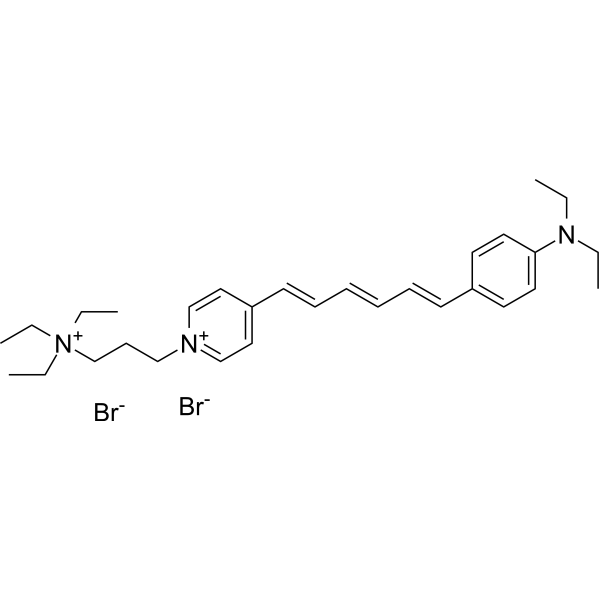
    FM4-64 is a very lipophilic, water-soluble styrene dyes, can specifically bind to cell membranes and inner membrane organelles to produce fluorescence. FM4-64 is widely used in endocytic and exospic membrane structure markers.
    FM4-64
  • HY-B0106
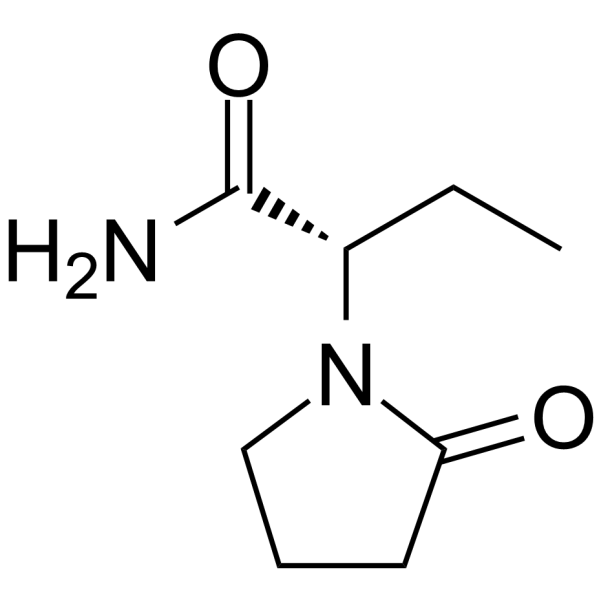
    Levetiracetam
    2 Publications Verification

    UCB L059

    DNA Methyltransferase Neurological Disease Cancer
    Levetiracetam, an antiepileptic agent, binds the synaptic vesicle protein SV2A. Levetiracetam enhances Temozolomide effect on glioblastoma stem cell proliferation and apoptosis. Levetiracetam modulates HDAC levels ultimately silencing MGMT, thus increasing Temozolomide effectiveness. A chemosensitizer agent .
    Levetiracetam
  • HY-120821
    Endosidin-2
    2 Publications Verification

    ES2

    Exosomes Others
    Endosidin-2 (ES2) is a selective inhibitor targeting the conserved exosome subunit EXO70. Endosidin-2 binds to the C-terminal domain of EXO70, inhibiting exocytosis and endosomal recycling, while promoting vacuolar trafficking in plant cells. Endosidin-2 interferes with the EXO70-mediated vesicle-to-plasma membrane anchoring process, leading to abnormal aggregation of auxin transporters (such as PIN2) in the cytoplasm and redirected to vacuolar degradation, while causing abnormal Golgi structure (such as cup-shaped or ring-shaped vesicles cisternae formation). Endosidin-2 can inhibit exocytosis in plant and mammalian cells and is mainly used to study the dynamic regulation of membrane trafficking (such as polar growth, vesicle sorting) .
    Endosidin-2
  • HY-D1378

    Fluorescent Dye Others
    C-Laurdan is a modified Laurdan (HY-D0080) probe that imaging lipid rafts with environmentally sensitive fluorescence. C-Laurdan can be used in research of lipid arrangement and fluidity in biological membranes or artificial lipid membranes .
    C-Laurdan
  • HY-D1612

    Fluorescent Dye Others
    The Golgi apparatus is composed of flattened vesicles superimposed on each other by unit membranes. The flattened vesicles are round with expanded and perforated edges. The Golgi fluorescent probe is a BODIPY-labeled ceramide derivative, the synthesis of which occurs in the endoplasmic reticulum and can then be transported to the Golgi via ceramide transport protein (CERT) or vesicular translocation, allowing specific labeling of the dye . BODIPY Fl C5-Ceramide is a Golgi-specific green fluorescent dye, which can visualise individual cells . Ex/Em= 505 nm/512 nm.
    BODIPY FL C5-Ceramide
  • HY-B0979
    Lobeline hydrochloride
    1 Publications Verification

    α-Lobeline hydrochloride; L-Lobeline hydrochloride

    nAChR Dopamine Transporter Neurological Disease
    Lobeline (α-Lobeline) hydrochloride is a brain-penetrant nicotinic receptor agonist. Lobeline hydrochloride increases dopamine (DA) release by inhibiting DA uptake into synaptic vesicles, and altering presynaptic DA storage. Lobeline hydrochloride is effective in smoking cessation .
    Lobeline hydrochloride
  • HY-143202

    Liposome Biochemical Assay Reagents Others
    DPhPC is a phospholipid compound characterized by high mechanical and chemical stability, broad temperature phase stability, and high electrical resistance. DPhPC readily forms unilamellar vesicles and solid-supported bilayers. DPhPC is commonly used as a component of nanoliposomal drug carriers or as a model membrane material for studies on membrane proteins/ion channels .
    DPhPC
  • HY-15584
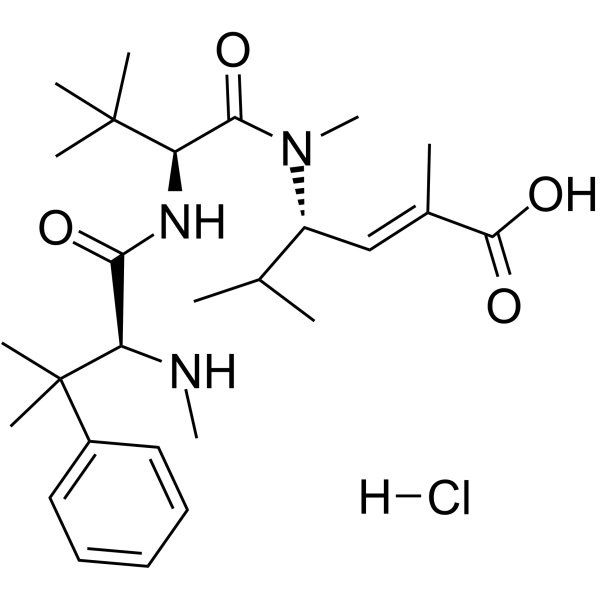
    Taltobulin
    3 Publications Verification

    HTI-286; SPA-110

    Microtubule/Tubulin ADC Payload Apoptosis Cancer
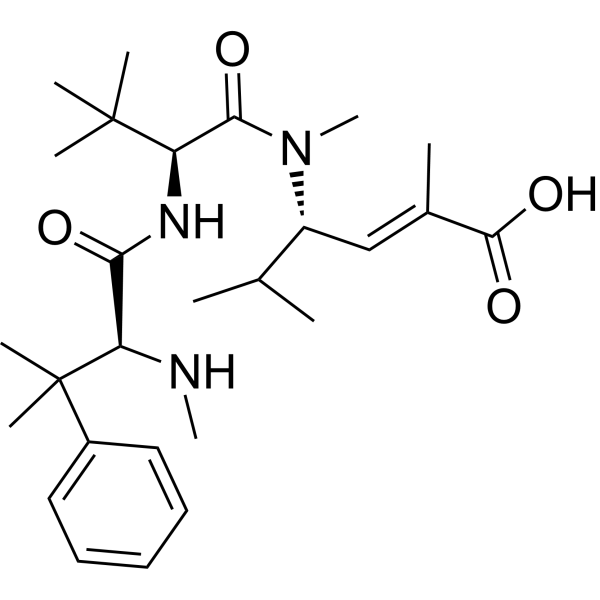
    Taltobulin (HTI-286), a synthetic analogue of the tripeptide hemiasterlin, is a potent antimicrotubule agent that circumvents P-glycoprotein-mediated resistance in vitro and in vivo. Taltobulin inhibits the polymerization of purified tubulin, disrupts microtubule organization in cells, and induces mitotic arrest, as well as apoptosis .
    Taltobulin
  • HY-13963
    ZCL278
    3 Publications Verification

    Ras Dengue Virus VSV Arenavirus Infection Neurological Disease Metabolic Disease Cancer
    ZCL278 is a selective Cdc42 inhibitor with Kds of 6.4 μM in fluorescence titration and 11.4 μM in surface plasmon resonance (SPR) measurement. ZCL278 is able to disrupt the Cdc42-ITSN interaction as well as GTP/GDP binding. ZCL278 has inhibitory effects on various enveloped viruses, but is ineffective against non-enveloped viruses. ZCL278 can be used for the studies of arsenic neurotoxicity and HER2-positive gastric cancer (GC) .
    ZCL278
  • HY-144007

    Liposome Others
    Chol-PEG is a nonionic surfactant vesicles and can be used for a blood-persistent drug delivery system .
    Chol-PEG
  • HY-N6588

    3,4,5-triCQA

    Akt NF-κB Inflammation/Immunology Cancer
    3,4,5-Tricaffeoylquinic acid (3,4,5-triCQA) inhibits tumor necrosis factor-α-stimulated production of inflammatory mediators in keratinocytes via suppression of Akt- and NF-κB-pathways. 3,4,5-Tricaffeoylquinic acid induces cell cycle arrest at G0/G1, actin cytoskeleton organization, chromatin remodeling, neuronal differentiation, and bone morphogenetic protein signaling in human neural stem cells. 3,4,5-Tricaffeoylquinic acid has the potential for the research of aging-associated diseases .
    3,4,5-Tricaffeoylquinic acid
  • HY-129467

    2-Hydroxyoleic acid; 2-OHOA; LAM561

    Apoptosis Cancer
    (Rac)-Idroxioleic acid (2-Hydroxyoleic acid) is a synthetic oleic acid (OA) derivative that binds to the plasma membrane and alters lipid organization. (Rac)-Idroxioleic acid has anti-tumor effect .
    (Rac)-Idroxioleic acid
  • HY-D0936

    Fluorescent Dye Others
    SPQ is a fluorescent dye. SPQ can be used to measure chloride ion concentration transients and transport rates in vesicles, cells, and even intact epithelium .
    SPQ
  • HY-111548
    Spastazoline
    4 Publications Verification

    Microtubule/Tubulin Others
    Spastazoline is a selective spastin (a microtubule-severing AAA protein) inhibitor, with an IC50 of 99 nM for Human spastin. Spastazoline can be used for cell division- and intracellular vesicle transport-related research .
    Spastazoline
  • HY-122614
    S29434
    2 Publications Verification

    NMDPEF

    Autophagy Neurological Disease
    S29434 (NMDPEF) is a potent, competitive, selective and cell-permeable inhibitor of quinone reductase 2 (QR2), with IC50s ranging from 5 to 16 nM for human QR2 at different organizational levels, and has good selectivity for QR2 over QR1. S29434 induces autophagy and inhibits QR2-mediated ROS production .
    S29434
  • HY-DY1031

    Fluorescent Dye Others
    FM4-64 (solution) is a very lipophilic, water-soluble styrene dyes, can specifically bind to cell membranes and inner membrane organelles to produce fluorescence. FM4-64 is widely used in endocytic and exospic membrane structure markers.
    Solvent and concentration: DMSO: 5 mM
    FM4-64 (solution)
  • HY-112257
    S-23
    1 Publications Verification

    Androgen Receptor Metabolic Disease
    S-23 is an orally active selective androgen receptor modulator (SARM) with a Ki of 1.7 nM. S-23 induces androgen receptor (AR)-mediated transcriptional activation in CV-1 cells. S-23 increases prostate, seminal vesicle, and levator ani muscle weights in castrated rats .
    S-23
  • HY-D1435

    Na+/K+ ATPase Fluorescent Dye Metabolic Disease
    Oxonol VI is an optical indicator of membrane potential in lipid vesicles (excitation/emission wavelengths: 614/646 nm). Oxonol VI can be used to detect changes in membrane potential associated with (Na + + K +)-ATPase activity in reconstituted vesicles .
    Oxonol VI
  • HY-150220

    Liposome Others
    1,5-Dihexadecyl N-(3-carboxy-1-oxopropyl)-L-glutamate is a lipid used in the synthesis of phospholipid vesicles. 1,5-Dihexadecyl N-(3-carboxy-1-oxopropyl)-L-glutamate works with other lipids to convert polydisperse vesicles into vesicles of uniform size by freeze-thaw and extrusion techniques. 1,5-Dihexadecyl N-(3-carboxy-1-oxopropyl)-L-glutamate can enhance protein encapsulation efficiency for drug delivery and biochemical applications .
    1,5-Dihexadecyl N-(3-carboxy-1-oxopropyl)-L-glutamate
  • HY-157999

    Synaptic Vesicle Proteins Neurological Disease
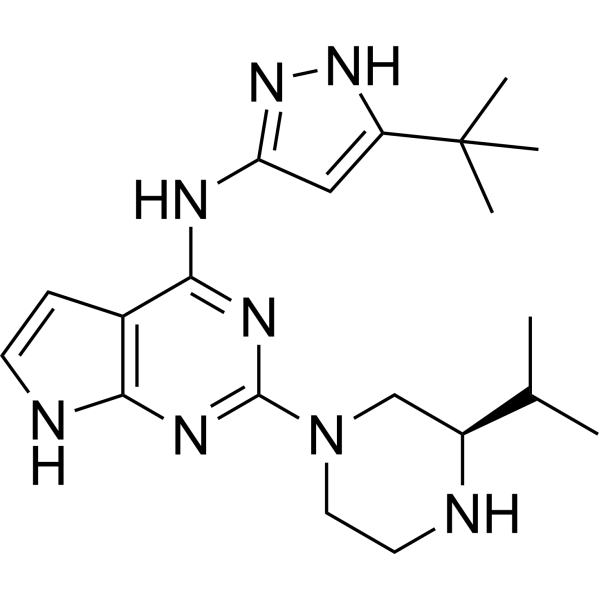
    SDI-118 is an orally active modulator for synaptic vesicle glycoprotein 2A (SV2A) with an IC50 of 13 nM .
    SDI-118
  • HY-D1735

    Golgi-Red Tracke

    Fluorescent Dye Others
    The Golgi apparatus is composed of flattened vesicles superimposed on each other by unit membranes. The flattened vesicles are round with expanded and perforated edges. The Golgi fluorescent probe is a BODIPY-labeled ceramide derivative, the synthesis of which occurs in the endoplasmic reticulum and can then be transported to the Golgi via ceramide transport protein (CERT) or vesicular translocation, allowing specific labeling of the dye. BODIPY TR Ceramide (Golgi-Red Tracke) is a Golgi-specific fluorescent dye, which can visualise individual cells . Ex/Em=589 nm/616 nm.
    BODIPY TR Ceramide
  • HY-W009823

    Chloride Channel Others
    Phenyl benzoate is a benzoate ester obtained by the formal condensation of phenol with benzoic acid. Phenyl benzoate is a chloride transport blocker, inhibits Cl --dependent Glu accumulation into vesicles. Phenyl benzoate can be used as preservative in cosmetic products .
    Phenyl benzoate
  • HY-W440986

    DSPS sodium

    Liposome Others
    Distearoylphosphatidylserine sodium is an anionic phospholipid with stearic acid tails (18:0) and contains a carboxylic acid (COOH) and amine (NH2) in their head group. It has been used in the preparation of lipid-mixing vesicles, liposome, or artificial membrane. Due to the medium size of fatty acid chain, DLPS is used to form thinner membranes/walls.
    Distearoylphosphatidylserine sodium
  • HY-148978

    Exosomes Endogenous Metabolite Liposome Metabolic Disease
    18:0,18:1 PS sodium is the dominant phosphatidylserine subtype in cells, exosomes and HIV particles. It is abundant in the brain and is essential for maintaining membrane structure, lipid raft organization and intracellular trafficking. 18:0,18:1 PS sodium mediates interleaflet membrane coupling through cholesterol-dependent interactions with very long-chain sphingolipids, and can induce the clustering of glycosylphosphatidylinositol-anchored proteins. In addition, clusters formed by the binding of 18:0,18:1 PS sodium to cholesterol not only facilitate the proper distribution of cholesterol in lipid bilayers, but also effectively protect cholesterol from oxidative damage .
    18:0,18:1 PS sodium
  • HY-D1629

    Fluorescent Dye Others
    Calcium Orange AM is an intracellular calcium reporter. Specific fluorescence can be detected when free calcium binds to Calcium Orange AM (Ex/Em=549/576 nm). Calcium Orange AM does not enter the vacuoles and does not compartmentalize into acidic vesicles .
    Calcium Orange AM
  • HY-113995
    (-)-Vesamicol
    1 Publications Verification

    (-)-AH5183

    mAChR Neurological Disease
    (-)-Vesamicol (AH5183) is a vesicular acetylcholine transporter inhibitor. (-)-Vesamicol reversibly and non-competitively inhibits the transport of acetylcholine into circulating synaptic vesicles and blocks the activity of vesicular acetylcholine transporters in medial amygdala neurons. (-)-Vesamicol is applicable to research related to central precocious puberty .
    (-)-Vesamicol
  • HY-W440988

    Liposome Others
    DOPE-mPEG2000 is a phospholipid polydisperse PEG (or DOPE liposome), can be used for preparation of targeted delivery of liposomal drug and giant unilamellar vesicles (GUVs). DOPE-mPEG2000 significantly reduces the pH-sensitivity of the liposome in a concentration dependent manner .
    DOPE-mPEG2000
  • HY-164390

    Neu5Acα2-6Galβ1-4GlcNAc

    Endogenous Metabolite Infection Cancer
    6′SLN is a cancer-related extracellular vesicle (EVs) surface glycan that serves as a key form of protein glycosylation in EVs. 6′SLN is also a sialic acid derivative that can interact with hemagglutinins (HAs) from human and avian influenza virus strains, making it useful for research into anti-influenza drugs .
    6′SLN
  • HY-P3586

    Hunter-killer peptide ao; Prohibitin-targeting peptide 1; prohibitin-TP01; Adipotide

    Apoptosis Cancer
    HKPao (Hunter-killer peptide ao) is a biologically active peptide. HKPao (Hunter-killer peptide ao) has anti-obesity and anti-tumor pro-apoptotic activity to cause release of cytochrome c from vesicles .
    HKPao
  • HY-D1556

    1,2-dioleoyl-sn-glycero-3-phosphoethanolamine-N-(carboxyfluorescein) ammonium

    Fluorescent Dye Cancer
    18:1 PE CF (1,2-dioleoyl-sn-glycero-3-phosphoethanolamine-N-(carboxyfluorescein) (ammonium)) is a pH-sensitive fluorescent indicator. 18:1 PE CF exhibits changes in fluorescence intensity in response to pH variations and reflects the electrostatic states of cationic liposomes and lipoplexes. 18:1 PE CF supports real-time visualization of pH distribution and membrane deformation in giant unilamellar vesicles and is suitable for steady-state fluorescence testing in large unilamellar vesicle membranes. 18:1 PE CF is capable of monitoring the surface electrical potential of cationic liposomes and lipoplexes and can effectively label lipid bilayers and nanomicelles. 18:1 PE CF can be used for the research of the investigation of lung cancer (Ex = 495 nm; Em = 520 nm) .
    18:1 PE CF
  • HY-B0106R

    UCB L059 (Standard)

    Reference Standards DNA Methyltransferase Neurological Disease Cancer
    Levetiracetam (Standard) is the analytical standard of Levetiracetam. This product is intended for research and analytical applications. Levetiracetam, an antiepileptic agent, binds the synaptic vesicle protein SV2A. Levetiracetam enhances Temozolomide effect on glioblastoma stem cell proliferation and apoptosis. Levetiracetam modulates HDAC levels ultimately silencing MGMT, thus increasing Temozolomide effectiveness. A chemosensitizer agent .
    Levetiracetam (Standard)
  • HY-D1438

    Fluorescent Dye Others
    RH 414 is the styryl pyridinium dye. RH 414 can be used for optical monitoring of synaptic vesicle membrane trafficking .
    RH 414
  • HY-P3095

    Endogenous Metabolite Neurological Disease
    α-Latrotoxin, a potent neurotoxin from black widow spider venom, triggers synaptic vesicle exocytosis from presynaptic nerve terminals .
    α-Latrotoxin
  • HY-W747572

    (R)-(+)-Perillyl alcohol

    Ras Cancer
    (+)-Perillyl alcohol is the enantiomer of S-(-)-Perillyl alcohol (HY-116514). (+)-Perillyl alcohol can inhibit the growth of polypeptides and block the cell cycle in the G0/G1 phase. (+)-Perillyl alcohol induces cell signaling that is associated with changes in cytoskeletal actin organization and reduced protein expression of growth regulatory proteins such as Ras and CDC2 kinase .
    (+)-Perillyl alcohol
  • HY-156753

    Bacterial Cancer
    NorA-IN-1 (Compound 16) is a NorA inhibitor. NorA-IN-1 inhibits NorA efflux pump in everted membrane vesicles. NorA-IN-1 can be used for research of multidrug resistance .
    NorA-IN-1
  • HY-B1423

    α-Lobeline; L-Lobeline

    nAChR Dopamine Transporter Neurological Disease
    Lobeline (α-Lobeline) is a brain-penetrant nicotinic receptor agonist. Lobeline increases dopamine (DA) release by inhibiting DA uptake into synaptic vesicles, and altering presynaptic DA storage. Lobeline is effective in smoking cessation .
    Lobeline
  • HY-125900

    NCA

    Others Cancer
    Neocarzilin A (NCA) reduces BST-2 levels via lysosomal degradation. Neocarzilin A has antimigratory and antiproliferative effects on cancer cells. Neocarzilin A inhibits cancer cell migration via irreversible binding to the synaptic vesicle membrane protein VAT-1 .
    Neocarzilin A
  • HY-15584A
    Taltobulin trifluoroacetate
    3 Publications Verification

    HTI-286 trifluoroacetate; SPA-110 trifluoroacetate

    Microtubule/Tubulin ADC Payload Apoptosis Cancer
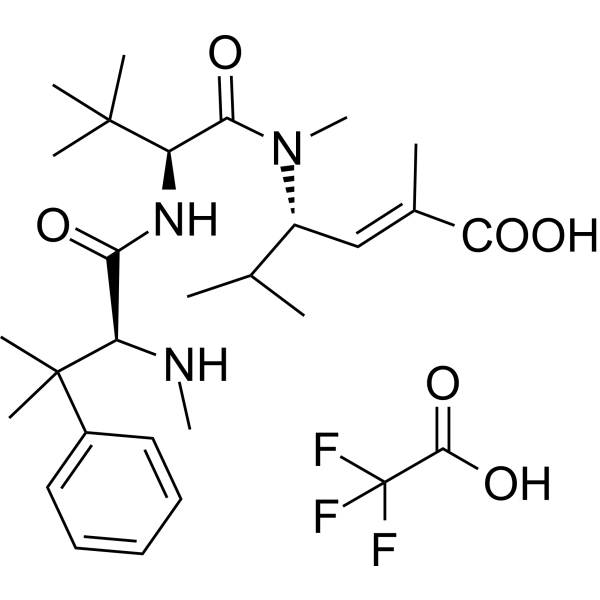
    Taltobulin trifluoroacetate (HTI-286 trifluoroacetate), a synthetic analogue of the tripeptide hemiasterlin, is a potent antimicrotubule agent that circumvents P-glycoprotein-mediated resistance in vitro and in vivo. Taltobulin trifluoroacetate inhibits the polymerization of purified tubulin, disrupts microtubule organization in cells, and induces mitotic arrest, as well as apoptosis .
    Taltobulin trifluoroacetate
  • HY-148977

    Endogenous Metabolite Metabolic Disease
    18:0,22:6 PS sodium is a lipid component of synaptic vesicles and cholesterol, which can be used for metabolic research .
    18:0,22:6 PS sodium
  • HY-172378

    Biochemical Assay Reagents Others
    Poly(styrene)-block-poly(acrylic acid) (PS:PAA 30000:2000) is a diblock copolymer used to prepare polymer micelles or vesicles and other encapsulation applications .
    Poly(styrene)-block-poly(acrylic acid) (PS:PAA 30000:2000)
  • HY-E70420

    Bacterial Inflammation/Immunology
    SpeB cysteine protease is a potent modifier of immunologically important host and bacterial proteins. SpeB cysteine protease degrades streptolysin O (SLO) in extracellular vesicles .
    SpeB cysteine protease
  • HY-101013

    S-Nitroso-N-acetylpenicillamine

    Fluorescent Dye Others
    D-SNAP (S-Nitroso-N-acetylpenicillamine) can Generate nitric oxide and form superoxides spontaneously under physiological conditions and is often used to probe the cell stress response and stimulate calcium-independent synaptic vesicle release.
    D-SNAP
  • HY-139322

    Biochemical Assay Reagents Others
    PEG-8 laurate is a single chain surfactant. PEG-8 laurate reduces the skin barrier, and acts as a penetration enhancer. PEG-8 laurate can be used to synthesize elastic vesicles .
    PEG-8 laurate
  • HY-167811

    16:0 Lysyl PG hydrochloride

    Biochemical Assay Reagents
    1,2-Dipalmitoyl-sn-glycero-3-[phospho-rac-(3-lysyl(1-glycerol))] hydrochloride (16:0 Lysyl PG hydrochloride) is a synthetic phospholipid with the activity of promoting the preparation of artificial vesicles.
    1,2-Dipalmitoyl-sn-glycero-3-[phospho-rac-(3-lysyl(1-glycerol))] hydrochloride
  • HY-103305

    Fluorescent Dye Calcium Channel Others
    cis-Ned19 is an irreversible nicotinic acid adenine dinucleotide phosphate (NAADP) antagonist. cis-Ned19 localizes to lysosomes and endolysosomal vesicles, stains two-pore calcium channels and fluorescently labels NAADP receptors (Ex/Em = 365/410 nm) .
    cis-Ned19
  • HY-136873

    Synaptic Vesicle Proteins Neurological Disease
    UCB-J is a ligand for synaptic vesicle protein 2A (SV2A) with pIC50 values for human and rat SV2A of 8.15 and 7.6 respectively. UCB-J can be used to display and quantify the total synaptic density throughout the brain .
    UCB-J
  • HY-W040790

    Environmental Pollutants Biochemical Assay Reagents Endocrinology
    2,6-Dimethylpyrazine is a key aroma compound. 2,6-Dimethylpyrazine can be isolated from Boletus edulis. 2,6-Dimethylpyrazine reduces seminal vesicle weight in rats. 2,6-Dimethylpyrazine can be used in food flavor and reproductive system research .
    2,6-Dimethylpyrazine
  • HY-B0106S

    UCB L059-d6

    Isotope-Labeled Compounds DNA Methyltransferase Neurological Disease Cancer
    Levetiracetam-d6 is the deuterium labeled Levetiracetam. Levetiracetam, an antiepileptic agent, binds the synaptic vesicle protein SV2A. Levetiracetam enhances Temozolomide effect on glioblastoma stem cell proliferation and apoptosis. Levetiracetam modulates HDAC levels ultimately silencing MGMT, thus increasing Temozolomide effectiveness. A chemosensitizer agent .
    Levetiracetam-d6
  • HY-D1515

    Neurodye GH1-84

    Fluorescent Dye Neurological Disease
    FM1-84 (Neurodye GH1-84) is a fluorescent dye. FM1-84 has lipophilic and facilitates association with membranes, resulting in an increase in fluorescence intensity (λex=510 nm, λem=625 nm). FM1-84 can be used for synaptic vesicle recycling in neurons research .
    FM1-84
  • HY-143695

    Liposome Others
    16:0 TAP is a lipid product. 16:0 TAP can be used for the preparation of giant unilamellar vesicles to deliver agents .
    16:0 TAP

Inquiry Online

Your information is safe with us. * Required Fields.

Salutation


Country or Region *

Applicant Name *


Organization Name *

Department *


Email Address *


Product Name *

Cat. No.


Requested quantity *

Phone Number *


Remarks

Inquiry Online

Inquiry Information

Product Name:
Cat. No.:
Quantity:
MCE Japan Authorized Agent:

