Search Result
Results for "
pharmaceutical carrier
" in MedChemExpress (MCE) Product Catalog:
10
Biochemical Assay Reagents
2
Isotope-Labeled Compounds
| Cat. No. |
Product Name |
Target |
Research Areas |
Chemical Structure |
-
- HY-Y0873B
-
|
Polyethylene glycol 2000
|
Environmental Pollutants
Biochemical Assay Reagents
|
Others
|
|
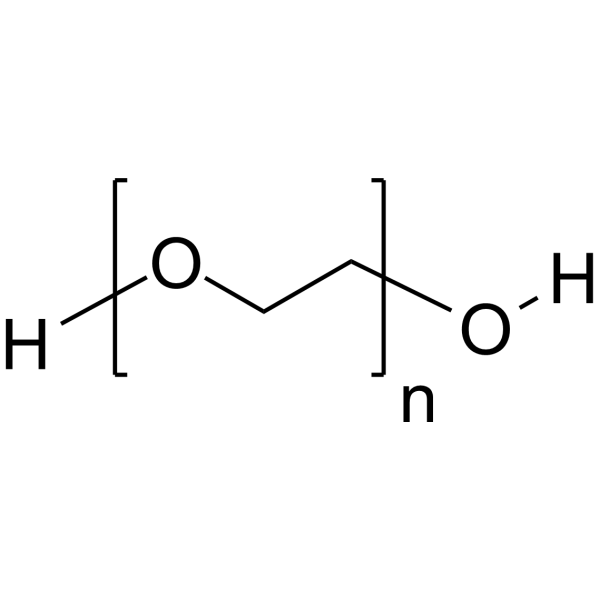
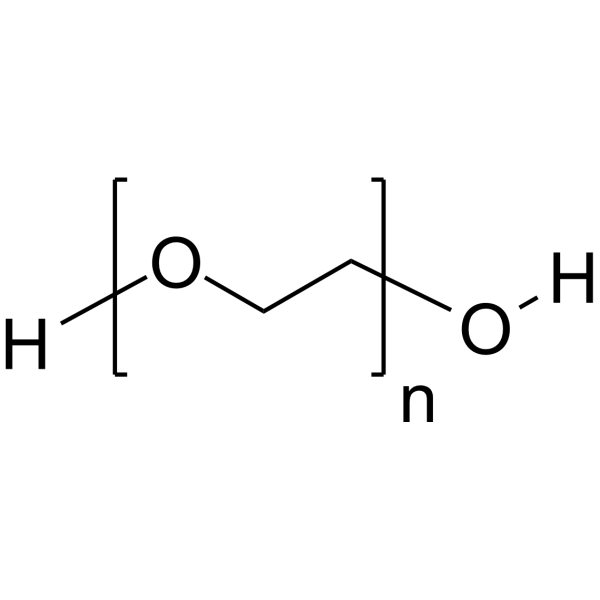
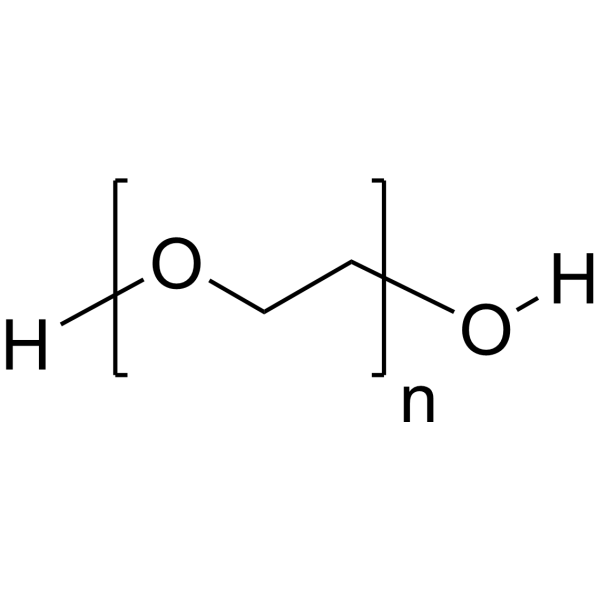
PEG2000 (Polyethylene glycol 2000) is a solvent for a large number of substances. PEG2000 can be used as a carrier material and modifying agent. PEG2000 is widely used in a variety of pharmaceutical formulations .
|
-
-
- HY-CP001
-
|
|
Biochemical Assay Reagents
|
Metabolic Disease
|
|
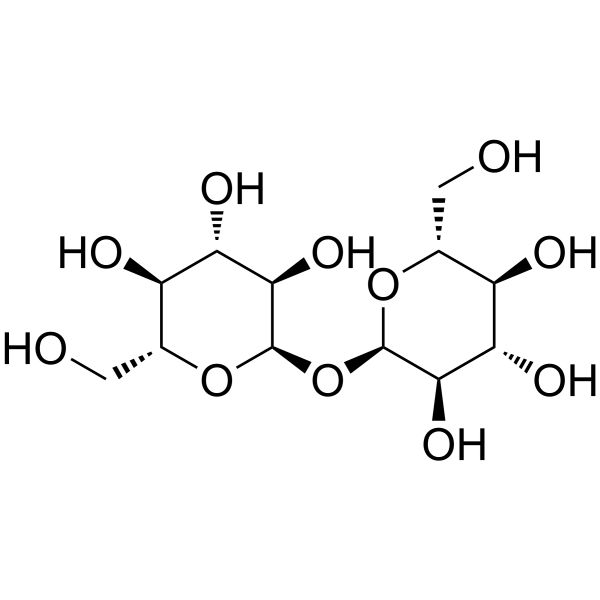
D-Trehalose is a disaccharide formed by a 1,1-glycosidic bond between two α-glucose units and is widely used as a food ingredient and pharmaceutical excipient. D-Trehalose is known to protect and stabilise proteins. For long-term storage, recombinant protein solution should be diluted further with 5% D-Trehalose, Carrier Protein.
|
-
-
- HY-137234
-
|
2,6-Di-O-methyl-β-cyclodextrin
|
Biochemical Assay Reagents
|
Others
|
|
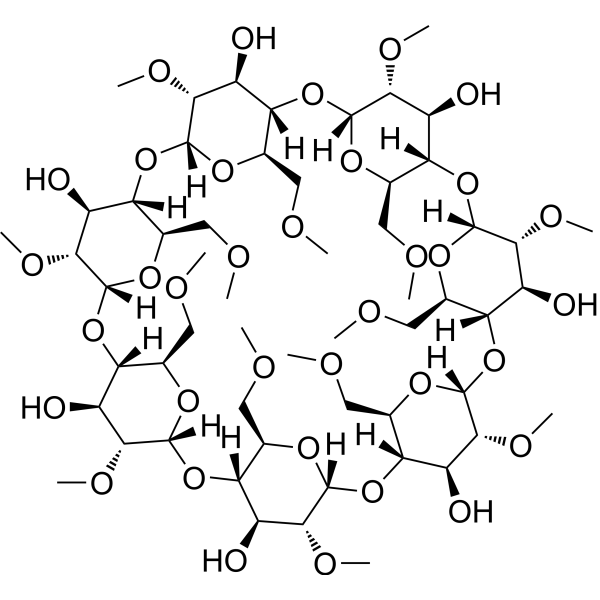
DM-β-CD (2,6-Di-O-methyl-β-cyclodextrin) is a cyclic molecule consisting of seven glucose units modified with two methyl groups at the 2- and 6-positions. It is usually used as a solubilizer and carrier for poorly soluble drugs in pharmaceutical preparations. Furthermore, it has applications in analytical chemistry, food science, and environmental remediation due to its ability to form clathrates with various guest molecules, such as aromatic compounds, pesticides, and heavy metals.
|
-
-
- HY-Y0873N
-
PEG3000
2 Publications Verification
Polyethylene glycol 3000
|
Environmental Pollutants
Biochemical Assay Reagents
|
Others
|
|
PEG3000 (Polyethylene glycol 3000) is a solvent for a large number of substances. PEG3000 can be used as a carrier material and modifying agent. PEG3000 is widely used in a variety of pharmaceutical formulations .
|
-
-
- HY-Y0873M
-
|
Polyethylene glycol 500
|
Environmental Pollutants
Biochemical Assay Reagents
|
Others
|
|
PEG500 (Polyethylene glycol 500) is a versatile polymer that's used as a solvent, dispersant, lubricant, and more in industries like pharmaceuticals and biotechnology, and it can also modify liposomes. PEG500 is commonly used as a solvent or carrier for drugs, helping with capsule endoscopy to improve image quality and cecum completion rates .
|
-
-
- HY-D1005A2
-
|
PEG-PPG-PEG, 1900 (Average)
|
Environmental Pollutants
Biochemical Assay Reagents
|
Others
|
|
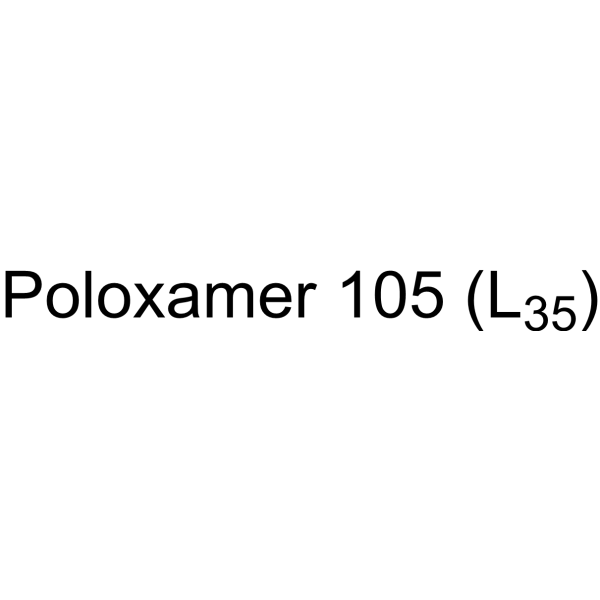
Poloxamer 105 L35 is block polymer of polyoxyethylene and polyoxypropylene with average molecular mass of 1900 Da. Poloxamer 105 L35 forms thermoreversible hydrogel, that is utilized in food additives, drug delivery carriers in cosmetics, pharmaceutical ingredients and tissue engineering .
|
-
-
- HY-W250721A
-
|
CBM 940
|
Biochemical Assay Reagents
|
Others
|
|
Carbomer 940 (CBM 940) is an acrylic polymer with high viscosity, good thermal stability and histocompatibility. Carbomer 940 serves as a transdermal drug delivery carrier and an external gel matrix. Carbomer 940 has no cytotoxicity, and it can also improve blood supply in the stasis zone of burns and promote wound repair. Carbomer 940 is applicable to pharmaceutical research .
|
-
-
- HY-D1005A8
-
|
PEG-PPG-PEG, 2000 (Average)
|
Environmental Pollutants
Biochemical Assay Reagents
Bacterial
P-glycoprotein
|
Infection
Cancer
|
|
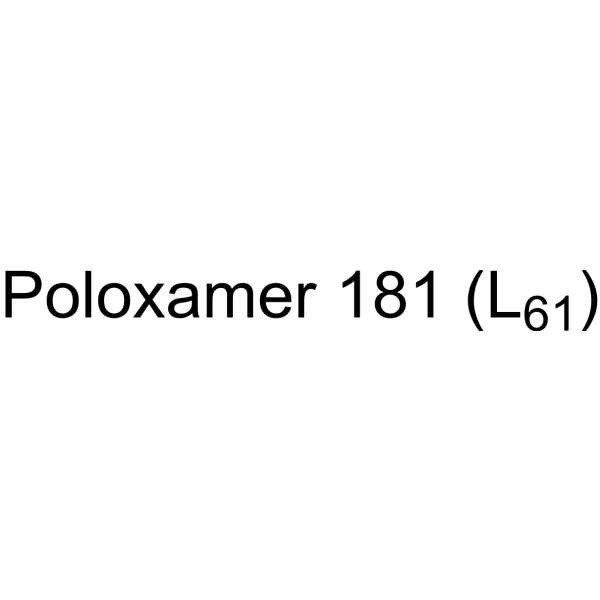
Poloxamer 181 L61 is a block polymer of polyethylene oxide and polypropylene oxide with an average molecular weight of 2000. Poloxamer has the ability to inhibit P-gp. Poloxamer 181 has antimicrobial activity and can inhibit Mycobacterium avium. Poloxamer 181 can form a thermally reversible hydrogel and is used as a food additive, and as an agent delivery carrier in cosmetics, pharmaceuticals and tissue engineering .
|
-
-
- HY-W087904
-
|
α-D-Lactose hydrate
|
Endogenous Metabolite
Biochemical Assay Reagents
|
Others
|
|
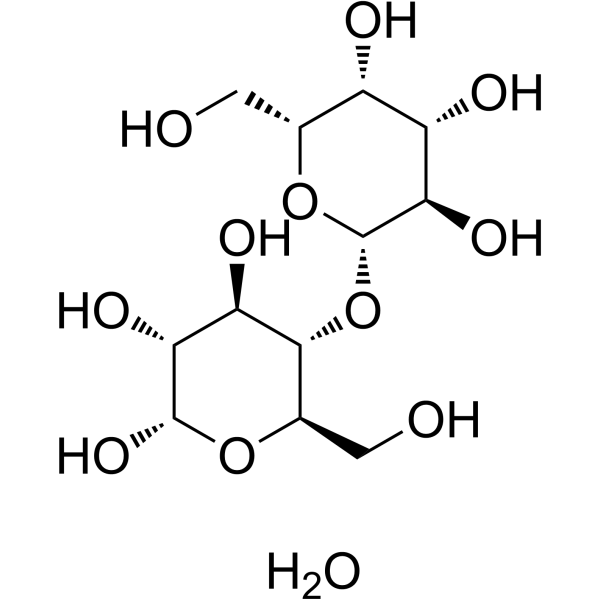
α-Lactose hydrate (α-D-Lactose (hydrate)) is the primary carbohydrate in the milk of most mammals. α-Lactose hydrate consists of glucose and galactose and exists in two isomeric forms, α and β. α-Lactose hydrate has numerous applications in the food and pharmaceutical industries, such as serving as a bulking or agglomerating agent, and a diluent for pigments, flavors or enzymes .
|
-
-
- HY-W011426
-
|
Propan-2-yl hexadecanoate
|
Environmental Pollutants
Biochemical Assay Reagents
Liposome
|
Others
|
|
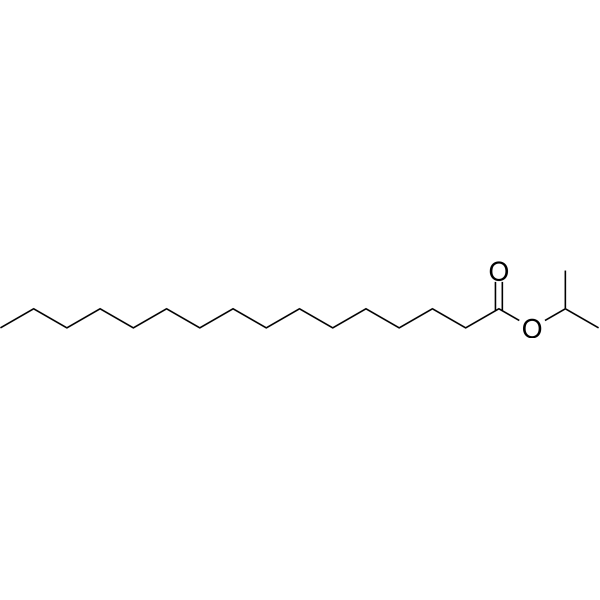
Isopropyl palmitate is an fatty acid ester. Isopropyl palmitate can be used for design and characterization of bioactive bilayer films. The bilayer membrane not only has the ability to scavenge free radicals and inhibit lipid peroxidation, but also can inhibit the growth of known foodborne pathogens. Isopropyl palmitate can be used as an excipient, such as lubricant, oily carrier, solvent, controlled-release transdermal film. Pharmaceutical excipients, or pharmaceutical auxiliaries, refer to other chemical substances used in the pharmaceutical process other than pharmaceutical ingredients. Pharmaceutical excipients generally refer to inactive ingredients in pharmaceutical preparations, which can improve the stability, solubility and processability of pharmaceutical preparations. Pharmaceutical excipients also affect the absorption, distribution, metabolism, and elimination (ADME) processes of co-administered drugs .
|
-
-
- HY-128387
-
|
|
Endogenous Metabolite
|
Cardiovascular Disease
|
|
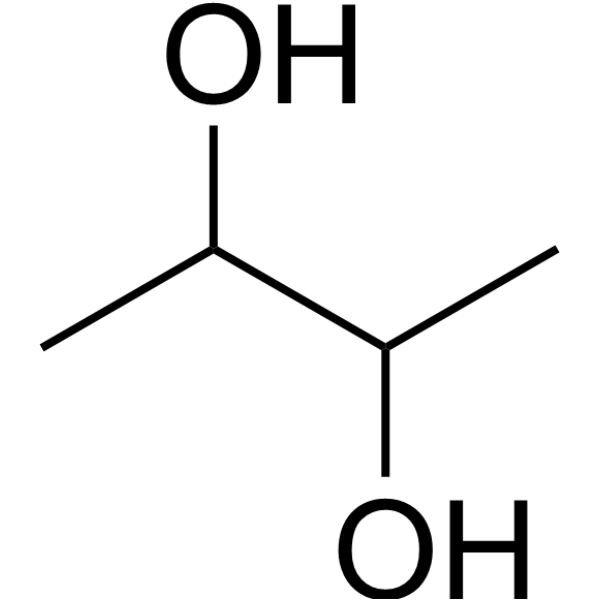
2,3-Butanediol is microbially derived compound that is a discriminating urinary biomarker of Fmo5 -/- mice. 2,3-Butanediol prevents age-related increases in the plasma concentration of cholesterol. 2,3-Butanediol has potential applications in the manufacture of printing inks, perfumes, fumigants, moistening and softening agents, plasticizers, and as a carrier for pharmaceuticals .
|
-
-
- HY-101530B
-
|
PEG 40 stearate
|
Biochemical Assay Reagents
|
Others
|
|
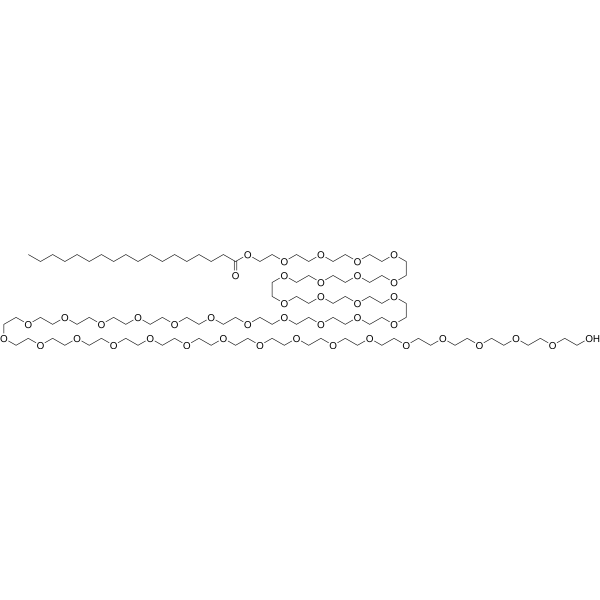
Polyoxyl 40 stearate (PEG 40 stearate) is a nonionic surfactant formed by the esterification of stearic acid with polyethylene glycol (PEG) containing approximately 40 ethoxy units, it is widely used in pharmaceutical preparations, nanodrug carriers, emulsification systems and biomedical materials. Polyoxyl 40 stearate can serve as a matrix component of solid lipid nanoparticles to achieve controlled release of encapsulated antifungal drugs; it can also act as a base material for solid lipid nanoparticles for vaginal administration, and polymerizable groups can be introduced via modification with acryloyl chloride .
|
-
-
- HY-D1005A7
-
|
PEG-PPG-PEG, 2400 (Average)
|
Biochemical Assay Reagents
|
Others
|
|
Poloxamer 125 L45 is block polymer of polyoxyethylene and polyoxypropylene with average molecular mass of 2400. Poloxamer 125 L45 forms thermoreversible hydrogel, that is utilized in food additives, drug delivery carriers in cosmetics, pharmaceutical ingredients and tissue engineering .
|
-
-
- HY-D1005A4
-
|
PEG-PPG-PEG, 1630 (Average)
|
Biochemical Assay Reagents
Bacterial
|
Infection
|
|
Poloxamer 122 L42 is block polymer of polyoxyethylene and polyoxypropylene with average molecular mass of 1630. Poloxamer 122 L42 exhibits antimicrobial activity, that inihibits 56% Mycobacterium avium complex at concentration of 1 mg/mL. Poloxamer 122 L42 forms thermoreversible hydrogel, that is utilized in food additives, drug delivery carriers in cosmetics, pharmaceutical ingredients and tissue engineering .
|
-
-
- HY-128387R
-
|
|
Reference Standards
Endogenous Metabolite
|
Cardiovascular Disease
|
|
2,3-Butanediol (Standard) is the analytical standard of 2,3-Butanediol (HY-128387). This product is intended for research and analytical applications. 2,3-Butanediol is microbially derived compound that is a discriminating urinary biomarker of Fmo5 -/- mice. 2,3-Butanediol prevents age-related increases in the plasma concentration of cholesterol. 2,3-Butanediol has potential applications in the manufacture of printing inks, perfumes, fumigants, moistening and softening agents, plasticizers, and as a carrier for pharmaceuticals.
|
-
-
- HY-128387S1
-
|
|
Isotope-Labeled Compounds
Endogenous Metabolite
|
Cardiovascular Disease
|
|
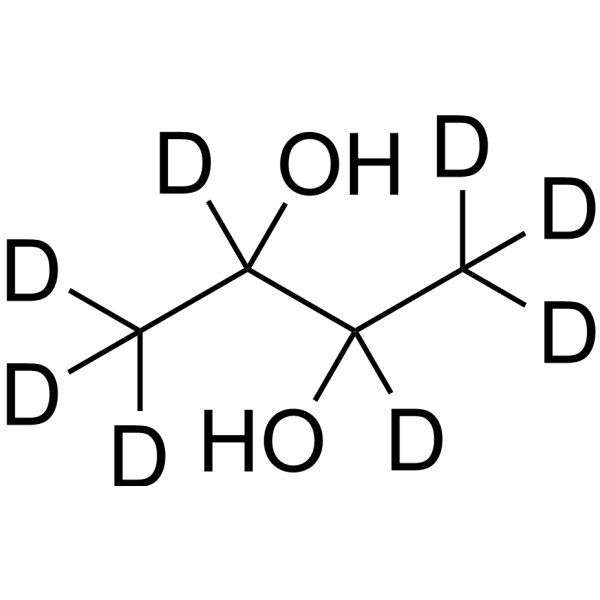
2,3-Butanediol-d8 is the deuterium labeled 2,3-Butanediol (HY-128387) . 2,3-Butanediol is microbially derived compound that is a discriminating urinary biomarker of Fmo5 -/- mice. 2,3-Butanediol prevents age-related increases in the plasma concentration of cholesterol. 2,3-Butanediol has potential applications in the manufacture of printing inks, perfumes, fumigants, moistening and softening agents, plasticizers, and as a carrier for pharmaceuticals .
|
-
-
- HY-W011426R
-
|
Propan-2-yl hexadecanoate (Standard)
|
Biochemical Assay Reagents
Liposome
Reference Standards
|
Others
|
|
Isopropyl palmitate (Standard) is the analytical standard of Isopropyl palmitate. This product is intended for research and analytical applications. Isopropyl palmitate is an fatty acid ester. Isopropyl palmitate can be used for design and characterization of bioactive bilayer films. The bilayer membrane not only has the ability to scavenge free radicals and inhibit lipid peroxidation, but also can inhibit the growth of known foodborne pathogens. Isopropyl palmitate can be used as an excipient, such as lubricant, oily carrier, solvent, controlled-release transdermal film. Pharmaceutical excipients, or pharmaceutical auxiliaries, refer to other chemical substances used in the pharmaceutical process other than pharmaceutical ingredients. Pharmaceutical excipients generally refer to inactive ingredients in pharmaceutical preparations, which can improve the stability, solubility and processability of pharmaceutical preparations. Pharmaceutical excipients also affect the absorption, distribution, metabolism, and elimination (ADME) processes of co-administered drugs .
|
-
-
- HY-W012618R
-
|
|
Drug Intermediate
Reference Standards
|
Others
|
|
Isopropyl palmitate (Standard) is the analytical standard of Isopropyl palmitate. This product is intended for research and analytical applications. Isopropyl palmitate is an fatty acid ester. Isopropyl palmitate can be used for design and characterization of bioactive bilayer films. The bilayer membrane not only has the ability to scavenge free radicals and inhibit lipid peroxidation, but also can inhibit the growth of known foodborne pathogens. Isopropyl palmitate can be used as an excipient, such as lubricant, oily carrier, solvent, controlled-release transdermal film. Pharmaceutical excipients, or pharmaceutical auxiliaries, refer to other chemical substances used in the pharmaceutical process other than pharmaceutical ingredients. Pharmaceutical excipients generally refer to inactive ingredients in pharmaceutical preparations, which can improve the stability, solubility and processability of pharmaceutical preparations. Pharmaceutical excipients also affect the absorption, distribution, metabolism, and elimination (ADME) processes of co-administered drugs .
|
-
-
- HY-128387S
-
|
|
Isotope-Labeled Compounds
Endogenous Metabolite
|
Infection
|
|
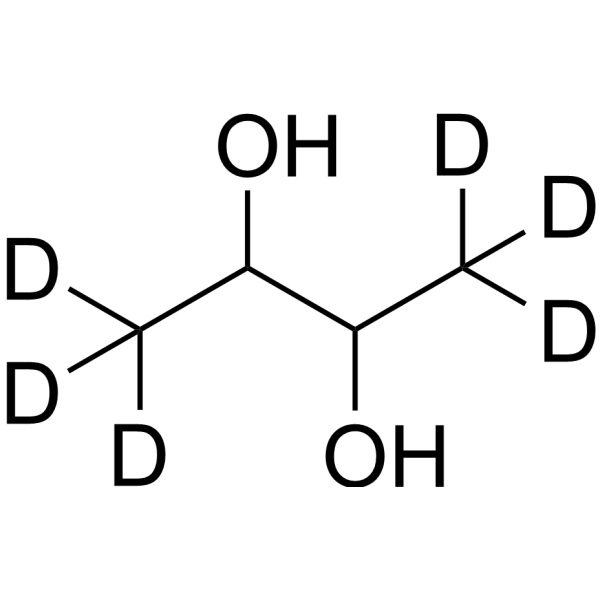
2,3-Butanediol-d6 is the deuterium labeled 2,3-Butanediol (HY-128387) . 2,3-Butanediol is microbially derived compound that is a discriminating urinary biomarker of Fmo5 -/- mice. 2,3-Butanediol prevents age-related increases in the plasma concentration of cholesterol. 2,3-Butanediol has potential applications in the manufacture of printing inks, perfumes, fumigants, moistening and softening agents, plasticizers, and as a carrier for pharmaceuticals .
|
-
| Cat. No. |
Product Name |
Type |
-
- HY-137234
-
|
2,6-Di-O-methyl-β-cyclodextrin
|
Biochemical Assay Reagents
|
|
DM-β-CD (2,6-Di-O-methyl-β-cyclodextrin) is a cyclic molecule consisting of seven glucose units modified with two methyl groups at the 2- and 6-positions. It is usually used as a solubilizer and carrier for poorly soluble drugs in pharmaceutical preparations. Furthermore, it has applications in analytical chemistry, food science, and environmental remediation due to its ability to form clathrates with various guest molecules, such as aromatic compounds, pesticides, and heavy metals.
|
-
- HY-Y0873N
-
PEG3000
2 Publications Verification
Polyethylene glycol 3000
|
Biochemical Assay Reagents
|
|
PEG3000 (Polyethylene glycol 3000) is a solvent for a large number of substances. PEG3000 can be used as a carrier material and modifying agent. PEG3000 is widely used in a variety of pharmaceutical formulations .
|
-
- HY-Y0873M
-
|
Polyethylene glycol 500
|
Biochemical Assay Reagents
|
|
PEG500 (Polyethylene glycol 500) is a versatile polymer that's used as a solvent, dispersant, lubricant, and more in industries like pharmaceuticals and biotechnology, and it can also modify liposomes. PEG500 is commonly used as a solvent or carrier for drugs, helping with capsule endoscopy to improve image quality and cecum completion rates .
|
-
- HY-D1005A2
-
|
PEG-PPG-PEG, 1900 (Average)
|
Biochemical Assay Reagents
|
|
Poloxamer 105 L35 is block polymer of polyoxyethylene and polyoxypropylene with average molecular mass of 1900 Da. Poloxamer 105 L35 forms thermoreversible hydrogel, that is utilized in food additives, drug delivery carriers in cosmetics, pharmaceutical ingredients and tissue engineering .
|
-
- HY-W250721A
-
|
CBM 940
|
Biochemical Assay Reagents
|
|
Carbomer 940 (CBM 940) is an acrylic polymer with high viscosity, good thermal stability and histocompatibility. Carbomer 940 serves as a transdermal drug delivery carrier and an external gel matrix. Carbomer 940 has no cytotoxicity, and it can also improve blood supply in the stasis zone of burns and promote wound repair. Carbomer 940 is applicable to pharmaceutical research .
|
-
- HY-D1005A8
-
|
PEG-PPG-PEG, 2000 (Average)
|
Biochemical Assay Reagents
|
|
Poloxamer 181 L61 is a block polymer of polyethylene oxide and polypropylene oxide with an average molecular weight of 2000. Poloxamer has the ability to inhibit P-gp. Poloxamer 181 has antimicrobial activity and can inhibit Mycobacterium avium. Poloxamer 181 can form a thermally reversible hydrogel and is used as a food additive, and as an agent delivery carrier in cosmetics, pharmaceuticals and tissue engineering .
|
-
- HY-W011426
-
|
Propan-2-yl hexadecanoate
|
Biochemical Assay Reagents
|
|
Isopropyl palmitate is an fatty acid ester. Isopropyl palmitate can be used for design and characterization of bioactive bilayer films. The bilayer membrane not only has the ability to scavenge free radicals and inhibit lipid peroxidation, but also can inhibit the growth of known foodborne pathogens. Isopropyl palmitate can be used as an excipient, such as lubricant, oily carrier, solvent, controlled-release transdermal film. Pharmaceutical excipients, or pharmaceutical auxiliaries, refer to other chemical substances used in the pharmaceutical process other than pharmaceutical ingredients. Pharmaceutical excipients generally refer to inactive ingredients in pharmaceutical preparations, which can improve the stability, solubility and processability of pharmaceutical preparations. Pharmaceutical excipients also affect the absorption, distribution, metabolism, and elimination (ADME) processes of co-administered drugs .
|
-
- HY-D1005A7
-
|
PEG-PPG-PEG, 2400 (Average)
|
Biochemical Assay Reagents
|
|
Poloxamer 125 L45 is block polymer of polyoxyethylene and polyoxypropylene with average molecular mass of 2400. Poloxamer 125 L45 forms thermoreversible hydrogel, that is utilized in food additives, drug delivery carriers in cosmetics, pharmaceutical ingredients and tissue engineering .
|
-
- HY-D1005A4
-
|
PEG-PPG-PEG, 1630 (Average)
|
Biochemical Assay Reagents
|
|
Poloxamer 122 L42 is block polymer of polyoxyethylene and polyoxypropylene with average molecular mass of 1630. Poloxamer 122 L42 exhibits antimicrobial activity, that inihibits 56% Mycobacterium avium complex at concentration of 1 mg/mL. Poloxamer 122 L42 forms thermoreversible hydrogel, that is utilized in food additives, drug delivery carriers in cosmetics, pharmaceutical ingredients and tissue engineering .
|
-
- HY-W011426R
-
|
Propan-2-yl hexadecanoate (Standard)
|
Biochemical Assay Reagents
|
|
Isopropyl palmitate (Standard) is the analytical standard of Isopropyl palmitate. This product is intended for research and analytical applications. Isopropyl palmitate is an fatty acid ester. Isopropyl palmitate can be used for design and characterization of bioactive bilayer films. The bilayer membrane not only has the ability to scavenge free radicals and inhibit lipid peroxidation, but also can inhibit the growth of known foodborne pathogens. Isopropyl palmitate can be used as an excipient, such as lubricant, oily carrier, solvent, controlled-release transdermal film. Pharmaceutical excipients, or pharmaceutical auxiliaries, refer to other chemical substances used in the pharmaceutical process other than pharmaceutical ingredients. Pharmaceutical excipients generally refer to inactive ingredients in pharmaceutical preparations, which can improve the stability, solubility and processability of pharmaceutical preparations. Pharmaceutical excipients also affect the absorption, distribution, metabolism, and elimination (ADME) processes of co-administered drugs .
|
| Cat. No. |
Product Name |
Category |
Target |
Chemical Structure |
-
- HY-W087904
-
-
-
- HY-128387
-
-
-
- HY-128387R
-
|
|
Structural Classification
Natural Products
Human Gut Microbiota Metabolites
Microorganisms
Endogenous metabolite
Source Classification
|
Reference Standards
Endogenous Metabolite
|
|
2,3-Butanediol (Standard) is the analytical standard of 2,3-Butanediol (HY-128387). This product is intended for research and analytical applications. 2,3-Butanediol is microbially derived compound that is a discriminating urinary biomarker of Fmo5 -/- mice. 2,3-Butanediol prevents age-related increases in the plasma concentration of cholesterol. 2,3-Butanediol has potential applications in the manufacture of printing inks, perfumes, fumigants, moistening and softening agents, plasticizers, and as a carrier for pharmaceuticals.
|
-
| Cat. No. |
Product Name |
Chemical Structure |
-
- HY-128387S1
-
|
|
|
2,3-Butanediol-d8 is the deuterium labeled 2,3-Butanediol (HY-128387) . 2,3-Butanediol is microbially derived compound that is a discriminating urinary biomarker of Fmo5 -/- mice. 2,3-Butanediol prevents age-related increases in the plasma concentration of cholesterol. 2,3-Butanediol has potential applications in the manufacture of printing inks, perfumes, fumigants, moistening and softening agents, plasticizers, and as a carrier for pharmaceuticals .
|
-
-
- HY-128387S
-
|
|
|
2,3-Butanediol-d6 is the deuterium labeled 2,3-Butanediol (HY-128387) . 2,3-Butanediol is microbially derived compound that is a discriminating urinary biomarker of Fmo5 -/- mice. 2,3-Butanediol prevents age-related increases in the plasma concentration of cholesterol. 2,3-Butanediol has potential applications in the manufacture of printing inks, perfumes, fumigants, moistening and softening agents, plasticizers, and as a carrier for pharmaceuticals .
|
-
| Cat. No. |
Product Name |
|
Classification |
-
- HY-W011426
-
|
Propan-2-yl hexadecanoate
|
|
Solvents
|
|
Isopropyl palmitate is an fatty acid ester. Isopropyl palmitate can be used for design and characterization of bioactive bilayer films. The bilayer membrane not only has the ability to scavenge free radicals and inhibit lipid peroxidation, but also can inhibit the growth of known foodborne pathogens. Isopropyl palmitate can be used as an excipient, such as lubricant, oily carrier, solvent, controlled-release transdermal film. Pharmaceutical excipients, or pharmaceutical auxiliaries, refer to other chemical substances used in the pharmaceutical process other than pharmaceutical ingredients. Pharmaceutical excipients generally refer to inactive ingredients in pharmaceutical preparations, which can improve the stability, solubility and processability of pharmaceutical preparations. Pharmaceutical excipients also affect the absorption, distribution, metabolism, and elimination (ADME) processes of co-administered drugs .
|
-
- HY-101530B
-
|
PEG 40 stearate
|
|
Emulsifiers
Bases
Solubilizing Agents
|
|
Polyoxyl 40 stearate (PEG 40 stearate) is a nonionic surfactant formed by the esterification of stearic acid with polyethylene glycol (PEG) containing approximately 40 ethoxy units, it is widely used in pharmaceutical preparations, nanodrug carriers, emulsification systems and biomedical materials. Polyoxyl 40 stearate can serve as a matrix component of solid lipid nanoparticles to achieve controlled release of encapsulated antifungal drugs; it can also act as a base material for solid lipid nanoparticles for vaginal administration, and polymerizable groups can be introduced via modification with acryloyl chloride .
|
Your information is safe with us. * Required Fields.
Inquiry Information
- Product Name:
- Cat. No.:
- Quantity:
- MCE Japan Authorized Agent:

