9 Results for "

photocatalysis

" in MedChemExpress (MCE) Product Catalog:
Products (9)

9 Results for "photocatalysis" in MCE Product Catalog:

Cat. No.: HY-W110929
CAS No.: 129-17-9
Synonyms: Xylene blue; C.I. Acid blue 1
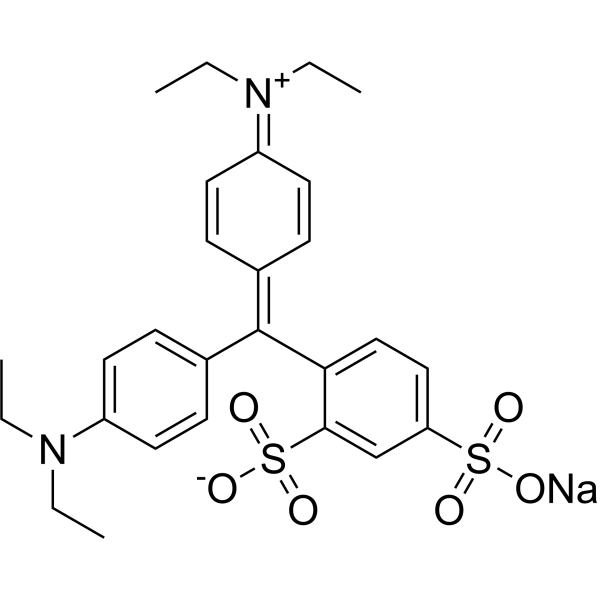
Acid blue 1 (Xylene blue) is an anionic triarylmethane dye and substrate for photocatalytic degradation .
loading...
    loading...
Cat. No.: HY-109116
CAS No.: 613-11-6
Synonyms: Leukomethylene blue
Hydromethylthionine (Leukomethylene blue) has a very active photochemically active reagent, especially in its interaction with dissolved oxygen. The photochemical activity of Hydromethylthionine is mainly regulated by the reaction of its triplet state with dissolved oxygen, which reacts with dissolved oxygen to form Methylene Blue (HY-14536) and hydronium ions under ultraviolet light. Hydromethylthionine can be used for the photodegradation of model pollutants in semiconductor photocatalysis and for the study of indicators in chemical analysis .
loading...
    loading...
Cat. No.: HY-23497
CAS No.: 24979-70-2
Target:  

Others

Research Areas:  

Others

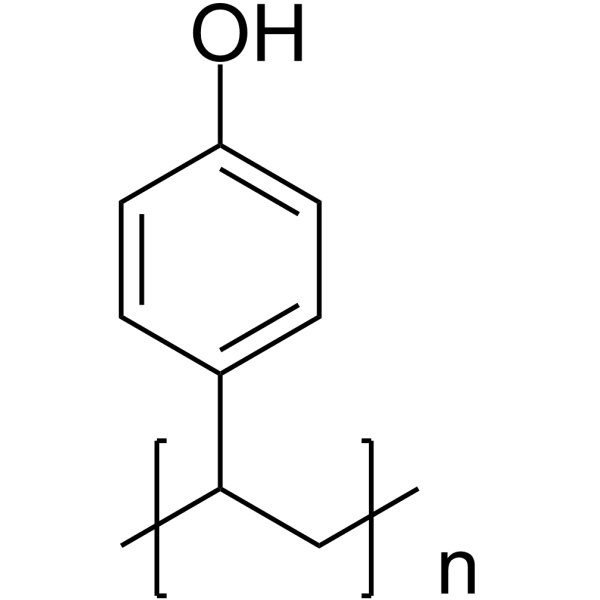
Poly(4-vinylphenol) is a polymer cross-linking agent that can be used to prepare non-toxic films. Poly(4-vinylphenol) is a sensitizer of titania for visible light photocatalysis. Poly(4-vinylphenol) also can be used as a water resistive wood adhesive, as a gate dielectric insulator in organic field effect transistors, and as a responsive surface coating .
loading...
    loading...
Cat. No.: HY-D1591
CAS No.: 150173-71-0
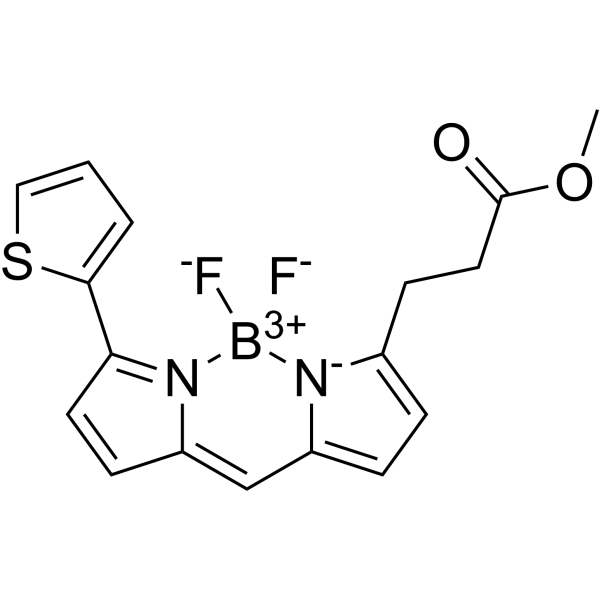
BODIPY R6G methyl ester (compound 5′-1) is a BODIPY-like fluorescent dye with good light stability and insensitive to pH value. BODIPY R6G methyl ester shows good photostability, high sensitivity and insensitive to pH value. BODIPY R6G methyl ester can be used in research areas such as photodynamic research, PH probes, ion recognition, photocatalysis, protein labeling, cell imaging, and proteomic analysis .
loading...
    loading...
Cat. No.: HY-W001297
CAS No.: 1121-79-5
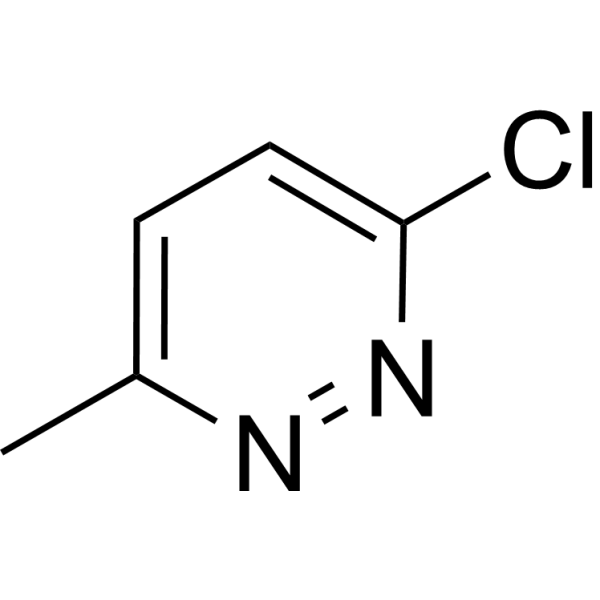
3-Chloro-6-methylpyridazine is a substituted pyridazine derivative containing an electron-withdrawing chlorine atom and an electron-donating methyl group. Pyridazine compounds generally possess pharmacological activities such as antibacterial and anti-inflammatory properties. 3-Chloro-6-methylpyridazine can serve as an organic ligand for constructing organic-inorganic hybrid chloroantimonate materials with semiconducting behavior. 3-Chloro-6-methylpyridazine can be used in studies related to optoelectronic devices, photodetectors, and photocatalysis .
loading...
    loading...
Cat. No.: HY-126926
CAS No.: 36408-16-9
Synonyms: 5-Deazaflavin mononucleotide
Research Areas:  

Others

5-Deaza-FMN (5-Deazaflavin mononucleotide) is a binder of type II isopentenyl diphosphate: dimethylallyl diphosphate isomerase (IDI-2) with a Kd value of 16 μM. 5-Deaza-FMN acts as a radical generator, forming radicals through photoinduced single-electron transfer of tryptophan. 5-Deaza-FMN finds applications in biocatalysis and photocatalysis .
loading...
    loading...
Cat. No.: HY-W585931
CAS No.: 120067-83-6
Target:  

Drug Metabolite

Research Areas:  

Others

Fipronil sulfide is a toxic, persistent metabolite of Fipronil (HY-B0822). Fipronil is a broad-spectrum insecticide .
loading...
    loading...
Cat. No.: HY-108010
CAS No.: 1208971-05-4
Target:  

Amyloid-β

Research Areas:  

Neurological Disease

Aftobetin is a non-invasive molecular probe used for the early diagnosis of Alzheimer's disease (AD). Aftobetin can specifically bind to the aggregated β-amyloid peptide () in the lens of the eye, enabling the early diagnosis of AD through a rapid and painless detection method .
loading...
    loading...
Cat. No.: HY-W075708
CAS No.: 41699-93-8
Synonyms: Cu(II) Meso-Tetra(4-carboxyphenyl)porphyrin
Target:  

MOFs

Research Areas:  

Others

Cu (II) MTCPP (Cu (II) Meso-Tetra (4-carboxyphenyl) porphyrin) is a copper coordination complex. Cu (II) MTCPP-sensitized TiO2 nanotubes are a type of visible-light photocatalyst. Cu (II) MTCPP-sensitized TiO2 nanotubes can expand the wavelength response range, transfer excited electrons more efficiently, and separate photogenerated electron-hole pairs .
loading...
    loading...

