Search Result
Results for "
polycyclic aromatic hydrocarbons
" in MedChemExpress (MCE) Product Catalog:
3
Biochemical Assay Reagents
10
Isotope-Labeled Compounds
| Cat. No. |
Product Name |
Target |
Research Areas |
Chemical Structure |
-
- HY-W011845
-
DMBA
3 Publications Verification
7,12-DMBA; 7,12-Dimethylbenzanthracene
|
Environmental Pollutants
c-Myc
|
Cancer
|
|
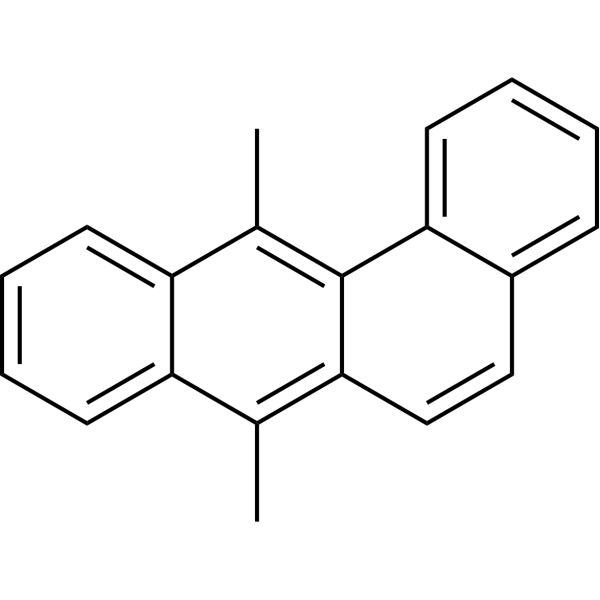
DMBA has carcinogenic activity as a polycyclic aromatic hydrocarbon (PAH). DMBA is used to induce tumor formation in various rodent models .
|
-
-
- HY-B1727
-
-
-
- HY-W014075
-
|
|
Aryl Hydrocarbon Receptor
Cytochrome P450
Collagen
|
Inflammation/Immunology
|
|
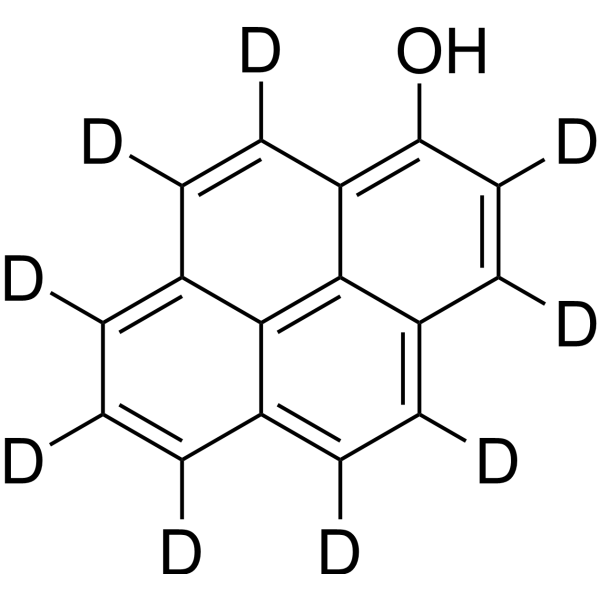
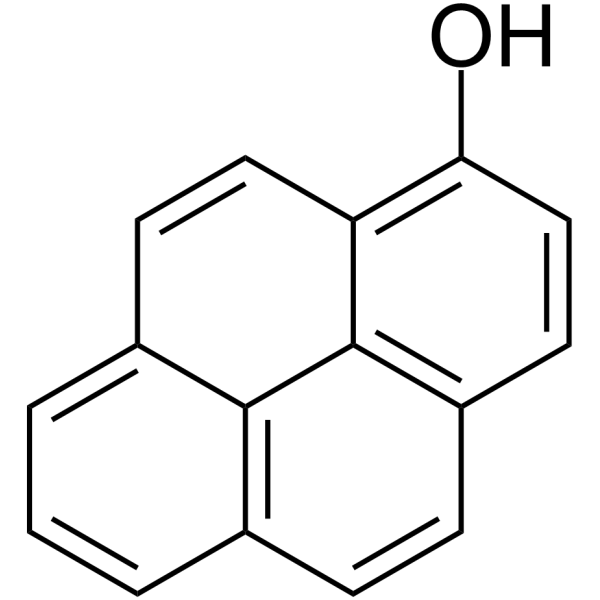
1-Hydroxypyrene, a biomarker of exposure to polycyclic aromatic hydrocarbons (PAHs), is analyzed in urine samples. 1-Hydroxypyrene is the major biomarker of exposure to pyrenes. 1-Hydroxypyrene is the orally active agonist for aryl hydrocarbon receptor (AhR) and can lead to renal fibrosis .
|
-
-
- HY-103609
-
Pyrene
1 Publications Verification
Benzo[def]phenanthrene
|
Environmental Pollutants
Biochemical Assay Reagents
|
Others
|
|
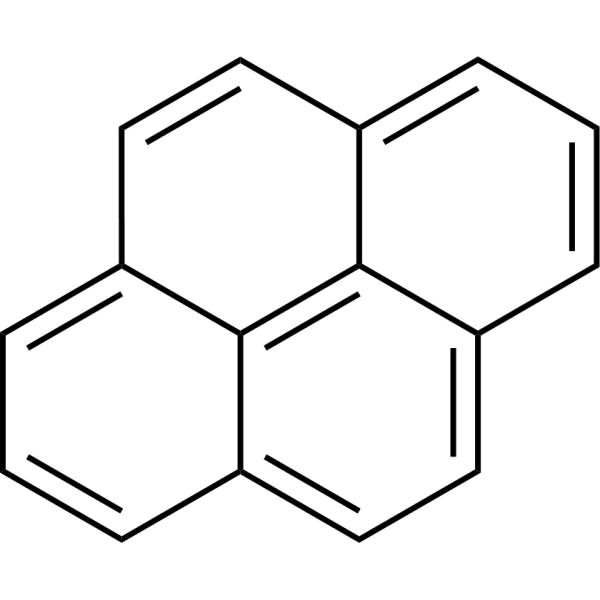
Pyrene is a polycyclic aromatic hydrocarbon (PAH) composed of four fused benzene rings. It has a distinct aromatic odor, produced by incomplete combustion of organic matter. Pyrene exhibits strong fluorescence, emitting in the blue region of the spectrum, making it useful as a probe for studying molecular interactions in solution and on surfaces. Pyrene is also used as a model compound for the study of PAHs in various environments and biological systems because of its ubiquity in these environments. However, long-term exposure to pyrene has been associated with potential health risks, including carcinogenicity and mutagenicity.
|
-
-
- HY-W013570
-
-
-
- HY-W026772
-
|
|
Environmental Pollutants
Fluorescent Dye
TNF Receptor
Interleukin Related
SOD
Reactive Oxygen Species (ROS)
|
Inflammation/Immunology
|
|
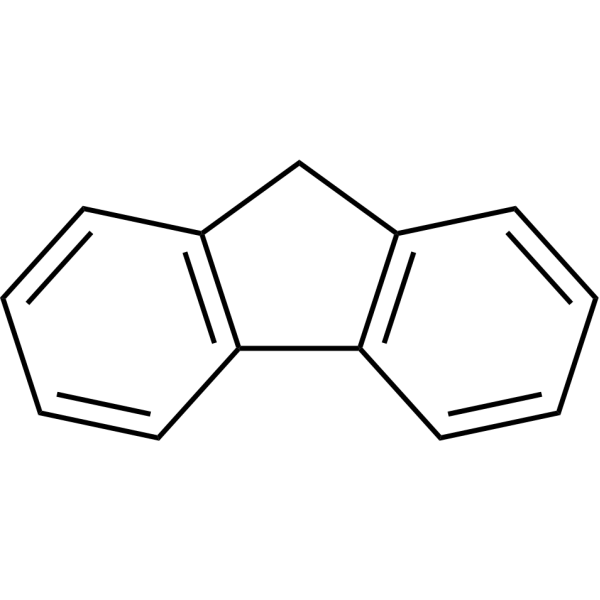
Fluorene is an orally active polycyclic aromatic hydrocarbon (PAH) and a precursor to other fluorene-based compounds. Fluorene and its derivatives serve as dye precursors for fluorene synthesis. In A549 cells, Fluorene induces oxidative stress and inflammatory responses by increasing ROS and SOD generation, exacerbating lipid peroxidation, modulating antioxidant enzyme activity, and upregulating the expression of pro-inflammatory factors TNF-α and IL-6. In vivo, Fluorene exhibits anxiolytic activity. Fluorene holds potential for research in inflammation and neurological disorders .
|
-
-
- HY-B1727S
-
|
|
Isotope-Labeled Compounds
|
Inflammation/Immunology
|
|
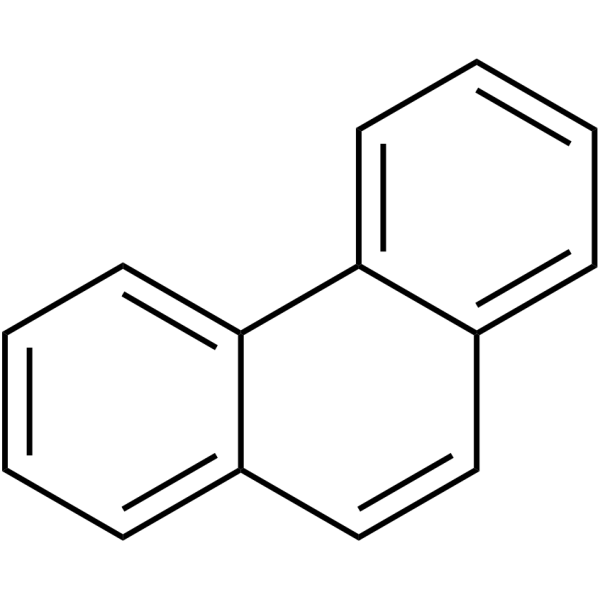
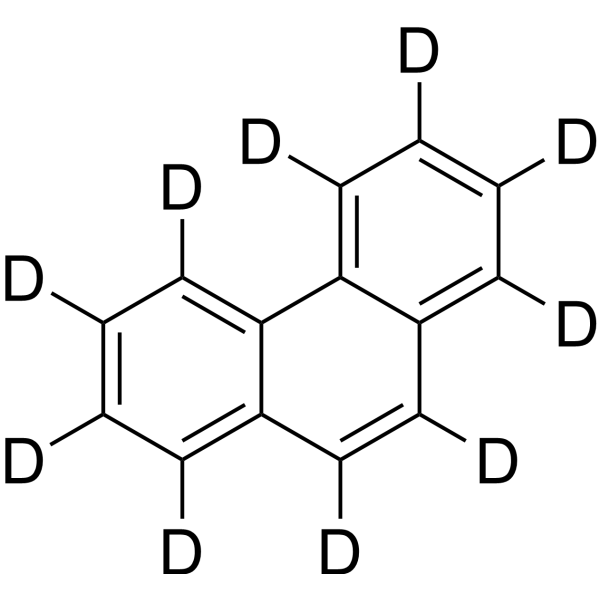
Phenanthrene-d10 is the deuterium labeled Phenanthrene. Phenanthrene is a polycyclic aromatic hydrocarbon (PAH) and has been frequently used as an indicator for monitoring PAH contaminated matrices . Phenanthrene induces oxidative stress and inflammation .
|
-
-
- HY-W013053
-
|
DBA; 1,2,5,6-Dibenzanthracene; Benzo[k]tetraphene
|
Environmental Pollutants
DNA/RNA Synthesis
MDM-2/p53
Apoptosis
|
Cancer
|
|
Dibenz[a,h]anthracene (DBA) is an orally active polycyclic aromatic hydrocarbon, a by-product of incomplete combustion of organic matter, a potent carcinogen, and an agonist of AhR. Dibenz[a,h]anthracene induces dose-dependent increases in DNA adduct formation and lacZ mutation frequency. Dibenz[a,h]anthracene upregulates St3gal5. Dibenz[a,h]anthracene can be used in cancer-related research .
|
-
-
- HY-121107
-
|
|
Environmental Pollutants
|
Cancer
|
|
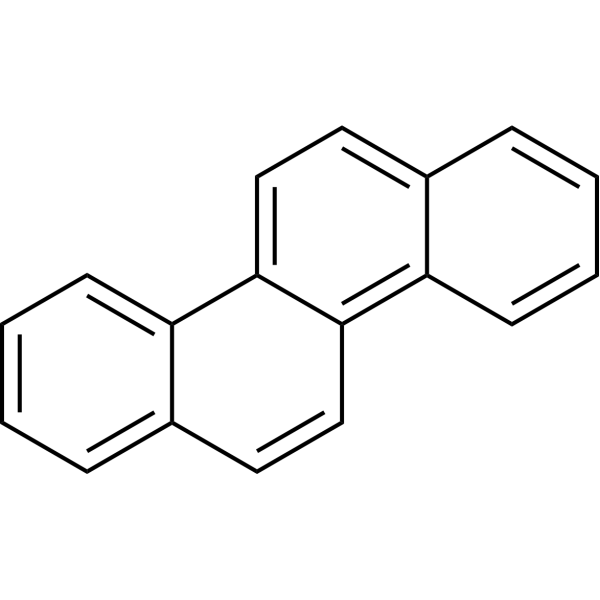
Chrysene is a high molecular weight (HMW), polycyclic aromatic hydrocarbon (PAH) known for its recalcitrance and carcinogenic properties .
|
-
-
- HY-W090294
-
|
Peri-dinaphthalene (purified by sublimation)
|
Environmental Pollutants
Biochemical Assay Reagents
|
Others
|
|
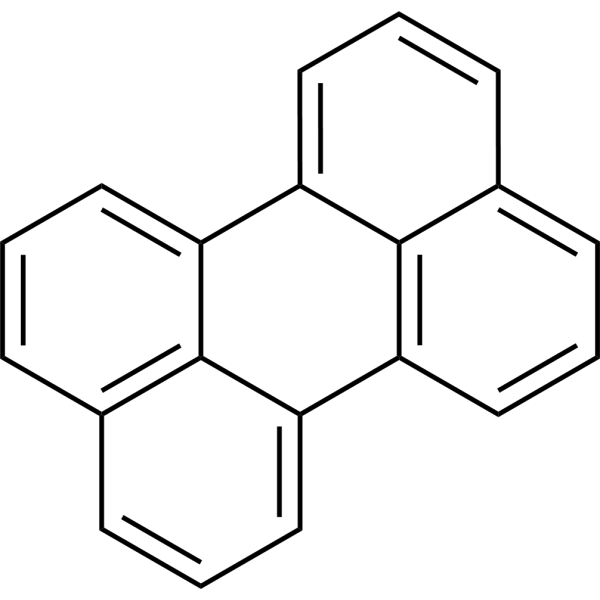
Perylene, which is a polycyclic aromatic hydrocarbon composed of four linearly fused benzene rings, is commonly used as a pigment and dye in a variety of applications, including printing inks, plastics, and textiles. In addition, Perylene has potential uses in solar cells as photosensitizers and as fluorescent probes in biochemistry and materials science. Perylene's rigid planar structure endows it with unique electronic and optical properties, making it a versatile and important compound in many fields of chemistry and materials science.
|
-
-
- HY-124211
-
|
|
Environmental Pollutants
MDM-2/p53
Aryl Hydrocarbon Receptor
|
Cancer
|
|
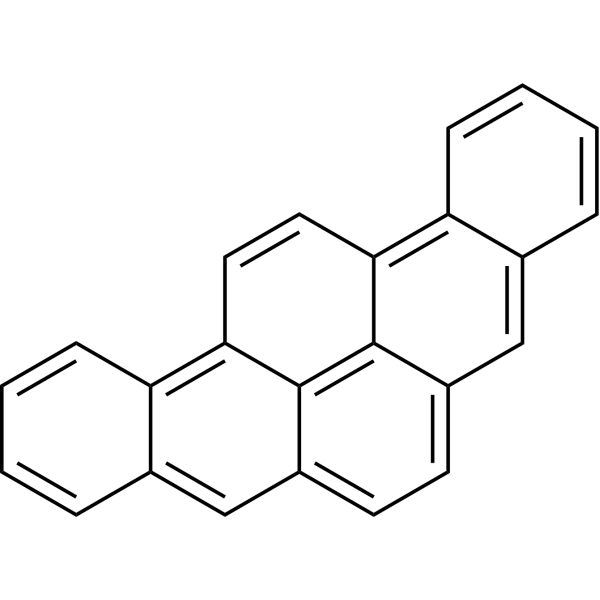
Dibenzo (a,i) pyrene is a polycyclic aromatic hydrocarbon and also a carcinogenic ligand of the TCDD (Ah) receptor. Dibenzo (a,i) pyrene binds to the TCDD (Ah) receptor in rat liver. Dibenzo (a,i) pyrene induces DNA adduct formation and upregulates the protein levels of p53 and p21 WAF1 in diploid lung fibroblasts. Dibenzo (a,i) pyrene alters the cell cycle distribution of diploid lung fibroblasts, increasing the proportion of cells in the S phase, decreasing the proportions of cells in the G0/G1 and G2/M phases, and causing S phase delay/arrest. Dibenzo (a,i) pyrene is applicable for cancer research .
|
-
-
- HY-111441
-
|
Chrysene-1,4-dione
|
Aryl Hydrocarbon Receptor
|
Cancer
|
|
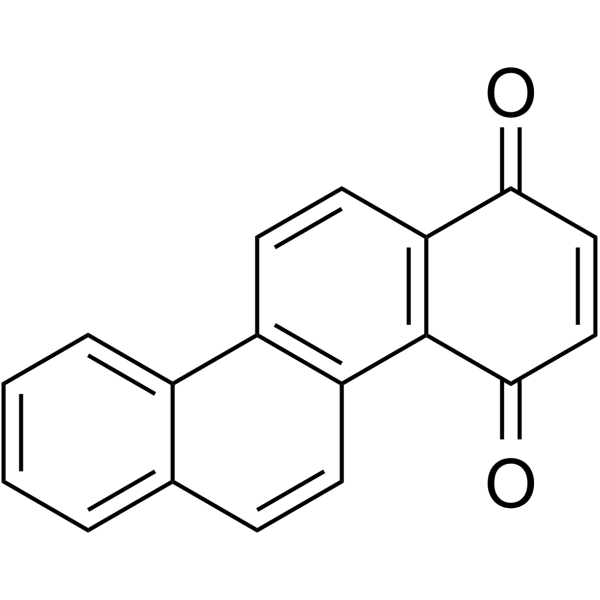
1,4-Chrysenequinone, a polycyclic aromatic quinone, acts as an activator of aryl hydrocarbon receptor (AhR).
|
-
-
- HY-23499
-
-
-
- HY-W014075S
-
-
-
- HY-111450
-
|
|
Aryl Hydrocarbon Receptor
|
Cancer
|
|
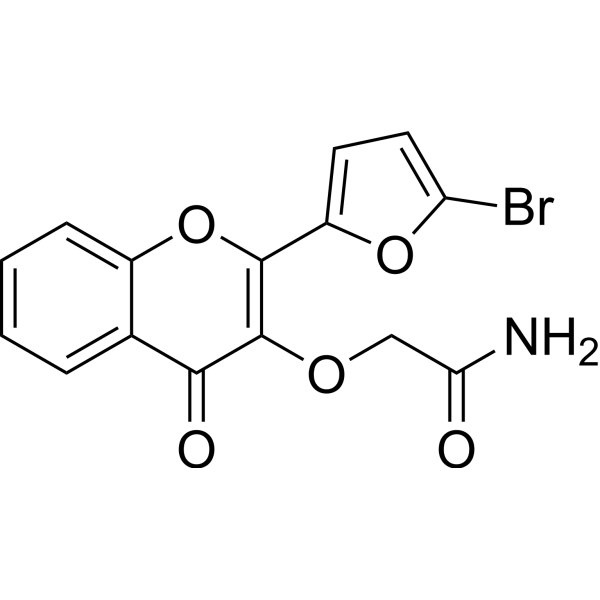
CB7993113 is a potent AHR antagonist, with an IC50 of 0.33 μM. CB7993113 directly binds AHR protein and blocks AHR nuclear translocation. CB7993113 inhibits polycyclic aromatic hydrocarbon (PAH)- and TCDD-induced reporter activity by 75% and 90% respectively .
|
-
-
- HY-W016103
-
|
|
Bacterial
Drug Intermediate
|
Infection
|
|
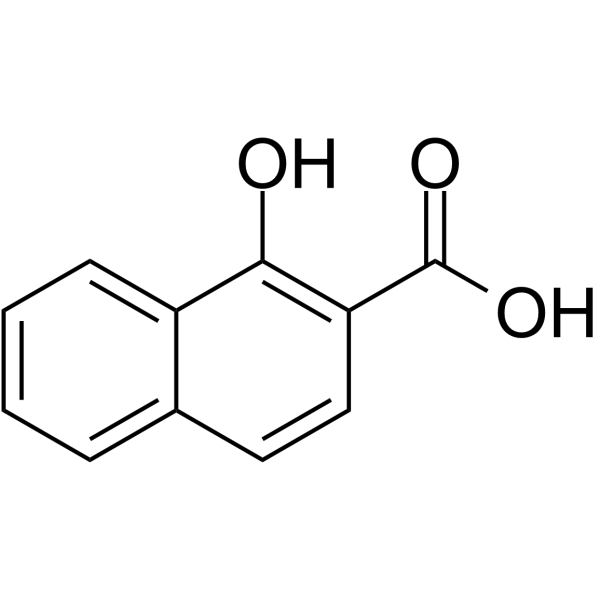
1-Hydroxy-2-naphthoic acid is a ubiquitous bicyclic intermediate metabolite in the microbial degradation process of polycyclic aromatic hydrocarbons (PAHs). 1-Hydroxy-2-naphthoic acid can be converted into 1,2-naphthalenediol, which enters the naphthalene degradation pathway and participates in the tricarboxylic acid (TCA) cycle to achieve complete mineralization .
|
-
-
- HY-23498
-
-
-
- HY-W016389
-
|
2-OHFLU
|
Endogenous Metabolite
|
Metabolic Disease
|
|
2-Hydroxyfluorene (2-OHFLU) is a polycyclic aromatic hydrocarbon metabolite. 2-Hydroxyfluorene is positively associated with cardiovascular disease (CVD) and hyperlipidemia.
|
-
-
- HY-W012278
-
|
Tetraphene
|
Environmental Pollutants
Aryl Hydrocarbon Receptor
|
Others
|
|
Benz[a]anthracene (Tetraphene) (Compound 92) is a ligand for the aryl hydrocarbon receptor (AhR) with a pIC50 of 7.319. Benz[a]anthracene is a polycyclic aromatic hydrocarbon (PAH) that can be detected in spruce needles near aluminum smelters .
|
-
-
- HY-N11222
-
|
C9 carnitine
|
Endogenous Metabolite
|
Cardiovascular Disease
Cancer
|
|
Nonanoylcarnitine is a metabolite associated with chronic environmental exposure to polycyclic aromatic hydrocarbons (PAH) and fragmented QRS waves in acute myocardial infarction. Nonanoylcarnitine can be used as a potential biomarker for the metabolic outcome of PAH exposure and the prognosis of acute myocardial infarction .
|
-
-
- HY-W110980
-
|
Anthracen-2-amine; 2-Anthramine
|
DNA/RNA Synthesis
|
Cancer
|
|
2-Aminoanthracene (Anthracen-2-amine) is a nitrogen substituted polycyclic aromatic hydrocarbon. 2-Aminoanthracene is mutagenic and carcinogenic. 2-Aminoanthracene acts by intercalating into DNA, causing structural distortion and interfering with DNA replication and transcription .
|
-
-
- HY-109542
-
|
|
Biochemical Assay Reagents
|
Metabolic Disease
|
|
Cyclopenthiazide is a benzothiadiazine diuretic with antihypertensive properties. Cyclopenthiazide exerts a diuretic effect by inhibiting the reabsorption of sodium chloride and water at the distal renal tubules. Cyclopenthiazide increases the excretory capacity of the rat kidney .
|
-
-
- HY-W017708
-
|
|
Drug Intermediate
|
Others
|
|
Triphenylene is a highly symmetrical polycyclic aromatic hydrocarbon. Triphenylene shows no carcinogenic activity in mouse skin application experiments. Triphenylene can be used as a drug intermediate for the synthesis of triphenyl polycyclic aromatic hydrocarbons (PAHs) .
|
-
-
- HY-W103306
-
-
-
- HY-W026772R
-
|
|
Fluorescent Dye
Reference Standards
|
Others
|
|
Fluorene (Standard) is the analytical standard of Fluorene. This product is intended for research and analytical applications. Fluorene, a polycyclic aromatic hydrocarbon (PAH), is a precursor to other fluorene compounds. Fluorene and its derivative?can be used as a precursor to fluorene-based dyes .
|
-
-
- HY-W004460
-
-
-
- HY-W013570S
-
|
Acenaphthylene-d8
|
Isotope-Labeled Compounds
|
Others
|
|
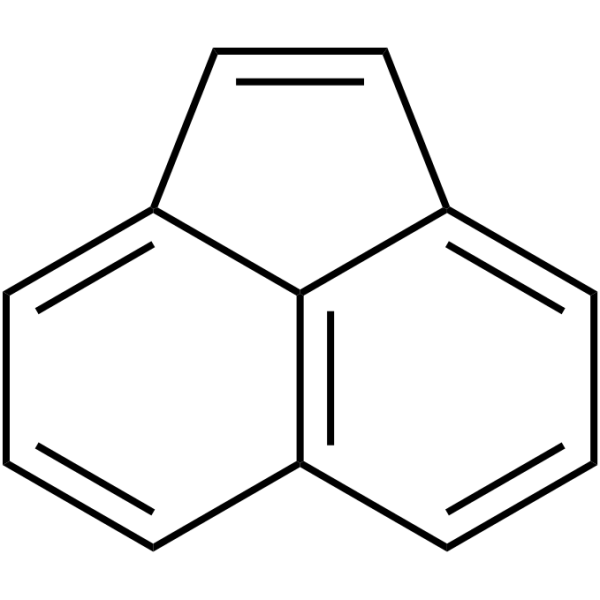
Acenaphthylene-d8 is the deuterium labeled Acenaphthylene . Acenaphthylene is a polycyclic aromatic hydrocarbon (PAH). PAHs are derived naturally from coal and tar deposits, and produced by incomplete combustion of organic matter .
|
-
-
- HY-B1727R
-
|
|
Reference Standards
Apoptosis
|
Inflammation/Immunology
Cancer
|
|
Phenanthrene (Standard) is the analytical standard of Phenanthrene. This product is intended for research and analytical applications. Phenanthrene is an orally active polycyclic aromatic hydrocarbon (PAH) that induces inflammation, oxidative stress, and apoptosis. Additionally, phenanthrene is commonly used to detect or assess PAH pollution in the environment .
|
-
-
- HY-W013570R
-
|
|
Reference Standards
Others
|
Others
|
|
Acenaphthylene (Standard) is the analytical standard of Acenaphthylene. This product is intended for research and analytical applications. Acenaphthylene is a polycyclic aromatic hydrocarbon (PAH). PAHs are derived naturally from coal and tar deposits, and produced by incomplete combustion of organic matter .
|
-
-
- HY-W011845R
-
|
7,12-DMBA (Standard); 7,12-Dimethylbenzanthracene (Standard)
|
c-Myc
Reference Standards
|
Cancer
|
|
DMBA has carcinogenic activity as a polycyclic aromatic hydrocarbon (PAH). DMBA is used to induce tumor formation in various rodent models .
|
-
-
- HY-121107S
-
|
|
Isotope-Labeled Compounds
|
Cancer
|
|
Chrysene-d12 is the deuterium labeled Chrysene. Chrysene is a high molecular weight (HMW), polycyclic aromatic hydrocarbon (PAH) known for its recalcitrance and carcinogenic properties .
|
-
-
- HY-W014075R
-
|
|
Reference Standards
Aryl Hydrocarbon Receptor
Cytochrome P450
Collagen
|
Inflammation/Immunology
|
|
1-Hydroxypyrene (Standard) is the analytical standard of 1-Hydroxypyrene (HY-W014075). This product is intended for research and analytical applications. 1-Hydroxypyrene, a biomarker of exposure to polycyclic aromatic hydrocarbons (PAHs), is analyzed in urine samples. 1-Hydroxypyrene is the major biomarker of exposure to pyrenes. 1-Hydroxypyrene is the orally active agonist for aryl hydrocarbon receptor (AhR) and can lead to renal fibrosis.
|
-
-
- HY-W777456
-
|
|
Isotope-Labeled Compounds
|
Others
|
|
Phenanthrene- 13C6 is the 13C labeled Phenanthrene (HY-B1727). Phenanthrene is an orally active polycyclic aromatic hydrocarbon (PAH) that induces inflammation, oxidative stress, and apoptosis. Additionally, phenanthrene is commonly used to detect or assess PAH pollution in the environment .
|
-
-
- HY-Y1771
-
|
Phthalaldehydic acid
|
Drug Metabolite
Bacterial
|
Infection
|
|
2-Carboxybenzaldehyde is a key intermediate metabolite in the biodegradation of polycyclic aromatic hydrocarbons (PAHs) such as fluoranthene and phenanthrene. 2-Carboxybenzaldehyde can be produced by the degradation of fluoranthene by Pasteurella sp. IFA and Mycobacterium sp. PYR-1. 2-Carboxybenzaldehyde can also be produced by the degradation of phenanthrene by Pseudomonas sp. PPD .
|
-
-
- HY-23499R
-
|
|
Reference Standards
Aryl Hydrocarbon Receptor
|
Inflammation/Immunology
Cancer
|
|
Indeno[1,2,3-cd]pyrene (Standard) is the analytical standard of Indeno[1,2,3-cd]pyrene. This product is intended for research and analytical applications. Indeno[1,2,3-cd]pyrene is a polycyclic aromatic hydrocarbon with moderate cytotoxicity in human pulmonary alveolar epithelial cells HPAEpiC. Indeno[1,2,3-cd]pyrene enhances allergic lung infammation via aryl hydrocarbon receptor .
|
-
-
- HY-125630
-
|
|
Biochemical Assay Reagents
|
Others
|
|
Decacyclene is a large polycyclic aromatic hydrocarbon with a triple symmetry. Decacyclene is a three-blade molecular propeller in the solid state, and crystal structure analysis shows that the molecule has a non-planar twisted form, and the crystal is chiral, which may correspond to the enantiomers of the Decacyclene propeller. Decacyclene can be used for research in chemical synthesis and materials science .
|
-
-
- HY-W013053R
-
|
DBA (Standard); 1,2,5,6-Dibenzanthracene (Standard); Benzo[k]tetraphene (Standard)
|
DNA/RNA Synthesis
Apoptosis
Reference Standards
MDM-2/p53
|
Cancer
|
|
Dibenz[a,h]anthracene (Standard) is the analytical standard of Dibenz[a,h]anthracene. This product is intended for research and analytical applications. Dibenz[a,h]anthracene (DBA) is a polycyclic aromatic hydrocarbon (PAH) of considerable tumorigenicity. Dibenz[a,h]anthracene results in DNA adduct formation leading to the activation of a DNA damage response. Dibenz[a,h]anthracene induces cell cycle arrest and apoptosis via both Tp53-dependent and Tp53-independent mechanisms .
|
-
-
- HY-W106762
-
|
3,4,9,10-Perylenetetracarboxylic acid
|
Drug Intermediate
Biochemical Assay Reagents
|
Others
|
|
Perylene-3,4,9,10-tetracarboxylic acid (3,4,9,10-Perylenetetracarboxylic acid) is a chemical intermediate. Derivatives formed from Perylene-3,4,9,10-tetracarboxylic acid can serve as colorimetric and fluorescent chemosensors with selectivity for fluoride ions, and also act as charge generation materials in electrophotographic photoreceptors, organic electrophotographic photoreceptors, optoelectronic and photonic devices .
|
-
-
- HY-33451
-
|
|
Biochemical Assay Reagents
|
Others
|
|
4-Dibenzofurancarboxylic acid is one of the synthesis materials of polycyclic aromatic hydrocarbons (PAHs) and Schistosoma mansoni histone deacetylase 8 (smHDAC8) inhibitors .
|
-
-
- HY-W441021
-
|
|
Liposome
|
Others
|
|
DSPE-Pyrene is a phospholipid molecule with polycyclic aromatic hydrocarbon, and can be used for drug encapsulation, such as drug loaded liposomes or nanoparticles. Pyrene is a fluorescent probe whose spectrum is sensitive to the polarity of its environment.
|
-
-
- HY-121107R
-
|
|
Biochemical Assay Reagents
Reference Standards
|
Cancer
|
|
Chrysene (Standard) is the analytical standard of Chrysene. This product is intended for research and analytical applications. Chrysene is a high molecular weight (HMW), polycyclic aromatic hydrocarbon (PAH) known for its recalcitrance and carcinogenic properties .
|
-
-
- HY-W026772S
-
|
|
Fluorescent Dye
Isotope-Labeled Compounds
|
Others
|
|
Fluorene-d10 is the deuterium labeled Fluorene. Fluorene, a polycyclic aromatic hydrocarbon (PAH), is a precursor to other fluorene compounds. Fluorene and its derivative?can be used as a precursor to fluorene-based dyes .
|
-
-
- HY-172508
-
|
|
Fluorescent Dye
Phosphoramidites
|
Others
|
|
Perylene dU phosphoramidite is a bright and extremely photostable fluorescent polycyclic aromatic hydrocarbon (PAH) label with a quantum yield approaching quantitative. Due to the low lifetime of fluorescence, this probe does not form excimers.With this phosphoramidite, perylene can be introduced into DNA by automated oligonucleotide synthesis.
|
-
-
- HY-W778162
-
|
|
Isotope-Labeled Compounds
Apoptosis
|
Cancer
|
|
Phenanthrene- 13C2 is the 13C-labeled Phenanthrene (HY-B1727). Phenanthrene is an orally active polycyclic aromatic hydrocarbon (PAH) that induces inflammation, oxidative stress, and apoptosis. Additionally, phenanthrene is commonly used to detect or assess PAH pollution in the environment .
|
-
-
- HY-109542R
-
|
|
Biochemical Assay Reagents
Reference Standards
|
Metabolic Disease
|
|
Cyclopenthiazide (Standard) is the analytical standard of Cyclopenthiazide. This product is intended for research and analytical applications. Cyclopenthiazide is a benzothiadiazine diuretic with antihypertensive properties. Cyclopenthiazide exerts a diuretic effect by inhibiting the reabsorption of sodium chloride and water at the distal renal tubules. Cyclopenthiazide increases the excretory capacity of the rat kidney .
|
-
-
- HY-103609R
-
|
Benzo[def]phenanthrene (Standard)
|
Biochemical Assay Reagents
Reference Standards
|
Others
|
|
Pyrene (Standard) is the analytical standard of Pyrene. This product is intended for research and analytical applications. Pyrene is a polycyclic aromatic hydrocarbon (PAH) composed of four fused benzene rings. It has a distinct aromatic odor, produced by incomplete combustion of organic matter. Pyrene exhibits strong fluorescence, emitting in the blue region of the spectrum, making it useful as a probe for studying molecular interactions in solution and on surfaces. Pyrene is also used as a model compound for the study of PAHs in various environments and biological systems because of its ubiquity in these environments. However, long-term exposure to pyrene has been associated with potential health risks, including carcinogenicity and mutagenicity.
|
-
-
- HY-Y1771R
-
|
Phthalaldehydic acid (Standard)
|
Reference Standards
Drug Metabolite
Bacterial
|
Infection
|
|
2-Carboxybenzaldehyde (Standard) is the analytical standard of 2-Carboxybenzaldehyde (HY-Y1771). This product is intended for research and analytical applications. 2-Carboxybenzaldehyde is a key intermediate metabolite in the biodegradation of polycyclic aromatic hydrocarbons (PAHs) such as fluoranthene and phenanthrene. 2-Carboxybenzaldehyde can be produced by the degradation of fluoranthene by Pasteurella sp. IFA and Mycobacterium sp. PYR-1. 2-Carboxybenzaldehyde can also be produced by the degradation of phenanthrene by Pseudomonas sp. PPD .
|
-
-
- HY-W011577S1
-
|
2,3-Benzotriphenylene-13C6
|
Isotope-Labeled Compounds
Photosensitizer
|
Cancer
|
|
Dibenzo[a,c]anthracene- 13C6 (2,3-Benzotriphenylene- 13C6) is 13C labeled Benzo[f]tetraphene. Benzo[f]tetraphene (Dibenz[a,c]anthracene) is a polycyclic aromatic hydrocarbon with significant antitumor activity. Benzo[f]tetraphene is used as a luminescent probe in cell biology research and can effectively detect reactive oxygen species in biological systems. Benzo[f]tetraphene can also be used as a potential photosensitizer and shows good application prospects in photodynamic inhibition.
|
-
-
- HY-W016103R
-
|
|
Reference Standards
Drug Intermediate
Bacterial
|
Infection
|
|
1-Hydroxy-2-naphthoic acid (Standard) is an analytical standard for 1-Hydroxy-2-naphthoic acid (HY-W016103). This product is intended for research and analytical applications. 1-Hydroxy-2-naphthoic acid is a ubiquitous bicyclic intermediate metabolite in the microbial degradation process of polycyclic aromatic hydrocarbons (PAHs). 1-Hydroxy-2-naphthoic acid can be converted into 1,2-naphthalenediol, which enters the naphthalene degradation pathway and participates in the tricarboxylic acid (TCA) cycle to achieve complete mineralization.
|
-
-
- HY-W026772S1
-
|
|
Isotope-Labeled Compounds
Fluorescent Dye
Reactive Oxygen Species (ROS)
TNF Receptor
Interleukin Related
SOD
|
Inflammation/Immunology
|
|
Fluorene-d8 is the deuterium labeled Fluorene (HY-W026772). Fluorene is an orally active polycyclic aromatic hydrocarbon (PAH) and a precursor to other fluorene-based compounds. Fluorene and its derivatives serve as dye precursors for fluorene synthesis. In A549 cells, Fluorene induces oxidative stress and inflammatory responses by increasing ROS and SOD generation, exacerbating lipid peroxidation, modulating antioxidant enzyme activity, and upregulating the expression of pro-inflammatory factors TNF-α and IL-6. In vivo, Fluorene exhibits anxiolytic activity. Fluorene holds potential for research in inflammation and neurological disorders .
|
-
- HY-W777458
-
|
|
Reactive Oxygen Species (ROS)
|
Inflammation/Immunology
|
|
Fluorene- 13C6 is the 13C-labeled Fluorene (HY-W026772). Fluorene is an orally active polycyclic aromatic hydrocarbon (PAH) and a precursor to other fluorene-based compounds. Fluorene and its derivatives serve as dye precursors for fluorene synthesis. In A549 cells, Fluorene induces oxidative stress and inflammatory responses by increasing ROS and SOD generation, exacerbating lipid peroxidation, modulating antioxidant enzyme activity, and upregulating the expression of pro-inflammatory factors TNF-α and IL-6. In vivo, Fluorene exhibits anxiolytic activity. Fluorene holds potential for research in inflammation and neurological disorders .
|
-
- HY-W096907
-
|
|
Biochemical Assay Reagents
|
Cancer
|
|
Picene is a polycyclic aromatic hydrocarbon of environmental relevance. Picene can be widely distributed in the environment as the result of incomplete combustion of organic matter. Picene is found to be inactive as complete carcinogen, while it acts in a high dose as a weak tumor initiator .
|
-
- HY-W587465
-
-
- HY-W587560
-
|
|
Drug Derivative
|
Others
|
|
3-Hydroxyfluorene is a polycyclic aromatic hydrocarbon. 3-Hydroxyfluorene can be used for the study of psoriasis and non-alcoholic fatty liver disease.
|
-
- HY-19197
-
|
|
Drug Metabolite
|
Others
|
|
2-NAP is a major metabolite of polycyclic aromatic hydrocarbons (PAHs). 2-NAP induces oxidative stress and inflammatory responses, impairs enamel formation, and disrupts oral microbiome balance, increasing the risk of early childhood caries (ECC). 2-NAP is promising for research of development-related diseases such as childhood caries .
|
-
- HY-W011577
-
|
Dibenz[a,c]anthracene
|
Photosensitizer
|
|
|
Benzo[f]tetraphene (Dibenz[a,c]anthracene) is a polycyclic aromatic hydrocarbon with significant antitumor activity. Benzo[f]tetraphene is used as a luminescent probe in cell biology research and can effectively detect reactive oxygen species in biological systems. Benzo[f]tetraphene can also be used as a potential photosensitizer and shows good application prospects in photodynamic inhibition.
|
-
- HY-W585976
-
|
|
p38 MAPK
|
Cancer
|
|
Benzo[a]pyrene diol epoxide is a carcinogen present in tobacco smoke as well as in environmental pollution. Benzo[a]pyrene diol epoxide is a metabolite of benzo[a]pyrene (BaP) , which is polycyclic aromatic hydrocarbon (PAH) . Benzo[a]pyrene diol epoxide induces esophageal carcinogenesis. Benzo[a]pyrene diol epoxide may act to induce activation of ERKs and p38 MAPK marked by an increased level of phosphorylation of both the ERKs and p38 MAPK which corresponds with the increased activation of both kinases as evidenced by increased phsosphorylation of their substrates Elk-1 and ATF-2, respectively.
|
-
| Cat. No. |
Product Name |
Type |
-
- HY-103609
-
Pyrene
1 Publications Verification
Benzo[def]phenanthrene
|
Fluorescent Dyes
|
|
Pyrene is a polycyclic aromatic hydrocarbon (PAH) composed of four fused benzene rings. It has a distinct aromatic odor, produced by incomplete combustion of organic matter. Pyrene exhibits strong fluorescence, emitting in the blue region of the spectrum, making it useful as a probe for studying molecular interactions in solution and on surfaces. Pyrene is also used as a model compound for the study of PAHs in various environments and biological systems because of its ubiquity in these environments. However, long-term exposure to pyrene has been associated with potential health risks, including carcinogenicity and mutagenicity.
|
-
- HY-103609R
-
|
Benzo[def]phenanthrene (Standard)
|
Fluorescent Dyes
|
|
Pyrene (Standard) is the analytical standard of Pyrene. This product is intended for research and analytical applications. Pyrene is a polycyclic aromatic hydrocarbon (PAH) composed of four fused benzene rings. It has a distinct aromatic odor, produced by incomplete combustion of organic matter. Pyrene exhibits strong fluorescence, emitting in the blue region of the spectrum, making it useful as a probe for studying molecular interactions in solution and on surfaces. Pyrene is also used as a model compound for the study of PAHs in various environments and biological systems because of its ubiquity in these environments. However, long-term exposure to pyrene has been associated with potential health risks, including carcinogenicity and mutagenicity.
|
| Cat. No. |
Product Name |
Type |
-
- HY-W090294
-
|
Peri-dinaphthalene (purified by sublimation)
|
Biochemical Assay Reagents
|
|
Perylene, which is a polycyclic aromatic hydrocarbon composed of four linearly fused benzene rings, is commonly used as a pigment and dye in a variety of applications, including printing inks, plastics, and textiles. In addition, Perylene has potential uses in solar cells as photosensitizers and as fluorescent probes in biochemistry and materials science. Perylene's rigid planar structure endows it with unique electronic and optical properties, making it a versatile and important compound in many fields of chemistry and materials science.
|
-
- HY-W110980
-
|
Anthracen-2-amine; 2-Anthramine
|
Biochemical Assay Reagents
|
|
2-Aminoanthracene (Anthracen-2-amine) is a nitrogen substituted polycyclic aromatic hydrocarbon. 2-Aminoanthracene is mutagenic and carcinogenic. 2-Aminoanthracene acts by intercalating into DNA, causing structural distortion and interfering with DNA replication and transcription .
|
-
- HY-W441021
-
|
|
Biochemical Assay Reagents
|
|
DSPE-Pyrene is a phospholipid molecule with polycyclic aromatic hydrocarbon, and can be used for drug encapsulation, such as drug loaded liposomes or nanoparticles. Pyrene is a fluorescent probe whose spectrum is sensitive to the polarity of its environment.
|
| Cat. No. |
Product Name |
Category |
Target |
Chemical Structure |
| Cat. No. |
Product Name |
Chemical Structure |
-
- HY-B1727S
-
|
|
|
Phenanthrene-d10 is the deuterium labeled Phenanthrene. Phenanthrene is a polycyclic aromatic hydrocarbon (PAH) and has been frequently used as an indicator for monitoring PAH contaminated matrices . Phenanthrene induces oxidative stress and inflammation .
|
-
-
- HY-W014075S
-
|
|
|
1-Hydroxypyrene-d9 is the deuterium labeled 1-Hydroxypyrene (HY-W014075). 1-Hydroxypyrene, a biomarker of exposure to polycyclic aromatic hydrocarbons (PAHs), is analyzed in urine samples. 1-Hydroxypyrene is the major biomarker of exposure to pyrenes. 1-Hydroxypyrene is the orally active agonist for aryl hydrocarbon receptor (AhR) and can lead to renal fibrosis .
|
-
-
- HY-W013570S
-
|
|
|
Acenaphthylene-d8 is the deuterium labeled Acenaphthylene . Acenaphthylene is a polycyclic aromatic hydrocarbon (PAH). PAHs are derived naturally from coal and tar deposits, and produced by incomplete combustion of organic matter .
|
-
-
- HY-121107S
-
|
|
|
Chrysene-d12 is the deuterium labeled Chrysene. Chrysene is a high molecular weight (HMW), polycyclic aromatic hydrocarbon (PAH) known for its recalcitrance and carcinogenic properties .
|
-
-
- HY-W777456
-
|
|
|
Phenanthrene- 13C6 is the 13C labeled Phenanthrene (HY-B1727). Phenanthrene is an orally active polycyclic aromatic hydrocarbon (PAH) that induces inflammation, oxidative stress, and apoptosis. Additionally, phenanthrene is commonly used to detect or assess PAH pollution in the environment .
|
-
-
- HY-W026772S
-
|
|
|
Fluorene-d10 is the deuterium labeled Fluorene. Fluorene, a polycyclic aromatic hydrocarbon (PAH), is a precursor to other fluorene compounds. Fluorene and its derivative?can be used as a precursor to fluorene-based dyes .
|
-
-
- HY-W778162
-
|
|
|
Phenanthrene- 13C2 is the 13C-labeled Phenanthrene (HY-B1727). Phenanthrene is an orally active polycyclic aromatic hydrocarbon (PAH) that induces inflammation, oxidative stress, and apoptosis. Additionally, phenanthrene is commonly used to detect or assess PAH pollution in the environment .
|
-
-
- HY-W011577S1
-
|
|
|
Dibenzo[a,c]anthracene- 13C6 (2,3-Benzotriphenylene- 13C6) is 13C labeled Benzo[f]tetraphene. Benzo[f]tetraphene (Dibenz[a,c]anthracene) is a polycyclic aromatic hydrocarbon with significant antitumor activity. Benzo[f]tetraphene is used as a luminescent probe in cell biology research and can effectively detect reactive oxygen species in biological systems. Benzo[f]tetraphene can also be used as a potential photosensitizer and shows good application prospects in photodynamic inhibition.
|
-
-
- HY-W026772S1
-
|
|
|
Fluorene-d8 is the deuterium labeled Fluorene (HY-W026772). Fluorene is an orally active polycyclic aromatic hydrocarbon (PAH) and a precursor to other fluorene-based compounds. Fluorene and its derivatives serve as dye precursors for fluorene synthesis. In A549 cells, Fluorene induces oxidative stress and inflammatory responses by increasing ROS and SOD generation, exacerbating lipid peroxidation, modulating antioxidant enzyme activity, and upregulating the expression of pro-inflammatory factors TNF-α and IL-6. In vivo, Fluorene exhibits anxiolytic activity. Fluorene holds potential for research in inflammation and neurological disorders .
|
-
-
- HY-W777458
-
|
|
|
Fluorene- 13C6 is the 13C-labeled Fluorene (HY-W026772). Fluorene is an orally active polycyclic aromatic hydrocarbon (PAH) and a precursor to other fluorene-based compounds. Fluorene and its derivatives serve as dye precursors for fluorene synthesis. In A549 cells, Fluorene induces oxidative stress and inflammatory responses by increasing ROS and SOD generation, exacerbating lipid peroxidation, modulating antioxidant enzyme activity, and upregulating the expression of pro-inflammatory factors TNF-α and IL-6. In vivo, Fluorene exhibits anxiolytic activity. Fluorene holds potential for research in inflammation and neurological disorders .
|
-
| Cat. No. |
Product Name |
|
Classification |
-
- HY-W441021
-
|
|
|
Phospholipids
|
|
DSPE-Pyrene is a phospholipid molecule with polycyclic aromatic hydrocarbon, and can be used for drug encapsulation, such as drug loaded liposomes or nanoparticles. Pyrene is a fluorescent probe whose spectrum is sensitive to the polarity of its environment.
|
-
- HY-172508
-
|
|
|
Phosphoramidites
Uracil
|
|
Perylene dU phosphoramidite is a bright and extremely photostable fluorescent polycyclic aromatic hydrocarbon (PAH) label with a quantum yield approaching quantitative. Due to the low lifetime of fluorescence, this probe does not form excimers.With this phosphoramidite, perylene can be introduced into DNA by automated oligonucleotide synthesis.
|
Your information is safe with us. * Required Fields.
Inquiry Information
- Product Name:
- Cat. No.:
- Quantity:
- MCE Japan Authorized Agent: