1. Search Result
Search Result
Results for "

redox metabolite

" in MedChemExpress (MCE) Product Catalog:

17

Inhibitors & Agonists

1

Screening Libraries

2

Fluorescent Dyes

7

Natural
Products

3

Isotope-Labeled Compounds

Cat. No. Product Name Target Research Areas Chemical Structure
  • HY-W011956

    Drug Metabolite Endogenous Metabolite Neurological Disease Metabolic Disease
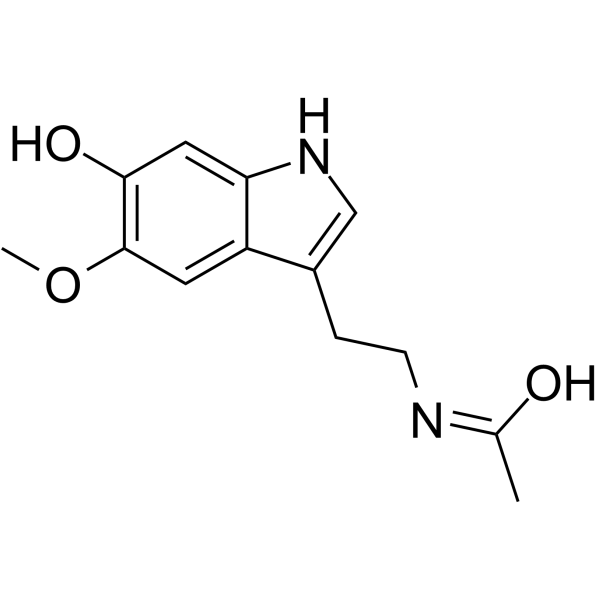
    6-Hydroxymelatonin is the main metabolite of melatonin (HY-B0075) after being metabolized by CYP1A2 and can cross the blood-brain barrier. 6-Hydroxymelatonin has strong free radical scavenging ability and antioxidant activity, and can alleviate oxidative damage caused by various neurotoxins. 6-Hydroxymelatonin can cause oxidative DNA damage in the presence of copper ions through a "non-quinone" type redox cycling mechanism .
    6-Hydroxymelatonin
  • HY-111278
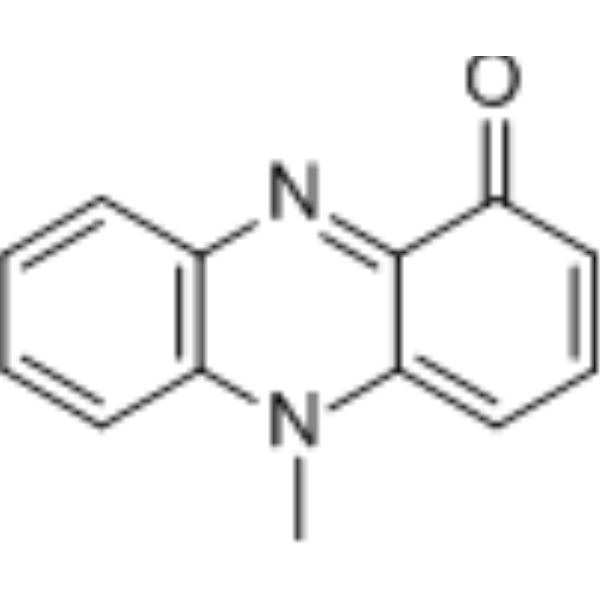
    Pyocyanin
    2 Publications Verification

    Pyocyanine; Sanazin; Sanasin

    Reactive Oxygen Species (ROS) Bacterial Drug Metabolite Endogenous Metabolite Infection Inflammation/Immunology
    Pyocyanin (Pyocyanine) is a toxic, quorum sensing (QS) controlled metabolite produced by Pseudomonas aeruginosa. Pyocyanin is a REDOX active compound that promotes the production of reactive oxygen species (ROS). Pyocyanin has antibacterial and anti-inflammatory activity .
    Pyocyanin
  • HY-W010323

    DHBQ

    Endogenous Metabolite Fungal Others
    2,5-Dihydroxy-1,4-benzoquinone (DHBQ) is a redox-active quinone-based organic ligand with antibacterial activity that can be obtained from fungal metabolites. After 2,5-Dihydroxy-1,4-benzoquinone is incorporated into the Fe (dhbq) metal-organic framework, a two-electron redox process occurs, which helps improve the discharge capacity of Li +-ion battery cathodes. 2,5-Dihydroxy-1,4-benzoquinone can be used to construct conductive metal-organic frameworks suitable for Li +-ion battery cathodes .
    2,5-Dihydroxy-1,4-benzoquinone
  • HY-13568

    LRCL 3794

    Cytochrome P450 COX Lipoxygenase PGE synthase Inflammation/Immunology
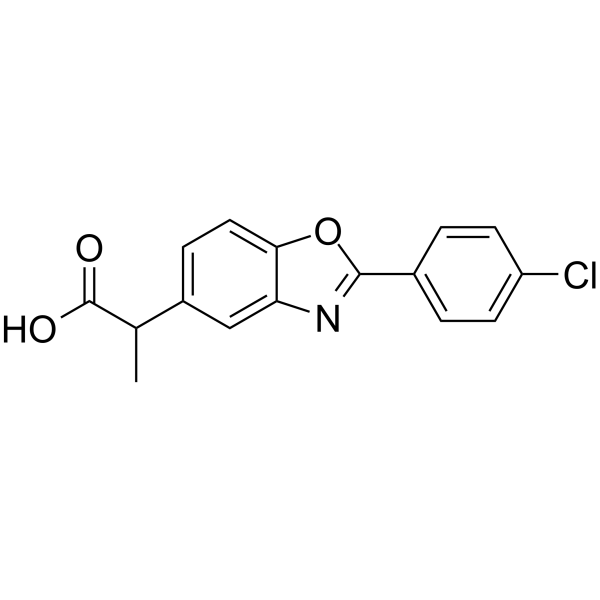
    Benoxaprofen (LRCL 3794) is a nonsteroidal anti-inflammatory agent that blocks the biosynthesis of inflammatory mediators such as leukotrienes and prostaglandins by inhibiting 5-LOX, PGH2 synthase and cytochrome P-450. Benoxaprofen exhibits significant toxicity: it not only alters cellular redox status, uncouples oxidative phosphorylation and disrupts calcium ion homeostasis, but also causes liver injury through the formation of covalent adducts between its active metabolites and hepatic proteins. Benoxaprofen shows strong phototoxicity under ultraviolet irradiation, and induces erythrocyte lysis, mast cell degranulation and histamine release. Benoxaprofen is widely used in studies of urticaria and related phototoxic mechanisms .
    Benoxaprofen
  • HY-127170

    Lipoxygenase Tyrosinase Metabolic Disease Inflammation/Immunology
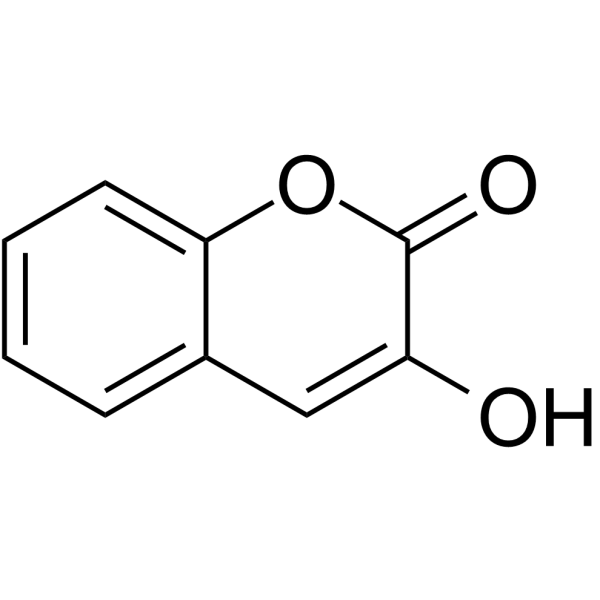
    3-Hydroxycoumarin is an inhibitor of tyrosinase and lipoxygenase with an IC50 for recombinant human tyrosinase (rHT) of 26 μM, and a Ki of 3.39 μM; its IC50 for LOX is 9.5 μM. 3-Hydroxycoumarin has DPPH free radical scavenging activity (IC50 = 31.2 μM). 3-Hydroxycoumarin has photoprotective effects on sea urchin zygotes and embryos .
    3-Hydroxycoumarin
  • HY-W587960

    Histidine-betaine

    Drug Metabolite Drug Intermediate Metabolic Disease
    Hercynine (Histidine-betaine) is an intermediate (precursor) and a redox metabolite of Ergothioneine (HY-N1914), which is found in the fine leaf algae, Schizosaccharomyces cerevisiae and honey bees. Hercynine has no effect on scavenging •OH radicals .
    Hercynine
  • HY-D0300
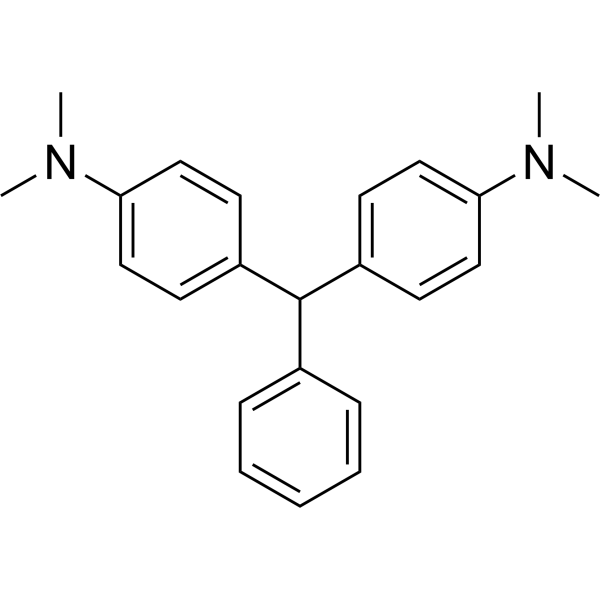
    Leucomalachite green
    1 Publications Verification

    Biochemical Assay Reagents Others
    Leucomalachite green is the major reduced metabolite of malachite green (MG) and has lower cytotoxicity (such as HEp-2 and Caco-2) than malachite green. Leucomalachite green may be involved in interfering with cell metabolism or redox balance and can be used to evaluate its potential harm to human cells as a food contaminant .
    Leucomalachite green
  • HY-N13292

    Antibiotic Bacterial Infection
    Actinorhodin is a blue-pigmented, redox-active microbial secondary metabolite. Actinorhodin is a potent, bacteriostatic, pH-responsive antibiotic. Actinorhodin exhibits antimicrobial activity against Gram-positive bacteria .
    Actinorhodin
  • HY-127170R

    Lipoxygenase Reference Standards Others
    3-Hydroxycoumarin (Standard) is the analytical standard of 3-Hydroxycoumarin. This product is intended for research and analytical applications. 3-hydroxycoumarin is a potent and redox inhibitor of human 15-LOX-1. 3-hydroxycoumarin is recently demonstrated to protect sea urchin reproductive cells against ultraviolet B damage .
    3-Hydroxycoumarin (Standard)
  • HY-111278R

    Pyocyanine (Standard); Sanazin (Standard); Sanasin (Standard)

    Reference Standards Reactive Oxygen Species (ROS) Bacterial Drug Metabolite Endogenous Metabolite Infection Inflammation/Immunology
    Pyocyanin (Standard) is the analytical standard of Pyocyanin. This product is intended for research and analytical applications. Pyocyanin (Pyocyanine) is a toxic, quorum sensing (QS) controlled metabolite produced by Pseudomonas aeruginosa. Pyocyanin is a REDOX active compound that promotes the production of reactive oxygen species (ROS). Pyocyanin has antibacterial and anti-inflammatory activity[1][2][3][4].
    Pyocyanin (Standard)
  • HY-D0300S1

    Isotope-Labeled Compounds Biochemical Assay Reagents Others
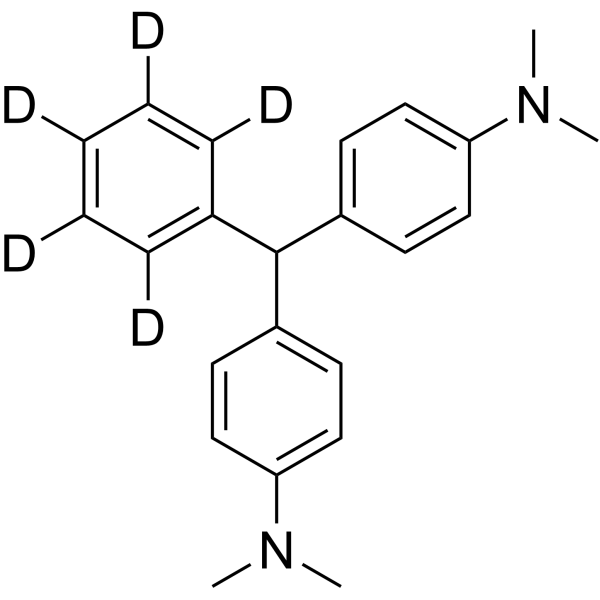
    Leucomalachite green-d6 is the deuterated derivative of Leucomalachite green (HY-D0300). Leucomalachite green is the major reduced metabolite of malachite green (MG) and has lower cytotoxicity (such as HEp-2 and Caco-2) than malachite green. Leucomalachite green may be involved in interfering with cell metabolism or redox balance and can be used to evaluate its potential harm to human cells as a food contaminant .
    Leucomalachite green-d6
  • HY-D0300S

    Isotope-Labeled Compounds Biochemical Assay Reagents Others
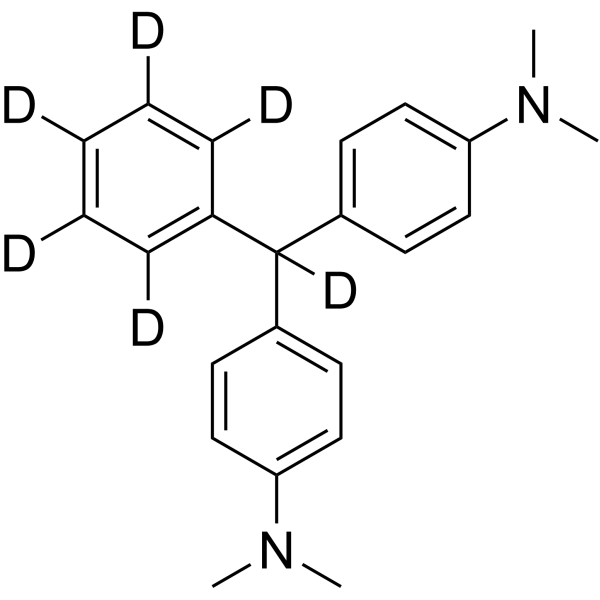
    Leucomalachite green-d5 is the deuterated derivative of Leucomalachite green (HY-D0300). Leucomalachite green is the major reduced metabolite of malachite green (MG) and has lower cytotoxicity (such as HEp-2 and Caco-2) than malachite green. Leucomalachite green may be involved in interfering with cell metabolism or redox balance and can be used to evaluate its potential harm to human cells as a food contaminant .
    Leucomalachite green-d5
  • HY-D0300R

    Biochemical Assay Reagents Reference Standards Others
    Leucomalachite green (Standard) is the analytical standard of Leucomalachite green (HY-D0300). This product is intended for research and analytical applications. Leucomalachite green is the major reduced metabolite of malachite green (MG) and has lower cytotoxicity (such as HEp-2 and Caco-2) than malachite green. Leucomalachite green may be involved in interfering with cell metabolism or redox balance and can be used to evaluate its potential harm to human cells as a food contaminant .
    Leucomalachite green (Standard)
  • HY-W011956R

    Drug Metabolite Reference Standards Endogenous Metabolite Neurological Disease Metabolic Disease
    6-Hydroxymelatonin (Standard) is the analytical standard of 6-Hydroxymelatonin. This product is intended for research and analytical applications. 6-Hydroxymelatonin is the main metabolite of melatonin (HY-B0075) after being metabolized by CYP1A2 and can cross the blood-brain barrier. 6-Hydroxymelatonin has strong free radical scavenging ability and antioxidant activity, and can alleviate oxidative damage caused by various neurotoxins. 6-Hydroxymelatonin can cause oxidative DNA damage in the presence of copper ions through a "non-quinone" type redox cycling mechanism.
    6-Hydroxymelatonin (Standard)
  • HY-W778179

    LRCL 3794-13C,d3

    Isotope-Labeled Compounds COX Cytochrome P450 Lipoxygenase PGE synthase Inflammation/Immunology
    Benoxaprofen- 13C, d3 is the 13C-labeled Benoxaprofen (HY-13568). Benoxaprofen (LRCL 3794) is a nonsteroidal anti-inflammatory agent that blocks the biosynthesis of inflammatory mediators such as leukotrienes and prostaglandins by inhibiting 5-LOX, PGH2 synthase and cytochrome P-450. Benoxaprofen exhibits significant toxicity: it not only alters cellular redox status, uncouples oxidative phosphorylation and disrupts calcium ion homeostasis, but also causes liver injury through the formation of covalent adducts between its active metabolites and hepatic proteins. Benoxaprofen shows strong phototoxicity under ultraviolet irradiation, and induces erythrocyte lysis, mast cell degranulation and histamine release. Benoxaprofen is widely used in studies of urticaria and related phototoxic mechanisms .
    Benoxaprofen-13C,d3
  • HY-13568R

    LRCL 3794 (Standard)

    Reference Standards COX Cytochrome P450 Lipoxygenase PGE synthase Inflammation/Immunology
    Benoxaprofen (Standard) is the analytical standard of Benoxaprofen. This product is intended for research and analytical applications. Benoxaprofen (LRCL 3794) is a nonsteroidal anti-inflammatory agent that blocks the biosynthesis of inflammatory mediators such as leukotrienes and prostaglandins by inhibiting 5-LOX, PGH2 synthase and cytochrome P-450. Benoxaprofen exhibits significant toxicity: it not only alters cellular redox status, uncouples oxidative phosphorylation and disrupts calcium ion homeostasis, but also causes liver injury through the formation of covalent adducts between its active metabolites and hepatic proteins. Benoxaprofen shows strong phototoxicity under ultraviolet irradiation, and induces erythrocyte lysis, mast cell degranulation and histamine release. Benoxaprofen is widely used in studies of urticaria and related phototoxic mechanisms .
    Benoxaprofen (Standard)
  • HY-182917

    Cancer
    MMB-DTCs-1,3-diaminopropane-DTCs-MMB is a Cuproptosis/Ferroptosis/Apoptosis inducer, and serves as the active metabolite of DMAPT-DTCs-1,3-diaminopropane-DTCs-DMAPT dimethanesulfonate (HY-182918). MMB-DTCs-1,3-diaminopropane-DTCs-MMB induces mitochondrial dysfunction, promotes reactive oxygen species (ROS) production, disrupts redox homeostasis, and triggers apoptosis, ferroptosis and cuproptosis in lung cancer cells. MMB-DTCs-1,3-diaminopropane-DTCs-MMB can be used in the research of lung cancer .
    MMB-DTCs-1,3-diaminopropane-DTCs-MMB

Inquiry Online

Your information is safe with us. * Required Fields.

Salutation


Country or Region *

Applicant Name *


Organization Name *

Department *


Email Address *


Product Name *

Cat. No.


Requested quantity *

Phone Number *


Remarks

Inquiry Online

Inquiry Information

Product Name:
Cat. No.:
Quantity:
MCE Japan Authorized Agent:

