




1. Search Result
Search Result
Results for "

relapsed/refractory multiple myeloma

" in MedChemExpress (MCE) Product Catalog:

20

Inhibitors & Agonists

7

Inhibitory Antibodies

2

Isotope-Labeled Compounds

2

Oligonucleotides

Cat. No. Product Name Target Research Areas Chemical Structure
  • HY-10224
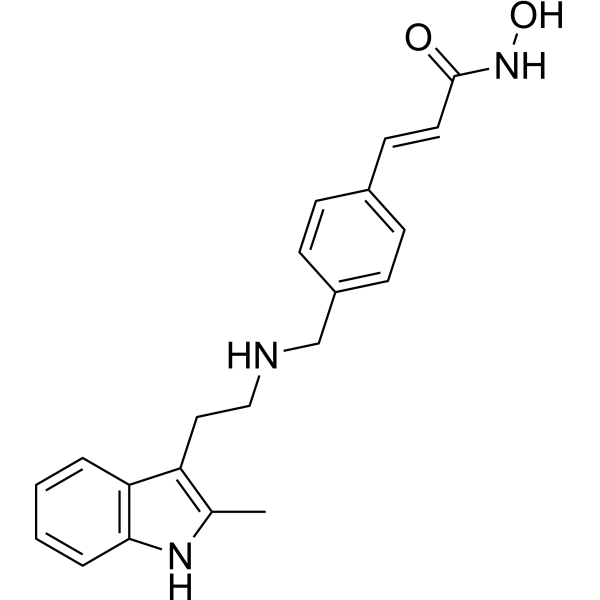
    Panobinostat
    Maximum Cited Publications
    83 Publications Verification

    LBH589; NVP-LBH589

    HDAC Autophagy HIV Apoptosis Cancer
    Panobinostat (LBH589; NVP-LBH589) is a potent and orally active non-selective HDAC inhibitor, and has antineoplastic activities . Panobinostat induces HIV-1 virus production even at low concentration range 8-31 nM, stimulates HIV-1 expression in latently infected cells . Panobinostat induces cell apoptosis and autophagy. Panobinostat can be used for the study of refractory or relapsed multiple myeloma .
    Panobinostat
  • HY-136328
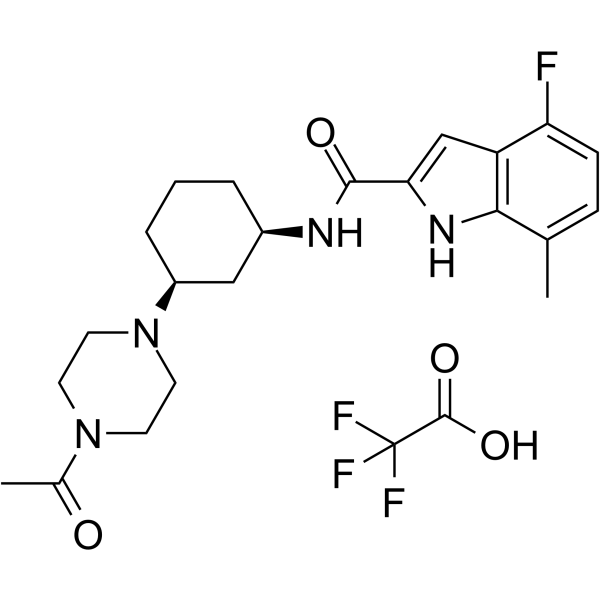
    EZM0414 TFA
    5+ Cited Publications

    SETD2-IN-1 TFA

    Histone Methyltransferase Cancer
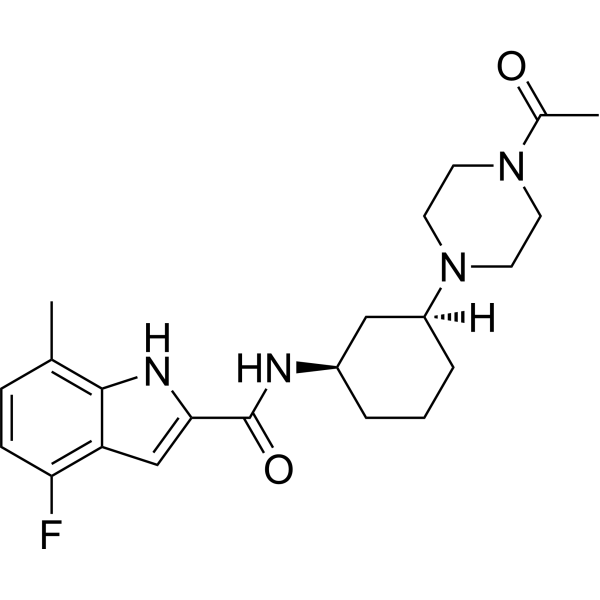
    EZM0414 (SETD2-IN-1) TFA is the TFA salt form of EZM0414 (HY-144858). EZM0414 TFA is a potent, selective, orally active inhibitor of SETD2 (IC50=18 nM in SETD2 biochemical assay; IC50=34 nM in cellular assay). EZM0414 TFA can be used for the research of relapsed or refractory multiple myeloma and diffuse large B-cell lymphoma .
    EZM0414 TFA
  • HY-154812

    KTX-1001

    Histone Methyltransferase CD44 Cancer
    Gintemetostat (KTX-1001) is an orally active, highly specific NSD2/MMSET histone methyltransferase inhibitor with human NSD2 IC50 values ranging 0.460-2.17 nM and NSD2 SET domain IC50 of 2.32 nM and Kd values ranging 6.3-70.4 nM .Gintemetostat reduces H3K36me2 levels, impairs multiple myeloma cell adhesion and colony formation, enhances cytotoxicity, boosts T-cell activation, and sensitizes resistant multiple myeloma cells to other agents .Gintemetostat can be used for the research of multiple myeloma and relapsed and refractory multiple myeloma .
    Gintemetostat
  • HY-P9980
    Belantamab
    2 Publications Verification

    GSK2857914

    ADC Antibody TNF Receptor Cancer
    Belantamab (GSK2857916) is a humanized IgG1 anti-BCMA/TNFRSF17 monoclonal antibody. Belantamab is linked to MMAF (HY-15579) through a non-cleavable ADC linker to synthesize the antibody-active molecule conjugate (ADC) Belantamab mafodotin (HY-P3239). After binding to BCMA on the surface of tumor cells, Belantamab mafodotin enters the cell through receptor-mediated endocytosis. After entering the cell, Belantamab mafodotin releases MMAF, blocks cell division by inhibiting tubulin polymerization, arrests the cell cycle and induces cell apoptosis. Belantamab can be used for the study of multiple myeloma, especially relapsed/refractory multiple myeloma .
    Belantamab
  • HY-P99909

    PF-06863135; RN-613

    TNF Receptor Inflammation/Immunology
    Elranatamab (PF-06863135) is an anti-CD3E/TNFRSF17 human IgG2κ monoclonal antibody . Recommend Isotype Controls: Human IgG2 kappa, Isotype Control (HY-P99002).
    Elranatamab
  • HY-144858
    EZM0414
    5+ Cited Publications

    Histone Methyltransferase Cancer
    EZM0414 is a potent, selective, orally bioavailable inhibitor of SETD2 (IC50=18 nM in SETD2 biochemical assay; IC50=34 nM in cellular assay). EZM0414 can be used for the research of relapsed or refractory multiple myeloma and diffuse large B-cell lymphoma .
    EZM0414
  • HY-P991490

    CD38 CD3 TNF Receptor Cancer
    ISB2001 is a trispecific antibody targeting CD38, CD3 and BCMA. ISB2001 effectively counteracts tumor immune escape mechanisms caused by antigen downregulation, antigen loss, soluble factor competition and other factors. ISB2001 is applicable to relevant research on multiple myeloma and relapsed/refractory multiple myeloma .
    ISB2001
  • HY-P9989

    REGN5458

    CD3 TNF Receptor Cancer
    Linvoseltamab (REGN5458) is a bispecific T-cell engager (BiTE) antibody that specifically binds to B cell maturation antigen (BCMA) and CD3 of T cells, thereby directing T cells to multiple myeloma (MM) cells expressing BCMA and activating T cells to kill tumor cells. Linvoseltamab can be used in research of relapsed/refractory multiple myeloma (RRMM) .
    Linvoseltamab
  • HY-P990980

    CND-106; EMB-06

    CD3 Inflammation/Immunology Cancer
    Cizutamig (CND-106) is a bispecific T-cell engager targeting BCMA and CD3. Cizutamig exhibits immunostimulatory and anti-tumor activities. Cizutamig can be used in research related to relapsed or refractory multiple myeloma and systemic lupus erythematosus .
    Cizutamig
  • HY-10224A
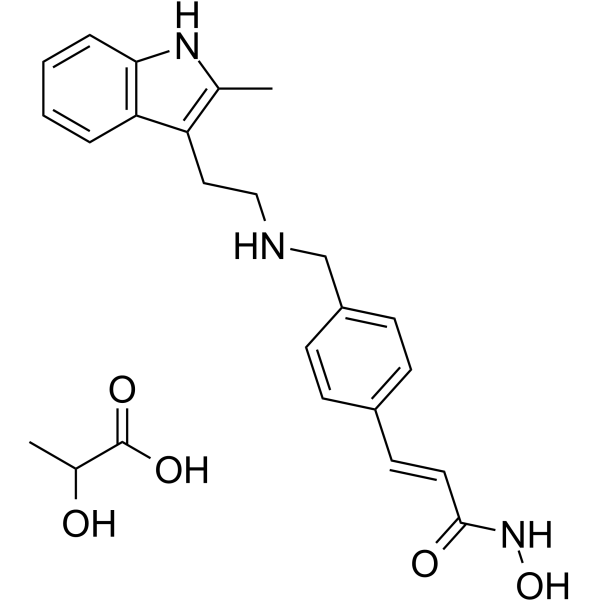
    Panobinostat lactate
    Maximum Cited Publications
    83 Publications Verification

    LBH589 lactate; NVP-LBH589 lactate

    HDAC HIV Autophagy Apoptosis Infection Cancer
    Panobinostat lactate is a potent and orally active non-selective HDAC inhibitor. Panobinostat lactate has antineoplastic activities. Panobinostat lactate effectively disrupts HIV latency. Panobinostat lactate induces cell apoptosis and autophagy. Panobinostat lactate can be used for the study of refractory or relapsed multiple myeloma .
    Panobinostat lactate
  • HY-P990095

    REGN5459

    CD3 TNF Receptor Cancer
    Vonsetamig (REGN5459) is a human bispecific antibody targeting BCMA and CD3. Vonsetamig triggers T-cell activation, induces plasma cell depletion, and triggers low-level cytokine release. Vonsetamig can be used for the research of relapsed/refractory multiple myeloma .
    Vonsetamig
  • HY-P99730
    Mezagitamab
    1 Publications Verification

    TAK-079

    CD38 Apoptosis Inflammation/Immunology Cancer
    Mezagitamab (TAK-079) is a IgG1λ anti-CD38 monoclonal antibody. Mezagitamab depletes tumor cells expressing CD38 through antibody and complement dependent cytotoxicity. Mezagitamab has potential application in relapsed/refractory multiple myeloma (RRMM) and idiopathic thrombocytopenic purpura (ITP) .
    Mezagitamab
  • HY-P99454

    ABBV-838

    Antibody-Drug Conjugates (ADCs) Cancer
    Azintuxizumab vedotin (ABBV-838) is an antibody–drug conjugate (ADC) targeting a unique epitope of CD2 subset 1, a cell-surface glycoprotein expressed on multiple myeloma cells .
    Azintuxizumab vedotin
  • HY-177632

    ION-935918; ION251

    IFNAR Cancer
    Frenlosirsen is an antisense oligonucleotide targeted to IRF4. It is used for study of relapsed/refractory multiple myeloma (RRMM).
    Frenlosirsen
  • HY-10224R
    Panobinostat (Standard)
    80+ Cited Publications

    LBH589 (Standard); NVP-LBH589 (Standard)

    Reference Standards HDAC Autophagy HIV Apoptosis Infection Cancer
    Panobinostat (Standard) (LBH589 (Standard)) is the analytical standard of Panobinostat (HY-10224). This product is intended for research and analytical applications. Panobinostat is a potent and orally active non-selective HDAC inhibitor, and has antineoplastic activities . Panobinostat induces HIV-1 virus production even at low concentration range 8-31 nM, stimulates HIV-1 expression in latently infected cells . Panobinostat induces cell apoptosis and autophagy. Panobinostat can be used for the study of refractory or relapsed multiple myeloma .
    Panobinostat (Standard)
  • HY-171754

    Antibody-Drug Conjugates (ADCs) Cancer
    LM-305 is an anti-G protein-coupled receptor class 5 member D (GPRC5D) antibody-drug conjugate (ADC). LM-305 consists of Anti-GPRC5D Antibody (HY-P991197) and VcMMAE (HY-15575). LM-305 exhibits potent cytotoxicity against multiple myeloma cells (NCI-H929 and MM.1R) with IC50 values ranging from 0.1 to 0.3 nM. LM-305 can be used in the study of GPRC5D-related relapsed and refractory multiple myeloma (RRMM) .
    LM-305
  • HY-177632A

    ION-935918 sodium; ION251 sodium

    IFNAR Cancer
    Frenlosirsen sodium is an antisense oligonucleotide targeted to IRF4. It is used for study of relapsed/refractory multiple myeloma (RRMM).
    Frenlosirsen sodium
  • HY-10224S

    LBH589-d4; NVP-LBH589-d4

    HDAC Autophagy HIV Apoptosis Cancer
    Panobinostat-d4 is the deuterium labeled Panobinostat. Panobinostat (LBH589; NVP-LBH589) is a potent and orally active non-selective HDAC inhibitor, and has antineoplastic activities[1][2]. Panobinostat induces HIV-1 virus production even at low concentration range 8-31 nM, stimulates HIV-1 expression in latently infected cells[4]. Panobinostat induces cell apoptosis and autophagy. Panobinostat can be used for the study of refractory or relapsed multiple myeloma[3].
    Panobinostat-d4
  • HY-10224S1

    LBH589-d4 hydrochloride; NVP-LBH589-d4 hydrochloride

    Isotope-Labeled Compounds HDAC Autophagy HIV Apoptosis Cancer
    Panobinostat-d4 (hydrochloride) is deuterium labeled Panobinostat. Panobinostat (LBH589; NVP-LBH589) is a potent and orally active non-selective HDAC inhibitor, and has antineoplastic activities[1][2]. Panobinostat induces HIV-1 virus production even at low concentration range 8-31 nM, stimulates HIV-1 expression in latently infected cells[4]. Panobinostat induces cell apoptosis and autophagy. Panobinostat can be used for the study of refractory or relapsed multiple myeloma[3].
    Panobinostat-d4 hydrochloride
  • HY-10224AR

    LBH589 lactate (Standard); NVP-LBH589 lactate (Standard)

    Reference Standards HDAC HIV Autophagy Apoptosis Infection Cancer
    Panobinostat lactate (Standard) is the analytical standard of Panobinostat lactate (HY-10224A). This product is intended for research and analytical applications. Panobinostat lactate is a potent and orally active non-selective HDAC inhibitor. Panobinostat lactate has antineoplastic activities. Panobinostat lactate effectively disrupts HIV latency. Panobinostat lactate induces cell apoptosis and autophagy. Panobinostat lactate can be used for the study of refractory or relapsed multiple myeloma .
    Panobinostat lactate (Standard)

Inquiry Online

Your information is safe with us. * Required Fields.

Salutation


Country or Region *

Applicant Name *


Organization Name *

Department *


Email Address *


Product Name *

Cat. No.


Requested quantity *

Phone Number *


Remarks

Inquiry Online

Inquiry Information

Product Name:
Cat. No.:
Quantity:
MCE Japan Authorized Agent:

