1. Search Result
Search Result
Results for "

reproductive disorder

" in MedChemExpress (MCE) Product Catalog:

26

Inhibitors & Agonists

1

Screening Libraries

8

Isotope-Labeled Compounds

Cat. No. Product Name Target Research Areas Chemical Structure
  • HY-106591A

    Vinylcyclohexene diepoxide

    Environmental Pollutants Akt Apoptosis mTOR Reactive Oxygen Species (ROS) PI3K Endocrinology
    4-Vinylcyclohexene dioxide (4-Vinylcyclohexene diepoxide) is an orally active metabolite of 4-vinylcyclohexene. 4-Vinylcyclohexene dioxide induces Apoptosis, increases intracellular ROS, and activates the PI3K/Akt/mTOR pathway. 4-Vinylcyclohexene dioxide selectively damages small ovarian follicles, inhibits granulosa cell function, and disrupts the male reproductive system. 4-Vinylcyclohexene dioxide can be used in the study of premature ovarian insufficiency, reproductive toxicity, and related fertility disorders .
    4-Vinylcyclohexene dioxide
  • HY-B0823
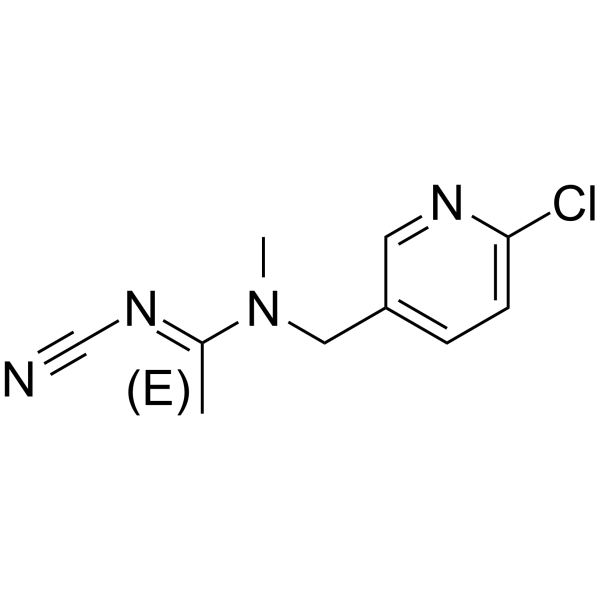
    Acetamiprid
    2 Publications Verification

    Environmental Pollutants nAChR Neurological Disease
    Acetamiprid is a neonicotinoid insecticide used worldwide. Acetamiprid is a nicotinic acetylcholine receptor (nAChR) agonist, and is shown to be associated with neuromuscular and reproductive disorders .
    Acetamiprid
  • HY-B1095
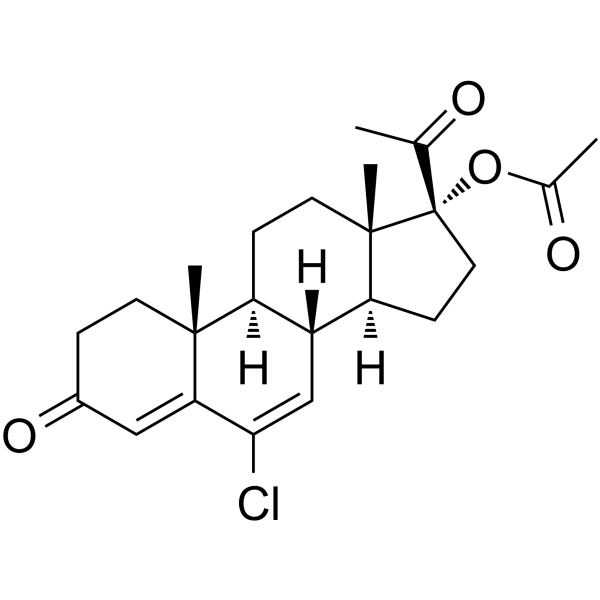
    Chlormadinone acetate
    1 Publications Verification

    Progesterone Receptor Androgen Receptor Glucocorticoid Receptor GABA Receptor Neurological Disease Metabolic Disease
    Chlormadinone acetate is a progestogen with potent progestogenic activity and antiandrogenic effects. Chlormadinone acetate acts on glucocorticoid receptor, progesterone receptor, androgen receptor, and GABAA receptor. Chlormadinone acetate induces endometrial proliferation in estrogen-pretreated rabbits, inhibits testosterone-stimulated growth of the prostate and seminal vesicles in castrated rats, and reduces the thymus and adrenal weights in juvenile rats. Chlormadinone acetate is applicable to research related to diseases such as depression and reproductive metabolic disorders .
    Chlormadinone acetate
  • HY-W002199

    6:2 FTOH; 1H,1H,2H,2H-Perfluoro-1-octanol; 2-(Perfluorohexyl)ethanol

    Bacterial Apoptosis ERK TNF Receptor Infection Neurological Disease
    6:2 Fluorotelomer alcohol (6:2 FTOH) is an orally active, blood-brain barrier-permeable modulator of cyclin D1 and ETS1. 6:2 Fluorotelomer alcohol downregulates cyclin D1 expression, upregulates ETS1 via the TNF-α/ERK 1/2 pathway, impairs mitochondrial membrane potential and respiratory function, increases reactive oxygen species levels, disrupts calcium homeostasis and activates endoplasmic reticulum stress markers, and induces cell proliferation inhibition and endothelial-mesenchymal transition. Furthermore, 6:2 Fluorotelomer alcohol induces morphological abnormalities in zebrafish embryos and liver developmental damage, while disrupting the brain immune microenvironment in mice, causing systemic toxicity and delayed pup maturation in CD-1 mice. 6:2 Fluorotelomer alcohol also induces cortical neuron apoptosis, glial cell activation, synaptic abnormalities, colonic barrier damage, intestinal dysbiosis and autism spectrum disorder-like symptoms in mice. 6:2 Fluorotelomer alcohol shows no mutagenic, clastogenic, primary skin/eye irritation or skin sensitizing effects, exhibits no selective reproductive toxicity in CD-1 mice, and is classified as GHS Category 4 for acute oral toxicity. 6:2 Fluorotelomer alcohol can be used in studies of neurodevelopmental disorders and autism spectrum disorders .
    6:2 Fluorotelomer alcohol
  • HY-N6710

    Estrogen Receptor/ERR Inflammation/Immunology
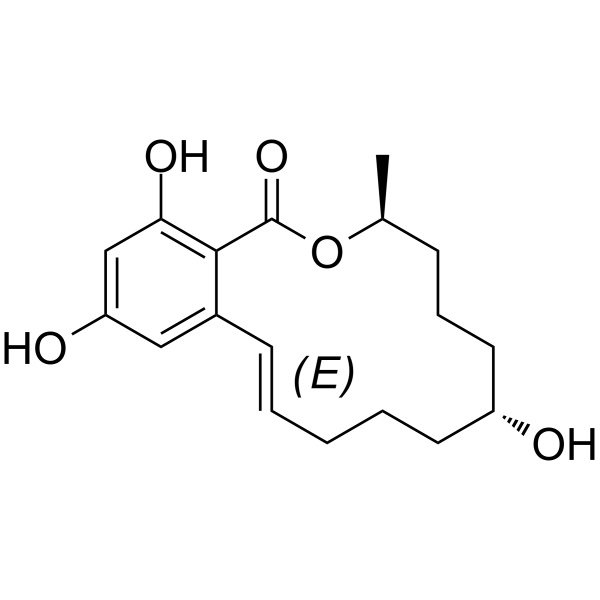
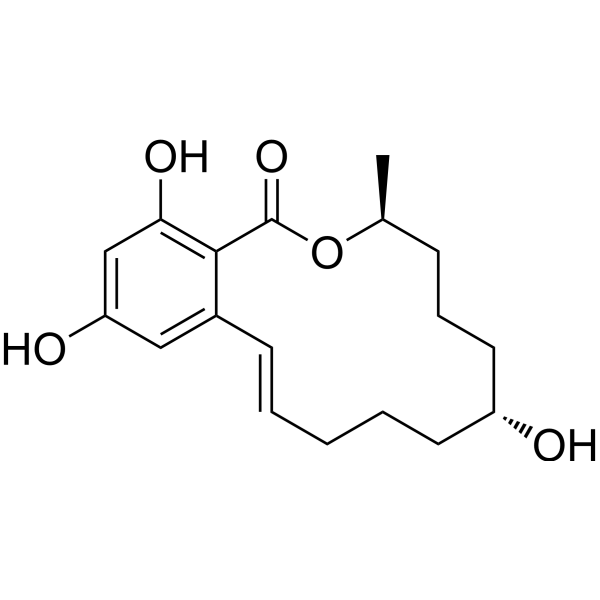
    α-Zearalenol is a Mycotoxin with high affinity for the estrogen receptors (ER), α-Zearalenol is the derivative of zearalenone (ZEN), causes reproductive disorders in animals, due to its xenoestrogenic effects .
    α-Zearalenol
  • HY-W036120

    2,2′,4,4′-Tetrahydroxybenzophenone

    Environmental Pollutants Glycosidase Estrogen Receptor/ERR Pregnane X Receptor (PXR) Metabolic Disease Endocrinology
    Benzophenone-2 (2,2',4,4'-Tetrahydroxybenzophenone) is an organic ultraviolet absorber that is widely used in personal care products and industrial products such as plastics and coatings. Benzophenone-2 is an endocrine disruptor that can interfere with estrogen receptors (ERα receptor) and pregnane X receptor (PXR receptor) activity, leading to reproductive toxicity, immune disorders, and metabolic abnormalities. Benzophenone-2 can inhibit the activity of α-glucosidase (IC50 = 49.72 μM), and can be used for research on diabetes .
    Benzophenone-2
  • HY-B2015

    Environmental Pollutants Insecticide Parasite Cholinesterase (ChE) Infection
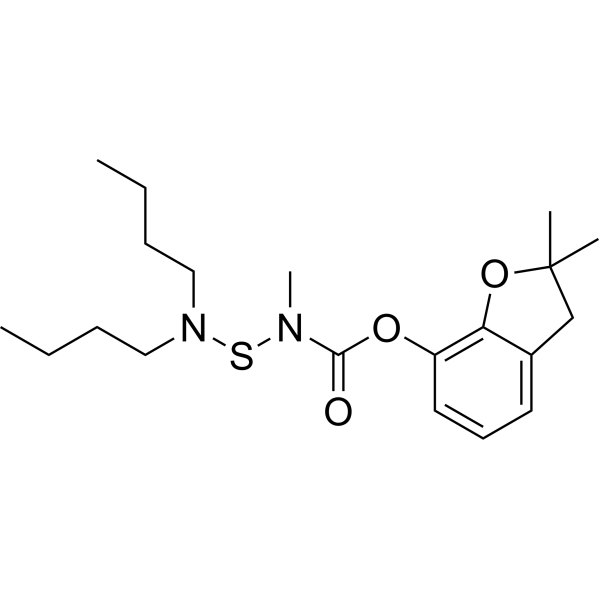
    Carbosulfan is an orally active AChE inhibitor that hydrolyzes to Carbofuran in organisms to exert insecticidal effects. Carbosulfan exhibits broad-spectrum insecticidal activity, and it also induces severe oxidative stress by enhancing lipid peroxidation and impairing the antioxidant defense system. Carbosulfan causes reproductive toxicity in male rats and developmental disorders in their offspring. Carbosulfan shows persistence in paddy field environments and potential hazards to non-target organisms, and it is commonly used in studies related to reproductive toxicity and environmental risk assessment .
    Carbosulfan
  • HY-W753602

    Isotope-Labeled Compounds Neurological Disease
    Acetamiprid-N-desmethyl- 13C,d3 is the 13C and deuterium labeled isotope of Acetamiprid-N-desmethyl( 13C,d3)(HY-B0823).Acetamiprid is a nAChR agonist that has been implicated in neuromuscular and reproductive disorders.
    Acetamiprid-N-desmethyl-13C,d3
  • HY-12073

    Progesterone Receptor Endocrinology Cancer
    W-255348 is an effective non-steroidal progesterone receptor (PR) antagonist that acquires antagonist activity by binding to and subsequently blocking progesterone induced nuclear accumulation, phosphorylation, and PR promoter interactions. WAY-255348 can be used in the research of reproductive disorders or PR-positive breast cancer .
    WAY-255348
  • HY-W766497

    Isotope-Labeled Compounds Estrogen Receptor/ERR Inflammation/Immunology
    Alpha-Zearalenol-d7 is the deuterium labeled α-Zearalenol (HY-N6710). α-Zearalenol is a Mycotoxin with high affinity for the estrogen receptors (ER). α-Zearalenol is the derivative of zearalenone (ZEN), causes reproductive disorders in animals, due to its xenoestrogenic effects .
    Alpha-Zearalenol-d7
  • HY-B0823R

    Reference Standards nAChR Neurological Disease
    Acetamiprid (Standard) is the analytical standard of Acetamiprid. This product is intended for research and analytical applications. Acetamiprid is a neonicotinoid insecticide used worldwide. Acetamiprid is a nicotinic acetylcholine receptor (nAChR) agonist, and is shown to be associated with neuromuscular and reproductive disorders .
    Acetamiprid (Standard)
  • HY-W040047S

    Endogenous Metabolite Isotope-Labeled Compounds Endocrinology
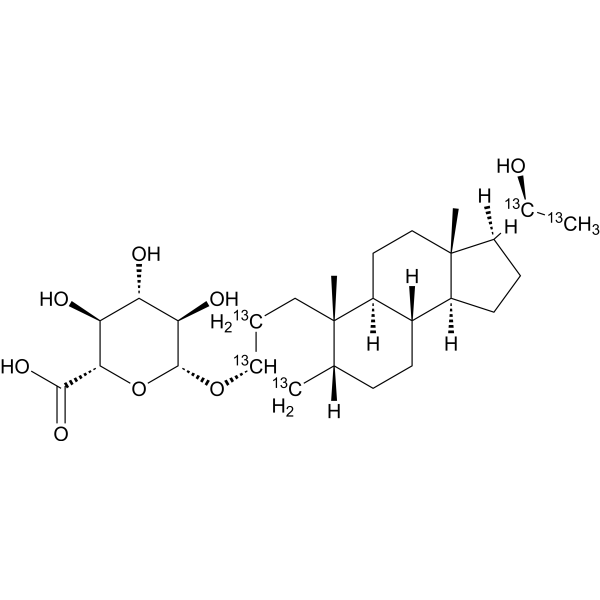
    Pregnanediol 3-glucuronide is the main end-metabolite of Progesterone (HY-N0437). Pregnanediol 3-glucuronide is a metabolite of Progesterone formed by hydroxylation and glucuronidation in the liver, with high hydrophilicity and easy excretion through urine. Pregnanediol 3-glucuronide excretion rate of ≥ 9 μmol/24 h can serve as biochemical evidence of ovulation. Pregnanediol 3-glucuronide reflects the quality of the luteal phase, and a level of < 7 μmol/24 h may indicate anovulation or luteal insufficiency. Pregnanediol 3-glucuronide holds significant importance in monitoring female reproductive health, assessing pregnancy, and diagnosing endocrine disorders.
    Pregnanediol 3-glucuronide-13C5
  • HY-B0823A

    nAChR Drug Isomer Neurological Disease
    (E/Z)-Acetamiprid is the E/Z mixture of Acetamiprid (HY-B0823). Acetamiprid is a neonicotinoid insecticide used worldwide. Acetamiprid is a nicotinic acetylcholine receptor (nAChR) agonist, and is shown to be associated with neuromuscular and reproductive disorders .
    (E/Z)-Acetamiprid
  • HY-129639

    DL-204-IT

    Prostaglandin Receptor Others
    L11204 (DL-204-IT) is a potent inhibitor of prostaglandin metabolism. L11204 inhibits PMS-induced superovulation and reduced the number of recoverable ova in the oviducts of hamsters. L11204 also inhibits chorionic gonadotrophin-induced ovarian hypertrophy and steroidogenesi in rats. L11204 is promising for research of reproductive system disorders .
    L11204
  • HY-120955

    Prostaglandin Receptor Others
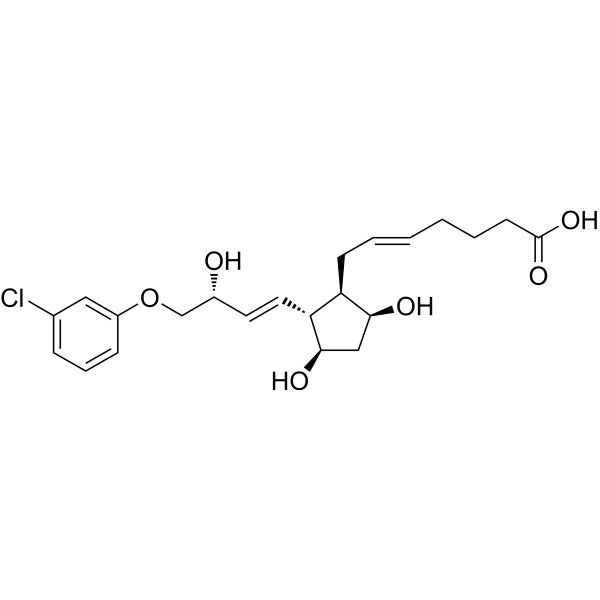
    Cloprostol, a synthetic derivative of prostaglandin F2α, is used as an ossified in veterinary medicine and the research of reproductive disorders in cattle, pigs and horses. (+)-5-trans Cloprostenol is a secondary impurity produced during the synthesis of (+) -cloprostenol .
    (+)-5-trans Cloprostenol
  • HY-N6710S

    Isotope-Labeled Compounds Estrogen Receptor/ERR Inflammation/Immunology
    α-Zearalenol-d4 is a deuterated labeled α-Zearalenol . α-Zearalenol is a Mycotoxin with high affinity for the estrogen receptors (ER), α-Zearalenol is the derivative of zearalenone (ZEN), causes reproductive disorders in animals, due to its xenoestrogenic effects .
    α-Zearalenol-d4
  • HY-N6710R

    Reference Standards Estrogen Receptor/ERR Inflammation/Immunology
    α-Zearalenol (Standard) is the analytical standard of α-Zearalenol. This product is intended for research and analytical applications. α-Zearalenol is a Mycotoxin with high affinity for the estrogen receptors (ER), α-Zearalenol is the derivative of zearalenone (ZEN), causes reproductive disorders in animals, due to its xenoestrogenic effects .
    α-Zearalenol (Standard)
  • HY-B2015S

    Isotope-Labeled Compounds Parasite Insecticide Cholinesterase (ChE) Infection
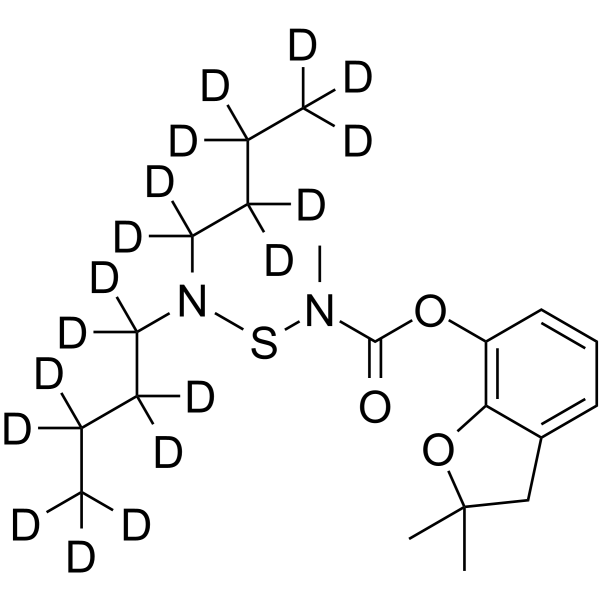
    Carbosulfan-d18 is the deuterium labeled Carbosulfan. Carbosulfan is an orally active AChE inhibitor that hydrolyzes to Carbofuran in organisms to exert insecticidal effects. Carbosulfan exhibits broad-spectrum insecticidal activity, and it also induces severe oxidative stress by enhancing lipid peroxidation and impairing the antioxidant defense system. Carbosulfan causes reproductive toxicity in male rats and developmental disorders in their offspring. Carbosulfan shows persistence in paddy field environments and potential hazards to non-target organisms, and it is commonly used in studies related to reproductive toxicity and environmental risk assessment .
    Carbosulfan-d18
  • HY-B2015R

    Reference Standards Parasite Insecticide Cholinesterase (ChE) Infection
    Carbosulfan (Standard) is the analytical standard of Carbosulfan. This product is intended for research and analytical applications. Carbosulfan is an orally active AChE inhibitor that hydrolyzes to Carbofuran in organisms to exert insecticidal effects. Carbosulfan exhibits broad-spectrum insecticidal activity, and it also induces severe oxidative stress by enhancing lipid peroxidation and impairing the antioxidant defense system. Carbosulfan causes reproductive toxicity in male rats and developmental disorders in their offspring. Carbosulfan shows persistence in paddy field environments and potential hazards to non-target organisms, and it is commonly used in studies related to reproductive toxicity and environmental risk assessment .
    Carbosulfan (Standard)
  • HY-B1095S1

    Isotope-Labeled Compounds Progesterone Receptor Neurological Disease Metabolic Disease
    Chlormadinone acetate-d6-1 is deuterium labeled Chlormadinone acetate (HY-B1095). Chlormadinone acetate is a progestogen with potent progestogenic activity and antiandrogenic effects. Chlormadinone acetate acts on glucocorticoid receptor, progesterone receptor, androgen receptor, and GABAA receptor. Chlormadinone acetate induces endometrial proliferation in estrogen-pretreated rabbits, inhibits testosterone-stimulated growth of the prostate and seminal vesicles in castrated rats, and reduces the thymus and adrenal weights in juvenile rats. Chlormadinone acetate is applicable to research related to diseases such as depression and reproductive metabolic disorders .
    Chlormadinone acetate-d6-1
  • HY-B1095R

    Reference Standards Progesterone Receptor Neurological Disease Metabolic Disease
    Chlormadinone acetate (Standard) is the analytical standard of Chlormadinone acetate (HY-B1095). This product is intended for research and analytical applications. Chlormadinone acetate is a progestogen with potent progestogenic activity and antiandrogenic effects. Chlormadinone acetate acts on glucocorticoid receptor, progesterone receptor, androgen receptor, and GABAA receptor. Chlormadinone acetate induces endometrial proliferation in estrogen-pretreated rabbits, inhibits testosterone-stimulated growth of the prostate and seminal vesicles in castrated rats, and reduces the thymus and adrenal weights in juvenile rats. Chlormadinone acetate is applicable to research related to diseases such as depression and reproductive metabolic disorders.
    Chlormadinone acetate (Standard)
  • HY-B1095S2

    Isotope-Labeled Compounds Progesterone Receptor Neurological Disease Metabolic Disease
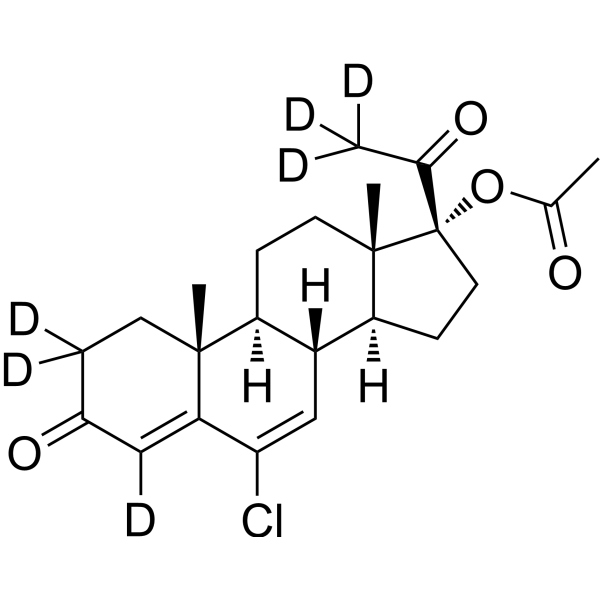
    Chlormadinone acetate-d3 is the deuterium labeled Chlormadinone acetate (HY-B1095). Chlormadinone acetate is a progestogen with potent progestogenic activity and antiandrogenic effects. Chlormadinone acetate acts on glucocorticoid receptor, progesterone receptor, androgen receptor, and GABAA receptor. Chlormadinone acetate induces endometrial proliferation in estrogen-pretreated rabbits, inhibits testosterone-stimulated growth of the prostate and seminal vesicles in castrated rats, and reduces the thymus and adrenal weights in juvenile rats. Chlormadinone acetate is applicable to research related to diseases such as depression and reproductive metabolic disorders .
    Chlormadinone acetate-d3
  • HY-N6710S1

    Isotope-Labeled Compounds Inflammation/Immunology
    α-Zearalenol- 13C18 is the 13C-labeled α-Zearalenol. α-Zearalenol is a Mycotoxin with high affinity for the estrogen receptors (ER). α-Zearalenol is the derivative of zearalenone (ZEN), causes reproductive disorders in animals, due to its xenoestrogenic effects .
    α-Zearalenol-13C18
  • HY-106591AR

    Vinylcyclohexene diepoxide (Standard)

    Reference Standards Apoptosis Reactive Oxygen Species (ROS) PI3K Akt mTOR Endocrinology
    4-Vinylcyclohexene dioxide (Standard) is the analytical standard of 4-Vinylcyclohexene dioxide (HY-106591A). This product is intended for research and analytical applications. 4-Vinylcyclohexene dioxide (4-Vinylcyclohexene diepoxide) is an orally active metabolite of 4-vinylcyclohexene. 4-Vinylcyclohexene dioxide induces Apoptosis, increases intracellular ROS, and activates the PI3K/Akt/mTOR pathway. 4-Vinylcyclohexene dioxide selectively damages small ovarian follicles, inhibits granulosa cell function, and disrupts the male reproductive system. 4-Vinylcyclohexene dioxide can be used in the study of premature ovarian insufficiency, reproductive toxicity, and related fertility disorders .
    4-Vinylcyclohexene dioxide (Standard)
  • HY-135446

    Endothelin Receptor Cardiovascular Disease Endocrinology
    BQ-610 is a selective antagonist of the endothelin A receptor (ETA receptor). BQ-610 specifically blocks the ETA receptor, competitively inhibiting the binding of endothelin-1 (ET-1) (a vasoconstrictive peptide) to the receptor, thereby blocking the effects of ET-1 such as vascular smooth muscle contraction, cell mitosis, and inhibition of hormone secretion. BQ-610 significantly alleviates cerebral vasospasm in rabbits. BQ-610 blocks the bronchial epithelial and pulmonary vascular cell proliferation caused by cigarette smoke in rat models. BQ-610 can delay the natural luteal regression in the cow's uterus. BQ-610 can be used for research on vasospasm, abnormal cell proliferation, and reproductive endocrine disorders .
    BQ-610
  • HY-W715812

    Fungal Apoptosis Caspase Reactive Oxygen Species (ROS) MDM-2/p53 SOD Bcl-2 Family PERK JNK p38 MAPK Cardiovascular Disease Infection Endocrinology Cancer
    Bromuconazole is a triazole fungicide with oral efficacy and blood-brain barrier permeability . Bromuconazole protects crops from various fungal contaminations. Bromuconazole exhibits cytotoxicity against a variety of cancer cells, induces G0/G1 cell cycle arrest and inhibits DNA synthesis in cancer cells, and triggers cytoskeletal structural disorder, genotoxic damage, apoptotic (apoptosis) cell death, and mitochondrial membrane depolarization. Bromuconazole activates caspase-3, induces excessive production of ROS, p53 and Bax, lipid peroxidation, increased activities of SOD and CAT, and downregulates Bcl-2. By upregulating p-ERK1/2 and p-JNK, Bromuconazole disrupts the MAPK signaling pathway, impairs the cellular stress response of human trophoblast cells and endometrial cells, and damages the implantation process . Bromuconazole is applicable to research related to glioma, colon cancer, reproductive injury (implantation dysfunction), and cardiac dysfunction .
    Bromuconazole

Inquiry Online

Your information is safe with us. * Required Fields.

Salutation


Country or Region *

Applicant Name *


Organization Name *

Department *


Email Address *


Product Name *

Cat. No.


Requested quantity *

Phone Number *


Remarks

Inquiry Online

Inquiry Information

Product Name:
Cat. No.:
Quantity:
MCE Japan Authorized Agent:

