1. Search Result
Search Result
Results for "

respiratory burst

" in MedChemExpress (MCE) Product Catalog:

13

Inhibitors & Agonists

1

Biochemical Assay Reagents

3

Natural
Products

Targets Recommended:
Cat. No. Product Name Target Research Areas Chemical Structure
  • HY-15511
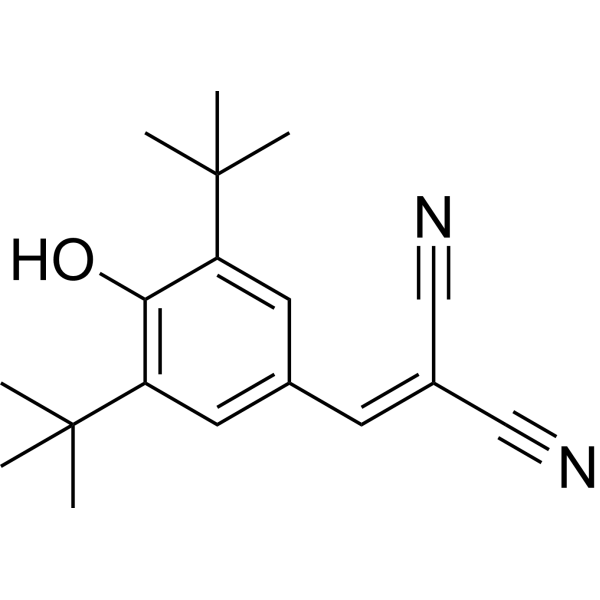
    Tyrphostin A9
    5+ Cited Publications

    Tyrphostin 9; Malonoben

    Environmental Pollutants VEGFR PDGFR Influenza Virus Infection Cancer
    Tyrphostin A9, a PDGFR inhibitor, is a potent inducer of mitochondrial fission. Tyrphostin A9 emerged as the most potent and selective of 51 tyrosine kinase inhibitors tested against the TNF-induced respiratory burst. Tyrphostin A9 has anti-influenza virus activities.
    Tyrphostin A9
  • HY-D0976
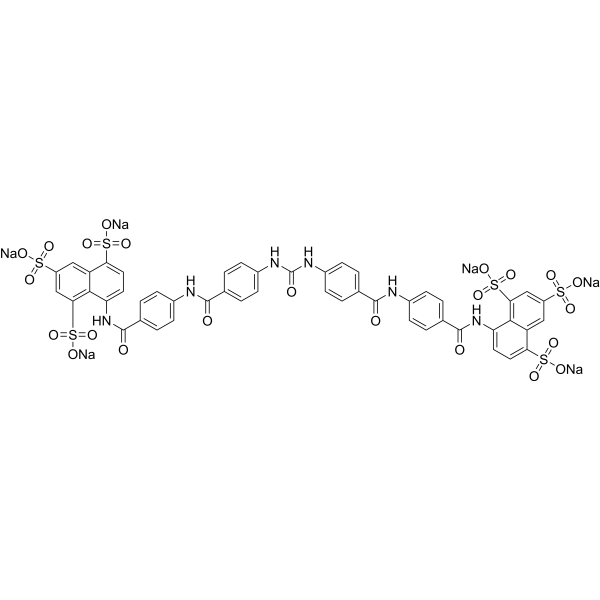
    NF279
    1 Publications Verification

    P2X Receptor HIV NTPDase CXCR Infection
    NF279 is a selective P2X1 receptor antagonist and NTPDase inhibitor, with a P2X1 IC50 value of 19 nM. NF279 suppresses GABA-evoked currents, reduces ATP-excited respiratory activity, alters hypoglossal nerve burst parameters, and blocks CXCR4, CCR5, CXCR3, and CXCR7-mediated calcium responses. NF279 arrests HIV-1 fusion downstream of CD4 binding, inhibits R5- and X4-tropic HIV-1 strains. NF279 can be used for the research of HIV-1 infection .
    NF279
  • HY-121641

    Reactive Oxygen Species (ROS)
    Nitrosobenzene is a radical scavenger that can be used to study oxidative DNA damage and the respiratory burst reaction of neutrophils induced by nitro compounds .
    Nitrosobenzene
  • HY-173556

    GPR84 Inflammation/Immunology
    GPR84 agonist-2 is a selective GPR84 agonist with no activity at free fatty acid receptors. GPR84 agonist-2 enhances GPR84-mediated signaling above basal levels and potentiates agonist-induced GPR84 activation. GPR84 agonist‑2 can be used for research on GPR84-related physiological mechanisms .
    GPR84 agonist-2
  • HY-W749980A

    cis-9,10-Epoxy-12(Z)-octadecenoic acid

    Endogenous Metabolite Others
    cis-Coronaric acid is the 9,10-cis epoxide of linoleic acid, generated by neutrophils during the oxidative burst. It has been recovered from the lungs of hyperoxic rats and from humans with acute respiratory distress syndrome. Mitochondrial dysfunction is the main feature of cis-Coronaric acid cytotoxicity, which may be due to the diol metabolites as well as the parent epoxide.
    cis-Coronaric acid
  • HY-15511R

    Tyrphostin 9 (Standard); Malonoben (Standard)

    VEGFR Influenza Virus PDGFR Reference Standards Infection Cancer
    Tyrphostin A9 (Standard) is the analytical standard of Tyrphostin A9. This product is intended for research and analytical applications. Tyrphostin A9, a PDGFR inhibitor, is a potent inducer of mitochondrial fission. Tyrphostin A9 emerged as the most potent and selective of 51 tyrosine kinase inhibitors tested against the TNF-induced respiratory burst. Tyrphostin A9 has anti-influenza virus activities.
    Tyrphostin A9 (Standard)
  • HY-N12215

    Others Others
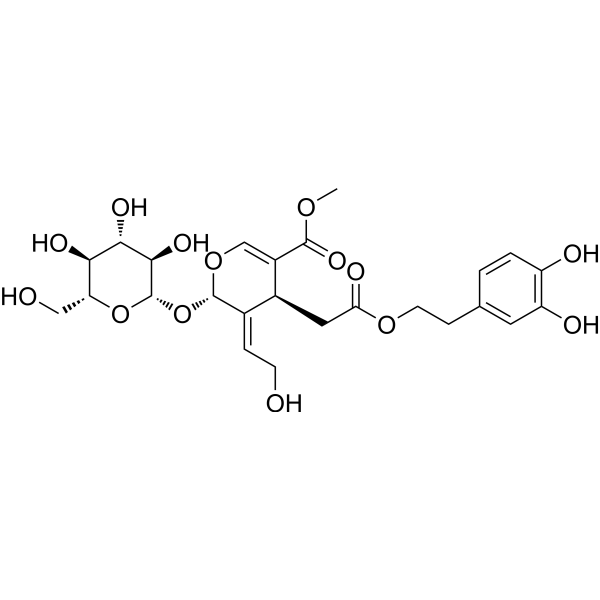
    10-Hydroxyoleuropein (compound 11) is isolated from the rhizome of Cyperus rotundus. 10-Hydroxyoleuropein inhibits the respiratory burst of macrophages (IC50: 693 μM) .
    10-Hydroxyoleuropein
  • HY-W744699

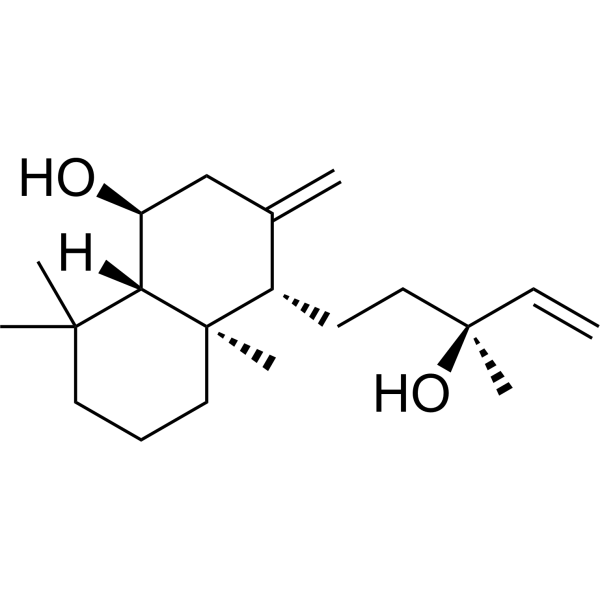
    (+)-Larixol

    Src ERK Akt Inflammation/Immunology
    Larixol is an fMLP inhibitor and also inhibits Src kinase, ERK1/2, p38 and AKT phosphorylation signals in immune regulation. Larixol can interfere with the interaction between the βγ subunit of the fMLP receptor Gi protein and its downstream molecules, thereby inhibiting fMLP-induced respiratory burst. Larixol inhibits fMLP (0.1 μM)-induced superoxide anion production (IC50: 1.98 μM), cathepsin G release (IC50: 2.76 μM), and chemotaxis. Larixol improves neutrophil hyperactivation and reduces inflammation or tissue damage. A series of Larixol derivatives were found to have inhibitory effects on FSGS-related TRPC6 functional mutants .
    Larixol
  • HY-N5051

    Others Inflammation/Immunology
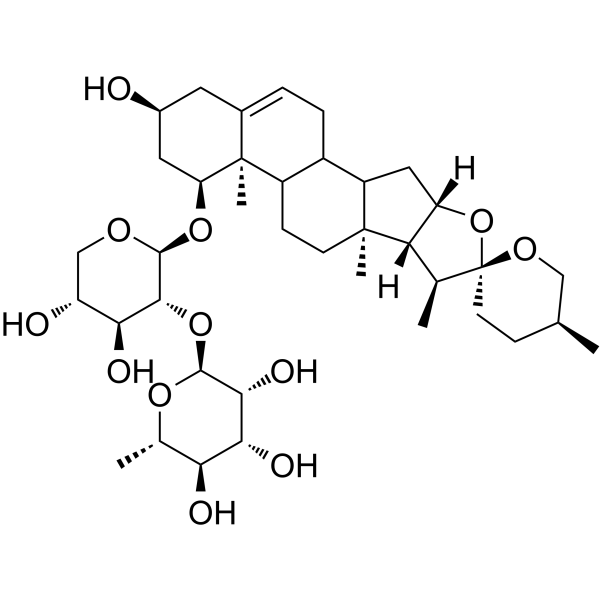
    25(S)-Ruscogenin-1-O-α-L-rhamnopyranosyl (1→2)-β-D-xylopyranoside shows inhibitory activity of neutrophil respiratory burst stimulated by PMA(phorbol myristate acetate) .
    25(S)-Ruscogenin-1-O-α-L-rhamnopyranosyl (1→2)-β-D-xylopyranoside
  • HY-138877A

    Phosphatase Cancer
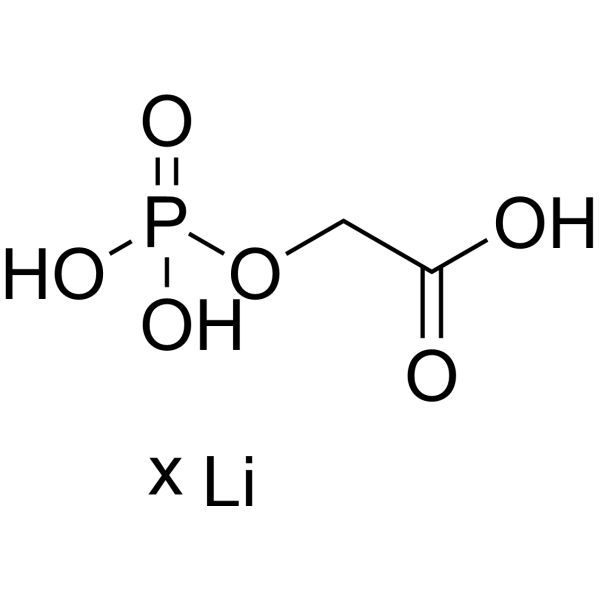
    Phosphoglycolic acid (lithium) is a competitive inhibitor of phosphoglycerate mutase (PGAM)-B, an enzyme of the glycolytic pathway. Phosphoglycolic acid increases basal and fMLF-induced levels of G6P in intact neutrophils. Phosphoglycolic acid thereby increases upstream intermediates in neutrophils, thereby amplifying the respiratory oxidative burst .
    Phosphoglycolic acid lithium
  • HY-W339757

    mTOR Endogenous Metabolite Cancer
    Dioctanoylphosphatidic acid sodium functions as a modulator of phagocyte respiratory burst, acts as a precursor to diacylglycerol and lysophosphatidic acid, and influences the phosphorylation of the mammalian target of rapamycin (mTOR) while enhancing the viability of gallbladder carcinoma cells treated with histone deacetylase inhibitors (HDACIs); it is derived from glycerophospholipid through the action of phospholipase D.
    Dioctanoylphosphatidic acid sodium
  • HY-19108

    Reactive Oxygen Species (ROS) Histamine Receptor Inflammation/Immunology Endocrinology
    CI-959 is an inhibitor of inflammatory cell activation. CI-959 exhibits anti-inflammatory and anti-allergic activities. CI-959 can inhibit the production of reactive oxygen species by neutrophils, as well as neutrophil adhesion, respiratory burst, and histamine release from mast cells. CI-959 can also inhibit the release of inflammatory mediators such as histamine, leukotrienes, and thromboxane from guinea-pig and human lung tissues, and effectively suppress anti-IgE-induced contractions of human bronchial smooth muscle. CI-959 can be used in the research of inflammatory and allergic diseases, such as asthma .
    CI-959
  • HY-W745090

    Formyl Peptide Receptor (FPR) Src ERK Akt p38 MAPK Others
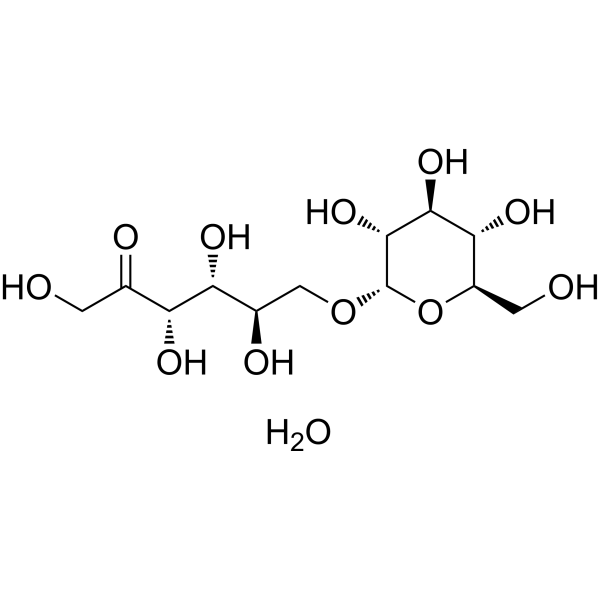
    Isomaltulose monohydrate is a fMLP inhibitor and also inhibits Src kinase, ERK1/2, p38 and AKT phosphorylation signals in immune regulation. Isomaltulose monohydrate can interfere with the interaction between the βγ subunit of the fMLP receptor Gi protein and its downstream molecules, thereby inhibiting fMLP-induced respiratory burst. Isomaltulose monohydrate inhibits fMLP (0.1 μM)-induced superoxide anion production (IC50: 1.98 μM) , cathepsin G release (IC< sub>50: 2.76 μM) and chemotaxis. Isomaltulose monohydrate can improve excessive activation of neutrophils and reduce inflammation or tissue damage. A series of derivatives of Isomaltulose monohydrate are found to have inhibitory effects on FSGS-related TRPC6 functional mutants .
    Isomaltulose monohydrate

Inquiry Online

Your information is safe with us. * Required Fields.

Salutation


Country or Region *

Applicant Name *


Organization Name *

Department *


Email Address *


Product Name *

Cat. No.


Requested quantity *

Phone Number *


Remarks

Inquiry Online

Inquiry Information

Product Name:
Cat. No.:
Quantity:
MCE Japan Authorized Agent:

