



Tyrphostin A9
Based on 6 publication(s) in Google Scholar
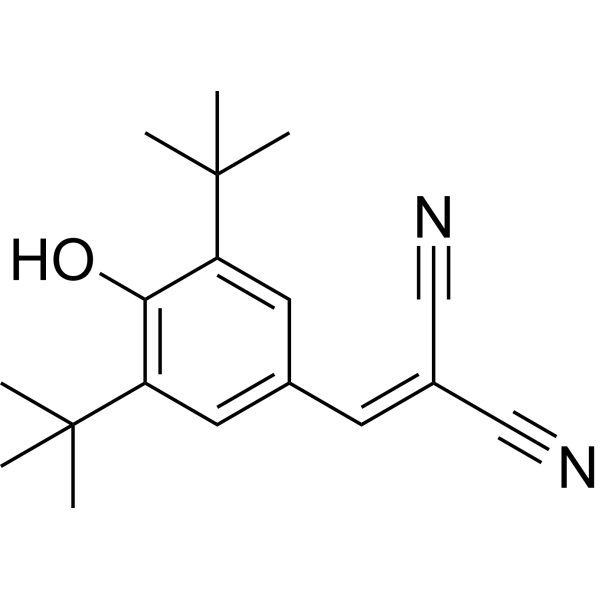
Tyrphostin A9, a PDGFR inhibitor, is a potent inducer of mitochondrial fission. Tyrphostin A9 emerged as the most potent and selective of 51 tyrosine kinase inhibitors tested against the TNF-induced respiratory burst. Tyrphostin A9 has anti-influenza virus activities.
For research use only. We do not sell to patients.
- Purity : 99.91%
- CAS No.: 10537-47-0
- Formula: C18H22N2O
- Molecular Weight:282.38
-
Storage:Powder -20°C, 3 years , 4°C, 2 years ; In solvent -80°C, 2 years , -20°C, 1 year

To place orders, for customer services and technical support, please contact: MedChemExpress USA
Tel: 609-228-6898 E-mail: [email protected] [email protected]


-
 Biological Activity
-
Chemical Information
-
Solvent & Solubility
- Purity & Documentation
- References
-
 Help & FAQs


-
HY-20878
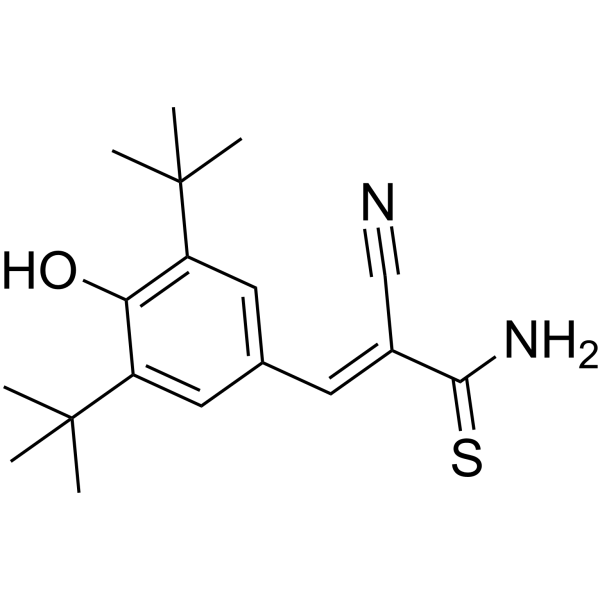
Tyrphostin AG 879TrKA Receptor Inhibitor -
HY-15886
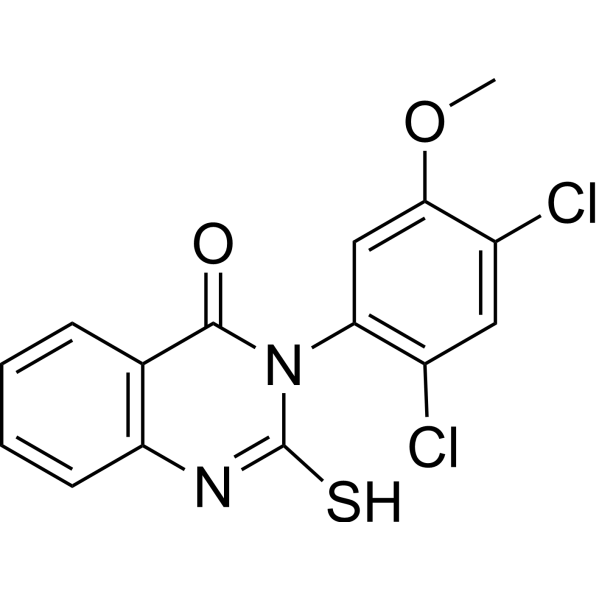
Mdivi-1Drp1 Inhibitor -
HY-101840
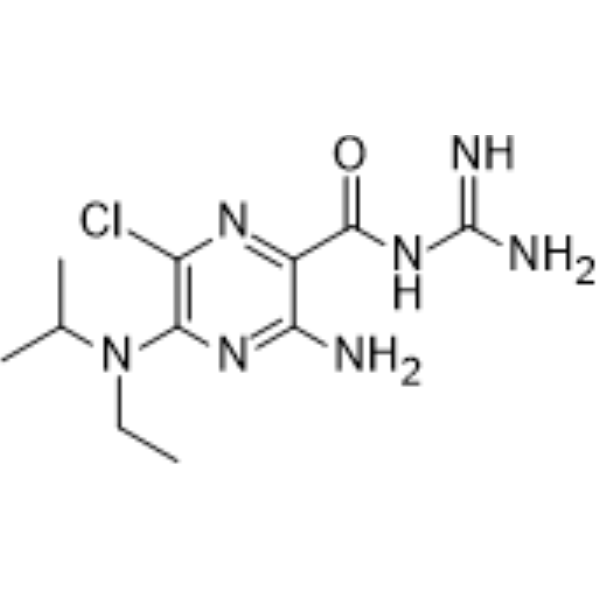
EIPATRPP3 Channel Inhibitor -
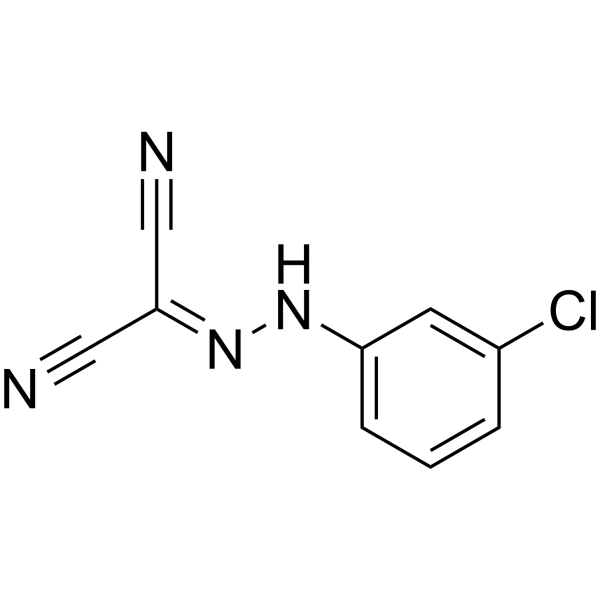
HY-100941
CCCPOXPHOS Uncoupler -
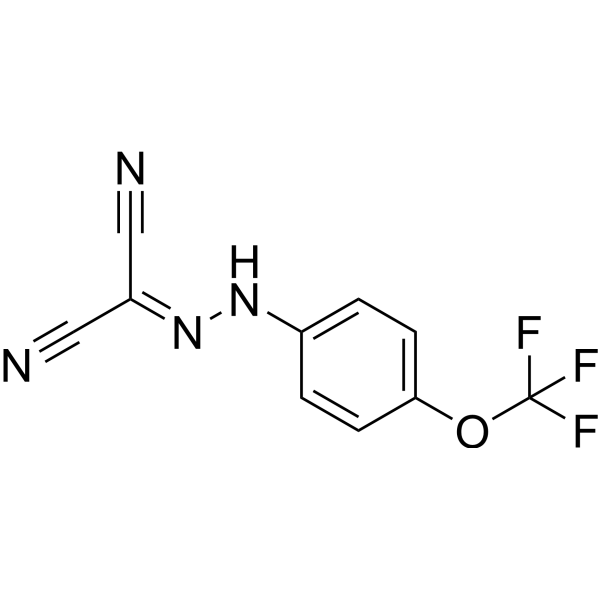
HY-100410
FCCPOXPHOS Uncoupler -
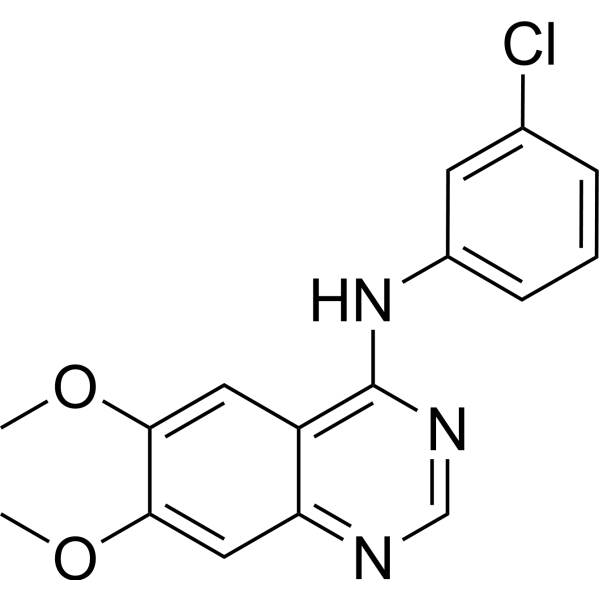
HY-13524
AG-1478EGFR Inhibitor -
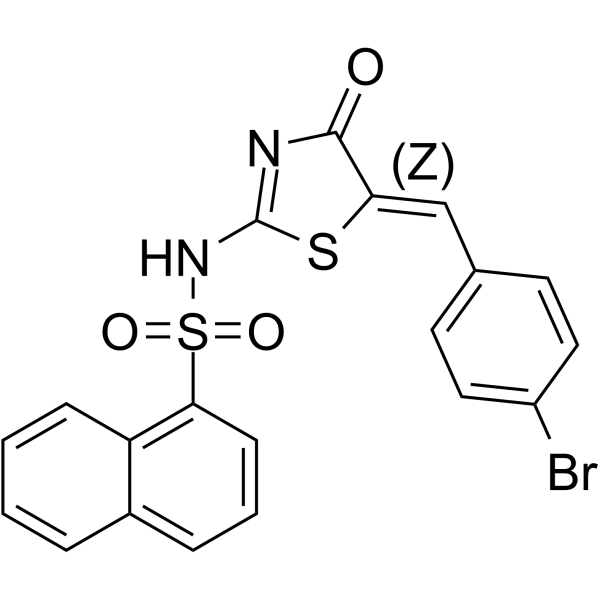
HY-115604
Pitstop 2Clathrin Inhibitor -
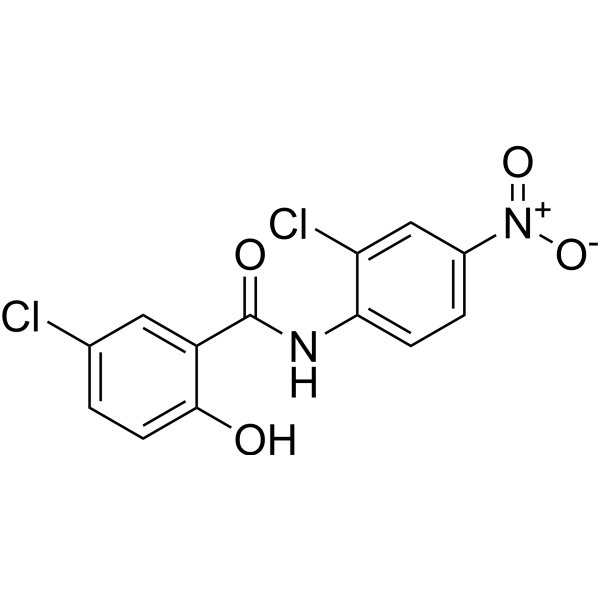
HY-B0497
NiclosamideAntihelminthic Agent -
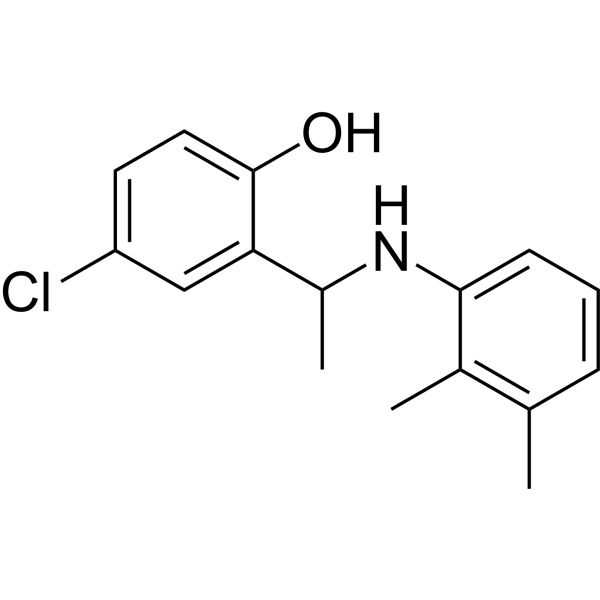
HY-150031
MFI8Mitochondrial Fusion Inhibitor -
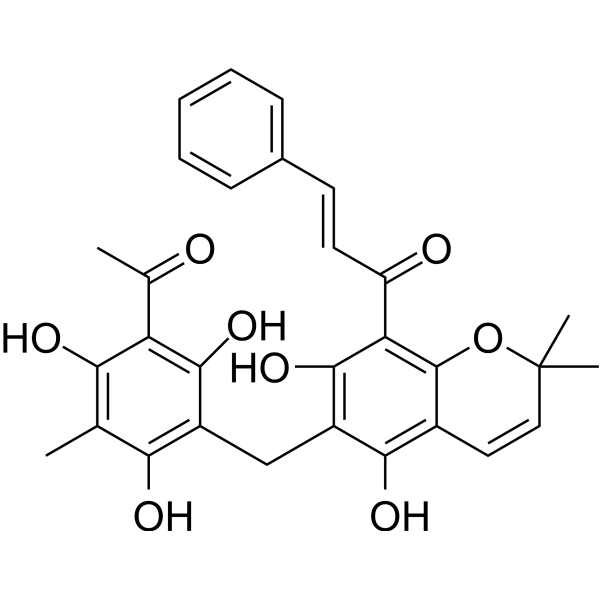
HY-18980
RottlerinPKC Inhibitor -
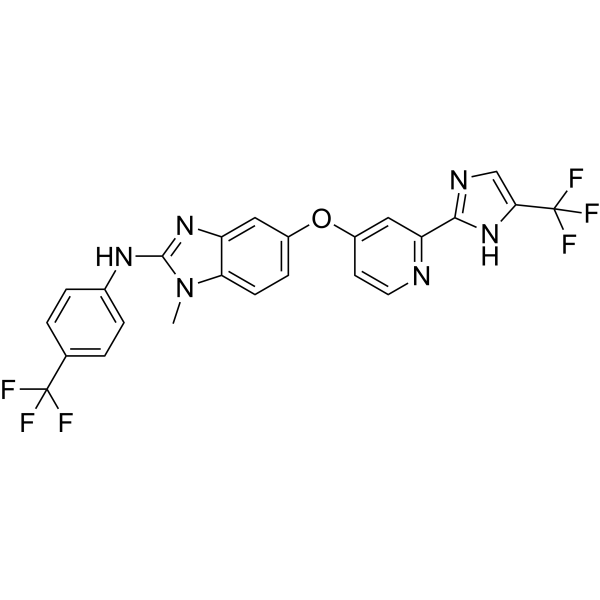
HY-10248
RAF265RAF/VEGFR2 Inhibitor -
HY-10201
SorafenibMultikinase Inhibitor
Publications Citing Use of MedChemExpress (MCE) Tyrphostin A9
More- Nat Cancer. 2022 Apr;3(4):453-470. [Abstract]
- Autophagy. 2026 Mar 15:1-22. [Abstract]
- Adv Sci (Weinh). 2025 Jun;12(23):e2416419. [Abstract]
- Int Immunopharmacol. 2024 Oct 25:140:112831. [Abstract]
- PLoS Pathog. 2026 Feb 12;22(2):e1013975. [Abstract]
- Pflugers Arch. 2024 Dec;476(12):1913-1928. [Abstract]
All VEGFR Isoforms
More

Biological Activity
Description
Cellular Effect
|
Cell Line

|
Type | Value | Description | References |
|---|---|---|---|---|
| HCT-116 | IC50 |
>0.2 μM
Compound: 12; SF-6847
|
Cytotoxicity against human HCT116 cells after 48 hrs by MTT assay
Cytotoxicity against human HCT116 cells after 48 hrs by MTT assay
|
[PMID: 29156129] |
| Hepatocyte | IC50 |
>0.97 μM
Compound: 12; SF-6847
|
Cytotoxicity against Sprague-Dawley rat hepatocytes after 24 hrs by MTT assay
Cytotoxicity against Sprague-Dawley rat hepatocytes after 24 hrs by MTT assay
|
[PMID: 29156129] |
In Vitro
Tyrphostin A9 inhibited TNF-induced tyrosine phosphorylation of pyk2 without blocking the cells' bactericidal activity. Tyrphostin A9 is a PDGF receptor tyrosine kinase inhibitor (IC50 = 500 nM). Recent findings suggest that signaling via PDGF receptor tyrosine kinases is not necessary for the shift of the smooth muscle cells from a contractile to a synthetic phenotype. On the other hand these enzymes apparently carry out important functions in the control of intracellular membrane traffic and cell division.
MedChemExpress (MCE) has not independently confirmed the accuracy of these methods. They are for reference only.


Chemical Information
-
CAS No. 10537-47-0
-
Appearance Solid
-
Molecular Weight 282.38
-
Formula C18H22N2O
-
Color Light yellow to yellow
-
SMILES
N#C/C(C#N)=C/C1=CC(C(C)(C)C)=C(O)C(C(C)(C)C)=C1
-
Synonyms
Tyrphostin 9; Malonoben
-
Shipping
Room temperature in continental US; may vary elsewhere.
-
Storage
Powder -20°C 3 years 4°C 2 years In solvent -80°C 2 years -20°C 1 year


Publications (6)
-
Journal Impact Factor
-
Most Recent
-
Nat Cancer
Macrophage mitochondrial fission improves cancer cell phagocytosis induced by therapeutic antibodies and is impaired by glutamine competition. [Abstract]2022 Apr;3(4):453-470. PMID: 35484420 -
Autophagy
Impaired mitophagy contributes to osteogenesis and mineralization disorders in fibrous dysplasia. [Abstract]2026 Mar 15:1-22. PMID: 41803635 -
Adv Sci (Weinh)
MTFR2-Mediated Fission Drives Fatty Acid and Mitochondrial Co-Transfer from Hepatic Stellate Cells to Tumor Cells Fueling Oncogenesis. [Abstract]2025 Jun;12(23):e2416419. PMID: 40365837 -
Int Immunopharmacol
Targeting TGR5 to mitigate liver fibrosis: Inhibition of hepatic stellate cell activation through modulation of mitochondrial fission. [Abstract]2024 Oct 25:140:112831. PMID: 39111149 -
PLoS Pathog
The UBC/SIRT5/DRP1 axis regulates mitochondrial dynamics to alleviate Staphylococcus aureus-induced oxidative stress and senescence in bovine mammary epithelial cells. [Abstract]2026 Feb 12;22(2):e1013975. PMID: 41678546 -
Pflugers Arch
Unlocking the potential: unveiling tyrphostins with Michael-reactive cyanoacrylate motif as promising inhibitors of human 5-lipoxygenase. [Abstract]2024 Dec;476(12):1913-1928. PMID: 39347835


Solvent & Solubility
In Vitro:
DMSO : 50 mg/mL (177.07 mM; Need ultrasonic; Hygroscopic DMSO has a significant impact on the solubility of product, please use newly opened DMSO)
H2O : < 0.1 mg/mL (insoluble)
Please refer to the solubility information to select the appropriate solvent. Once prepared, please aliquot and store the solution to prevent product inactivation from repeated freeze-thaw cycles.
Storage method and period of stock solution: -80°C, 2 years; -20°C, 1 year. When stored at -80°C, please use it within 2 years. When stored at -20°C, please use it within 1 year.
Please refer to the solubility information to select the appropriate solvent. Once prepared, please aliquot and store the solution to prevent product inactivation from repeated freeze-thaw cycles.
Storage method and period of stock solution: -80°C, 2 years; -20°C, 1 year. When stored at -80°C, please use it within 2 years. When stored at -20°C, please use it within 1 year.
Concentration (start) × Volume (start) = Concentration (final) × Volume (final)
In Vivo:
Select the appropriate dissolution method based on your experimental animal and administration route.
- For the following dissolution methods, please ensure to first prepare a clear stock solution using an In Vitro approach and then sequentially add co-solvents:
- To ensure reliable experimental results, the clarified stock solution can be appropriately stored based on storage conditions. As for the working solution for In Vivo experiments, it is recommended to prepare freshly and use it on the same day.
- The percentages shown for the solvents indicate their volumetric ratio in the final prepared solution. If precipitation or phase separation occurs during preparation, heat and/or sonication can be used to aid dissolution.
Add each solvent one by one: 10% DMSO 40% PEG300 5% Tween-80 45% Saline
Solubility: ≥ 2.5 mg/mL (8.85 mM); Clear solution
This protocol yields a clear solution of ≥ 2.5 mg/mL (saturation unknown).
Taking 1 mL working solution as an example, add 100 μL DMSO stock solution (25.0 mg/mL) to 400 μL PEG300, and mix evenly; then add 50 μL Tween-80 and mix evenly; then add 450 μL Saline to adjust the volume to 1 mL.
Preparation of Saline: Dissolve 0.9 g sodium chloride in ddH₂O and dilute to 100 mL to obtain a clear Saline solution.
For the following dissolution methods, please prepare the working solution directly:
It is recommended to prepare fresh solutions and use them promptly within a short period of time.
The percentages shown for the solvents indicate their volumetric ratio in the final prepared solution. If precipitation or phase separation occurs during preparation, heat and/or sonication can be used to aid dissolution.
Add each solvent one by one: 0.5% CMC-Na/saline water
Solubility: 5 mg/mL (17.71 mM); Suspended solution; Need ultrasonic
In Vivo Dissolution Calculator
Please enter the basic information of animal experiments:
-
-
-
-
Recommended: Prepare an additional quantity of animals to account for potential losses during experiments.
Please enter your animal formula composition:
-
%DMSO +
Recommended: Keep the proportion of DMSO in working solution below 2% if your animal is weak.
-
%+
-
+%Tween-80 + +
-
%Saline +
The co-solvents required include: DMSO, . All of co-solvents are available by MedChemExpress (MCE). , Tween 80. All of co-solvents are available by MedChemExpress (MCE).
Working solution concentration: 0.22 mg/mL
Method for preparing stock solution: mg drug dissolved in μL DMSO. Stock solution concentration: mg/mL.
1. Take μL DMSO stock solution;
2. Add μL .
μL , mix evenly;
3. Then add μL Tween 80, mix evenly;
4. Then add μL
Please ensure that the stock solution in the first step is dissolved to a clear state, and add co-solvents in sequence. You can use ultrasonic heating (ultrasonic cleaner, recommended frequency 20-40 kHz), vortexing, etc. to assist dissolution.


Purity & Documentation
-
Data Sheet (276 KB)
-
SDS (419 KB)
- English - EN (419 KB)
- Français - FR (419 KB)
- Deutsch - DE (419 KB)
- Norwegian - NO (419 KB)
- Español - ES (419 KB)
- Swedish - SV (419 KB)
- Italian - IT (419 KB)
- Korean - KR (419 KB)
- Portuguese - PT (419 KB)
-
Handling Instructions (2659 KB)
References
[1]. Park SJ, Park YJ, Shin JH, et al. A receptor tyrosine kinase inhibitor, Tyrphostin A9 induces cancer cell death through Drp1 dependent mitochondria fragmentation. Biochem Biophys Res Commun. 2011 May 13;408(3):465-70. [Content Brief]
[6]. Kumar N, et al. Receptor tyrosine kinase inhibitors block multiple steps of influenza a virus replication. J Virol. 2011 Mar;85(6):2818-2 [Content Brief]


Complete Stock Solution Preparation Table
Please refer to the solubility information to select the appropriate solvent. Once prepared, please aliquot and store the solution to prevent product inactivation from repeated freeze-thaw cycles.
Storage method and period of stock solution: -80°C, 2 years; -20°C, 1 year. When stored at -80°C, please use it within 2 years. When stored at -20°C, please use it within 1 year.
| Optional Solvent | Concentration Solvent Mass | 1 mg | 5 mg | 10 mg | 25 mg |
|---|---|---|---|---|---|
| DMSO | 1 mM | 3.5413 mL | 17.7066 mL | 35.4133 mL | 88.5332 mL |
| 5 mM | 0.7083 mL | 3.5413 mL | 7.0827 mL | 17.7066 mL | |
| 10 mM | 0.3541 mL | 1.7707 mL | 3.5413 mL | 8.8533 mL | |
| 15 mM | 0.2361 mL | 1.1804 mL | 2.3609 mL | 5.9022 mL | |
| 20 mM | 0.1771 mL | 0.8853 mL | 1.7707 mL | 4.4267 mL | |
| 25 mM | 0.1417 mL | 0.7083 mL | 1.4165 mL | 3.5413 mL | |
| 30 mM | 0.1180 mL | 0.5902 mL | 1.1804 mL | 2.9511 mL | |
| 40 mM | 0.0885 mL | 0.4427 mL | 0.8853 mL | 2.2133 mL | |
| 50 mM | 0.0708 mL | 0.3541 mL | 0.7083 mL | 1.7707 mL | |
| 60 mM | 0.0590 mL | 0.2951 mL | 0.5902 mL | 1.4756 mL | |
| 80 mM | 0.0443 mL | 0.2213 mL | 0.4427 mL | 1.1067 mL | |
| 100 mM | 0.0354 mL | 0.1771 mL | 0.3541 mL | 0.8853 mL |


Tyrphostin A9 Related Classifications
HY-15511 Related Classifications
 Powered by Bioz