1. Search Result
Search Result
Results for "

serotonin (5-HT)

" in MedChemExpress (MCE) Product Catalog:

310

Inhibitors & Agonists

1

Screening-Bibliotheken

2

Fluorescent Dyes

2

Biochemical Assay Reagents

3

Peptides

14

Natural
Products

2

Recombinant Proteins

48

Isotope-Labeled Compounds

2

Antibodies

1

Click Chemistry

1

GMP Molecules

Art. -Nr. Produktname Target Forschungsgebiete Chemical Structure
  • HY-B1473A
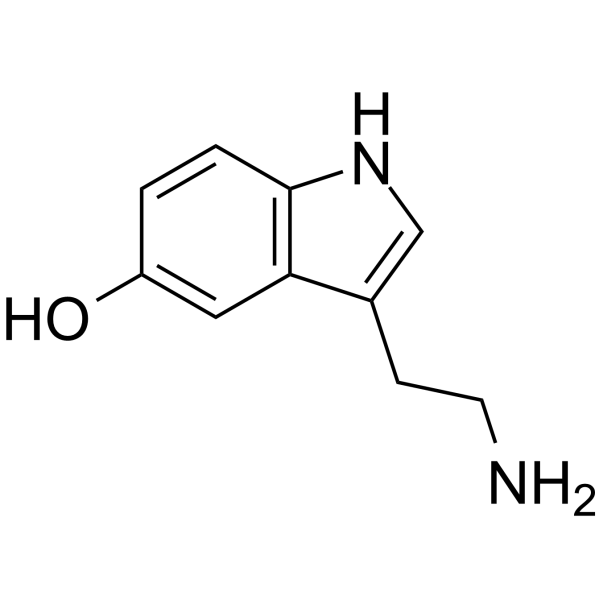
    Serotonin
    Maximum Cited Publications
    31 Publications Verification

    5-Hydroxytryptamine; 5-HT

    5-HT Receptor COMT Endogenous Metabolite Neurological Disease
    Serotonin is a monoamine neurotransmitter in the CNS and an endogenous 5-HT receptor agonist. Serotonin is also a catechol O-methyltransferase (COMT) inhibitor with a Ki of 44 μM.
    Serotonin
  • HY-B1473
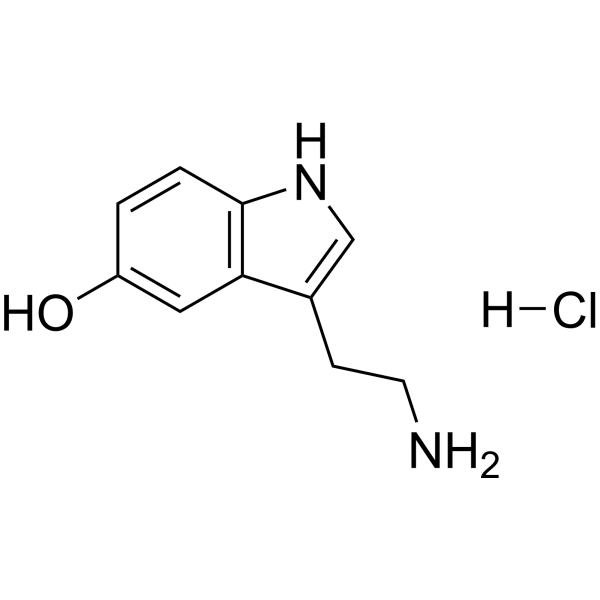
    Serotonin hydrochloride
    Maximum Cited Publications
    31 Publications Verification

    5-Hydroxytryptamine hydrochloride; 5-HT hydrochloride

    5-HT Receptor COMT Endogenous Metabolite Neurological Disease
    Serotonin (5-Hydroxytryptamine) hydrochloride is a monoamine neurotransmitter in the CNS and an endogenous 5-HT receptor agonist, with blood-brain barrier permeability. Serotonin hydrochloride is also a catechol O-methyltransferase (COMT) inhibitor with a Ki of 44 μM.
    Serotonin hydrochloride
  • HY-B1473AS

    5-Hydroxytryptamine-d4; 5-HT-d4

    Isotope-Labeled Compounds 5-HT Receptor COMT Endogenous Metabolite Neurological Disease
    Serotonin-d4 is deuterium labeled Serotonin. Serotonin is a monoamine neurotransmitter in the CNS and an endogenous 5-HT receptor agonist. Serotonin is also a catechol O-methyltransferase (COMT) inhibitor with a Ki of 44 μM.
    Serotonin-d4
  • HY-17385
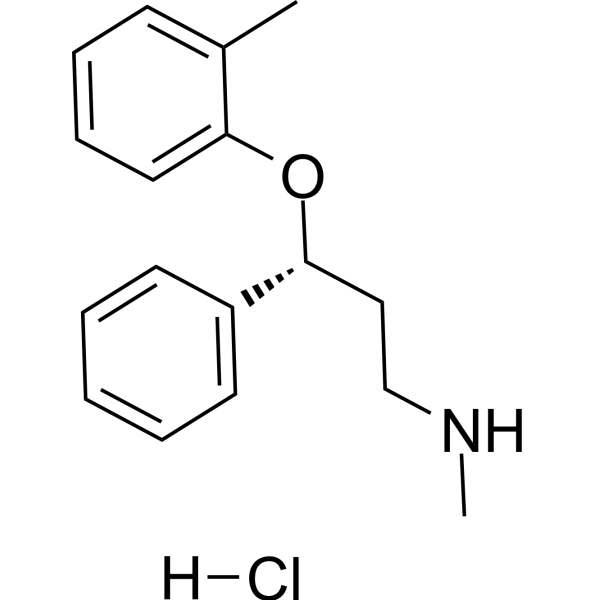
    Atomoxetine hydrochloride
    4 Publications Verification

    Tomoxetine hydrochloride; (R)-Tomoxetine hydrochloride; LY 139603

    Adrenergic Receptor Serotonin Transporter Sodium Channel Neurological Disease Cancer
    Atomoxetine (Tomoxetine) hydrochloride is a selective noradrenaline reuptake inhibitor with Ki values of 5 nM, 77 nM and 1451 nM for norepinephrine (NE), serotonin (5-HT) and dopamine (DA) transporters, respectively. Atomoxetine hydrochloride is a potent Na + channels (VGSCs) blocker. Atomoxetine hydrochloride can be used for attention-deficit hyperactivity disorder (ADHD) research .
    Atomoxetine hydrochloride
  • HY-B1033
    Metergoline
    2 Publications Verification

    5-HT Receptor Dopamine Receptor Sodium Channel Neurological Disease
    Metergoline is a serotonin (5-HT) receptor and dopamine receptors antagonist, with pKis of 8.64, 8.75 and 8.75 for 5-HT2A, 5-HT2B and 5-HT2C, respectively. Metergoline is a high-affinity ligand for the h5-HT7 receptor, with a Ki of 16 nM. Metergoline is also a reversible neural Na + channels inhibitor. Metergoline is commonly used for the research of seasonal affective disorder, prolactin hormone regulation .
    Metergoline
  • HY-N0740
    Jatrorrhizine chloride
    3 Publications Verification

    Cholinesterase (ChE) 5-HT Receptor Bacterial Neurological Disease Inflammation/Immunology
    Jatrorrhizine chloride is an alkaloid isolated from?Coptis chinensis with neuroprotective, antimicrobial, antiplasmodial and antioxidant activities . Jatrorrhizine chloride is a potent and orally active inhibitor of?AChE?(IC50=872 nM) over >115-fold selectivity for BuChE . Jatrorrhizine chloride reduces uptake of serotonin (5-HT) and norepinephrine (NE) via inhibition of uptake-2 transporters .
    Jatrorrhizine chloride
  • HY-B1213
    Trimipramine maleate
    1 Publications Verification

    5-HT Receptor Bacterial Neurological Disease
    Trimipramine maleate is a 5-HT receptor antagonist, with blood-brain barrier permeability. Trimipramine maleate has pKi binding values of 6.39, 8.10, 4.66 for 5-HT1C, 5-HT2 and 5-HT1A, respectively. Trimipramine maleate is also a potent and selective inhibitor targeting human noradrenaline (hNAT), serotonin (hSERT) and organic cation transporters (hOCT1, hOCT2) with IC50 values of 4.99 μM, 2.11 μM, 3.72 μM, 8.00 μM, respectively. Trimipramine maleate has vascular activity and anxiolytic efficacy .
    Trimipramine maleate
  • HY-101456
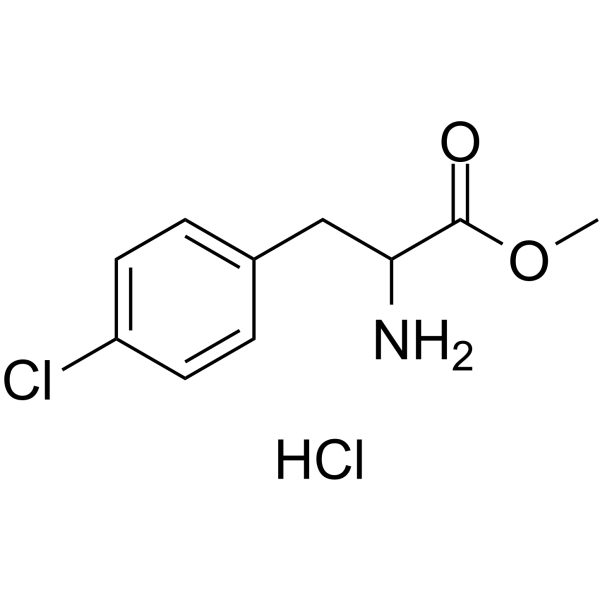
    PCPA methyl ester hydrochloride
    5 Publications Verification

    4-Chloro-DL-phenylalanine methyl ester hydrochloride

    Tryptophan Hydroxylase 5-HT Receptor Neurological Disease
    PCPA methyl ester hydrochloride (4-Chloro-DL-phenylalanine methyl ester hydrochloride), a reversible tryptophan hydroxylase inhibitor, is a serotonin (5-HT) synthesis inhibitor. PCPA methyl ester hydrochloride crosses the blood brain barrier and reduces 5-HT central availability .
    PCPA methyl ester hydrochloride
  • HY-B1287
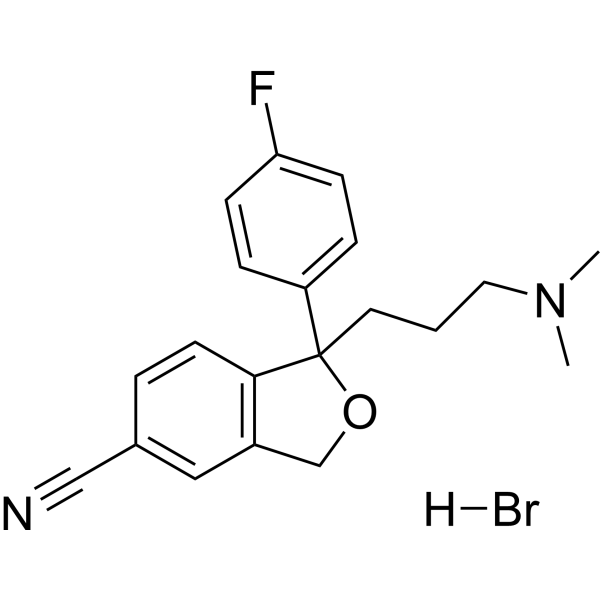
    Citalopram hydrobromide
    5+ Cited Publications

    (±)-Citalopram hydrobromide; Lu 10-171

    Serotonin Transporter Autophagy Neurological Disease Cancer
    Citalopram hydrobromide is a selective serotonin reuptake inhibitor (SSRI), with blood-brain barrier permeability. Citalopram hydrobromide inhibits 5-HT uptake into synaptosomes with an IC50 of 1.8 nM. Citalopram hydrobromideinhibits the 5-HT uptake in rabbit blood platelets with an IC50 of 14 nM. Antidepressant effect .
    Citalopram hydrobromide
  • HY-108256

    5-HT Receptor Neurological Disease
    Melitracen hydrochloride is an orally active biphasic antidepressant and antianxiety agent. Melitracen hydrochloride can inhibit the uptake of Norepinephrine and 5-HT (serotonin) through the presynaptic membrane inducing the increase of monoamine transmitters in synaptic space .
    Melitracen hydrochloride
  • HY-N0749

    Cholinesterase (ChE) 5-HT Receptor Bacterial Neurological Disease
    Jatrorrhizine is an alkaloid isolated from Coptis chinensis with neuroprotective, antimicrobial, antiplasmodial and antioxidant activities . Jatrorrhizine is a potent and orally active inhibitor of AChE (IC50=872 nM) over >115-fold selectivity for BuChE . Jatrorrhizine reduces uptake of serotonin (5-HT) and norepinephrine (NE) via inhibition of uptake-2 transporters .
    Jatrorrhizine
  • HY-109112

    RP5063

    Dopamine Receptor 5-HT Receptor Neurological Disease Inflammation/Immunology
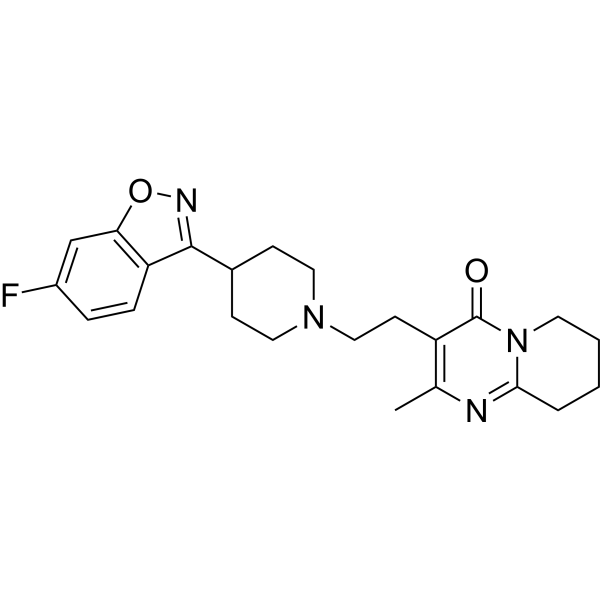
    Brilaroxazine (RP5603) is a potent and orally active multimodal dopamine (DA)/serotonin (5-HT) modulator. Brilaroxazine is a partial agonist of dopamine (DA) D2, D3, and D4 receptors, 5-HT1A (Ki=1.5 nM) and 5-HT2A (Ki=2.5 nM), and has antagonist activity at 5-HT2B (Ki=0.19 nM), and 5-HT7 (Ki=2.7 nM) receptors . Brilaroxazine is an atypical antipsychotic agent, and has the potential to improve cognitive impairments in neuropsychiatric and neurological diseases in vivo .
    Brilaroxazine
  • HY-19818A

    5-HT Receptor Neurological Disease
    NAN-190 hydrobromide is a serotonin receptor 5-HT antagonist. NAN-190 is a selective antagonist of 5-HT1A .
    NAN-190 hydrobromide
  • HY-13041
    LX-1031
    1 Publications Verification

    Tryptophan Hydroxylase Neurological Disease
    LX-1031 is a potent, orally available tryptophan 5-hydroxylase (TPH) inhibitor that reduces serotonin (5-HT) synthesis peripherally.
    LX-1031
  • HY-B1473S

    5-Hydroxytryptamine-d4 hydrochloride; 5-HT-d4 hydrochloride

    Isotope-Labeled Compounds 5-HT Receptor Endogenous Metabolite COMT Others
    Serotonin-d4 (5-Hydroxytryptamine-d4) hydrochloride is the deuterium labeled Serotonin (hydrochloride) (HY-B1473) . Serotonin (5-Hydroxytryptamine) hydrochloride is a monoamine neurotransmitter in the CNS and an endogenous 5-HT receptor agonist. Serotonin hydrochloride is also a catechol O-methyltransferase (COMT) inhibitor with a Ki of 44 μM .
    Serotonin-d4 hydrochloride
  • HY-W011235

    5-HT Receptor Calcium Channel Drug Metabolite Cardiovascular Disease Neurological Disease
    Norfluoxetine hydrochloride is an active N-demethylated metabolite of Fluoxetine. Fluoxetine is a selective serotonin (5-HT) reuptake inhibitor that is metabolized to Norfluoxetine hydrochloride by cytochrome P450 (CYP) 2D6, CYP2C19, and CYP3A4. Norfluoxetine hydrochloride inhibits 5-HT uptake and inhibits CaV3.3 T current (IC50 = 5 μM). Norfluoxetine hydrochloride has anticonvulsant activity .
    Norfluoxetine hydrochloride
  • HY-131678

    PA-5HT

    FAAH Neurological Disease
    Palmitoyl serotonin is a hybrid molecule patterned after arachidonoyl serotonin, antagonist of FAAH. Palmitoyl serotonin inhibits L-3,4-dihydroxyphenylalanine (HY-N0304) induced abnormal involuntary movements. Palmitoyl serotonin has the potential for the research of parkinson's disease (PD) .
    Palmitoyl serotonin
  • HY-N0749A
    Jatrorrhizine hydroxide
    3 Publications Verification

    Cholinesterase (ChE) 5-HT Receptor Bacterial Neurological Disease Inflammation/Immunology
    Jatrorrhizine hydroxide is an alkaloid isolated from Coptis chinensis with neuroprotective, antimicrobial, antiplasmodial and antioxidant activities . Jatrorrhizine hydroxide is a potent and orally active inhibitor of AChE (IC50=872 nM) over >115-fold selectivity for BuChE . Jatrorrhizine hydroxide reduces uptake of serotonin (5-HT) and norepinephrine (NE) via inhibition of uptake-2 transporters .
    Jatrorrhizine hydroxide
  • HY-131255

    Ziprasidone Impurity C; Ziprasidone open ring impurity

    5-HT Receptor Dopamine Receptor Neurological Disease
    Ziprasidone amino acid (Ziprasidone Impurity C) is an impurity of Ziprasidone. Ziprasidone is a combined 5-HT (serotonin) and dopamine receptor antagonist. Ziprasidone exhibits potent effects of antipsychotic activity .
    Ziprasidone amino acid
  • HY-110023

    Serotonin Transporter Neurological Disease
    Zimelidine dihydrochloride is an orally active selective serotonin reuptake inhibitor. Zimelidine dihydrochloride competitively inhibits central 5-HT uptake and desensitizes 5-HT autoreceptors in dorsal raphe nucleus. Zimelidine dihydrochloride time-dependently modulates 5-HT neuronal firing and hippocampal CA3 responses. Zimelidine dihydrochloride strengthens central serotonergic neurotransmission and produces related behavioral changes. Zimelidine dihydrochloride exerts anxiolytic, analgesic, feeding-suppressive and tolerance-attenuating effects. Zimelidine dihydrochloride is used for the study of depressive disorders and analgesic tolerance .
    Zimelidine dihydrochloride
  • HY-D2335

    Fluorescent Dye Neurological Disease
    SERTlight is a fluorescent agent that can specifically label serotonergic neuronal cell bodies, dendrites, and axonal projections as fluorescent substrates of the serotonin transporter (SERT). SERTlight is orthogonal to various genetically encoded sensors in terms of optics, pharmacology, and operation, enabling multiple imaging. SERTlight allows the use of GRAB5HT sensors to label distal 5HT axonal projections and simultaneously image the release of endogenous 5HT, providing a new multifunctional molecular tool for studying serotonergic systems .
    SERTlight
  • HY-14196
    Toloxatone
    1 Publications Verification

    MD 69276

    Monoamine Oxidase Neurological Disease
    Toloxatone (MD 69276) is a reversible, selective MAO-A inhibitor that can cross the blood-brain barrier. Toloxatone increases the levels of serotonin (5-HT) and norepinephrine in the brain. Toloxatone reduces the immobility time in the forced swimming test in mice, inhibits killing behavior in rats without causing sedation, and shows a correlation between its free plasma concentration and cerebrospinal fluid concentration. Toloxatone is widely used in research related to depression, depressive disorders and Parkinson's disease .
    Toloxatone
  • HY-119541

    TD-9855

    5-HT Receptor Adrenergic Receptor Cardiovascular Disease Neurological Disease
    Ampreloxetine (TD-9855) is a potent and orally active norepinephrine (NE) and serotonin 5-HT inhibitor. Ampreloxetine has the potential for the research of neurogenic orthostatic hypotension .
    Ampreloxetine
  • HY-107370
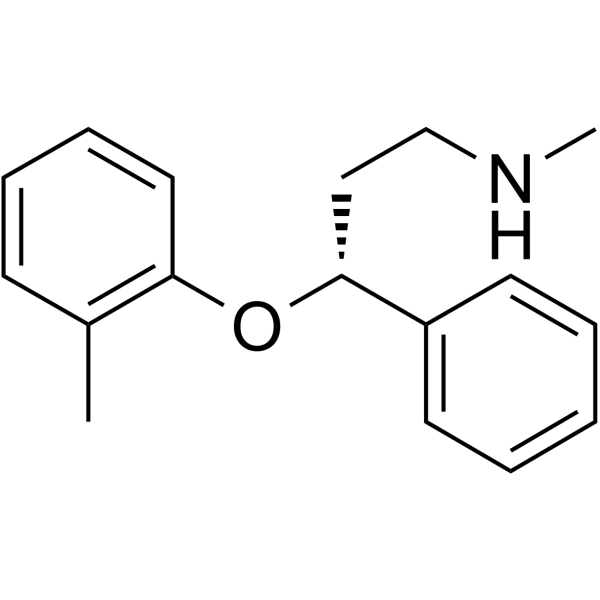
    Atomoxetine
    4 Publications Verification

    Tomoxetine; (R)-Tomoxetine

    Serotonin Transporter Sodium Channel Neurological Disease Cancer
    Atomoxetine (Tomoxetine) is a selective noradrenaline reuptake inhibitor with Ki values of 5, 77 and 1451 nM for norepinephrine (NE), serotonin (5-HT) and dopamine (DA) transporters, respectively. Atomoxetine (Tomoxetine) increases of DAEX and NEEX in the PFC and enhances catecholaminergic neurotransmission. Atomoxetine (Tomoxetine) is a potent Na + channels (VGSCs) blocker. Atomoxetine (Tomoxetine) can be used for attention-deficit hyperactivity disorder (ADHD) research .
    Atomoxetine
  • HY-106865

    Dopamine Receptor Adrenergic Receptor Cardiovascular Disease
    Mivazerol is a selective α2-adrenoceptor agonist. Mivazerol decreases the spontaneous release of serotonin (5-HT) and significantly inhibits the immobilization stress-induced enhancement of norepinephrine (NE), dopamine (DA) and dihydroxyphenylacetic acid (DOPAC). Mivazerol inhibits intrathecal release of glutamate evoked by halothane withdrawal in rats, and exerts neuroprotective effects in forebrain ischemia rats. Mivazerol can be used for myocardial ischemia research .
    Mivazerol
  • HY-B1473R

    5-Hydroxytryptamine hydrochloride (Standard); 5-HT hydrochloride (Standard)

    5-HT Receptor Reference Standards COMT Endogenous Metabolite Neurological Disease
    Serotonin (5-Hydroxytryptamine) (Standard) hydrochloride is the analytical standard of Serotonin hydrochloride (HY-B1473). This product is intended for research and analytical applications. Serotonin (5-Hydroxytryptamine) hydrochloride is a monoamine neurotransmitter in the CNS and an endogenous 5-HT receptor agonist. Serotonin hydrochloride is also a catechol O-methyltransferase (COMT) inhibitor with a Ki of 44 μM.
    Serotonin hydrochloride (Standard)
  • HY-103337

    Arachidonyl serotonin; AA-5-HT

    FAAH TRP Channel Neurological Disease
    N-Arachidonoylserotonin (Arachidonyl serotonin; AA-5-HT) is a potent fatty acid amide hydrolase (FAAH) inhibitor with an IC50 value of 1~12 µM. N-Arachidonoylserotonin acts also as an antagonist of transient receptor potential vanilloid-type 1 (TRPV1) channels (IC50=70~100 nM). N-Arachidonoylserotonin is analgesic in rodents .
    N-Arachidonoylserotonin
  • HY-W016194

    1-Carboxycyclohexaneacetic acid; Gabapentin Impurity E; Gabapentin Related Compound E

    5-HT Receptor Neurological Disease
    1-(Carboxymethyl)cyclohexanecarboxylic acid (1-Carboxycyclohexaneacetic acid; Gabapentin Impurity E) is a potential impurity in commercial preparations of the antiepileptic agent Gabapentin (HY-A0057). It is also used as a precursor for the synthesis of a serotonin (5-HT) receptor subtype 5-HT2A antagonist.
    1-(Carboxymethyl)cyclohexanecarboxylic acid
  • HY-120083

    KAR5417

    5-HT Receptor Tryptophan Hydroxylase Cardiovascular Disease
    Rodatristat (KAR5417) is a potent tryptophan hydroxylase 1 (TPH1) and TPH2 inhibitor with IC50s value of 33 nM and 7 nM, respectively, and shows robust reduction of intestinal serotonin (5-HT) levels in mice .
    Rodatristat
  • HY-W417914

    4-MA hydrochloride

    5-HT Receptor Monoamine Transporter Dopamine Receptor Neurological Disease
    4-Methylamphetamine hydrochloride is a 5-HT1A receptor agonist that induces hypothermia in rats by binding to the 5-HT1A receptor. Additionally, 4-Methylamphetamine hydrochloride acts on norepinephrine (NE), dopamine (DA), and serotonin (5-HT) transporters to increase the extracellular levels of these neurotransmitters. 4-Methylamphetamine hydrochloride can be used in the study of neurological disorders .
    4-Methylamphetamine hydrochloride
  • HY-135096

    Serotonin Transporter 5-HT Receptor Histamine Receptor mAChR Adrenergic Receptor Sodium Channel Trk Receptor Neurological Disease
    Amitriptyline-d3 hydrochloride is the deuterium labeled Amitriptyline (hydrochloride). Amitriptyline hydrochloride is an inhibitor of serotonin reuptake transporter (SERT) and noradrenaline reuptake transporter (NET), with Kis of 3.45 nM and 13.3 nM for human SERT and NET, respectively. Amitriptyline hydrochloride also weakly binds to dopamine reuptake transporter (DAT) with a Ki of 2.58 μM. Amitriptyline hydrochloride also inhibits adrenergic, muscarinic, histamine and 5-HT receptors. Amitriptyline hydrochloride is a TrkA and TrkB receptors agonist with potent neurotrophic activity. Amitriptyline hydrochloride has antidepressant activity .
    Amitriptyline-d3 hydrochloride
  • HY-B1473S2

    5-Hydroxytryptamine-13C,D4; 5-HT-13C,D4

    Isotope-Labeled Compounds 5-HT Receptor COMT Endogenous Metabolite Neurological Disease
    Serotonin- 13C,D4 (5-Hydroxytryptamine-13C,D4) is a 13C- and deuterated labeled Serotonin (HY-B1473A). Serotonin is a monoamine neurotransmitter in the CNS and an endogenous 5-HT receptor agonist. Serotonin is also a catechol O-methyltransferase (COMT) inhibitor with a Ki of 44 μM .
    Serotonin-13C,D4
  • HY-100648

    5-HT Receptor Dopamine Receptor Neurological Disease
    Keto Ziprasidone is an impurity of Ziprasidone . Ziprasidone, an antipsychotic agent, is a combined 5-HT (serotonin) and dopamine receptor antagonist .
    Keto Ziprasidone
  • HY-118557

    S-MPEC

    5-HT Receptor Inflammation/Immunology
    Iferanserin (S-MPEC) is a selective 5-HT receptor (serotonin receptor) antagonist with an affinity for 5-HT2A receptor. Iferanserin has the potential for internal hemorrhoid disease treatment .
    Iferanserin
  • HY-169611

    5-Hydroxytryptamine maleate; 5-HT maleate

    5-HT Receptor COMT Neurological Disease
    Serotonin hydrogen maleate is a monoamine neurotransmitter in the CNS and an endogenous 5-HT receptor agonist. Serotonin hydrogen maleate is also a catechol O-methyltransferase (COMT) inhibitor with a Ki of 44 μM .
    Serotonin maleate
  • HY-110289

    Serotonin Transporter 5-HT Receptor Neurological Disease
    (R)-Citalopram oxalate, a R-(-) enantiomers of Citalopram (HY-121203), is a serotonin reuptake inhibitor. (R)-Citalopram oxalate is at least 20-fold weaker than S-citalopram (HY-14258) as inhibitor of the 5-HT transporter (SERT). (R)-Citalopram oxalate can be used for research of depression .
    (R)-Citalopram oxalate
  • HY-B1213A

    5-HT Receptor Bacterial Neurological Disease
    Trimipramine is a 5-HT receptor antagonist, with pKi binding values of 6.39, 8.10, 4.66 for 5-HT1C, 5-HT2 and 5-HT1A, respectively. Trimipramine is also a potent and selective inhibitor targeting human noradrenaline (hNAT), serotonin (hSERT) and organic cation transporters (hOCT1, hOCT2) with IC50 values of 4.99 μM, 2.11 μM, 3.72 μM, 8.00 μM, respectively. Trimipramine has vascular activity and anxiolytic efficacy .
    Trimipramine
  • HY-127023

    EPA-5-HT

    Endogenous Metabolite FAAH Interleukin Related Tyrosine Hydroxylase Metabolic Disease
    Eicosapentaenoyl serotonin (EPA-5-HT) is an endogenous fatty acid-serotonin conjugate lipid mediator. Eicosapentaenoyl serotonin acts as an inhibitor of fatty acid amide hydrolase (FAAH). Eicosapentaenoyl serotonin suppresses IL-17 release in Concanavalin A (HY-P2149)-stimulated human peripheral blood mononuclear cells. Eicosapentaenoyl serotonin is regulated by polyunsaturated fatty acids and modulates intestinal immunity and Th17 signaling. Eicosapentaenoyl serotonin can be used for the study of inflammatory bowel disease-related mechanisms .
    Eicosapentaenoyl serotonin
  • HY-118835

    Serotonin Transporter Neurological Disease
    Zimelidine is an orally active selective serotonin reuptake inhibitor. Zimelidine competitively inhibits central 5-HT uptake and desensitizes 5-HT autoreceptors in dorsal raphe nucleus. Zimelidine time-dependently modulates 5-HT neuronal firing and hippocampal CA3 responses. Zimelidine strengthens central serotonergic neurotransmission and produces related behavioral changes. Zimelidine exerts anxiolytic, analgesic, feeding-suppressive and tolerance-attenuating effects. Zimelidine is used for the study of depressive disorders and analgesic tolerance .
    Zimelidine
  • HY-131284

    Drug Metabolite Others
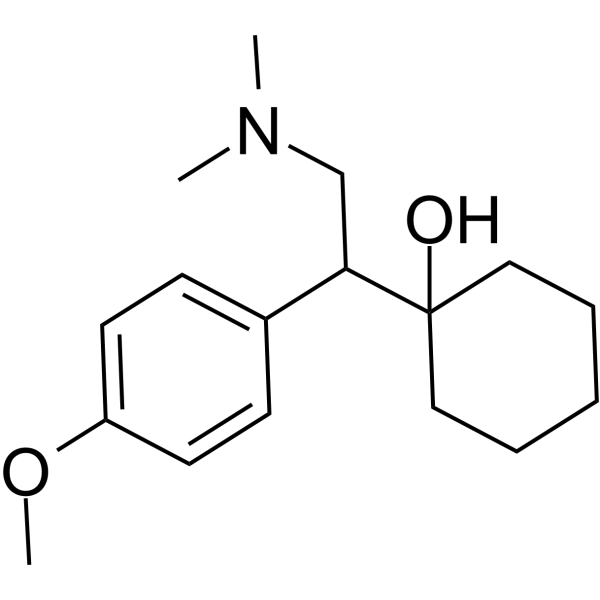
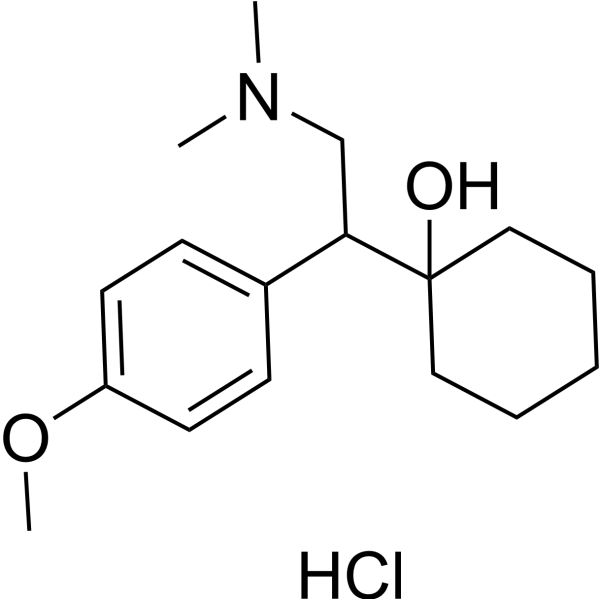
    (S)-Dehydro Venlafaxine is an inactive S-enantiomer of Dehydro Venlafaxine. Dehydro Venlafaxine is an impurity of Venlafaxine hydrochloride. Venlafaxine hydrochloride (Wy 45030 hydrochloride) is a potent serotonin (5-HT) / norepinephrine (NE) reuptake dual inhibitor .
    (S)-Dehydro Venlafaxine
  • HY-107128

    TD-9855 hydrochloride

    Serotonin Transporter Neurological Disease
    Ampreloxetine (TD-9855) hydrochloride is an orally active and CNS-penetrant inhibitor of Norepinephrine transporter (NET) and Serotonin 5-HT uptake transporter (SERT), but not Dopamine transporter (DAT). Ampreloxetine hydrochloride binds norepinephrine transporters (NET) and serotonin transporters (SERT) with EC50 values of 11.7 ng/mL and 50.8 ng/mL, respectively, in plasma .
    Ampreloxetine hydrochloride
  • HY-10419A
    AH23848 hemicalcium salt
    1 Publications Verification

    Prostaglandin Receptor Cardiovascular Disease
    AH23848 hemicalcium salt is an orally active, selective competitive blocker of the thromboxane A2 receptor, with an IC50 value of 50 nM. AH23848 hemicalcium salt shows no activity against other prostaglandin, serotonin (5-HT) or adenosine diphosphate (ADP) receptors. AH23848 hemicalcium salt can be used in the research of occlusive vascular diseases .
    AH23848 hemicalcium salt
  • HY-131397

    DHA-5-HT

    Interleukin Related Inflammation/Immunology
    Docosahexaenoyl serotonin (DHA-5-HT) is an endogenous n-3 fatty acid-serotonin conjugate. Docosahexaenoyl serotonin is an inhibitor of IL-17. Docosahexaenoyl serotonin has anti-inflammatory activity .
    Docosahexaenoyl serotonin
  • HY-W982195

    Adrenergic Receptor 5-HT Receptor Neurological Disease
    Napamezole hydrochloride is an orally active α-2 adrenergic receptor antagonist and serotonin (5-HT Receptor) reuptake inhibitor, with Ki values of 28 nM and 93 nM for rat α-2 and α-1 adrenergic receptors, respectively. Napamezole hydrochloride can be used for the research of depression .
    Napamezole hydrochloride
  • HY-153091

    Adrenergic Receptor 5-HT Receptor Sigma Receptor Neurological Disease
    BMY 14802 is a sigma-1 receptor (σ1R) antagonist, as well as an agonist at serotonin (5-HT) 1A and adrenergic alpha-1 receptors. BMY 14802 inhibits abnormal involuntary movement (AIM) in rat Parkinson's disease (PD) model, with down-regulating the expression of AIM .
    BMY 14802
  • HY-W009681

    5-HT Receptor Serotonin Transporter Drug Intermediate Infection Neurological Disease
    1-(2-Methoxyphenyl)piperazine hydrochloride is a key agent intermediate of antipsychotics with high affinity to the serotonin receptors and 5-HT, which can be used to synthesize the intestinal worm-repellent agents Piperazine phosphate (HY-B0912C) and Piperazine citrate (HY-17599), as well as Fluphenazine (HY-119980), dihydrochloride, Rifampicin (HY-B0272) .
    1-(2-Methoxyphenyl)piperazine hydrochloride
  • HY-W284026

    Drug Derivative 5-HT Receptor Dopamine Receptor Adrenergic Receptor Neurological Disease
    PIM-35 is a derivative of Indole (HY-W001132). PIM-35 significantly inhibits serotonin (5HT) and dopamine (DA) uptake with a weak inhibitory effect on noradrenaline (NA) uptake.PIM-35 has antidepressant activity and can be used for depression research .
    PIM-35
  • HY-107370A

    (Rac)-Tomoxetine hydrochloride; (Rac)-LY 139603

    Serotonin Transporter Sodium Channel Metabolic Disease Cancer
    (Rac)-Atomoxetine hydrochloride ((Rac)-Tomoxetine (hydrochloride); (Rac)-LY 139603) is the racemic mixture of Atomoxetine hydrochloride (HY-17385). Atomoxetine hydrochloride is a selective noradrenaline reuptake inhibitor with Ki values of 5, 77 and 1451 nM for norepinephrine (NE), serotonin (5-HT) and dopamine (DA) transporters, respectively. Atomoxetine hydrochloride increases of DAEX and NEEX in the PFC and enhances catecholaminergic neurotransmission. Atomoxetine hydrochloride is a potent Na + channels (VGSCs) blocker. Atomoxetine hydrochloride can be used for attention-deficit hyperactivity disorder (ADHD) research .
    (Rac)-Atomoxetine hydrochloride
  • HY-19818

    5-HT Receptor Neurological Disease
    NAN-190 is a serotonin receptor 5-HT antagonist.
    NAN-190
  • HY-106644A

    FG4963

    5-HT Receptor Neurological Disease
    Femoxetine hydrochloride is a serotonin (5-HT) inhibitor with antidepressant properties. Femoxetine hydrochloride increases serotonin levels in the brain by preventing serotonin from being reabsorbed by nerve cells, resulting in increased concentrations of the neurotransmitter in the synaptic gap, which enhances serotonin signaling. Femoxetine hydrochloride can be used to study the role of serotonin in depression and other emotional disorders, and how 5-HT reuptake inhibitors affect mood and behavior .
    Femoxetine hydrochloride

Online-Anfrage

Your information is safe with us. * Required Fields.

Anrede


Country or Region *

Name des Antragstellers *


Name der Organisation *

Department *


E-Mail-Addresse *


Produktname *

Art. -Nr.


Requested quantity *

Telefonnummer *


Bemerkungen

Online-Anfrage

Inquiry Information

Produktname:
Art. -Nr.:
Menge:
MCE Japan Authorized Agent:

