7 Results for "

skin-lightening

" in MedChemExpress (MCE) Product Catalog:
Products (7)

7 Results for "skin-lightening" in MCE Product Catalog:

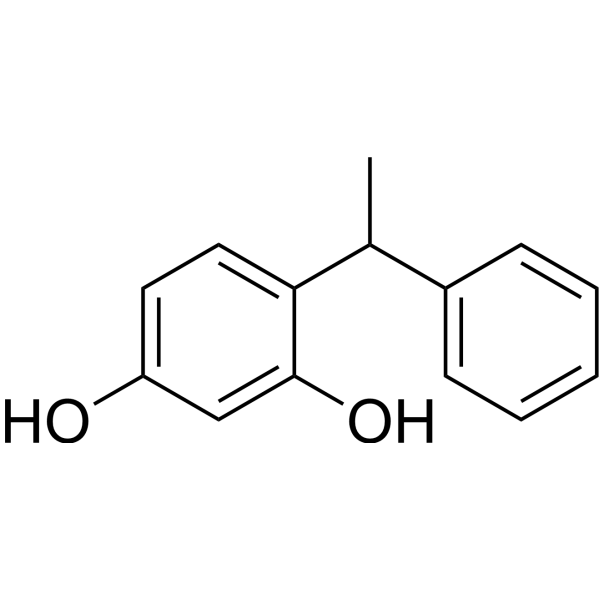
Cat. No.: HY-125809
CAS No.: 85-27-8
Purity:  99.31%
4-(1-Phenylethyl)resorcinol is a skin lightening agent used in cosmetics. It works by inhibiting the production of melanin, the pigment that gives skin its color. This helps reduce the appearance of dark spots, hyperpigmentation and uneven skin tone. 4-(1-Phenylethyl)resorcinol is considered safe for cosmetic use and is approved for use in several countries.
loading...
    loading...
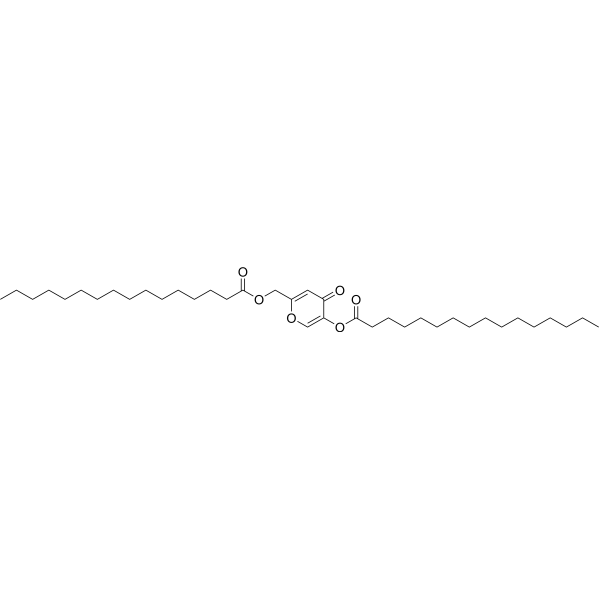
Cat. No.: HY-W099579
CAS No.: 79725-98-7
Synonyms: Kojic dipalmitate
Target:  

Tyrosinase

Research Areas:  

Endocrinology

Kojic acid dipalmitate (Kojic dipalmitate) is a derivative of Kojic acid (HY-W050154), a fungal metabolite that can be produced by species of Aspergillus, Acetobacter and Penicillium. Kojic acid dipalmitate is a slow and reversible competitive inhibitor of tyrosinase. Kojic acid dipalmitate can be used for skin‐lightening agent research .
loading...
    loading...
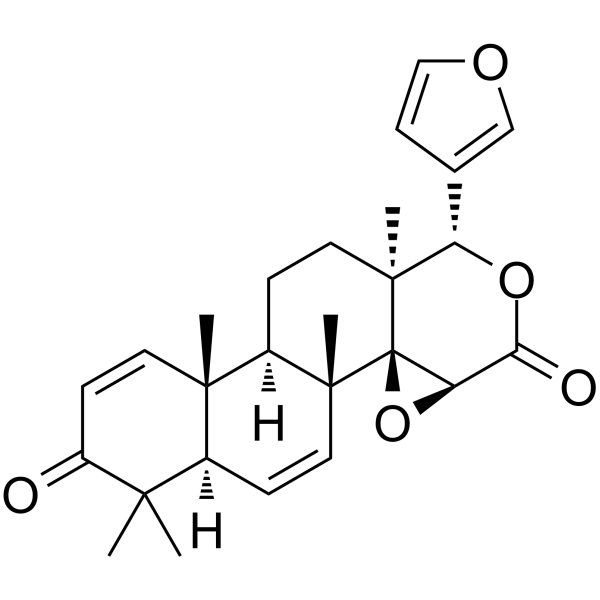
Cat. No.: HY-124857
CAS No.: 26927-01-5
Purity:  98%
Synonyms: 7-Desacetoxy-6,7-dehydrogedunin
7DG (7-Desacetoxy-6,7-dehydrogedunin) is a PKR inhibitor, P2X7 purinergic receptor inhibitor, and skin-lightening agent. 7DG binds outside the ATP-catalytic domain of PKR, blocks the kinase activity-independent protein-protein interactions of PKR, inhibits the phosphorylation and activity of PKR, disrupts ASC assembly and caspase-1 activation, and suppresses the activation of the NLRP1 inflammasome. 7DG inhibits pyroptosis, suppresses the ATP-P2X7 signaling pathway, and abolishes ATP-induced increases in the expression levels of MITF, tyrosinase, PMEL/gp100, and melanin content. 7DG exerts skin-lightening effects in cultured skin in vitro. 7DG can be used in research related to chronic obstructive pulmonary disease, gout, type 2 diabetes, Alzheimer's disease, and hyperpigmentary skin disorders .
loading...
    loading...
Cat. No.: HY-148400
CAS No.: 913541-96-5
Synonyms: TXC hydrochloride
Research Areas:  

Metabolic Disease

Cetyl tranexamate (TXC) hydrochloride is an ester derivative of Tranexamic acid (HY-B0149). Cetyl tranexamate hydrochloride is an inhibitor of fibrinogen activation and can reduce the production of fibrinogen in keratinocytes induced by ultraviolet rays or damage, indirectly inhibiting the melanin production pathway. Cetyl tranexamate hydrochloride also targets melanin (dark spots) and hemoglobin (red spots), reducing vascular dilation and pigmentation by inhibiting inflammatory mediators (such as prostaglandins, platelet activating factors). Cetyl tranexamate hydrochloride can be used as a cosmetic ingredient and is suitable for epidermal pigment disorders such as photoaging, post-inflammatory hyperpigmentation (PIH), and melasma .
loading...
    loading...
Cat. No.: HY-N4096R
CAS No.: 174391-64-1
Kojic acid dipalmitate (Standard) is the analytical standard of Kojic acid dipalmitate. This product is intended for research and analytical applications. Kojic acid dipalmitate (Kojic dipalmitate) is a derivative of Kojic acid (HY-W050154), a fungal metabolite that can be produced by species of Aspergillus, Acetobacter and Penicillium. Kojic acid dipalmitate is a slow and reversible competitive inhibitor of tyrosinase. Kojic acid dipalmitate can be used for skin‐lightening agent research .
loading...
    loading...
Cat. No.: HY-W099579R
CAS No.: 79725-98-7
Synonyms: Kojic dipalmitate (Standard)
Research Areas:  

Endocrinology

Kojic acid dipalmitate (Standard) is the analytical standard of Kojic acid dipalmitate. This product is intended for research and analytical applications. Kojic acid dipalmitate (Kojic dipalmitate) is a derivative of Kojic acid (HY-W050154), a fungal metabolite that can be produced by species of Aspergillus, Acetobacter and Penicillium. Kojic acid dipalmitate is a slow and reversible competitive inhibitor of tyrosinase. Kojic acid dipalmitate can be used for skin‐lightening agent research .
loading...
    loading...
Cat. No.: HY-175149
CAS No.: 170795-16-1
Target:  

Tyrosine Hydroxylase

Research Areas:  

Metabolic Disease

2-Fluorodeoxyarbutin, a derivative of Deoxyarbutin (HY-B1461), is a tyrosine hydroxylase and dopa oxidase inhibitor. 2-Fluorodeoxyarbutin inhibits melanin synthesis in intact melanocytes. 2-Fluorodeoxyarbutin can be used for the strudy of skin lightening or for ameliorating hyperpigmented lesions .
loading...
    loading...

