
Search Result
Results for "
thermal hyperalgesia
" in MedChemExpress (MCE) Product Catalog:
1
Isotope-Labeled Compounds
| Cat. No. |
Product Name |
Target |
Research Areas |
Chemical Structure |
-
- HY-P1410B
-
-
-
- HY-18732A
-
|
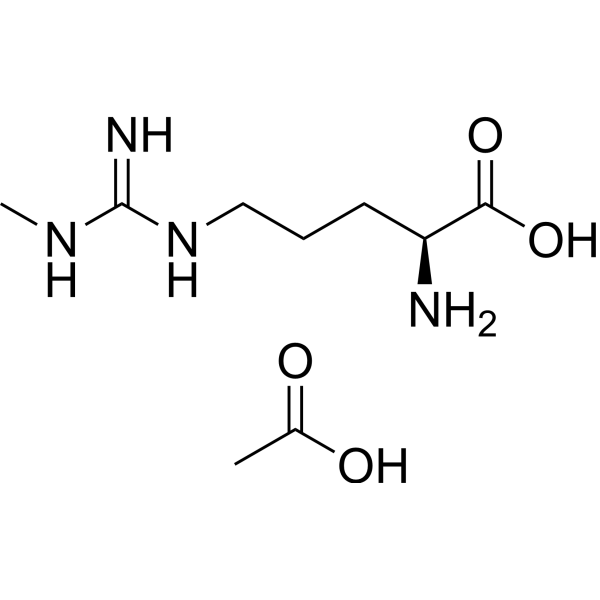
Tilarginine acetate; Methylarginine acetate
|
NO Synthase
|
Neurological Disease
Inflammation/Immunology
Cancer
|
|
L-NMMA (Tilarginine) acetate is a non-selective and competitive inhibitor of nitric oxide synthase. L-NMMA acetate inhibits three subtypes, namely nNOS, eNOS, and iNOS, and reduces NO production . L-NMMA acetate alleviates mechanical allodynia, thermal hyperalgesia, and choroidal fibrosis. L-NMMA acetate is applicable to research related to nociception, bone cancer pain, and myopia .
|
-
-
- HY-107922
-
|
Isothazine
|
Cholinesterase (ChE)
iGluR
mAChR
|
Neurological Disease
|
|
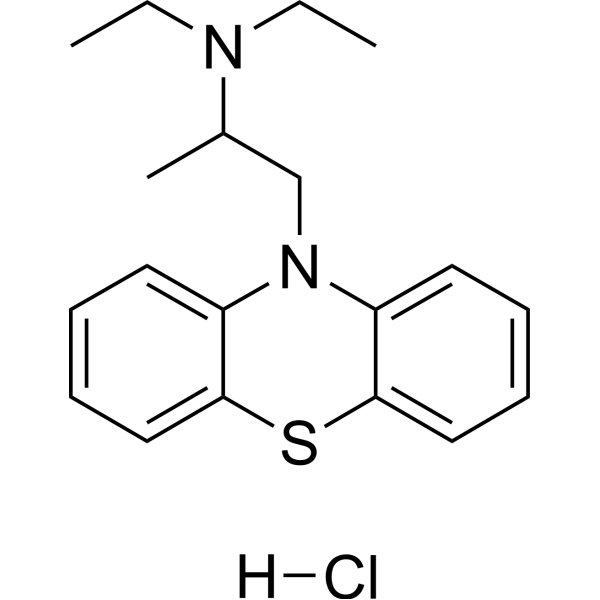
Ethopropazine (Isothazine) hydrochloride is a potent and selective BChE inhibitor, a poor AChE inhibitor and a non-selective mAChR and NMDA antagonist. Ethopropazine hydrochloride has anticholinergic, antihistamine, antiadrenergic actions and properties. Ethopropazine hydrochloride alleviates thermal hyperalgesia in a dose dependent manner. Ethopropazine hydrochloride can be used for the research of Parkinson’s disease .
|
-
-
- HY-B0168A
-
|
|
Serotonin Transporter
PERK
|
Neurological Disease
|
|
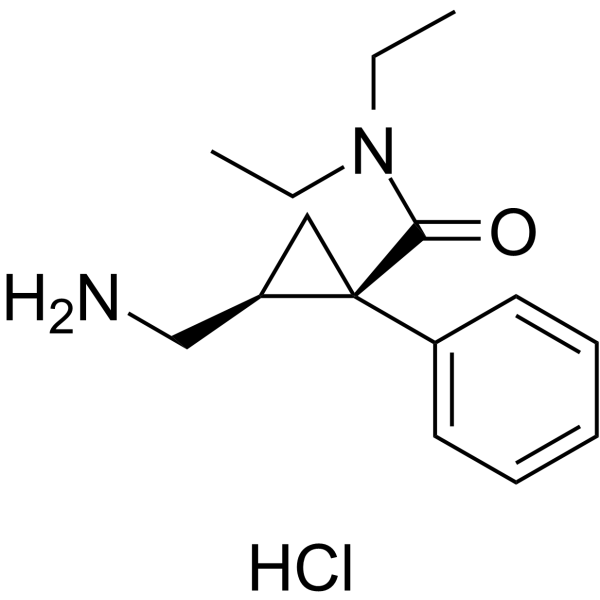
Milnacipran hydrochloride is an orally active Serotonin (HY-B1473A) and Norepinephrine (HY-13715) reuptake inhibitor. Milnacipran hydrochloride inhibits monoamine transporters, especially the norepinephrine transporter and the serotonin transporter (Ki values of 31 and 8.5 nM, respectively). Milnacipran hydrochloride inhibits pERK1/2 activation. Milnacipran hydrochloride has antidepressant, anxiolytic and analgesic properties. Milnacipran hydrochloride inhibits biting behavior in mice. Milnacipran hydrochloride can be used in the study of major depressive disorder, anxiety disorders, and neuropathic pain (e.g., fibromyalgia) .
|
-
-
- HY-120546
-
|
Z944; PRAX-944
|
Calcium Channel
|
Neurological Disease
Inflammation/Immunology
|
|
Ulixacaltamide (Z944) is an orally available T-type calcium channel antagonist that can slow the progression of epilepsy. Ulixacaltamide effectively reduces tremor in a normal alkaline tremor animal model. Ulixacaltamide reverses thermal hyperalgesia and mediates pain relief .
|
-
-
- HY-110150
-
|
|
PI4P5K
|
Neurological Disease
Inflammation/Immunology
Cancer
|
|
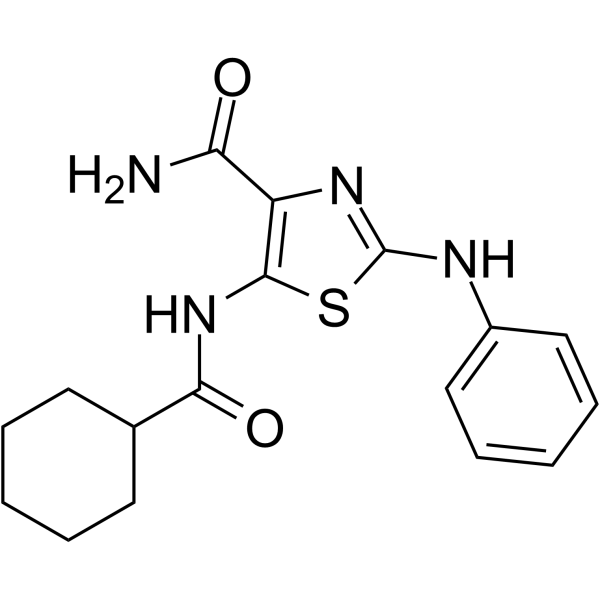
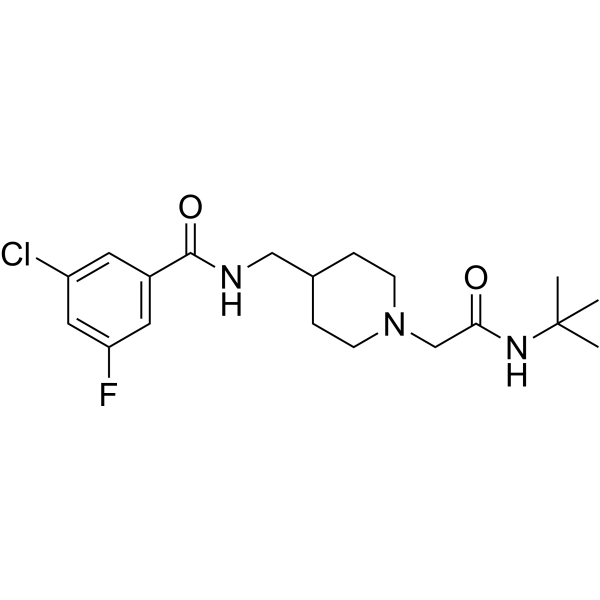
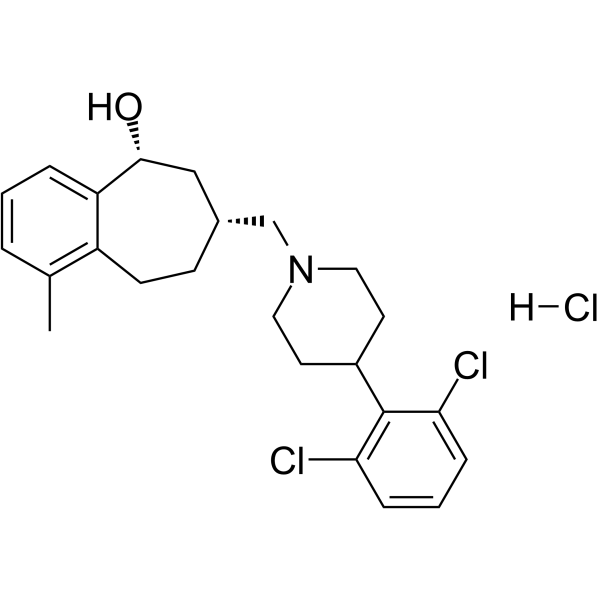
UNC3230 is a potent, selective and ATP-competitive PIP5K1C inhibitor with an IC50 of ~41 nM. UNC3230 also inhibits PIP4K2C and does not inhibit any of the other lipid kinases that regulate phosphoinositide levels. UNC3230 has antinociceptive and anticancer effects .
|
-
-
- HY-P10638
-
|
|
CaMK
|
Cardiovascular Disease
Neurological Disease
|
|
TAT-CN21 is a potent CaMKII inhibitor with an IC50 of 77.2 nM. TAT-CN21 inhibits both calcium/calmodulin-dependent and autonomously activated CaMKII, blocks glutamate-induced translocation of CaMK IIα, and reverses the enhanced phosphorylation of CaMKII at Thr286 following excitotoxic injury. TAT-CN21 shows application potential in studies related to ischemic stroke by reducing neuronal excitotoxicity and exacerbating pre-existing long-term neuronal death prior to injury. TAT-CN21 improves definitive behaviors in rats with residual nerve injury without altering indicators such as mechanical/thermal hyperalgesia or spatial memory. TAT-CN21 can also be used in studies related to neuropathic pain .
|
-
-
- HY-18732
-
L-NMMA
Maximum Cited Publications
11 Publications Verification
Tilarginine; Methylarginine
|
NO Synthase
|
Neurological Disease
Inflammation/Immunology
Cancer
|
|
L-NMMA (Tilarginine) is a non-selective and competitive inhibitor of nitric oxide synthase. L-NMMA inhibits three subtypes, namely nNOS, eNOS, and iNOS, and reduces NO production . L-NMMA alleviates mechanical allodynia, thermal hyperalgesia, and choroidal fibrosis. L-NMMA is applicable to research related to nociception, bone cancer pain, and myopia .
|
-
-
- HY-106841
-
|
R-75231; R88021
|
Adenosine Receptor
Nucleoside Transporters
|
Inflammation/Immunology
|
|
Draflazine (R-75231) is a ENT1 inhibitor. Draflazine (R-75231) completely reverses the hypersensitivity in the complete Freund’s adjuvant (CFA) model of mechanical hyperalgesia and the carrageenan inflammation model of thermal and mechanical hyperalgesia .
|
-
-
- HY-131182
-
|
|
Sodium Channel
|
Neurological Disease
|
|
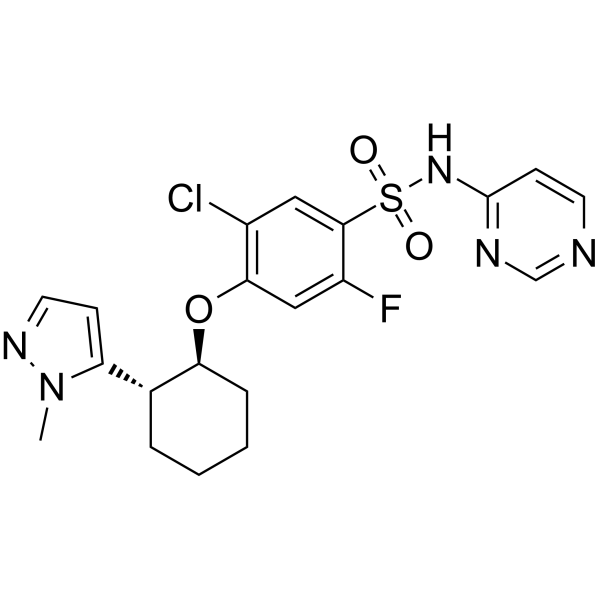
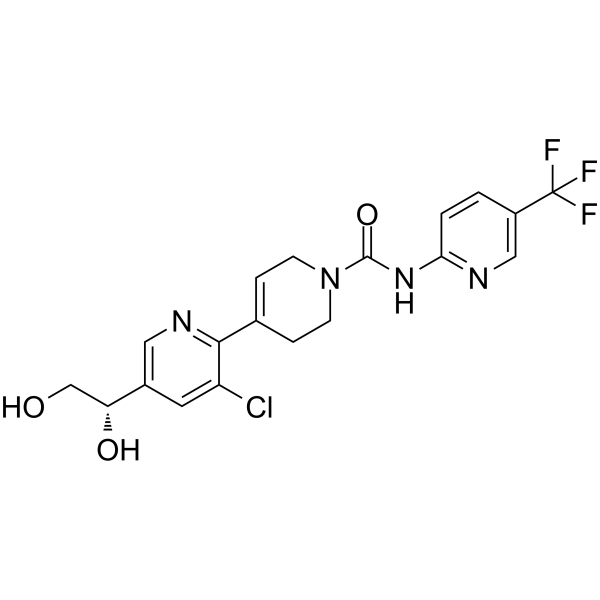
DS-1971a is a potent, selective, and orally active NaV1.7 inhibitor, with IC50s of 22.8 and 59.4 nM for hNaV1.7 and mNaV1.7, respectively. DS-1971a exerts analgesic effects .
|
-
-
- HY-P1410C
-
|
|
Piezo Channel
Calcium Channel
mTOR
PI3K
Akt
|
Cardiovascular Disease
Neurological Disease
Inflammation/Immunology
|
|
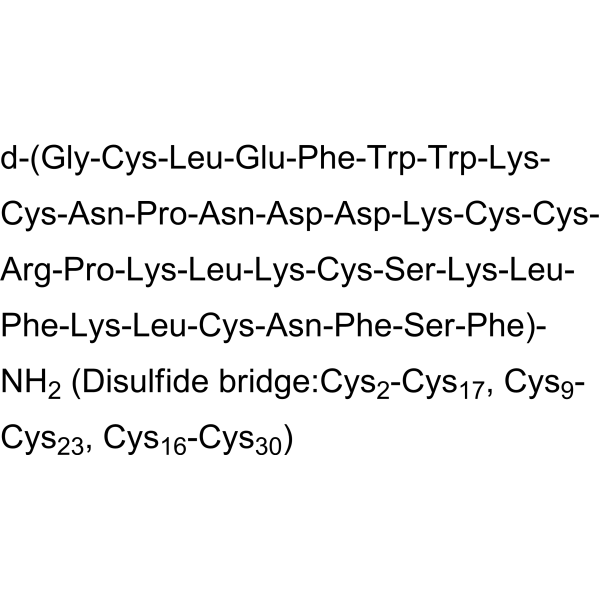
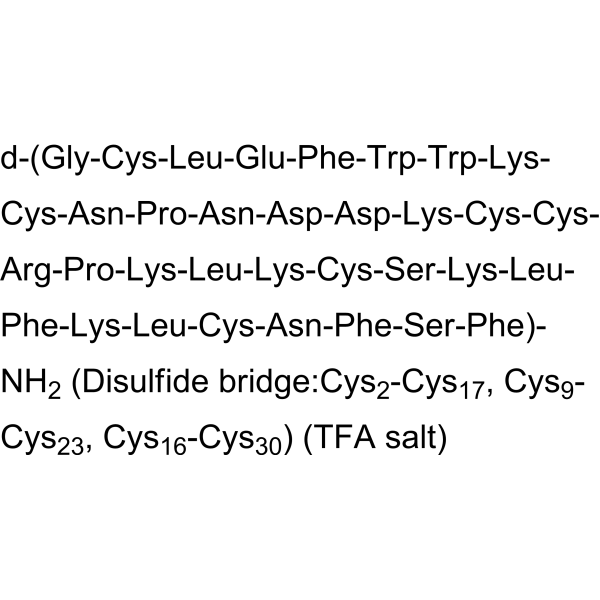
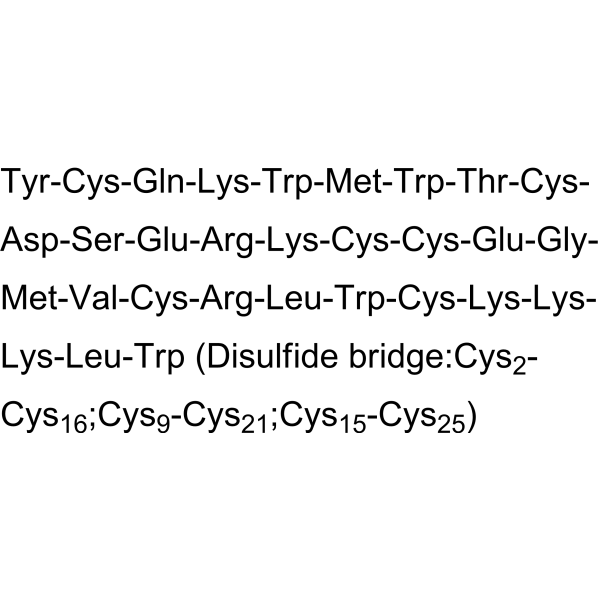
D-GsMTx4 TFA is a spider peptide and the D enantiomer of GsMTx4 (HY-P1410). D-GsMTx4 TFA inhibits the mechanosensitive ion channel Piezo2. D-GsMTx4 TFA inhibits [Ca 2+]i elevation. D-GsMTx4 TFA inhibits mTOR and PI3K-Akt signaling pathways. D-GsMTx4 TFA inhibits mechanical allodynia and thermal hyperalgesia. D-GsMTx4 TFA can be used in researches of mechanical stress, chronic pain and idiopathic pulmonary fibrosis .
|
-
-
- HY-B0168
-
|
|
Serotonin Transporter
PERK
|
Neurological Disease
|
|
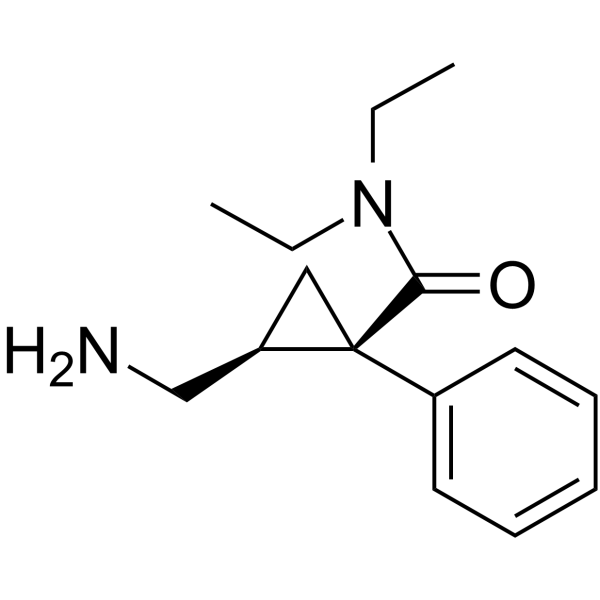
Milnacipran is an orally active Serotonin (HY-B1473A) and Norepinephrine (HY-13715) reuptake inhibitor. Milnacipran inhibits monoamine transporters, especially the norepinephrine transporter and the serotonin transporter (Ki values of 31 and 8.5 nM, respectively). Milnacipran inhibits pERK1/2 activation. Milnacipran has antidepressant, anxiolytic and analgesic properties. Milnacipran inhibits biting behavior in mice. Milnacipran can be used in the study of major depressive disorder, anxiety disorders, and neuropathic pain (e.g., fibromyalgia) .
|
-
-
- HY-103177
-
|
|
Adenosine Receptor
|
Inflammation/Immunology
|
|
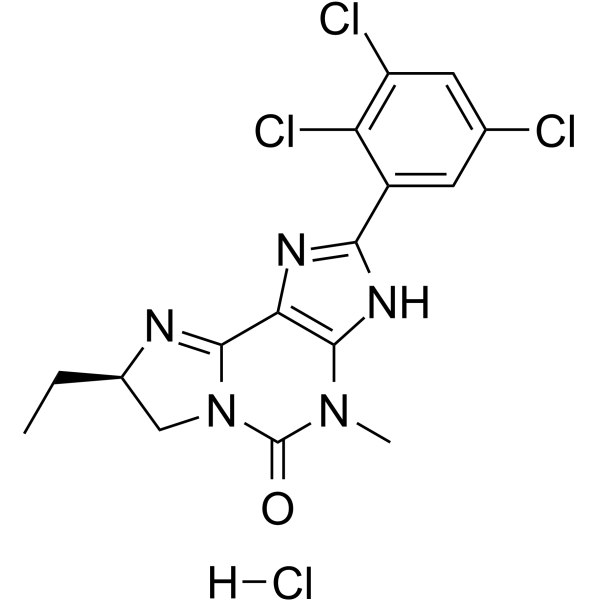
PSB-10 hydrochloride is a potent and selective antagonist of human adenosine A3 receptor (A3AR), with a Ki of 0.44 nM. PSB-10 hydrochloride shows more than 800-fold selectivity for hA3 over rA1, rA2A, hA1, hA2A and hA2B receptors (Ki=805, 6040, 1700, 2700, 30000 nM, respectively). PSB-10 hydrochloride produces thermal hyperalgesia in mice .
|
-
-
- HY-18617
-
|
|
Opioid Receptor
|
Neurological Disease
Inflammation/Immunology
|
|
rel-SB-612111 hydrochloride is a novel and potent human opiate receptor-like orphan receptor (ORL-1) antagonist with a high affinity for hORL-1 (Ki=0.33 nM). rel-SB-612111 hydrochloride exhibits selectivity for μ-, κ- and δ-receptors with Ki values of 57.6 nM, 160.5 nM and 2109 nM, respecticely. rel-SB-612111 hydrochloride effectively antagonizes the pronociceptive action of Nociceptin (HY-P0183) in an acute pain model .
|
-
-
- HY-12914
-
|
|
TRP Channel
|
Neurological Disease
Inflammation/Immunology
|
|
V116517 is a potent, orally active transient receptor potential vanilloid (TRPV1) antagonist. V116517 shows potent activity in inhibiting both capsaicin (CAP)- and acid (pH 5)-induced currents in rat DRG neurons expressing native TRPV (IC50=423.2 nM for CAP; IC50=180.3 nM for acid). V116517 can be used for the research of pain .
|
-
-
- HY-P1319
-
|
|
Opioid Receptor
|
Inflammation/Immunology
|
|
Nociceptin (1-7) is the N-terminal bioactive fragment of nociceptin (HY-P0183). Nociceptin (1-7) is a potent ORL1 (NOP) receptor agonist with antinociceptive activity. Nociceptin (1-7) combines with nociceptin reduces hyperalgesia in vivo .
|
-
-
- HY-131986
-
|
|
TRP Channel
|
Neurological Disease
Inflammation/Immunology
|
|
LASSBio-1135 (Compound 3a) is an orally active TRPV1 antagonist. LASSBio-1135 is an anti-inflammatory and analgesic compound. LASSBio-1135 inhibits moderately the human PGHS-2 enzyme activity (IC50 = 18.5 μM). LASSBio-1135 reverts the Capsaicin (HY-10448)-induced thermal hyperalgesia and reduces the carrageenan-induced rat paw edem .
|
-
-
- HY-120476
-
|
|
TRP Channel
|
Neurological Disease
Inflammation/Immunology
|
|
JNJ-39729209 is an antagonist for transient receptor potential vanilloid 1 (TRPV1) with pIC50 of 7.9, 8.5, 7.9 and 7.7 for TRPV1 from human, rat, canine and guinea pig. JNJ-39729209 inhibits Capsaicin (HY-10448)-induced hypotension and inhibit thereby hypothermia. JNJ-39729209 exhibits anti-inflammatory and analgesic activities in Carrageenan (HY-125474)- and CFA (HY-153808)-induced thermal hyperalgesia rat models. JNJ-39729209 exhibits anti-cough effects in guinea pigs .
|
-
-
- HY-18732C
-
|
Tilarginine hydrochloride; Methylarginine hydrochloride
|
NO Synthase
Endogenous Metabolite
|
Cardiovascular Disease
Cancer
|
|
L-NMMA (Tilarginine) hydrochloride is a non-selective and competitive inhibitor of nitric oxide synthase. L-NMMA hydrochloride inhibits three subtypes, namely nNOS, eNOS, and iNOS, and reduces NO production . L-NMMA hydrochloride alleviates mechanical allodynia, thermal hyperalgesia, and choroidal fibrosis. L-NMMA hydrochloride is applicable to research related to nociception, bone cancer pain, and myopia .
|
-
-
- HY-18618
-
|
|
Opioid Receptor
|
Neurological Disease
Inflammation/Immunology
|
|
SB-612111 is a novel and potent opiate receptor-like orphan receptor (ORL-1) antagonist with a high affinity for hORL-1 (Ki=0.33 nM). SB-612111 exhibits selectivity for μ-, κ- and δ-receptors with Ki values of 57.6 nM, 160.5 nM and 2109 nM, respecticely. SB-612111 effectively antagonizes the pronociceptive action of Nociceptin (HY-P0183) in an acute pain model .
|
-
-
- HY-18732B
-
|
Methylarginine citrate; Tilarginine citrate
|
NO Synthase
Endogenous Metabolite
|
Cardiovascular Disease
Cancer
|
|
L-NMMA (Tilarginine) citrate is a non-selective and competitive inhibitor of nitric oxide synthase. L-NMMA citrate inhibits three subtypes, namely nNOS, eNOS, and iNOS, and reduces NO production . L-NMMA citrate alleviates mechanical allodynia, thermal hyperalgesia, and choroidal fibrosis. L-NMMA citrate is applicable to research related to nociception, bone cancer pain, and myopia .
|
-
-
- HY-107922R
-
|
Isothazine (Standard)
|
Reference Standards
Cholinesterase (ChE)
iGluR
mAChR
|
Neurological Disease
|
|
Ethopropazine (hydrochloride) (Standard) is the analytical standard of Ethopropazine (hydrochloride) (HY-107922). This product is intended for research and analytical applications. Ethopropazine (Isothazine) hydrochloride is a potent and selective BChE inhibitor, a poor AChE inhibitor and a non-selective mAChR and NMDA antagonist. Ethopropazine hydrochloride has anticholinergic, antihistamine, antiadrenergic actions and properties. Ethopropazine hydrochloride alleviates thermal hyperalgesia in a dose dependent manner. Ethopropazine hydrochloride can be used for the research of Parkinson’s disease .
|
-
-
- HY-P1319A
-
|
|
Opioid Receptor
|
Inflammation/Immunology
|
|
Nociceptin (1-7) TFA is the N-terminal bioactive fragment of nociceptin (HY-P0183). Nociceptin (1-7) TFA is a potent ORL1 (NOP) receptor agonist with antinociceptive activity. Nociceptin (1-7) TFA combines with nociceptin reduces hyperalgesia in vivo .
|
-
-
- HY-18732AR
-
|
Tilarginine acetate (Standard); Methylarginine acetate (Standard)
|
Reference Standards
NO Synthase
|
Cardiovascular Disease
Cancer
|
|
L-NMMA (Tilarginine) acetate (Standard) is the analytical standard of L-NMMA acetate (HY-18732A). This product is intended for research and analytical applications. L-NMMA (Tilarginine) acetate is a non-selective and competitive inhibitor of nitric oxide synthase. L-NMMA acetate inhibits three subtypes, namely nNOS, eNOS, and iNOS, and reduces NO production . L-NMMA acetate alleviates mechanical allodynia, thermal hyperalgesia, and choroidal fibrosis. L-NMMA acetate is applicable to research related to nociception, bone cancer pain, and myopia .
|
-
-
- HY-B0168AR
-
|
|
Reference Standards
Serotonin Transporter
PERK
|
Neurological Disease
|
|
Milnacipran (hydrochloride) (Standard) is the analytical standard of Milnacipran hydrochloride (HY-B0168A). This product is intended for research and analytical applications. Milnacipran hydrochloride is an orally active Serotonin (HY-B1473A) and Norepinephrine (HY-13715) reuptake inhibitor. Milnacipran hydrochloride inhibits monoamine transporters, especially the norepinephrine transporter and the serotonin transporter (Ki values of 31 and 8.5 nM, respectively). Milnacipran hydrochloride inhibits pERK1/2 activation. Milnacipran hydrochloride has antidepressant, anxiolytic and analgesic properties. Milnacipran hydrochloride inhibits biting behavior in mice. Milnacipran hydrochloride can be used in the study of major depressive disorder, anxiety disorders, and neuropathic pain (e.g., fibromyalgia) .
|
-
-
- HY-B0168AS
-
|
|
Isotope-Labeled Compounds
Serotonin Transporter
PERK
|
Neurological Disease
|
|
Milnacipran-d5 hydrochloride is deuterium labeled Milnacipran hydrochloride (HY-B0168A). Milnacipran hydrochloride is an orally active Serotonin (HY-B1473A) and Norepinephrine (HY-13715) reuptake inhibitor. Milnacipran hydrochloride inhibits monoamine transporters, especially the norepinephrine transporter and the serotonin transporter (Ki values of 31 and 8.5 nM, respectively). Milnacipran hydrochloride inhibits pERK1/2 activation. Milnacipran hydrochloride has antidepressant, anxiolytic and analgesic properties. Milnacipran hydrochloride inhibits biting behavior in mice. Milnacipran hydrochloride can be used in the study of major depressive disorder, anxiety disorders, and neuropathic pain (e.g., fibromyalgia) .
|
-
-
- HY-168166
-
|
|
Endogenous Metabolite
|
Neurological Disease
|
|
CHET3 is a sex-selective activator with potent analgesic activity. CHET3 was discovered to be a highly selective omnidirectional modulator of TASK-3-containing K2P channels, including TASK-3 homologues and TASK-3/TASK-1 heterologues. CHET3 exhibited significant analgesic effects in multiple acute and chronic pain models in mice, which could be abolished by pharmacological means or genetic knockout of TASK-3. CHET3 is able to functionally modulate the membrane excitability of specific small sensory neurons, which supports its analgesic effects on thermal hypersensitivity and mechanical hyperalgesia in chronic pain .
|
-
-
- HY-114583
-
|
|
TRP Channel
|
Neurological Disease
|
|
AMG-8562 is a TRPV1 modulator. AMG-8562 blocks Capsaicin (HY-10448) activation of TRPV1 without affecting heat activation of TRPV1. AMG-8562 potentiates pH 5 activation of TRPV1. AMG-8562 blocks capsaicin-induced flinching behavior in pain models. AMG-8562 produces significant efficacy in CFA- and skin incision-induced thermal hyperalgesia, and in the Acetic acid (HY-Y0319)-induced writhing models .
|
-
-
- HY-U00069
-
|
|
Monoamine Transporter
|
Neurological Disease
Inflammation/Immunology
|
|
Thionisoxetine is a norepinephrine transporter inhibitor with a Ki value of 0.2 nM in rats, and exhibits anti-hyperalgesic and analgesic activities. Thionisoxetine reverses thermal hyperalgesia and mechanical allodynia in rats. Thionisoxetine can be used in studies related to persistent inflammatory pain .
|
-
-
- HY-180582
-
|
|
nAChR
|
Neurological Disease
Inflammation/Immunology
|
|
QND8 is a selective and potent α7 nicotinic acetylcholine receptor (nAChR) agonist. QND8 can alleviate thermal hyperalgesia and mechanical hyperalgesia in carrageenan-induced inflammatory pain mouse model. QND8 can reduce the swelling of the mice feet, inhibit the release of pro-inflammatory factors at the inflammatory site, and prevent the infiltration of white blood cells. QND8 can be used for the research of inflammation and neurological disease, such as arthritis .
|
-
-
- HY-165571
-
|
|
Carboxypeptidase
|
Neurological Disease
|
|
E2072 is a selective, orally active competitive inhibitor of glutamate carboxypeptidase II (GCPII) with a Ki of 10 nM. E2072 alleviates established thermal hyperalgesia in a rat model of chronic constriction injury. E2072 prevents oxaliplatin-induced reductions in nerve conduction velocity and amplitude in mice. E2072 is applicable to research related to neuropathic pain and neuropathy .
|
-
-
- HY-155949
-
|
|
|
Neurological Disease
Cancer
|
|
Bt354 is an orally active STAT3 inhibitor with IC50 values of 4.6 μM (DU145), 6.5 μM (MDA-MB-435) and 7.2 μM (MDA-MB-231), respectively. Bt354 induces cell cycle arrest and apoptosis, and downregulates epithelial-mesenchymal transition-related genes. Bt354 exhibits anti-angiogenic and anti-inflammatory activities, attenuates the polarization of M1 microglia and A1 astrocytes, suppresses inflammasome-related signaling pathways, and alleviates mechanical hyperalgesia and thermal hyperalgesia. Bt354 can be used in research related to glioblastoma multiforme, triple-negative breast cancer, prostate cancer and neuropathic pain .
|
-
-
- HY-182597
-
|
|
Imidazoline Receptor
5-HT Receptor
Adrenergic Receptor
|
Neurological Disease
|
|
Tracizoline is an orally active I2-imidazoline receptor agonist. Tracizoline functionally modulates I2-imidazoline receptors, regulates hippocampal FADD cell fate adaptor, attenuates mechanical and thermal hyperalgesia, activates α2A-adrenergic receptors with very weak partial agonism, and induces antidepressant-like activity via 5-HT1A receptor activation. Tracizoline can be used for the research of inflammatory pain, neuropathic pain, and depression .
|
-
-
- HY-183857
-
|
|
TRP Channel
|
Neurological Disease
|
|
DD-161515 is a TRPV1/VR1 inhibitor with an IC50 of 0.7 μM in rats. DD-161515 binds to an allosteric site of TRPV1 distinct from that of capsaicin, blocks channel opening, inhibits receptor-mediated calcium ion influx, reduces the excitability of peripheral sensory nerve fibers, and thereby inhibits nociception induced by heat and transmission of chemically induced pain signals. DD-161515 can be used in studies related to inflammatory pain .
|
-
-
- HY-182517
-
|
|
TRP Channel
|
Inflammation/Immunology
|
|
AG1529 is a TRPV1 inhibitor and capsaicinoid-based soft agent with a human TRPV1 IC50 of 0.9-0.93 μM. AG1529 reversibly blocks capsaicin-evoked TRPV1 activation, binds to the TRPV1 capsaicin binding site, moderately affects pH-induced TRPV1 gating, and does not alter voltage- or heat-mediated TRPV1 responses. AG1529 suppresses TRPV1-mediated neuronal excitability, reduces capsaicin- and pH-evoked neuronal firing, abolishes histaminergic and inflammation-mediated TRPV1 sensitization. AG1529 exhibits anti-nociceptive and antipruritic effects, attenuates in vivo hyperalgesia and pruritus, dose-dependently reduces acute histaminergic itch in rodents, and mildly blocks hTRPA1 and hTRPM8 channel activity. AG1529 undergoes hydrolysis and dermal deactivation, minimizes TRPV1-associated side reactions, does not evoke capsaicin-like burning sensation, and does not disrupt physiological thermal regulation. AG1529 can be used for the research of inflammatory cutaneous nociception and acute histaminergic pruritus .
|
-
-
- HY-182351
-
|
|
Calcium Channel
|
Neurological Disease
|
|
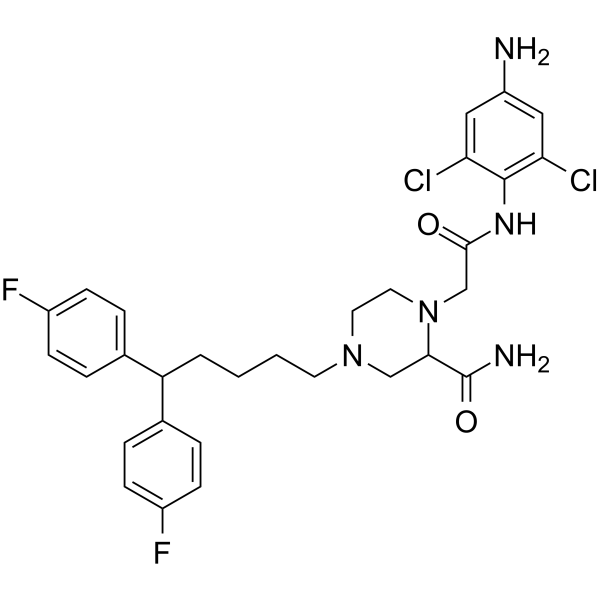
ONO-2921 is an orally active and selective N-type calcium channel blocker. ONO-2921 functionally blocks N-type calcium channels. ONO-2921 reduces paw withdrawal responses during persistent nociception and hyperalgesia to heat in neuropathic pain models. ONO-2921 can be used for research on neuropathic pain and nociceptive pain .
|
-
| Cat. No. |
Product Name |
Target |
Research Area |
-
- HY-P1410B
-
-
- HY-P10638
-
|
|
CaMK
|
Cardiovascular Disease
Neurological Disease
|
|
TAT-CN21 is a potent CaMKII inhibitor with an IC50 of 77.2 nM. TAT-CN21 inhibits both calcium/calmodulin-dependent and autonomously activated CaMKII, blocks glutamate-induced translocation of CaMK IIα, and reverses the enhanced phosphorylation of CaMKII at Thr286 following excitotoxic injury. TAT-CN21 shows application potential in studies related to ischemic stroke by reducing neuronal excitotoxicity and exacerbating pre-existing long-term neuronal death prior to injury. TAT-CN21 improves definitive behaviors in rats with residual nerve injury without altering indicators such as mechanical/thermal hyperalgesia or spatial memory. TAT-CN21 can also be used in studies related to neuropathic pain .
|
-
- HY-P1410C
-
|
|
Piezo Channel
Calcium Channel
mTOR
PI3K
Akt
|
Cardiovascular Disease
Neurological Disease
Inflammation/Immunology
|
|
D-GsMTx4 TFA is a spider peptide and the D enantiomer of GsMTx4 (HY-P1410). D-GsMTx4 TFA inhibits the mechanosensitive ion channel Piezo2. D-GsMTx4 TFA inhibits [Ca 2+]i elevation. D-GsMTx4 TFA inhibits mTOR and PI3K-Akt signaling pathways. D-GsMTx4 TFA inhibits mechanical allodynia and thermal hyperalgesia. D-GsMTx4 TFA can be used in researches of mechanical stress, chronic pain and idiopathic pulmonary fibrosis .
|
-
- HY-P1319
-
|
|
Opioid Receptor
|
Inflammation/Immunology
|
|
Nociceptin (1-7) is the N-terminal bioactive fragment of nociceptin (HY-P0183). Nociceptin (1-7) is a potent ORL1 (NOP) receptor agonist with antinociceptive activity. Nociceptin (1-7) combines with nociceptin reduces hyperalgesia in vivo .
|
-
- HY-P3856
-
|
|
Peptides
|
Neurological Disease
|
|
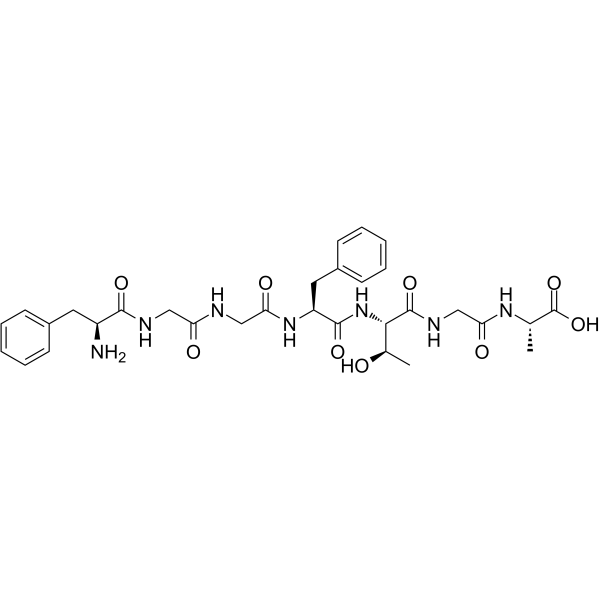
Endokinin C is a peptide component of endokinin. Endokinin C works as a neurotransmitter or modulator in the pain system. Pretreatment with endokinin C prevents induction of scratching behavior and thermal hyperalgesia of endokinin A/B in mice .
|
-
- HY-P1319A
-
|
|
Opioid Receptor
|
Inflammation/Immunology
|
|
Nociceptin (1-7) TFA is the N-terminal bioactive fragment of nociceptin (HY-P0183). Nociceptin (1-7) TFA is a potent ORL1 (NOP) receptor agonist with antinociceptive activity. Nociceptin (1-7) TFA combines with nociceptin reduces hyperalgesia in vivo .
|
| Cat. No. |
Product Name |
Category |
Target |
Chemical Structure |
-
- HY-18732A
-
-
-
- HY-18732AR
-
|
Tilarginine acetate (Standard); Methylarginine acetate (Standard)
|
Structural Classification
Natural Products
Endogenous metabolite
Source Classification
|
Reference Standards
NO Synthase
|
|
L-NMMA (Tilarginine) acetate (Standard) is the analytical standard of L-NMMA acetate (HY-18732A). This product is intended for research and analytical applications. L-NMMA (Tilarginine) acetate is a non-selective and competitive inhibitor of nitric oxide synthase. L-NMMA acetate inhibits three subtypes, namely nNOS, eNOS, and iNOS, and reduces NO production . L-NMMA acetate alleviates mechanical allodynia, thermal hyperalgesia, and choroidal fibrosis. L-NMMA acetate is applicable to research related to nociception, bone cancer pain, and myopia .
|
-
| Cat. No. |
Product Name |
Chemical Structure |
-
- HY-B0168AS
-
|
|
|
Milnacipran-d5 hydrochloride is deuterium labeled Milnacipran hydrochloride (HY-B0168A). Milnacipran hydrochloride is an orally active Serotonin (HY-B1473A) and Norepinephrine (HY-13715) reuptake inhibitor. Milnacipran hydrochloride inhibits monoamine transporters, especially the norepinephrine transporter and the serotonin transporter (Ki values of 31 and 8.5 nM, respectively). Milnacipran hydrochloride inhibits pERK1/2 activation. Milnacipran hydrochloride has antidepressant, anxiolytic and analgesic properties. Milnacipran hydrochloride inhibits biting behavior in mice. Milnacipran hydrochloride can be used in the study of major depressive disorder, anxiety disorders, and neuropathic pain (e.g., fibromyalgia) .
|
-
Your information is safe with us. * Required Fields.
Inquiry Information
- Product Name:
- Cat. No.:
- Quantity:
- MCE Japan Authorized Agent:

