
Search Result
Results for "
triglyceride (TG)
" in MedChemExpress (MCE) Product Catalog:
2
Isotope-Labeled Compounds
| Cat. No. |
Product Name |
Target |
Research Areas |
Chemical Structure |
-
- HY-112540B
-
|
|
Endogenous Metabolite
|
Metabolic Disease
|
|
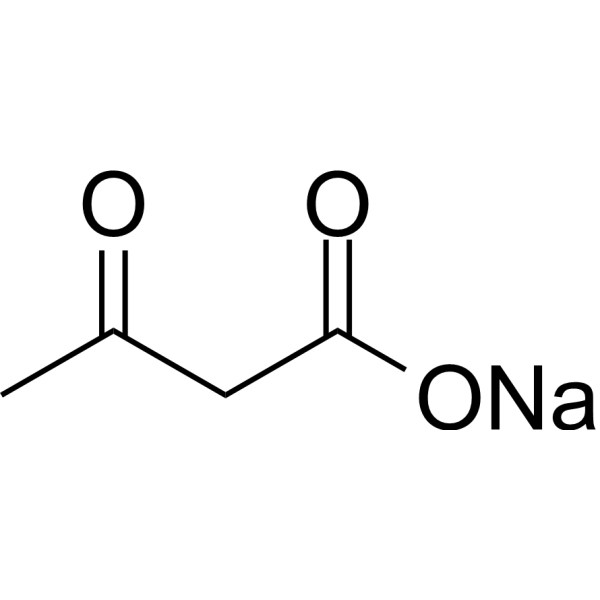
Acetoacetic acid sodium is an oxidative stress inducer that affects the antioxidant enzyme system and lipoprotein metabolism. Acetoacetic acid sodium induces oxidative stress by decreasing the mRNA expression and activity of superoxide dismutase (SOD), catalase (CAT), and glutathione peroxidase (GSH-Px), increasing MDA content, and inhibiting very low density lipoprotein (VLDL) assembly by downregulating apolipoprotein ApoB100, ApoE, and low density lipoprotein receptor (LDLR), leading to triglyceride (TG) accumulation in hepatocytes. Acetoacetic acid sodium can be used to study metabolic diseases .
|
-
-
- HY-112540
-
|
|
Endogenous Metabolite
|
Metabolic Disease
|
|
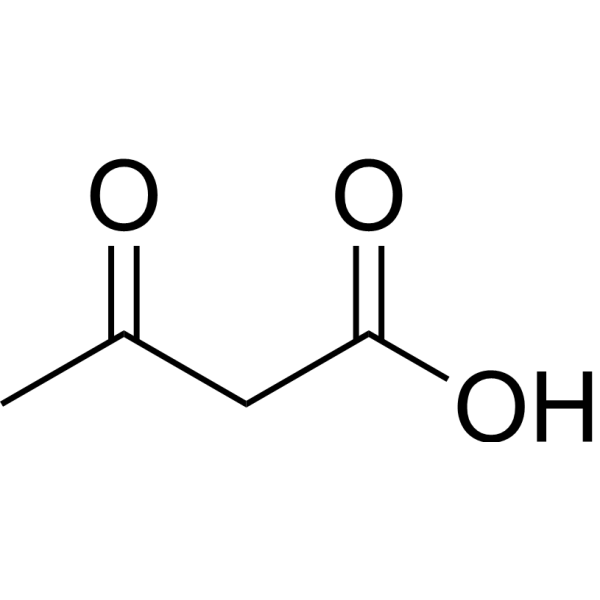
Acetoacetic acid is an oxidative stress inducer that affects the antioxidant enzyme system and lipoprotein metabolism. Acetoacetic acid induces oxidative stress by decreasing the mRNA expression and activity of superoxide dismutase (SOD), catalase (CAT), and glutathione peroxidase (GSH-Px), increasing MDA content, and inhibiting very low density lipoprotein (VLDL) assembly by downregulating apolipoprotein ApoB100, ApoE, and low density lipoprotein receptor (LDLR), leading to triglyceride (TG) accumulation in hepatocytes. Acetoacetic acid can be used to study metabolic diseases .
|
-
-
- HY-112540A
-
|
|
Endogenous Metabolite
|
Metabolic Disease
|
|
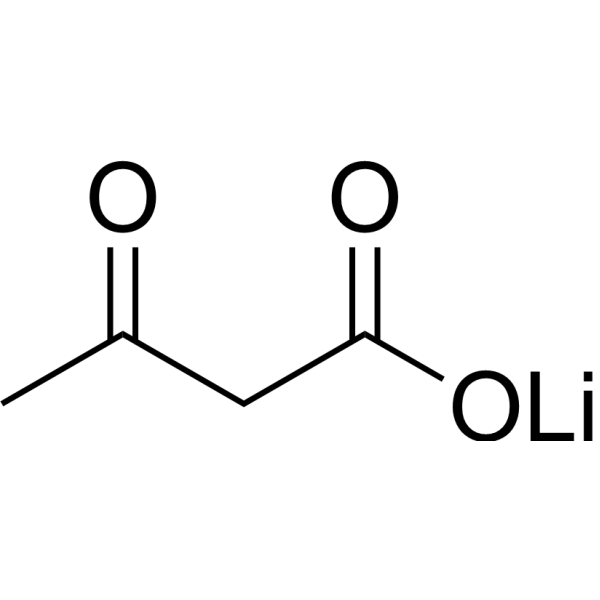
Acetoacetic acid lithium is an oxidative stress inducer that affects the antioxidant enzyme system and lipoprotein metabolism. Acetoacetic acid lithium induces oxidative stress by decreasing the mRNA expression and activity of superoxide dismutase (SOD), catalase (CAT), and glutathione peroxidase (GSH-Px), increasing MDA content, and inhibiting very low density lipoprotein (VLDL) assembly by downregulating apolipoprotein ApoB100, ApoE, and low density lipoprotein receptor (LDLR), leading to triglyceride (TG) accumulation in hepatocytes. Acetoacetic acid lithium can be used to study metabolic diseases .
|
-
-
- HY-W015600
-
|
Orthocetamol
|
Ferroptosis
Glutathione Peroxidase
Reactive Oxygen Species (ROS)
LDLR
|
Cardiovascular Disease
Inflammation/Immunology
|
|
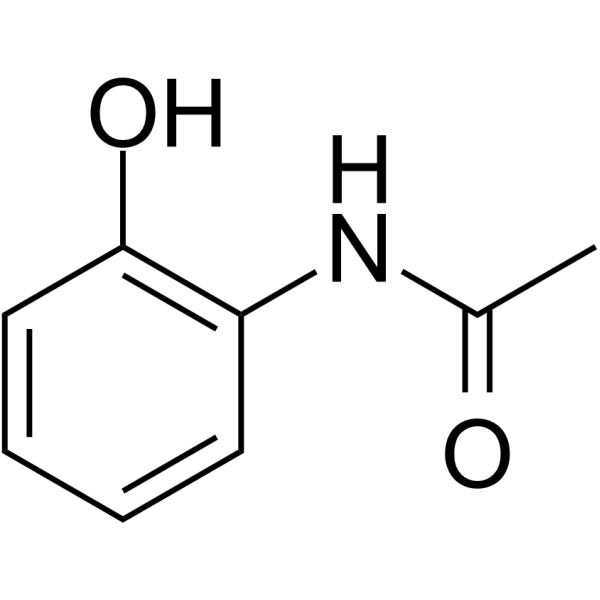
2-Acetamidophenol (Orthocetamol) is a regulator that targets ferroptosis and glutathione metabolic pathways, is the ortho-regioisomer of Paracetamol (HY-66005). 2-Acetamidophenol has anti-atherosclerotic activity, and inhibiting total cholesterol (TC) and triglyceride (TG) in a zebrafish hyperlipidemia model with IC50s for 30 μM and 40 μM, respectively. 2-Acetamidophenol upregulates the expression of glutathione synthesis-related genes (such as GCLC, GCLM, GSS) and iron ion transport genes (such as FPN1, FTH), reduces the accumulation of intracellular reactive oxygen species (ROS) and ferrous ions (Fe 2+), and enhances the activity of glutathione peroxidase GPX4, thereby inhibiting macrophage phagocytosis of oxidized low-density lipoprotein (ox-LDL) and foam cell formation .
|
-
-
- HY-P99822
-
|
SHR-1209
|
PCSK9
|
Metabolic Disease
|
|
Recaticimab (SHR-1209) is a humanized IgG1 mAb that selectively targets PCSK9. Recaticimab reduces low-density lipoprotein cholesterol (LDL-C), non-high-density lipoprotein cholesterol (non-HDL-C), apolipoprotein B (ApoB), triglyceride (TG), and lipoprotein(a) levels. Recaticimab can be used for hyperlipidemia research .
|
-
-
- HY-110381
-
|
|
Acyltransferase
|
Metabolic Disease
|
|
JNJ-DGAT2-A is a selective diacylglycerol acyltransferase 2 (DGAT2) inhibitor with an IC50 value of 0.14 μM in human DGAT2-expressing Sf9 insect cell membranes. JNJ-DGAT2-A can be used for the research of triglyceride (TG) synthesis .
|
-
-
- HY-N15875
-
|
|
Fluorescent Dye
|
Metabolic Disease
|
|
18:1-18:1-C11 BODIPY 505/515 TG is a fluorescently-labeled triglyceride that can be used as a fluorescent probe (Ex/Em = 495/503 nm).
|
-
-
- HY-W587772
-
|
MEHHTP
|
Drug Metabolite
|
Metabolic Disease
|
|
Mono (2-ethyl-5-hydroxyhexyl) terephthalate (MEHHTP), a hydroxyl metabolite of the phthalate alternative Di-2-ethylhexyl terephthalate (DEHTP), is a liver X receptor α (LXRα) agonist with a binding energy of -7.41 kcal/mol. Mono (2-ethyl-5-hydroxyhexyl) terephthalate upregulates LXRα downstream targets such as SREBP-1c and FASN and increases lipogenic enzyme activity in hepatocytes, and elevating triglyceride (TG) levels. Mono (2-ethyl-5-hydroxyhexyl) terephthalate is promising for research of nonalcoholic fatty liver disease (NAFLD) .
|
-
-
- HY-W015600R
-
|
Orthocetamol (Standard)
|
Reference Standards
Ferroptosis
Glutathione Peroxidase
Reactive Oxygen Species (ROS)
LDLR
|
Cardiovascular Disease
Inflammation/Immunology
|
|
2-Acetamidophenol (Standard) is the analytical standard of 2-Acetamidophenol. This product is intended for research and analytical applications. 2-Acetamidophenol (Orthocetamol) is a regulator that targets ferroptosis and glutathione metabolic pathways, is the ortho-regioisomer of Paracetamol (HY-66005). 2-Acetamidophenol has anti-atherosclerotic activity, and inhibiting total cholesterol (TC) and triglyceride (TG) in a zebrafish hyperlipidemia model with IC50s for 30 μM and 40 μM, respectively. 2-Acetamidophenol upregulates the expression of glutathione synthesis-related genes (such as GCLC, GCLM, GSS) and iron ion transport genes (such as FPN1, FTH), reduces the accumulation of intracellular reactive oxygen species (ROS) and ferrous ions (Fe 2+), and enhances the activity of glutathione peroxidase GPX4, thereby inhibiting macrophage phagocytosis of oxidized low-density lipoprotein (ox-LDL) and foam cell formation .
|
-
-
- HY-175725
-
|
|
Nuclear Hormone Receptor 4A/NR4A
|
Metabolic Disease
|
|
NR4A1 agonist 1 is a NR4A1 agonist with a Ki value of 2.96 μM. NR4A1 agonist 1 exhibits lipid-lowering activity in 3T3-L1 adipocytes, with an EC50 of 0.13 μM, significantly decreasing triglyceride (TG) accumulation and lipid droplet accumulation. NR4A1 agonist 1 can be used for the study of obesity .
|
-
-
- HY-W015600S
-
|
Orthocetamol-d3
|
Isotope-Labeled Compounds
Ferroptosis
Glutathione Peroxidase
Reactive Oxygen Species (ROS)
LDLR
|
Cardiovascular Disease
Inflammation/Immunology
|
|
2-Acetamidophenol-d3 (Orthocetamol-d3) is the deuterium labeled 2-Acetamidophenol (HY-W015600). 2-Acetamidophenol (Orthocetamol) is a regulator that targets ferroptosis and glutathione metabolic pathways, is the ortho-regioisomer of Paracetamol (HY-66005). 2-Acetamidophenol has anti-atherosclerotic activity, and inhibiting total cholesterol (TC) and triglyceride (TG) in a zebrafish hyperlipidemia model with IC50s for 30 μM and 40 μM, respectively. 2-Acetamidophenol upregulates the expression of glutathione synthesis-related genes (such as GCLC, GCLM, GSS) and iron ion transport genes (such as FPN1, FTH), reduces the accumulation of intracellular reactive oxygen species (ROS) and ferrous ions (Fe2+), and enhances the activity of glutathione peroxidase GPX4, thereby inhibiting macrophage phagocytosis of oxidized low-density lipoprotein (ox-LDL) and foam cell formation .
|
-
-
- HY-172083
-
-
-
- HY-158614
-
|
16:0-12-PAHSA-18:1-TG; TG(16:0/12-PAHSA/18:1)
|
Endogenous Metabolite
|
Others
|
|
1-Palmitoyl-2-12-PAHSA-3-oleoyl-sn-glycerol (16:0-12-PAHSA-18:1-TG) is a FAHFAs-containing triglyceride that can be synthesized from isotope-labeled FAHFAs, whose decomposition can regulate intracellular FAHFAs levels, and is the major reservoir of FAHFAs in cells and tissues, revealing the activity of a new branch of TG and FAHFAs metabolism.
|
-
-
- HY-W704600
-
|
TG(18:0/18:1/18:0)
|
Biochemical Assay Reagents
|
Others
|
|
1,3-Distearoyl-2-oleoyl glycerol (TG(18:0/18:1/18:0)) is a triglyceride that can be isolated from native fats such as such as kokum, shea butter and mango kernel fat. 1,3-Distearoyl-2-oleoyl glycerol is widely used in the chocolate industry as a cocoa butter modifier and an anti-blooming agent .
|
-
-
- HY-176817
-
|
|
GPR109A
|
Cardiovascular Disease
Metabolic Disease
|
|
GPR109 receptor agonist-3 is an orally active GPR109 receptor agonist, with an IC50 of 310 nM.
GPR109 receptor agonist-3 retains the antioxidation and cytoprotection of Lipoic acid (HY-18733). GPR109 receptor agonist-3 reduces total cholesterol (TC), triglyceride (TG), low-density lipoprotein cholesterol (LDL-C) and increases high-density lipoprotein cholesterol (HDL-C) in high-fat diet-fed rats. GPR109 receptor agonist-3 can be used for the study of atherosclerosis .
|
-
-
- HY-N15883
-
|
|
Fluorescent Dye
|
Metabolic Disease
|
|
18:1-C11 BODIPY 505/515-C11 BODIPY 505/515 TG is a fluorescently-labeled triglyceride that can be used to measure triacylglycerol hydrolases (Ex/Em = 495/503 nm) .
|
-
-
- HY-161939
-
|
|
PCSK9
|
Cardiovascular Disease
|
|
7030B-C5 is a PCSK9 inhibitor (IC50=1.61 μM). 7030B-C5 can significantly reduce plasma cholesterol and triglyceride (TG) levels in vivo and slow the progression of atherosclerosis. 7030B-C5 can be used in the study of cardiovascular diseases .
|
-
-
- HY-123765
-
|
|
Acyltransferase
|
Metabolic Disease
|
|
JTT-553 is a DGAT1 inhibitor (IC50: 2.38 nM). JTT-553 reduces plasma concentrations of glucose, insulin, non-esterified fatty acids (NEFA), total cholesterol (TC), and hepatic triglycerides (TG). JTT-553 improves insulin-dependent glucose uptake and glucose intolerance in adipose tissue of DIO mice. JTT-553 reduces TNF-α mRNA levels and increases GLUT4 mRNA levels in adipose tissue of KK-Ay mice. JTT-553 improves adipose tissue insulin resistance and systemic glucose metabolism by reducing body weight. JTT-553 can be used in the study of obesity and type 2 diabetes mellitus (T2DM) .
|
-
-
- HY-115705
-
|
Glycerol tri-10(Z)-heptadecenoate; TG(17:1/17:1/17:1); Tri-10(Z)-heptadecenoin
|
Biochemical Assay Reagents
|
Others
|
|
1,2,3-Tri-10(Z)-heptadecenoyl glycerol (TG(17:1/17:1/17:1)) is a biochemical assay reagent, which can be used as an internal standard for the quantification of biological triglyceride .
|
-
-
- HY-165050
-
|
18:2/18:0/18:2-TG; TG(18:2/18:0/18:2)
|
Others
|
Others
|
|
1,3-Dilinoleoyl-2-stearoyl glycerol (18:2/18:0/18:2-TG) is a compound used in the study of triglyceride composition of vegetable oils. It was analyzed by supercritical CO? chromatography-mass spectrometry to determine its content and characteristics in different vegetable oils.
|
-
-
- HY-N15876
-
|
|
Fluorescent Dye
|
Metabolic Disease
|
|
18:1-6:0 DNP-C11 BODIPY 505/515 TG is a fluorescently-labeled triglyceride that can be used to study the effects of phosphoinositides (Ex/Em = 495/503 nm) .
|
-
-
- HY-N11551
-
|
|
Others
|
Others
Metabolic Disease
|
|
Salvifaricin is an orally active diterpenoid compound that can be isolated from Salvia leucantha Cav. and Salvia hispanica L.. Salvifaricin significantly reduces fasting blood glucose and serum triglyceride (TG) levels, and has anti-diabetic effect .
|
-
-
- HY-117110
-
|
H-Arg-Pro-OH
|
Proton Pump
|
Metabolic Disease
|
|
Arginylproline (H-Arg-Pro-OH) is a dipeptide consisted of arginine and proline. Arginylproline reduces intracellular triglyceride (TG) levels stimulated by Oleic acid (HY-N1446), through the peptide transporter 1 (PepT1) pathway .
|
-
-
- HY-N8214
-
|
|
Others
|
Cardiovascular Disease
|
|
Isorhamnetin 3-O-β-D-glucose-7-O-β-D-gentiobioside is a bioactive constituent that can be found in the seeds of Lepidium apetalum Willd. Isorhamnetin 3-O-β-D-glucose-7-O-β-D-gentiobioside exhibits significant triglyceride (TG)-lowering effects in HepG2 cells .
|
-
-
- HY-N7907
-
|
|
Others
|
Metabolic Disease
|
|
Myricetin-3-O-β-D-xylopyranosyl-(1→2)-β-D-glucopyranoside is a natural product that can be obtained from sphaerophysa salsula. Myricetin-3-O-β-D-xylopyranosyl-(1→2)-β-D-glucopyranoside inhibits triglyceride (TG) accumulation in 3T3-L1 adipocytes .
|
-
-
- HY-146398
-
|
|
AMPK
|
Metabolic Disease
|
|
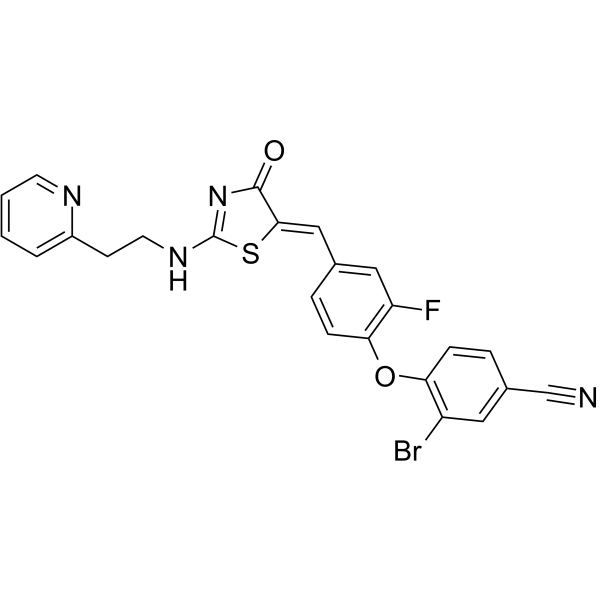
AMPK activator 6 (Compound GC) reduces lipid content and activates the AMPK pathway in HepG2 and 3T3-L1 cells. AMPK activator 6 significantly suppresses the increase in triglyceride (TG) , total cholesterol (TC), low-density lipoprotein-C (LDL-C), and other biochemical indices in blood serum. AMPK activator 6 can be used for the research of non-alcoholic fatty liver disease (NAFLD) and metabolic syndrome .
|
-
-
- HY-161985
-
|
|
PPAR
|
Metabolic Disease
|
|
PPARγ-IN-3 (compound 9ga) is a potent and orally active PPARγ inhibitor. PPARγ-IN-3 reduces triglyceride (TG) accumulation with low cytotoxicity. PPARγ-IN-3 preventes the excessive growth of body weight and lessened fat mass as well as liver mass, decreases lipid accumulation in the liver and blood. PPARγ-IN-3 has the potential for the research of diet-induced obesity .
|
-
-
- HY-112540AR
-
|
|
Endogenous Metabolite
Reference Standards
|
Metabolic Disease
|
|
Acetoacetic acid (lithium) (Standard) is the analytical standard of Acetoacetic acid (lithium). This product is intended for research and analytical applications. Acetoacetic acid lithium is an oxidative stress inducer that affects the antioxidant enzyme system and lipoprotein metabolism. Acetoacetic acid lithium induces oxidative stress by decreasing the mRNA expression and activity of superoxide dismutase (SOD), catalase (CAT), and glutathione peroxidase (GSH-Px), increasing MDA content, and inhibiting very low density lipoprotein (VLDL) assembly by downregulating apolipoprotein ApoB100, ApoE, and low density lipoprotein receptor (LDLR), leading to triglyceride (TG) accumulation in hepatocytes. Acetoacetic acid lithium can be used to study metabolic diseases .
|
-
-
- HY-176987
-
-
-
- HY-176985
-
-
-
- HY-176982
-
-
-
- HY-176983
-
-
-
- HY-176984
-
-
-
- HY-176981
-
-
-
- HY-176986
-
-
-
- HY-176988
-
-
-
- HY-176989
-
-
-
- HY-165105
-
|
TG(18:1/10:0/18:1); 1,3-Dioleoyl-2-caproyl glycerol; 1,3-Olein-2-caprin
|
Others
|
Others
|
|
1,3-Dioleoyl-2-decanoyl glycerol (TG(18:1/10:0/18:1)) is a compound that was investigated in the study of triglyceride composition in human milk and infant formula. The analysis and comparison of the compound using a specific chromatography-mass spectrometry technique revealed differences in triglyceride content between human milk and infant formula.
|
-
-
- HY-169473
-
|
Tribrassidin; TG(22:1/22:1/22:1)
|
Drug Derivative
|
Metabolic Disease
|
|
1,2,3-Tri-13(E)-docosenoyl glycerol (Tribrassidin; TG(22:1/22:1/22:1)) is an orally consumable triglyceride. 1,2,3-Tri-13(E)-docosenoyl glycerol was added to the diet of rats by mixing it with corn oil and undergoing ester exchange to improve its digestion and absorption .
|
-
-
- HY-N8353
-
|
|
Others
|
Metabolic Disease
|
|
Stachybotramide is a natural fungal metabolite with the property of modulating the activity of cholesteryl ester transfer protein (CETP). Stachybotramide stimulates the transfer of cholesteryl esters (CE) from high-density lipoprotein (HDL) to very-low-density lipoprotein (VLDL) and low-density lipoprotein (LDL), increasing the transfer efficiency by 1.3- to 1.5-fold. Stachybotramide slightly reduced the transfer of cholesteryl esters from LDL and VLDL to HDL at 0.5 mM. The effect of Stachybotramide on the transfer of triglycerides (TG) from HDL was not significant. By these results, Stachybotramide was shown to preferentially stimulate the CETP-mediated transfer of cholesteryl esters from HDL to VLDL and LDL .
|
-
-
-
HY-L182
-
|
|
285 compounds
|
|
Fatty acids (FAs) are the main components of lipids. The synthesis of fatty acids mainly involves the Triglyceride (TG) cycle and De Novo Lipogenesis (DNL). Fatty acids which exist widely in organisms are components of cell membranes and play an indispensable role in cell signaling. In addition, FFAs can be taken up from circulating plasma by all mitochondria-containing cells, and they are metabolized by β-oxidation and the citric acid cycle to release large amounts of energy in the form of ATP. Abnormal fatty acid metabolism is associated with the occurrence and development of cardiovascular diseases, diabetes, fatty liver, hyperthyroidism, and other diseases.
MCE offers a unique collection of fatty acid compounds. Fatty Acids Compound Library is an important tool for the study of energy metabolism and drug development of metabolism-related diseases.
|
| Cat. No. |
Product Name |
Target |
Research Area |
-
- HY-117110
-
|
H-Arg-Pro-OH
|
Proton Pump
|
Metabolic Disease
|
|
Arginylproline (H-Arg-Pro-OH) is a dipeptide consisted of arginine and proline. Arginylproline reduces intracellular triglyceride (TG) levels stimulated by Oleic acid (HY-N1446), through the peptide transporter 1 (PepT1) pathway .
|
| Cat. No. |
Product Name |
Target |
Research Area |
Image |
-
- HY-P99822
-
|
SHR-1209
|
PCSK9
|
Metabolic Disease
|
|
Recaticimab (SHR-1209) is a humanized IgG1 mAb that selectively targets PCSK9. Recaticimab reduces low-density lipoprotein cholesterol (LDL-C), non-high-density lipoprotein cholesterol (non-HDL-C), apolipoprotein B (ApoB), triglyceride (TG), and lipoprotein(a) levels. Recaticimab can be used for hyperlipidemia research .
|
-
(5)
| Cat. No. |
Product Name |
Category |
Target |
Chemical Structure |
-
- HY-112540B
-
-
-
- HY-112540
-
|
|
Human Gut Microbiota Metabolites
Microorganisms
Endogenous metabolite
Source Classification
|
Endogenous Metabolite
|
|
Acetoacetic acid is an oxidative stress inducer that affects the antioxidant enzyme system and lipoprotein metabolism. Acetoacetic acid induces oxidative stress by decreasing the mRNA expression and activity of superoxide dismutase (SOD), catalase (CAT), and glutathione peroxidase (GSH-Px), increasing MDA content, and inhibiting very low density lipoprotein (VLDL) assembly by downregulating apolipoprotein ApoB100, ApoE, and low density lipoprotein receptor (LDLR), leading to triglyceride (TG) accumulation in hepatocytes. Acetoacetic acid can be used to study metabolic diseases .
|
-
-
- HY-112540A
-
-
-
- HY-N15875
-
-
-
- HY-N15883
-
|
|
Lipid
|
Fluorescent Dye
|
|
18:1-C11 BODIPY 505/515-C11 BODIPY 505/515 TG is a fluorescently-labeled triglyceride that can be used to measure triacylglycerol hydrolases (Ex/Em = 495/503 nm) .
|
-
-
- HY-N15876
-
|
|
Lipid
|
Fluorescent Dye
|
|
18:1-6:0 DNP-C11 BODIPY 505/515 TG is a fluorescently-labeled triglyceride that can be used to study the effects of phosphoinositides (Ex/Em = 495/503 nm) .
|
-
-
- HY-N11551
-
-
-
- HY-N8214
-
-
-
- HY-N7907
-
-
-
- HY-112540AR
-
|
|
Structural Classification
Ketones, Aldehydes, Acids
Endogenous metabolite
Source Classification
|
Endogenous Metabolite
Reference Standards
|
|
Acetoacetic acid (lithium) (Standard) is the analytical standard of Acetoacetic acid (lithium). This product is intended for research and analytical applications. Acetoacetic acid lithium is an oxidative stress inducer that affects the antioxidant enzyme system and lipoprotein metabolism. Acetoacetic acid lithium induces oxidative stress by decreasing the mRNA expression and activity of superoxide dismutase (SOD), catalase (CAT), and glutathione peroxidase (GSH-Px), increasing MDA content, and inhibiting very low density lipoprotein (VLDL) assembly by downregulating apolipoprotein ApoB100, ApoE, and low density lipoprotein receptor (LDLR), leading to triglyceride (TG) accumulation in hepatocytes. Acetoacetic acid lithium can be used to study metabolic diseases .
|
-
-
- HY-N8353
-
|
|
Natural Products
Microorganisms
Source Classification
|
Others
|
|
Stachybotramide is a natural fungal metabolite with the property of modulating the activity of cholesteryl ester transfer protein (CETP). Stachybotramide stimulates the transfer of cholesteryl esters (CE) from high-density lipoprotein (HDL) to very-low-density lipoprotein (VLDL) and low-density lipoprotein (LDL), increasing the transfer efficiency by 1.3- to 1.5-fold. Stachybotramide slightly reduced the transfer of cholesteryl esters from LDL and VLDL to HDL at 0.5 mM. The effect of Stachybotramide on the transfer of triglycerides (TG) from HDL was not significant. By these results, Stachybotramide was shown to preferentially stimulate the CETP-mediated transfer of cholesteryl esters from HDL to VLDL and LDL .
|
-
| Cat. No. |
Product Name |
Chemical Structure |
-
- HY-W015600S
-
|
|
|
2-Acetamidophenol-d3 (Orthocetamol-d3) is the deuterium labeled 2-Acetamidophenol (HY-W015600). 2-Acetamidophenol (Orthocetamol) is a regulator that targets ferroptosis and glutathione metabolic pathways, is the ortho-regioisomer of Paracetamol (HY-66005). 2-Acetamidophenol has anti-atherosclerotic activity, and inhibiting total cholesterol (TC) and triglyceride (TG) in a zebrafish hyperlipidemia model with IC50s for 30 μM and 40 μM, respectively. 2-Acetamidophenol upregulates the expression of glutathione synthesis-related genes (such as GCLC, GCLM, GSS) and iron ion transport genes (such as FPN1, FTH), reduces the accumulation of intracellular reactive oxygen species (ROS) and ferrous ions (Fe2+), and enhances the activity of glutathione peroxidase GPX4, thereby inhibiting macrophage phagocytosis of oxidized low-density lipoprotein (ox-LDL) and foam cell formation .
|
-
-
- HY-115705
-
|
|
|
1,2,3-Tri-10(Z)-heptadecenoyl glycerol (TG(17:1/17:1/17:1)) is a biochemical assay reagent, which can be used as an internal standard for the quantification of biological triglyceride .
|
-
Your information is safe with us. * Required Fields.
Inquiry Information
- Product Name:
- Cat. No.:
- Quantity:
- MCE Japan Authorized Agent:

