
1. Search Result
Search Result
Results for "

vascular density

" in MedChemExpress (MCE) Product Catalog:

9

Inhibitors & Agonists

1

Fluorescent Dyes

4

Inhibitory Antibodies

Targets Recommended:
Cat. No. Product Name Target Research Areas Chemical Structure
  • HY-P99646
    Golocdacimab
    2 Publications Verification

    MEDI6570

    LOX-1 Metabolic Disease Inflammation/Immunology
    Gocdacimab (MEDI6570) is a fully human IgG1 monoclonal antibody inhibitor targeting the lectin-like oxidized low-density lipoprotein receptor LOX-1. By binding to LOX-1 and blocking its function, gocdacimab effectively reduces the level of free soluble LOX-1, thereby inhibiting key pathological processes such as lipid accumulation, foam cell formation, and vascular wall inflammation. Gocdacimab can interfere with atherosclerosis-related mechanisms, and it is used for research on atherosclerosis, and type 2 diabetes mellitus .
    Golocdacimab
  • HY-14668
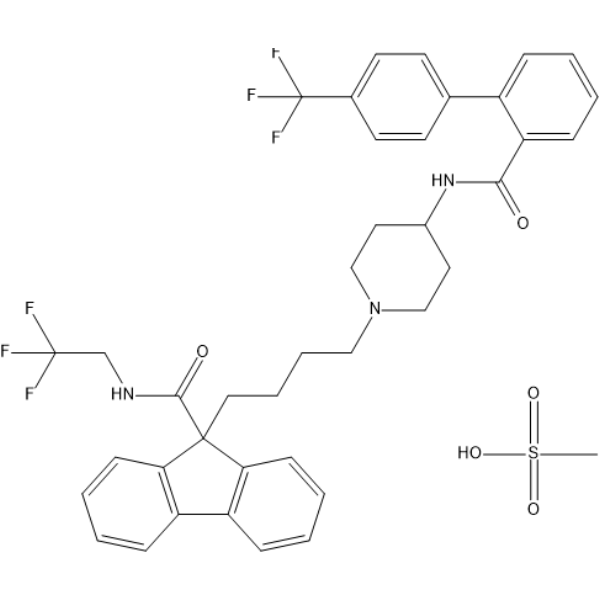
    Lomitapide mesylate
    Maximum Cited Publications
    6 Publications Verification

    AEGR-733 mesylate; BMS-201038 mesylate

    Microsomal Triglyceride Transfer Protein (MTP) mTOR LDLR Autophagy Apoptosis Cardiovascular Disease Neurological Disease Metabolic Disease Cancer
    Lomitapide (AEGR-733; BMS-201038) mesylate is an orally active microsomal triglyceride transfer protein (MTP) inhibitor and a selective mTORC1 inhibitor with lipid-lowering activity and BBB permeability. Lomitapide mesylate significantly reduces plasma LDL levels by blocking the assembly and secretion of very-low-density lipoprotein (VLDL). Lomitapide mesylate inhibits mTORC1 in an ATP-dependent manner, thereby inducing AMPK-independent autophagic cell death and suppressing cancer cell growth and apoptosis. Lomitapide mesylate also enhances tumor infiltration of CD8 + T cells. In addition, Lomitapide mesylate inhibits HDAC, improves endothelial function, effectively alleviates vascular inflammation and oxidative stress, and exerts neuroprotective effects in a cerebral ischemia/reperfusion injury model. Lomitapide mesylate can be used in research on related diseases such as colorectal cancer, breast cancer, melanoma, ischemic stroke, and familial hypercholesterolemia .
    Lomitapide mesylate
  • HY-116940
    Sm4
    1 Publications Verification

    Oct3/4 Notch STAT Cancer
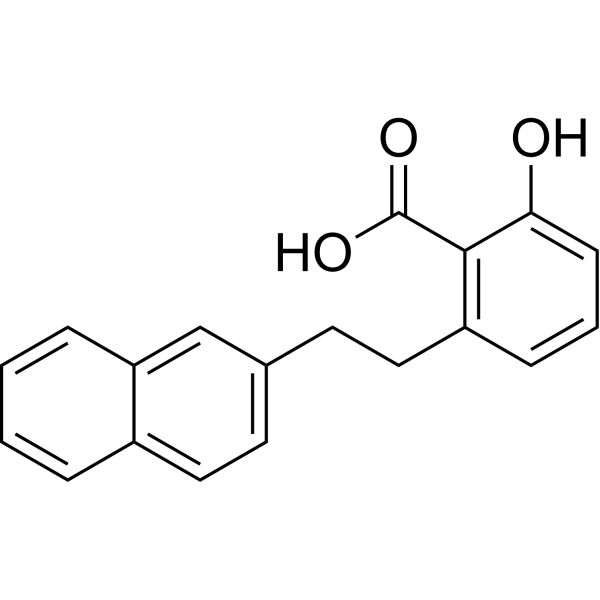
    Sm4 is a selective and orally active SOX18 inhibitor. Sm4 inhibits SOX18-DNA binding (IC50 = 97.5 μM); Sm4 disrupts the SOX18-RBPJ protein-protein interaction (IC50 = 42.3 μM). Sm4 blocks SOX18 DNA binding, disrupts multiple SOX18 protein-protein interactions with RBPJ, DDX1, DDX17, ILF3, SOX7 and STAT1, modulates SOX18 chromatin binding dynamics. Sm4 exerts anti‑angiogenic and anti‑lymphangiogenic effects, reduces tumor vascular density, triggers vascular defects in zebrafish, prolongs survival in mouse metastatic cancer models. Sm4 can be used for the research of breast cancer .
    Sm4
  • HY-D1073

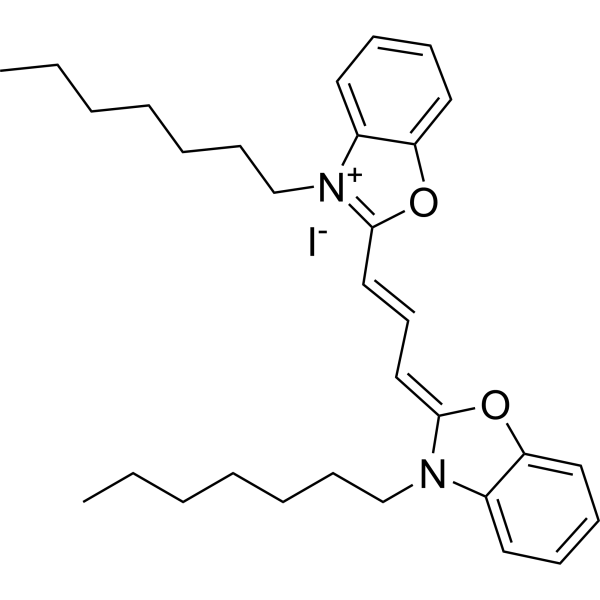
    3,3'-Diheptyloxacarbocyanine iodide

    Fluorescent Dye Cardiovascular Disease
    DiOC7(3) (3,3'-Diheptyloxacarbocyanine iodide) is a green membrane potential probe (Ex=450-490 nm, Em=510-520 nm). DiOC7(3) can be used to quantify the vascular densities .
    DiOC7(3)
  • HY-156081

    Keap1-Nrf2 Apoptosis Metabolic Disease
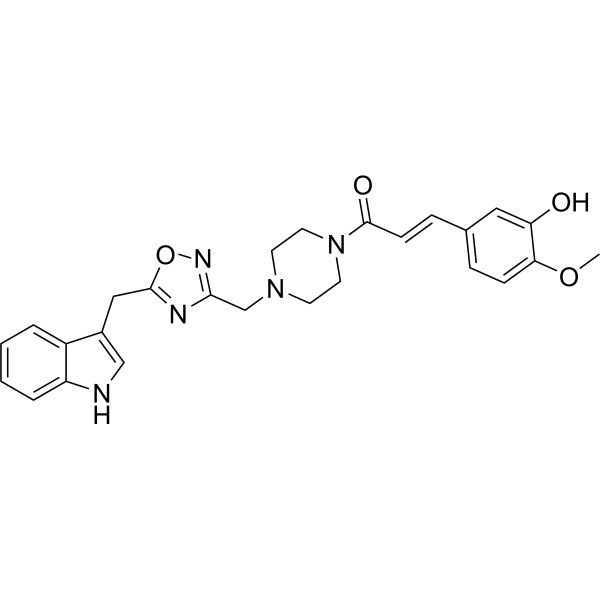
    Nrf2 activator-9 (compound D-36) is an Nrf2 activator that inhibits oxidized low-density lipoprotein (oxLDL) and high glucose (HG)-induced apoptosis in HUVEC cells. Nrf2 activator-9 inhibits oxLDL and HG-induced vascular endothelial cell (VEC) injury and can effectively prevent and treat atherosclerosis .
    Nrf2 activator-9
  • HY-P990252

    Notch Interleukin Related NF-κB VEGFR FGFR NO Synthase Metabolic Disease Inflammation/Immunology Cancer
    Anti-Mouse Delta-like protein 4/DLL4 Antibody (HMD4-2) is an anti-mouse Delta-like protein 4/DLL4 IgG monoclonal antibody. Anti-Mouse Delta-like protein 4/DLL4 Antibody (HMD4-2) can reduce angiogenesis and density by blocking the DLL4-Notch signaling pathway. Anti-Mouse Delta-like protein 4/DLL4 Antibody (HMD4-2) reduces inflammatory response by decreasing NF-κB activity and pro-inflammatory factors (IL-1β, iNOS, IL-6) levels. Anti-Mouse Delta-like protein 4/DLL4 Antibody (HMD4-2) can inhibit Th17 cell differentiation and IL-17A production. Anti-Mouse Delta-like protein 4/DLL4 Antibody (HMD4-2) can reduce macrophage infiltration and alleviate insulin resistance. Anti-Mouse Delta-like protein 4/DLL4 Antibody (HMD4-2) can be used for researches on inflammation, metabolic conditions and cancer such as atherosclerosis, pancreatic cancer and asthma .
    Anti-Mouse Delta-like protein 4/DLL4 Antibody (HMD4-2)
  • HY-122010

    VEGFR Others
    NVP-AAD777 is a specific inhibitor of VEGFR-2, demonstrated in vivo by its effective suppression of phospho-VEGFR-2 (Tyr1175) signaling in rat lung tissues. Unlike the nonspecific VEGFR inhibitor SUG-5416, NVP-AAD777 did not induce emphysematous changes in the lungs after three weeks of treatment, even when combined with exposure to cigarette smoke. Additionally, there were no alterations observed in vascular density compared to control animals. This indicates NVP-AAD777's targeted action in inhibiting VEGFR-2 without adverse pulmonary effects, highlighting its potential therapeutic utility in managing conditions associated with aberrant VEGFR-2 signaling .
    NVP-AAD777
  • HY-P992201

    CL1-R2

    MHC Apoptosis IFNAR TNF Receptor Interleukin Related Akt mTOR Cardiovascular Disease Neurological Disease Cancer
    Anti-CD160 Antibody (MAT 302) (CL1-R2) is a human monoclonal antibody targeting CD160. Anti-CD160 Antibody (MAT 302) blocks the CD160-HVEM protein interaction, inhibits FGF2-mediated renal tubular vascular growth, and induces endothelial cell apoptosis. Anti-CD160 Antibody (MAT 302) targets CD160 on neovascularization to exert anti-angiogenic and vascular normalization effects, trigger the production of IFN-γ, TNF and IL-6 by NK cells, and enhance glucose metabolism of NK cells through the AKT/mTOR/s6k signaling pathway. Anti-CD160 Antibody (MAT 302) reduces vascular density, normalizes remaining tumor blood vessels, and inhibits tumor growth in melanoma-bearing mice. Anti-CD160 Antibody (MAT 302) can be used in research related to neovascularization, proliferative diabetic retinopathy, and melanoma .
    Anti-CD160 Antibody (MAT 302)
  • HY-P992086

    VEGFR Cancer
    Anti-Mouse VEGF Antibody (G6-31) is a anti-mouse VEGF antibody. Anti-Mouse VEGF Antibody (G6-31) blocks VEGF-A-mediated angiogenesis and shows antitumor activity. Anti-Mouse VEGF Antibody (G6-31) can be used for the research of cancer, such as multiple endocrine neoplasia type 1 .
    Anti-Mouse VEGF Antibody (G6-31)

Inquiry Online

Your information is safe with us. * Required Fields.

Salutation


Country or Region *

Applicant Name *


Organization Name *

Department *


Email Address *


Product Name *

Cat. No.


Requested quantity *

Phone Number *


Remarks

Inquiry Online

Inquiry Information

Product Name:
Cat. No.:
Quantity:
MCE Japan Authorized Agent:

