



SPA70
Based on 1 publication(s) in Google Scholar
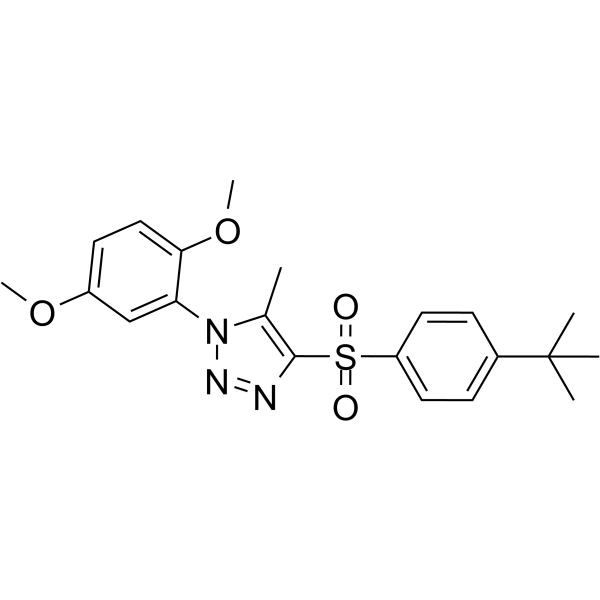
SPA70 is a potent and selective antagonist of human pregnane X receptor (hPXR), with an IC50 of 540 nM (Ki=390 nM). SPA70 can enhance the chemosensitivity of cancer cells.
Nur für Forschungszwecke. Wir verkaufen nicht an Patienten.
- Reinheit : 99.27%
- CAS. Nr.: 931314-31-7
- Formel: C21H25N3O4S
- Molecular Weight:415.51
-
Speicherung:Powder -20°C, 3 years ; In solvent -80°C, 6 months , -20°C, 1 month

To place orders, for customer services and technical support, please contact: MedChemExpress USA
Tel: 609-228-6898 E-mail: [email protected] [email protected]


-
 Biologische Aktivität
-
Chemical Information
-
Lösungsmittel & Löslichkeit
- Reinheit & Dokumentation
- Verweise
-
 Help & FAQs


-
HY-108688
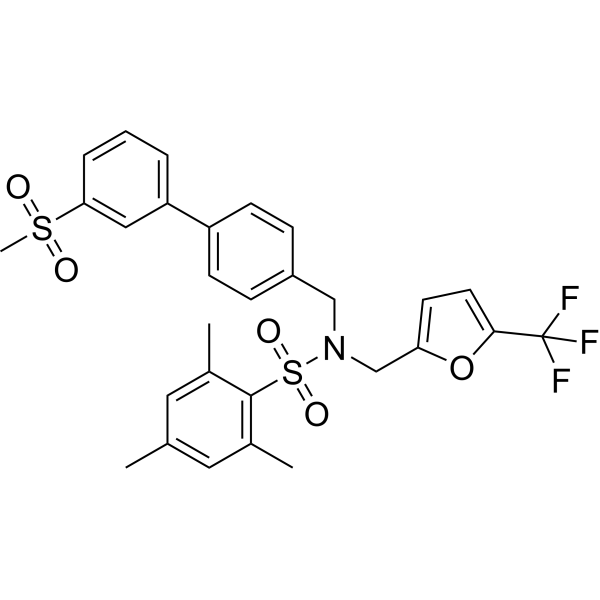
GSK2033LXR Antagonist -
HY-110267
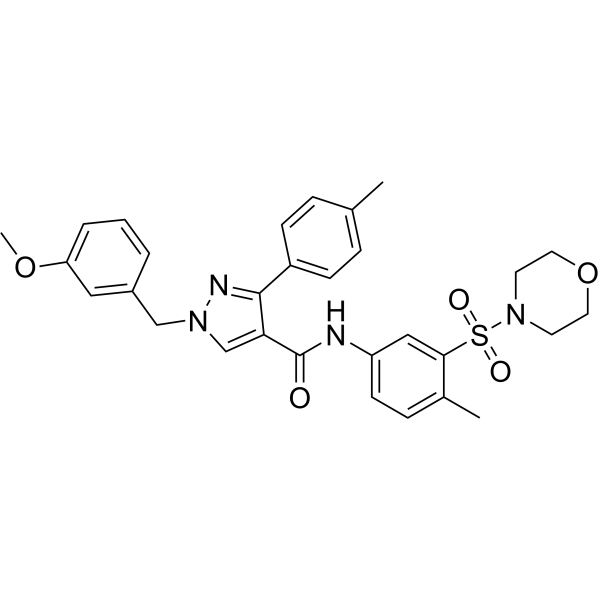
DY268FXR Antagonist -
HY-B0272
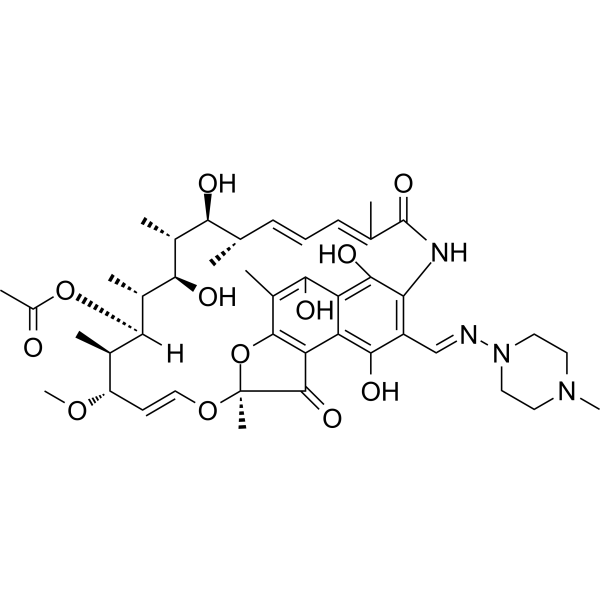
RifampicinAntivirus Agent -
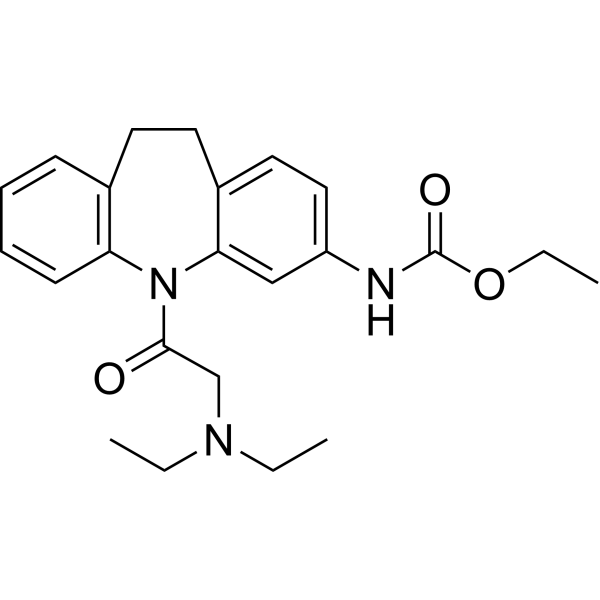
HY-110249
CINPA1CAR Inhibitor -
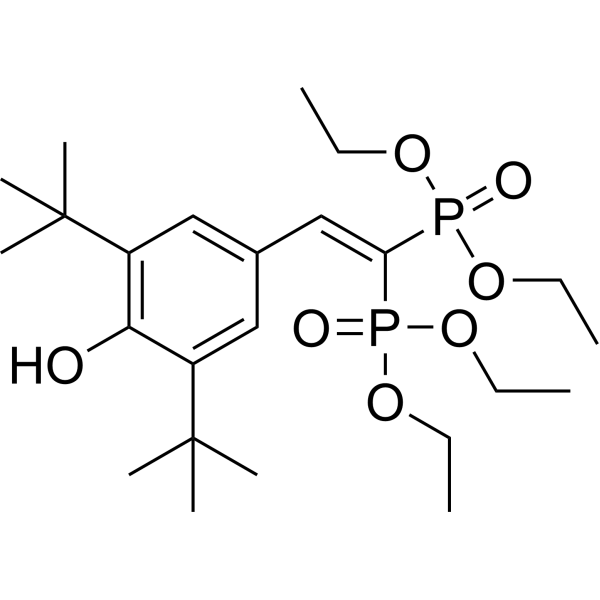
HY-100793
SR12813HMG-CoA Reductase Inhibitor/hPXR Agonist -
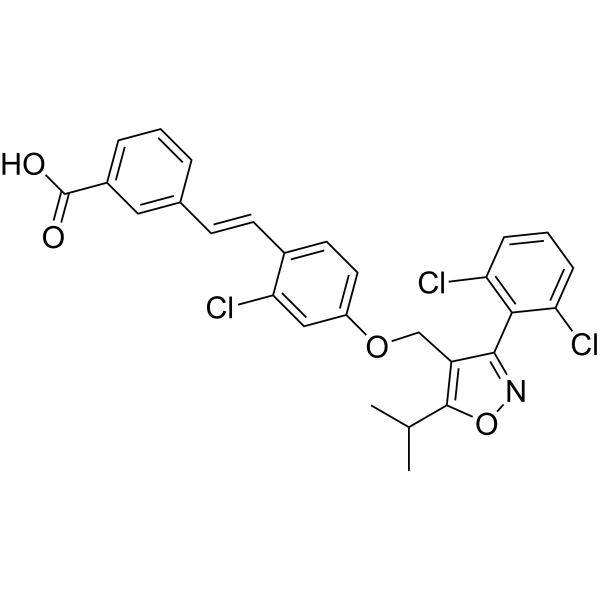
HY-50108
GW 4064FXR Agonist -
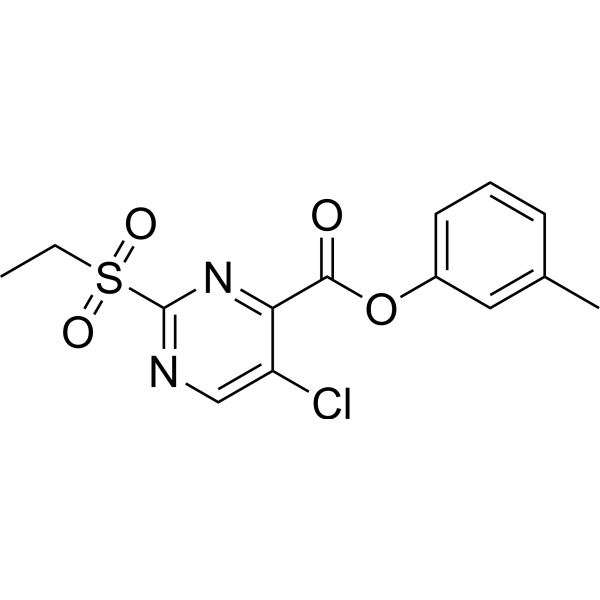
HY-111534
SBI-115TGR5 (GPCR19) Antagonist -
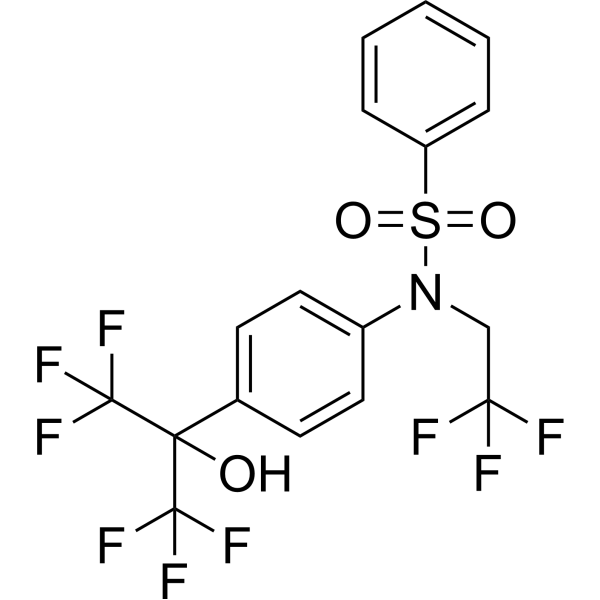
HY-10626
T0901317LXR Agonist -
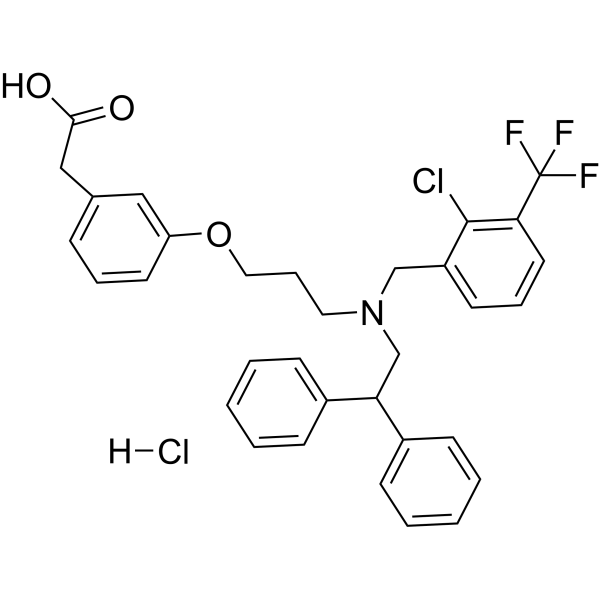
HY-10627A
GW3965 hydrochlorideLXR Agonist -
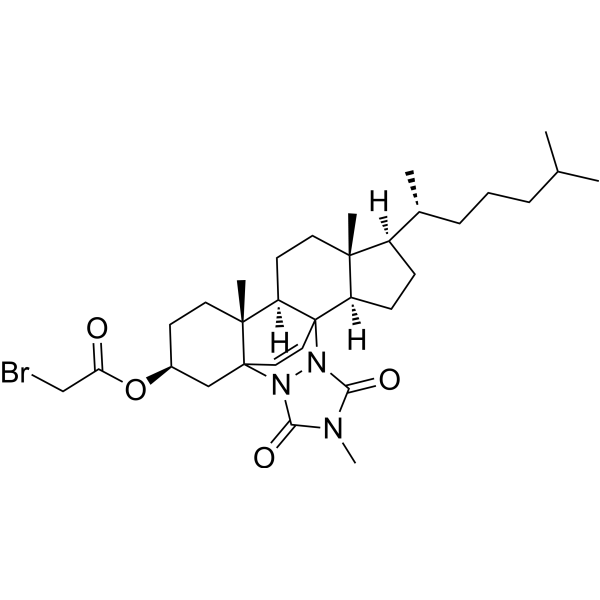
HY-147337
MeTC7VDR Antagonist -
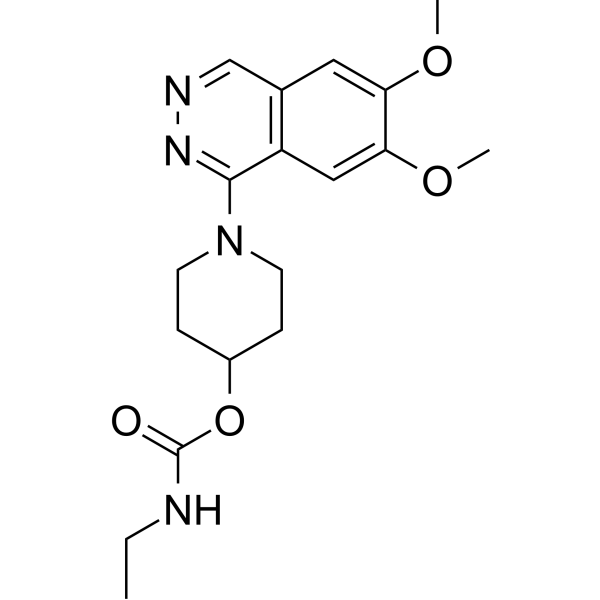
HY-B0051
CarbazeranPDE Inhibitor -
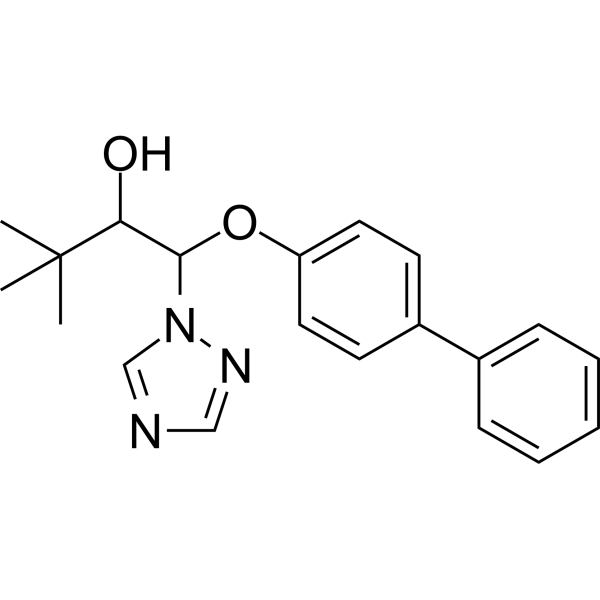
HY-118216
BitertanolAntifungal Agent
Publications Citing Use of MedChemExpress (MCE) SPA70
More

Biologische Aktivität
Beschreibung
IC50 & Target
IC50: 540 nM (hPXR)[1]
In Vitro
-
Cell Line:A549, A549/TR, H460, H460/TR cells
-
Concentration:PA70 (0.001-30 μM) + PTX (0.001-30 μM)
-
Incubation Time:72 h
-
Result:SPA70 alone showed IC₅₀ values of 2.41 μM (A549) and 5.62 μM (A549/TR), while combination with PTX synergistically reduced cell viability (CI < 1.0) in both sensitive and resistant cells.
-
Cell Line:A549/TR
-
Concentration:SPA70 (10 μM) + PTX (2 nM)
-
Incubation Time:48 h
-
Result:Combination treatment increased apoptotic cells to 15.25% (vs. 7.3% in control) via Annexin V/PI staining, accompanied by elevated ROS levels.
-
Cell Line:A549/TR
-
Concentration:SPA70 (10 μM) + PTX (2 nM)
-
Incubation Time:48 h
-
Result:Combination treatment induced S-phase arrest (48.6% reduction in EdU incorporation) and mitotic defects (multipolar spindles) compared to controls.
-
Cell Line:A549/TR, H460/TR
-
Concentration:SPA70 (10 μM) + PTX (2 nM)
-
Incubation Time:48 h
-
Result:Reduced P-gp, PXR, and Tip60 expression, increased cleaved PARP and phosphorylated MLKL, indicating apoptosis and necroptosis activation.
In Vivo
-
Animal Model:hPXR transgenic mice (male, 8–15 weeks, 20–25 g) + rifampicin-induced Cyp3a11 activation model[1]
-
Dosage:200 mg/kg (i.p., saline + 7.5% PEG400)
-
Administration:i.p. injection, once daily for 3 days
-
Result:Reduced rifampicin-induced Cyp3a11 mRNA/protein expression by 70% and prolonged anesthesia duration by 2-fold compared to vehicle controls.
-
Animal Model:BALB/c Nude mice (male, 6-8 weeks, 20-22 g) + A549/TR xenograft model[2].
-
Dosage:30 mg/kg (i.p., 90% PBS + 5% PEG300 + 5% ethanol)
-
Administration:i.p. injection, 3 times/week for 4 weeks
-
Result:A549/TR xenograft: SPA70 combined with PTX (5 mg/kg) suppressed tumor growth by 89.5% (TGI), decreased P-gp and PXR expression by 60%, and increased cleaved caspase-3-positive cells by 3-fold.
-
Animal Model:hPXR/CYP3A4 humanized mice (male, 8-10 weeks, 20-25 g) + hemorrhagic shock (HS) model[3]
-
Dosage:150 mg/kg (i.p., DMSO + cremophor EL)
-
Administration:i.p. injection, once daily for 3 days
-
Result:Blocked rifampicin-induced CYP3A4 expression, reduced hepatic necrosis (Suzuki score: 2.1 vs. 4.5 in vehicle), and attenuated oxidative stress (4-HNE and 8-OHdG staining).


Chemical Information
-
CAS. Nr. 931314-31-7
-
Appearance Solid
-
Molecular Weight 415.51
-
Formel C21H25N3O4S
-
Color Off-white to pink
-
SMILES
CC1=C(S(=O)(C2=CC=C(C(C)(C)C)C=C2)=O)N=NN1C3=CC(OC)=CC=C3OC
-
Versand
Room temperature in continental US; may vary elsewhere.
-
Speicherung
Powder -20°C 3 years In solvent -80°C 6 months -20°C 1 month


Publications (1)
-
Journal Impact Factor
-
Most Recent
-
Nat Struct Mol Biol
Cytoplasmic PXR regulates glucose metabolism by binding mRNAs and modulating their stability. [Abstract]2025 Aug 12. PMID: 40797049


Lösungsmittel & Löslichkeit
In Vitro:
DMSO : 25 mg/mL (60.17 mM; ultrasonic and warming and heat to 60°C; Hygroscopic DMSO has a significant impact on the solubility of product, please use newly opened DMSO)
Please refer to the solubility information to select the appropriate solvent. Once prepared, please aliquot and store the solution to prevent product inactivation from repeated freeze-thaw cycles.
Storage method and period of stock solution: -80°C, 6 months; -20°C, 1 month. When stored at -80°C, please use it within 6 months. When stored at -20°C, please use it within 1 month.
Please refer to the solubility information to select the appropriate solvent. Once prepared, please aliquot and store the solution to prevent product inactivation from repeated freeze-thaw cycles.
Storage method and period of stock solution: -80°C, 6 months; -20°C, 1 month. When stored at -80°C, please use it within 6 months. When stored at -20°C, please use it within 1 month.
Konzentration (Stammlösung) × Volumen (Stammlösung) = Konzentration (Ziellösung) × Volumen (Ziellösung)
In Vivo:
Select the appropriate dissolution method based on your experimental animal and administration route.
- For the following dissolution methods, please ensure to first prepare a clear stock solution using an In Vitro approach and then sequentially add co-solvents:
- To ensure reliable experimental results, the clarified stock solution can be appropriately stored based on storage conditions. As for the working solution for In Vivo experiments, it is recommended to prepare freshly and use it on the same day.
- The percentages shown for the solvents indicate their volumetric ratio in the final prepared solution. If precipitation or phase separation occurs during preparation, heat and/or sonication can be used to aid dissolution.
Add each solvent one by one: 10% DMSO 40% PEG300 5% Tween-80 45% Saline
Solubility: 2.5 mg/mL (6.02 mM); Suspended solution; Need ultrasonic
This protocol yields a suspended solution of 2.5 mg/mL. Suspended solution can be used for oral and intraperitoneal injection.
Taking 1 mL working solution as an example, add 100 μL DMSO stock solution (25.0 mg/mL) to 400 μL PEG300, and mix evenly; then add 50 μL Tween-80 and mix evenly; then add 450 μL Saline to adjust the volume to 1 mL.
Preparation of Saline: Dissolve 0.9 g sodium chloride in ddH₂O and dilute to 100 mL to obtain a clear Saline solution.
In Vivo Dissolution Calculator
Please enter the basic information of animal experiments:
-
-
-
-
Recommended: Prepare an additional quantity of animals to account for potential losses during experiments.
Please enter your animal formula composition:
-
%DMSO +
Recommended: Keep the proportion of DMSO in working solution below 2% if your animal is weak.
-
%+
-
+%Tween-80 + +
-
%Saline +
The co-solvents required include: DMSO, . All of co-solvents are available by MedChemExpress (MCE). , Tween 80. All of co-solvents are available by MedChemExpress (MCE).
Working solution concentration: 0.22 mg/mL
Method for preparing stock solution: mg drug dissolved in μL DMSO. Stock solution concentration: mg/mL.
1. Take μL DMSO stock solution;
2. Add μL .
μL , mix evenly;
3. Then add μL Tween 80, mix evenly;
4. Then add μL
Please ensure that the stock solution in the first step is dissolved to a clear state, and add co-solvents in sequence. You can use ultrasonic heating (ultrasonic cleaner, recommended frequency 20-40 kHz), vortexing, etc. to assist dissolution.


Reinheit & Dokumentation
-
Data Sheet (272 KB)
-
SDS (251 KB)
- English - EN (251 KB)
- Français - FR (251 KB)
- Deutsch - DE (251 KB)
- Norwegian - NO (251 KB)
- Español - ES (251 KB)
- Swedish - SV (251 KB)
- Italian - IT (251 KB)
- Korean - KR (251 KB)
- Portuguese - PT (251 KB)
-
Handling Instructions (2659 KB)
Verweise


Complete Stock Solution Preparation Table
Please refer to the solubility information to select the appropriate solvent. Once prepared, please aliquot and store the solution to prevent product inactivation from repeated freeze-thaw cycles.
Storage method and period of stock solution: -80°C, 6 months; -20°C, 1 month. When stored at -80°C, please use it within 6 months. When stored at -20°C, please use it within 1 month.
| Optional Solvent | Concentration Solvent Mass | 1 mg | 5 mg | 10 mg | 25 mg |
|---|---|---|---|---|---|
| DMSO | 1 mM | 2.4067 mL | 12.0334 mL | 24.0668 mL | 60.1670 mL |
| 5 mM | 0.4813 mL | 2.4067 mL | 4.8134 mL | 12.0334 mL | |
| 10 mM | 0.2407 mL | 1.2033 mL | 2.4067 mL | 6.0167 mL | |
| 15 mM | 0.1604 mL | 0.8022 mL | 1.6045 mL | 4.0111 mL | |
| 20 mM | 0.1203 mL | 0.6017 mL | 1.2033 mL | 3.0084 mL | |
| 25 mM | 0.0963 mL | 0.4813 mL | 0.9627 mL | 2.4067 mL | |
| 30 mM | 0.0802 mL | 0.4011 mL | 0.8022 mL | 2.0056 mL | |
| 40 mM | 0.0602 mL | 0.3008 mL | 0.6017 mL | 1.5042 mL | |
| 50 mM | 0.0481 mL | 0.2407 mL | 0.4813 mL | 1.2033 mL | |
| 60 mM | 0.0401 mL | 0.2006 mL | 0.4011 mL | 1.0028 mL |


SPA70 Related Classifications
HY-124830 Related Classifications
 Powered by Bioz