



WYE-687
Based on 3 publication(s) in Google Scholar
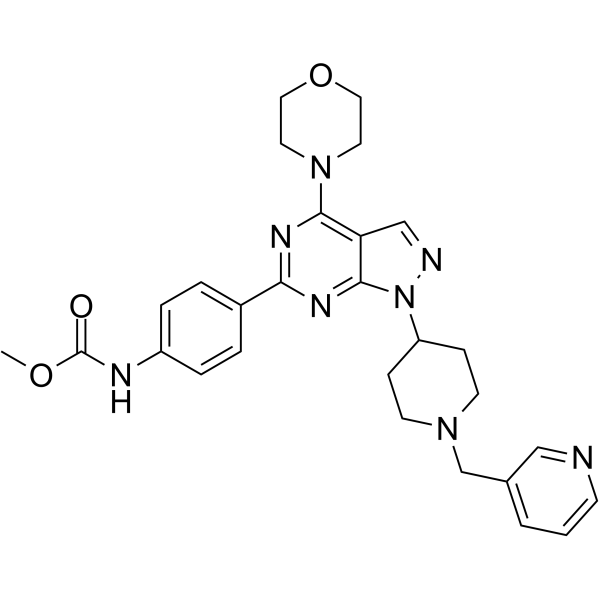
WYE-687 is an ATP-competitive mTOR inhibitor with an IC50 of 7 nM. WYE-687 concurrently inhibits activation of mTORC1 and mTORC2. WYE-687 also inhibits PI3Kα and PI3Kγ with IC50s of 81 nM and 3.11 μM, respectively.
For research use only. We do not sell to patients.
- Purity: 98.12%
- CAS No.: 1062161-90-3
- Formula: C28H32N8O3
- Molecular Weight:528.61
-
Storage:Powder -20°C, 3 years , 4°C, 2 years ; In solvent -80°C, 6 months , -20°C, 1 month

To place orders, for customer services and technical support, please contact: MedChemExpress USA
Tel: 609-228-6898 E-mail: [email protected] [email protected]


-
 Biological Activity
-
Chemical Information
-
Solvent & Solubility
- Protocol
- Purity & Documentation
- References
-
 Help & FAQs


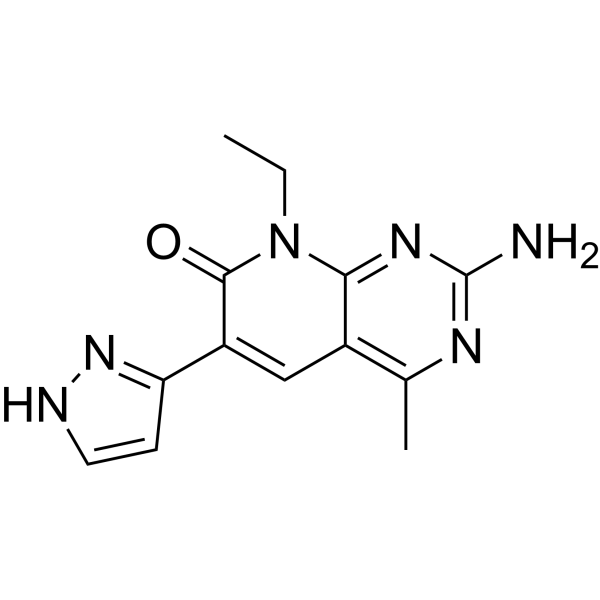
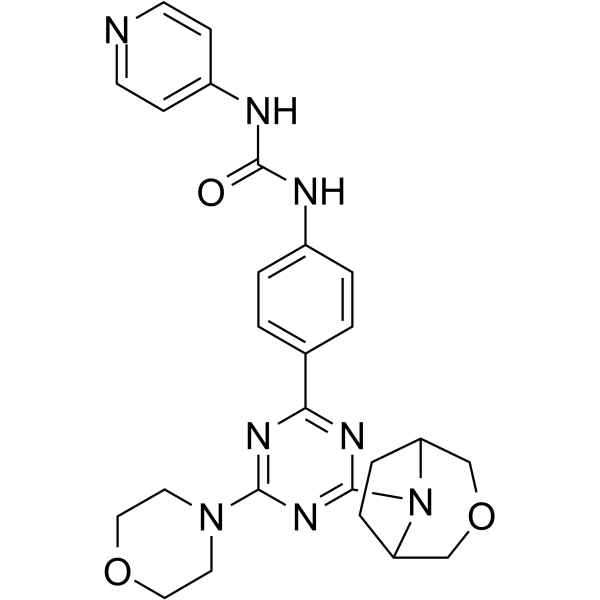
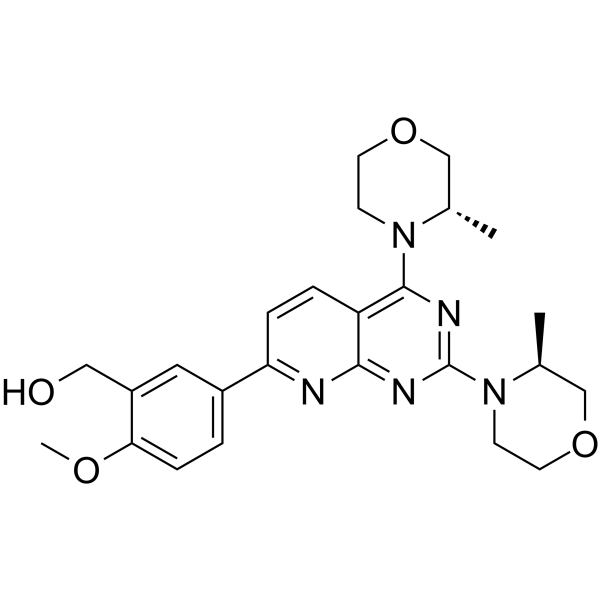
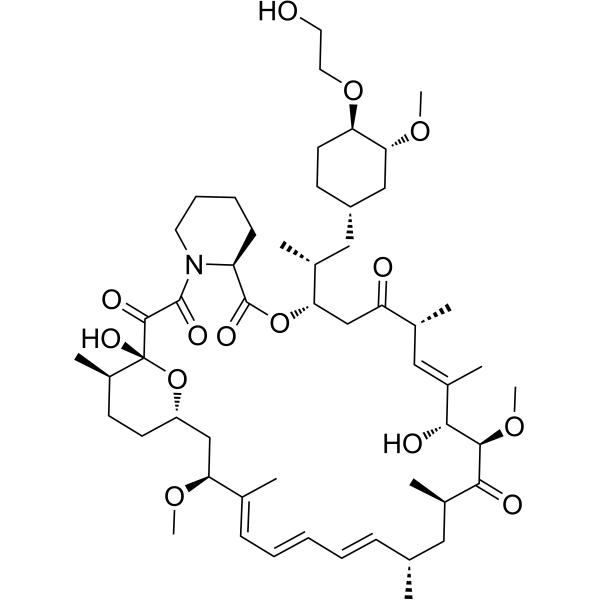
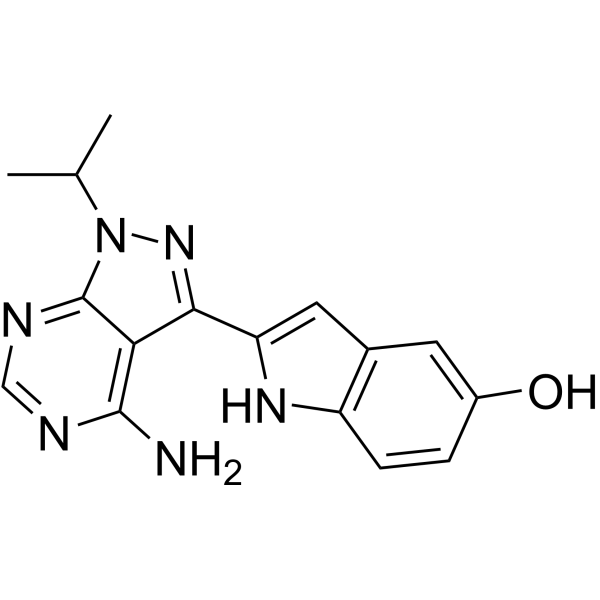
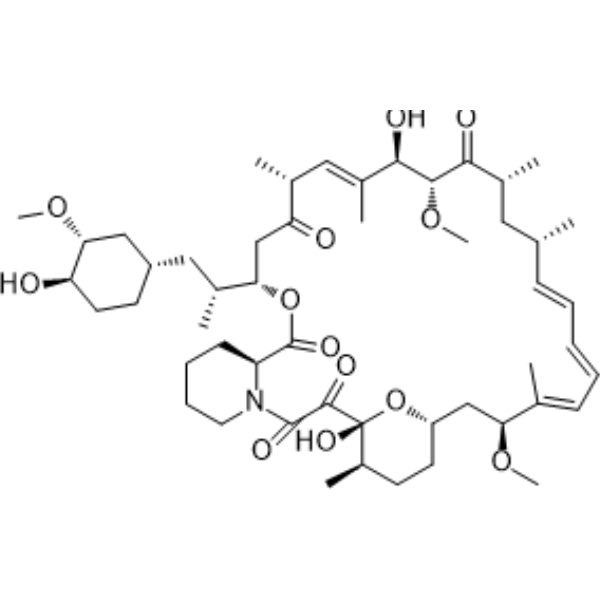
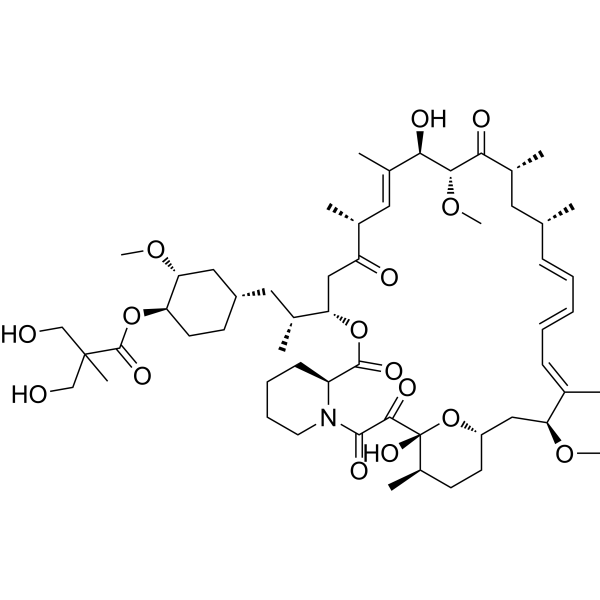
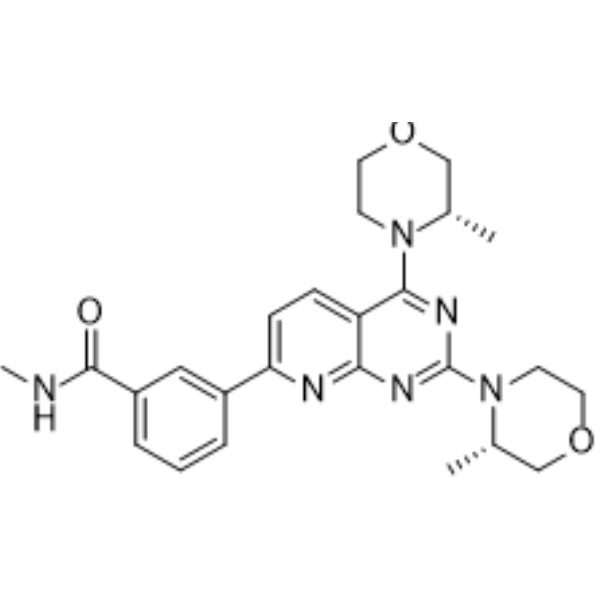
Publications Citing Use of MedChemExpress (MCE) WYE-687
More

Biological Activity
|
mTOR 7 nM (IC50) |
mTORC1 |
mTORC2 |
PI3K alpha 81 nM (IC50) |
PI3K gamma 3.11 μM (IC50) |
CK1 gamma1 17.8 μM (IC50) |
p38 alpha 28.9 μM (IC50) |
|
Cell Line

|
Type | Value | Description | References |
|---|---|---|---|---|
| HEK293 | IC50 |
4.6 nM
Compound: 9
|
Inhibition of flag-tagged truncated human mTOR (1360-2549) expressed in HEK293 cells by DELFIA assay
Inhibition of flag-tagged truncated human mTOR (1360-2549) expressed in HEK293 cells by DELFIA assay
|
[PMID: 19645448] |
| HEK293 | IC50 |
4.6 nM
Compound: 22a
|
Inhibition of human mTOR (1360-2549 amino acids) expressed in HEK293 cells
Inhibition of human mTOR (1360-2549 amino acids) expressed in HEK293 cells
|
[PMID: 19894727] |
| LNCaP | IC50 |
213 nM
Compound: 22a
|
Antiproliferative activity against human LNCAP cells after 3 days by MTS assay
Antiproliferative activity against human LNCAP cells after 3 days by MTS assay
|
[PMID: 19894727] |
| LNCaP | IC50 |
213 nM
Compound: 9
|
Cytotoxicity against human LNCAP cells after 3 days by MTS assay
Cytotoxicity against human LNCAP cells after 3 days by MTS assay
|
[PMID: 19645448] |
In the DELFIA measuring His6-S6K1 T389 phosphorylation, WYE-687 inhibits recombinant mTOR enzyme with an IC50 of 7 nM[1]. HL-60 AML cells are treated with applied concentrations of WYE-687 (33-1000 nM), MTT cell survival assay results demonstrate that WYE-687 potently inhibits HL-60 cell survival in a dose-dependent manner. A time dependent response by WYE-687 is also noticed. The number of dead ( "trypan blue" positive) HL-60 cells is significantly increased following applied WYE-687 (100-1000 nM) treatment. At the meantime, HL-60 cell proliferation, tested by [H3] Thymidine integration assay, is also inhibited by the WYE-687. Results show that WYE-687 is also antisurvival ( "cytotoxic" ) to the other AML cell lines: U937, THP-1 and AML-193[2].
MedChemExpress (MCE) has not independently confirmed the accuracy of these methods. They are for reference only.
MedChemExpress (MCE) has not independently confirmed the accuracy of these methods. They are for reference only.


Chemical Information
-
CAS No. 1062161-90-3
-
Appearance Solid
-
Molecular Weight 528.61
-
Formula C28H32N8O3
-
Color Off-white to yellow
-
SMILES
O=C(OC)NC1=CC=C(C2=NC(N3CCOCC3)=C4C(N(C5CCN(CC6=CC=CN=C6)CC5)N=C4)=N2)C=C1
-
Shipping
Room temperature in continental US; may vary elsewhere.
-
Storage
Powder -20°C 3 years 4°C 2 years In solvent -80°C 6 months -20°C 1 month


Publications (3)
-
Journal Impact Factor
-
Most Recent
-
Molecules
In Vitro and in Vivo Activity of mTOR Kinase and PI3K Inhibitors Against Leishmania donovani and Trypanosoma brucei. [Abstract]2020 Apr 23;25(8):1980. PMID: 32340370 -
Sci Rep
QSAR analysis on a large and diverse set of potent phosphoinositide 3-kinase gamma (PI3Kγ) inhibitors using MLR and ANN methods. [Abstract]2022 Apr 12;12(1):6090. PMID: 35414065 -
Biosci Rep
PD-L1 regulates tumorigenesis and autophagy of ovarian cancer by activating mTORC signaling. [Abstract]2019 Dec 20;39(12):BSR20191041. PMID: 31799599


Solvent & Solubility
DMSO : 25 mg/mL (47.29 mM; ultrasonic and warming and heat to 60°C; Hygroscopic DMSO has a significant impact on the solubility of product, please use newly opened DMSO)
Please refer to the solubility information to select the appropriate solvent. Once prepared, please aliquot and store the solution to prevent product inactivation from repeated freeze-thaw cycles.
Storage method and period of stock solution: -80°C, 6 months; -20°C, 1 month. When stored at -80°C, please use it within 6 months. When stored at -20°C, please use it within 1 month.
Please refer to the solubility information to select the appropriate solvent. Once prepared, please aliquot and store the solution to prevent product inactivation from repeated freeze-thaw cycles.
Storage method and period of stock solution: -80°C, 6 months; -20°C, 1 month. When stored at -80°C, please use it within 6 months. When stored at -20°C, please use it within 1 month.
Concentration (start) × Volume (start) = Concentration (final) × Volume (final)
Select the appropriate dissolution method based on your experimental animal and administration route.
- For the following dissolution methods, please ensure to first prepare a clear stock solution using an In Vitro approach and then sequentially add co-solvents:
- To ensure reliable experimental results, the clarified stock solution can be appropriately stored based on storage conditions. As for the working solution for In Vivo experiments, it is recommended to prepare freshly and use it on the same day.
- The percentages shown for the solvents indicate their volumetric ratio in the final prepared solution. If precipitation or phase separation occurs during preparation, heat and/or sonication can be used to aid dissolution.
Add each solvent one by one: 10% DMSO 40% PEG300 5% Tween-80 45% Saline
Solubility: ≥ 2.5 mg/mL (4.73 mM); Clear solution
This protocol yields a clear solution of ≥ 2.5 mg/mL (saturation unknown).
Taking 1 mL working solution as an example, add 100 μL DMSO stock solution (25.0 mg/mL) to 400 μL PEG300, and mix evenly; then add 50 μL Tween-80 and mix evenly; then add 450 μL Saline to adjust the volume to 1 mL.
Preparation of Saline: Dissolve 0.9 g sodium chloride in ddH₂O and dilute to 100 mL to obtain a clear Saline solution.
Add each solvent one by one: 10% DMSO 90% (20% SBE-β-CD in Saline)
Solubility: ≥ 2.5 mg/mL (4.73 mM); Clear solution
This protocol yields a clear solution of ≥ 2.5 mg/mL (saturation unknown).
Taking 1 mL working solution as an example, add 100 μL DMSO stock solution (25.0 mg/mL) to 900 μL 20% SBE-β-CD in Saline, and mix evenly.
Preparation of 20% SBE-β-CD in Saline (4°C, storage for one week): 2 g SBE-β-CD powder is dissolved in 10 mL Saline, completely dissolve until clear.
Please enter the basic information of animal experiments:
-
-
-
-
Recommended: Prepare an additional quantity of animals to account for potential losses during experiments.
Please enter your animal formula composition:
-
%DMSO +
Recommended: Keep the proportion of DMSO in working solution below 2% if your animal is weak.
-
%+
-
+%Tween-80 + +
-
%Saline +
The co-solvents required include: DMSO, . All of co-solvents are available by MedChemExpress (MCE). , Tween 80. All of co-solvents are available by MedChemExpress (MCE).
Working solution concentration: 0.22 mg/mL
Method for preparing stock solution: mg drug dissolved in μL DMSO. Stock solution concentration: mg/mL.
1. Take μL DMSO stock solution;
2. Add μL .
μL , mix evenly;
3. Then add μL Tween 80, mix evenly;
4. Then add μL
Please ensure that the stock solution in the first step is dissolved to a clear state, and add co-solvents in sequence. You can use ultrasonic heating (ultrasonic cleaner, recommended frequency 20-40 kHz), vortexing, etc. to assist dissolution.

Protocol
The routine inhibitor assays are performed in 96-well plates for 2 h at room temperature in 25 μL containing 6 nM Flag-TOR(3.5) (estimated 5-10% purity), 1 μM His6-S6K and 100 μM ATP. The assays are performed and detected by DELFIA employing the Euphospho-p70S6K T389 antibody. Some assays employ a commercially purchased batch of mTOR. For inhibitor versus ATP matrix competition, mTOR kinase reactions are carried out with varying concentrations of ATP (0, 25, 50 100, 200, 400 and 800 μM) in combination with varying concentrations of inhibitor. The assays contain 12 nM Flag-TOR(3.5), 1 μM His-S6K and are incubated for 30 min. The assay results are similarly detected by DELFIA and processed for generation of double-reciprocal plots[1].
MedChemExpress (MCE) has not independently confirmed the accuracy of these methods. They are for reference only.
Acute myeloid leukemia (AML) cells/progenitor cells are seeded at a density of 1 ×10⁵ cells/well in 0.5 mL DMEM containing 10% FBS onto the 48-well tissue culture plates, cells are treated with indicated concentrations of WYE-687 (33-1000 nM) with the presence of 1 mCi/mL of tritiated thymidine. To determine [H3] thymidine incorporation, cells are washed, the DNA is precipitated with cold 10% trichloroacetic acid (TCA), solubilized with 1.0 M sodium hydroxide, and aliquots are counted by liquid-scintillation spectrometry. The value of treatment group is normalized to that of untreated control group[2].
MedChemExpress (MCE) has not independently confirmed the accuracy of these methods. They are for reference only.
Mice[2]
U937 cells (2×10⁶ cells/mice, suspended in 100 mL of culture medium) are injected into the right flanks of 6-week-old male CB17 severe combined immunodeficient (SCID)/beige mice, and cells are allowed to grow to palpable tumors. When tumors reach a volume around 100 mm3, animals are randomly assigned to three groups: WYE-687 (5 mg/kg body weight), WYE- 687 (25 mg/kg body weight) or the vehicle control (5% ethanol, 2% Tween 80, and 5% polyethylene glycol-400). WYE-687 and vehicle control are freshly prepared, and given by oral gavage daily for 7 consecutive days. Tumor sizes are measured. At the end of experiment, the animals are killed, and the tumors are removed and weighted.
MedChemExpress (MCE) has not independently confirmed the accuracy of these methods. They are for reference only.


Purity & Documentation
-
Data Sheet (282 KB)
-
SDS (251 KB)
- English - EN (251 KB)
- Français - FR (251 KB)
- Deutsch - DE (251 KB)
- Norwegian - NO (251 KB)
- Español - ES (251 KB)
- Swedish - SV (251 KB)
- Italian - IT (251 KB)
- Korean - KR (251 KB)
- Portuguese - PT (251 KB)
-
Handling Instructions (2659 KB)
References
[1]. Yu K, et al. Biochemical, cellular, and in vivo activity of novel ATP-competitive and selective inhibitors of the mammalian target of rapamycin. Cancer Res. 2009 Aug 1;69(15):6232-40. [Content Brief]
[2]. Cheng F, et al. Preclinical evaluation of WYE-687, a mTOR kinase inhibitor, as a potential anti-acute myeloid leukemia agent. Biochem Biophys Res Commun. 2016 Feb 5;470(2):324-330. [Content Brief]


Complete Stock Solution Preparation Table
Please refer to the solubility information to select the appropriate solvent. Once prepared, please aliquot and store the solution to prevent product inactivation from repeated freeze-thaw cycles.
Storage method and period of stock solution: -80°C, 6 months; -20°C, 1 month. When stored at -80°C, please use it within 6 months. When stored at -20°C, please use it within 1 month.
| Optional Solvent | Concentration Solvent Mass | 1 mg | 5 mg | 10 mg | 25 mg |
|---|---|---|---|---|---|
| DMSO | 1 mM | 1.8918 mL | 9.4588 mL | 18.9175 mL | 47.2938 mL |
| 5 mM | 0.3784 mL | 1.8918 mL | 3.7835 mL | 9.4588 mL | |
| 10 mM | 0.1892 mL | 0.9459 mL | 1.8918 mL | 4.7294 mL | |
| 15 mM | 0.1261 mL | 0.6306 mL | 1.2612 mL | 3.1529 mL | |
| 20 mM | 0.0946 mL | 0.4729 mL | 0.9459 mL | 2.3647 mL | |
| 25 mM | 0.0757 mL | 0.3784 mL | 0.7567 mL | 1.8918 mL | |
| 30 mM | 0.0631 mL | 0.3153 mL | 0.6306 mL | 1.5765 mL | |
| 40 mM | 0.0473 mL | 0.2365 mL | 0.4729 mL | 1.1823 mL |


WYE-687 Related Classifications
HY-15271 Related Classifications
 Powered by Bioz