



PKI-179
Based on 1 publication(s) in Google Scholar
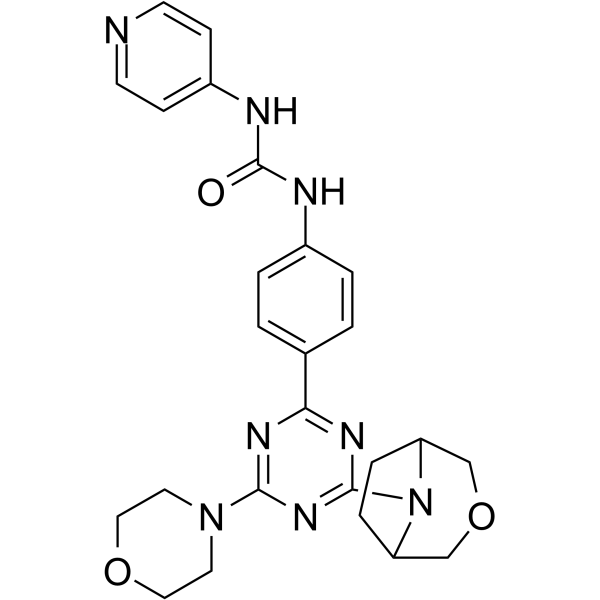
PKI-179 is a potent and orally active dual PI3K/mTOR inhibitor, with IC50s of 8 nM, 24 nM, 74 nM, 77 nM, and 0.42 nM for PI3K-α, PI3K-β, PI3K-γ, PI3K-δ and mTOR, respectively. PKI-179 also exhibits activity over E545K and H1047R, with IC50s of 14 nM and 11 nM, respectively. PKI-179 shows anti-tumor activity in vivo.
연구목적의 판매만을 진행합니다. 환자를 대상으로 한 판매는 하지 않습니다.
- Purity : 98.0%
- CAS No.: 1197160-28-3
- 화학식: C25H28N8O3
- 분자량:488.54
-
보관:Powder -20°C, 3 years , 4°C, 2 years ; In solvent -80°C, 6 months , -20°C, 1 month

To place orders, for customer services and technical support, please contact: MedChemExpress USA
Tel: 609-228-6898 E-mail: [email protected] [email protected]


-
 Biological Activity
-
Chemical Information
-
용액&용해도
- 순도&문서
- References
-
 Help & FAQs


-
HY-15272
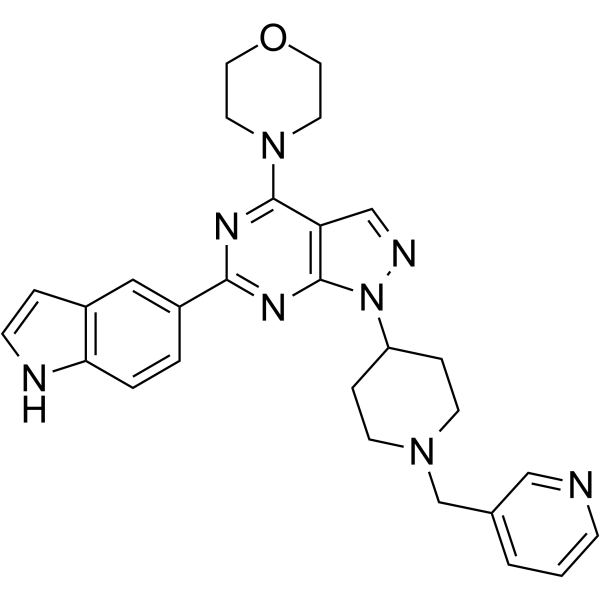
WAY-600mTOR inhibitor -
HY-15900
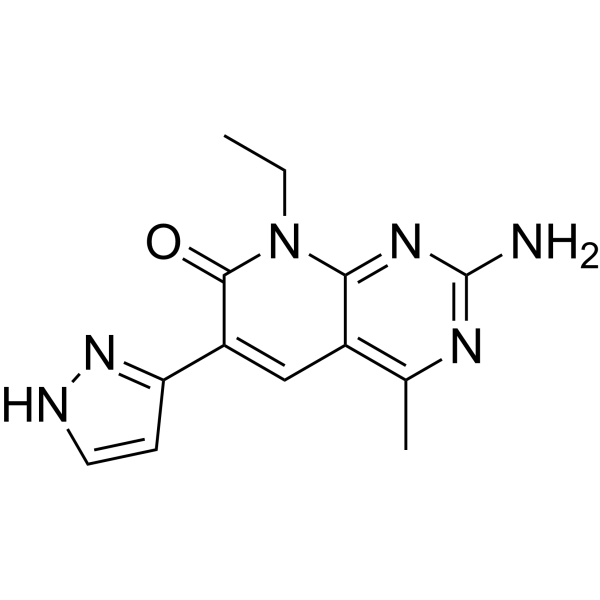
VoxtalisibPI3K Inhibitor -
HY-10044
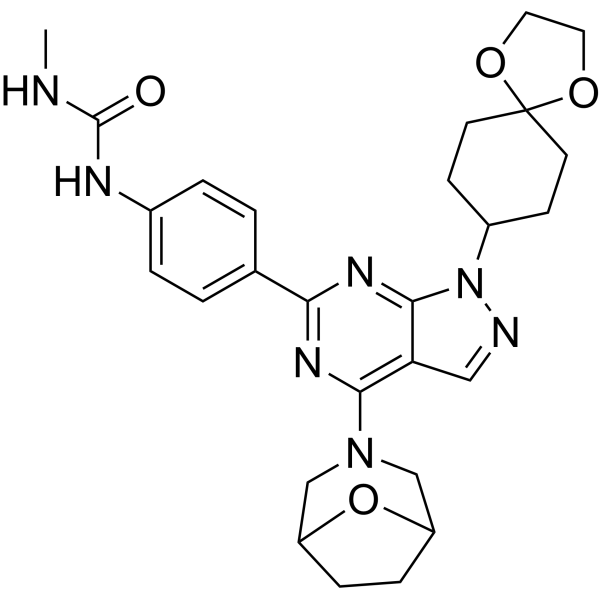
WYE-132mTORC1/mTORC2 Inhibitor -
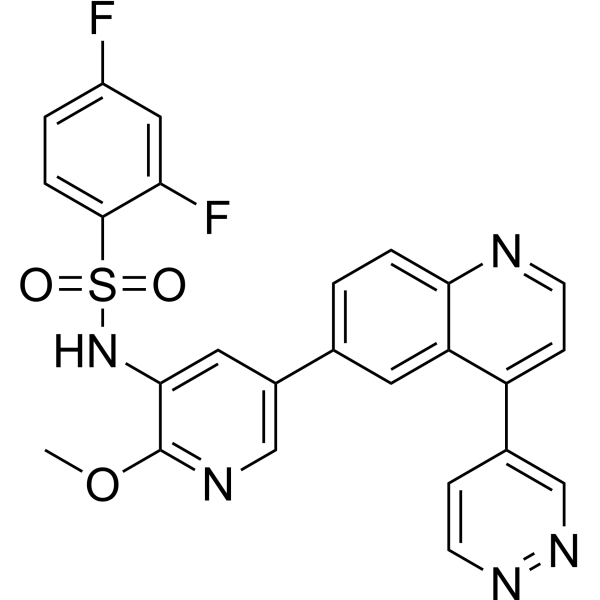
HY-10297
OmipalisibPI3K/mTOR Inhibitor -
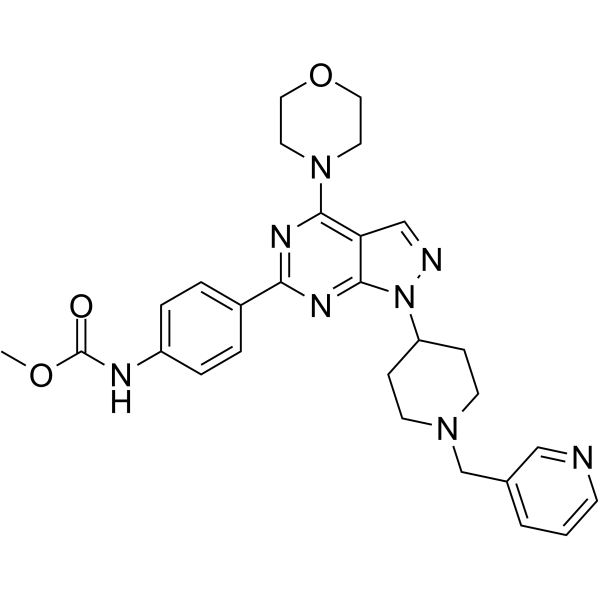
HY-15271
WYE-687mTOR inhibitor -
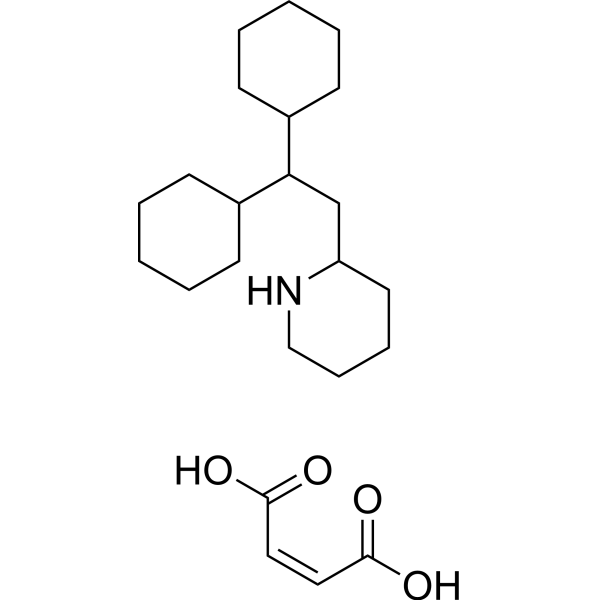
HY-B1334A
Perhexiline maleateCPT1/CPT2 Inhibitor -
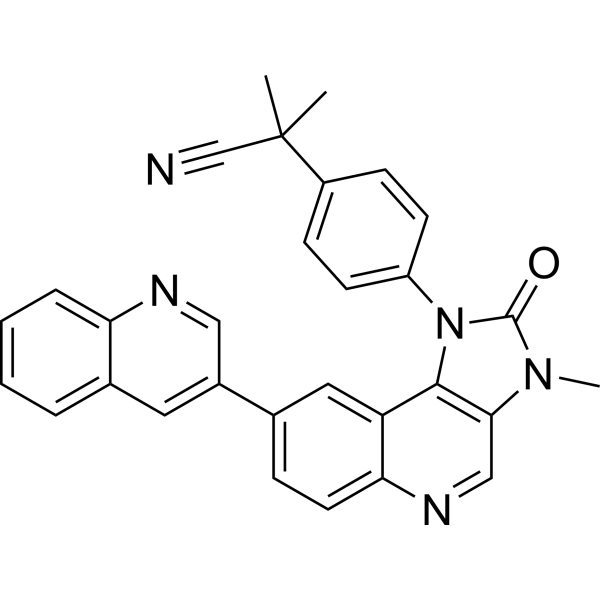
HY-50673
DactolisibPI3K/mTOR Inhibitor -
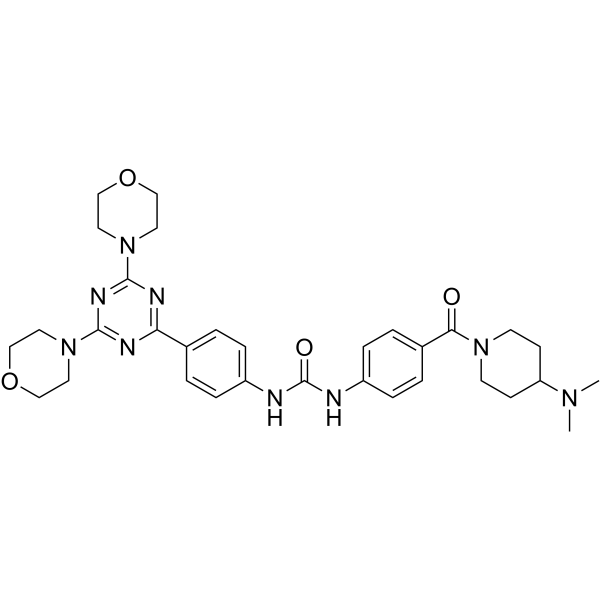
HY-10681
GedatolisibPI3K/mTOR Inhibitor -
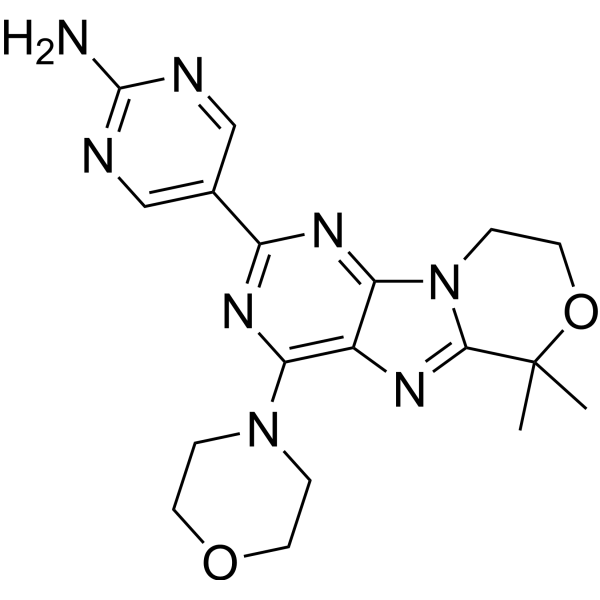
HY-19962
PaxalisibPI3K/mTOR Inhibitor -
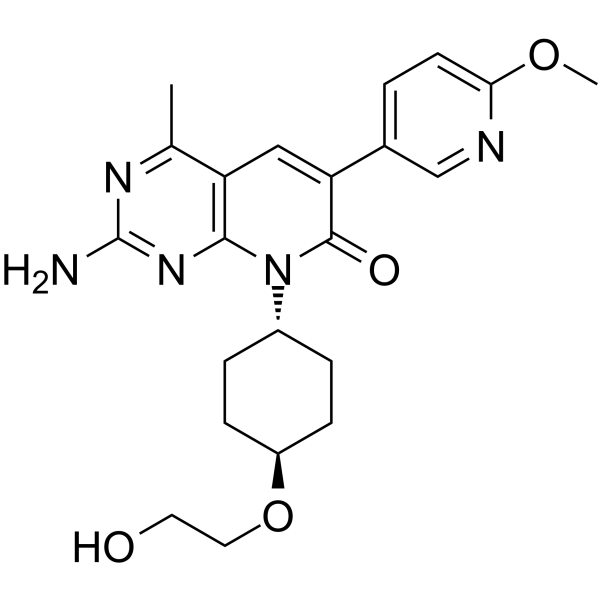
HY-15177
PF-04691502PI3K/mTOR Inhibitor -
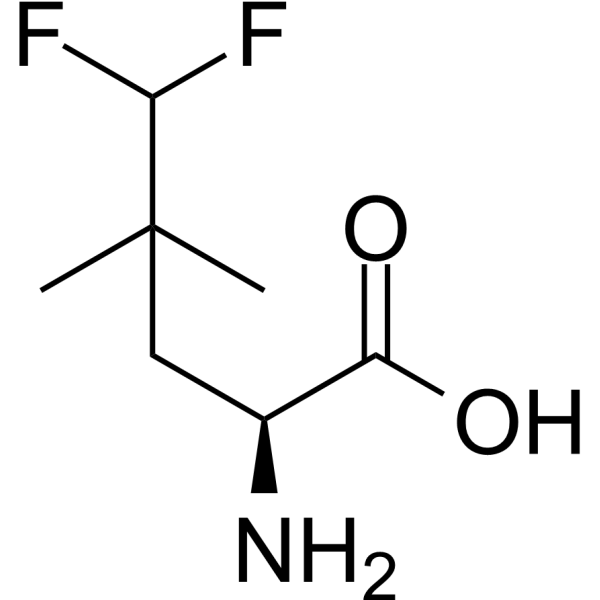
HY-114384
MefluleucinemTORC1 Activator -
HY-12036
GSK1059615Apoptosis Inducer
Publications Citing Use of MedChemExpress (MCE) PKI-179
More

Biological Activity
제품 설명
IC50 & Target
[1]|
mTOR 0.42 nM (IC50) |
PI3Kα 8 nM (IC50) |
PI3Kβ 24 nM (IC50) |
PI3Kγ 74 nM (IC50) |
PI3Kδ 77 nM (IC50) |
E545K 14 nM (IC50) |
H1047R 11 nM (IC50) |
Cellular Effect
|
Cell Line

|
Type | Value | Description | References |
|---|---|---|---|---|
| MDA-MB-361 | IC50 |
22 nM
Compound: 8m
|
Antiproliferative activity against human MDA-MB-361 cells
Antiproliferative activity against human MDA-MB-361 cells
|
[PMID: 20797855] |
| PC-3 | IC50 |
29 nM
Compound: 8m
|
Antiproliferative activity against human PC3 cells
Antiproliferative activity against human PC3 cells
|
[PMID: 20797855] |
In Vitro
PKI-179 inhibits the cell proliferation, with IC50s of 22 nM and 29 nM for MDA361 and PC3 cells, respectively[1].
PKI-179 shows inhibitory activity against a panel of 361 other kinases, hERG and cytochrome P450 (CYP) isoforms at concentrations up to >30 μM, but does have activity for CYP2C8 (IC50=3 μM)[1].
MedChemExpress (MCE) has not independently confirmed the accuracy of these methods. They are for reference only. .
In Vivo
PKI-179 (50 mg/kg; p.o.) results in good inhibition of PI3K signaling in nude mice bearing MDA361 tumor xenografts[1].
PKI-179 exhibits good oral bioavailability (98% in nude mouse, 46% in rat, 38% in monkey, and 61% in dog) and a high half-life (>60 min) [1].
MedChemExpress (MCE) has not independently confirmed the accuracy of these methods. They are for reference only.
-
Animal Model:Nude mice bearing MDA-361 human breast cancer tumors[1]
-
Dosage:5, 10, 25, 50 mg/kg
-
Administration:I.p. every 3 days for 4 weeks
-
Result:Exhibited pronounced tumor growth arrest when dosed above 10 mg/kg.
No significant weight loss of tested animals was observed for all different dosages.
Clinical Trial
| NCT Number | Sponsor | Condition | Start Date |
Phase
|
|---|---|---|---|---|
| NCT01329991 | Plexxikon| | 2011-05 | PHASE1 |


Chemical Information
-
CAS No. 1197160-28-3
-
Appearance Solid
-
분자량 488.54
-
화학식 C25H28N8O3
-
Color Off-white to yellow
-
SMILES
O=C(NC1=CC=NC=C1)NC2=CC=C(C3=NC(N4C5CCC4COC5)=NC(N6CCOCC6)=N3)C=C2
-
선적
Room temperature in continental US; may vary elsewhere.
-
보관
Powder -20°C 3 years 4°C 2 years In solvent -80°C 6 months -20°C 1 month


Publications (1)
-
Journal Impact Factor
-
Most Recent
-
Antiviral Res
Large-scale deep learning identifies the antiviral potential of PKI-179 and MTI-31 against coronaviruses. [Abstract]2024 Nov:231:106012. PMID: 39332537


용액&용해도
In Vitro:
DMSO : 100 mg/mL (204.69 mM; Need ultrasonic; Hygroscopic DMSO has a significant impact on the solubility of product, please use newly opened DMSO)
Please refer to the solubility information to select the appropriate solvent. Once prepared, please aliquot and store the solution to prevent product inactivation from repeated freeze-thaw cycles.
Storage method and period of stock solution: -80°C, 6 months; -20°C, 1 month. When stored at -80°C, please use it within 6 months. When stored at -20°C, please use it within 1 month.
Please refer to the solubility information to select the appropriate solvent. Once prepared, please aliquot and store the solution to prevent product inactivation from repeated freeze-thaw cycles.
Storage method and period of stock solution: -80°C, 6 months; -20°C, 1 month. When stored at -80°C, please use it within 6 months. When stored at -20°C, please use it within 1 month.
Concentration (start) × Volume (start) = Concentration (final) × Volume (final)
In Vivo:
Select the appropriate dissolution method based on your experimental animal and administration route.
- For the following dissolution methods, please ensure to first prepare a clear stock solution using an In Vitro approach and then sequentially add co-solvents:
- To ensure reliable experimental results, the clarified stock solution can be appropriately stored based on storage conditions. As for the working solution for In Vivo experiments, it is recommended to prepare freshly and use it on the same day.
- The percentages shown for the solvents indicate their volumetric ratio in the final prepared solution. If precipitation or phase separation occurs during preparation, heat and/or sonication can be used to aid dissolution.
Add each solvent one by one: 10% DMSO 90% (20% SBE-β-CD in Saline)
Solubility: ≥ 2.5 mg/mL (5.12 mM); Clear solution
This protocol yields a clear solution of ≥ 2.5 mg/mL (saturation unknown).
Taking 1 mL working solution as an example, add 100 μL DMSO stock solution (25.0 mg/mL) to 900 μL 20% SBE-β-CD in Saline, and mix evenly.
Preparation of 20% SBE-β-CD in Saline (4°C, storage for one week): 2 g SBE-β-CD powder is dissolved in 10 mL Saline, completely dissolve until clear.
In Vivo Dissolution Calculator
Please enter the basic information of animal experiments:
-
-
-
-
Recommended: Prepare an additional quantity of animals to account for potential losses during experiments.
Please enter your animal formula composition:
-
%DMSO +
Recommended: Keep the proportion of DMSO in working solution below 2% if your animal is weak.
-
%+
-
+%Tween-80 + +
-
%Saline +
The co-solvents required include: DMSO, . All of co-solvents are available by MedChemExpress (MCE). , Tween 80. All of co-solvents are available by MedChemExpress (MCE).
Working solution concentration: 0.22 mg/mL
Method for preparing stock solution: mg drug dissolved in μL DMSO. Stock solution concentration: mg/mL.
1. Take μL DMSO stock solution;
2. Add μL .
μL , mix evenly;
3. Then add μL Tween 80, mix evenly;
4. Then add μL
Please ensure that the stock solution in the first step is dissolved to a clear state, and add co-solvents in sequence. You can use ultrasonic heating (ultrasonic cleaner, recommended frequency 20-40 kHz), vortexing, etc. to assist dissolution.


순도&문서
-
Data Sheet (278 KB)
-
SDS (251 KB)
- English - EN (251 KB)
- Français - FR (251 KB)
- Deutsch - DE (251 KB)
- Norwegian - NO (251 KB)
- Español - ES (251 KB)
- Swedish - SV (251 KB)
- Italian - IT (251 KB)
- Korean - KR (251 KB)
- Portuguese - PT (251 KB)
-
Handling Instructions (2659 KB)
References
[1]. Venkatesan AM, et, al. PKI-179: an orally efficacious dual phosphatidylinositol-3-kinase (PI3K)/mammalian target of rapamycin (mTOR) inhibitor. Bioorg Med Chem Lett. 2010 Oct 1;20(19):5869-73. [Content Brief]
[2]. Rehan M. A structural insight into the inhibitory mechanism of an orally active PI3K/mTOR dual inhibitor, PKI-179 using computational approaches. J Mol Graph Model. 2015 Nov;62:226-234. [Content Brief]


Complete Stock Solution Preparation Table
Please refer to the solubility information to select the appropriate solvent. Once prepared, please aliquot and store the solution to prevent product inactivation from repeated freeze-thaw cycles.
Storage method and period of stock solution: -80°C, 6 months; -20°C, 1 month. When stored at -80°C, please use it within 6 months. When stored at -20°C, please use it within 1 month.
| Optional Solvent | Concentration Solvent Mass | 1 mg | 5 mg | 10 mg | 25 mg |
|---|---|---|---|---|---|
| DMSO | 1 mM | 2.0469 mL | 10.2346 mL | 20.4692 mL | 51.1729 mL |
| 5 mM | 0.4094 mL | 2.0469 mL | 4.0938 mL | 10.2346 mL | |
| 10 mM | 0.2047 mL | 1.0235 mL | 2.0469 mL | 5.1173 mL | |
| 15 mM | 0.1365 mL | 0.6823 mL | 1.3646 mL | 3.4115 mL | |
| 20 mM | 0.1023 mL | 0.5117 mL | 1.0235 mL | 2.5586 mL | |
| 25 mM | 0.0819 mL | 0.4094 mL | 0.8188 mL | 2.0469 mL | |
| 30 mM | 0.0682 mL | 0.3412 mL | 0.6823 mL | 1.7058 mL | |
| 40 mM | 0.0512 mL | 0.2559 mL | 0.5117 mL | 1.2793 mL | |
| 50 mM | 0.0409 mL | 0.2047 mL | 0.4094 mL | 1.0235 mL | |
| 60 mM | 0.0341 mL | 0.1706 mL | 0.3412 mL | 0.8529 mL | |
| 80 mM | 0.0256 mL | 0.1279 mL | 0.2559 mL | 0.6397 mL | |
| 100 mM | 0.0205 mL | 0.1023 mL | 0.2047 mL | 0.5117 mL |


PKI-179 Related Classifications
HY-11080 Related Classifications
 Powered by Bioz