



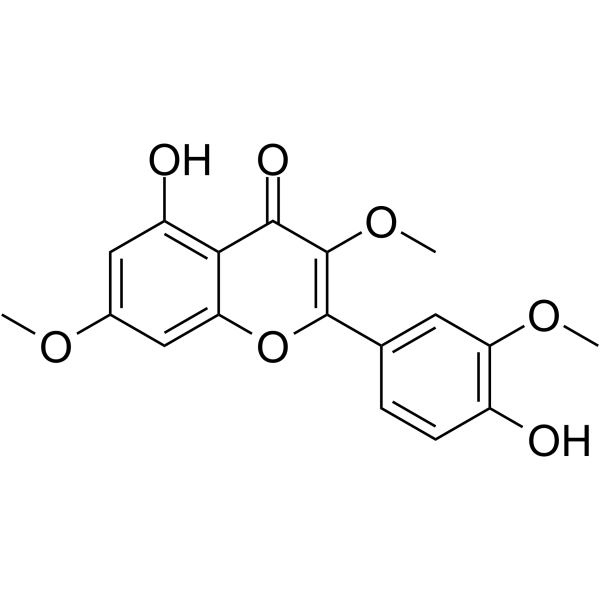
Pachypodol
Based on 1 publication(s) in Google Scholar
Pachypodol is an orally active methoxyflavonoid compound. Pachypodol activates the ERK-dependent Nrf2 pathway and inhibits Apoptosis. Pachypodol exhibits activities such as antioxidant, cytoprotective, anti-inflammatory effects. Pachypodol improves cognition. Pachypodol exerts protective effects against cardiac and liver damage. Pachypodol has anticancer activity against colon cancer.
For research use only. We do not sell to patients.
- Purity : 99.82%
- CAS No.: 33708-72-4
- Formula: C18H16O7
- Molecular Weight:344.32
-
Storage:
4°C, sealed storage, away from moisture and light
* In solvent : -80°C, 6 months; -20°C, 1 month (sealed storage, away from moisture and light)

To place orders, for customer services and technical support, please contact: MedChemExpress USA
Tel: 609-228-6898 E-mail: [email protected] [email protected]


-
 Biological Activity
-
Chemical Information
-
Solvent & Solubility
- Protocols
- Purity & Documentation
- References
-
 Help & FAQs


Publications Citing Use of MedChemExpress (MCE) Pachypodol
More

Biological Activity
Description
Cellular Effect
|
Cell Line

|
Type | Value | Description | References |
|---|---|---|---|---|
| KB | IC50 |
>47.8 μM
Compound: 7
|
Cytotoxicity against human KB cells by sulforhodamine B assay
Cytotoxicity against human KB cells by sulforhodamine B assay
|
[PMID: 26928423] |
| NCI-H460 | IC50 |
17.2 μM
Compound: 10
|
Inhibition of ABCG2 expressed in human NCI-H460 cells assessed as inhibition of PhA accumulation after 2 to 20 hrs relative to fumitremorgin C
Inhibition of ABCG2 expressed in human NCI-H460 cells assessed as inhibition of PhA accumulation after 2 to 20 hrs relative to fumitremorgin C
|
[PMID: 21275386] |
| Neutrophil | IC50 |
0.99 μg/mL
Compound: 11
|
Antiinflammatory activity in human neutrophils assessed as inhibition of fMet-Leu-Phe/Cytochalasin B-induced elastase release
Antiinflammatory activity in human neutrophils assessed as inhibition of fMet-Leu-Phe/Cytochalasin B-induced elastase release
|
[PMID: 18163582] |
| Neutrophil | IC50 |
1 μg/mL
Compound: 11
|
Antiinflammatory activity in human neutrophils assessed as inhibition of fMet-Leu-Phe/Cytochalasin B-induced superoxide anion generation
Antiinflammatory activity in human neutrophils assessed as inhibition of fMet-Leu-Phe/Cytochalasin B-induced superoxide anion generation
|
[PMID: 18163582] |
| Vero | IC50 |
>47.8 μM
Compound: 7
|
Cytotoxicity against African green monkey Vero cells by sulforhodamine B assay
Cytotoxicity against African green monkey Vero cells by sulforhodamine B assay
|
[PMID: 26928423] |
In Vitro
Pachypodol (3-30 μM; 1-12 h) significantly prevents oxidative stress-induced cell death in HepG2 cells in a concentration-dependent manner[1].
Pachypodol (0-30 μM; 24 h) inhibits the growth of CaCo-2 colon cancer cell line, with an IC50 value of 185.6 μM[2].
MedChemExpress (MCE) has not independently confirmed the accuracy of these methods. They are for reference only. Further protocols information, click here.
-
Cell Line:HepG2 cells
-
Concentration:30 μM
-
Incubation Time:10 min, 30 min, 1 h, 3 h, 6 h, 12 h, 24 h
-
Result:Upregulated the protein levels of Nrf2-controlled antioxidant genes such as GCLC and NQO1.
Increased ERK phosphorylation.
In Vivo
Pachypodol (10-30 mg/kg; i.v.; 30 min before isoflurane exposure) reduces neuronal apoptosis and oxidative stress in Isoflurane (HY-A0134)-induced neuron-injured rats by regulating the JNK/ERK pathway, and also ameliorates cognitive function and neurological scores[4].
Pachypodol (20 mg/kg; p.o.; once a day; 7-28 days) significantly alleviates Cisplatin (HY-17394)-induced hepatic impairment in albino rats by inhibiting oxidative stress, inflammation, and apoptosis, and mitigates histopathological liver damage[5].
MedChemExpress (MCE) has not independently confirmed the accuracy of these methods. They are for reference only.
-
Animal Model:Seven-day-old Sprague-Dawley rat pups (15-18 g), Isoflurane (HY-A0134)-induced neuronal injury model in developing brain[4]
-
Dosage:10 mg/kg, 30 mg/kg
-
Administration:Intravenous injection, once (30 min before Isoflurane exposure)
-
Result:Reduced the levels of inflammatory mediators such as TNF-α, IL-6, and IL-1β in the serum.
Reduced oxidative stress in the brain tissue, as shown by decreased ROS and MDA levels and increased iNOS activity and protein expression.
Ameliorated neuronal cell apoptosis, as indicated by the reduced expression of Bax and caspase-3 and increased expression of Bcl-2, and decreased the number of TUNEL-positive cells in the hippocampus.
Regulated the JNK/ERK/Akt pathway, reducing the expression of p-JNK/JNK and p-ERK/ERK and increasing the expression of p-Akt/Akt.
Improved cognitive function, as shown by increased time spent in the target quadrant and number of crossings and decreased escape latency, and reduced the neurological score.


Chemical Information
-
CAS No. 33708-72-4
-
Appearance Solid
-
Molecular Weight 344.32
-
Formula C18H16O7
-
Color White to yellow
-
SMILES
O=C1C(OC)=C(C2=CC(OC)=C(O)C=C2)OC3=CC(OC)=CC(O)=C13
-
Structure Classification
-
Initial Source
-
Shipping
Room temperature in continental US; may vary elsewhere.
-
Storage
4°C, sealed storage, away from moisture and light
* In solvent : -80°C, 6 months; -20°C, 1 month (sealed storage, away from moisture and light)


Publications (1)
-
Journal Impact Factor
-
Most Recent
-
Nat Biomed Eng
DeepDrugDiscovery identifies blood-brain barrier permeable autophagy enhancers for Alzheimer's disease. [Abstract]2026 Apr 24. PMID: 42032039


Solvent & Solubility
In Vitro:
DMSO : 100 mg/mL (290.43 mM; Need ultrasonic; Hygroscopic DMSO has a significant impact on the solubility of product, please use newly opened DMSO)
Please refer to the solubility information to select the appropriate solvent. Once prepared, please aliquot and store the solution to prevent product inactivation from repeated freeze-thaw cycles.
Storage method and period of stock solution: -80°C, 6 months; -20°C, 1 month (sealed storage, away from moisture and light). When stored at -80°C, please use it within 6 months. When stored at -20°C, please use it within 1 month.
Please refer to the solubility information to select the appropriate solvent. Once prepared, please aliquot and store the solution to prevent product inactivation from repeated freeze-thaw cycles.
Storage method and period of stock solution: -80°C, 6 months; -20°C, 1 month (sealed storage, away from moisture and light). When stored at -80°C, please use it within 6 months. When stored at -20°C, please use it within 1 month.
Concentration (start) × Volume (start) = Concentration (final) × Volume (final)

Protocols
-
Apoptosis
Apoptosis, also called programmed cell death, is generally characterized by distinct morphological characteristics.
-
TUNEL staining for apoptotic DNA fragmentation
TUNEL staining detects DNA strand breaks by using terminal deoxynucleotidyl transferase to add labeled nucleotides to exposed 3′-OH DNA termini, generating either microscopic staining in fixed cells or tissue sections, or fluorescence/cytometric signal in cell suspensions. TUNEL positivity reflects DNA fragmentation but should not be interpreted alone as definitive apoptosis, because TUNEL can also label necrotic, autolytic, mechanically damaged, or DNA-repair-associated DNA breaks.
-
Annexin V plus membrane-impermeant dye apoptosis staining
Annexin V-based apoptosis assays rely on the detection of phosphatidylserine (PS) externalization from the inner leaflet of the plasma membrane to the outer leaflet, an early biochemical hallmark of apoptosis. Fluorescently labeled Annexin V binds PS in a calcium-dependent manner, enabling identification of early apoptotic cells by flow cytometry or fluorescence microscopy. When combined with a membrane-impermeant DNA-binding dye (e. g. , propidium iodide), this approach allows discrimination between viable (Annexin V−/dye−), early apoptotic (Annexin V+/dye−), and late apoptotic or necrotic (Annexin V+/dye+) cell populations by assessing membrane integrity and PS exposure.
-
Apoptosis Solutions
Apoptosis is a regulated, generally non-lytic cell-death pathway that removes unwanted, damaged, infected, or abnormal cells through coordinated morphological changes, caspase activation, DNA fragmentation, and membrane remodeling. The intrinsic apoptosis pathway is controlled mainly by mitochondrial outer membrane permeabilization, BCL-2 family proteins, cytochrome c release, apoptosome formation, caspase-9 activation, and downstream executioner caspase-3/7 activation. The extrinsic apoptosis pathway is initiated by death receptors such as Fas, TNFR, and TRAIL receptors, which recruit adaptor proteins and activate caspase-8 before engaging executioner caspases or mitochondrial amplification through BID cleavage. Apoptosis is linked to many phenotypes, including cancer cell killing, tissue homeostasis, immune regulation, neurodegeneration, infection response, and treatment-induced cytotoxicity; unresolved questions include how apoptosis interacts with necroptosis, pyroptosis, ferroptos
-
Research Protocol for Inflammation-related Diseases
The NLRP3 inflammasome is a cytosolic innate immune signaling platform that integrates priming signals and danger-signal activation to promote caspase-1 activation, maturation of IL-1β and IL-18, and gasdermin D-mediated pyroptotic cell death. The core experimental logic is to determine whether inflammatory disease phenotypes are driven by increased NLRP3 expression, ASC-containing inflammasome assembly, caspase-1 cleavage, GSDMD cleavage, and extracellular release of IL-1β/IL-18 rather than by nonspecific cell injury alone. The pathway is strongly linked to inflammation-related disease phenotypes because monosodium urate crystals activate NALP3/NLRP3 inflammasome signaling in gout-like crystal inflammation, cholesterol crystals activate NLRP3 inflammasomes in atherogenesis models, and DSS-induced intestinal inflammation has been reported to involve NLRP3 inflammasome activity. However, experimental colitis studies also show context-dependent protective effects of NLRP3 inflammasome co
-
Hepatotoxicity Study
This protocol evaluates hepatotoxicity using complementary in vivo mouse APAP acute liver injury and in vitro hepatocyte-based cytotoxicity readouts. In vivo APAP injury is assessed by serum ALT/AST, liver histology, hepatic glutathione, protein adducts, necrosis, inflammation, and regeneration-related endpoints. In vitro hepatotoxicity is assessed by loss of viability, leakage of ALT/AST/LDH, oxidative-stress markers, mitochondrial function, nuclear morphology, intracellular calcium, and high-content imaging endpoints.


Purity & Documentation
-
Data Sheet (279 KB)
-
SDS (252 KB)
- English - EN (252 KB)
- Français - FR (252 KB)
- Deutsch - DE (252 KB)
- Norwegian - NO (252 KB)
- Español - ES (252 KB)
- Swedish - SV (252 KB)
- Italian - IT (252 KB)
- Korean - KR (252 KB)
- Portuguese - PT (252 KB)
-
Handling Instructions (2659 KB)
References
[1]. Kim EK, et al. Pachypodol, a Methoxyflavonoid Isolated from Pogostemon cablin Bentham Exerts Antioxidant and Cytoprotective Effects in HepG2 Cells: Possible Role of ERK-Dependent Nrf2 Activation. Int J Mol Sci. 2019;20(17):4082. Published 2019 Aug 21. [Content Brief]
[2]. Ali HA,et al. Pachypodol, a flavonol from the leaves of Calycopteris floribunda, inhibits the growth of CaCo 2 colon cancer cell line in vitro. Phytother Res. 2008;22(12):1684-1687. [Content Brief]
[4]. Zhang J, et al. Pachypodol protects newborn rats from anaesthesia-induced apoptosis in the developing brain by regulating the JNK/ERK pathway. Int J Dev Neurosci. 2021 Nov;81(7):633-642. [Content Brief]


Complete Stock Solution Preparation Table
Please refer to the solubility information to select the appropriate solvent. Once prepared, please aliquot and store the solution to prevent product inactivation from repeated freeze-thaw cycles.
Storage method and period of stock solution: -80°C, 6 months; -20°C, 1 month (sealed storage, away from moisture and light). When stored at -80°C, please use it within 6 months. When stored at -20°C, please use it within 1 month.
| Optional Solvent | Concentration Solvent Mass | 1 mg | 5 mg | 10 mg | 25 mg |
|---|---|---|---|---|---|
| DMSO | 1 mM | 2.9043 mL | 14.5214 mL | 29.0428 mL | 72.6069 mL |
| 5 mM | 0.5809 mL | 2.9043 mL | 5.8086 mL | 14.5214 mL | |
| 10 mM | 0.2904 mL | 1.4521 mL | 2.9043 mL | 7.2607 mL | |
| 15 mM | 0.1936 mL | 0.9681 mL | 1.9362 mL | 4.8405 mL | |
| 20 mM | 0.1452 mL | 0.7261 mL | 1.4521 mL | 3.6303 mL | |
| 25 mM | 0.1162 mL | 0.5809 mL | 1.1617 mL | 2.9043 mL | |
| 30 mM | 0.0968 mL | 0.4840 mL | 0.9681 mL | 2.4202 mL | |
| 40 mM | 0.0726 mL | 0.3630 mL | 0.7261 mL | 1.8152 mL | |
| 50 mM | 0.0581 mL | 0.2904 mL | 0.5809 mL | 1.4521 mL | |
| 60 mM | 0.0484 mL | 0.2420 mL | 0.4840 mL | 1.2101 mL | |
| 80 mM | 0.0363 mL | 0.1815 mL | 0.3630 mL | 0.9076 mL | |
| 100 mM | 0.0290 mL | 0.1452 mL | 0.2904 mL | 0.7261 mL |


Pachypodol Related Classifications
HY-N3121 Related Classifications
 Powered by Bioz