



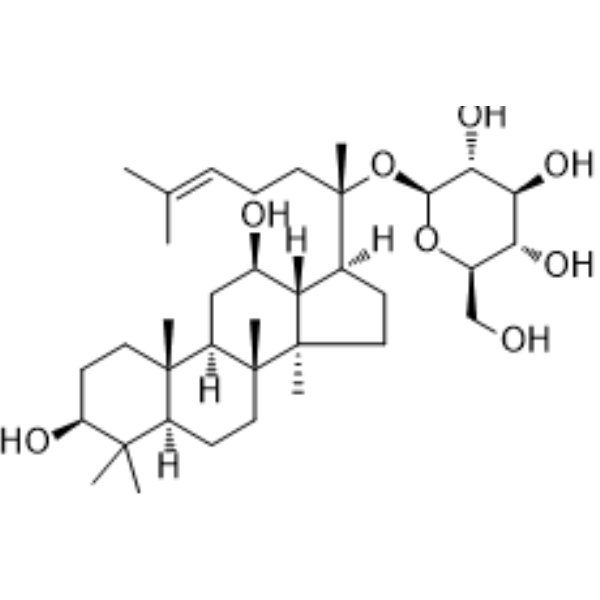
Ginsenoside C-K
Based on 5 publication(s) in Google Scholar
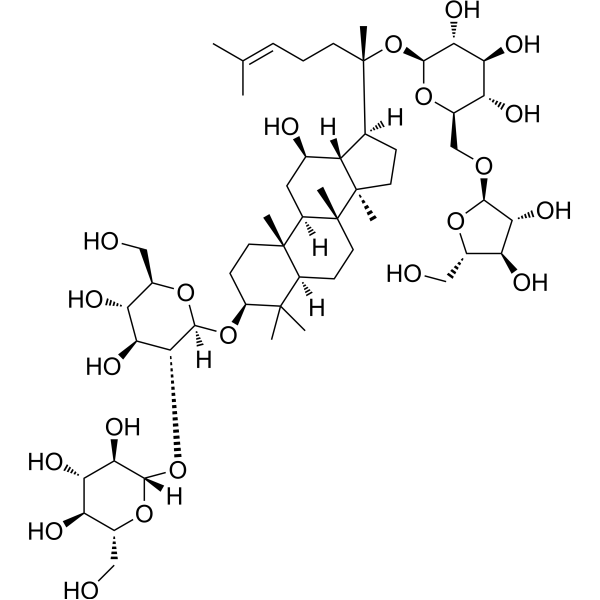
Ginsenoside C-K, a bacterial metabolite of G-Rb1, exhibits anti-inflammatory effects by reducing iNOS and COX-2. Ginsenoside C-K exhibits an inhibition against the activity of CYP2C9 and CYP2A6 in human liver microsomes with IC50s of 32.0±3.6 μM and 63.6±4.2 μM, respectively.
For research use only. We do not sell to patients.
- Purity : 99.93%
- CAS No.: 39262-14-1
- Formula: C36H62O8
- Molecular Weight:622.87
-
Storage:Powder -20°C, 3 years , 4°C, 2 years ; In solvent -80°C, 2 years , -20°C, 1 year

To place orders, for customer services and technical support, please contact: MedChemExpress USA
Tel: 609-228-6898 E-mail: [email protected] [email protected]


-
 Biological Activity
-
Chemical Information
-
Solvent & Solubility
- Protocols
- Purity & Documentation
- References
-
 Help & FAQs


-
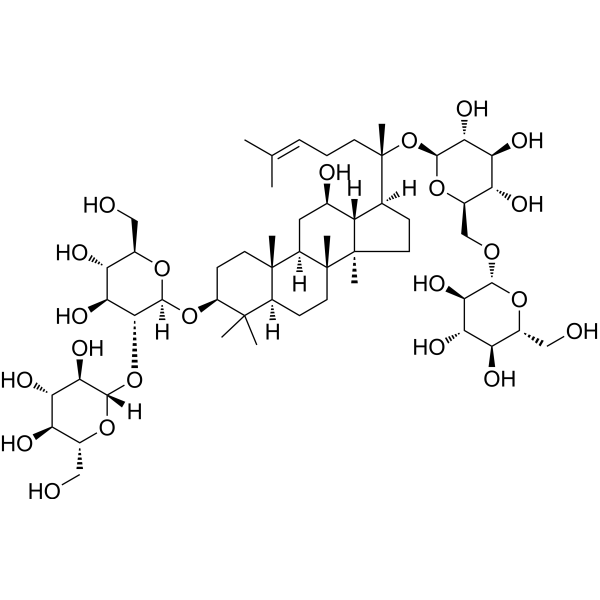
HY-N0039
Ginsenoside Rb1Autophagy Inducer -
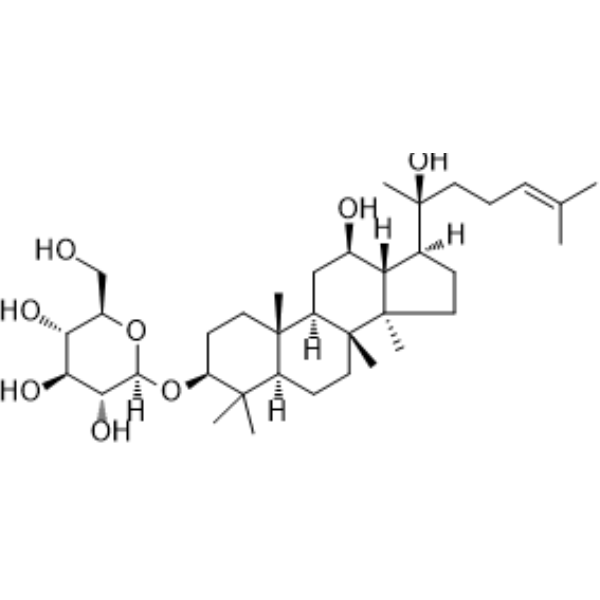
HY-N0605
Ginsenoside Rh2Caspase Activator -
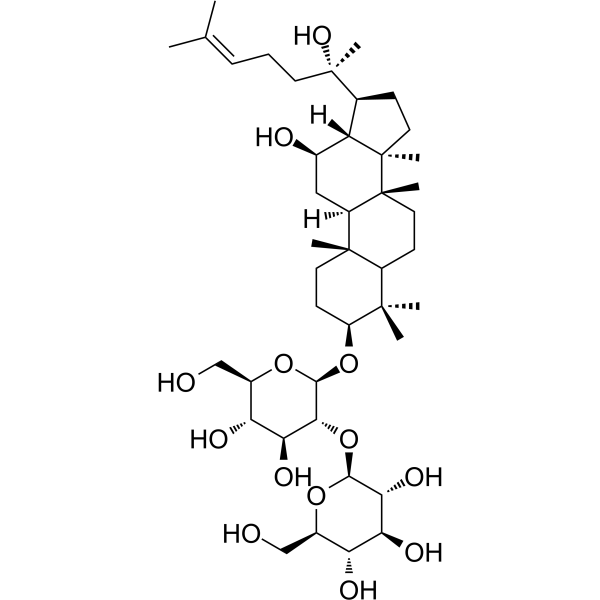
HY-N0603
20(S)-Ginsenoside Rg3Sodium Channel Inhibitor -
HY-N0604
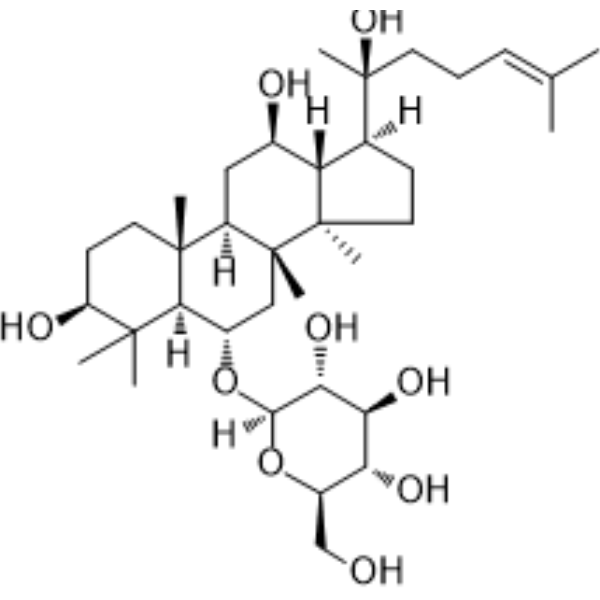
Ginsenoside Rh1Endogenous Metabolite -
HY-N0797
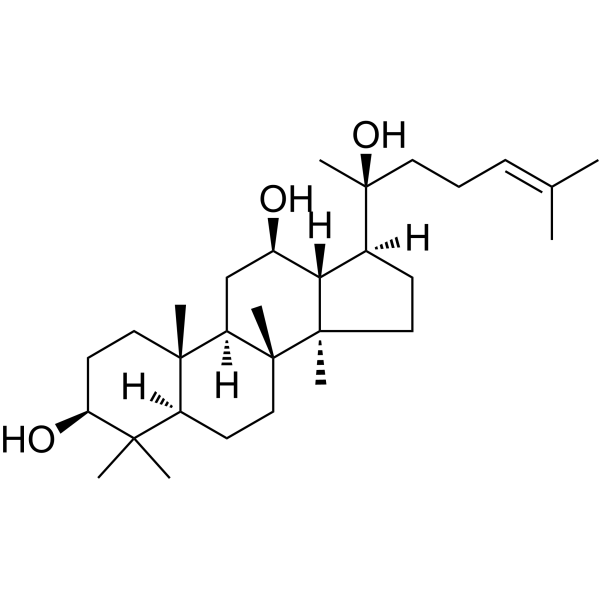
(20S)-ProtopanaxadiolAkt activity inhibitor -
HY-N0045
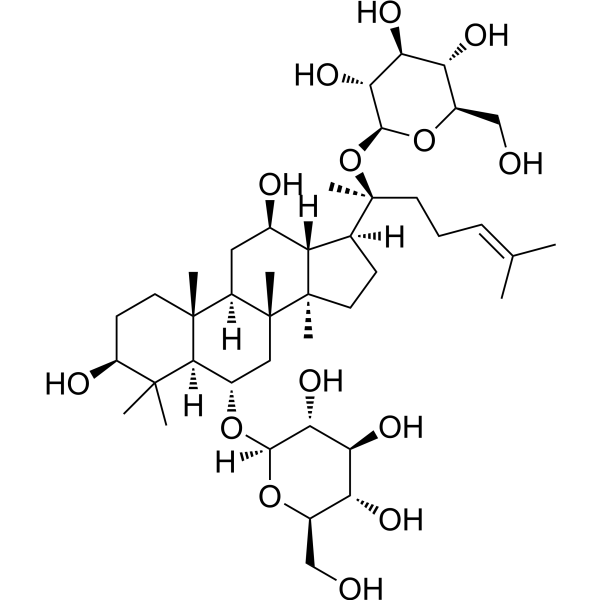
Ginsenoside Rg1Apoptosis Inducer -
HY-N0602
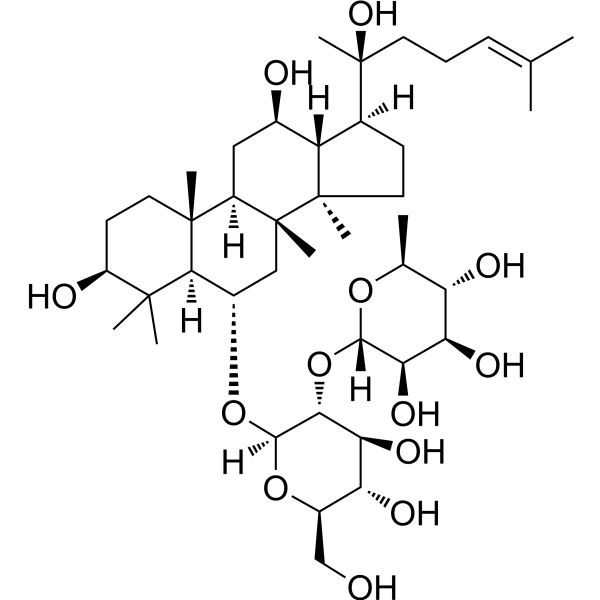
Ginsenoside Rg2NF-κB Inhibitor -
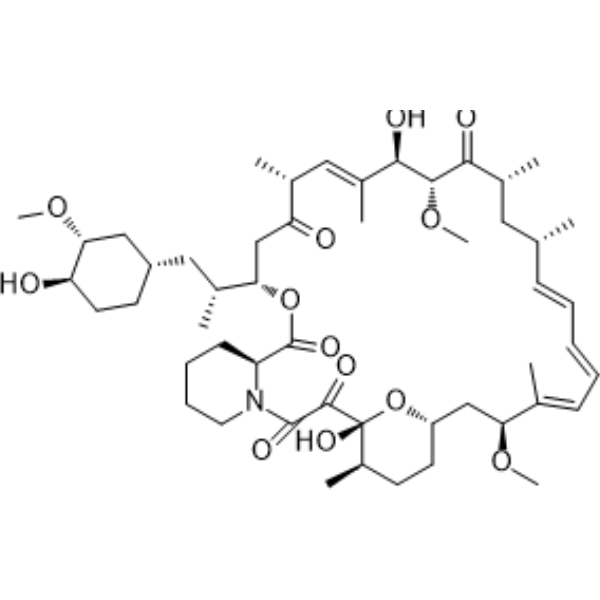
HY-10219
RapamycinmTOR Inhibitor -
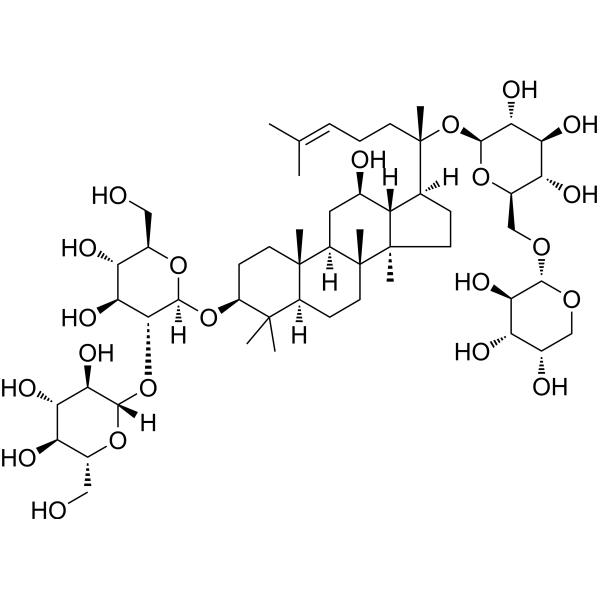
HY-N0040
Ginsenoside Rb2Influenza Virus Inhibitor -
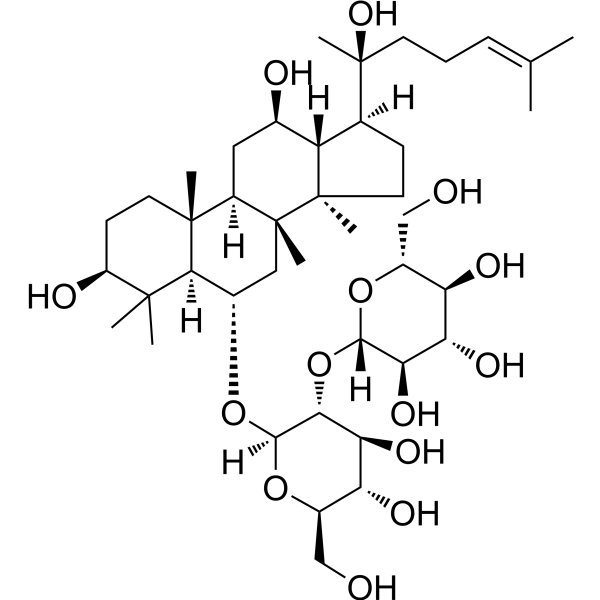
HY-N0601
Ginsenoside RfCalcium Channel Inhibitor -
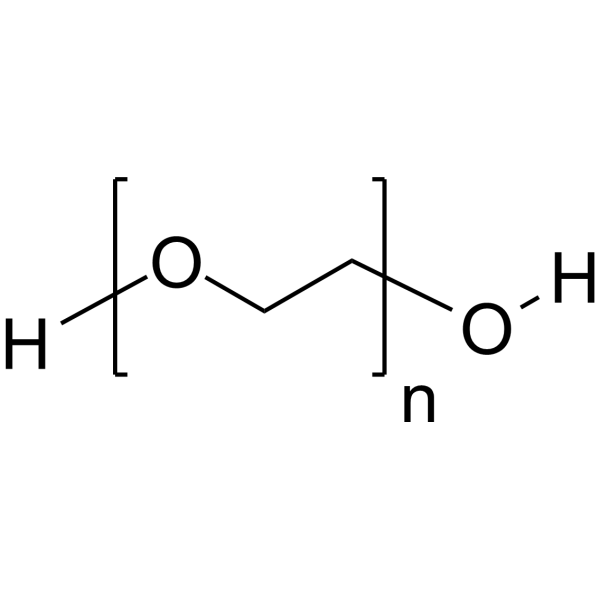
HY-Y0873
PEG300Neutral Polymer -
HY-N0042
Ginsenoside RcTNF Receptor Inhibitor
Publications Citing Use of MedChemExpress (MCE) Ginsenoside C-K
More Customer Validation & Images

-
Cell Imaging/Staining

-
Cell Proliferation/Viability Assay

-
IF

-
WB
-
RT-PCR


Biological Activity
Description
|
COX-2 |
iNOS |
CYP2C9 32 μM (IC50) |
CYP2A6 63.6 μM (IC50) |
In Vitro
Ginsenoside C-K, a bacterial metabolite of G-Rb1, exhibits anti-inflammatory effects mainly by reducing inducible nitric oxide synthase (iNOS), cyclooxygenase (COX)-2, and proinflammatory cytokines. Ginsenoside C-K suppresses the expression of proinflammatory cytokines by downregulating the activities of IRAK-1, MAPKs, IKK-α, and NF-κB in LPS-treated murine peritoneal macrophages. Ginsenoside C-K also suppresses the expression of iNOS and COX-2 by inhibiting NF-κB signaling in LPS-stimulated RAW264.7 cells. In zymosan-treated bone-marrow-derived macrophages (BMDMs) and RAW264.7 cells, Ginsenoside C-K inhibits inflammatory responses by negatively regulating the secretion of proinflammatory cytokines, the activation of MAPKs, and the generation of ROS. In addition, anti-inflammatory activity of Ginsenoside C-K has been observed in LPS-stimulated microglial cells. Ginsenoside C-K hinders inflammatory responses by controlling both the generation of ROS and the activities of MAPKs, NF-κB, and AP-1[1]. Ginsenoside C-K, a major metabolite of ginsenosides in the gastrointestinal tract, inhibits NF-κB signaling in a PXR-dependent manner. Ginsenoside C-K is shown to promote recovery of dextran sulfate sodium (DSS) -induced colitis by suppressing NF-κB activation. Ginsenoside C-K significantly reduces TNF-α-induced upregulation of IL-1β and iNOS mRNA levels, and restores the mRNA levels of PXR and CYP3A4 in LS174T cells[2]. Ginsenoside C-K, one of the intestinal metabolites of 20(S)-protopanaxadiol derivatives, exhibits an inhibition against the activity of CYP2C9 in human liver microsomes with an IC50 value of 32.0±3.6 μM, a weak inhibition against the activity of CYP2A6 in human liver microsomes with an IC50 value of 63.6±4.2 μM, and an even weaker inhibition against the activity of CYP2D6 in human liver microsomes with an IC50 value of more than 100 μM[4].
MedChemExpress (MCE) has not independently confirmed the accuracy of these methods. They are for reference only.
In Vivo
MedChemExpress (MCE) has not independently confirmed the accuracy of these methods. They are for reference only.


Chemical Information
-
CAS No. 39262-14-1
-
Appearance Solid
-
Molecular Weight 622.87
-
Formula C36H62O8
-
Color White to off-white
-
SMILES
C[C@@]([C@@]12C)(CC[C@@]3([H])C4(C)C)[C@@](C[C@@H](O)[C@]1([H])[C@]([C@@](CC/C=C(C)/C)(C)O[C@@H]([C@@H]([C@@H](O)[C@@H]5O)O)O[C@@H]5CO)([H])CC2)([H])[C@]3(CC[C@@H]4O)C
-
Synonyms
Ginsenoside compound K; Ginsenoside K
-
Structure Classification
-
Initial Source
-
Shipping
Room temperature in continental US; may vary elsewhere.
-
Storage
Powder -20°C 3 years 4°C 2 years In solvent -80°C 2 years -20°C 1 year


Publications (5)
-
Journal Impact Factor
-
Most Recent
-
Phytother Res
Ginsenoside CK cooperates with bone mesenchymal stem cells to enhance angiogenesis post-stroke via GLUT1 and HIF-1α/VEGF pathway. [Abstract]2024 Aug;38(8):4321-4335. PMID: 38990183
Ginsenoside C-K purchased from MedChemExpress. Usage Cited in: Phytother Res. 2024 Aug;38(8):4321-4335. [Abstract]
Crystal violet staining indicating the cell proliferation inMSCs Ginsenoside C-K (CK) (10 μM).
Ginsenoside C-K purchased from MedChemExpress. Usage Cited in: Phytother Res. 2024 Aug;38(8):4321-4335. [Abstract]
CCK-8 assay to detect survival ofMSCs after Ginsenoside C-K (CK) (10 μM) administration and co-culturewith BMECs.
Ginsenoside C-K purchased from MedChemExpress. Usage Cited in: Phytother Res. 2024 Aug;38(8):4321-4335. [Abstract]
Double staining of CD31 and VEGF treated with Ginsenoside C-K (CK) (10 μM).
-
J Agric Food Chem
Ginsenoside Compound K Ameliorates Osteoarthritis by Inhibiting the Chondrocyte Endoplasmic Reticulum Stress-Mediated IRE1α-TXNIP-NLRP3 Axis and Pyroptosis. [Abstract]2023 Jan 25;71(3):1499-1509. PMID: 36630614
Ginsenoside C-K purchased from MedChemExpress. Usage Cited in: J Agric Food Chem. 2023 Jan 25;71(3):1499-1509. [Abstract]
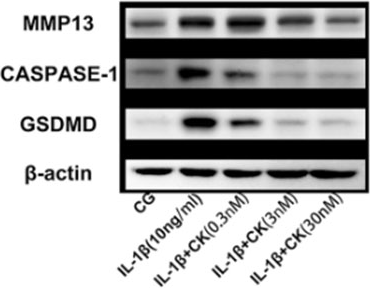
Ginsenoside C-K (CK; 0.3, 3, 30 nM; 1 h) significantly suppresses GSDMD and caspase-1 expression in a dose-dependent manner, in chondrocytes.
Ginsenoside C-K purchased from MedChemExpress. Usage Cited in: J Agric Food Chem. 2023 Jan 25;71(3):1499-1509. [Abstract]
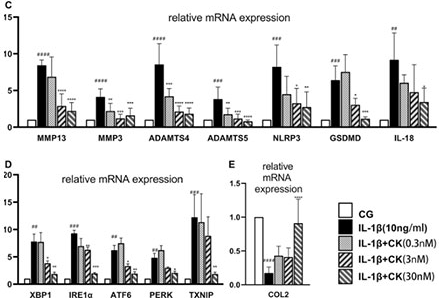
Ginsenoside C-K (CK; 0.3, 3, 30 nM) significantly suppresses expression of Nlrp3, Gsdmd, IL18, and Txnip mRNA levels (fig C-D), as well as promotes the mRNA expression of Col2a1(fig E), in a dose-dependent manner in chondrocytes.
-
J Agric Food Chem
Chemoproteomic Profiling of Cobalamin-Independent Methionine Synthases in Plants with a Covalent Probe. [Abstract]2020 Jul 29;68(30):8050-8056. PMID: 32618189 -
Food Funct
Ginsenoside CK induces apoptosis of human cervical cancer HeLa cells by regulating autophagy and endoplasmic reticulum stress. [Abstract]2021 Jun 21;12(12):5301-5316. PMID: 34013944 -
N Biotechnol
Cultivation optimization promotes ginsenoside and universal triterpenoid production by engineered yeast. [Abstract]2024 Nov 25:83:219-230. PMID: 39181198


Solvent & Solubility
In Vitro:
DMSO : ≥ 100 mg/mL (160.55 mM; Hygroscopic DMSO has a significant impact on the solubility of product, please use newly opened DMSO)
* "≥" means soluble, but saturation unknown.
Please refer to the solubility information to select the appropriate solvent. Once prepared, please aliquot and store the solution to prevent product inactivation from repeated freeze-thaw cycles.
Storage method and period of stock solution: -80°C, 2 years; -20°C, 1 year. When stored at -80°C, please use it within 2 years. When stored at -20°C, please use it within 1 year.
Please refer to the solubility information to select the appropriate solvent. Once prepared, please aliquot and store the solution to prevent product inactivation from repeated freeze-thaw cycles.
Storage method and period of stock solution: -80°C, 2 years; -20°C, 1 year. When stored at -80°C, please use it within 2 years. When stored at -20°C, please use it within 1 year.
Concentration (start) × Volume (start) = Concentration (final) × Volume (final)
In Vivo:
Select the appropriate dissolution method based on your experimental animal and administration route.
- For the following dissolution methods, please ensure to first prepare a clear stock solution using an In Vitro approach and then sequentially add co-solvents:
- To ensure reliable experimental results, the clarified stock solution can be appropriately stored based on storage conditions. As for the working solution for In Vivo experiments, it is recommended to prepare freshly and use it on the same day.
- The percentages shown for the solvents indicate their volumetric ratio in the final prepared solution. If precipitation or phase separation occurs during preparation, heat and/or sonication can be used to aid dissolution.
Add each solvent one by one: 10% DMSO 40% PEG300 5% Tween-80 45% Saline
Solubility: ≥ 2.75 mg/mL (4.42 mM); Clear solution
This protocol yields a clear solution of ≥ 2.75 mg/mL (saturation unknown).
Taking 1 mL working solution as an example, add 100 μL DMSO stock solution (27.5 mg/mL) to 400 μL PEG300, and mix evenly; then add 50 μL Tween-80 and mix evenly; then add 450 μL Saline to adjust the volume to 1 mL.
Preparation of Saline: Dissolve 0.9 g sodium chloride in ddH₂O and dilute to 100 mL to obtain a clear Saline solution.
Add each solvent one by one: 10% DMSO 90% (20% SBE-β-CD in Saline)
Solubility: ≥ 2.75 mg/mL (4.42 mM); Clear solution
This protocol yields a clear solution of ≥ 2.75 mg/mL (saturation unknown).
Taking 1 mL working solution as an example, add 100 μL DMSO stock solution (27.5 mg/mL) to 900 μL 20% SBE-β-CD in Saline, and mix evenly.
Preparation of 20% SBE-β-CD in Saline (4°C, storage for one week): 2 g SBE-β-CD powder is dissolved in 10 mL Saline, completely dissolve until clear.
In Vivo Dissolution Calculator
Please enter the basic information of animal experiments:
-
-
-
-
Recommended: Prepare an additional quantity of animals to account for potential losses during experiments.
Please enter your animal formula composition:
-
%DMSO +
Recommended: Keep the proportion of DMSO in working solution below 2% if your animal is weak.
-
%+
-
+%Tween-80 + +
-
%Saline +
The co-solvents required include: DMSO, . All of co-solvents are available by MedChemExpress (MCE). , Tween 80. All of co-solvents are available by MedChemExpress (MCE).
Working solution concentration: 0.22 mg/mL
Method for preparing stock solution: mg drug dissolved in μL DMSO. Stock solution concentration: mg/mL.
1. Take μL DMSO stock solution;
2. Add μL .
μL , mix evenly;
3. Then add μL Tween 80, mix evenly;
4. Then add μL
Please ensure that the stock solution in the first step is dissolved to a clear state, and add co-solvents in sequence. You can use ultrasonic heating (ultrasonic cleaner, recommended frequency 20-40 kHz), vortexing, etc. to assist dissolution.


Purity & Documentation
-
Data Sheet (286 KB)
-
SDS (392 KB)
- English - EN (392 KB)
- Français - FR (392 KB)
- Deutsch - DE (392 KB)
- Norwegian - NO (392 KB)
- Español - ES (392 KB)
- Swedish - SV (392 KB)
- Italian - IT (392 KB)
- Korean - KR (392 KB)
- Portuguese - PT (392 KB)
-
Handling Instructions (2659 KB)
References
[1]. Kim JH, et al. Role of ginsenosides, the main active components of Panax ginseng, in inflammatory responsesand diseases. J Ginseng Res. 2017 Oct;41(4):435-443. [Content Brief]
[2]. Liu Y, et al. Ginsenoside metabolites, rather than naturally occurring ginsenosides, lead to inhibition of human cytochrome P450 enzymes. Toxicol Sci. 2006 Jun;91(2):356-64. [Content Brief]
[3]. Zhang J, et al. Ginsenosides Regulate PXR/NF-κB Signaling and Attenuate Dextran Sulfate Sodium-Induced Colitis. Drug Metab Dispos. 2015 Aug;43(8):1181-9. [Content Brief]
[4]. Liu KK, et al. Ginsenoside compound K suppresses the abnormal activation of T lymphocytes in mice with collagen-induced arthritis. Acta Pharmacol Sin. 2014 May;35(5):599-612. [Content Brief]


Complete Stock Solution Preparation Table
Please refer to the solubility information to select the appropriate solvent. Once prepared, please aliquot and store the solution to prevent product inactivation from repeated freeze-thaw cycles.
Storage method and period of stock solution: -80°C, 2 years; -20°C, 1 year. When stored at -80°C, please use it within 2 years. When stored at -20°C, please use it within 1 year.
| Optional Solvent | Concentration Solvent Mass | 1 mg | 5 mg | 10 mg | 25 mg |
|---|---|---|---|---|---|
| DMSO | 1 mM | 1.6055 mL | 8.0274 mL | 16.0547 mL | 40.1368 mL |
| 5 mM | 0.3211 mL | 1.6055 mL | 3.2109 mL | 8.0274 mL | |
| 10 mM | 0.1605 mL | 0.8027 mL | 1.6055 mL | 4.0137 mL | |
| 15 mM | 0.1070 mL | 0.5352 mL | 1.0703 mL | 2.6758 mL | |
| 20 mM | 0.0803 mL | 0.4014 mL | 0.8027 mL | 2.0068 mL | |
| 25 mM | 0.0642 mL | 0.3211 mL | 0.6422 mL | 1.6055 mL | |
| 30 mM | 0.0535 mL | 0.2676 mL | 0.5352 mL | 1.3379 mL | |
| 40 mM | 0.0401 mL | 0.2007 mL | 0.4014 mL | 1.0034 mL | |
| 50 mM | 0.0321 mL | 0.1605 mL | 0.3211 mL | 0.8027 mL | |
| 60 mM | 0.0268 mL | 0.1338 mL | 0.2676 mL | 0.6689 mL | |
| 80 mM | 0.0201 mL | 0.1003 mL | 0.2007 mL | 0.5017 mL | |
| 100 mM | 0.0161 mL | 0.0803 mL | 0.1605 mL | 0.4014 mL |


Ginsenoside C-K Related Classifications
HY-N0904 Related Classifications
 Powered by Bioz