



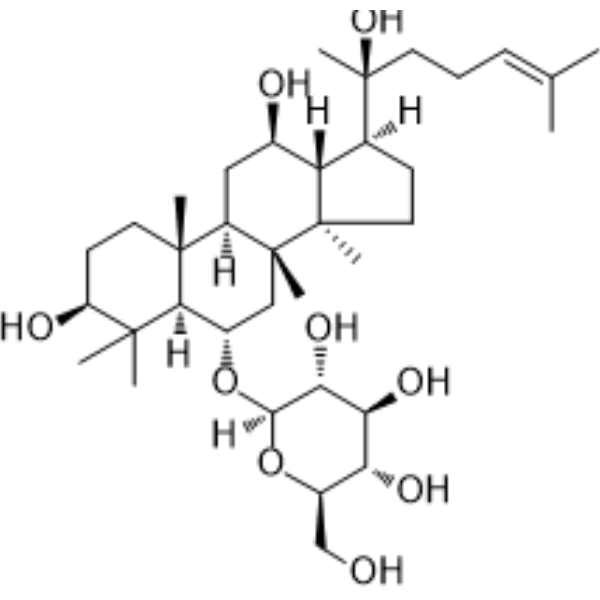
Ginsenoside Rh1
Based on 6 publication(s) in Google Scholar
Ginsenoside Rh1 (Prosapogenin A2) inhibits the expression of PPAR-γ, TNF-α, IL-6, and IL-1β.
For research use only. We do not sell to patients.
- Purity : 98.72%
- CAS No.: 63223-86-9
- Formula: C36H62O9
- Molecular Weight:638.87
-
Storage:Powder -20°C, 3 years , 4°C, 2 years ; In solvent -80°C, 2 years , -20°C, 1 year

To place orders, for customer services and technical support, please contact: MedChemExpress USA
Tel: 609-228-6898 E-mail: [email protected] [email protected]


-
 Biological Activity
-
Chemical Information
-
Solvent & Solubility
- Protocols
- Purity & Documentation
- References
-
 Help & FAQs


-
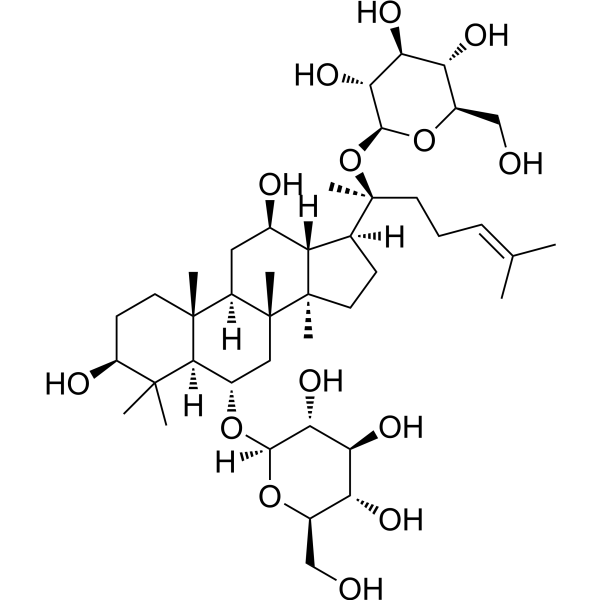
HY-N0045
Ginsenoside Rg1Apoptosis Inducer -
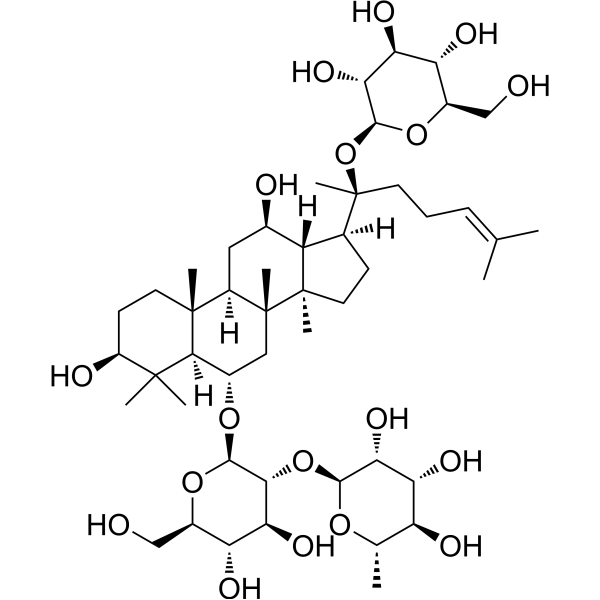
HY-N0044
Ginsenoside ReEndogenous Metabolite -
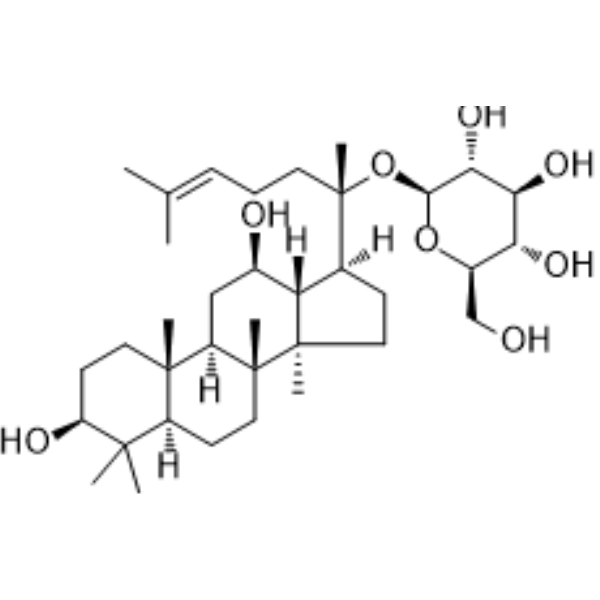
HY-N0904
Ginsenoside C-KNO Synthase/COX Inhibitor -
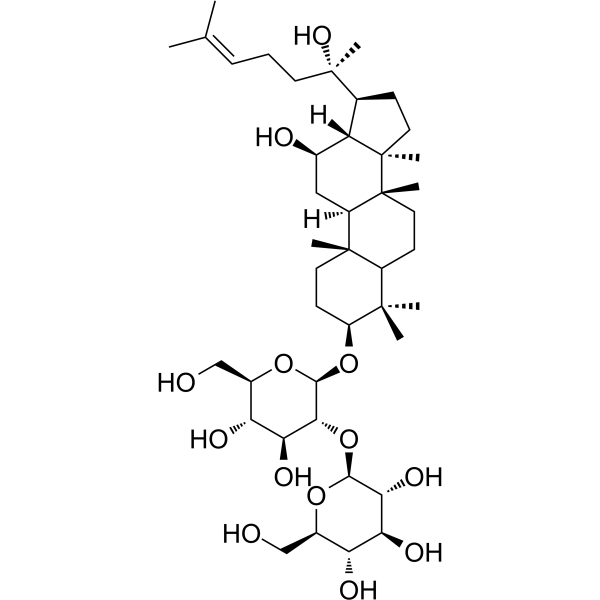
HY-N0603
20(S)-Ginsenoside Rg3Sodium Channel Inhibitor -
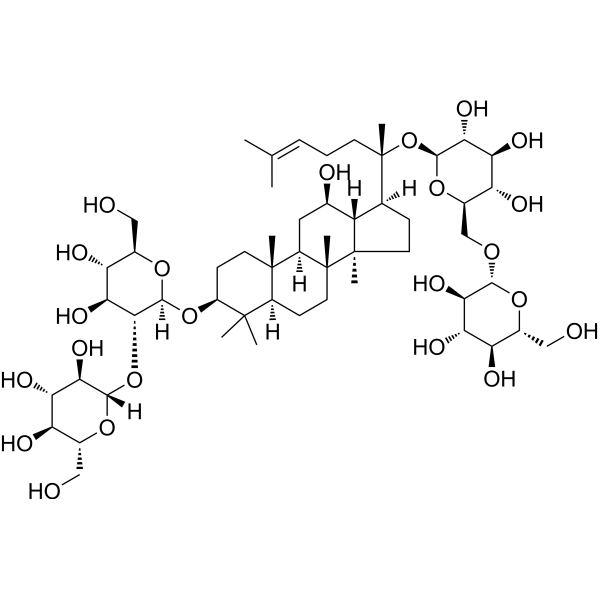
HY-N0039
Ginsenoside Rb1Autophagy Inducer -
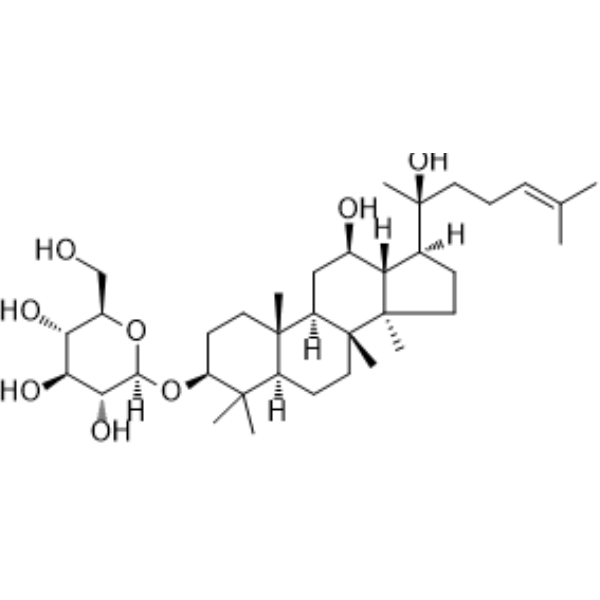
HY-N0605
Ginsenoside Rh2Caspase Activator -
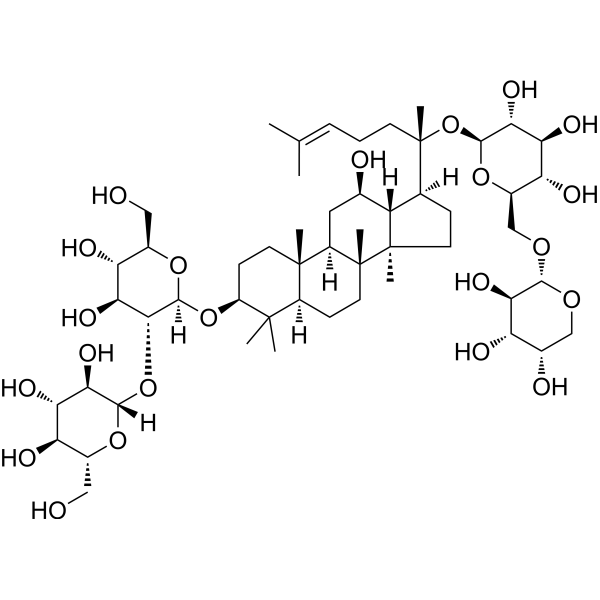
HY-N0040
Ginsenoside Rb2Influenza Virus Inhibitor -
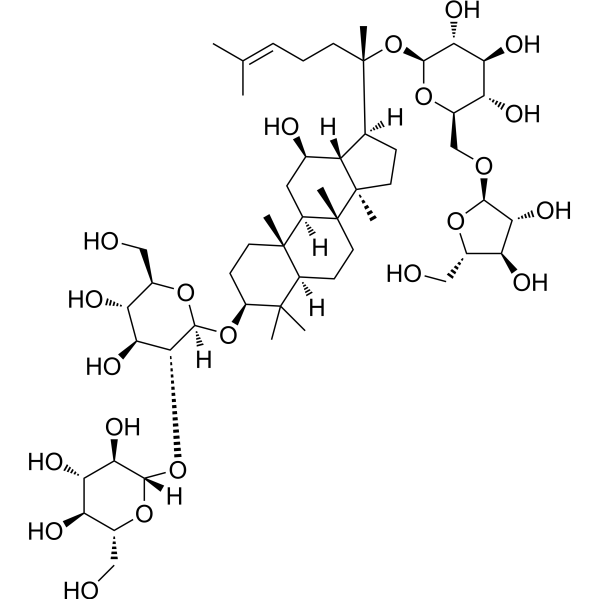
HY-N0042
Ginsenoside RcTNF Receptor Inhibitor -
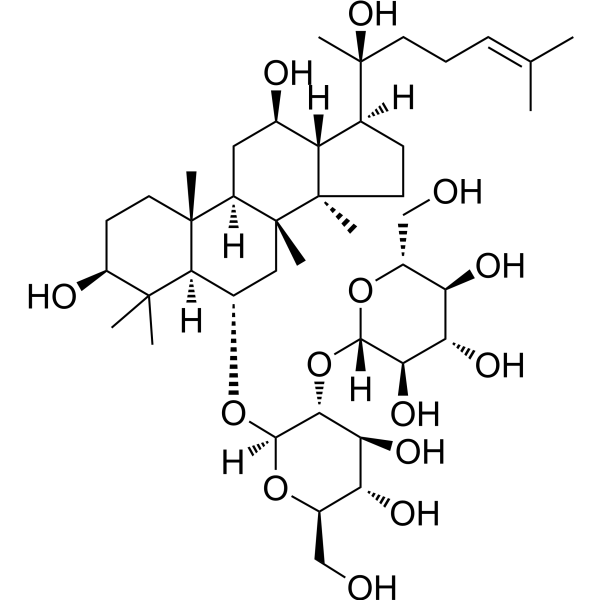
HY-N0601
Ginsenoside RfCalcium Channel Inhibitor -
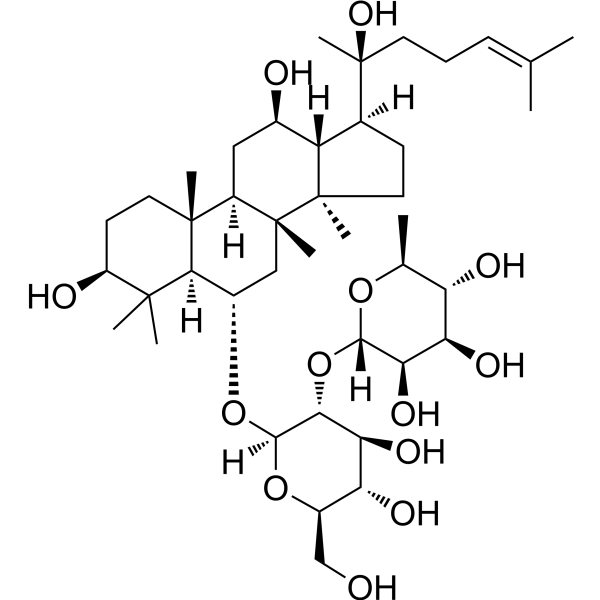
HY-N0602
Ginsenoside Rg2NF-κB Inhibitor -
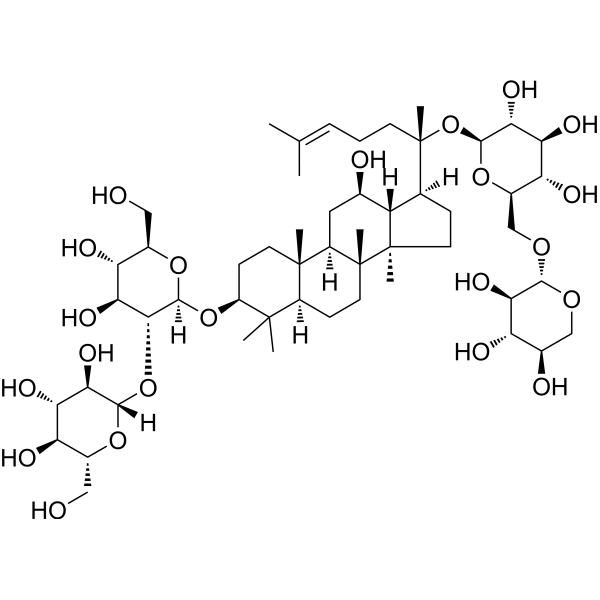
HY-N0041
Ginsenoside Rb3COX Inhibitor -
HY-N0292
OleuropeinApoptosis Inducer
Publications Citing Use of MedChemExpress (MCE) Ginsenoside Rh1
More- Cell Death Dis. 2026 Apr 28;17(1):565. [Abstract]
- Cell Biol Toxicol. 2021 Feb;37(1):65-84. [Abstract]
- Microorganisms. 2026 Mar 27;14(4):757. [Abstract]
- Food Sci Biotechnol. 2024 Sep 23;34(3):793-802. [Abstract]
- Food Sci Biotechnol. 2023 Aug 18;33(5):1233-1243. [Abstract]
- J Med Food. 2024 Oct;27(10):951-960. [Abstract]
 Customer Validation & Images

-
Cell Proliferation/Viability Assay
-
Histological Imaging/Staining
-
RT-PCR
-
WB
All Endogenous Metabolite Isoforms
More

Biological Activity
Description
IC50 & Target
[1]|
PPAR-γ |
IL-6 |
IL-1β |
Cellular Effect
|
Cell Line

|
Type | Value | Description | References |
|---|---|---|---|---|
| Hepatocyte | IC50 |
105 μM
Compound: 9
|
Hepatoprotective activity in mouse hepatocytes assessed inhibition of D-galactosamine/TNFalpha-induced cell death dosed administered before 30 mins of TNFalpha challenge measured after 18 hrs
Hepatoprotective activity in mouse hepatocytes assessed inhibition of D-galactosamine/TNFalpha-induced cell death dosed administered before 30 mins of TNFalpha challenge measured after 18 hrs
|
[PMID: 11325227] |
| HepG2 | IC50 |
>200 μM
Compound: 11
|
Cytotoxicity against human HepG2 cells after 48 hrs by MTT assay
Cytotoxicity against human HepG2 cells after 48 hrs by MTT assay
|
[PMID: 26420067] |
| HL-60 | IC50 |
>200 μM
Compound: 11
|
Cytotoxicity against human HL60 cells after 48 hrs by MTT assay
Cytotoxicity against human HL60 cells after 48 hrs by MTT assay
|
[PMID: 26420067] |
In Vitro
The effect of Ginsenoside Rh1 is examined on adipogenesis in 3T3-L1 cells. Ginsenoside Rh1 potently inhibits the adipogenesis, as assessed by Oil-red O staining and lipid contents in 3T3-L1 adipocytes. Ginsenoside Rh1, at concentrations of 50 μM and 100 μM, inhibit the adipogenesis by 50% and 63%, respectively.The expression levels of adipocytespecific genes such as PPAR-γ, C/EBP-α, FAS, aFABP and some genes are examined during early phase of differentiation such as Pref-1, C/EBP-δ and Glucocorticoid receptor (GR). After the treatment with Ginsenoside Rh1 in 3T3-L1 cells, mRNA is extracted on 18 h and 24 h for Pref-1, C/EBP-δ and GR and day 8 for PPAR-γ, C/EBP-α, FAS, aFABP. Then, the expression profiles of adipocyte-specific genes are investigated by RT-PCR. PPAR-γ, C/EBP-α, FAS, and aFABP expressions are significantly increased in DMI-stimulated differentiated adipocyte compared to those of non-stimulated adipocyte cells. However, treatment with DMI in the presence of Ginsenoside Rh1 significantly suppresses the expression levels of PPAR-γ, C/EBP-α, FAS, and aFABP in a dose- dependent manner, whereas the expression levels of Pref-1, C/EBP-δ and GR are not affected[1].
MedChemExpress (MCE) has not independently confirmed the accuracy of these methods. They are for reference only. Further protocols information, click here.
In Vivo
MedChemExpress (MCE) has not independently confirmed the accuracy of these methods. They are for reference only.


Chemical Information
-
CAS No. 63223-86-9
-
Appearance Solid
-
Molecular Weight 638.87
-
Formula C36H62O9
-
Color White to off-white
-
SMILES
C[C@@]([C@@]12C)(C[C@H](O[C@]([C@@H]([C@@H](O)[C@@H]3O)O)([H])O[C@@H]3CO)[C@@]4([H])C5(C)C)[C@@](C[C@@H](O)[C@]1([H])[C@]([C@@](C)(O)CC/C=C(C)/C)([H])CC2)([H])[C@]4(CC[C@@H]5O)C
-
Synonyms
Prosapogenin A2; Sanchinoside B2; Sanchinoside Rh1
-
Structure Classification
-
Initial Source
-
Shipping
Room temperature in continental US; may vary elsewhere.
-
Storage
Powder -20°C 3 years 4°C 2 years In solvent -80°C 2 years -20°C 1 year


Publications (6)
-
Journal Impact Factor
-
Most Recent
-
Cell Death Dis
Metabolic adaptation to IMMT deficiency through the ATF6-PPARγ axis is contingent on TP53 mutation status in breast cancer. [Abstract]2026 Apr 28;17(1):565. PMID: 42049712 -
Cell Biol Toxicol
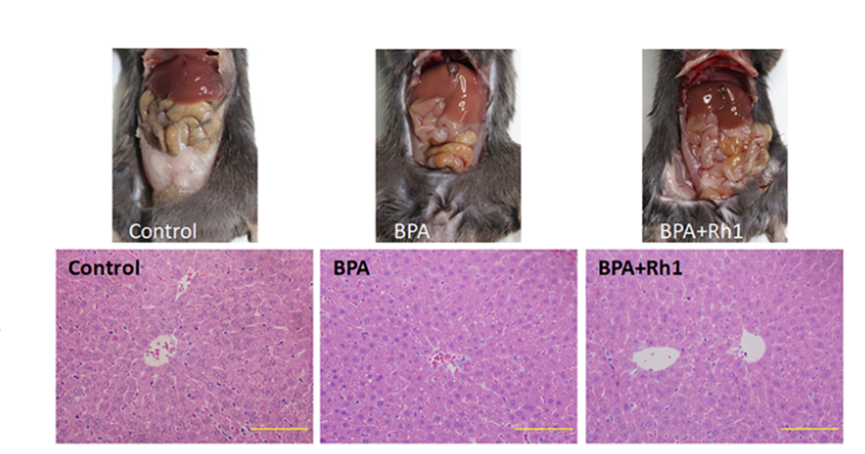
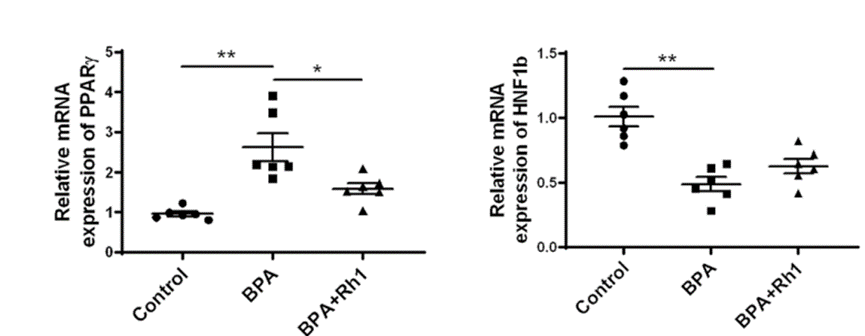
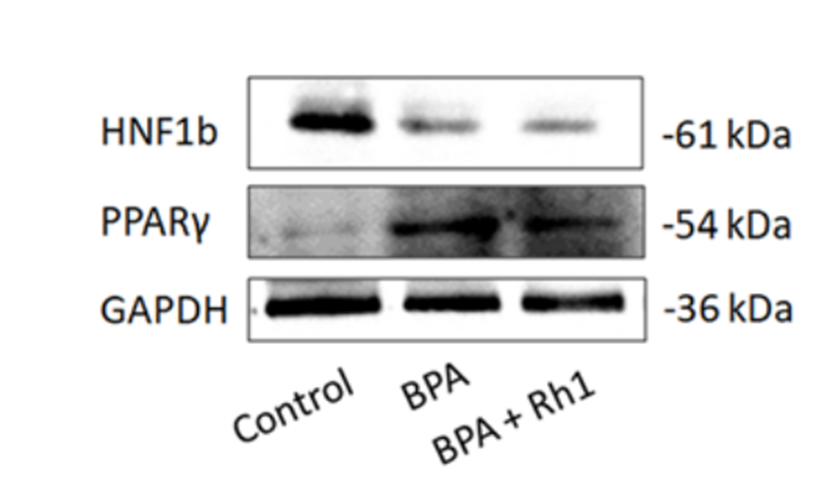
Gestational bisphenol A exposure induces fatty liver development in male offspring mice through the inhibition of HNF1b and upregulation of PPARγ. [Abstract]2021 Feb;37(1):65-84. PMID: 32623698
Ginsenoside Rh1 purchased from MedChemExpress. Usage Cited in: Cell Biol Toxicol. 2021 Feb;37(1):65-84. [Abstract]
H&E staining of liver tissues showed there was a significant reduction of hepatic lipid droplets and lipid accumulation was improved in Ginsenoside Rh1 (20 mg/kg, p.o.)-treated mice.
Ginsenoside Rh1 purchased from MedChemExpress. Usage Cited in: Cell Biol Toxicol. 2021 Feb;37(1):65-84. [Abstract]
mRNA expression levels of PPARγ and HNF1b in Ginsenoside Rh1 (20 mg/kg, p.o.)-treated mice was determined in the liver tissues of male and female mice using qRT-PCR
Ginsenoside Rh1 purchased from MedChemExpress. Usage Cited in: Cell Biol Toxicol. 2021 Feb;37(1):65-84. [Abstract]
Protein expression levels of PPARγ and HNF1b in Ginsenoside Rh1 (20 mg/kg, p.o.)-treated mice was determined in the liver tissues of male and female mice using immunoblotting.
-
Microorganisms
Ginsenoside Rh1 Suppresses Vesicular Stomatitis Virus Replication by Inhibiting Autophagy to Promote Immune Responses. [Abstract]2026 Mar 27;14(4):757. PMID: 42075153 -
Food Sci Biotechnol
Fermented red ginseng extract improves sarcopenia-related muscle atrophy in old mice through regulation of muscle protein metabolism. [Abstract]2024 Sep 23;34(3):793-802. PMID: 39958181 -
Food Sci Biotechnol
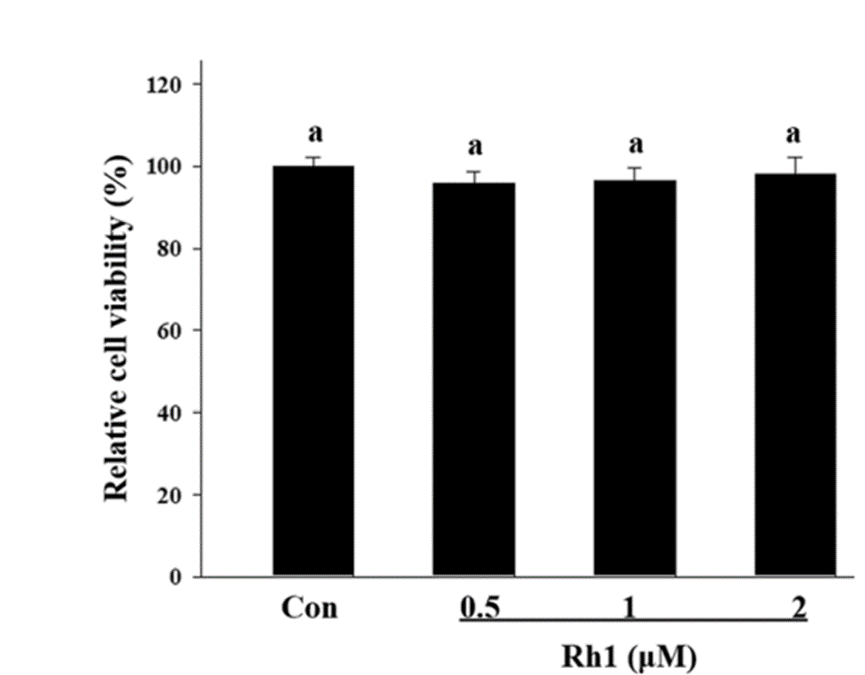
Ginsenosides Rh1, Rg2, and Rg3 ameliorate dexamethasone-induced muscle atrophy in C2C12 myotubes. [Abstract]2023 Aug 18;33(5):1233-1243. PMID: 38440685
Ginsenoside Rh1 purchased from MedChemExpress. Usage Cited in: Food Sci Biotechnol. 2023 Aug 18;33(5):1233-1243. [Abstract]
The cell viability of C2C12 myotubes was assessed in the presence of Ginsenoside Rh1 (0.5, 1, 2 μM).
-
J Med Food
Ameliorative Effects of Fermented Red Ginseng Extract on Muscle Atrophy in Dexamethasone-Induced C2C12 Cell And Hind Limb-Immobilized C57BL/6J Mice. [Abstract]2024 Oct;27(10):951-960. PMID: 39167545


Solvent & Solubility
In Vitro:
DMSO : 100 mg/mL (156.53 mM; Need ultrasonic; Hygroscopic DMSO has a significant impact on the solubility of product, please use newly opened DMSO)
Please refer to the solubility information to select the appropriate solvent. Once prepared, please aliquot and store the solution to prevent product inactivation from repeated freeze-thaw cycles.
Storage method and period of stock solution: -80°C, 2 years; -20°C, 1 year. When stored at -80°C, please use it within 2 years. When stored at -20°C, please use it within 1 year.
Please refer to the solubility information to select the appropriate solvent. Once prepared, please aliquot and store the solution to prevent product inactivation from repeated freeze-thaw cycles.
Storage method and period of stock solution: -80°C, 2 years; -20°C, 1 year. When stored at -80°C, please use it within 2 years. When stored at -20°C, please use it within 1 year.
Concentration (start) × Volume (start) = Concentration (final) × Volume (final)
In Vivo:
Select the appropriate dissolution method based on your experimental animal and administration route.
- For the following dissolution methods, please ensure to first prepare a clear stock solution using an In Vitro approach and then sequentially add co-solvents:
- To ensure reliable experimental results, the clarified stock solution can be appropriately stored based on storage conditions. As for the working solution for In Vivo experiments, it is recommended to prepare freshly and use it on the same day.
- The percentages shown for the solvents indicate their volumetric ratio in the final prepared solution. If precipitation or phase separation occurs during preparation, heat and/or sonication can be used to aid dissolution.
Add each solvent one by one: 10% DMSO 40% PEG300 5% Tween-80 45% Saline
Solubility: ≥ 2.5 mg/mL (3.91 mM); Clear solution
This protocol yields a clear solution of ≥ 2.5 mg/mL (saturation unknown).
Taking 1 mL working solution as an example, add 100 μL DMSO stock solution (25.0 mg/mL) to 400 μL PEG300, and mix evenly; then add 50 μL Tween-80 and mix evenly; then add 450 μL Saline to adjust the volume to 1 mL.
Preparation of Saline: Dissolve 0.9 g sodium chloride in ddH₂O and dilute to 100 mL to obtain a clear Saline solution.
Add each solvent one by one: 10% DMSO 90% (20% SBE-β-CD in Saline)
Solubility: ≥ 2.5 mg/mL (3.91 mM); Clear solution
This protocol yields a clear solution of ≥ 2.5 mg/mL (saturation unknown).
Taking 1 mL working solution as an example, add 100 μL DMSO stock solution (25.0 mg/mL) to 900 μL 20% SBE-β-CD in Saline, and mix evenly.
Preparation of 20% SBE-β-CD in Saline (4°C, storage for one week): 2 g SBE-β-CD powder is dissolved in 10 mL Saline, completely dissolve until clear.
In Vivo Dissolution Calculator
Please enter the basic information of animal experiments:
-
-
-
-
Recommended: Prepare an additional quantity of animals to account for potential losses during experiments.
Please enter your animal formula composition:
-
%DMSO +
Recommended: Keep the proportion of DMSO in working solution below 2% if your animal is weak.
-
%+
-
+%Tween-80 + +
-
%Saline +
The co-solvents required include: DMSO, . All of co-solvents are available by MedChemExpress (MCE). , Tween 80. All of co-solvents are available by MedChemExpress (MCE).
Working solution concentration: 0.22 mg/mL
Method for preparing stock solution: mg drug dissolved in μL DMSO. Stock solution concentration: mg/mL.
1. Take μL DMSO stock solution;
2. Add μL .
μL , mix evenly;
3. Then add μL Tween 80, mix evenly;
4. Then add μL
Please ensure that the stock solution in the first step is dissolved to a clear state, and add co-solvents in sequence. You can use ultrasonic heating (ultrasonic cleaner, recommended frequency 20-40 kHz), vortexing, etc. to assist dissolution.

Protocols
-
RNA extraction experimental
By lysing cells, releasing RNA, and removing impurities such as proteins and DNA, high-purity RNA products are finally obtained. The commonly used traditional method is the guanidine isothiocyanate/phenol/chloroform method (Trizol), which is suitable for a variety of animal materials including animal tissues, microorganisms, cultured cells, etc., and most plant materials.
-
Pyroptosis Solutions
Pyroptosis is a lytic inflammatory cell-death pathway executed by gasdermin pores, most classically through inflammasome-mediated activation of caspase-1, cleavage of gasdermin D, membrane pore formation, LDH release, and secretion of IL-1β and IL-18. The canonical pathway is commonly modeled by priming cells with an inflammatory signal such as LPS to induce pro-IL-1β and inflammasome components, followed by an activation signal such as ATP or nigericin to activate NLRP3, ASC speck formation, caspase-1 cleavage, GSDMD cleavage, cytokine release, and pyroptotic membrane rupture. The non-canonical pathway is triggered when cytosolic LPS activates mouse caspase-11 or human caspase-4/5, leading to GSDMD cleavage and pyroptosis, and this can secondarily activate NLRP3-dependent IL-1β release. Pyroptosis is linked to inflammatory injury, infection, cancer, liver disease, ocular disease, placental inflammation, and other disease phenotypes, but unresolved questions include which gasdermin fam


Purity & Documentation
-
Data Sheet (285 KB)
-
SDS (393 KB)
- English - EN (393 KB)
- Français - FR (393 KB)
- Deutsch - DE (393 KB)
- Norwegian - NO (393 KB)
- Español - ES (393 KB)
- Swedish - SV (393 KB)
- Italian - IT (393 KB)
- Korean - KR (393 KB)
- Portuguese - PT (393 KB)
-
Handling Instructions (2659 KB)
References


Complete Stock Solution Preparation Table
Please refer to the solubility information to select the appropriate solvent. Once prepared, please aliquot and store the solution to prevent product inactivation from repeated freeze-thaw cycles.
Storage method and period of stock solution: -80°C, 2 years; -20°C, 1 year. When stored at -80°C, please use it within 2 years. When stored at -20°C, please use it within 1 year.
| Optional Solvent | Concentration Solvent Mass | 1 mg | 5 mg | 10 mg | 25 mg |
|---|---|---|---|---|---|
| DMSO | 1 mM | 1.5653 mL | 7.8263 mL | 15.6526 mL | 39.1316 mL |
| 5 mM | 0.3131 mL | 1.5653 mL | 3.1305 mL | 7.8263 mL | |
| 10 mM | 0.1565 mL | 0.7826 mL | 1.5653 mL | 3.9132 mL | |
| 15 mM | 0.1044 mL | 0.5218 mL | 1.0435 mL | 2.6088 mL | |
| 20 mM | 0.0783 mL | 0.3913 mL | 0.7826 mL | 1.9566 mL | |
| 25 mM | 0.0626 mL | 0.3131 mL | 0.6261 mL | 1.5653 mL | |
| 30 mM | 0.0522 mL | 0.2609 mL | 0.5218 mL | 1.3044 mL | |
| 40 mM | 0.0391 mL | 0.1957 mL | 0.3913 mL | 0.9783 mL | |
| 50 mM | 0.0313 mL | 0.1565 mL | 0.3131 mL | 0.7826 mL | |
| 60 mM | 0.0261 mL | 0.1304 mL | 0.2609 mL | 0.6522 mL | |
| 80 mM | 0.0196 mL | 0.0978 mL | 0.1957 mL | 0.4891 mL | |
| 100 mM | 0.0157 mL | 0.0783 mL | 0.1565 mL | 0.3913 mL |


Ginsenoside Rh1 Related Classifications
HY-N0604 Related Classifications
 Powered by Bioz
Keywords
- Ginsenoside Rh1
- 63223-86-9
- Prosapogenin A2
- Sanchinoside B2
- Sanchinoside Rh1
- Ginsenoside Rh 1
- Ginsenoside Rh-1
- Prosapogenin A 2
- Prosapogenin A-2
- Sanchinoside B2
- Sanchinoside B 2
- Sanchinoside B-2
- Sanchinoside Rh1
- Sanchinoside Rh 1
- Sanchinoside Rh-1
- PPAR
- TNF Receptor
- Interleukin Related
- Endogenous Metabolite
- Inhibitor
- inhibitor
- inhibit