



Macranthoidin B

Based on 1 Customer Validation
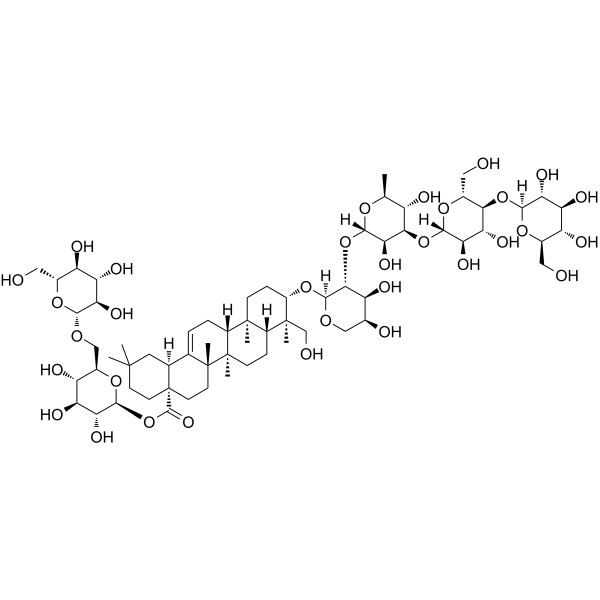
Macranthoidin B (Macranthoiside I) is an orally active triterpene saponin. Macranthoidin B inhibits epithelial-mesenchymal transition in endometriosis via the COX‑2/PGE2 pathway, and also induces tumor cell apoptosis and inhibits their proliferation by regulating metabolism and increasing ROS levels. Macranthoidin B can be used in studies related to endometriosis, colorectal cancer and hepatocellular carcinoma.
Nos produits utilisent uniquement pour la recherche. Nous ne vendons pas aux patients.
- Pureté : 98.35%
- CAS No.: 136849-88-2
- Formule: C65H106O32
- Masse moléculaire:1399.52
-
Stockage:
4°C, protect from light
* In solvent : -80°C, 6 months; -20°C, 1 month (protect from light)

To place orders, for customer services and technical support, please contact: MedChemExpress USA
Tel: 609-228-6898 E-mail: [email protected] [email protected]


-
 Activité biologique
-
Chemical Information
-
Solvant et solubilité
- Protocole
- Pureté et documentation
- Références
-
 Help & FAQs


-
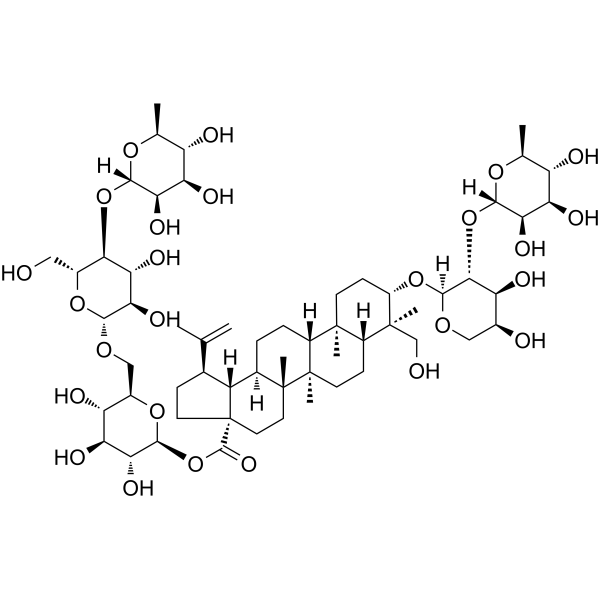
HY-N0205
Pulchinenoside CAnti-cancer Agent -
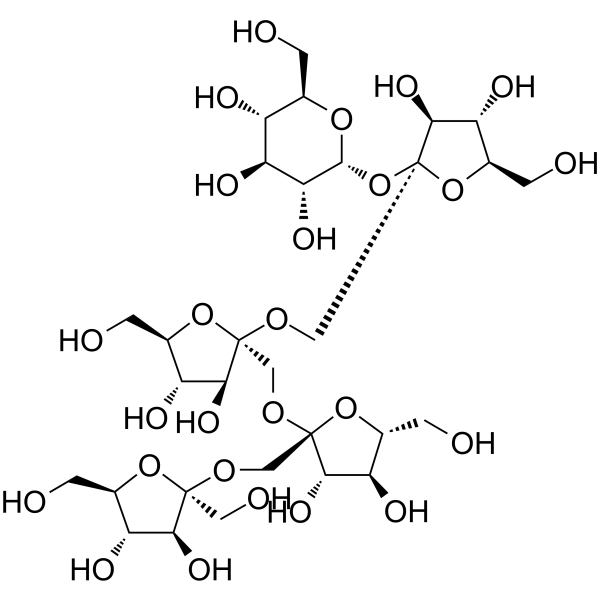
HY-N2577
1F-FructofuranosylnystoseFructo-oligose -
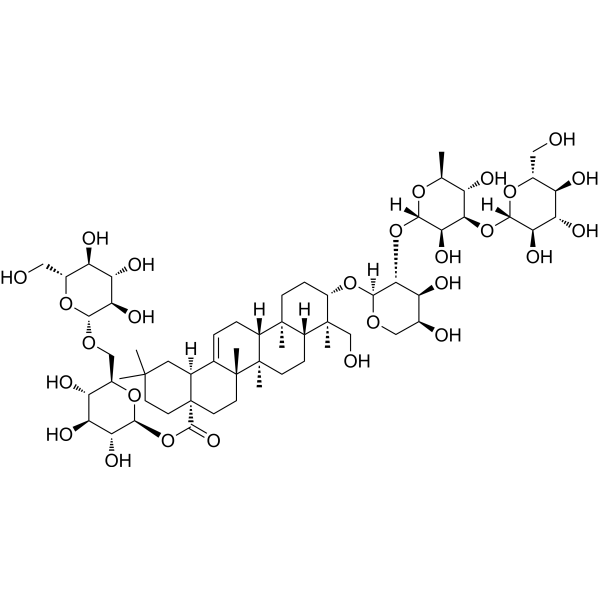
HY-N2109
Macranthoidin ASaponin -

HY-N0864R
Macranthoidin B (Standard)Standard -
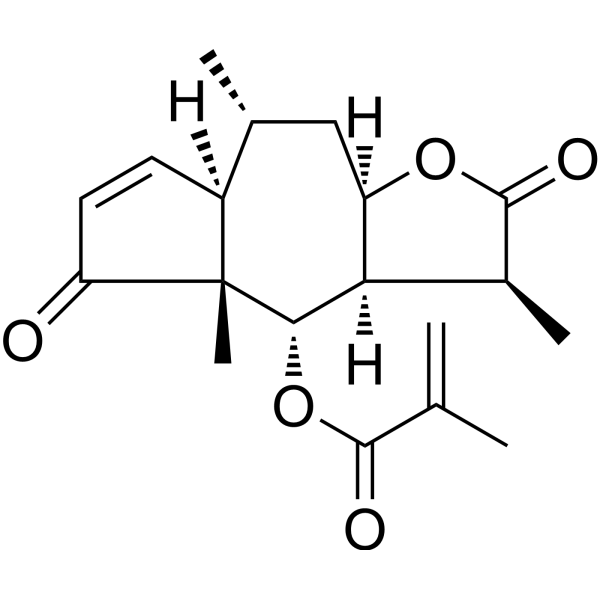
HY-N6843
Arnicolide DAntitumor Agent -
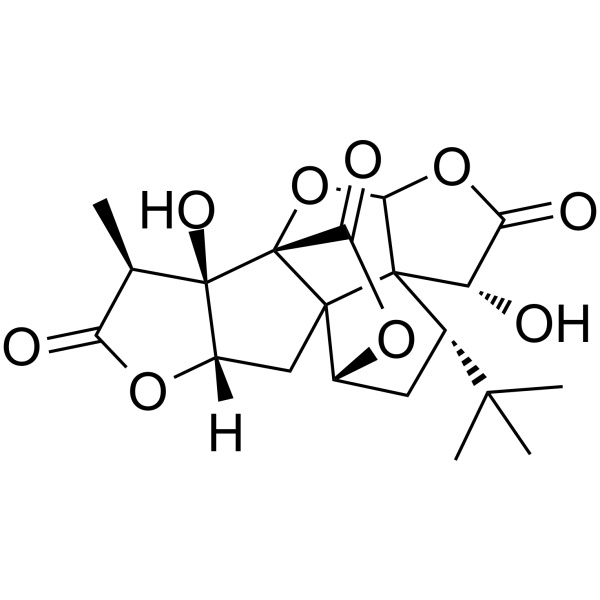
HY-B0355
Ginkgolide AGABA Antagonist -
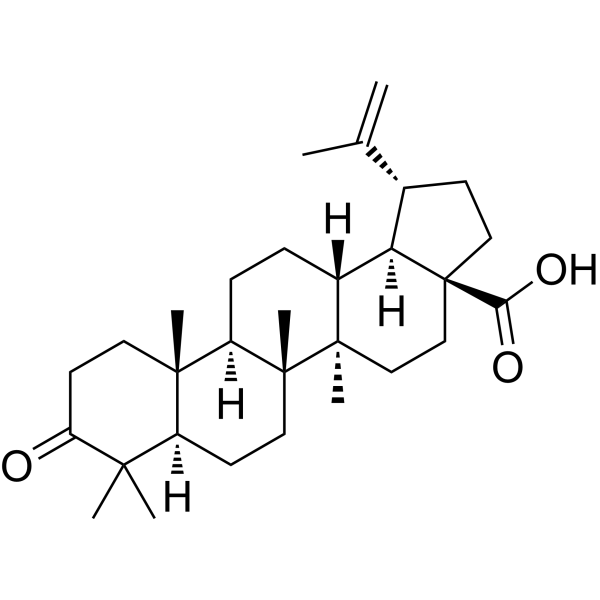
HY-N1451
Betulonic acidParasite Inhibitor -
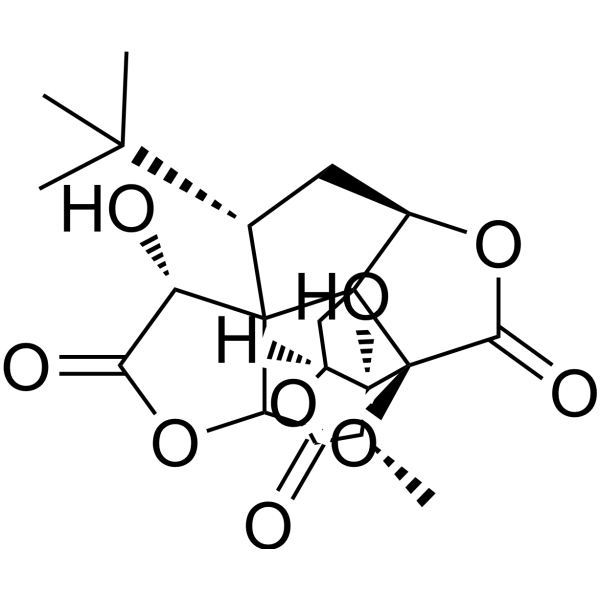
HY-B0355R
Ginkgolide A (Standard) -

HY-N1451R
Betulonic acid (Standard)Parasite Inhibitor
Voir tous les produits spécifiques à Isoform Caspase
More

Activité biologique
Description
In Vitro
Macranthoidin B (0-500 μM; 24 h) inhibits migration and invasion of primary endometriotic stromal cells and HEC1-B endometrial cancer cells, and suppresses epithelial-mesenchymal transition and the COX-2/PGE2 pathway[1].
Macranthoidin B (20-400 μM; 24-48 h) reduces the viability of HCT-116 colorectal cancer cells in a dose-dependent manner, induces cell apoptosis, and promotes ROS generation[2].
Macranthoidin B (20-400 μM; 48 h) dose-dependently promotes ROS production in HCT-116 colorectal cancer cells[2].
Macranthoidin B (20-400 μM; 48 h) dose-dependently downregulates the mRNA expression of antioxidant enzymes MnSOD and GSH-Px in HCT-116 colorectal cancer cells[2].
Macranthoidin B (100-400 μM; 24 h) inhibits the proliferation of Hepa1-6 cells in a dose-dependent manner and increases intracellular ROS levels[3].
Macranthoidin B (100-400 μM; 24 h) dose-dependently induces oxidative stress in Hepa1-6 cells, which is characterized by a significant increase in MDA levels and significant decreases in GSH levels, SOD activity and GSH-Px activity at all tested concentrations[3].
MedChemExpress (MCE) has not independently confirmed the accuracy of these methods. They are for reference only. Further protocols information, click here.
-
Cell Line:HCT-116 colorectal cancer cells
-
Concentration:20, 50, 100, 200, 400 μM
-
Incubation Time:48 h
-
Result:Caused a dose-dependent decrease in cell viability, with significant reductions observed at all tested concentrations relative to control.
-
Cell Line:HCT-116 colorectal cancer cells
-
Concentration:20, 50, 100, 200, 400 μM
-
Incubation Time:72 h
-
Result:Altered caspase-3 expression, increasing levels of cleaved caspase-3 in a dose-dependent manner.
In Vivo
Macranthoidin B (16 mg/kg; i.p.; once daily; for 3 consecutive weeks) significantly inhibits the growth of colorectal cancer xenografts in nude mice by inducing tumor cell apoptosis[2].
MedChemExpress (MCE) has not independently confirmed the accuracy of these methods. They are for reference only.
-
Animal Model:Sprague-Dawley (SD) (female, 6-7 weeks old, 180-220 g, autograft implantation of endometrial segments endometriosis model)[1]
-
Dosage:3 mg/kg; 9 mg/kg; 27 mg/kg
-
Administration:p.o.; daily; 28 days
-
Result:Reduced post-treatment ectopic endometrial volume compared to pretreatment.
Resulted in transplants with less adhesion and fewer surface blood vessels (9 and 27 mg/kg doses).
Improved pathological morphology of ectopic tissues, with fewer and smaller pseudo glands, reduced microvascularity, and decreased inflammatory cell infiltrations.
Decreased serum estradiol (E2) levels and increased serum progesterone (PROG) levels compared to the untreated endometriosis group.
Increased mRNA and protein expression of epithelial marker Cdh1/E-cadherin in ectopic tissues.
Decreased mRNA expression of mesenchymal markers Cdh2, Vim, Twist, Slug, Snail, Zeb1, and Zeb2, as well as protein expression of mesenchymal markers N-cadherin and Vimentin in ectopic tissues.
Reduced mRNA expression of Ptgs2 and Ptges, and decreased protein levels of COX-2 and PGE2 in ectopic tissues.
-
Animal Model:Nude mice (4 weeks old; half male, half female; engrafted with human HCT-116 colorectal cancer cells)[2]
-
Dosage:16 mg/kg
-
Administration:i.p.; once daily; 3 weeks
-
Result:Reduced tumor volume significantly compared to vehicle control.
Reduced tumor weight significantly compared to vehicle control.
Increased TUNEL-positive cells per field significantly compared to vehicle control.
Elevated levels of cleaved caspase-3 compared to vehicle control.


Chemical Information
-
CAS No. 136849-88-2
-
Appearance Solid
-
Masse moléculaire 1399.52
-
Formule C65H106O32
-
Color White to light brown
-
SMILES
O=C([C@]1(CCC(C)(C)C2)[C@]2([H])C3=CC[C@@]4([H])[C@@](C)(CC[C@]5([H])[C@@]4(CC[C@H](O[C@@](OC[C@H](O)[C@@H]6O)([H])[C@@H]6O[C@@](O[C@@H](C)[C@H](O)[C@H]7O[C@]([C@@H]([C@@H](O)[C@@H]8O[C@]([C@@H]([C@@H](O)[C@@H]9O)O)([H])O[C@@H]9CO)O)([H])O[C@@H]8CO)([H])[C@@H]7O)[C@@]5(C)CO)C)[C@]3(C)CC1)O[C@@H]([C@@H]([C@@H](O)[C@@H]%10O)O)O[C@@H]%10CO[C@@H]([C@@H]([C@@H](O)[C@@H]%11O)O)O[C@@H]%11CO
-
Synonyms
Macranthoiside I
-
Structure Classification
-
Initial Source
-
Livraison
Room temperature in continental US; may vary elsewhere.
-
Stockage
4°C, protect from light
* In solvent : -80°C, 6 months; -20°C, 1 month (protect from light)


Solvant et solubilité
In Vitro:
H2O : 100 mg/mL (71.45 mM; Need ultrasonic)
DMSO : 100 mg/mL (71.45 mM; Need ultrasonic; Hygroscopic DMSO has a significant impact on the solubility of product, please use newly opened DMSO)
Please refer to the solubility information to select the appropriate solvent. Once prepared, please aliquot and store the solution to prevent product inactivation from repeated freeze-thaw cycles.
Storage method and period of stock solution: -80°C, 6 months; -20°C, 1 month (protect from light). When stored at -80°C, please use it within 6 months. When stored at -20°C, please use it within 1 month.
* Note: If you choose water as the stock solution, please dilute it to the working solution, then filter and sterilize it with a 0.22 μm filter before use.
Please refer to the solubility information to select the appropriate solvent. Once prepared, please aliquot and store the solution to prevent product inactivation from repeated freeze-thaw cycles.
Storage method and period of stock solution: -80°C, 6 months; -20°C, 1 month (protect from light). When stored at -80°C, please use it within 6 months. When stored at -20°C, please use it within 1 month.
* Note: If you choose water as the stock solution, please dilute it to the working solution, then filter and sterilize it with a 0.22 μm filter before use.
Concentration (start) × Volume (start) = Concentration (final) × Volume (final)
In Vivo:
Select the appropriate dissolution method based on your experimental animal and administration route.
- For the following dissolution methods, please ensure to first prepare a clear stock solution using an In Vitro approach and then sequentially add co-solvents:
- To ensure reliable experimental results, the clarified stock solution can be appropriately stored based on storage conditions. As for the working solution for In Vivo experiments, it is recommended to prepare freshly and use it on the same day.
- The percentages shown for the solvents indicate their volumetric ratio in the final prepared solution. If precipitation or phase separation occurs during preparation, heat and/or sonication can be used to aid dissolution.
Add each solvent one by one: 10% DMSO 40% PEG300 5% Tween-80 45% Saline
Solubility: ≥ 2.5 mg/mL (1.79 mM); Clear solution
This protocol yields a clear solution of ≥ 2.5 mg/mL (saturation unknown).
Taking 1 mL working solution as an example, add 100 μL DMSO stock solution (25.0 mg/mL) to 400 μL PEG300, and mix evenly; then add 50 μL Tween-80 and mix evenly; then add 450 μL Saline to adjust the volume to 1 mL.
Preparation of Saline: Dissolve 0.9 g sodium chloride in ddH₂O and dilute to 100 mL to obtain a clear Saline solution.
Add each solvent one by one: 10% DMSO 90% (20% SBE-β-CD in Saline)
Solubility: ≥ 2.5 mg/mL (1.79 mM); Clear solution
This protocol yields a clear solution of ≥ 2.5 mg/mL (saturation unknown).
Taking 1 mL working solution as an example, add 100 μL DMSO stock solution (25.0 mg/mL) to 900 μL 20% SBE-β-CD in Saline, and mix evenly.
Preparation of 20% SBE-β-CD in Saline (4°C, storage for one week): 2 g SBE-β-CD powder is dissolved in 10 mL Saline, completely dissolve until clear.
For the following dissolution methods, please prepare the working solution directly:
It is recommended to prepare fresh solutions and use them promptly within a short period of time.
The percentages shown for the solvents indicate their volumetric ratio in the final prepared solution. If precipitation or phase separation occurs during preparation, heat and/or sonication can be used to aid dissolution.
Add each solvent one by one: PBS
Solubility: 100 mg/mL (71.45 mM); Clear solution; Need ultrasonic
In Vivo Dissolution Calculator
Please enter the basic information of animal experiments:
-
-
-
-
Recommended: Prepare an additional quantity of animals to account for potential losses during experiments.
Working solution concentration: 0.22 mg/mL
This product has good water solubility, please refer to the measured solubility data in water/PBS/Saline for details.

Protocole
-
Detection of Apoptosis
Apoptosis, also called programmed cell death, is generally characterized by distinct morphological characteristics.
-
TUNEL staining for apoptotic DNA fragmentation
TUNEL staining detects DNA strand breaks by using terminal deoxynucleotidyl transferase to add labeled nucleotides to exposed 3′-OH DNA termini, generating either microscopic staining in fixed cells or tissue sections, or fluorescence/cytometric signal in cell suspensions. TUNEL positivity reflects DNA fragmentation but should not be interpreted alone as definitive apoptosis, because TUNEL can also label necrotic, autolytic, mechanically damaged, or DNA-repair-associated DNA breaks.
-
Annexin V plus membrane-impermeant dye apoptosis staining
Annexin V-based apoptosis assays rely on the detection of phosphatidylserine (PS) externalization from the inner leaflet of the plasma membrane to the outer leaflet, an early biochemical hallmark of apoptosis. Fluorescently labeled Annexin V binds PS in a calcium-dependent manner, enabling identification of early apoptotic cells by flow cytometry or fluorescence microscopy. When combined with a membrane-impermeant DNA-binding dye (e. g. , propidium iodide), this approach allows discrimination between viable (Annexin V−/dye−), early apoptotic (Annexin V+/dye−), and late apoptotic or necrotic (Annexin V+/dye+) cell populations by assessing membrane integrity and PS exposure.
-
ROS/oxidative-stress fluorescent staining
ROS/oxidative-stress fluorescent staining uses cell-permeant fluorogenic probes that become fluorescent after oxidation inside cells or tissues; commonly used examples include DCFH-DA/DCFDA for broad cellular oxidant detection, DHE for superoxide-related signal detection, MitoSOX for mitochondrial superoxide-related signal detection, and CellROX probes for oxidative-stress-associated fluorescence readouts. The assay detects probe oxidation rather than a single ROS species unless the probe and analysis method have been chemically validated for that species. DCFH-DA enters cells, is deacetylated by intracellular esterases to DCFH, and produces fluorescent DCF after oxidation, so the readout is used as an operational measure of total cellular oxidative stress rather than a species-specific ROS measurement. DHE and MitoSOX can report superoxide-related oxidation, but red fluorescence alone can include non-specific ethidium-like oxidation products; HPLC or optimized spectral approaches are
-
Apoptosis Solutions
Apoptosis is a regulated, generally non-lytic cell-death pathway that removes unwanted, damaged, infected, or abnormal cells through coordinated morphological changes, caspase activation, DNA fragmentation, and membrane remodeling. The intrinsic apoptosis pathway is controlled mainly by mitochondrial outer membrane permeabilization, BCL-2 family proteins, cytochrome c release, apoptosome formation, caspase-9 activation, and downstream executioner caspase-3/7 activation. The extrinsic apoptosis pathway is initiated by death receptors such as Fas, TNFR, and TRAIL receptors, which recruit adaptor proteins and activate caspase-8 before engaging executioner caspases or mitochondrial amplification through BID cleavage. Apoptosis is linked to many phenotypes, including cancer cell killing, tissue homeostasis, immune regulation, neurodegeneration, infection response, and treatment-induced cytotoxicity; unresolved questions include how apoptosis interacts with necroptosis, pyroptosis, ferroptos
-
Liver Cancer Modeling
Liver cancer can be classified into primary liver cancer and secondary liver cancer. Secondary liver cancer is the metastatic liver cancer. Primary liver cancer includes hepatocellular carcinoma (HCC), intrahepatic cholangiocarcinoma (ICC) and fibrolamellar HCC, of which HCC is the most common form, accounting for approximately 90% of primary liver cancers[1]. HCC mouse models include chemical agent-induced models, transplanted tumor models, and genetic engineered models.
-
Cell Viability Determination by MTT Colorimetric Assay
The following protocol uses the MTT colorimetric assay as a classic literature-established method for assessing cell viability/metabolic activity in cultured mammalian cells. MTT[3-(4,5-dimethylthiazol-2-yl)-2,5-diphenyltetrazolium bromide] is reduced by metabolically active cells to a colored formazan product; the amount of formazan is quantified spectrophotometrically and provides an indirect measure of metabolically active viable cells. Importantly, MTT reduction reflects cellular oxidoreductase/metabolic activity rather than an absolute direct count of living cells, so changes in cellular metabolism can alter the signal independently of cell number.


Pureté et documentation
-
Fiche technique (286 KB)
-
SDS (252 KB)
- English - EN (252 KB)
- Français - FR (252 KB)
- Deutsch - DE (252 KB)
- Norwegian - NO (252 KB)
- Español - ES (252 KB)
- Swedish - SV (252 KB)
- Italian - IT (252 KB)
- Korean - KR (252 KB)
- Portuguese - PT (252 KB)
-
Instruction de manipulation (2659 KB)
Références
[1]. Ding Y, et al. Macranthoidin B restrains the epithelial-mesenchymal transition through COX-2/PGE2 pathway in endometriosis. Front Pharmacol. 2024;15:1492098. Published 2024 Dec 12. [Content Brief]
[2]. Fan X, et al. Macranthoidin B Modulates Key Metabolic Pathways to Enhance ROS Generation and Induce Cytotoxicity and Apoptosis in Colorectal Cancer. Cell Physiol Biochem. 2018;46(4):1317-1330. [Content Brief]
[3]. Tan S, et al. Macranthoidin B (MB) Promotes Oxidative Stress-Induced Inhibiting of Hepa1-6 Cell Proliferation via Selenoprotein. Biol Trace Elem Res. 2023;201(1):368-376. [Content Brief]


Complete Stock Solution Preparation Table
Please refer to the solubility information to select the appropriate solvent. Once prepared, please aliquot and store the solution to prevent product inactivation from repeated freeze-thaw cycles.
Storage method and period of stock solution: -80°C, 6 months; -20°C, 1 month (protect from light). When stored at -80°C, please use it within 6 months. When stored at -20°C, please use it within 1 month.
| Optional Solvent | Concentration Solvent Mass | 1 mg | 5 mg | 10 mg | 25 mg |
|---|---|---|---|---|---|
| H2O / DMSO | 1 mM | 0.7145 mL | 3.5727 mL | 7.1453 mL | 17.8633 mL |
| 5 mM | 0.1429 mL | 0.7145 mL | 1.4291 mL | 3.5727 mL | |
| 10 mM | 0.0715 mL | 0.3573 mL | 0.7145 mL | 1.7863 mL | |
| 15 mM | 0.0476 mL | 0.2382 mL | 0.4764 mL | 1.1909 mL | |
| 20 mM | 0.0357 mL | 0.1786 mL | 0.3573 mL | 0.8932 mL | |
| 25 mM | 0.0286 mL | 0.1429 mL | 0.2858 mL | 0.7145 mL | |
| 30 mM | 0.0238 mL | 0.1191 mL | 0.2382 mL | 0.5954 mL | |
| 40 mM | 0.0179 mL | 0.0893 mL | 0.1786 mL | 0.4466 mL | |
| 50 mM | 0.0143 mL | 0.0715 mL | 0.1429 mL | 0.3573 mL | |
| 60 mM | 0.0119 mL | 0.0595 mL | 0.1191 mL | 0.2977 mL |
* Note: If you choose water as the stock solution, please dilute it to the working solution, then filter and sterilize it with a 0.22 μm filter before use.


Macranthoidin B Related Classifications
HY-N0864 Related Classifications
 Powered by Bioz
Keywords
- Macranthoidin B
- 136849-88-2
- Macranthoiside I
- Apoptosis
- COX
- Reactive Oxygen Species (ROS)
- Caspase
- SOD
- COX-2/PGE2 pathway
- thioredoxin reductases
- endometriosis
- glutathione peroxidases
- selenoproteins
- colorectal cancer
- hepatocellular carcinoma
- primary endometriotic stromal cells
- deiodinases
- HEC1-B endometrial cancer cells
- Inhibitor
- inhibitor
- inhibit