



Cancer Targeted Therapy
Cancer targeted therapy is the foundation of precision medicine; it uses drugs or other substances to target specific genes and proteins that control cancer cells’ growth, division and spreading. Compared to traditional chemotherapy drugs, targeted-drugs can specifically act on cancer cells with high efficacy without damaging normal cells. Drugs used in cancer targeted therapy mainly includes small molecules and macromolecules (e.g., monoclonal antibodies), which can target cancer cells and constituents in the tumor microenvironment to activate the immune system. Anti-angiogenesis drugs, such as those targeting vascular endothelial growth factor (VEGF), epidermal growth factor receptor (EGFR), transforming growth factor (TGF)-α, TGF-β, Tumor necrosis factor (TNF)-α, and platelet-derived endothelial growth factor (PDGFR) inhibit the proliferation and metastasis of cancer cells. In recent years, the proportion of antibody drugs in cancer treatment has gradually become prominent. Antibody-drug conjugates (ADCs) are a new type of targeted drugs that are composed of monoclonal antibody, cytotoxic drug and linker. ADCs can deliver drugs to tumor cells and minimize the toxicity to normal tissues. Proteolysis-targeting chimera (PROTAC) is a useful technology for targeted protein degradation. PROTAC exploits the ubiquitin-proteasome system and forms a ternary complex with a hijacked E3 ubiquitin ligase and target protein, leading to polyubiquitination and degradation of the target protein.
Targeted therapy is a useful strategy in treatment of cancer either alone or in combination with standard chemotherapy. At present, targeted therapy has proved significant clinical success in the treatment of many types of cancer, including breast cancer, colorectal cancer, leukemia, ovarian cancer and lung cancer.
-
GT103
 0 ImagesCat. No.: HY-P991954
GT103 is a human-derived monoclonal antibody targeting complement factor H (CFH). GT103 binds to a conformationally distinct epitope of CFH on tumor cells. GT103 activates the classical complement pathway, induces complement-dependent cytotoxicity, and triggers antibody-dependent cellular phagocytosis (ADCP) of tumor cells. GT103 increases calreticulin translocation to tumor cell plasma membranes. GT103 mediates B-cell activation via Syk kinase phosphorylation. GT103 inhibits tumor growth and metastasis in animal models. GT103 can be used for the research of non-small cell lung cancer.
-
hsa-miR-3972 inhibitor
 0 ImagesCat. No.: HY-RI00910
hsa-miR-3972 inhibitors are chemically-modified oligonucleotides that hybridize with mature miRNAs. The miRNA inhibitors have full-length nucleotide 2'-methoxy modification. The miRNA inhibitors strongly compete with mature miRNAs to prevent the complementary pairing of miRNAs and their target genes, thereby inhibiting miRNAs from functioning.
-
hsa-miR-5093 antagomir
 0 ImagesCat. No.: HY-RI01530A
hsa-miR-5093 antagomirs are chemically-modified oligonucleotides that hybridize with mature miRNAs. The miRNA antagomirs have 2 phosphorothioates at the 5' end, 4 phosphorothioates at the 3' end, 1 cholesterol group at the 3' end, and full-length nucleotide 2'-methoxy modification. The miRNA antagomirs strongly compete with mature miRNAs to prevent the complementary pairing of miRNAs and their target genes, thereby inhibiting miRNAs from functioning. Stability of miRNA antagomirs appears to be significantly higher than miRNA inhibitors, they exhibits enhanced cellular uptake, stability and regulatory activity in vivo.
-
hsa-miR-6793-5p inhibitor
 0 ImagesCat. No.: HY-RI02151
hsa-miR-6793-5p inhibitors are chemically-modified oligonucleotides that hybridize with mature miRNAs. The miRNA inhibitors have full-length nucleotide 2'-methoxy modification. The miRNA inhibitors strongly compete with mature miRNAs to prevent the complementary pairing of miRNAs and their target genes, thereby inhibiting miRNAs from functioning.
-
mmu-miR-453 inhibitor
 0 ImagesCat. No.: HY-RI03157
mmu-miR-453 inhibitors are chemically-modified oligonucleotides that hybridize with mature miRNAs. The miRNA inhibitors have full-length nucleotide 2'-methoxy modification. The miRNA inhibitors strongly compete with mature miRNAs to prevent the complementary pairing of miRNAs and their target genes, thereby inhibiting miRNAs from functioning.
-
mmu-miR-7023-3p inhibitor
 0 ImagesCat. No.: HY-RI03782
mmu-miR-7023-3p inhibitors are chemically-modified oligonucleotides that hybridize with mature miRNAs. The miRNA inhibitors have full-length nucleotide 2'-methoxy modification. The miRNA inhibitors strongly compete with mature miRNAs to prevent the complementary pairing of miRNAs and their target genes, thereby inhibiting miRNAs from functioning.
-
rno-miR-3566 inhibitor
 0 ImagesCat. No.: HY-RI04403
rno-miR-3566 inhibitors are chemically-modified oligonucleotides that hybridize with mature miRNAs. The miRNA inhibitors have full-length nucleotide 2'-methoxy modification. The miRNA inhibitors strongly compete with mature miRNAs to prevent the complementary pairing of miRNAs and their target genes, thereby inhibiting miRNAs from functioning.
-
Thalidomide-4-NH-PEG1-NH-Boc
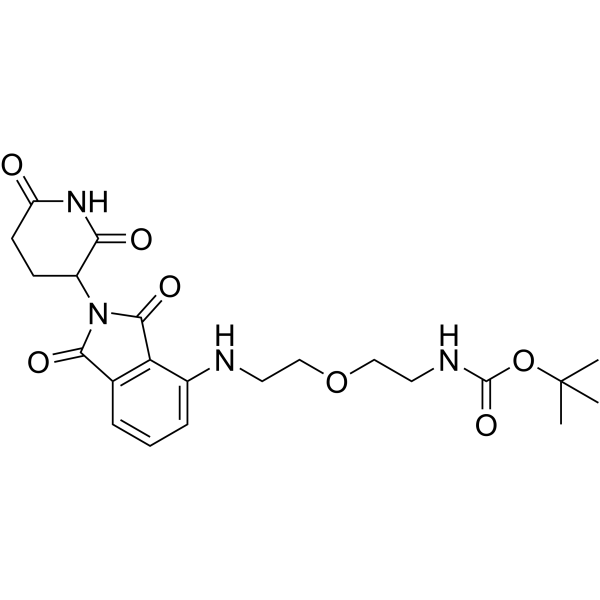 0 ImagesCat. No.: HY-W584520CAS No.: 2154342-17-1
Thalidomide-4-NH-PEG1-NH-Boc is a Boc-modified Thalidomide (HY-14658) that acts as a Cereblon ligand to recruit CRBN protein. The Boc protecting group at the end of Thalidomide-4-NH-PEG1-NH-Boc can be removed under acidic conditions to participate in the synthesis of PROTAC molecules. Thalidomide-4-NH-PEG1-NH-Boc is a key intermediate in the synthesis of CRBN-based PROTAC molecules.
-
N-Nitrosodiethylamine-d4
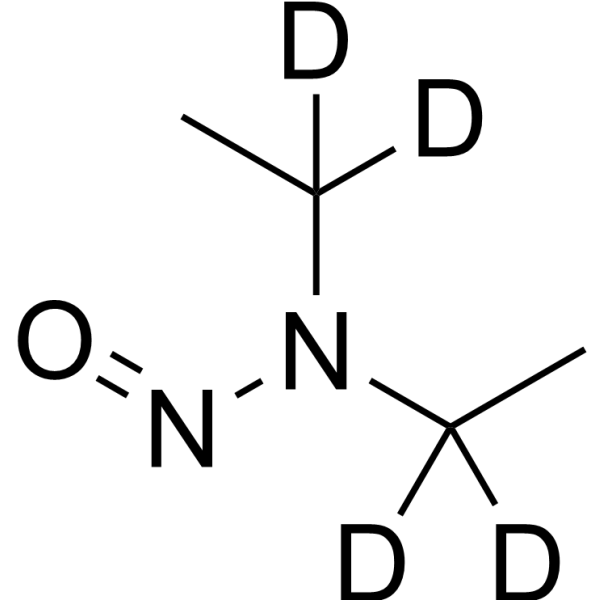 0 ImagesCat. No.: HY-N7434SCAS No.: 1346603-41-5Synonyms: Diethylnitrosamine-d4; DEN-d4; DENA-d4
N-Nitrosodiethylamine-d4 is the deuterium labeled N-Nitrosodiethylamine. N-Nitrosodiethylamine (Diethylnitrosamine) is a potent hepatocarcinogenic dialkylnitrosoamine. N-Nitrosodiethylamine is mainly present in tobacco smoke, water, cheddar cheese, cured, fried meals and many alcoholic beverages. N-Nitrosodiethylamine is responsible for the changes in the nuclear enzymes associated with DNA repair/replication. N-Nitrosodiethylamine results in various tumors in all animal species. The main target organs are the nasal cavity, trachea, lung, esophagus and liver.
-
8-Aza-2’-beta-C-methylguanosine
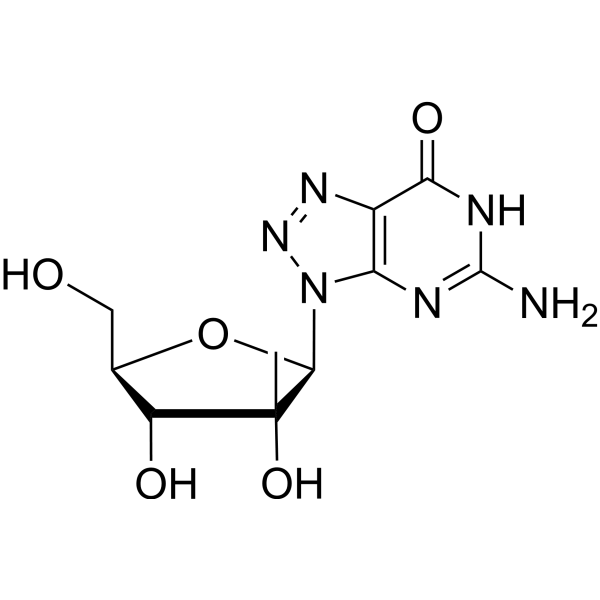 0 ImagesCat. No.: HY-152467
8-Aza-2’-beta-C-methylguanosine is a purine nucleoside analog. Purine nucleoside analogs have broad antitumor activity targeting indolent lymphoid malignancies. Anticancer mechanisms in this process rely on inhibition of DNA synthesis, induction of apoptosis, etc.

-
GPX4-IN-11
 0 ImagesCat. No.: HY-162717CAS No.: 951570-56-2
GPX4-IN-11 (compound I14) is a potent inhibitor of GPX4, with the KD of 45.7 μM. GPX4-IN-11 plays an important role in ferroptosis research.
-
Gαi2-IN-1
 0 ImagesCat. No.: HY-176780CAS No.: 2794979-74-9
Gαi2-IN-1 is a Gαi2 inhibitor. Gαi2-IN-1 attenuates migration of prostate cancer cells. Gαi2-IN-1 can be used for the research of prostate cancer .
-
EGFR-IN-196
 0 ImagesCat. No.: HY-181479
EGFR-IN-196 is an EGFR inhibitor with an IC50 of 105.96 nM. EGFR-IN-196 inhibits EGFR enzymatic activity, reduces phosphorylated PI3K levels, and suppresses downstream EGFR-AKT signaling. EGFR-IN-196 increases intracellular ROS generation, induces mitochondrial depolarisation, and induces apoptosis in cancer cells. EGFR-IN-196 can be used for the research of lung cancer.

-
5′-Amino-5′-deoxythymidine
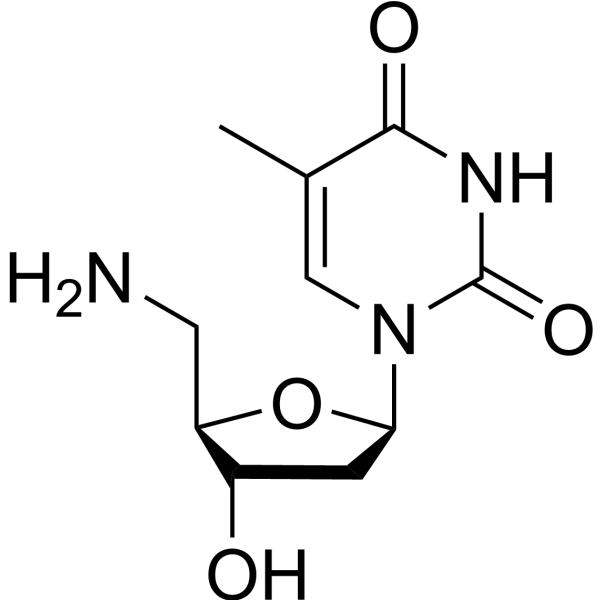 0 ImagesCat. No.: HY-149160CAS No.: 25152-20-9
5′-Amino-5′-deoxythymidine is a purine nucleoside analog. Purine nucleoside analogs have broad antitumor activity targeting indolent lymphoid malignancies. Anticancer mechanisms in this process rely on inhibition of DNA synthesis, induction of apoptosis, etc.
-
Ac-Ala-Ala-Ser(PO3H2)-Pro-Arg-NH-Np
 0 ImagesCat. No.: HY-187112CAS No.: 202739-37-5
-
Nifuroxazide-d4
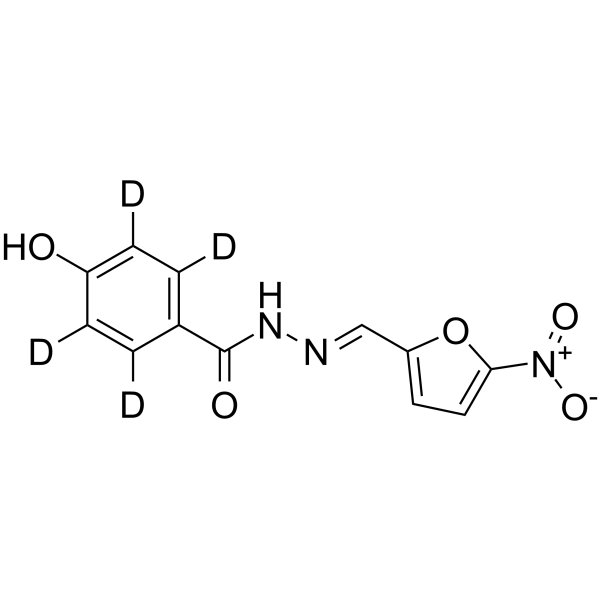 0 ImagesCat. No.: HY-B1436SCAS No.: 1188487-83-3
Nifuroxazide-d4 is the deuterium labeled Nifuroxazide. Nifuroxazide is an effective inhibitor of STAT3, also exerts potent anti-tumor and anti-metastasis activity.
-
hsa-miR-4466 inhibitor
 0 ImagesCat. No.: HY-RI01070
hsa-miR-4466 inhibitors are chemically-modified oligonucleotides that hybridize with mature miRNAs. The miRNA inhibitors have full-length nucleotide 2'-methoxy modification. The miRNA inhibitors strongly compete with mature miRNAs to prevent the complementary pairing of miRNAs and their target genes, thereby inhibiting miRNAs from functioning.
-
hsa-miR-548k antagomir
 0 ImagesCat. No.: HY-RI01690A
hsa-miR-548k antagomirs are chemically-modified oligonucleotides that hybridize with mature miRNAs. The miRNA antagomirs have 2 phosphorothioates at the 5' end, 4 phosphorothioates at the 3' end, 1 cholesterol group at the 3' end, and full-length nucleotide 2'-methoxy modification. The miRNA antagomirs strongly compete with mature miRNAs to prevent the complementary pairing of miRNAs and their target genes, thereby inhibiting miRNAs from functioning. Stability of miRNA antagomirs appears to be significantly higher than miRNA inhibitors, they exhibits enhanced cellular uptake, stability and regulatory activity in vivo.



