



Cancer Targeted Therapy
Cancer targeted therapy is the foundation of precision medicine; it uses drugs or other substances to target specific genes and proteins that control cancer cells’ growth, division and spreading. Compared to traditional chemotherapy drugs, targeted-drugs can specifically act on cancer cells with high efficacy without damaging normal cells. Drugs used in cancer targeted therapy mainly includes small molecules and macromolecules (e.g., monoclonal antibodies), which can target cancer cells and constituents in the tumor microenvironment to activate the immune system. Anti-angiogenesis drugs, such as those targeting vascular endothelial growth factor (VEGF), epidermal growth factor receptor (EGFR), transforming growth factor (TGF)-α, TGF-β, Tumor necrosis factor (TNF)-α, and platelet-derived endothelial growth factor (PDGFR) inhibit the proliferation and metastasis of cancer cells. In recent years, the proportion of antibody drugs in cancer treatment has gradually become prominent. Antibody-drug conjugates (ADCs) are a new type of targeted drugs that are composed of monoclonal antibody, cytotoxic drug and linker. ADCs can deliver drugs to tumor cells and minimize the toxicity to normal tissues. Proteolysis-targeting chimera (PROTAC) is a useful technology for targeted protein degradation. PROTAC exploits the ubiquitin-proteasome system and forms a ternary complex with a hijacked E3 ubiquitin ligase and target protein, leading to polyubiquitination and degradation of the target protein.
Targeted therapy is a useful strategy in treatment of cancer either alone or in combination with standard chemotherapy. At present, targeted therapy has proved significant clinical success in the treatment of many types of cancer, including breast cancer, colorectal cancer, leukemia, ovarian cancer and lung cancer.
-
KRAS inhibitor-38
 0 ImagesCat. No.: HY-169312CAS No.: 3059496-10-2
KRAS inhibitor-38 (Example 18) is a KRAS inhibitor that effectively suppresses the activity of KRAS G12C, KRAS G12D, and KRAS G12V in vivo.
-
rno-miR-543-3p inhibitor
 0 ImagesCat. No.: HY-RI04514
rno-miR-543-3p inhibitors are chemically-modified oligonucleotides that hybridize with mature miRNAs. The miRNA inhibitors have full-length nucleotide 2'-methoxy modification. The miRNA inhibitors strongly compete with mature miRNAs to prevent the complementary pairing of miRNAs and their target genes, thereby inhibiting miRNAs from functioning.
-
Erythrabyssin II
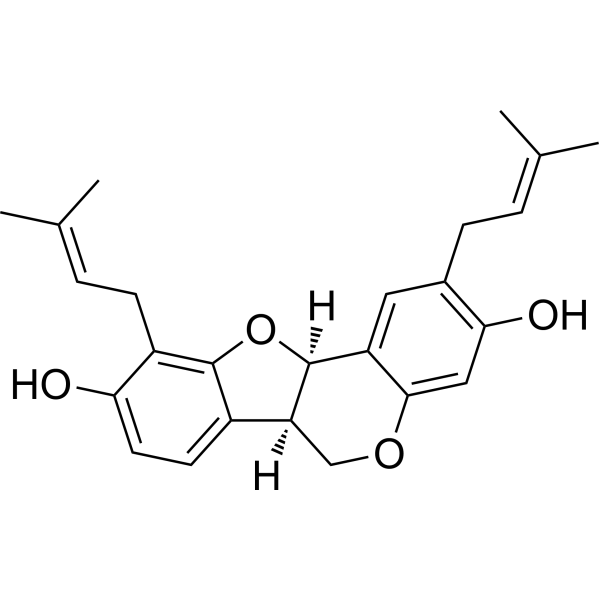 0 ImagesCat. No.: HY-N3855CAS No.: 77263-06-0
Erythrabyssin II (EL-19) is a potent late-stage autophagy inhibitor that blocks the fusion of autophagosome and lysosome. Erythrabyssin II leads to the accumulation of autophagic substrates and does not impair lysosomal pH or lysosomal enzyme activity. Erythrabyssin II suppresses ovarian cancer organoid activity and induces apoptosis. Erythrabyssin II can be used for the study of ovarian cancer.
-
2’-Bromo-2’-deoxy-5-methyluridine
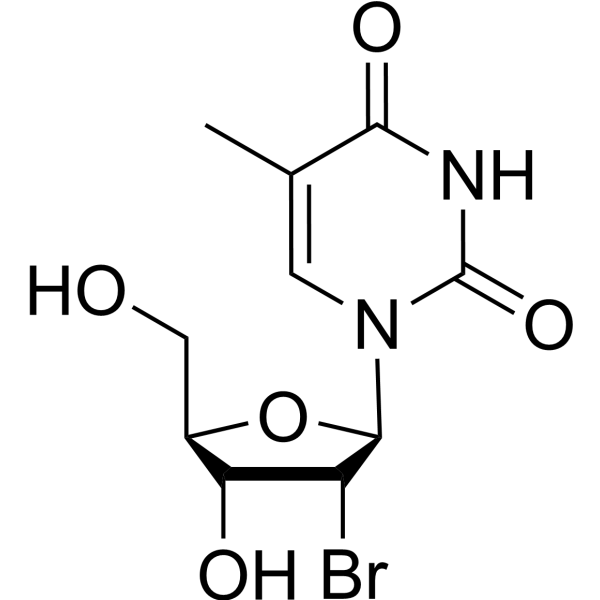 0 ImagesCat. No.: HY-154642CAS No.: 95585-76-5
2’-Bromo-2’-deoxy-5-methyluridine is a purine nucleoside analog. Purine nucleoside analogs have broad antitumor activity targeting indolent lymphoid malignancies. Anticancer mechanisms in this process rely on inhibition of DNA synthesis, induction of apoptosis, etc.
-
E3 Ligase Ligand-linker Conjugate 92
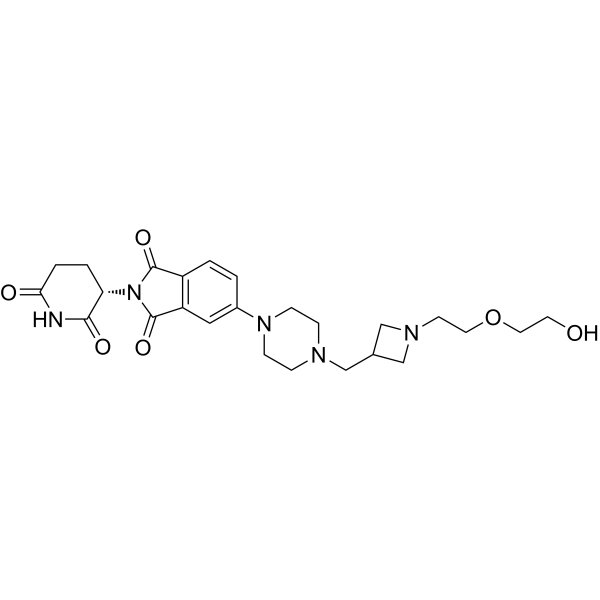 0 ImagesCat. No.: HY-157635
E3 Ligase Ligand-linker Conjugate 92 is a conjugate of E3 ligase ligand and linker, consisting of Thalidomide (HY-14658) and the corresponding Linker. E3 Ligase Ligand-linker Conjugate 92 can serve as a Cereblon ligand to recruit CRBN protein and serve as a key intermediate for the synthesis of complete PROTAC molecules.
-
HBV/HDV-IN-2
 0 ImagesCat. No.: HY-161605CAS No.: 3034161-76-4
HBV/HDV-IN-2 (Compd 143) is a HBV, HDV and PD-1/PD-L1 inhibitor, with an EC50 of 35 nM for T cell activation.
-
mmu-miR-6414 inhibitor
 0 ImagesCat. No.: HY-RI03421
mmu-miR-6414 inhibitors are chemically-modified oligonucleotides that hybridize with mature miRNAs. The miRNA inhibitors have full-length nucleotide 2'-methoxy modification. The miRNA inhibitors strongly compete with mature miRNAs to prevent the complementary pairing of miRNAs and their target genes, thereby inhibiting miRNAs from functioning.
-
mmu-miR-7646-5p inhibitor
 0 ImagesCat. No.: HY-RI04042
mmu-miR-7646-5p inhibitors are chemically-modified oligonucleotides that hybridize with mature miRNAs. The miRNA inhibitors have full-length nucleotide 2'-methoxy modification. The miRNA inhibitors strongly compete with mature miRNAs to prevent the complementary pairing of miRNAs and their target genes, thereby inhibiting miRNAs from functioning.
-
Valproic acid-d4 sodium
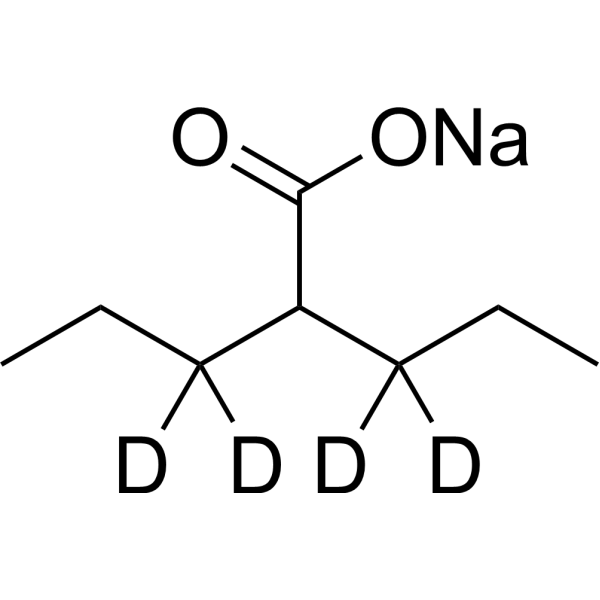 0 ImagesCat. No.: HY-10585S3Synonyms: Sodium Valproate-d4; VPA-d4 sodium; 2-Propylpentanoic acid-d4 sodium
Valproic acid-d4 (sodium) is the deuterium labeled Valproic acid. Valproic acid (VPA; 2-Propylpentanoic Acid) is an HDAC inhibitor, with IC50 in the range of 0.5 and 2 mM, also inhibits HDAC1 (IC50, 400 μM), and induces proteasomal degradation of HDAC2. Valproic acid activates Notch1 signaling and inhibits proliferation in small cell lung cancer (SCLC) cells. Valproic acid sodium salt is used in the treatment of epilepsy, bipolar disorder and prevention of migraine headaches.
-
Alendronate sodium hydrate (Standard)
 0 ImagesCat. No.: HY-11101RCAS No.: 121268-17-5Synonyms: Alendronate (Standard); MK 217 (Standard); G-704650 Adronat (Standard)
Alendronate (sodium hydrate) (Standard) is the analytical standard of Alendronate (sodium hydrate). This product is intended for research and analytical applications. Alendronate (sodium hydrate) is a farnesyl diphosphate synthase inhibitor with IC50 of 460 nM.
-
Azido-PEG3-Ala-Boc
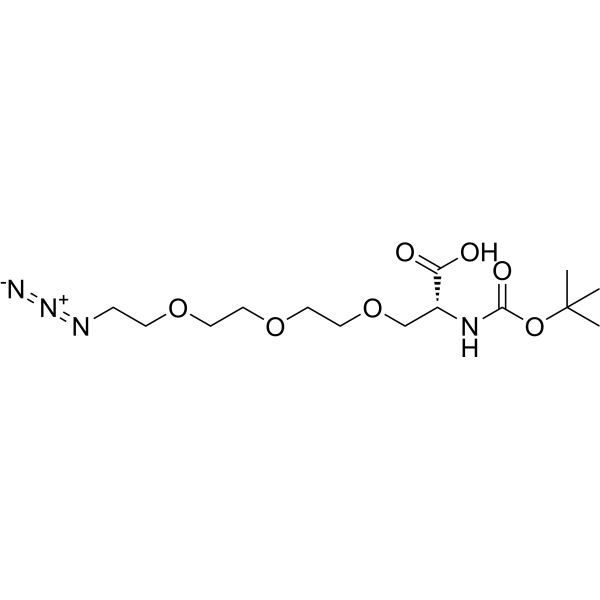 0 ImagesCat. No.: HY-140849CAS No.: 2054345-68-3
Azido-PEG3-Ala-Boc is a PEG-based PROTAC linker that can be used in the synthesis of PROTACs. Azido-PEG3-Ala-Boc is a click chemistry reagent, it contains an Azide group and can undergo copper-catalyzed azide-alkyne cycloaddition reaction (CuAAc) with molecules containing Alkyne groups. It can also undergo strain-promoted alkyne-azide cycloaddition (SPAAC) reactions with molecules containing DBCO or BCN groups.
-
VEGFR-2-IN-28
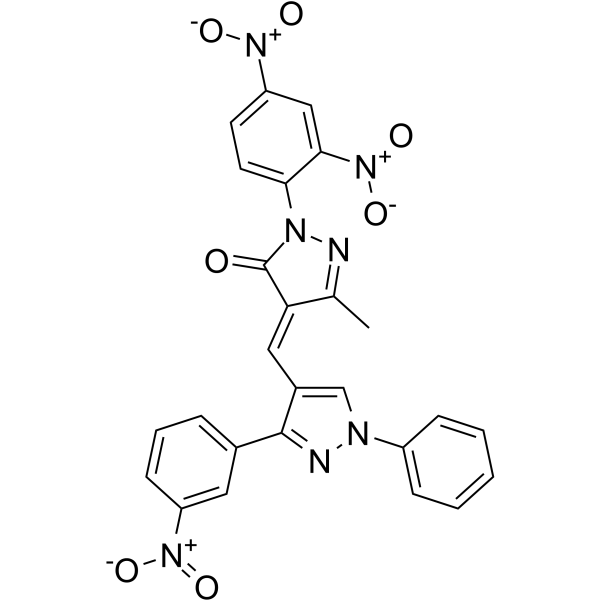 0 ImagesCat. No.: HY-147926CAS No.: 2447597-39-7
VEGFR-2-IN-28 (compound 12c) is a potent VEGFR-2 inhibitor with IC50 value of 0.83 µM. VEGFR-2-IN-28 induces apoptosis and has anticancer activity.
-
PROTAC c-Met degrader-5
 0 ImagesCat. No.: HY-175320
PROTAC c-Met degrader-5 is an orally active c-Met PROTAC degrader. PROTAC c-Met degrader-5 induces c-Met degradation via Cullin-CRBN, with a DC50 value of 0.32 nM, and inhibits the phosphorylation of c-Met and its downstream signaling molecule STAT3. PROTAC c-Met degrader-5 inhibits cancer cell proliferation, migration and invasion, induces apoptosis, alters cell cycle distribution, and suppresses the growth of EBC-1 xenograft tumors. PROTAC c-Met degrader-5 can be used to study MET-driven cancers as well as Tepotinib (HY-14721)-resistant cancers harboring c-MetD1228N and c-MetY1230H mutations.
-
hsa-miR-924 inhibitor
 0 ImagesCat. No.: HY-RI02510
hsa-miR-924 inhibitors are chemically-modified oligonucleotides that hybridize with mature miRNAs. The miRNA inhibitors have full-length nucleotide 2'-methoxy modification. The miRNA inhibitors strongly compete with mature miRNAs to prevent the complementary pairing of miRNAs and their target genes, thereby inhibiting miRNAs from functioning.
-
mmu-miR-3968 inhibitor
 0 ImagesCat. No.: HY-RI03132
mmu-miR-3968 inhibitors are chemically-modified oligonucleotides that hybridize with mature miRNAs. The miRNA inhibitors have full-length nucleotide 2'-methoxy modification. The miRNA inhibitors strongly compete with mature miRNAs to prevent the complementary pairing of miRNAs and their target genes, thereby inhibiting miRNAs from functioning.
-
Azo-PROTAC-4C-cis
 0 ImagesCat. No.: HY-180985
Azo-PROTAC-4C-cis is a BCR-ABL PROTAC degrader, and its degradation efficiency of BCR-ABL is much lower than that of its trans isomer Azo-PROTAC-4C-trans (HY-180983). Azo-PROTAC-4C-cis is the product of the conformational transformation of Azo-PROTAC-4C-trans under ultraviolet (UV) light irradiation. Azo-PROTAC-4C-cis can be converted into highly active Azo-PROTAC-4C-trans under visible light, thereby initiating protein degradation. Azo-PROTAC-4C-cis can be used for the study of myeloid leukemia.
-
Tubulin polymerization-IN-93
 0 ImagesCat. No.: HY-184760CAS No.: 3022872-60-9
Tubulin polymerization-IN-93 is a β-tubulin polymerization inhibitor. Tubulin polymerization-IN-93 disrupts the microtubule network structure. Tubulin polymerization-IN-93 activates the spindle assembly checkpoint and promotes Mitotic catastrophe. Tubulin polymerization-IN-93 activates the mitochondrial Apoptotic pathway. Tubulin polymerization-IN-93 exhibits anticancer activity against acute myeloid leukemia.
-
hsa-miR-302b-5p inhibitor
 0 ImagesCat. No.: HY-RI00520
hsa-miR-302b-5p inhibitors are chemically-modified oligonucleotides that hybridize with mature miRNAs. The miRNA inhibitors have full-length nucleotide 2'-methoxy modification. The miRNA inhibitors strongly compete with mature miRNAs to prevent the complementary pairing of miRNAs and their target genes, thereby inhibiting miRNAs from functioning.
-
hsa-miR-4520-2-3p inhibitor
 0 ImagesCat. No.: HY-RI01141
hsa-miR-4520-2-3p inhibitors are chemically-modified oligonucleotides that hybridize with mature miRNAs. The miRNA inhibitors have full-length nucleotide 2'-methoxy modification. The miRNA inhibitors strongly compete with mature miRNAs to prevent the complementary pairing of miRNAs and their target genes, thereby inhibiting miRNAs from functioning.
-
hsa-miR-5682 antagomir
 0 ImagesCat. No.: HY-RI01761A
hsa-miR-5682 antagomirs are chemically-modified oligonucleotides that hybridize with mature miRNAs. The miRNA antagomirs have 2 phosphorothioates at the 5' end, 4 phosphorothioates at the 3' end, 1 cholesterol group at the 3' end, and full-length nucleotide 2'-methoxy modification. The miRNA antagomirs strongly compete with mature miRNAs to prevent the complementary pairing of miRNAs and their target genes, thereby inhibiting miRNAs from functioning. Stability of miRNA antagomirs appears to be significantly higher than miRNA inhibitors, they exhibits enhanced cellular uptake, stability and regulatory activity in vivo.



