



Cancer Targeted Therapy
Cancer targeted therapy is the foundation of precision medicine; it uses drugs or other substances to target specific genes and proteins that control cancer cells’ growth, division and spreading. Compared to traditional chemotherapy drugs, targeted-drugs can specifically act on cancer cells with high efficacy without damaging normal cells. Drugs used in cancer targeted therapy mainly includes small molecules and macromolecules (e.g., monoclonal antibodies), which can target cancer cells and constituents in the tumor microenvironment to activate the immune system. Anti-angiogenesis drugs, such as those targeting vascular endothelial growth factor (VEGF), epidermal growth factor receptor (EGFR), transforming growth factor (TGF)-α, TGF-β, Tumor necrosis factor (TNF)-α, and platelet-derived endothelial growth factor (PDGFR) inhibit the proliferation and metastasis of cancer cells. In recent years, the proportion of antibody drugs in cancer treatment has gradually become prominent. Antibody-drug conjugates (ADCs) are a new type of targeted drugs that are composed of monoclonal antibody, cytotoxic drug and linker. ADCs can deliver drugs to tumor cells and minimize the toxicity to normal tissues. Proteolysis-targeting chimera (PROTAC) is a useful technology for targeted protein degradation. PROTAC exploits the ubiquitin-proteasome system and forms a ternary complex with a hijacked E3 ubiquitin ligase and target protein, leading to polyubiquitination and degradation of the target protein.
Targeted therapy is a useful strategy in treatment of cancer either alone or in combination with standard chemotherapy. At present, targeted therapy has proved significant clinical success in the treatment of many types of cancer, including breast cancer, colorectal cancer, leukemia, ovarian cancer and lung cancer.
-
P18IN005 hydrochloride
 0 ImagesCat. No.: HY-115893ACAS No.: 7403-44-3
P18IN005 hydrochloride is a novel inhibitor of p18, exhibiting potent activity in negatively regulating haematopoietic stem cell (HSC) self-renewal. P18IN005 hydrochloride has been shown to be more effective than p27 in inhibiting HSC self-renewal in mouse models. P18IN005 hydrochloride promotes the expansion of functional HSCs in short-term cultures. P18IN005 hydrochloride serves as a valuable tool for dissecting the signaling pathways involved in stem cell self-renewal.
-
Taligantinib
 0 ImagesCat. No.: HY-177134CAS No.: 2243235-80-3
Taligantinib (Compound Example 70) is an orally active and selective dual inhibitor targeting vascular endothelial growth factor receptor 2 (VEGFR-2) and hepatocyte growth factor receptor (c-Met). Taligantinib suppresses tumor angiogenesis and cell proliferation. Taligantinib is promising for research of solid tumors such as non-small cell lung cancer and hepatocellular carcinoma.
-
nNOS-IN-6
 0 ImagesCat. No.: HY-181711
nNOS-IN-6 is a human neuronal nitric oxide synthase (hnNOS) inhibitor with a human hnNOS Ki of 16 nM, ~1800-fold selectivity over human eNOS, ~2900-fold selectivity over human iNOS, and a rat nNOS Ki of 34 nM.nNOS-IN-6 exhibits high effective permeability in PAMPA-BBB assays, crosses the blood-brain barrier, and shows sustained systemic exposure, low clearance, and robust brain penetration in mouse in vivo pharmacokinetic studies.nNOS-IN-6 can be used for the research of neurodegenerative diseases, melanoma.
-
Propargyl-PEG4-5-nitrophenyl carbonate
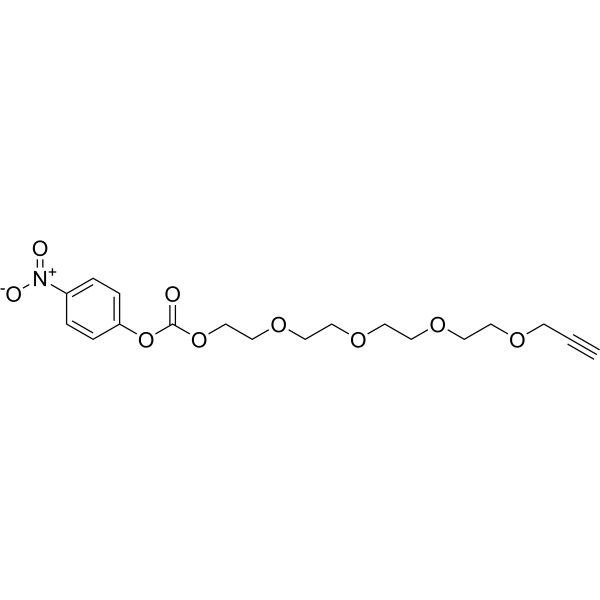 0 Images
Propargyl-PEG4-5-nitrophenyl carbonate is a PEG-based PROTAC linker that can be used in the synthesis of PROTACs. Propargyl-PEG4-5-nitrophenyl carbonate is a click chemistry reagent, it contains an Alkyne group and can undergo copper-catalyzed azide-alkyne cycloaddition (CuAAc) with molecules containing Azide groups.
-
DOTA-NAPamide
 0 ImagesCat. No.: HY-P10731CAS No.: 935886-72-9
DOTA-NAPamide is a radionuclide conjugate (RDC), which is capable of binding to a radionuclide. RDC has the ability to specifically target biomolecules and can be used in medical imaging or therapy.
-
hsa-miR-1288-5p inhibitor
 0 ImagesCat. No.: HY-RI00210
hsa-miR-1288-5p inhibitors are chemically-modified oligonucleotides that hybridize with mature miRNAs. The miRNA inhibitors have full-length nucleotide 2'-methoxy modification. The miRNA inhibitors strongly compete with mature miRNAs to prevent the complementary pairing of miRNAs and their target genes, thereby inhibiting miRNAs from functioning.
-
hsa-miR-374c-5p inhibitor
 0 ImagesCat. No.: HY-RI00833
hsa-miR-374c-5p inhibitors are chemically-modified oligonucleotides that hybridize with mature miRNAs. The miRNA inhibitors have full-length nucleotide 2'-methoxy modification. The miRNA inhibitors strongly compete with mature miRNAs to prevent the complementary pairing of miRNAs and their target genes, thereby inhibiting miRNAs from functioning.
-
WZH-17-002
 0 ImagesCat. No.: HY-174315
WZH-17-002 is a CRBN‑recruiting ALK PROTAC degrader. WZH‑17‑002 degrades ALK proteins, including EML4‑ALK and the compound mutants. WZH‑17‑002 inhibits the development of drug resistance in ALK‑fusion non‑small‑cell lung cancer. WZH‑17‑002 can be used for research related to non‑small‑cell lung cancer.
-
VT101
 0 ImagesCat. No.: HY-182672CAS No.: 65194-64-1
-
Onapristone
 0 ImagesCat. No.: HY-106389CAS No.: 96346-61-1Synonyms: ZK 98299
Onapristone is a progesterone receptor antagonist, with Kds of 11.6 nM and 11.90 nM for human endometrium and myometrium progesterone receptor in saturation analysis. Onapristone has antitumor activity.
-
Buforin IIb TFA
 0 ImagesCat. No.: HY-P12127APurity: 98.01%Synonyms: BF2-B TFA
Buforin IIb TFA (BF2-B TFA) is an anticancer peptide, as well as an Antibacterial and Antifungal agent. Buforin IIb TFA is derived from histone H2A. Buforin IIb TFA activates SAPK/JNK and p38 MAPK. Buforin IIb TFA induces mitochondria-dependent Apoptosis. Buforin IIb TFA achieves selective targeting by interacting with gangliosides on the surface of cancer cells, and can penetrate cancer cell membranes without causing damage. Buforin IIb TFA exhibits antibacterial activity against Gram-negative bacteria, Gram-positive bacteria and fungi. Buforin IIb TFA can be used in the research of cervical cancer, as well as cancers including leukemia, central nervous system cancer, ovarian cancer, breast cancer, melanoma, colon cancer, non-small cell lung cancer, renal cancer and prostate cancer.
-
D8P1C1
 0 ImagesCat. No.: HY-P992341
D8P1C1 is a high-affinity ADAM17 inhibitor (with a Kd of 180 pM targeting ADAM17-ECD) that reduces the shedding and phosphorylation of EGFR ligands. D8P1C1 inhibits cancer cell proliferation in vitro and tumor growth in xenograft models. 89Zr-DFO-D8P1C1 radioimmunological PET imaging shows its substantial accumulation in ovarian tumor xenografts, serving as a platform for generating bispecific T-cell engager derivatives. D8P1C1 can be applied to research on related diseases including triple-negative breast cancer, various types of ovarian cancer, lung adenocarcinoma, glioma, and colon cancer.
-
hsa-miR-190a-3p antagomir
 0 ImagesCat. No.: HY-RI00360A
hsa-miR-190a-3p antagomirs are chemically-modified oligonucleotides that hybridize with mature miRNAs. The miRNA antagomirs have 2 phosphorothioates at the 5' end, 4 phosphorothioates at the 3' end, 1 cholesterol group at the 3' end, and full-length nucleotide 2'-methoxy modification. The miRNA antagomirs strongly compete with mature miRNAs to prevent the complementary pairing of miRNAs and their target genes, thereby inhibiting miRNAs from functioning. Stability of miRNA antagomirs appears to be significantly higher than miRNA inhibitors, they exhibits enhanced cellular uptake, stability and regulatory activity in vivo.
-
3′-Deoxy-3′-iodothymidine
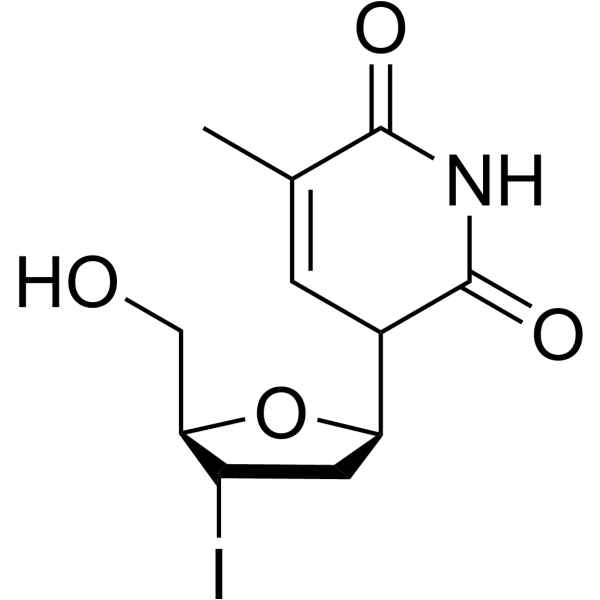 0 ImagesCat. No.: HY-154088CAS No.: 14260-82-3
3′-Deoxy-3′-iodothymidine is a purine nucleoside analog. Purine nucleoside analogs have broad antitumor activity targeting indolent lymphoid malignancies. Anticancer mechanisms in this process rely on inhibition of DNA synthesis, induction of apoptosis, etc.
-
YZ-17
 0 ImagesCat. No.: HY-189213
YZ-17 is a PROTAC degrader targeting PRMT5, with DC50 = 2.2 μM (HCC1806 cells). YZ-17 recruits CRBN E3 ligase and induces PRMT5 degradation through the ubiquitin-proteasome system, inhibiting PRMT5-mediated symmetric dimethylarginine modification. YZ-17 co-degrades the PRMT5 adaptor protein MEP50 via a CRBN-dependent mechanism. YZ-17 induces G1 phase cell cycle arrest and inhibits colony formation in cancer cells. YZ-17 exhibits antiproliferative activity in various cancer cells. YZ-17 shows antitumor efficacy in a triple-negative breast cancer xenograft mouse model. YZ-17 can be used for research on triple-negative breast cancer.
-
KIT V560G Recombinant Human Active Protein Kinase
 0 ImagesCat. No.: HY-E70741
KIT (CD117) is an important cell surface marker used to identify certain types of hematopoietic(blood) progenitors in the bone marrow. KIT is a cytokine receptor expressed on the surface of hematopoietic stem cells as well as other cell types. Altered forms of this receptor may be associated with some types of cancer. KIT V560G is a mutant of KIT. KIT V560G Recombinant Human Active Protein Kinase is a recombinant KIT V560G protein that can be used to study KIT V560G-related functions.
-
N-(m-PEG4)-N'-(PEG2-acid)-Cy5
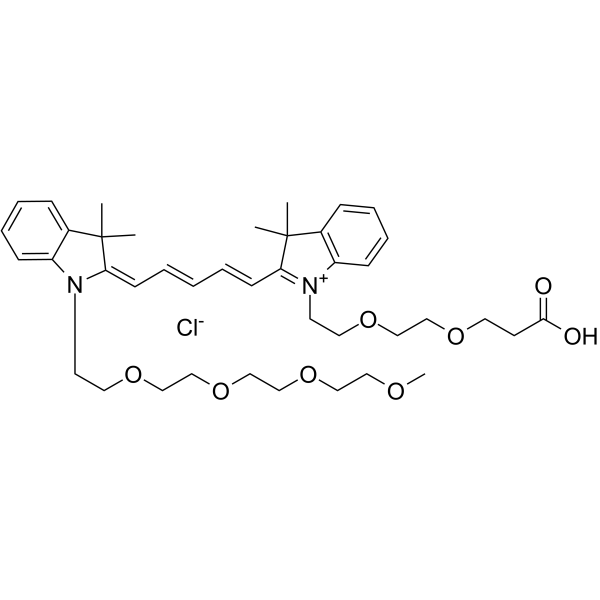 0 ImagesCat. No.: HY-141035CAS No.: 2107273-24-3
-
PBRM1-BD2-IN-7
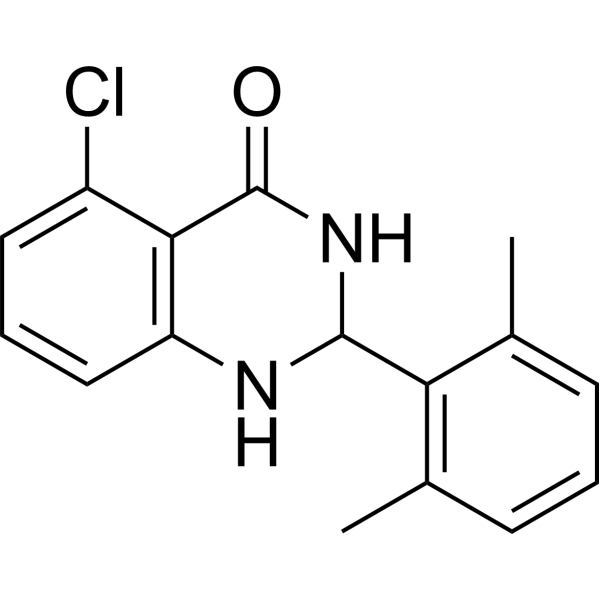 0 ImagesCat. No.: HY-151534CAS No.: 2819989-68-7
PBRM1-BD2-IN-7 is a selective and cell-active polybromo-1 (PBRM1) bromodomain inhibitor. PBRM1-BD2-IN-7 has inhibitory activity for PBRM1-BD2 with an IC50 value of 0.29 μM. PBRM1-BD2-IN-7 can be used for the research of cancer.
-
9-(5(R)-C-Methyl-2,3,5-tri-O-benzoyl-D-ribofuranosyl)-6-chloropurine
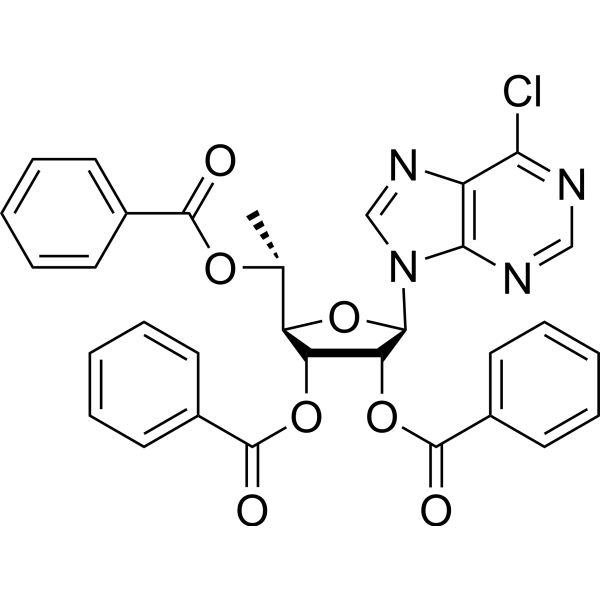 0 ImagesCat. No.: HY-154532
9-(5(R)-C-Methyl-2,3,5-tri-O-benzoyl-D-ribofuranosyl)-6-chloropurine is a purine nucleoside analog. Purine nucleoside analogs have broad antitumor activity targeting indolent lymphoid malignancies. Anticancer mechanisms in this process rely on inhibition of DNA synthesis, induction of apoptosis, etc.
-
BRD4 Inhibitor-29
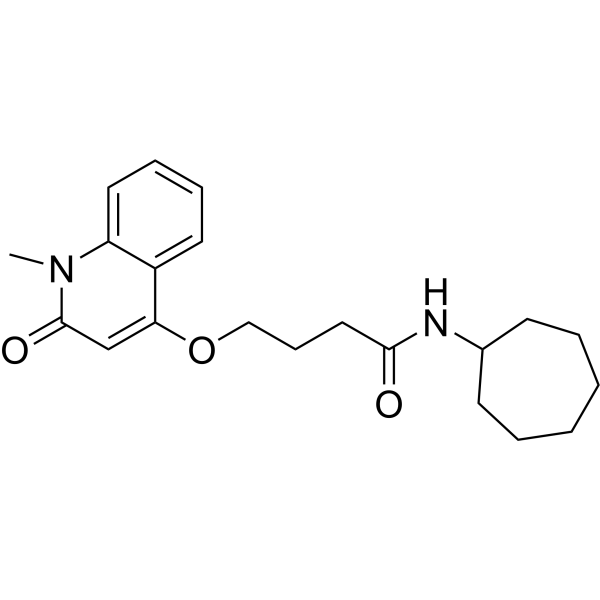 0 ImagesCat. No.: HY-157460CAS No.: 902563-50-2
BRD4 Inhibitor-29 (SQ-17) is a BRD4 inhibitor, with an IC50 of <100 nM. BRD4 Inhibitor-29 shows antiproliferative effect against prostate cancer cells.



