



Autophagy
Autophagy is a conserved cellular degradation and recycling process in the lysosome. In mammalian cells, there are three primary types of autophagy: microautophagy, macroautophagy, and chaperone-mediated autophagy (CMA). Microphagy captures cargoes by means of invaginations or protrusions of the lysosomal membrane directly, CMA uses chaperones to identify cargo proteins and then unfolds and transfers them into the lysosomal, while macroautophagy sequesters cargo by autophagosomes-de novo synthesized of double-membrane vesicles-and subsequently transport it to the lysosome.
Macroautophagy is the best studied and it occurs at a low level constitutively and can also be further induced under stress conditions, such as nutrient or energy starvation with a salient feature of autophagy protein degradation. Stress-induced macrophagy plays an important role in protein catabolism with another key protein degradation pathway, the ubiquitin–proteasome system (UPS).
As the study progressed, autophagy gains its importance under basal, nutrient-rich conditions, and is now recognized as a critical housekeeping pathway in catabolism of diverse cellular constituents, such as protein aggregates (aggrephagy), lipid droplets (lipophagy), iron complex (Ferritinophagy) and carbohydrate. Except for macromolecules, autophagy can also target several organelles and structures, such as mitochondria (mitophagy), peroxisome (pexophagy), endoplasmic reticulum (reticulophagy or ER-phagy), ribosome (ribophagy), spermatozoon-inherited organelles following fertilization (allophagy), secretory granules within pancreatic cells (zymophagy) and intracellular pathogens (xenophagy).
Autophagy and its dysfunction are associated with a variety of human pathologies, including ageing, cancer, neurodegenerative disease, heart disease and metabolic diseases, such as diabetes. Plenty of drugs and natural products are involved in autophagy modulation through multiple signaling pathways. Small molecules that can regulate autophagy seem to have great potential to intervene such diseases in animal models or clinical courses.
All Product Categories
-
Autophagy Inhibitors
(462)
View all products
-
Autophagy Agonists
(6)
View all products
-
Autophagy Activators
(117)
View all products
-
Autophagy Modulators
(59)
View all products
-
Autophagy Chemicals
(2)
View all products
-
Autophagy Inducers
(2157)
View all products
-
Autophagy Controls
(5)
View all products
-
Autophagy Ligand
(1)
View all products
-
Autophagy Related Products (3338)
Related Products (3338)

-
Antibodies (31)
-
Autophagy Signaling Pathway
-
Sodium butyrate (GMP)
 0 ImagesCat. No.: HY-B0350AGCAS No.: 156-54-7Synonyms: Butanoic acid sodium (GMP); Butyric acid sodium (GMP)Sodium butyrate (GMP) refers to Sodium butyrate (HY-B0350A) of GMP grade. Small molecules of GMP grade can be used as adjuvants in cell therapy. Sodium Butyrate (sodium butanoate) is an inhibitor of HDAC, possessing anti-tumor activity.

-
EGFR-IN-187
 0 ImagesCat. No.: HY-180196EGFR-IN-187 (Compound 4d) is a selective EGFR inhibitor with an IC50 of 25.41 μM. EGFR-IN-187 can cause cancer cells S amd G2/M phase arrest and induce apoptosis and autophagy. EGFR-IN-187 upregulates CCNE1, Bax, LC3B-II and P27 expression and downregulates CCNA1 and Bcl-2 levels. EGFR-IN-187 can be used for the research of cancer, such as lung cancer.
-
Thioridazine hydrochloride (Standard)
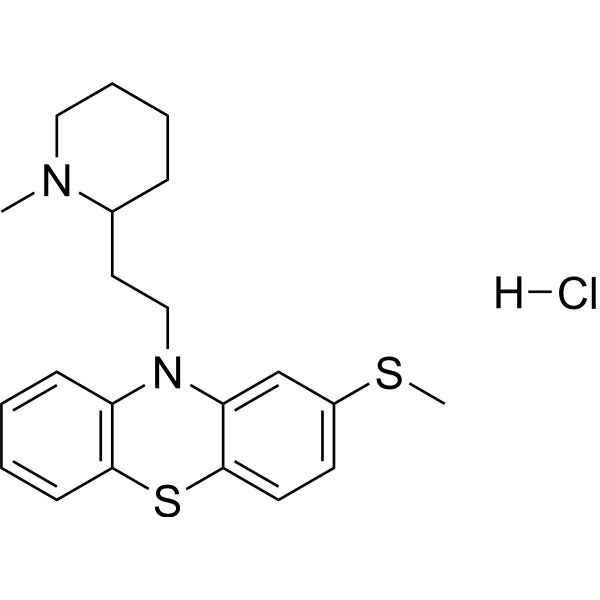 0 ImagesThioridazine (hydrochloride) (Standard) is the analytical standard of Thioridazine (hydrochloride). This product is intended for research and analytical applications. Thioridazine hydrochloride, an orally active antagonist of the dopamine receptor D2 family proteins, exhibits potent anti-psychotic and anti-anxiety activities. Thioridazine hydrochloride is also a potent inhibitor of PI3K-Akt-mTOR signaling pathways with anti-angiogenic effect. Thioridazine hydrochloride shows antiproliferative and apoptosis induction effects in various types of cancer cells, with specificity on targeting cancer stem cells (CSCs).
-
Thalidomide-azetidine-piperazine-C2-O-C2-OH
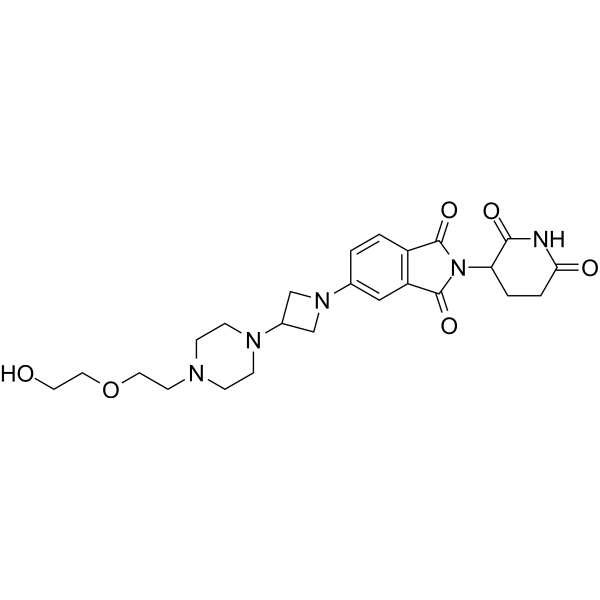 0 ImagesCat. No.: HY-161191Thalidomide-azetidine-piperazine-C2-O-C2-OH is a conjugate of E3 ligase ligand and linker, consisting of Thalidomide (HY-14658) and the corresponding Linker. Thalidomide-azetidine-piperazine-C2-O-C2-OH can serve as a Cereblon ligand to recruit CRBN protein and serve as a key intermediate for the synthesis of complete PROTAC molecules.
-
Typhaneoside (Standard)
 0 ImagesCat. No.: HY-N0712RCAS No.: 104472-68-6Typhaneoside (Standard) is the analytical standard of Typhaneoside. This product is intended for research and analytical applications. Typhaneoside, extracted from Typha angustifolia L., Typhaneoside can inhibit the excessive autophagy of hypoxia/reoxygenation cells and increase the phosphorylation of Akt and mTOR. Typhaneoside has certain effects on the cardiovascular system, including lowering blood lipid levels, promoting antiatherosclerosis activities, as well as improving immune and coagulation function.
-
(R)-Bicalutamide-d5
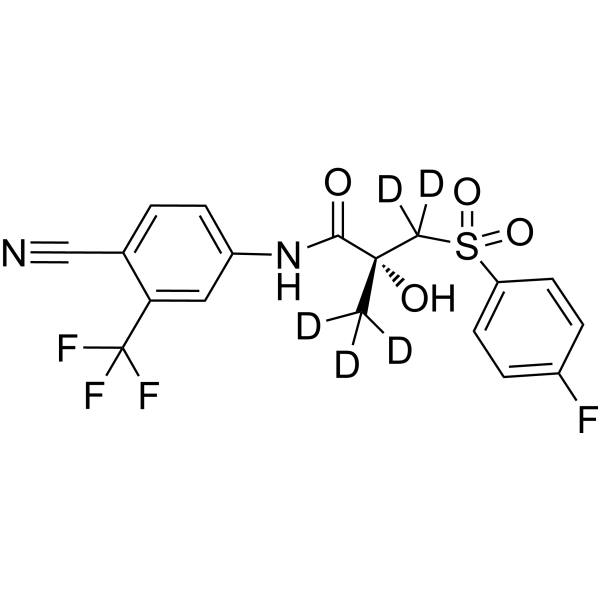 0 ImagesCat. No.: HY-14249S1(R)-Bicalutamide-d5 is deuterated labeled (R)-Bicalutamide (HY-108250). (R)-Bicalutamide is an androgen receptor (AR) antagonist, with antineoplastic activity. (R)-Bicalutamide is widely used for the research of prostate cancer.
-
Thalidomide-5-O-C10-NH2 hydrochloride
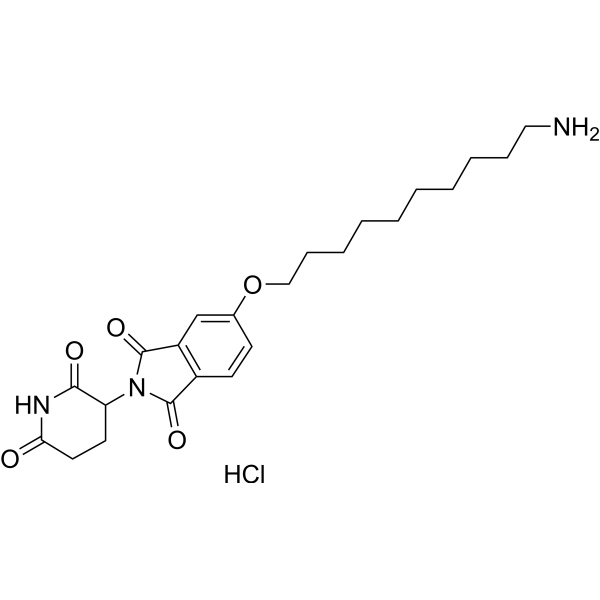 0 ImagesCat. No.: HY-149567Purity: 99.37%Thalidomide-5-O-C10-NH2 hydrochloride is the Thalidomide (HY-10984)-based cereblon ligand used in the recruitment of CRBN protein.Thalidomide-5-O-C10-NH2 hydrochloride can be connected to the ligand for protein by a linker to form PROTACs.
-
Gly-β-MCA (Standard)
 0 ImagesCat. No.: HY-114392RCAS No.: 66225-78-3Gly-β-MCA (Standard) is the analytical standard of Gly-β-MCA. This product is intended for research and analytical applications. Gly-β-MCA, a bile acid, is a potent, sable, intestine-selective and oral bioactive farnesoid X receptor (FXR) inhibitor that may be a candidate for the treatment of metabolic disorders[1].
-
Neoeriocitrin (Standard)
 0 ImagesCat. No.: HY-N4119RCAS No.: 13241-32-2Neoeriocitrin (Standard) is the analytical standard of Neoeriocitrin (HY-N4119). This product is intended for research and analytical applications. Neoeriocitrin is a Naringin (HY-N0153) analogue found in Drynaria Rhizome. Neoeriocitrin induces cells proliferation, differentiation, up-regulates type I collagen, osteocalcin, and key osteogenic markers, and increases ALP activity. Neoeriocitrin increases expression of Runx2, COL I, OCN and Beclin1. Neoeriocitrin inhibits phosphorylation of P38 mitogen-activated protein kinase, reduces acetylcholinesterase (AChE) activity, and increases choline acetyltransferase (ChAT) activity. Neoeriocitrin reduces apoptosis and induces autophagy. Neoeriocitrin can be used for the researches of osteoporosis and Alzheimer's disease.
-
Lentztrehalose B
 0 ImagesCat. No.: HY-158794CAS No.: 1808096-67-4

-
Bexarotene-13C4
 0 ImagesCat. No.: HY-W777169CAS No.: 1185030-01-6Synonyms: LGD1069-13C4Bexarotene-13C4 (LGD1069-13C4) is the 13C-labeled Bexarotene (HY-14171). Bexarotene (LGD1069) is a high-affinity and selective retinoid X receptors (RXR) agonist with EC50s of 33, 24, 25 nM for RXRα, RXRβ, and RXRγ, respectively. Bexarotene shows limited affinity for RAR receptors (EC50 >10000 nM). Bexarotene can be used for the research of cutaneous T-cell lymphoma.
-
Amiodarone-d5 hydrochloride
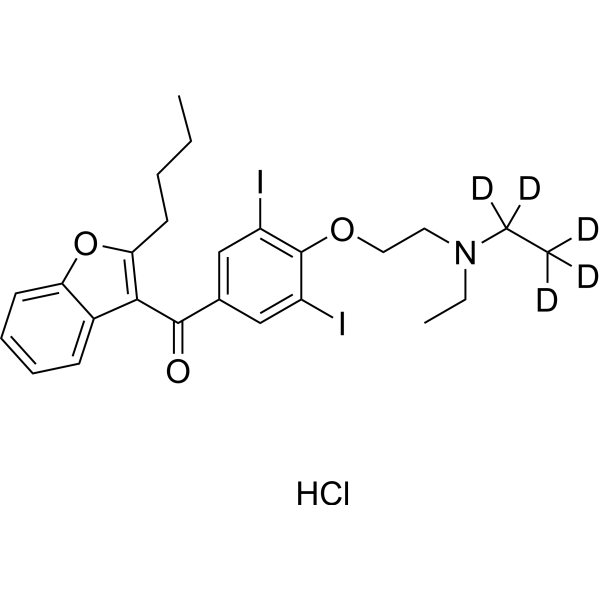 0 ImagesCat. No.: HY-14187S1Amiodarone-d5 hydrochloride is deuterated labeled Amiodarone (HY-14187). Amiodarone is an antiarrhythmic agent for inhibition of ATP-sensitive potassium channel with an IC50 of 19.1 μM.
-
PPM-18
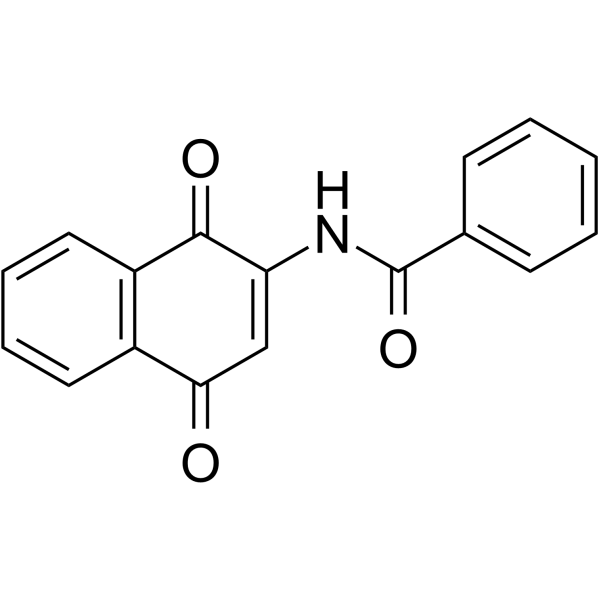 0 ImagesSynonyms: NSC 73233PPM-18 (NSC 73233) is a Vitamin K (HY-B2172) analog. PPM-18 prevents LPS-induced IκBα degradation, thereby inhibiting NF-κB activation and nuclear translocation of NF-κB. PPM-18 inhibits LPS-induced nitrite production and iNOS expression. PPM-18 inhibits HDAC6. PPM-18 induces ROS accumulation, activates AMPK, inhibits the mTORC1 and PI3K/AKT pathways, initiates Autophagy, and induces Apoptosis. PPM-18 suppresses seizures in zebrafish and mouse epilepsy models. PPM-18 prevents LPS-induced lethal toxicity and delayed hypotension. PPM-18 exhibits anticancer activity against leukemia and bladder cancer. PPM-18 can be used in research related to septic shock, bladder cancer and atherosclerosis.
-
(1r,4r)-Thalidomide-piperidine-N(Me)-CH-cyclohexane-NH-Boc
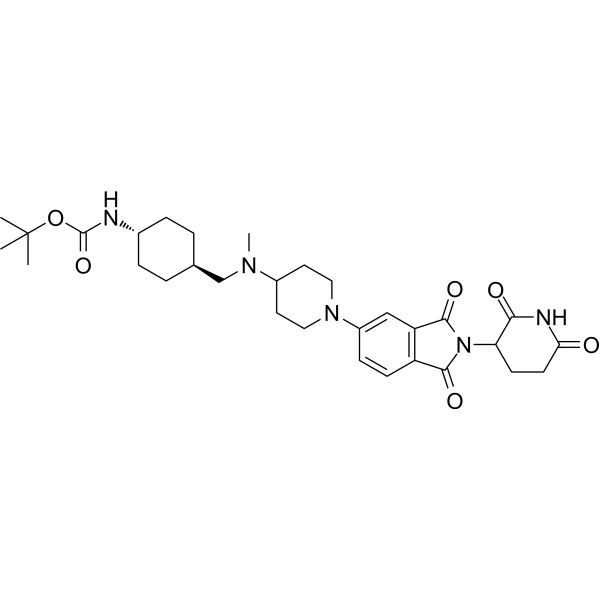 0 ImagesCat. No.: HY-163229(1r,4r)-Thalidomide-piperidine-N(Me)-CH-cyclohexane-NH-Boc is a conjugate of E3 ligase ligand and linker, consisting of Thalidomide (HY-14658) and the corresponding Linker. (1r,4r)-Thalidomide-piperidine-N(Me)-CH-cyclohexane-NH-Boc can serve as a Cereblon ligand to recruit CRBN protein and serve as a key intermediate for the synthesis of complete PROTAC molecules.
-
Thalidomide-NH-amido-C2-NH2 hydrochloride
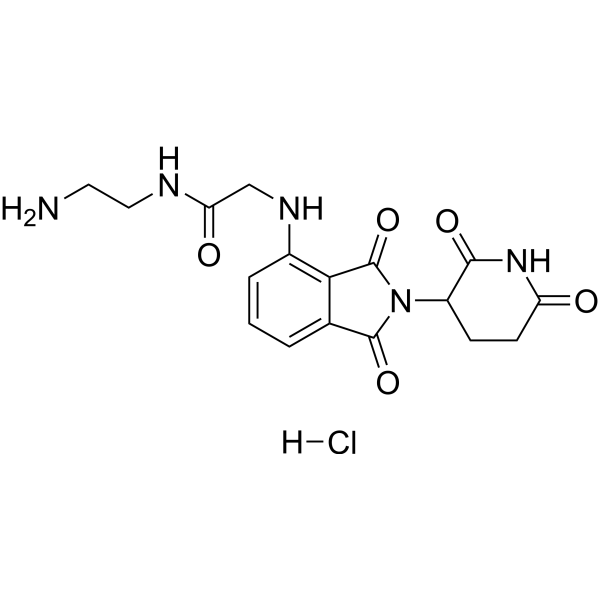 0 ImagesCat. No.: HY-138849ACAS No.: 2983057-90-3Thalidomide-NH-amido-C2-NH2 hydrochloride is a synthesized E3 ligase ligand-linker conjugate that incorporates the Thalidomide based cereblon ligand and a linker used in PROTAC technology.
-
(S)-Thalidomide-piperazine-(1S,4r)-cyclohexane-N(Me)-Boc
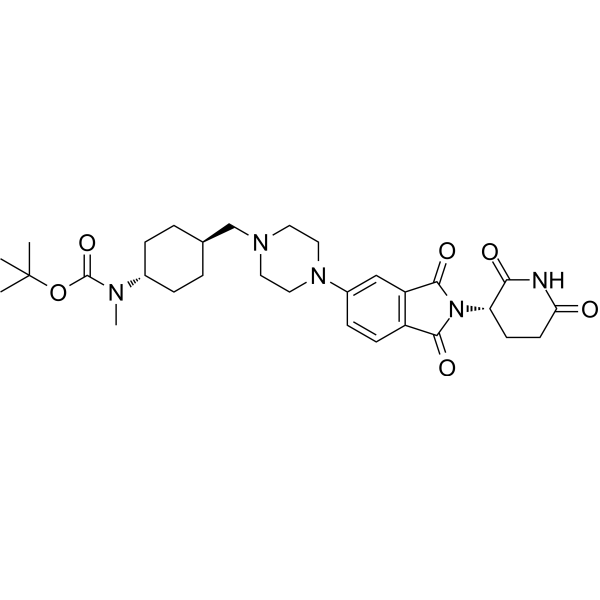 0 ImagesCat. No.: HY-163221(S)-Thalidomide-piperazine-(1S,4r)-cyclohexane-N(Me)-Boc is a conjugate of E3 ligase ligand and linker, consisting of Thalidomide (HY-14658) and the corresponding Linker. (S)-Thalidomide-piperazine-(1S,4r)-cyclohexane-N(Me)-Boc can serve as Cereblon ligand to recruit CRBN protein and serve as a key intermediate for the synthesis of complete PROTAC molecules.
-
Cabergoline diphosphate
 0 ImagesCat. No.: HY-15296ACAS No.: 85329-89-1Synonyms: FCE-21336 diphosphateCabergoline diphosphate is an ergot derived-dopamine D2-like receptor agonist that has high affinity for D2, D3, and 5-HT2B receptors (Ki=0.7, 1.5, and 1.2, respectively).
-
Antitumor agent-201
 0 ImagesCat. No.: HY-173331Antitumor agent-201 (Compound 10) is a chloride transport activator that targets the Golgi apparatus. Its EC50 for promoting the transmembrane transport of chloride ions is 1.53 mol%, and its IC50 against HepG2 cells is 7.13 μM. Antitumor agent-201 exerts its anti-cancer activity by selectively acting on the Golgi apparatus, disrupting the chloride ion homeostasis within it, reducing the expression of key proteins such as GM130 and GRASP55, altering the structure and function of the Golgi apparatus, triggering Autophagy of the Golgi apparatus, and further inducing Apoptosis of cancer cells and arresting cancer cells in the G2/M phase. Antitumor agent-201 can be used in the research field of cancer diseases.




