



Cathepsin
Cathepsins are protease enzymes, categorized into multiple families. Cathepsins can be serine protease, cysteine protease, or aspartyl protease. There are about 15 classes of cathepsins in humans (Cathepsin A, B, C, D, E, F, G, H, K, L, O, S, V, W, and Z). Cathepsins are active in the low pH milieu of lysosomes and are versatile in their functions. Like other enzymes, they are vital for the normal physiological functions such as digestion, blood coagulation, bone resorption, ion channel activity, innate immunity, complement activation, apoptosis, vesicular trafficking, autophagy, angiogenesis, proliferation, and metastasis, among scores of others.
Numerous pathologies have been attributed to the dysregulated cathepsins, some of which include arthritis, periodontitis, pancreatitis, macular degeneration, muscular dystrophy, atherosclerosis, obesity, stroke, Alzheimer's disease, schizophrenia, tuberculosis, and Ebola.
Cathepsin Isoform Specific Products
All Product Categories
-
Cathepsin Inhibitors
(213)
View all products
-
Cathepsin Antagonist
(1)
View all products
-
Cathepsin Activators
(7)
View all products
-
Cathepsin Inducers
(3)
View all products
-
Cathepsin Degrader
(1)
View all products
-
Cathepsin Control
(1)
View all products
-
Cathepsin Substrates
(21)
View all products
-
Cathepsin Ligand
(1)
View all products
-
Cathepsin Proteins
(35)
View all products
-
Cathepsin B Proteins
(5)
View all products
-
Cathepsin C Proteins
(4)
View all products
-
Cathepsin D Proteins
(5)
View all products
-
Cathepsin E Proteins
(3)
View all products
-
Cathepsin K Proteins
(1)
View all products
-
Cathepsin L1 Proteins
(4)
View all products
-
Cathepsin S Proteins
(2)
View all products
-
Cathepsin Related Products (294)
Related Products (294)

-
Recombinant Proteins (35)
-
Antibodies (6)
-
Cathepsin Isoform Comparison
-
NOTA-FZCD-3
 0 ImagesCat. No.: HY-P11844Purity: 98.43%NOTA-FZCD-3 is a NOTA (HY-134418)-labeled FZCD-3 polypeptide precursor that targets cathepsin D (CTSD) with a KD of 0.65 μM. NOTA-FZCD-3 binds specifically to the active site of CTSD, exhibits rapid in vivo clearance properties, and remains stable in blood for more than 2 h. NOTA-FZCD-3 can be used in studies monitoring CTSD-positive tumors.
-
Cathepsin L-IN-4
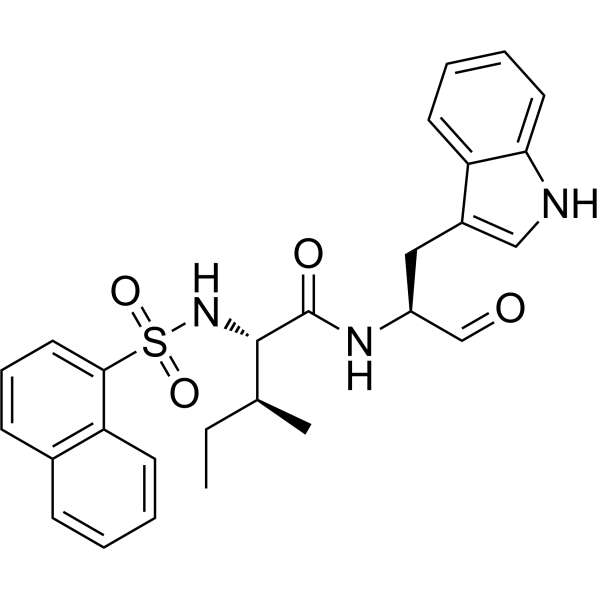 0 ImagesCat. No.: HY-137392CAS No.: 161709-56-4Synonyms: 1-Naphthalenesulfonyl-Ile-Trp-CHOCathepsin L-IN-4 is an inhibitor of cathepsin L with IC50 at nanomolar concentrations.
-
Gallinamide A TFA
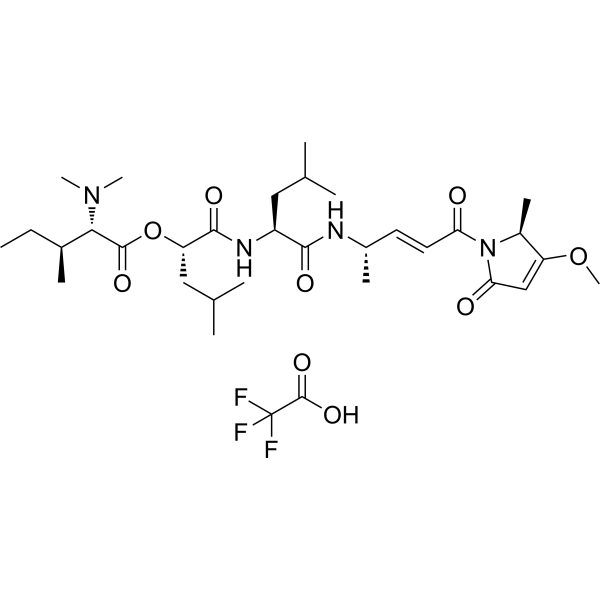 0 ImagesGallinamide A TFA is a linearly depositing peptide and a potent inhibitor of cathepsin L (CatL) (IC50: 17.6 pM). Gallinamide A TFA inhibits SARS-CoV-2 infection by inhibiting CatL (EC50: 28 nM). Gallinamide A TFA also inhibits Plasmodium falciparum (IC50: 50 nM).
-
TS-24
 0 ImagesTS-24 is an inhibitor for cathepsin S, with an IC50 of 4.3 μM. TS-24 exhibits radiosensitizing activity in wild type breast cancer susceptibility gene 1 (BRCA1) and in TNBC xenograft mice model, through induction of apoptosis.
-
Hepcidin-1 (mouse)
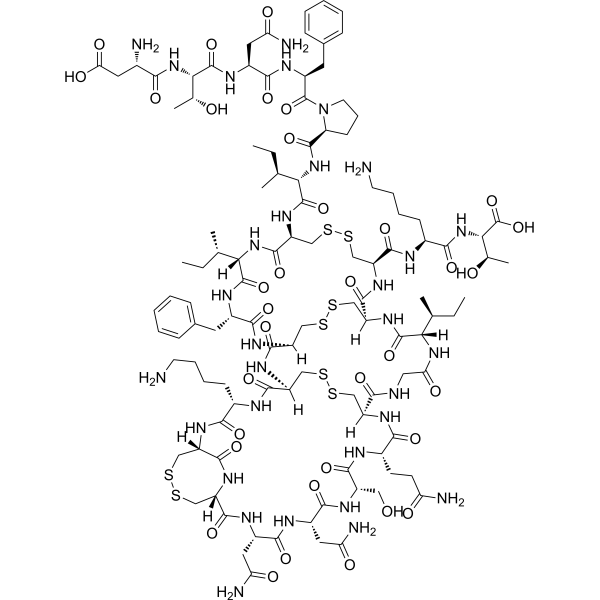 0 ImagesCat. No.: HY-P4373CAS No.: 1676104-75-8Hepcidin-1 (mouse) is an endogenous peptide hormone involved in the regulation of iron homeostasis. Hepcidin-1 (mouse) upregulates mRNA levels of TRAP, cathepsin K, and MMP-9 and increases TRAP-5b protein secretion. Hepcidin-1 (mouse) downregulates the level of FPN1 protein and increases intracellular iron. Hepcidin-1 (mouse) facilitates osteoclast differentiation.
-
CTSD Human Pre-designed siRNA Set A
 0 ImagesCat. No.: HY-RS03328
CTSD Human Pre-designed siRNA Set A contains three designed siRNAs for CTSD gene (Human), as well as a negative control, a positive control, and a FAM-labeled negative control.
-
MPI8 TFA
 0 ImagesCat. No.: HY-158763ASynonyms: TG0205221 TFAMPI8 (TG0205221) TFA is an inhibitor of the major protease of SARS-CoV-2 (MPro) with high antiviral activity. MPI8 TFA exerts its antiviral effect by dual and selective inhibition of SARS-CoV-2 MPro and host cell cysteine protease L (cathepsin L). MPI8 TFA can be used in clinical studies of COVID-19.
-
KYS-1
 0 ImagesKYS-1 is a selective substrate for cathepsin E with a Km value of 1.9 μM. KYS-1 was incubated with cathepsin E (1.0 ng) with the pH optimum of approximately pH 4.0.
-
MIV-247
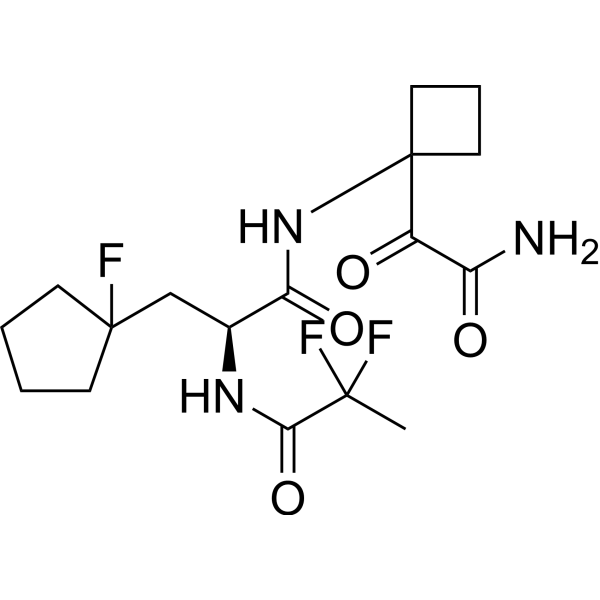 0 ImagesCat. No.: HY-112583CAS No.: 1352817-76-5MIV-247 is a selective cathepsin S inhibitor with Kis of 2.1, 4.2 and 7.5 nM for human, mouse and cynomolgus monkey cathepsin S, respectively.
-
Papain (lyophilized powder, ≥10 units/mg protein)
 0 ImagesPapain (lyophilized powder, ≥10 units/mg protein) is a cysteine protease of the peptidase C1 family. Papain (lyophilized powder, ≥10 units/mg protein) enhances red cell agglutination by anti-D and anti-A, and increases red cell sensitivity to K cell-mediated lysis in ADCC assays. Papain (lyophilized powder, ≥10 units/mg protein) can induce pulmonary emphysema. Papain (lyophilized powder, ≥10 units/mg protein) can be used for the researches of Rh haemolytic disease of the newborn and pulmonary emphysema.
-
L-873724
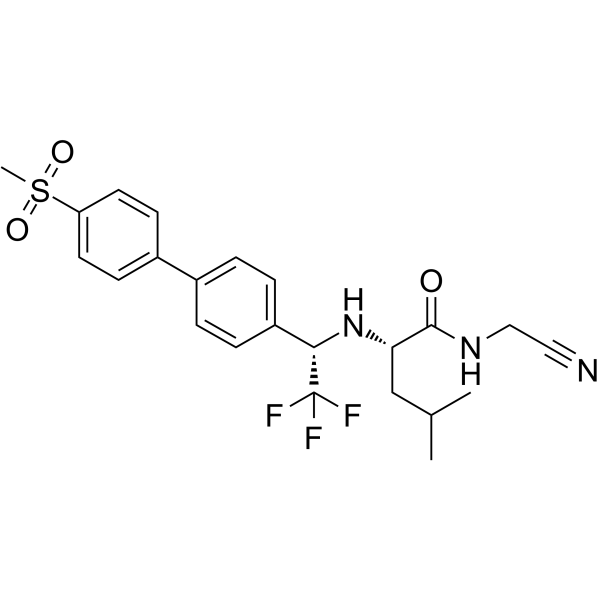 0 ImagesL-873724 is a potent, orally bioavailable, selective and reversible non-basic cathepsin K inhibitor, with IC50s of 0.2, 178, 264, and 5239 nM for cathepsin K, cathepsin S, cathepsin L, cathepsin B, respectively. L-873724 also exhibits an IC50 of 0.5 nM for rabbit cathepsin K. L-873724 inhibits bone resorption.
-
SSAA09E1
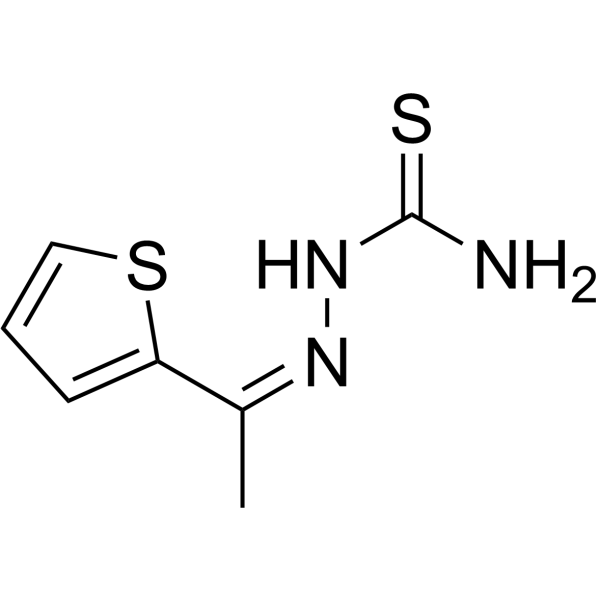 0 ImagesSSAA09E1 is a cathepsin L blocker (IC50: 5.33 μM).SSAA09E1 inhibits stages of viral entry. SSAA09E1 can be used for SARS-CoV infection research
-
Z-Phe-Phe-Diazomethylketone
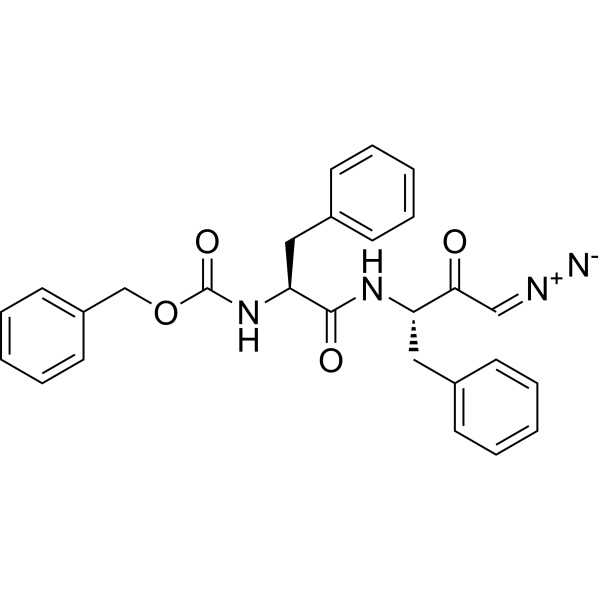 0 ImagesCat. No.: HY-P4306CAS No.: 65178-14-5Z-Phe-Phe-Diazomethylketone is a selective inhibitor of cathepsin L.
-
Ac-Glu-Asp(EDANS)-Lys-Pro-Ile-Leu-Phe-Phe-Arg-Leu-Gly-Lys(DABCYL)-Glu-NH2 acetate
 0 ImagesCat. No.: HY-P4787APurity: 99.44%Ac-Glu-Asp(EDANS)-Lys-Pro-Ile-Leu-Phe-Phe-Arg-Leu-Gly-Lys(DABCYL)-Glu-NH2 acetate is a Cathepsin D substrate, that can be used for cathepsin D FRET assay.
-
Dual Cathepsin L/JAK-IN-1
 0 ImagesDual Cathepsin L/JAK-IN-1 (Compound A8) is a dual inhibitor of Cathepsin L (CTSL) and JAK, with IC50 values of 0.68 μM, 337.1 nM, 5.251 nM, 27.29 nM, and 172.6 nM for CTSL, JAK1/2/3, and TYK2, respectively. Dual Cathepsin L/JAK-IN-1 effectively blocks the activation of the MAPK, NF-κB, and JAK/STAT signaling pathways, leading to significant anti-inflammatory therapeutic effects. Dual Cathepsin L/JAK-IN-1 can be used in research on acute lung injury (ALI).
-
S2160 hydrochloride
 0 ImagesCat. No.: HY-118959ACAS No.: 38789-84-3Synonyms: Bz-Phe-Val-Arg-pNA hydrochlorideS2160 hydrochloride is a substrate of Cathepsin B that can be utilized in the calorimetric assay for the measurement of cathepsin B.
-
Cathepsin K inhibitor 6
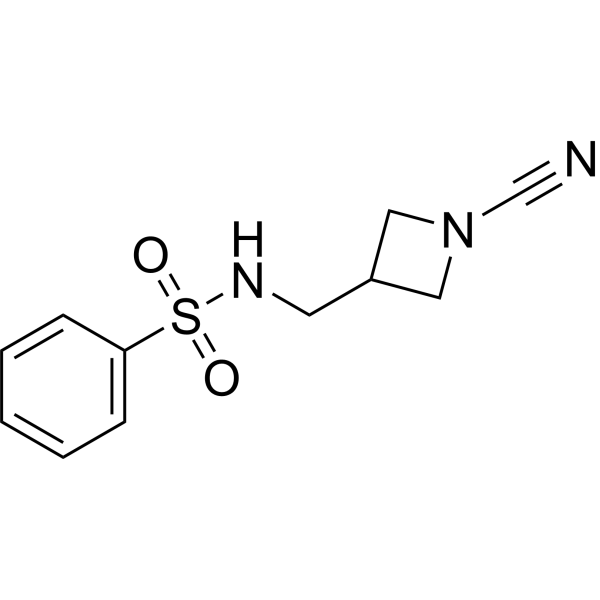 0 ImagesCathepsin K inhibitor 6 (compound 19) is an inhibitor of cathepsin K (Cat K) with an IC50 of 17 nM. Cathepsin K inhibitor 6 also has inhibitory effects on other isoforms, with IC50s of 0.05 μM (Cat L) and 0.3 μM (Cat B), respectively.
-
Cathepsin L-IN-5
 0 ImagesCat. No.: HY-169171CAS No.: 3115287-13-0Cathepsin L-IN-5 (D6-3) is a potent Cathepsin L (CatL) inhibitor with an IC50 of 0.27 nM. Cathepsin L-IN-5 effectively blocks the CatL function and substantially hinders the entry of the SARS-CoV-2 pseudovirus to cells by inhibiting the cleavage of the spike protein. Cathepsin L-IN-5 can be utilized in SARS-CoV-2 research.
-
Poly-L-glutamic acid sodium salt (MW 120000)
 0 ImagesCat. No.: HY-W596474ICAS No.: 26247-79-0Poly-L-glutamic acid sodium salt (MW 120000) is a synthetic polypeptide with biocompatibility, biodegradability and non-immunogenicity. Poly-L-glutamic acid sodium salt is an ideal tumor-targeting polymer carrier. Poly-L-glutamic acid sodium salt can be hydrolyzed by cathepsin B during metabolic decomposition.
-
Z-Arg-Arg-βNA acetate
 0 ImagesZ-Arg-Arg-βNA acetate is a sensitive dipeptide substrate of the protease Cathepsin B and resistant to proteases H and L. Z-Arg-Arg-βNA acetate can serve as an important tool for distinguishing non-Cathepsin B type proteins.




