



RelA/p65
RelA/p65 is a transcriptionally active subunit of the NF-κB family and functions as a central regulator of inflammatory, immune, cell survival, and stress-response gene expression programs[1][2]. Upon activation of the canonical NF-κB pathway by pro-inflammatory cytokines, Toll-like receptor signaling, or other cellular stimuli, inhibitory IκB proteins are degraded, allowing RelA-containing NF-κB complexes to translocate into the nucleus and regulate target gene transcription[3][4]. The predominant NF-κB complex in most cell types is the p50-RelA (p65) heterodimer, which controls the expression of cytokines, chemokines, and survival-associated genes that coordinate innate and adaptive immune responses[5][6]. Mechanistically, RelA activity is further regulated by post-translational modifications, including phosphorylation, acetylation, methylation, and ubiquitination, which influence its transcriptional output across physiological and pathological conditions[2]. Dysregulated RelA signaling is strongly associated with chronic inflammation, immune disorders, metabolic disease, and cancer, making this pathway a major focus of translational research and therapeutic development[1][7][8]. In disease models, genetic or functional disruption of RelA alters inflammatory responses, cell survival, and immune activation, highlighting its essential biological role[9]. Compared with related NF-κB family members, RelA is distinguished by its prominent role in the canonical pathway and its widespread expression across tissues, whereas c-Rel is enriched in hematopoietic cells and RelB/p52 primarily mediates non-canonical NF-κB signaling[3][5]. For experimental applications, direct targeting of RelA/p65 and modulation of NF-κB nuclear activity are widely explored strategies for investigating inflammatory mechanisms and evaluating therapeutic interventions[1].
References:
- [1]. Baño V, et al. Characterization and Structural Performance in Bending of CLT Panels Made from Small-Diameter Logs of Loblolly/Slash Pine. Materials (Basel). 2018 Nov 30;11(12):2436. [Content Brief]
- [2]. Huang Y, et al. The adjuvant treatment role of ω-3 fatty acids by regulating gut microbiota positively in the acne vulgaris. J Dermatolog Treat. 2024 Dec;35(1):2299107. [Content Brief]
- [3]. Wan F, et al. The nuclear signaling of NF-kappaB: current knowledge, new insights, and future perspectives. Cell Res. 2010 Jan;20(1):24-33. [Content Brief]
- [4]. Opheim E, et al. Changes in Risk Behaviour Among People With Recent Injecting Drug Use in Oslo 2002-2024. Drug Alcohol Rev. 2026 Jan;45(1):e70060. [Content Brief]
- [5]. Rabezanahary H, et al. Live virus neutralizing antibodies against pre and post Omicron strains in food and retail workers in Québec, Canada. Heliyon. 2024 May 21;10(10):e31026. [Content Brief]
- [6]. Sun SC. The non-canonical NF-κB pathway in immunity and inflammation. Nat Rev Immunol. 2017 Sep;17(9):545-558. doi: 10.1038/nri.2017.52. Epub 2017 Jun 5. PMID: 28580957; PMCID: PMC5753586. et al. The non-canonical NF-κB pathway in immunity and inflammation. Nat Rev Immunol. 2017 Sep;17(9):545-558. [Content Brief]
- [7]. Taniguchi K, et al. NF-κB, inflammation, immunity and cancer: coming of age. Nat Rev Immunol. 2018 May;18(5):309-324. [Content Brief]
- [8]. Frawley L, et al. Stem Cell Therapy for the Treatment of Amyotrophic Lateral Sclerosis: Comparison of the Efficacy of Mesenchymal Stem Cells, Neural Stem Cells, and Induced Pluripotent Stem Cells. Biomedicines. 2024 Dec 27;13(1):35. [Content Brief]
- [9]. Yu Y, et al. The biological functions of NF-kappaB1 (p50) and its potential as an anti-cancer target. Curr Cancer Drug Targets. 2009 Jun;9(4):566-71. [Content Brief]
-
RelA/p65 Related Products (64)
Related Products (64)

-
Ginsenoside Rg1 (Standard)
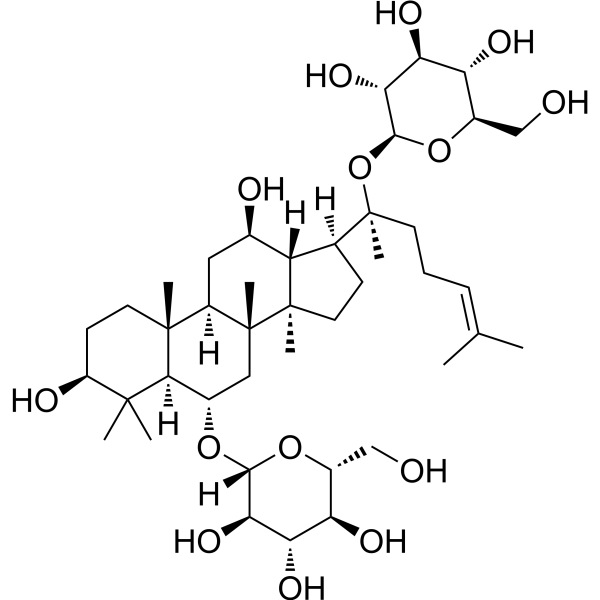 0 ImagesSynonyms: Panaxoside A (Standard); Panaxoside Rg1 (Standard)Ginsenoside Rg1 (Standard) is the analytical standard of Ginsenoside Rg1. This product is intended for research and analytical applications. Ginsenoside Rg1 is one of the major active components of Panax ginseng. Ginsenoside Rg1 ameliorates the impaired cognitive function, displays promising effects by reducing cerebral Aβ levels. Ginsenoside Rg1 also reduces NF-κB nuclear translocation.
-
Anti-inflammatory agent 118
 0 ImagesCat. No.: HY-184341Anti-inflammatory agent 118 is a bergenin derivative with anti-inflammatory activity. Anti-inflammatory agent 118 inhibits the expression of iNOS through negative feedback regulation mediated by NO release, while blocking the phosphorylation of p65 protein and reducing the secretion levels of two pro-inflammatory cytokines, TNF-α and IL-6. Anti-inflammatory agent 118 can be used for the research of inflammation-related diseases.
-
CLP-d2
 0 ImagesCat. No.: HY-P11617CLP-d2 is a multi-target anti-inflammatory agent, osteoclastogenesis inhibitor and immunomodulator with superior pharmacokinetic properties to Daptomycin (HY-B0108) and good safety profiles. CLP-d2 inhibits the NF-κB and MAPK signaling pathways by reducing the expression levels of c-Fos and NFATc1, and decreasing the phosphorylation levels of IκBα, p65, ERK and JNK, thereby reducing the secretion of pro-inflammatory cytokines such as IL-6, TNF-α and IL-1β to exert anti-inflammatory activity. CLP-d2 inhibits intra-articular osteoclastogenesis in mice, alleviates bone erosion and joint swelling, reduces synovial hyperplasia and inflammatory cell infiltration, and decreases serum rheumatoid factor (RF) levels. CLP-d2 is applicable to related research on rheumatoid arthritis.
-
Glycoursodeoxycholic acid 3-sulfate
 0 ImagesCat. No.: HY-48813CAS No.: 133429-88-6Glycoursodeoxycholic acid 3-sulfate is a glycine-conjugated sulfated bile acid 3-sulfate, which is produced by SULT2A1-mediated sulfation of glycoursodeoxycholic acid (HY-N1424) in the liver. Glycoursodeoxycholic acid 3-sulfate attenuates the anti-inflammatory effect of glycoursodeoxycholic acid and impairs the inhibitory effect on the IL-17 and NF-κB signaling pathways. Glycoursodeoxycholic acid 3-sulfate shows a significant correlation with aortic flow velocity and BNP in patients with aortic stenosis. Glycoursodeoxycholic acid 3-sulfate is mainly used in related studies such as quantitative analysis, quality control and biochemical experiments; it often serves as a reagent for metabolomics analysis and can also be applied to research related to aortic stenosis.



