



Fluorescent Dye
Fluorescence is a phenomenon of photoluminescence in luminescence. When an atom is irradiated by light, some electrons around the nucleus jump from their original orbitals to higher energy orbitals under the influence of light energy, i.e., from the ground state to the first or second excited single-line state, etc. Due to the instability of the first or second excited singlet state, the electron returns from the excited singlet state to the ground state accompanied by released energy, resulting in fluorescence.
Fluorescent dyes can be covalently bound or physically adsorbed in the structure of the substance. The fluorescence properties allow for the characterization, localization and quantitative analysis of the labeled object. Fluorescent dyes have shown great potential for the detection of proteins, nucleic acids, cells, and immunoassays, attributed to the advantages in non-radioactive contamination, simple experimental operation and easy observation.
Fluorescent dyes have penetrated many fields such as pharmacology, physiology, environmental science, and information science, as well as functional studies of proteins and drug screening.
All Product Categories
-
Fluorescent Dye Related Products (4891)
Related Products (4891)

-
Antibodies (4)
-
NerveGreen C3
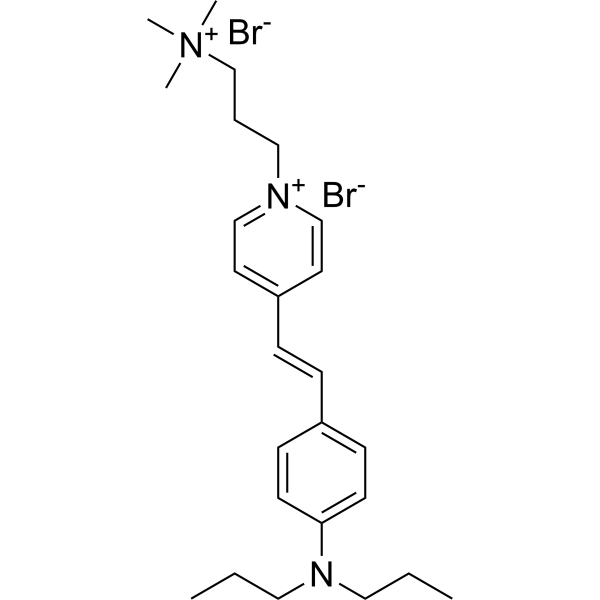 0 ImagesCat. No.: HY-D1516CAS No.: 1331918-65-0NerveGreen C3 is a cationic styrene based fluorescent dye. NerveGreen C3 can be used to track synaptic activity at neuromuscular junctions or synapses.

-
1-[3-(Succinimidyloxycarbonyl)benzyl]-4-[2-(3,4-dihydro-2H-1-benzopyran-6-yl)-5-oxazolyl]pyridinium bromide
![1-[3-(Succinimidyloxycarbonyl)benzyl]-4-[2-(3,4-dihydro-2H-1-benzopyran-6-yl)-5-oxazolyl]pyridinium bromide](https://file.medchemexpress.com/product_pic/hy-d1507.gif "Click to View 1-[3-(Succinimidyloxycarbonyl)benzyl]-4-[2-(3,4-dihydro-2H-1-benzopyran-6-yl)-5-oxazolyl]pyridinium bromide Product Detail") 0 ImagesCat. No.: HY-D1507CAS No.: 155863-03-91-[3-(Succinimidyloxycarbonyl)benzyl]-4-[2-(3,4-dihydro-2H-1-benzopyran-6-yl)-5-oxazolyl]pyridinium bromide is a fluorescence dye.
0 ImagesCat. No.: HY-D1507CAS No.: 155863-03-91-[3-(Succinimidyloxycarbonyl)benzyl]-4-[2-(3,4-dihydro-2H-1-benzopyran-6-yl)-5-oxazolyl]pyridinium bromide is a fluorescence dye.
-
AF405-PEG12-DBCO
 0 ImagesCat. No.: HY-D3571AF405-PEG12-DBCO is a derivative of Alexa Fluor 405 featuring a DBCO (dibenzocyclooctyne) group for copper-free click chemistry (SPAAC). It incorporates a PEG12 linker to enhance hydrophilicity and provide increased spacer length. AF405-PEG12-DBCO is primarily used for copper-free click chemistry (SPAAC) bioconjugation (Ex/Em = 402/421 nm).
-
4Arm-PEG20000-RB
 0 ImagesCat. No.: HY-D2894CSynonyms: 4Arm-PEG20000-Rhodamine B4Arm-PEG20000-RB (4Arm-PEG20000-Rhodamine B) is a fluorescent dye composed of Rhodamine B (HY-Y0016) and PEG with a four-arm structure. 4Arm-PEG20000-RB can be used for drug delivery and fluorescence imaging (Ex/Em=546/610 nm).
-
WazaGaY-1
 0 ImagesCat. No.: HY-D3432WazaGaY-1 is an aza-BODIPY derivative, functions as a NIR-I/NIR-II fluorescent contrast agent. WazaGaY-1 undergoes internalization into tumor cells predominantly via clathrin-coated pits. WazaGaY-1 can be used for the research of glioblastoma, ovarian carcinoma and melanoma (Ex/Em = 685/820 nm).
-
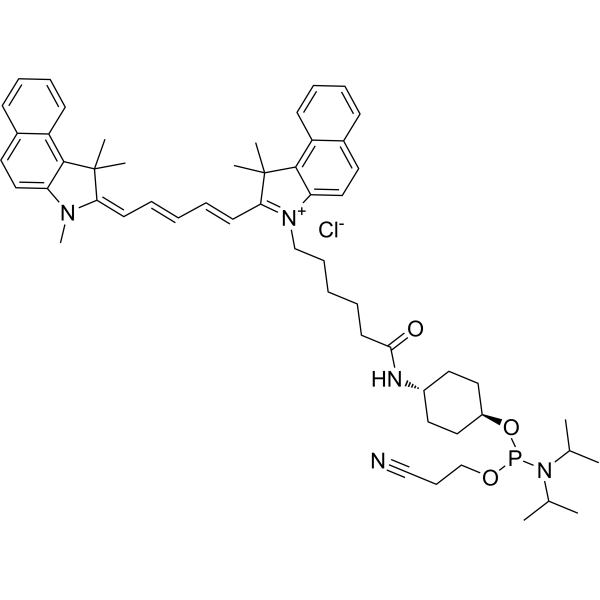
Chlorin e6 (solution)
 0 ImagesCat. No.: HY-DY1092CAS No.: 19660-77-6Synonyms: Ce6 (solution)Chlorin e6 (solution) (Ce6 (solution)) is a photosensitizer and has strong absorption peaks at wavelength of 402 and 662 nm, as well as exhibiting intense fluorescence at 668 nm. Chlorin e6 has antimicrobial efficacy and anticancer activity. Chlorin e6 induces cell apoptosis via caspase-3 activation and can be used for the research of cancer.
Solvent and concentration: DMSO: 10 mM
The 1 mL volume is defined as the base specification. All larger sizes correspond to incremental volumes of this base.
-
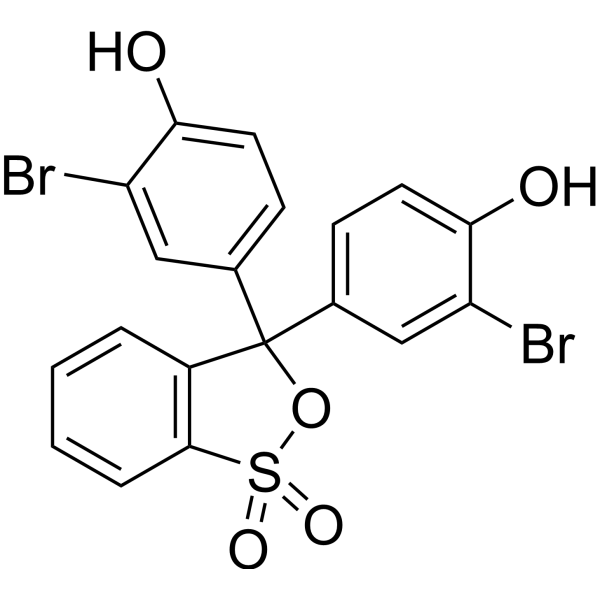
Tubulin-RedTracker
 0 ImagesCat. No.: HY-D3306Tubulin-RedTracker is a paclitaxel-derived fluorescent microtubule-binding probe. Tubulin-RedTracker induces F-actin cytoskeleton defects at relatively high concentrations. (Ex/Em=652/669).
-
Basic yellow 40
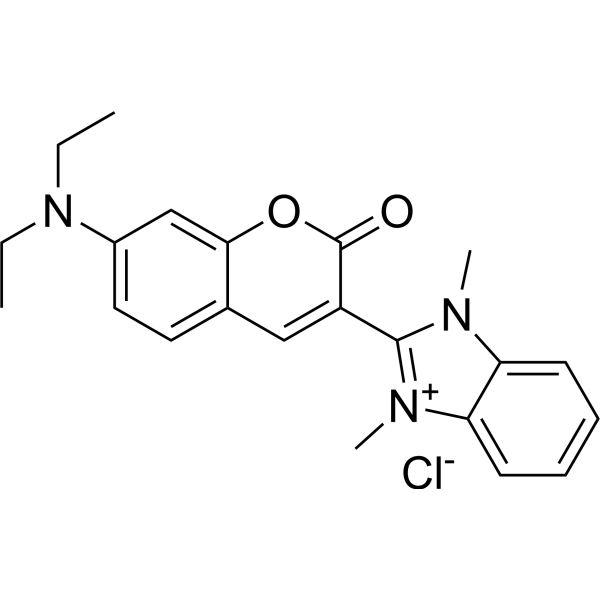 0 ImagesCat. No.: HY-D1129CAS No.: 29556-33-0Synonyms: Coumarin 40Basic yellow 40 is an alkaline dye that can be removed from aqueous solutions in intermittent adsorption systems using tree ferns as biosorbents.
-
4-(Benzyloxy)-2-nitrophenol
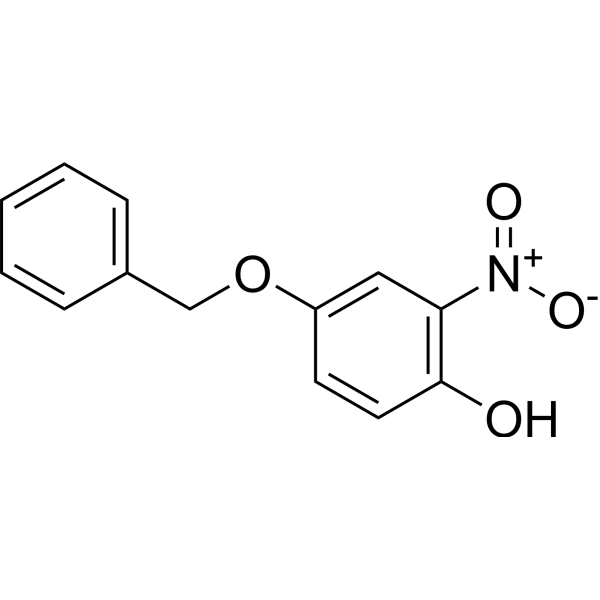 0 ImagesCat. No.: HY-W351340CAS No.: 96315-18-34-(Benzyloxy)-2-nitrophenol is a synthetic building block that can be used in the synthesis of fluorescent ion indicators.

-
AF 430 tetrazine
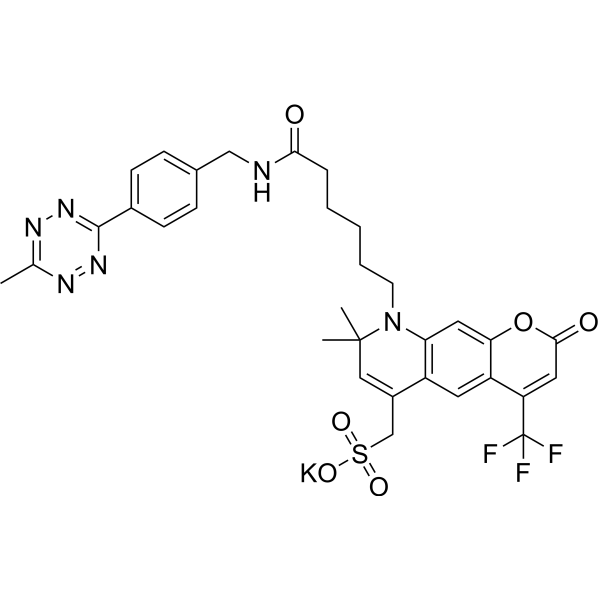 0 ImagesCat. No.: HY-D2148AF 430 tetrazine is a derivative of the yellow fluorescent dye AF 430. AF430 has an excitation wavelength of 425 nm and an emission wavelength of 542 nm. AF 430 tetrazine contains a Tetrazine group that can undergo an inverse electron demand Diels-Alder reaction (iEDDA) with molecules containing TCO groups. To achieve specific coupling of dye labels and biomolecules.
-
(5)6-Carboxytetramethylrhodamine
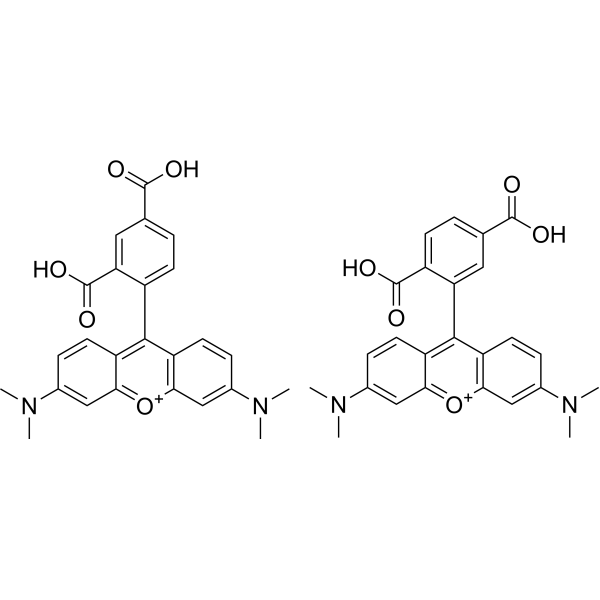 0 Images(5)6-Carboxytetramethylrhodamine contains a carboxylic acid that can be used to react with primary amines via carbodiimide activation of the carboxylic acid; bright, orange-fluorescent dye produces conjugates with absorption/emission maxima of ~555/580 nm.
-
IR-251
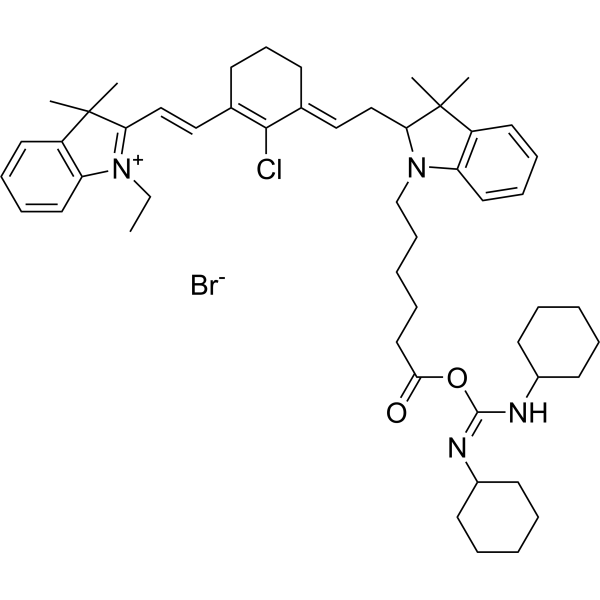 0 ImagesCat. No.: HY-155062IR-251 is a mitochondrion-targeting NIR fluorescent probe. IR-251 targets mitochondria via OATPs and causes mitochondrial damage in tumor cells. IR-251 IR-251 induced ROS overproduction by inhibiting PPARγ, and then inhibiting the β-catenin signaling pathway and downstream protein molecules related to the cell cycle and metastasis. IR-251 inhibits tumor proliferation and metastasis.
-
SYBR Green II (Ionic form)
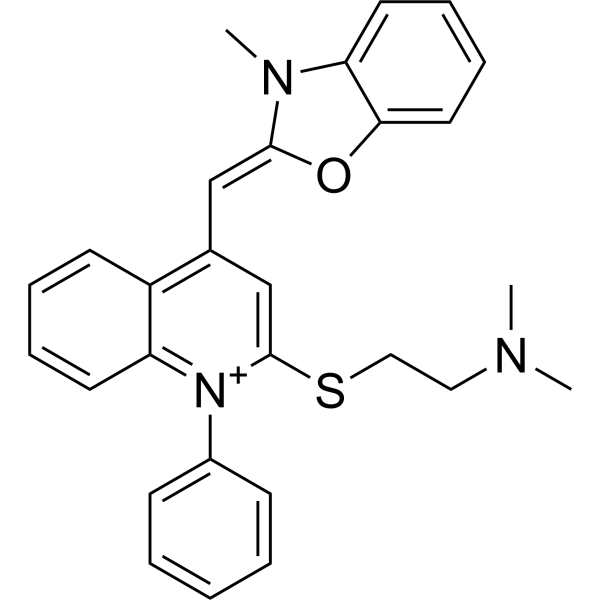 0 ImagesCat. No.: HY-D1098ACAS No.: 178919-00-1SYBR Green II (Ionic form) is a fluorescent nucleic acid dye that mainly binds single-stranded nucleotides. SYBR Green II is sensitive to oligonucleotides or larger nucleic acid polymers in a variety of cells and gels. SYBR Green II can be used to study cell structure, membrane integrity or function, and cell cycle distribution. Wavelength 484/515 nm.
-
Sumitone fast red b
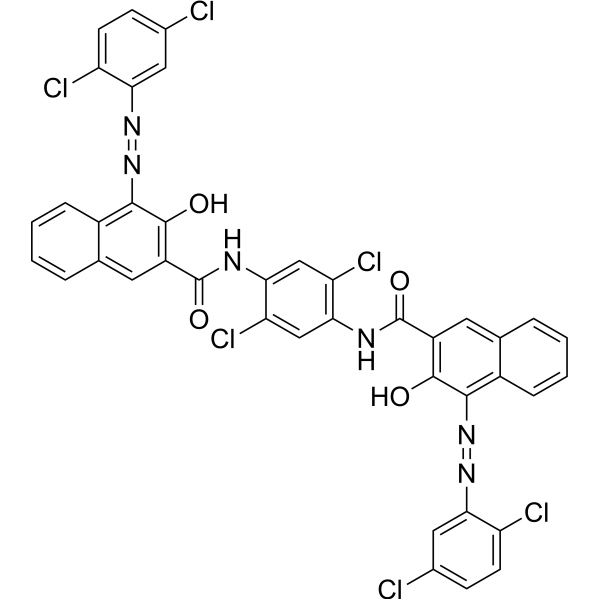 0 ImagesCat. No.: HY-D0554CAS No.: 40618-31-3Sumitone fast red b is a multifunctional dye. Dyes are important tools in biological experiments. They can help researchers observe and analyze cell structures, track biomolecules, evaluate cell functions, distinguish cell types, detect biomolecules, study tissue pathology and monitor microorganisms. Their applications range from basic scientific research to clinical A wide range of diagnostics. Dyes are also widely used in traditional fields such as textile dyeing, as well as in emerging fields such as functional textile processing, food pigments and dye-sensitized solar cells.
-
2-AHA-cAMP
 0 ImagesCat. No.: HY-131772CAS No.: 214276-80-92-AHA-cAMP is an analogue of natural signal molecule cAMP and an activator of cAMP-dependent protein kinase. 2-AHA-cAMP has a free terminal primary amino group, which can be used for coupling to gels or fluorescent dyes.




