



Fluorescent Dye
Fluorescence is a phenomenon of photoluminescence in luminescence. When an atom is irradiated by light, some electrons around the nucleus jump from their original orbitals to higher energy orbitals under the influence of light energy, i.e., from the ground state to the first or second excited single-line state, etc. Due to the instability of the first or second excited singlet state, the electron returns from the excited singlet state to the ground state accompanied by released energy, resulting in fluorescence.
Fluorescent dyes can be covalently bound or physically adsorbed in the structure of the substance. The fluorescence properties allow for the characterization, localization and quantitative analysis of the labeled object. Fluorescent dyes have shown great potential for the detection of proteins, nucleic acids, cells, and immunoassays, attributed to the advantages in non-radioactive contamination, simple experimental operation and easy observation.
Fluorescent dyes have penetrated many fields such as pharmacology, physiology, environmental science, and information science, as well as functional studies of proteins and drug screening.
All Product Categories
-
Fluorescent Dye Related Products (4888)
Related Products (4888)

-
Antibodies (4)
-
L-ANAP
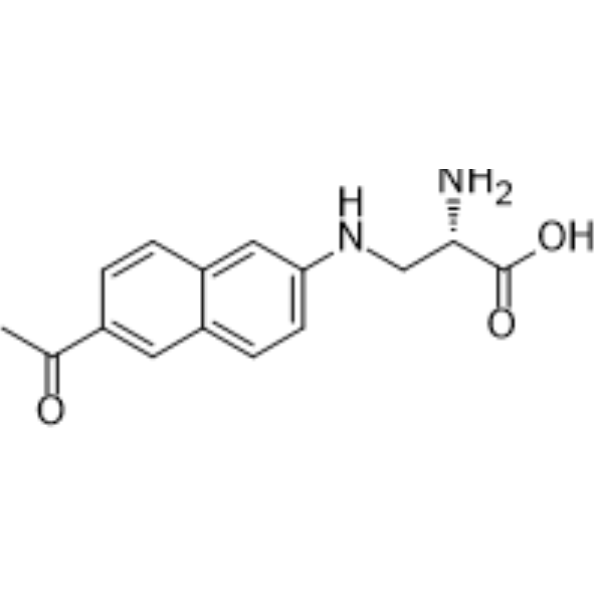 0 ImagesL-ANAP is a genetically encodable and polarity-sensitive fluorescent unnatural amino acid (Uaa).
-
Quin-2AM
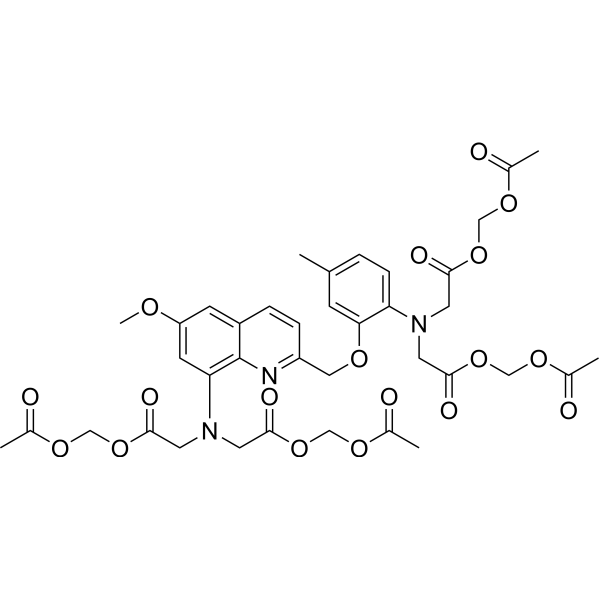 0 ImagesCat. No.: HY-101902CAS No.: 83104-85-2Synonyms: Quin-2 acetoxymethyl esterQuin-2AM is a fluorecent Ca2+ chelator, with high affinity for calcium. Quin-2AM can specifically identify intracellular calcium ions, with high sensitivity, low cytotoxicity, increased AM acetylmethyl ester can enter the cell well, after being sheared by the intracellular esterase stay in the cell to bind to calcium ions, produce strong fluorescence.
-
DiSulfo-Cy5 alkyne
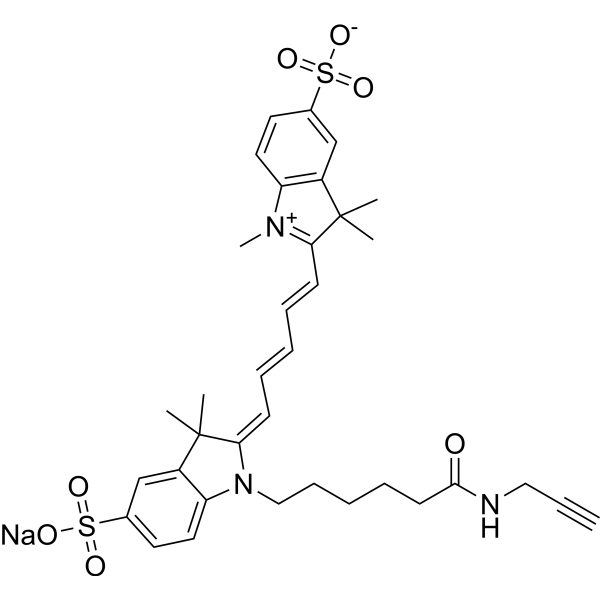 0 ImagesDiSulfo-Cy5 alkyne is a fluorescent dye can be used as a click chemistry reagent.
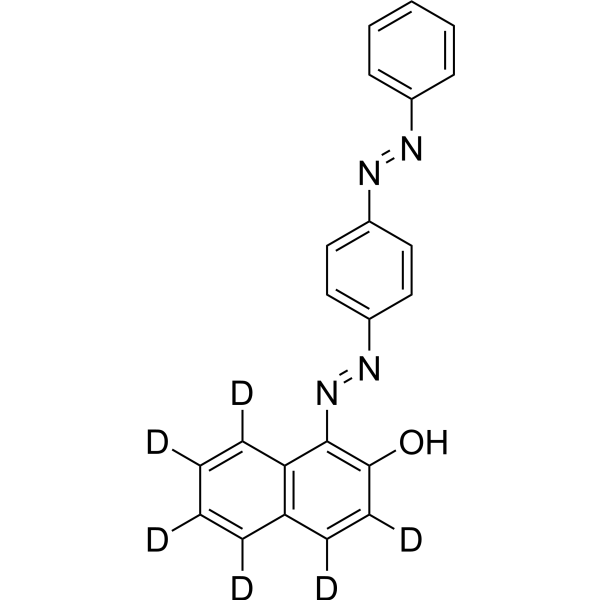
-
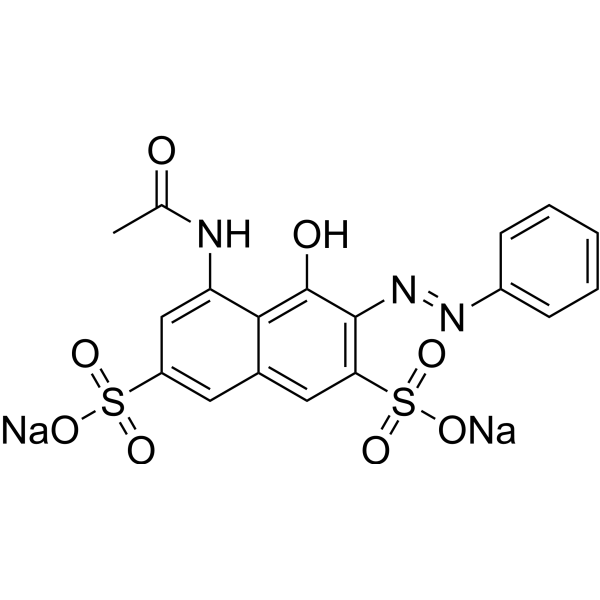
Hydroxy naphthol blue disodium
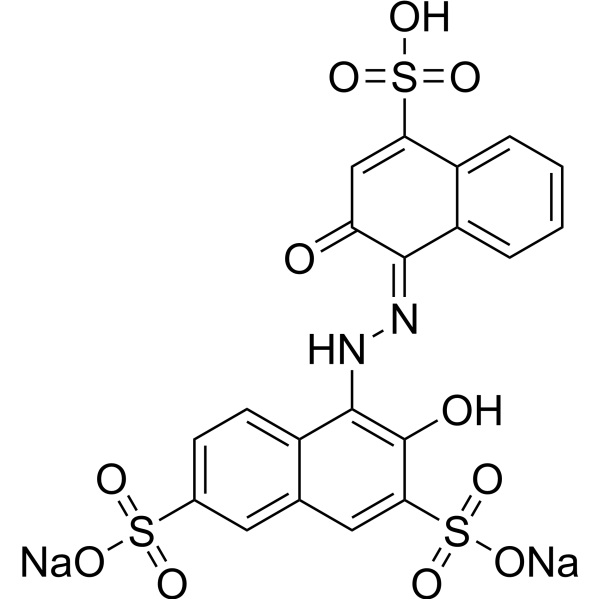 0 ImagesCat. No.: HY-W151206CAS No.: 165660-27-5Hydroxy naphthol blue disodium is an azo dye compound commonly used as an acid-base indicator (λmax = 650 nm). Within the pH range of 12 to 13, the indicator solution of Hydroxy naphthol blue disodium appears pale red in the presence of calcium ions and dark blue in the presence of disodium EDTA.
-
Chromoionophore I
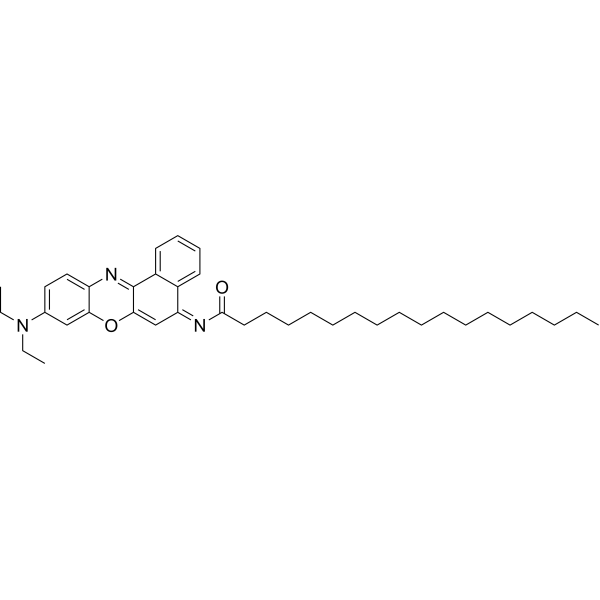 0 ImagesCat. No.: HY-D0140CAS No.: 125829-24-5Synonyms: ETH 5294Chromoionophore I (ETH 5294) is a hydrophobic pH indicator. Chromoionophore I is used as a transmissive or fluorescent probe molecule in many types of hydrophobic sensor membranes. Chromoionophore I is oil-soluble.
-
ZY-2
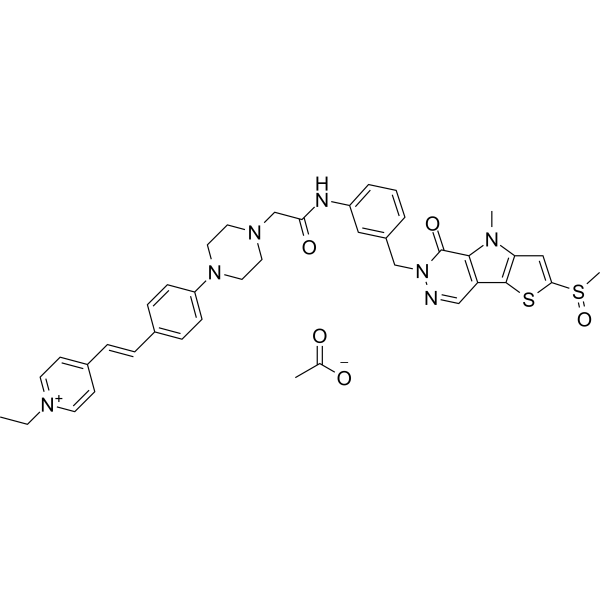 0 ImagesCat. No.: HY-D1876ZY-2 is a specific fluorescent probe for pyruvate kinase M2 (PKM2). ZY-2 can image in PKM2-positive cells in a time- and concentration-dependent manner. ZY-2 can be used for the detection of cancer cells.
-
SGPL1 fluorogenic substrate
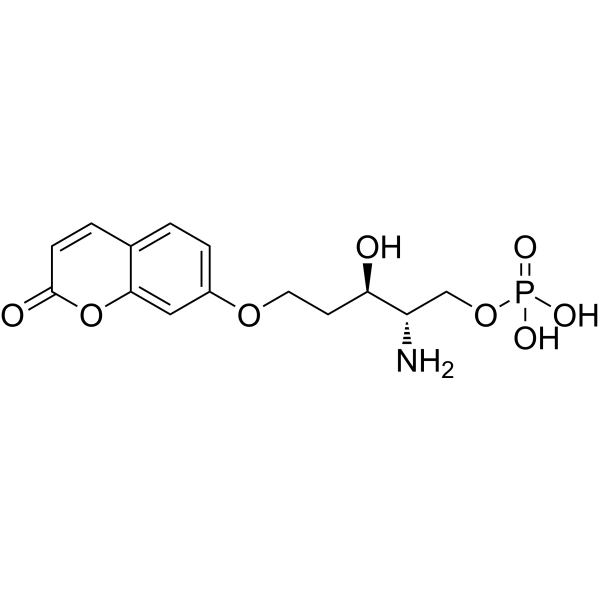 0 ImagesCat. No.: HY-D2284CAS No.: 1166838-84-1Synonyms: Sphingosine-1-phosphate lyase fluorogenic substrateSGPL1 fluorogenic substrate is the fluorogenic substrate of sphingosine-1-phosphate lyase (SGPL1) that can be used to measure the activity of SGPL1.
-
ATTO 594 TEA
 0 ImagesCat. No.: HY-D1916AATTO 594 TEA is a highly hydrophilic fluorescent dye used to label the outermost position of the glycan moiety of glycosphingolipids to retain the biophysical and biochemical properties of native glycosphingolipids.
-
pH Receptor Probe (solution)
 0 ImagesCat. No.: HY-DY1071CAS No.: 312961-83-4pH Receptor Probe (solution) is a pH-sensitive cyanine derivative and a environmental sensitive fluorophore. pH Receptor Probe has a pH-sensitive maximal absorption at 644 nm and emission at 664 nm. pH Receptor Probe has been used as a pH sensor of lysosomal compartments.
Solvent and concentration: DMSO: 10 mM
-
Fluorescent brightener 28 (Technical Grade)
 0 ImagesCat. No.: HY-W750459CAS No.: 4404-43-7Fluorescent brightener 28 (Technical Grade) is a fluorescent whitening agent commonly used in the padding process of the textile industry. Fluorescent brightener 28 is capable of staining polysaccharides such as cellulose, and when the plasma membrane ruptures, it also weakly stains the cytoplasm and strongly stains the cell nucleus. Additionally, Fluorescent brightener 28 can be utilized to detect intracellular chitin in living cells. Fluorescent Brightener 28 also is a visible light emitting diode (LED)-light sensitive photoinitiator for free radical photopolymerizations.
-
BAPTA-TMFM
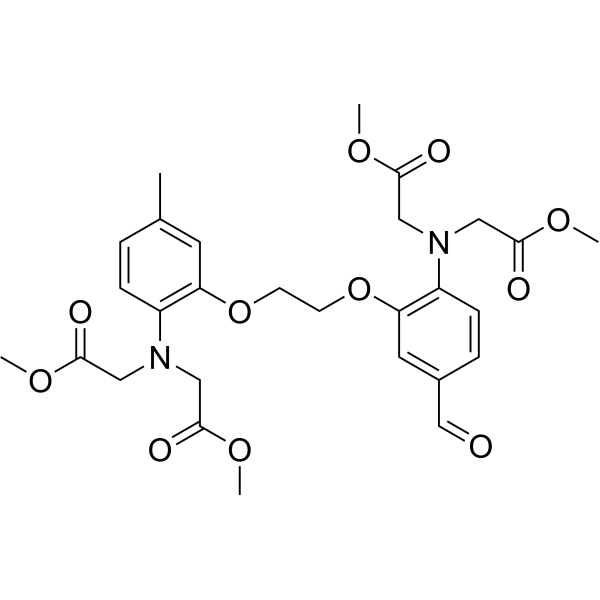 0 ImagesCat. No.: HY-W351339CAS No.: 96315-11-6BAPTA-TMFM is a fluorescent chelating indicator used to study the role of cytosolic free calcium.
-
Mca-Pro-Leu-Ala-Cys(Mob)-Trp-Ala-Arg-Dap(Dnp)-NH2
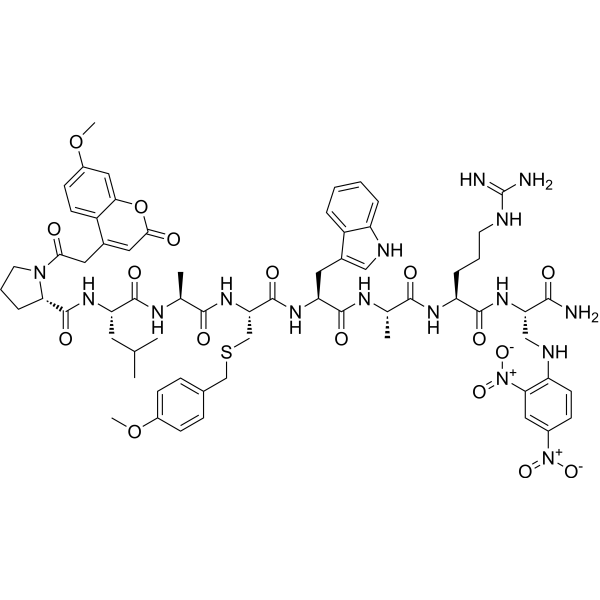 0 ImagesCat. No.: HY-P3120CAS No.: 1926163-82-7Mca-Pro-Leu-Ala-Cys(Mob)-Trp-Ala-Arg-Dap(Dnp)-NH2 is a fluorogenic substrate for matrix metalloproteinase-14 (MMP-14). Mca-Pro-Leu-Ala-Cys(Mob)-Trp-Ala-Arg-Dap(Dnp)-NH2, upon cleavage by MMP-14, releases 7-methoxycoumarin-4-acetyl (Mca) (Ex/Em = 328/420 nm).
-
BBD
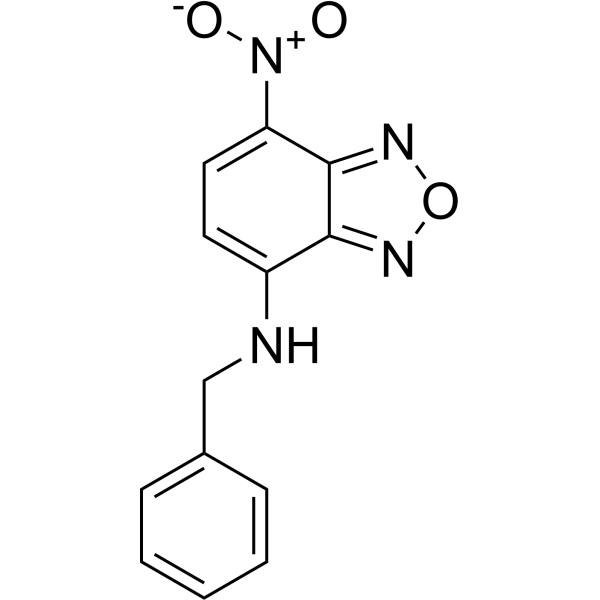 0 ImagesSynonyms: NSC240867; Benzylamino-NBDBBD (NSC240867) is a biochemical reagent/chromogenic reagent.
-
Br-DAPI
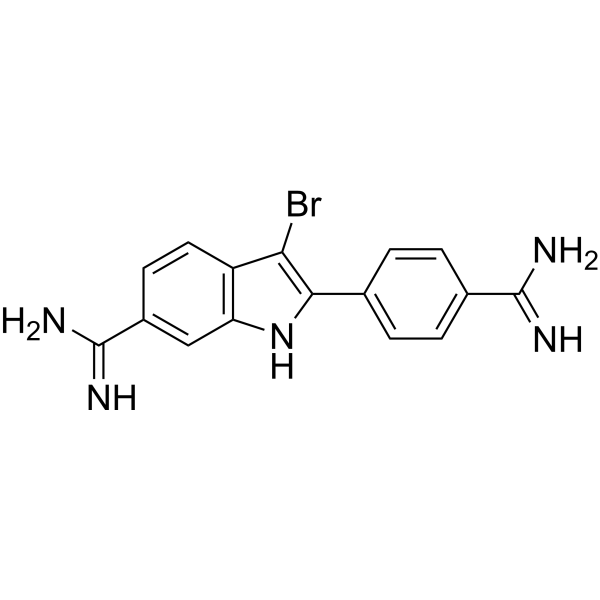 0 ImagesBr-DAPI is a marker dye in DAPI series. DAPI is a fluorescent dye that binds strongly to DNA. It binds to the AT base pair of the double-stranded DNA minor groove, and one DAPI molecule can occupy three base pair positions. The fluorescence intensity of DAPI molecules bound to double-stranded DNA is increased by about 20 times, and it is commonly observed with fluorescence microscopy, and the amount of DNA can be determined based on the intensity of fluorescence. DAPI cannot penetrate intact cell membranes and is commonly used for staining damaged and fixed cells. Storage: Keep away from light.
-
NIR-641 N-succinimidyl ester bromide
 0 ImagesCat. No.: HY-D1514ACAS No.: 2088919-43-9NIR-641 N-succinimidyl ester bromide is a fluorescent dye.
-
Fast Red Violet LB
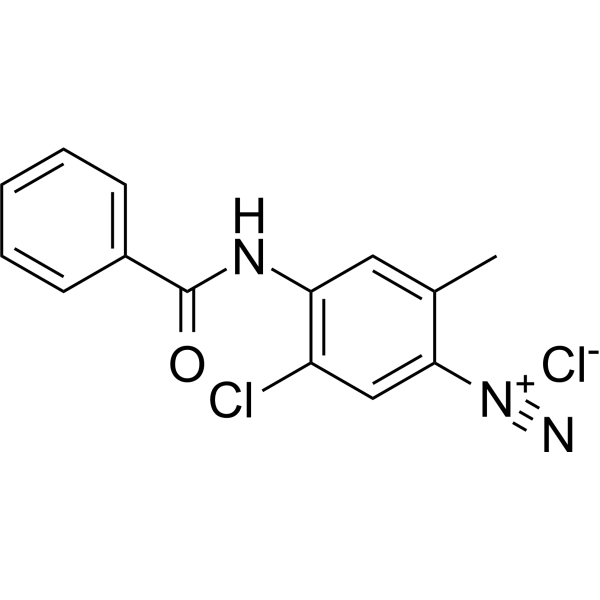 0 ImagesCat. No.: HY-D1491CAS No.: 32348-81-5Fast Red Violet LB is a dye for staining tartrate resistant acid phosphatase (TRAP). Fast Red Violet LB can be used for alkaline phosphatase (ALP) activity staining.
-
2-(Naphthalen-1-yl)-5-phenyloxazole
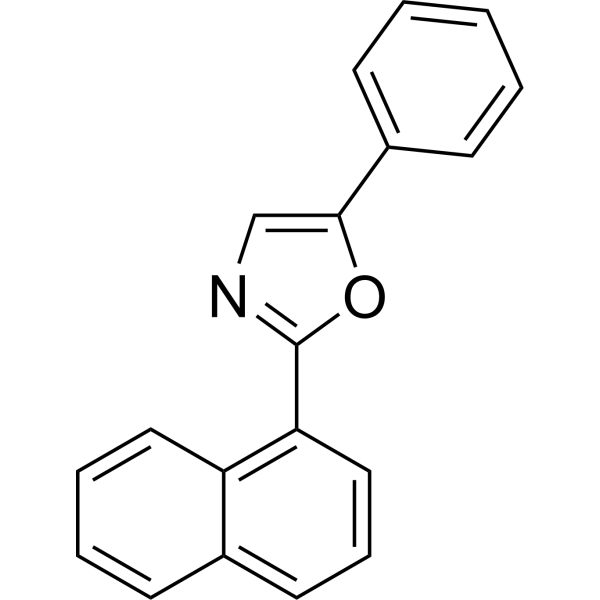 0 ImagesSynonyms: α-NPO2-(Naphthalen-1-yl)-5-phenyloxazole (α-NPO) is an organic fluorescent dye. 2-(Naphthalen-1-yl)-5-phenyloxazole has a nitrogen atom in its structure that can interfere with the nitrogen content from the amination step.




