



Fluorescent Dye
Fluorescence is a phenomenon of photoluminescence in luminescence. When an atom is irradiated by light, some electrons around the nucleus jump from their original orbitals to higher energy orbitals under the influence of light energy, i.e., from the ground state to the first or second excited single-line state, etc. Due to the instability of the first or second excited singlet state, the electron returns from the excited singlet state to the ground state accompanied by released energy, resulting in fluorescence.
Fluorescent dyes can be covalently bound or physically adsorbed in the structure of the substance. The fluorescence properties allow for the characterization, localization and quantitative analysis of the labeled object. Fluorescent dyes have shown great potential for the detection of proteins, nucleic acids, cells, and immunoassays, attributed to the advantages in non-radioactive contamination, simple experimental operation and easy observation.
Fluorescent dyes have penetrated many fields such as pharmacology, physiology, environmental science, and information science, as well as functional studies of proteins and drug screening.
All Product Categories
-
Fluorescent Dye Related Products (4888)
Related Products (4888)

-
Antibodies (4)
-
3-NBD-C12 Cholesterol
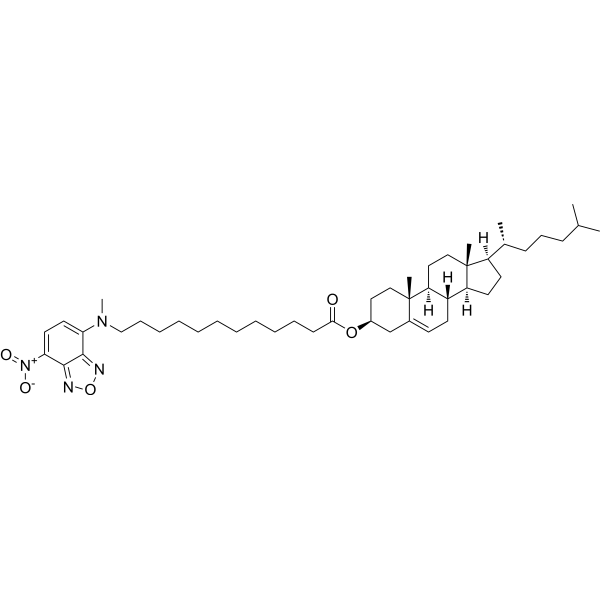 0 ImagesCat. No.: HY-D1621CAS No.: 186833-02-3C-12 NBD cholesterol is a cholesterol derivative with a hydrophilic fluorophore tag (NBD: Ex=465 nm, Em=535 nm). C-12 NBD cholesterol can be used to study the utilization and metabolism of cholesterol.
-
Vicia Villosa Lectin (Biotinylated)
 0 ImagesCat. No.: HY-NP0191Synonyms: VVL (Biotinylated)Vicia Villosa Lectin (VVL) Biotinylated is a plant lectin that can be used as a probe to specifically bind biomolecules (such as polysaccharides, peptides, etc.).Vicia Villosa Lectin (VVL) Biotinylated is a biological material or organic compound that can be used in life science research.
-
Cy5.5 hydrazide
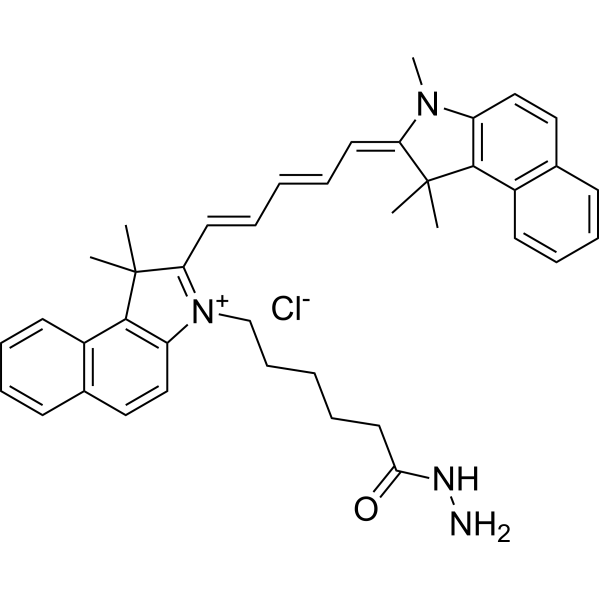 0 ImagesCat. No.: HY-D1882Cy5.5 hydrazide is a fluorescent dye containing a hydrazide functionality. Cy5.5 hydrazide can be used to label aldehydes and ketones.
-
Naphthol green B
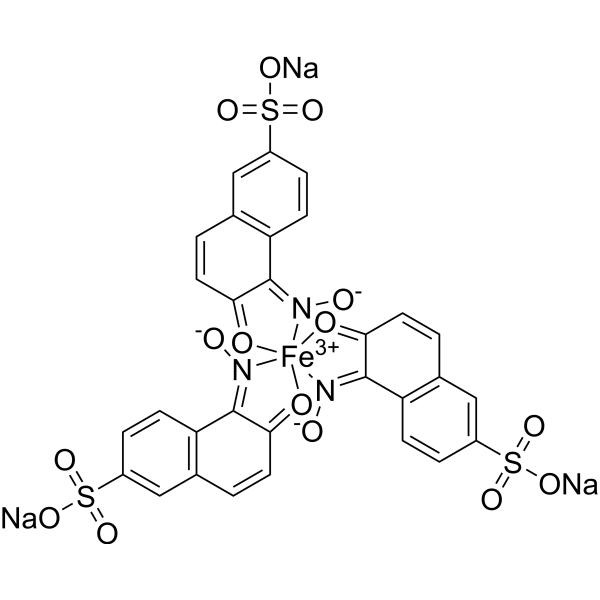 0 ImagesCat. No.: HY-W110905CAS No.: 19381-50-1Naphthol green B is an iron-complex dye. Naphthol green B can be used in wool dyeing, silk dyeing and polyamide dyeing. Naphthol green B can be used to fabricate electrochemical sensor for the detection of H2O2.
-
TCEP-biotin
 0 ImagesCat. No.: HY-158738CAS No.: 2227020-26-8Synonyms: Tris(2-carboxyethyl)phosphine-biotinTCEP-biotin is biotinylated TCEP (HY-W011500). TCEP-biotin is also a probe for histone lysine crotonylation.
-
6-ROX hydrochloride
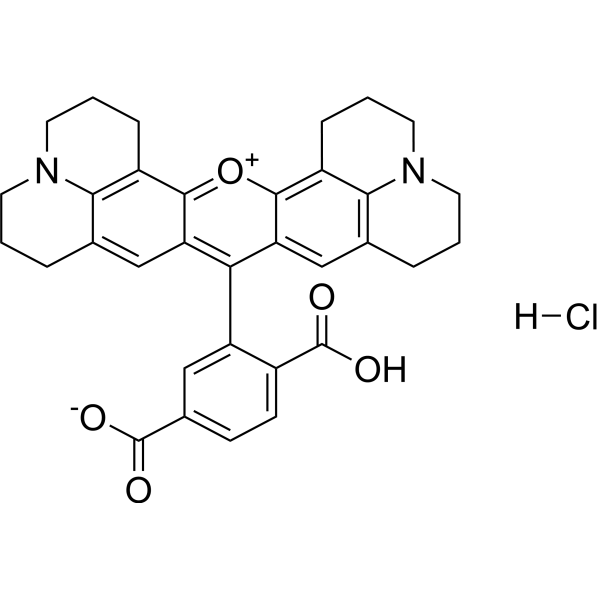 0 ImagesSynonyms: 6-Carboxy-X-rhodamine hydrochloride6-ROX (6-Carboxy-X-rhodamine) hydrochloride, a fluorescent marker of oligonucleotides, acts as a receptor coupled to 5-FAM and as a donor in FRET imaging. Excitation wavelength: 568 nm. Emission wavelength: 568 nm.
-
6-TAMRA maleimide
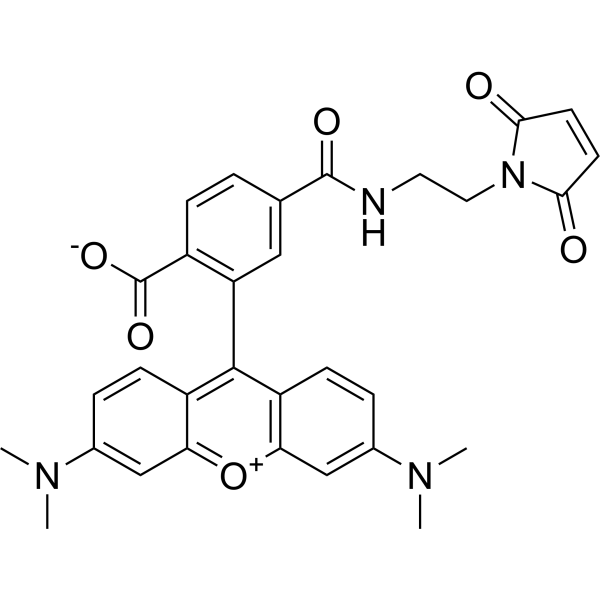 0 ImagesCat. No.: HY-D2187CAS No.: 1508249-06-66-TAMRA maleimide is a fluorescent dye composed of the fluorescent group of an avidin derivative and a maleimide group.
-
CH1055 triethylamine
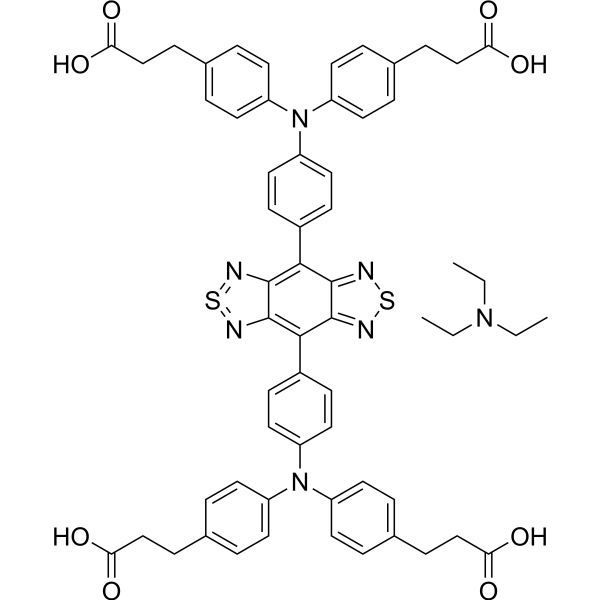 0 ImagesCat. No.: HY-D1464ACH1055 triethylamine is a near-infrared II (NIR-II) fluorescent dye that can be used as a fluorescent probe for in vivo imaging. CH1055 triethylamine can be conjugated with antibodies or ligands for specific imaging (for example the tumor imaging).
-
Aleuria Aurantia Lectin (Biotinylated)
 0 ImagesCat. No.: HY-NP0173Synonyms: AAL (Biotinylated)Aleuria Aurantia Lectin (AAL) Biotinylated is a plant lectin that can be used as a probe to specifically bind biomolecules (such as polysaccharides, peptides, etc.).Aleuria Aurantia Lectin (AAL) Biotinylated is a biological material or organic compound that can be used in life science research.
-
Biotin-11-UTP
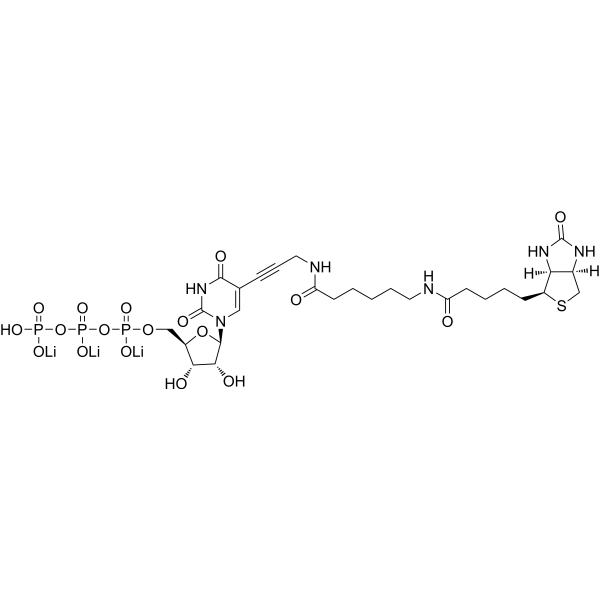 0 ImagesCat. No.: HY-D1669Biotin-11-UTP is a Biotin-labeled uridine triphosphate (UTP), containing 11 atoms in the linker between biotin and UTP. Biotin-11-UTP can biotinylate transcribed RNA in vitro and has been widely used as labeling RNA probe. Biotin-11-UTP is a click chemistry reagent, it contains an Alkyne group and can undergo copper-catalyzed azide-alkyne cycloaddition (CuAAc) with molecules containing Azide groups.
-
D-Ala-Lys-AMCA
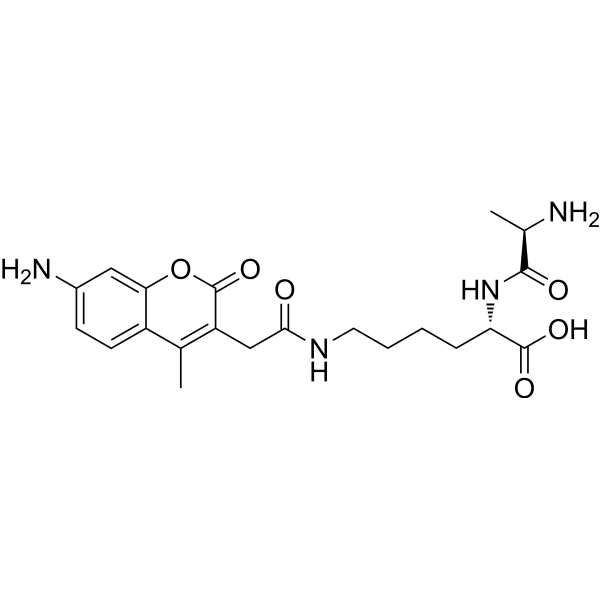 0 ImagesCat. No.: HY-111956CAS No.: 375822-19-8D-Ala-Lys-AMCA is a known proton-coupled oligopeptide transporter 1 (PEPT1) substrate that emits blue fluorescence. D-Ala-Lys-AMCA may be transported into liver cancer cells and Caco-2 cells based on fluorescence analysis. D-Ala-Lys-AMCA can be used for characterizing PEPT1-specific substrates or inhibitors (Ex/Em = 390/480 nm).
-
Janelia Fluor® 669, SE
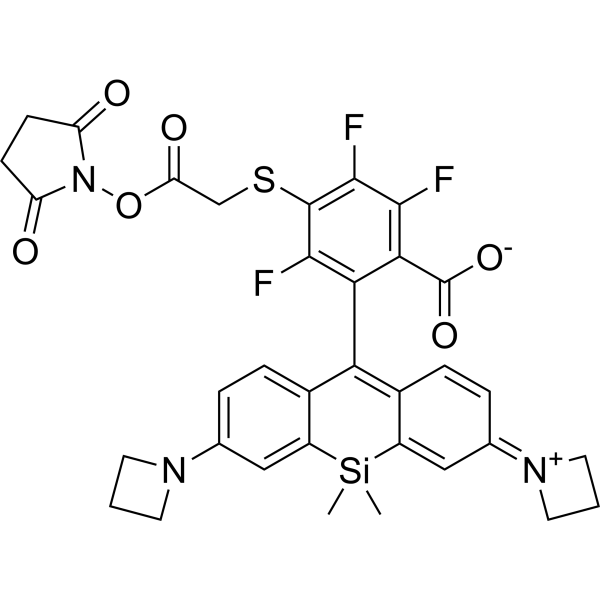 0 ImagesCat. No.: HY-131030CAS No.: 2127150-20-1Synonyms: JF669, SE; JF669, NHSJanelia Fluor 669, SE (JF669, SE), a red fluorescent dye, can be directly reacted with the available thiol-containing HaloTag ligand under mild conditions (DIEA, DMF) to afford a JF669HaloTag ligand in a single step (Ex = 669 nm; Em = 682 nm). Janelia Fluor fluorescent dyes can be chemically conjugated to the specific HaloTag substrate (a chloroalkane ligand) to form a fluorescent ligand, rather than binding directly to the HaloTag protein itself. Janelia Fluor products are licensed under U.S. Pat. Nos. 9,933,417, 10,018,624 and 10,161,932 and other patents from Howard Hughes Medical Institute.
-
BG-PEG-NH2
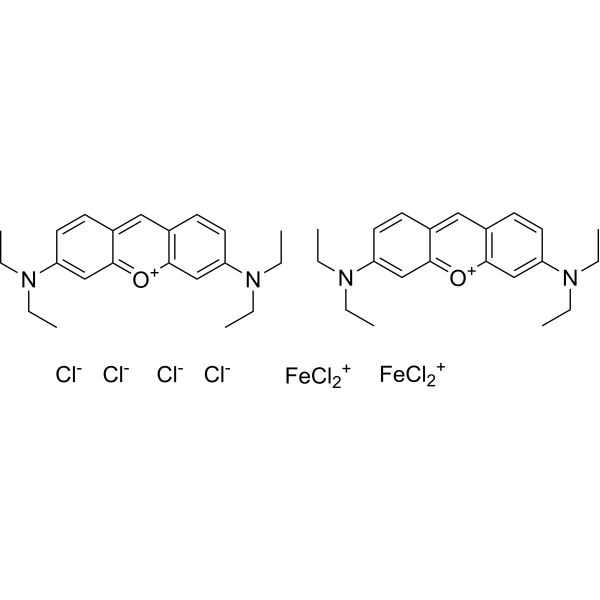
 0 ImagesSynonyms: SNAP-PEG-NH2BG-PEG-NH2 (SNAP-PEG-NH2) is an amino-terminal fluorescent probe building block and a precursor for site-specific labeling of SNAP-tag fusion proteins. BG-PEG-NH2 undergoes one-step coupling with activated carboxyl esters to form customized SNAP-tag substrates, which covalently bind to SNAP tags via a thioether bond formed at the Cys145 site. After coupling with a caged carboxyfluorescein, BG-PEG-NH2 forms a probe with Ex/Em = 500/524 nm following ultraviolet uncaging. Coupling of BG-PEG-NH2 with SeTau-647-NHS enables visualization of GPCR signal transduction. BG-PEG-NH2 is suitable for coupling reactions in aqueous phases or buffers, conjugation of labels, and labeling of intracellular or cell-surface proteins.

-
RB-PEG2000-SH
 0 ImagesCat. No.: HY-D2883CSynonyms: Rhodamine B-PEG2000-SHRB-PEG2000-SH (Rhodamine B-PEG2000-SH) is a fluorescent dye composed of Rhodamine B (HY-Y0016), PEG and sulfhydryl (SH). SH is highly reactive and can react with a variety of functional groups (such as maleimide) to form stable thioether bonds (Ex/Em=546/610 nm).
-
6-Carboxy-JF5252
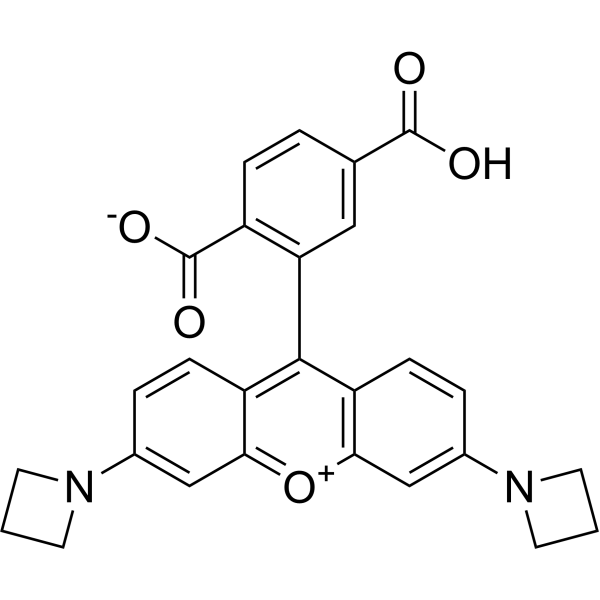 0 ImagesCat. No.: HY-D2183CAS No.: 1811539-31-76-Carboxy-JF5252 is a fluorophore. 6-Carboxy-JF5252 can be used as probes, dyes, tags. 6-Carboxy-JF5252 can be used for the research of super-resolution imaging.




